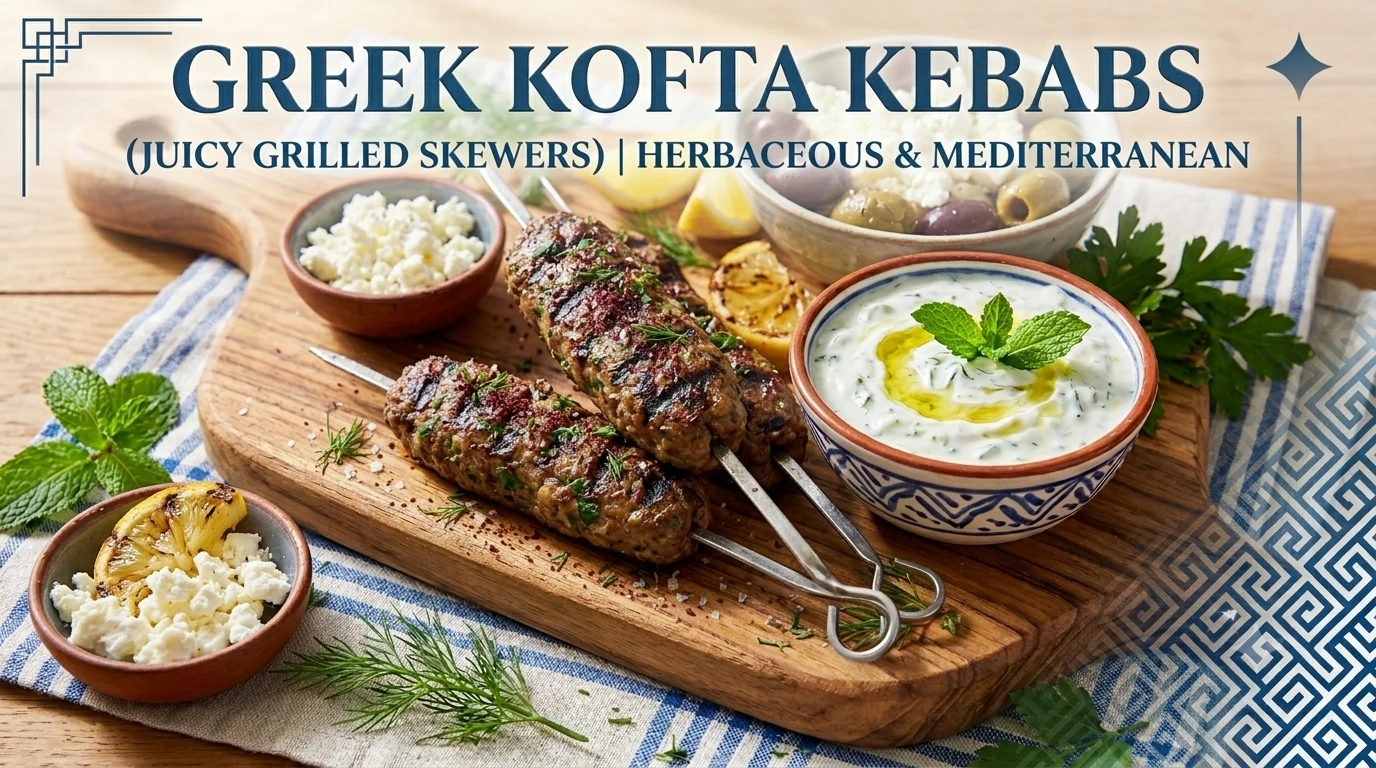
Greek Kofta Kebabs: Juicy Mediterranean Skewers Packed with Herbs, Garlic, and Smoky Flavor
There’s a particular sound I listen for at the grill: the hiss of lamb fat hitting hot coals, followed a beat later by the smell of oregano and charred garlic drifting up into the air. That combination is the whole reason Greek Kofta Kebabs exist. They’re not fussy food. They’re built from ground meat, a fistful of herbs, and a hot fire, and yet when you get the ratios and technique right, they taste like something a taverna cook has been perfecting for thirty years.
This guide covers everything I’ve learned about making Greek Kofta Kebabs at home: the history behind them, the meat science that keeps them juicy instead of dry and crumbly, the exact mixing and grilling technique I use, and the mistakes that ruin most home versions before they even hit the grill. By the end, you’ll be able to make Greek Kofta Kebabs that taste like they came off a charcoal grill in Thessaloniki, not off a sheet pan.
Table of Contents
- What Are Greek Kofta Kebabs?
- The History of Greek Kofta Kebabs
- Why These Kebabs Are So Popular
- The Science Behind Juicy Kofta Kebabs
- Choosing the Best Meat
- Ingredients Explained
- The Secret to Authentic Greek Flavor
- Step-by-Step Technique
- Equipment Needed
- Common Mistakes
- Pro Chef Tips
- Delicious Variations
- Storage & Reheating
- What to Serve with Greek Kofta Kebabs
- Frequently Asked Questions
- Recipe Card
- Conclusion
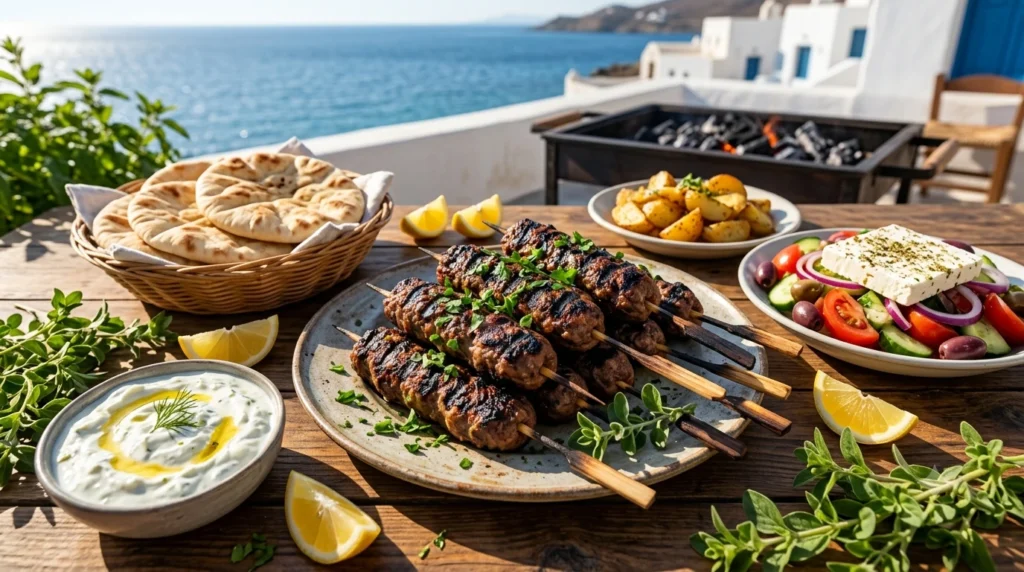
What Are Greek Kofta Kebabs?
Greek Kofta Kebabs are seasoned ground meat—usually lamb, beef, or a blend of the two—shaped around a skewer and grilled directly over an open flame. The mixture leans on parsley, mint, oregano, garlic, and onion, bound just enough to hold its shape on the skewer without turning dense or rubbery. Unlike a burger patty, the meat is worked into a log or oval, elongated along the skewer so it cooks quickly and evenly over live coals.
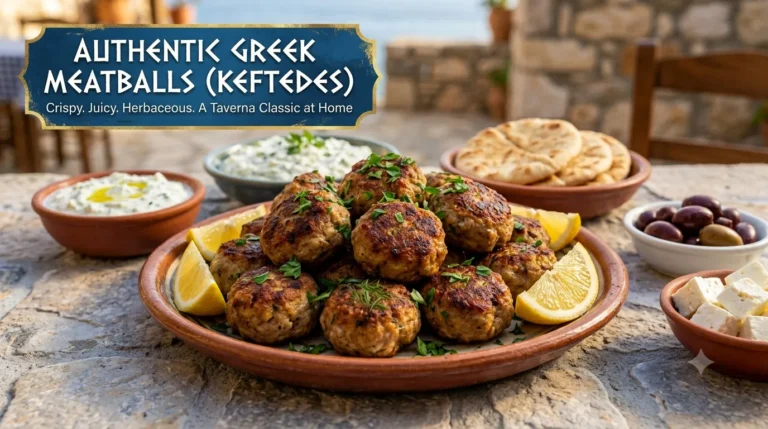
It helps to understand how kofta relates to the dish most Greek households already know: keftedes. Keftedes are the pan-fried or baked meatballs found on nearly every Greek table, usually rounder, often bulked up with bread and egg, and cooked in a skillet or oven rather than over fire. Greek Kofta Kebabs are keftedes’ leaner, grill-loving cousin. The seasoning family is similar—oregano, mint, garlic—but the shape, the fat ratio, and the cooking method are built specifically for skewers and open flame.
The name and format themselves trace back to Asia Minor and the broader Eastern Mediterranean, where seasoned minced-meat skewers have been a street food and taverna staple for centuries. Greek cooks along the coast and in communities with Asia Minor heritage adapted the technique, folding in their own herb combinations and grilling habits. That’s why you’ll find Greek Kofta Kebabs at tavernas from Athens to Thessaloniki today, often listed right alongside souvlaki and gyro on the grill menu.
It’s worth being precise about the differences between Greek, Turkish, and Middle Eastern kofta, since they share a family tree but aren’t interchangeable:
- Greek kofta kebabs lean heavily on oregano, mint, and parsley, use olive oil as the primary fat, and are typically served with tzatziki, pita, and a lemon-forward salad.
- Turkish köfte (particularly Adana or Urfa kebab styles) often include Aleppo or Urfa pepper, sumac, and a spicier profile, with less emphasis on mint.
- Middle Eastern kofta (Lebanese, Syrian, and similar styles) frequently include warm spices like allspice, cinnamon, and sometimes baharat blends, paired with tahini-based sauces rather than yogurt-based ones.
None of these are better or worse than the others—they’re regional expressions of the same basic cooking idea, shaped by local herbs, spice trade routes, and dairy traditions.
The History of Greek Kofta Kebabs
Grilling ground or minced meat over fire is not a modern invention. Ancient Greek cooking already relied heavily on the grill—obeliskos, a word describing small spits or skewers, appears in ancient texts, and archaeologists have found stone skewer supports at Bronze Age sites in the Aegean. Grilling meat directly over coals was practical: it cooked quickly, required minimal equipment, and suited a diet built around lamb, goat, and pork.
The specific dish we call kofta today owes a great deal to Ottoman-era culinary exchange. During centuries of Ottoman rule across much of Greece, cooking techniques, spice usage, and dish formats moved freely between Greek, Turkish, Balkan, and Middle Eastern kitchens. Seasoned minced-meat skewers—known by variations of the word “kofta” or “köfte” across the region—became common ground shared by many cultures, each adapting the format with local herbs and served alongside local staples.
In Greece, that meant folding in ingredients already central to Greek cooking: oregano from hillside herb gardens, mint from kitchen pots, lemon from nearly every coastal grove, and olive oil instead of clarified butter or other regional fats. Communities of Greeks with roots in Asia Minor, who resettled in mainland Greece and the islands during the population exchanges of the early twentieth century, brought grilling traditions that further shaped how kofta appeared on Greek taverna menus.
Regional variation persists today. Mainland tavernas, especially in Thessaloniki, tend to serve kofta with a heavier hand on cumin and paprika, reflecting the city’s historic ties to Ottoman and Sephardic Jewish culinary influence. Island tavernas often keep the seasoning simpler—oregano, mint, garlic—letting the char and the olive oil carry more of the flavor. Across the wider Mediterranean, grilled minced-meat skewers remain popular for a simple reason: they turn an inexpensive cut of meat into something that tastes indulgent, cook in minutes, and travel well from grill to table.
Why These Kebabs Are So Popular
Greek Kofta Kebabs earn their popularity honestly—every element of the dish is built to deliver flavor and texture that’s hard to get bored of.
- Juicy interior. The right fat ratio and gentle mixing keep the center moist even after direct grilling.
- Smoky grilled flavor. Charcoal and open flame add a layer of aroma that no oven or stovetop can replicate.
- Fresh herbs. Parsley, mint, and oregano add brightness that cuts through the richness of the meat.
- Garlic. Used both raw (grated into the mix) and slightly caramelized at the edges from grilling, garlic adds depth without overwhelming the other flavors.
- Oregano. Greece’s signature herb ties the dish unmistakably to its cuisine.
- Tender texture. Properly mixed kofta holds together but still yields easily when you bite into it—no rubbery bounce.
- Perfect for entertaining. Kofta cooks in minutes, can be prepped ahead, and turns a backyard grill into a full Mediterranean spread with minimal last-minute work.
The Science Behind Juicy Kofta Kebabs
Good kofta is as much about technique as it is about ingredients. A few principles from food science explain why some kebabs turn out juicy and others turn out dry, crumbly, or tough.
Protein binding. When you mix ground meat with salt and work it gently, the salt dissolves some of the myosin protein on the surface of the meat particles. That dissolved protein becomes sticky and acts as a natural glue, helping the kofta hold its shape on the skewer without needing a lot of filler. Mix too little, and the kebab falls apart. Mix too much, and the proteins overbind, producing a dense, springy texture closer to a hot dog than a kebab.
Fat ratio. Fat is where the juiciness lives. As kofta cooks, fat renders and bastes the meat from the inside, while also carrying flavor from the herbs and spices. A ratio that’s too lean dries out fast over high heat; too fatty, and the kebab can fall apart on the grill as the fat renders away, leaving a hollow, crumbly result.
Mixing without overworking. The goal is to distribute salt, herbs, and aromatics evenly while activating just enough protein to bind the mixture—no more. Overworking develops too much of that sticky protein network, and the result is tight and rubbery instead of tender.
Chilling the mixture. Resting the shaped or mixed kofta in the refrigerator for at least 30 minutes (ideally longer) lets the fat firm up and the seasoning distribute through the meat. Chilled fat also renders more slowly on the grill, giving the kebab time to develop a crust before the interior dries out.
Maillard reaction and crust development. High, direct heat triggers the Maillard reaction—the browning reaction between amino acids and sugars that creates the deep, savory, slightly charred flavor associated with grilled meat. This only happens efficiently above roughly 300°F (150°C) at the meat’s surface, which is why a hot, well-prepped grill matters so much for kofta.
Internal temperature for safe cooking. Ground lamb and ground beef should reach a minimum internal temperature of 160°F (71°C), per USDA guidance for ground meats. Ground chicken kofta should reach 165°F (74°C). Because kofta is thin and cooks quickly, an instant-read thermometer is the only reliable way to confirm doneness without overcooking.
Choosing the Best Meat
The meat you choose shapes the entire character of the kebab—flavor, juiciness, and how forgiving the mixture is for a first attempt.
| Meat | Flavor | Fat Content | Texture | Juiciness | Best For |
|---|---|---|---|---|---|
| Ground lamb | Rich, slightly gamey, distinctly Mediterranean | Typically 15–20% | Tender, slightly loose | Very juicy | Traditionalists and lamb lovers |
| Ground beef | Familiar, beefy, milder | Best at 15–20% (80/20 blend) | Firm, holds shape well | Juicy if fat ratio is right | Beginners |
| Half lamb, half beef | Balanced richness with more structure | 15–18% blended | Tender with good hold | Very juicy | Most home cooks—best all-around choice |
| Ground veal | Delicate, mild | Lower, often under 10% | Soft, more fragile | Can dry out easily | Experienced cooks wanting a lighter kofta |
| Ground chicken | Light, mild | Low unless thigh meat is used | Can be dense if overmixed | Needs extra fat or moisture | A leaner variation, not a direct substitute |
For beginners, an 80/20 ground beef blend or a 50/50 lamb-beef mix is the easiest entry point. Straight lamb delivers the most traditional flavor but can feel rich to palates that aren’t used to it; blending it with beef mellows the gaminess while keeping plenty of moisture. If you use ground chicken, choose thigh meat over breast meat, since breast meat’s low fat content makes juicy kofta far harder to achieve.
Ingredients Explained
Every ingredient in a Greek kofta mixture has a job. Skipping one, or using a poor substitute, changes the final result more than most recipes let on.
- Ground lamb / ground beef: The base of the dish and the primary source of both flavor and fat.
- Onion: Grated (not diced) and often lightly squeezed of excess liquid, onion adds moisture and a subtle sweetness as it cooks down inside the meat.
- Garlic: Grated finely so it distributes evenly rather than leaving harsh, uneven bites.
- Fresh parsley: The backbone herb—grassy, clean, and essential for balancing the richness of the meat.
- Fresh mint: Distinctly Greek in this context; it adds a cooling brightness that pairs naturally with lamb.
- Fresh oregano: Greece’s defining herb, earthier and more peppery than the dried version most Americans know.
- Ground cumin: Adds warmth and a faint smokiness, echoing the dish’s Eastern Mediterranean roots.
- Ground coriander: Slightly citrusy and floral, it rounds out the cumin without competing with it.
- Paprika: Adds color and a mild, sweet pepper note; smoked paprika can stand in for extra depth.
- Ground cinnamon (optional): A small pinch nods to the dish’s Ottoman-era influence—used sparingly, it should be barely detectable, not dessert-like.
- Olive oil: Adds richness, helps distribute fat-soluble flavors, and keeps the mixture from drying out on the grill.
- Salt: Essential not just for flavor but for the protein-binding process described above.
- Black pepper: Basic but necessary for balance.
- Breadcrumbs (optional): A small amount can help lean mixtures hold together, though traditional versions often skip this.
- Egg (optional): Adds binding for looser mixtures, particularly with leaner meats.
- Lemon zest: Adds brightness without the acidity of lemon juice, which can break down the meat’s texture if added directly to the raw mix.
The Secret to Authentic Greek Flavor
If there’s one thing that separates a forgettable kofta from a memorable one, it’s restraint paired with quality ingredients. Fresh herbs, not dried, make the single biggest difference—dried oregano and mint taste dusty and one-dimensional next to their fresh counterparts. Good olive oil, ideally a robust Greek extra virgin, contributes flavor on its own, not just fat.
Balanced spices matter more than heavy spices. Greek kofta isn’t meant to taste like a curry or a heavily spiced Middle Eastern kofta—cumin, coriander, and paprika should support the herbs, not overpower them. Proper seasoning means salting the meat mixture assertively enough to taste like a finished dish, not an underseasoned one; most home cooks under-salt ground meat mixtures out of caution.
Minimal fillers keep the focus on meat and herbs rather than bread and egg. And the grill itself matters: charcoal imparts a smokiness that gas simply cannot replicate, because charcoal grilling produces aromatic compounds from burning wood and rendered fat dripping onto the coals. Gas grilling still works well and is far more convenient, but if you want the taverna flavor, charcoal is worth the extra effort.
Step-by-Step Technique
1. Prepare the aromatics. Grate the onion and garlic on the fine side of a box grater rather than dicing them—this releases more moisture and distributes flavor more evenly. Squeeze the grated onion gently in a clean towel to remove excess liquid, which prevents a soggy mixture.
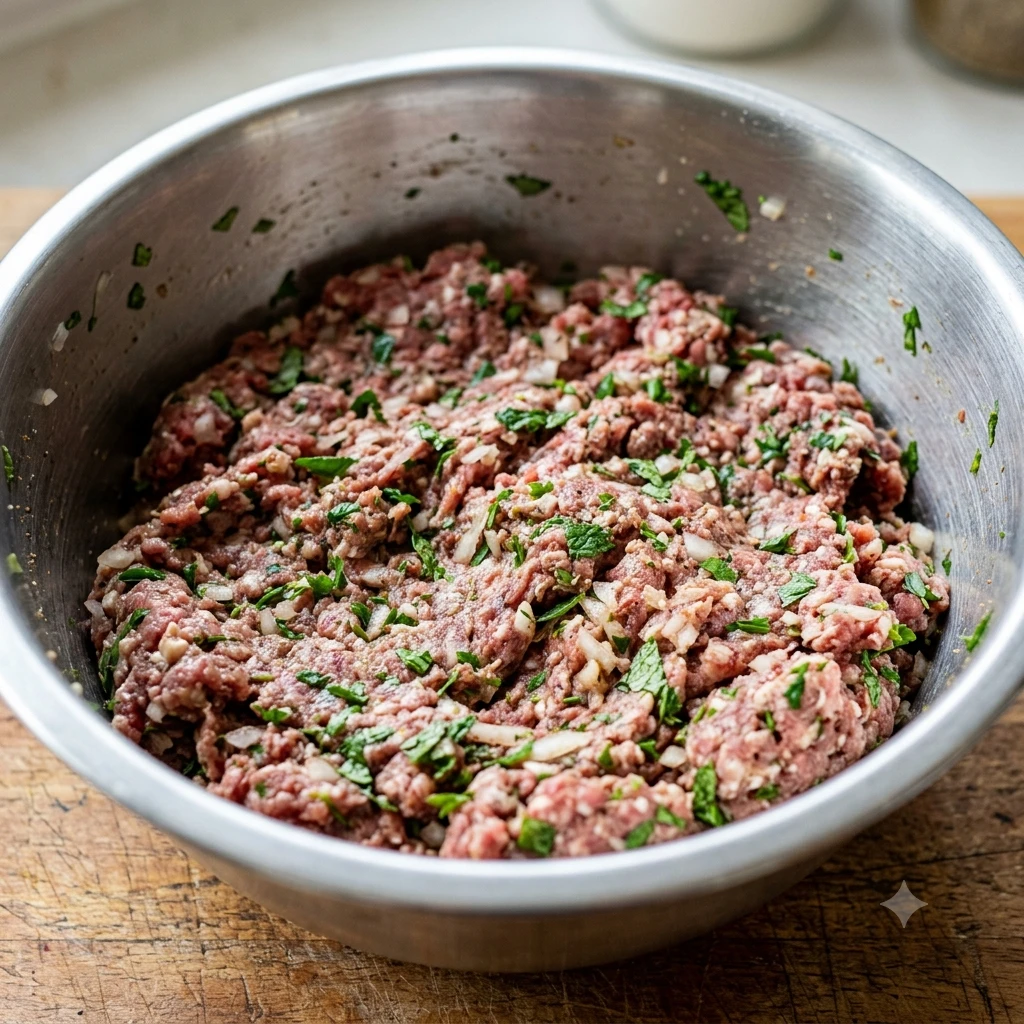
2. Mix the ingredients. In a large bowl, combine the ground meat, grated onion and garlic, chopped herbs, spices, salt, pepper, olive oil, and lemon zest. Mix with your hands using a light folding motion—turn the mixture over on itself repeatedly rather than squeezing or kneading it. You’re looking for even distribution, not a uniform paste.
3. Rest the mixture. Cover and refrigerate for at least 30 minutes, up to overnight. The meat should feel firm, not soft, when you take it out to shape.
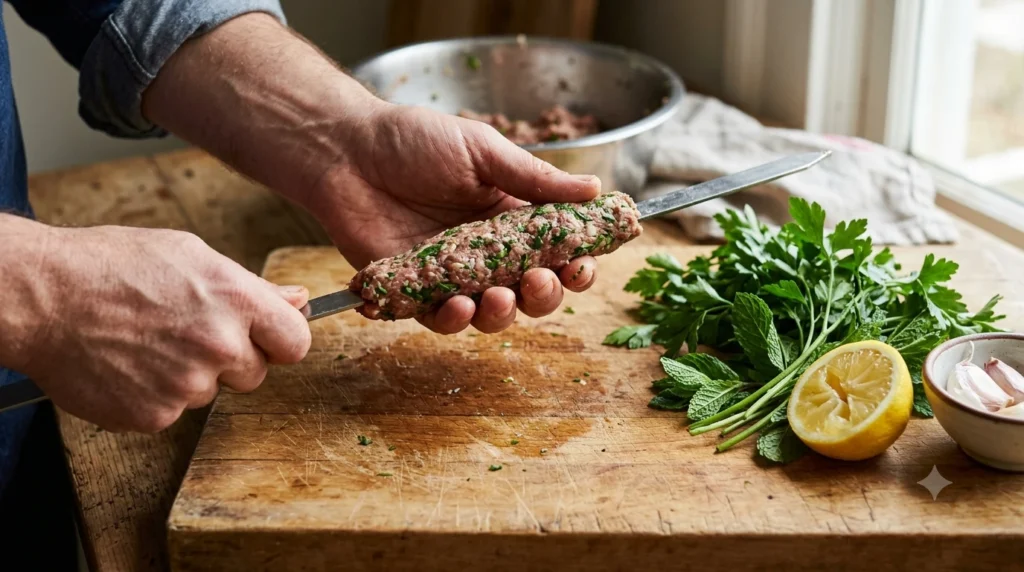
4. Shape the kebabs. Divide the mixture into equal portions—roughly 3 to 4 ounces each for standard skewers. Wet your hands slightly to prevent sticking, then form each portion into an oval log about 4–5 inches long and an inch thick.
5. Skewer. Thread each log onto a flat metal skewer, pressing the meat firmly along its length so it grips the skewer and won’t spin or slide when you turn it. Flat skewers work significantly better than round ones for this reason.
6. Prepare the grill. Build a two-zone fire if using charcoal—hot coals on one side, a cooler zone on the other—so you have somewhere to move the kebabs if flare-ups happen. Preheat to a high, direct heat, and clean and oil the grates well.
7. Grill. Place the skewers directly over high heat. Resist moving them for the first 2–3 minutes so a proper crust develops.
8. Turn. Turn every 2–3 minutes, rotating a quarter turn each time, until all sides are browned and the internal temperature reaches 160°F (71°C) for lamb or beef.
9. Rest before serving. Let the kebabs rest for 3–5 minutes off direct heat. This allows the juices, which get pushed toward the center during grilling, to redistribute through the meat instead of running out the moment you cut into it.
Visual and texture cues to watch for: the meat should look opaque with visible grill marks and slightly crisped edges; when pressed gently with tongs, it should feel firm but still give slightly, not hard or bouncy.
Equipment Needed
- Outdoor grill (charcoal preferred, gas is a good substitute)
- Grill pan (for stovetop cooking when an outdoor grill isn’t available)
- Flat metal skewers (prevents the kofta from spinning while turning)
- Wooden skewers (soak for at least 30 minutes before use to prevent burning)
- Large mixing bowl
- Instant-read thermometer (the most reliable way to avoid over- or undercooking)
- Tongs (for turning skewers without piercing the meat and losing juices)
Common Mistakes
1. Using meat that’s too lean. Dry, crumbly kofta almost always starts with lean ground meat. Stick to a 15–20% fat content.
2. Overmixing the meat. Too much handling activates excess protein binding, producing a dense, rubbery texture. Mix just until combined.
3. Skipping the chilling step. Warm, soft mixtures are difficult to shape and fall apart faster on the grill.
4. Using round skewers. The meat spins freely when you try to turn it, leading to uneven cooking. Use flat skewers.
5. Grilling over low heat. Low heat renders the fat slowly without building a crust, resulting in gray, steamed-tasting meat. Use high, direct heat.
6. Moving the kebabs too soon. Turning before a crust forms causes sticking and tearing. Let the first side sear undisturbed for a few minutes.
7. Using dried herbs instead of fresh. Dried parsley and mint lose most of their brightness and can taste dusty in a raw meat mixture.
8. Adding lemon juice directly to raw meat. The acidity begins breaking down the proteins, leading to a mushy texture. Use lemon zest instead, and save the juice for finishing or the accompanying sauces.
9. Under-salting the mixture. Ground meat needs more salt than most people expect; taste a small cooked patty of the mixture before shaping the rest.
10. Skipping the test patty. Cooking a small sample before committing all the meat to skewers is the only reliable way to check seasoning.
11. Packing the meat too loosely onto the skewer. Loose kofta falls apart on the grill. Press firmly along the skewer’s length as you shape.
12. Overcrowding the grill. Too many skewers at once lowers the grill’s temperature and prevents proper searing.
13. Not oiling the grates. Kofta sticks easily to dirty or dry grates, tearing apart when you try to turn it.
14. Overcooking past the safe temperature. Cooking well beyond 160°F (71°C) dries out the meat unnecessarily; pull it right at temperature.
15. Skipping the resting period after grilling. Cutting into kofta immediately releases most of its juices onto the plate instead of into the meat.
Common Mistake: Adding raw lemon juice straight into the meat mixture. It looks harmless, but the acid begins “cooking” the proteins on contact, giving you a mushy, pasty kofta instead of a tender one. Save the lemon for zest in the mix and juice at the table.
Pro Chef Tips
- Grate onion instead of dicing it for smoother texture and better moisture distribution.
- Squeeze grated onion in a towel before adding it to the mixture to avoid excess liquid.
- Use flat metal skewers, not round ones.
- Wet your hands before shaping to prevent sticking.
- Chill the mixture for at least 30 minutes, ideally longer.
- Always cook a small test patty to check seasoning before shaping the full batch.
- Salt more assertively than feels natural—cold, raw meat mutes salt’s flavor.
- Use a two-zone fire so you have a safety zone for flare-ups.
- Don’t touch the kebabs for the first few minutes on the grill.
- Rotate a quarter turn at a time for even browning on all sides.
- Use an instant-read thermometer instead of guessing by color.
- Let kofta rest for a few minutes before serving.
- Brush the grates with oil right before cooking, not hours ahead.
- Keep a spray bottle of water nearby to calm flare-ups without moving the meat.
- Use fresh herbs whenever possible—dried versions dull the final flavor.
- Add lemon zest, not juice, directly to the raw mixture.
- Blend lamb and beef for a beginner-friendly balance of richness and structure.
- Avoid packing the meat too tightly, which can trap moisture and cause steaming rather than searing.
- Keep portions consistent in size so all kebabs finish cooking at the same time.
- Warm the pita bread over the same grill in the last minute of cooking for extra flavor.
- Serve with a cold, herb-forward sauce like tzatziki to balance the richness of the meat.
Delicious Variations
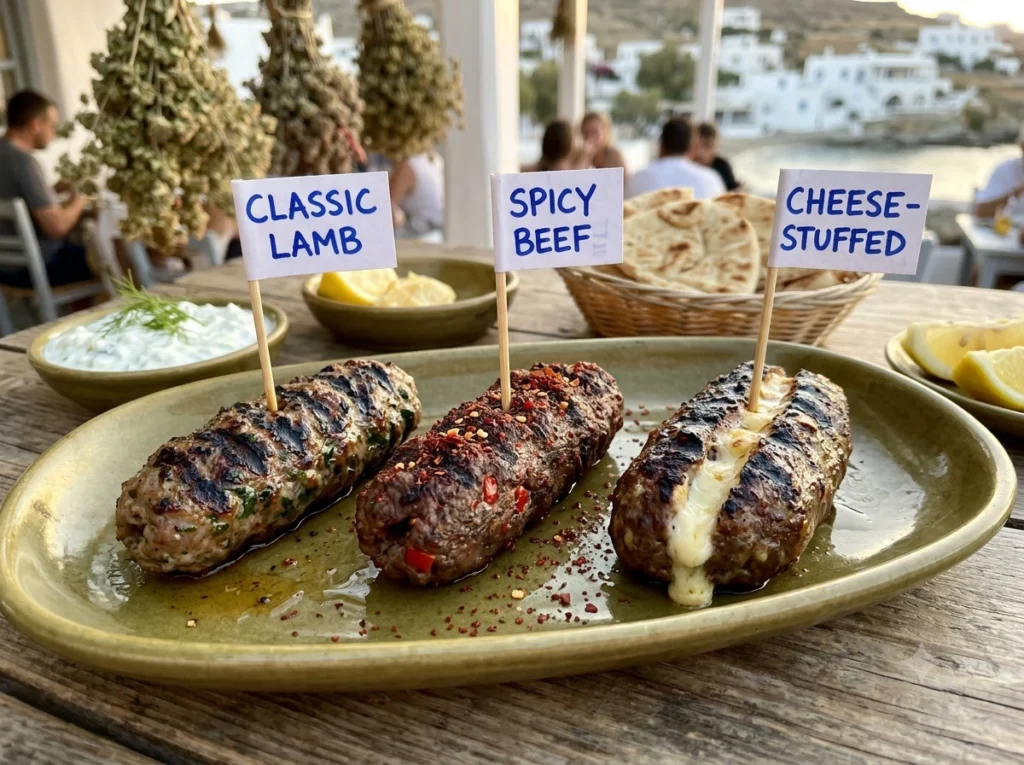
All-lamb kofta: The most traditional version, rich and slightly gamey, best paired with a bright, acidic salad.
Beef kofta: Milder and more familiar to American palates, especially approachable for first-time cooks.
Chicken kofta: Lighter, made with thigh meat for enough fat to stay juicy; benefits from a touch of olive oil mixed in.
Spicy kofta: Add a pinch of crushed red pepper flakes or a small amount of Aleppo pepper to the mixture for gentle heat.
Cheese-stuffed kofta: Press a small cube of halloumi or firm feta into the center of each portion before shaping around it.
Herb-loaded version: Double the parsley and mint for an especially green, fresh-tasting kofta.
Low-carb version: Skip the optional breadcrumbs entirely and serve over grilled vegetables instead of pita.
Oven-baked version: Shape the kofta onto skewers or into logs on a wire rack over a sheet pan, and broil for 4–5 minutes per side to mimic direct-heat searing indoors.
Storage & Reheating
Refrigeration: Store cooked kofta in an airtight container for up to 3–4 days. Raw shaped kofta can be refrigerated for up to 2 days before grilling.
Freezing: Raw shaped kofta freezes well for up to 3 months; freeze on a tray until firm, then transfer to a freezer bag to prevent sticking. Cooked kofta can also be frozen but is best used within 2 months for optimal texture.
Best reheating methods: Reheat gently in a covered skillet over medium-low heat with a splash of water or broth, or in a 300°F (150°C) oven wrapped in foil. Both methods add back moisture that a microwave tends to strip away.
Retaining juiciness: Avoid high-heat reheating, which dries out already-cooked meat quickly. Low, gentle heat with added moisture is the key.
Food safety: Always thaw frozen kofta in the refrigerator, never at room temperature, and reheat cooked kofta to an internal temperature of 165°F (74°C) before serving.
What to Serve with Greek Kofta Kebabs
Classic pairings:
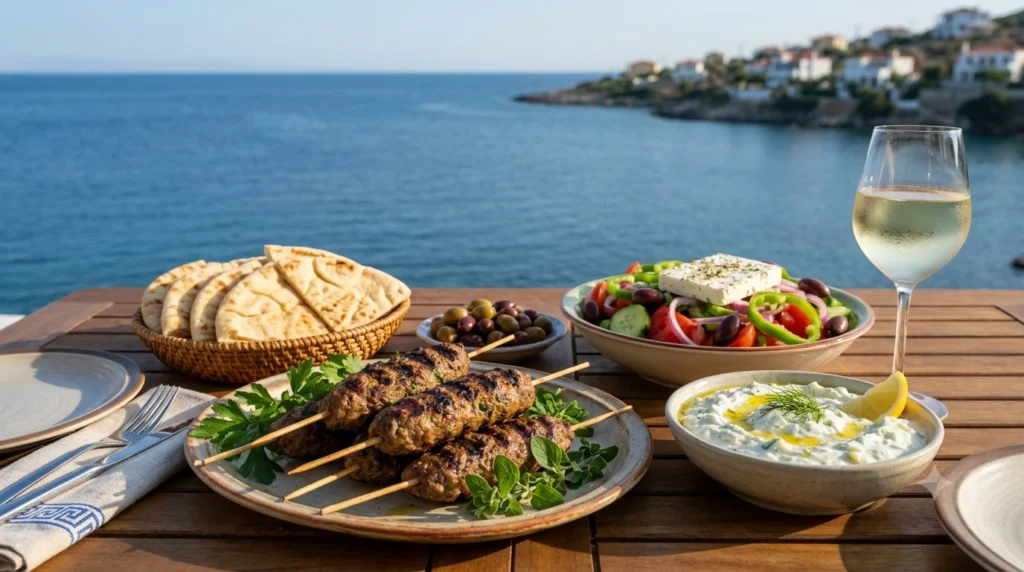
- Tzatziki
- Warm pita bread
- Greek village salad (Horiatiki)
- Lemon rice
- Roasted potatoes
- Grilled vegetables
- Hummus
- Feta cheese
- Olives
Drink pairings:
- Assyrtiko (crisp, mineral white wine that cuts through the richness of the meat)
- Xinomavro (a food-friendly red with enough acidity to stand up to grilled lamb)
- Sauvignon Blanc (a reliable, widely available alternative to Assyrtiko)
- Sparkling lemonade (a refreshing non-alcoholic option)
- Iced herbal tea (mountain tea or mint tea, both common in Greek households)
Frequently Asked Questions
Can I use only beef for Greek Kofta Kebabs? Yes. An 80/20 ground beef blend works well on its own and is a good starting point if lamb isn’t available or preferred, though the flavor will be milder and less traditional.
Can I make Greek Kofta Kebabs in the oven? Yes. Shape the mixture onto skewers or into logs, place them on a wire rack over a sheet pan, and broil for 4–5 minutes per side, watching closely to prevent burning.
Can I freeze uncooked kofta? Yes. Freeze shaped, uncooked kofta on a tray until firm, then transfer to a freezer bag for up to 3 months. Thaw in the refrigerator before grilling.
Why are my kebabs falling apart on the grill? This usually comes from a mixture that’s too lean, too loosely packed onto the skewer, or turned before a crust has formed. Chilling the mixture and using flat skewers both help.
Can I cook Greek Kofta Kebabs without skewers? Yes. Shape the mixture into oval patties or logs and cook them directly on the grill grates or in a grill pan, using a wide spatula to turn them.
Can I make the mixture ahead of time? Yes. The seasoned mixture can be refrigerated for up to 2 days before shaping and grilling, and the flavor often improves with a longer rest.
Can I use dried herbs instead of fresh? You can in a pinch, but the flavor will be noticeably less bright. Use about one-third the amount of dried herb compared to fresh, since dried herbs are more concentrated.
How do restaurants keep their kofta so juicy? Restaurants typically use a fat content around 18–20%, chill the mixture thoroughly, and cook over very high, consistent heat, pulling the meat the moment it hits a safe internal temperature rather than overcooking it.
What’s the ideal fat percentage for kofta? Somewhere between 15% and 20% fat gives the best balance of juiciness and structure.
Do I need breadcrumbs or egg? No, not in a traditional version. They’re optional additions that can help leaner mixtures hold together, but a well-mixed, properly chilled meat mixture with the right fat content doesn’t need them.
Can I make Greek Kofta Kebabs with chicken? Yes, using ground chicken thigh rather than breast for enough fat content, and adding a small amount of olive oil to the mixture to compensate for chicken’s naturally lower fat.
What’s the difference between Greek kofta and souvlaki? Souvlaki is made from cubed, marinated meat threaded onto skewers, while kofta is made from seasoned ground meat shaped around the skewer.
Why does my kofta taste bland? Usually under-salting. Cold, raw ground meat mutes salt’s perceived flavor, so it’s worth cooking a small test patty to check seasoning before committing the whole batch.
Can I grill Greek Kofta Kebabs on a gas grill? Yes. Gas grilling works well, though it won’t produce quite the same smokiness as charcoal. Preheating the grates thoroughly and keeping the heat high still delivers excellent results.
How long do leftovers last? Cooked kofta keeps for 3–4 days refrigerated in an airtight container, and reheats best with a low, gentle method that adds back some moisture.
Recipe Card
Greek Kofta Kebabs
| Detail | Information |
|---|---|
| Prep Time | 25 minutes |
| Chill Time | 30 minutes (minimum) |
| Cook Time | 10 minutes |
| Total Time | 65 minutes |
| Servings | 4 (2 skewers per person) |
| Cuisine | Greek / Mediterranean |
| Course | Main dish |
| Calories (estimated) | Approximately 320 per serving (2 skewers), based on a 50/50 lamb-beef blend |
Ingredients
- 1 lb ground lamb
- 1 lb ground beef (80/20)
- 1 medium onion, grated and squeezed of excess liquid
- 4 garlic cloves, grated
- 1/2 cup fresh parsley, finely chopped
- 1/4 cup fresh mint, finely chopped
- 2 tbsp fresh oregano, finely chopped
- 1 tsp ground cumin
- 1 tsp ground coriander
- 1 tsp paprika
- 1/8 tsp ground cinnamon (optional)
- 2 tbsp olive oil
- 1 1/2 tsp salt (plus more to taste)
- 1/2 tsp black pepper
- Zest of 1 lemon
- 2 tbsp breadcrumbs (optional)
- 1 egg (optional)
Instructions
- Grate the onion and garlic; squeeze the onion in a clean towel to remove excess moisture.
- In a large bowl, combine both meats with the onion, garlic, herbs, spices, olive oil, salt, pepper, and lemon zest. Mix gently until just combined.
- Cover and refrigerate for at least 30 minutes.
- Cook a small test patty in a hot pan to check seasoning; adjust salt if needed.
- Divide the mixture into 8 portions and shape each around a flat metal skewer into a 4–5 inch log.
- Preheat a grill to high, direct heat, and oil the grates well.
- Grill the skewers for 2–3 minutes per side without moving, turning until all sides are browned and the internal temperature reaches 160°F (71°C).
- Rest for 3–5 minutes before serving with tzatziki, warm pita, and Greek salad.
Chef Notes: A 50/50 lamb-beef blend gives the most balanced flavor for a first attempt. Adjust herb quantities to taste once you’ve made the base recipe a few times.
Storage Notes: Refrigerate cooked kofta up to 4 days, or freeze raw shaped kofta up to 3 months.
Nutrition Disclaimer: Nutrition values are estimates based on standard ingredient data and will vary depending on specific products used, portion size, and preparation method.
Conclusion
Greek Kofta Kebabs reward patience in the mixing bowl and confidence at the grill. Get the fat ratio right, chill the mixture, season more boldly than feels comfortable, and let the fire do the rest. Once you’ve made a batch that comes off the grill with a charred crust and a juicy center, you’ll understand exactly why this dish has held its place on Greek taverna menus for generations. Fire up the grill, gather good ingredients, and bring a taste of the Mediterranean to your own backyard.