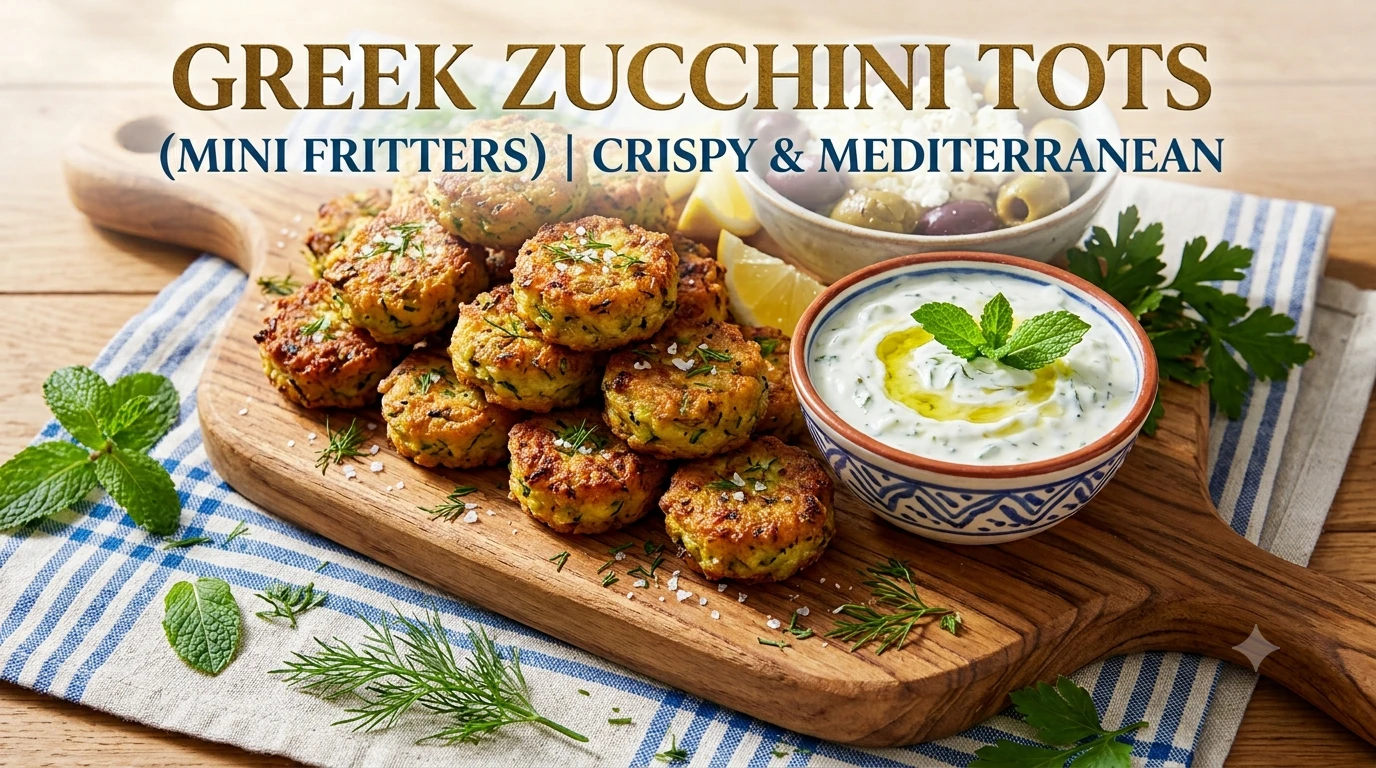
Greek Zucchini Tots (Mini Fritters): Crispy Mediterranean Bites with Feta, Herbs, and Olive Oil
Greek Zucchini Tots are what happen when a classic Mediterranean fritter gets shrunk down into something you can pop in one bite. Golden and crisp on the outside, soft and herb-flecked in the middle, with salty pockets of feta throughout. They come together from ingredients most home cooks already have during zucchini season, and they disappear from the plate just as fast, whether you serve them as a party appetizer or a way to get a picky kid to eat a vegetable without complaint.
This guide covers what Greek Zucchini Tots actually are, how they connect to the traditional Greek dish they draw from, the food science behind getting a genuinely crispy fritter instead of a soggy one, and a complete recipe you can make tonight. You will also find a zucchini comparison, a full ingredient breakdown, cooking method options, fifteen common mistakes, twenty professional tips, and a complete recipe card.

Table of Contents
- What Are Greek Zucchini Tots?
- The Story Behind Kolokithokeftedes
- Why These Zucchini Tots Are So Popular
- The Science Behind Crispy Zucchini Fritters
- Choosing the Best Zucchini
- Ingredients Explained
- The Secret to Perfect Greek Zucchini Tots
- Step-by-Step Technique
- Equipment Needed
- Common Mistakes
- Pro Chef Tips
- Delicious Variations
- Storage & Reheating
- What to Serve with Greek Zucchini Tots
- Frequently Asked Questions
- Recipe Card
- Conclusion
What Are Greek Zucchini Tots?
Greek Zucchini Tots are small, bite-sized fritters made from grated zucchini, feta cheese, fresh herbs, and a light binding of egg, flour, and breadcrumbs, formed into little rounds and cooked until the outside turns golden and crisp while the center stays tender and moist. Think of them as a modern, kid-friendly, party-friendly cousin of a classic Greek dish, scaled down for easy eating and easy serving.
These tots are directly inspired by Kolokithokeftedes, the traditional Greek zucchini fritter served throughout Greece, particularly on islands like Crete and Santorini. Where Kolokithokeftedes are typically shaped as larger patties, Greek Zucchini Tots take the same core flavors, zucchini, feta, dill, mint, and shrink them down into a smaller, more shareable, more freezer-friendly format better suited to appetizer platters and lunchboxes than a formal meal.
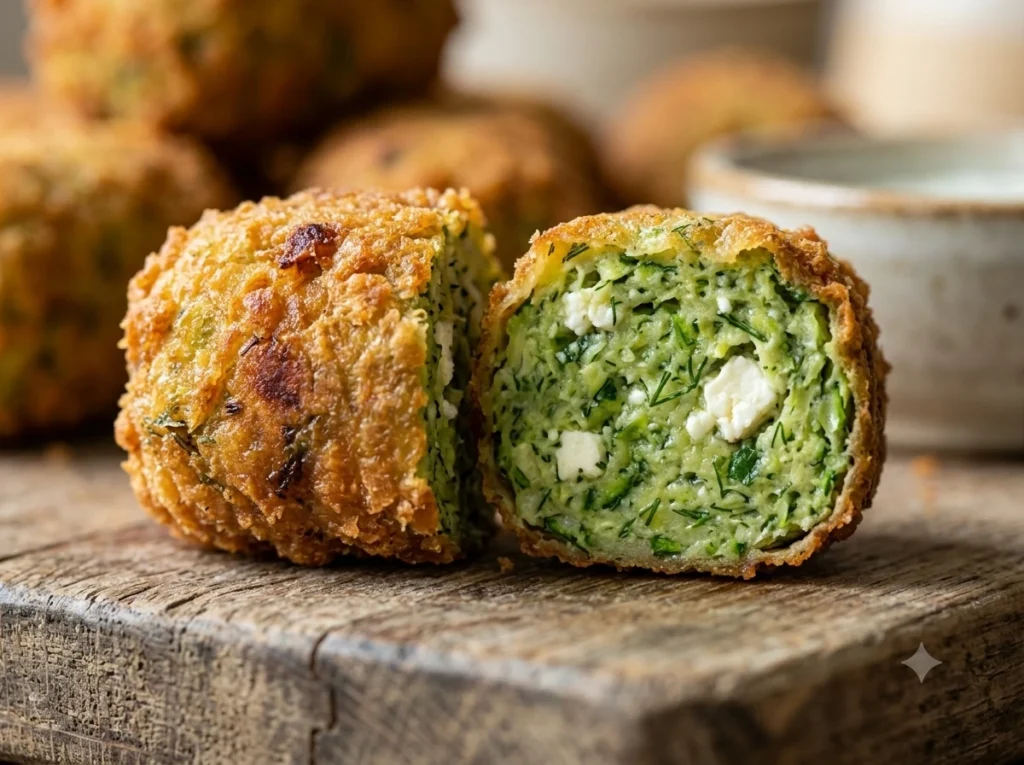
They have become popular for straightforward reasons. As an appetizer or mezze item, their small size makes them easy to grab and dip. As a snack, they hold up well warm or at room temperature. As a side dish, they round out a Mediterranean-style dinner without much added effort. Their appeal rests on that contrast between textures: a shatteringly crisp exterior giving way to a soft, herb-scented interior studded with salty feta.
Zucchini season, typically the height of summer, produces more squash than most households know what to do with, and these tots are a genuinely good answer. They use up zucchini in a way that transforms its mild, slightly watery flavor into something concentrated and savory, rather than serving it plain and letting its blandness show.
The Story Behind Kolokithokeftedes
Kolokithokeftedes, meaning zucchini fritters or zucchini “meatballs” in a loose translation, since “keftedes” traditionally refers to fried, ball-shaped preparations, have a long-standing place in Greek home cooking, particularly in regions where zucchini and other summer squash grow abundantly. The dish reflects a broader pattern in Greek cuisine: taking whatever vegetable is in season and turning it into something substantial through simple techniques like grating, salting, and frying.
The dish holds particular popularity on islands such as Crete and Santorini, where local versions often incorporate regional ingredients like Cretan graviera cheese or wild herbs specific to the island’s terrain. These island variations reflect how a single dish idea, zucchini fritters, adapts across different parts of Greece depending on what grows locally and what cheese or herbs a particular region favors.
Kolokithokeftedes hold a regular place in traditional Greek mezze spreads, the shared, small-plate style of eating common throughout Greek dining culture. Served alongside dishes like tzatziki, dolmades, and grilled octopus, they represent the vegetable-forward, herb-driven side of Greek cooking that balances out richer, meat-based mezze items.
Modern zucchini tots evolved as a playful, family-friendly variation on this tradition rather than a historic recipe in their own right. Home cooks and food bloggers, particularly in the United States, began shaping the same zucchini-feta-herb mixture into smaller, more kid-friendly rounds, closer in size and format to a tater tot than a traditional fritter patty. This adaptation makes the dish easier to portion for lunchboxes, easier to freeze in batches, and easier to serve at a party where guests want something they can eat in one or two bites. It is worth being direct about this: Greek Zucchini Tots, as covered in this guide, are a modern adaptation inspired by Kolokithokeftedes, not a traditional dish you would find under this exact name and format in Greece itself.
Why These Zucchini Tots Are So Popular
The contrast between a crispy exterior and a soft, creamy interior is the main draw. Getting that contrast right, rather than ending up with a soggy, one-texture fritter, is really the entire technical challenge of this dish, and it is worth mastering because the payoff is significant.
Salty feta cheese threaded throughout the mixture adds pockets of sharp, tangy flavor that keep each bite interesting rather than uniformly mild. Fresh dill and mint bring a distinctly Greek herbal brightness, different from the parsley-forward profile common in many other Mediterranean vegetable dishes.
These Mediterranean flavors, built on olive oil, lemon, feta, and fresh herbs, appeal to a wide range of palates without leaning on heavy spice or excessive richness. That balance also makes the tots genuinely kid-friendly; the mild zucchini base and familiar, tot-like shape make them an easier sell to picky eaters than a whole grilled zucchini spear ever would be.
They are also excellent for meal prep. The mixture can be made ahead, shaped and frozen uncooked, or cooked in a large batch and reheated throughout the week, making them a practical addition to a rotation of make-ahead snacks and sides.
The Science Behind Crispy Zucchini Fritters
Why zucchini contains so much water. Zucchini is roughly ninety-five percent water by weight, held within a soft, high-moisture flesh and a network of small seed cavities. This is part of why raw or lightly cooked zucchini tastes so mild; there is simply a lot of water diluting whatever flavor compounds are present.
How salting removes excess moisture through osmosis. Salt draws water out of zucchini’s cells through osmosis, a process where water naturally moves from an area of lower salt concentration inside the cell to the higher salt concentration on the surface. Salting grated zucchini and letting it sit for ten to fifteen minutes pulls out a significant amount of this trapped water before it ever gets a chance to make your batter soggy.
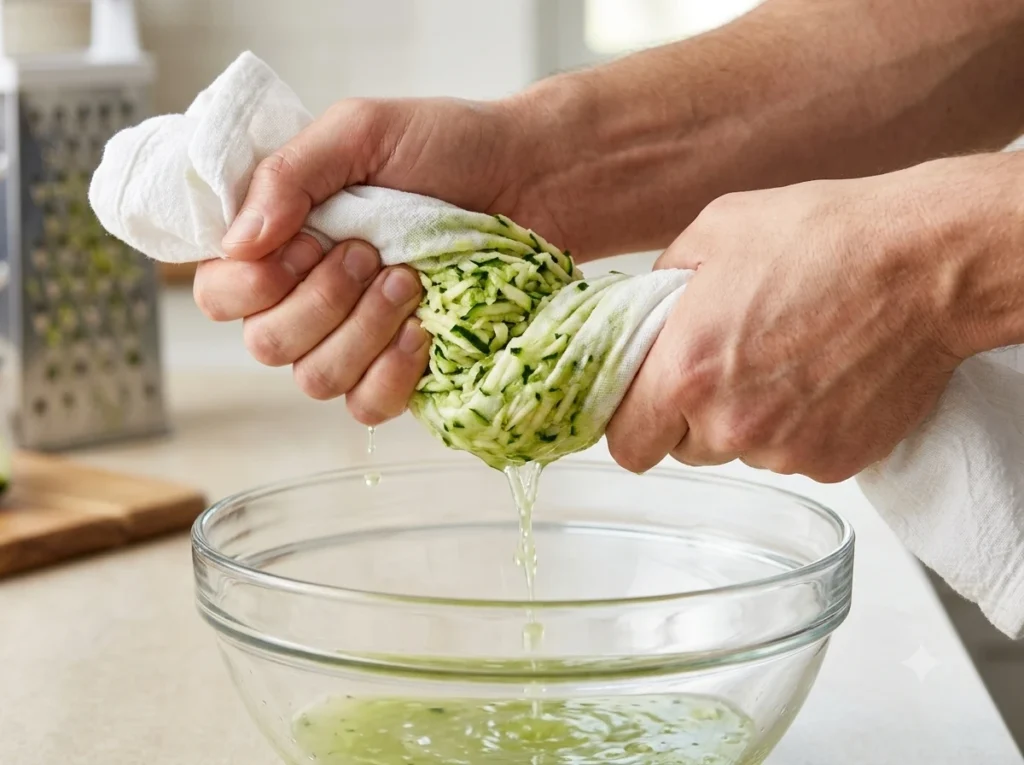
Why squeezing the zucchini is essential. Salting alone loosens the water, but it does not remove it. Physically squeezing the salted, rested zucchini, ideally in a clean kitchen towel or cheesecloth, is the step that actually expels that water from the mixture. Skipping this step is the single most common reason zucchini fritters turn out mushy rather than crisp.
The role of flour and eggs. Flour absorbs any remaining moisture and provides structure, holding the grated zucchini and feta together as a cohesive mixture rather than a loose, crumbly pile. Egg acts as a binder, its proteins coagulating during cooking to hold the shaped tots together so they do not fall apart when flipped or handled.
How feta adds flavor and structure. Beyond its salty, tangy flavor, feta’s slightly crumbly texture helps create small pockets of contrast throughout the tots, and because it is already salted and semi-firm, it does not add nearly as much excess moisture to the mixture as a softer, wetter cheese would.
Why olive oil creates an even golden crust. Olive oil has a moderate smoke point and conducts heat evenly across a pan’s surface, browning the tots’ exterior through the Maillard reaction, the same chemical browning process responsible for seared meat and toasted bread. A properly heated layer of olive oil, not too thin and not so much that the tots are deep-frying, produces that classic golden, slightly crisp shell.
Baking versus pan-frying versus air frying. Pan-frying in oil produces the crispest, most evenly browned exterior, since direct contact with hot oil maximizes browning. Baking is more hands-off and uses less oil, but tends to produce a drier, less uniformly crisp texture unless the tots are flipped partway through. Air frying splits the difference, using circulating hot air to crisp the exterior with significantly less oil than pan-frying, generally landing closer to pan-fried texture than baked texture.
Choosing the Best Zucchini
| Zucchini Type | Moisture | Seeds | Flavor | Best Choice? |
|---|---|---|---|---|
| Green Zucchini | High | Moderate | Mild, slightly grassy | Traditional and most common choice |
| Yellow Zucchini | High | Moderate | Slightly sweeter | Good alternative, similar texture |
| Large Zucchini | Very high, more seeds | High seed content | More diluted flavor | Not ideal; requires extra draining |
| Small Zucchini | Lower, fewer seeds | Low | More concentrated flavor | Best choice for beginners |
| Garden Zucchini | Varies, often very fresh | Varies by size | Fuller flavor when fresh | Excellent if harvested small |
| Store-Bought Zucchini | Moderate, consistent | Moderate | Reliable, consistent flavor | Reliable year-round option |
Small to medium zucchini, roughly six to eight inches long, are the best choice for this dish. Their seeds are still small and tender, and their flesh holds less excess water relative to their size compared to larger, more mature zucchini. Large zucchini, the kind that seem to appear overnight in a home garden, tend to have tougher, more developed seeds and a higher overall water content, both of which mean more draining work and a slightly less concentrated flavor.
Green and yellow zucchini work interchangeably here; the difference in flavor is subtle, with yellow zucchini running just slightly sweeter. Garden zucchini, picked at a smaller size, often has the fullest flavor of all, since it has not spent time traveling or sitting in cold storage. Store-bought zucchini remains a perfectly reliable option, especially outside of peak summer growing season, and the technique in this guide accounts for its slightly higher moisture content regardless.
Ingredients Explained
| Ingredient | Role in the Dish |
|---|---|
| Zucchini | The base vegetable; requires proper draining for the best texture |
| Feta cheese | Salty, tangy flavor and textural contrast throughout |
| Eggs | Binds the mixture together during cooking |
| All-purpose flour | Absorbs remaining moisture and adds structure |
| Panko breadcrumbs | Adds lightness and extra crispness to the exterior |
| Parmesan (optional) | Adds a deeper, umami-rich layer alongside feta |
| Fresh dill | Signature Greek herbal note |
| Fresh mint | Bright, cooling contrast to the richness of the feta |
| Fresh parsley | Adds freshness and color |
| Garlic | Background aromatic depth |
| Green onions | Mild, sharp bite throughout the mixture |
| Lemon zest | Brightens the whole mixture without adding liquid |
| Olive oil | Used for cooking; builds the golden, crisp crust |
| Salt | Draws out zucchini’s moisture and seasons the mixture |
| Black pepper | Adds background warmth |
Feta should be crumbled by hand rather than pre-shredded from a bag, since block feta packed in brine has a better texture and less added moisture than pre-shredded versions, which are often coated in anti-caking agents that affect how the cheese behaves in the mixture.
Panko breadcrumbs matter more than regular breadcrumbs here. Their larger, airier flakes create more surface texture on the exterior of each tot, contributing extra crunch that finer, denser breadcrumbs cannot replicate as effectively.
Fresh dill and mint are non-negotiable if you want the dish to taste distinctly Greek rather than like a generic vegetable fritter. Dried herbs can work in a pinch, but fresh herbs contribute a brightness and aroma that dried versions lose significantly in processing and storage.
Lemon zest, rather than lemon juice, is the better choice for brightening the mixture, since zest adds citrus aroma and flavor without introducing extra liquid that would work against all the moisture-draining effort put in earlier.
The Secret to Perfect Greek Zucchini Tots
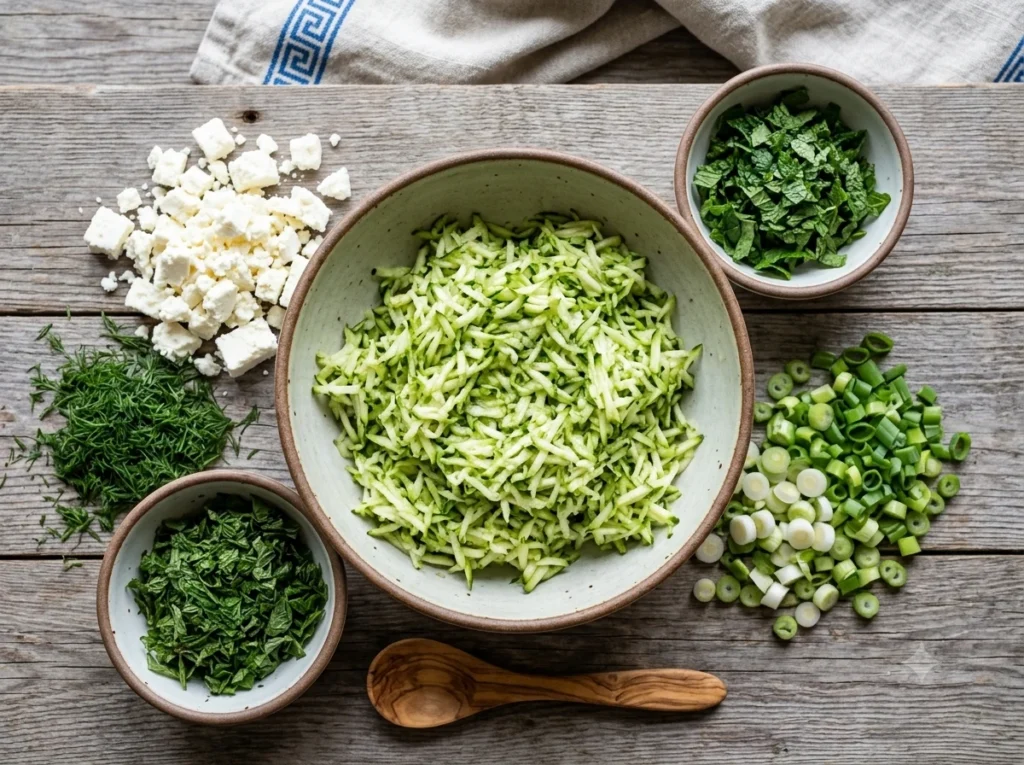
Proper draining is the single most important step in this entire recipe, more important than any specific ratio of ingredients. Salt the grated zucchini, let it rest, and then squeeze it firmly in a towel until you genuinely cannot get any more liquid out. Most home cooks underestimate how much water actually comes out of zucchini; it is often close to half a cup of liquid from a couple of medium zucchini.
Mixing without overworking matters almost as much. Once the drained zucchini, feta, herbs, egg, and flour come together, stir just until combined. Overmixing develops the flour’s gluten more than needed for this dish, leading to a denser, slightly tougher final texture rather than a light, tender interior.
Correct batter consistency should hold together firmly enough to shape into small rounds without being sticky or falling apart. If your mixture feels too wet even after thorough draining, add flour or breadcrumbs a tablespoon at a time rather than all at once, checking consistency as you go.
Shaping evenly, using a small cookie scoop or a rounded tablespoon, ensures each tot cooks in roughly the same amount of time, so you are not left guessing which pieces are done and which need another minute.
Choosing the right cooking method depends on your priorities. Pan-frying delivers the crispest exterior with the least effort. Air frying comes close with far less oil. Baking is the most hands-off but requires careful flipping and slightly longer cooking time to develop real crispness.
To achieve maximum crispiness regardless of method, make sure the tots are not touching each other in the pan, air fryer basket, or baking sheet, since crowding traps steam and softens whatever surface is touching a neighboring piece.
Step-by-Step Technique
1. Grate the zucchini (5 minutes)
Grate zucchini using the large holes of a box grater. There is no need to peel it first.
2. Salt and rest (10-15 minutes)
Toss grated zucchini with a generous pinch of salt and let it sit in a colander or bowl. You will see visible liquid pooling as the salt draws moisture out.
3. Drain thoroughly (2-3 minutes)
Transfer the salted zucchini to a clean kitchen towel or cheesecloth and squeeze firmly over the sink until it feels noticeably dry and compact, with almost no liquid left to release.
4. Mix the ingredients (3-5 minutes)
Combine the drained zucchini with feta, egg, flour, panko, herbs, garlic, green onions, lemon zest, and pepper. Stir just until everything is evenly combined; do not overwork the mixture.
5. Shape the tots (5-8 minutes)
Using a small cookie scoop or rounded tablespoon, form the mixture into small, evenly sized rounds or short cylinders, about one to one and a half inches long.
6. Cook (8-10 minutes total)
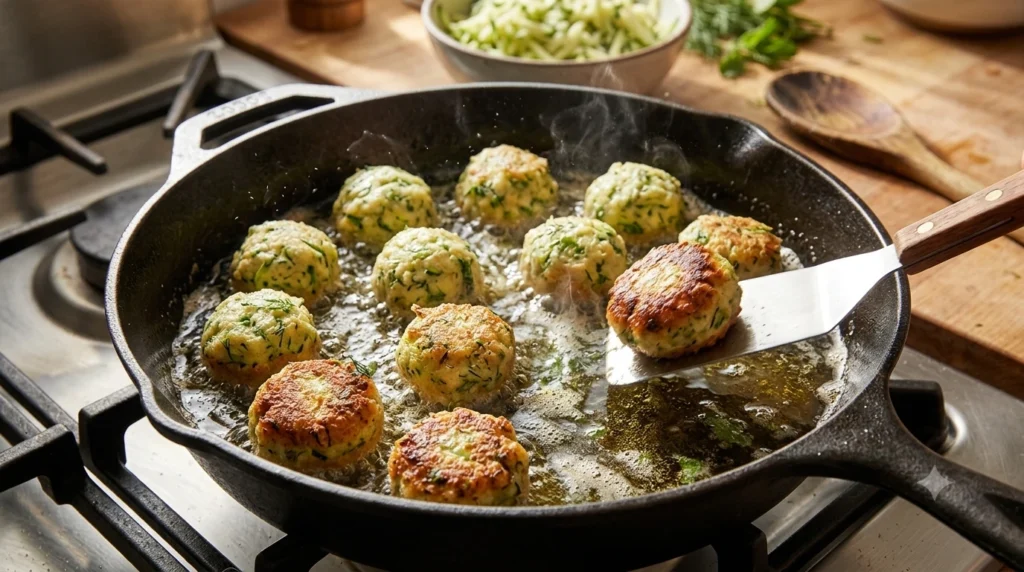
Heat olive oil in a large skillet over medium heat. Add tots in a single layer without crowding, and cook for 3-4 minutes per side, until deeply golden.
7. Turn carefully
Use a thin spatula to flip each tot gently, since the exterior is delicate until it has fully crisped and set.
8. Cool briefly
Let the tots rest on a paper towel-lined plate or wire rack for a minute or two after cooking, allowing the exterior to firm up further.
9. Serve
Serve warm alongside tzatziki or your dip of choice, ideally within the first fifteen minutes for maximum crispness.
Equipment Needed
- Box grater: For quickly and evenly grating zucchini by hand.
- Cheesecloth or clean kitchen towel: Essential for squeezing excess water out of the salted zucchini.
- Mixing bowls: For combining the drained zucchini with the rest of the ingredients.
- Baking sheet: Useful if baking, or for holding shaped tots before cooking.
- Large skillet: For pan-frying; a wide surface allows more tots to cook at once without crowding.
- Air fryer (optional): A lower-oil alternative that still produces a crisp exterior.
- Cookie scoop: Helps shape evenly sized tots quickly and consistently.
Common Mistakes
1. Skipping the salting step entirely. Without salt drawing out moisture first, the zucchini holds onto far more water than squeezing alone can remove. Always salt before draining.
2. Not squeezing the zucchini thoroughly enough. Even salted zucchini holds a surprising amount of water. Squeeze until the mixture feels genuinely dry and compact, not just damp.
3. Overmixing the batter. This develops the flour’s structure too much, resulting in denser, tougher tots instead of a light, tender interior.
4. Using pre-shredded feta instead of block feta. Pre-shredded feta often contains anti-caking agents and holds more moisture, affecting both texture and flavor.
5. Cooking at too low a temperature. A pan that is not hot enough allows the tots to absorb oil and turn greasy rather than developing a crisp, browned exterior.
6. Cooking at too high a temperature. The exterior can burn before the interior finishes cooking through. Medium heat is usually the right balance.
7. Overcrowding the pan. Tots touching each other trap steam between them, softening the sides that are not making direct contact with the pan.
8. Flipping too early. The exterior needs time to set and crisp before it can be turned without falling apart. Wait until a golden crust has clearly formed.
9. Using too little binder. Not enough egg or flour leaves the mixture too loose to hold its shape, causing the tots to fall apart during cooking.
10. Using too much binder. Overloading with flour or breadcrumbs can mute the zucchini and feta flavor and make the texture dense rather than light.
11. Skipping fresh herbs in favor of dried. Dried dill and mint lose much of their aromatic quality, leaving the dish tasting flatter than intended.
12. Not letting the tots rest briefly after cooking. Serving them straight from the pan without a minute to firm up can result in a softer, less crisp bite.
13. Storing warm, freshly cooked tots in a sealed container immediately. This traps steam and softens the crispy exterior. Let them cool slightly first.
14. Reheating in a microwave. This softens the crust significantly. A skillet or oven reheats far more effectively for maintaining crispness.
15. Using overly large zucchini without adjusting draining time. Larger zucchini holds more water and more developed seeds, requiring extra draining time to avoid a soggy result.
Pro Chef Tips
- Salt the zucchini for a full fifteen minutes if you have the time; more resting time draws out more water.
- Squeeze the zucchini in batches rather than all at once for more thorough moisture removal.
- Use block feta and crumble it by hand for the best texture.
- Add lemon zest, not juice, to avoid introducing extra liquid into the mixture.
- Chill the shaped mixture for fifteen minutes before cooking if it feels at all soft; this helps the tots hold their shape better.
- Use a cookie scoop for consistent sizing, which also ensures even cooking times.
- Heat your oil fully before adding the first batch; a properly hot pan is essential for crisping.
- Do not overcrowd the pan; cook in batches if needed.
- Use a thin, flexible spatula for flipping, since the tots are delicate before fully crisping.
- Let cooked tots rest briefly on a wire rack rather than a paper towel-lined plate, which can trap steam underneath.
- Add parmesan alongside feta for a deeper, more savory flavor if you like.
- Taste your feta before adding salt to the mixture; feta varies significantly in saltiness by brand.
- If air frying, lightly spray or brush the tots with olive oil for better browning.
- Keep a close eye on the tots during the last minute of cooking, since browning can go from perfect to burnt quickly at that stage.
- Serve immediately after the brief resting period for the best texture; they soften gradually the longer they sit.
- Freeze uncooked, shaped tots on a baking sheet before transferring to a bag, so they do not stick together.
- Double the herbs if you want a more pronounced Greek flavor profile.
- Use panko rather than regular breadcrumbs for a noticeably crispier finish.
- If your mixture feels too wet even after draining, add breadcrumbs a tablespoon at a time rather than more flour, which can make the texture denser.
- Serve with a squeeze of fresh lemon at the table; a little acid right before eating brightens the whole dish.
Delicious Variations
Air Fryer Version Arrange shaped tots in a single layer in the air fryer basket, lightly brushed with olive oil, and cook at 375°F for 10-12 minutes, flipping halfway through, for a lower-oil result close to pan-frying.
Baked Version Arrange tots on a parchment-lined baking sheet, brushed with olive oil, and bake at 425°F for 20-25 minutes, flipping halfway through for even browning.
Gluten-Free Version Substitute all-purpose flour and panko with a gluten-free flour blend and gluten-free breadcrumbs in equal measure.
Low-Carb Version Replace the flour and breadcrumbs with almond flour or crushed pork rinds for a lower-carb binder, adjusting quantity slightly since almond flour absorbs moisture differently.
Spinach and Feta Version Add a cup of well-drained, chopped cooked spinach to the mixture for an extra vegetable-forward variation, echoing the flavors of spanakopita.
Zucchini and Carrot Tots Add finely grated carrot alongside the zucchini for extra sweetness and color, salting and draining the carrot along with the zucchini.
Extra Herb Version Double the dill, mint, and parsley for a version that leans even further into fresh, herbal brightness.
Spicy Feta Version Mix in a small amount of crushed red pepper flakes or a spoonful of hot honey drizzled over the finished tots for a version with a gentle kick.
Storage & Reheating
Greek Zucchini Tots keep in the refrigerator for up to four days in an airtight container. Let them cool completely to room temperature before sealing, to avoid trapping steam that softens their crispy exterior.
For longer storage, freeze either the shaped, uncooked tots or the fully cooked tots for up to three months. Freezing the uncooked mixture on a baking sheet first, then transferring to a freezer bag once solid, keeps them from sticking together and lets you cook only as many as you need at a time.
To reheat while maintaining crispiness, use a skillet over medium heat with a small amount of oil, or an oven at 375°F for about ten minutes, both of which help restore some of the original crisp texture. A microwave will heat the tots through but will noticeably soften the exterior, so it is the least ideal option if crispness matters to you.
As with any dish containing eggs and dairy, reheat leftovers to an internal temperature of 165°F, and do not leave cooked tots out at room temperature for more than two hours.
What to Serve with Greek Zucchini Tots
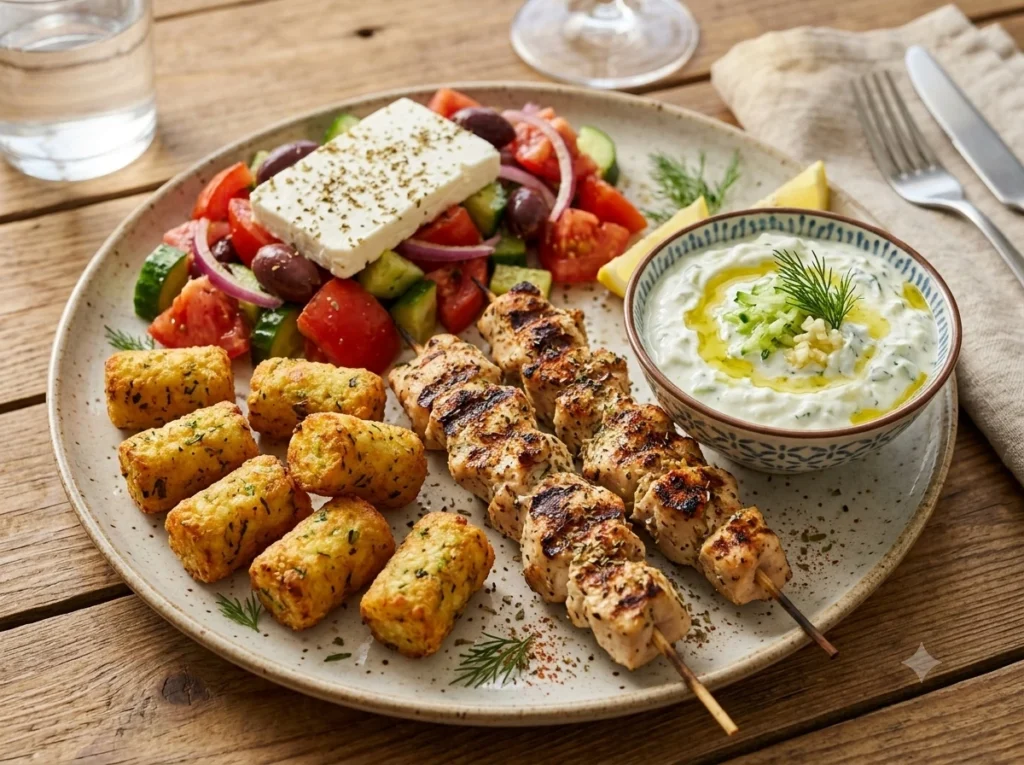
Tzatziki, the classic Greek yogurt and cucumber dip, is the essential pairing, its cool, tangy flavor balancing the tots’ richness and salt perfectly.
A plain Greek yogurt dip, seasoned simply with lemon, garlic, and olive oil, offers a lighter alternative to full tzatziki for those who want less cucumber.
Hummus makes a heartier, protein-rich dip option, especially useful if serving the tots as part of a larger mezze spread.
Lemon aioli, a simple garlic and lemon mayonnaise, adds a rich, tangy contrast that pairs particularly well with the tots’ crispy exterior.
A Greek salad, with tomatoes, cucumber, olives, and feta, rounds out the meal with fresh, acidic contrast.
Grilled chicken, lamb souvlaki, or grilled fish all make excellent main courses alongside these tots as a starter or side.
Roasted vegetables add another vegetable-forward element for a fuller, more balanced Mediterranean-style meal.
For drinks, a crisp Assyrtiko, the signature white wine of Santorini, pairs naturally with the dish’s island-inspired flavors. Sauvignon Blanc offers a similar bright acidity if Assyrtiko is not available. Sparkling water with lemon and iced herbal tea both make refreshing non-alcoholic options.
Frequently Asked Questions
Can I bake Greek Zucchini Tots instead of frying them? Yes. Bake at 425°F on a parchment-lined sheet, brushed with olive oil, for 20-25 minutes, flipping halfway through. The texture will be slightly less crisp than pan-frying but still very good.
Can I air fry them? Yes. Air fry at 375°F for 10-12 minutes, flipping halfway through, lightly brushed with olive oil. This method comes close to pan-fried crispness with much less oil.
Can I freeze Greek Zucchini Tots? Yes, both cooked and uncooked shaped tots freeze well for up to three months. Freeze uncooked tots on a baking sheet first to prevent sticking, then transfer to a freezer bag.
Why are my fritters soggy? This almost always comes down to insufficient draining. Make sure to salt the grated zucchini, let it rest, and squeeze it thoroughly in a towel until very little liquid remains before mixing.
Can I make Greek Zucchini Tots gluten-free? Yes. Substitute a gluten-free flour blend and gluten-free breadcrumbs for the all-purpose flour and panko in equal measure.
Can I use frozen zucchini? You can, but expect a wetter mixture, since freezing breaks down zucchini’s cell structure and releases even more water upon thawing. Drain and squeeze thawed zucchini even more thoroughly than fresh.
Can I make the mixture ahead of time? Yes. The mixture can be prepared and shaped a day ahead, then refrigerated until ready to cook. This can also firm up the mixture, making it easier to shape and handle.
How do I keep them crispy after cooking? Let them rest briefly on a wire rack rather than a paper towel-lined plate, and avoid sealing them in a container while still warm, which traps steam and softens the crust.
Are Greek Zucchini Tots the same as Kolokithokeftedes? Not exactly. Greek Zucchini Tots are a modern, bite-sized adaptation inspired by Kolokithokeftedes, the traditional Greek zucchini fritter, but shaped smaller and more tot-like rather than as a larger, traditional patty.
Can I make these without feta cheese? You can, though feta contributes significant flavor and helps balance the mixture’s moisture. If omitting it, consider adding a bit more salt and possibly parmesan for depth.
Why did my tots fall apart while cooking? This usually means not enough egg or flour was used to bind the mixture, or the tots were flipped before the exterior had time to set and crisp.
Can I make a dairy-free version? Yes, though you will need a feta substitute, such as a plant-based feta alternative, and the flavor and texture will differ somewhat from the traditional version.
What is the best oil for frying these tots? Olive oil is traditional and gives the best flavor, though a neutral oil with a higher smoke point can be used if you prefer a more neutral taste or need to fry at a higher temperature.
Can I make a larger, patty-style version instead of small tots? Yes. Shaping the mixture into larger patties moves closer to a traditional Kolokithokeftedes preparation, though cooking time will need to increase slightly to cook through the center.
How many tots does one batch of this recipe typically make? A standard batch using two medium zucchini typically yields around 20-24 small tots, depending on how large you shape each one.
Recipe Card
Greek Zucchini Tots
| Detail | Info |
|---|---|
| Prep Time | 25 minutes (includes salting and draining) |
| Cook Time | 15 minutes |
| Total Time | 40 minutes |
| Servings | 4 (about 20-24 tots) |
| Cuisine | Greek-inspired |
| Course | Appetizer or Side Dish |
| Calories (estimated) | 220 per serving |
Ingredients
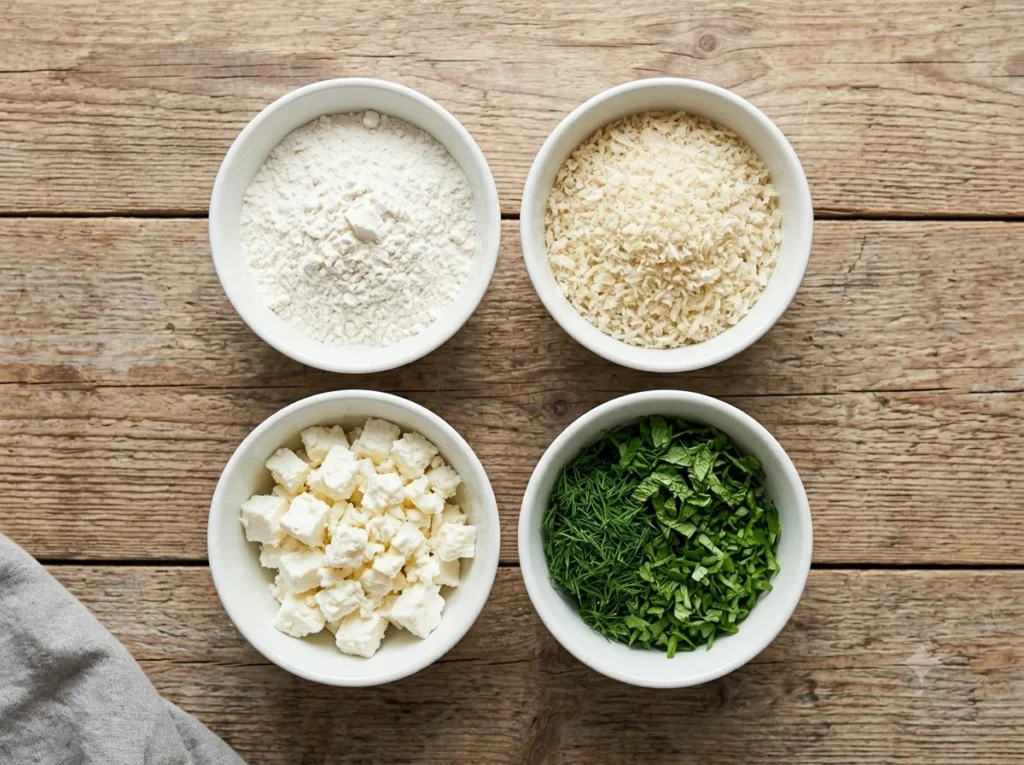
- 2 medium zucchini, grated
- 1 teaspoon salt (for draining)
- 1/2 cup feta cheese, crumbled
- 1 large egg
- 1/3 cup all-purpose flour
- 1/4 cup panko breadcrumbs
- 2 tablespoons parmesan, grated (optional)
- 2 tablespoons fresh dill, chopped
- 1 tablespoon fresh mint, chopped
- 1 tablespoon fresh parsley, chopped
- 1 clove garlic, minced
- 2 green onions, thinly sliced
- 1 teaspoon lemon zest
- 1/4 teaspoon black pepper
- 3-4 tablespoons olive oil, for frying
Instructions
- Grate zucchini using the large holes of a box grater. Toss with salt and let sit in a colander for 10-15 minutes.
- Transfer salted zucchini to a clean kitchen towel and squeeze thoroughly to remove as much liquid as possible.
- In a large bowl, combine drained zucchini, feta, egg, flour, panko, parmesan if using, dill, mint, parsley, garlic, green onions, lemon zest, and black pepper. Stir just until combined.
- Using a small cookie scoop or rounded tablespoon, shape the mixture into small rounds, about one to one and a half inches long.
- Heat olive oil in a large skillet over medium heat.
- Add tots in a single layer, without crowding, and cook for 3-4 minutes per side, until deeply golden and crisp.
- Transfer cooked tots to a wire rack and let rest for a minute or two before serving.
- Serve warm with tzatziki or your preferred dip.
Chef Notes Thorough draining is essential; do not skip the salting and squeezing steps. Use block feta rather than pre-shredded for the best texture.
Storage Notes Refrigerate in an airtight container for up to 4 days, or freeze cooked or uncooked tots for up to 3 months. Reheat in a skillet or oven to maintain crispness.
Nutrition Disclaimer Calorie and nutrition estimates are approximate and will vary based on specific ingredients, cooking method, and portion size used.
Conclusion
Greek Zucchini Tots take everything appealing about Kolokithokeftedes, salty feta, fresh dill and mint, a crisp golden crust, and reshape it into something smaller, easier to share, and easier to fit into a busy week. The technique behind them comes down to one non-negotiable step: draining the zucchini properly, with real patience and a firm squeeze, before anything else happens.
Get that step right, and everything after it, mixing, shaping, cooking, becomes almost foolproof. Make a batch this week, keep some in the freezer for later, and you will have a genuinely useful appetizer on hand any time a Mediterranean-inspired spread, or a hungry kid, calls for something crispy and green.