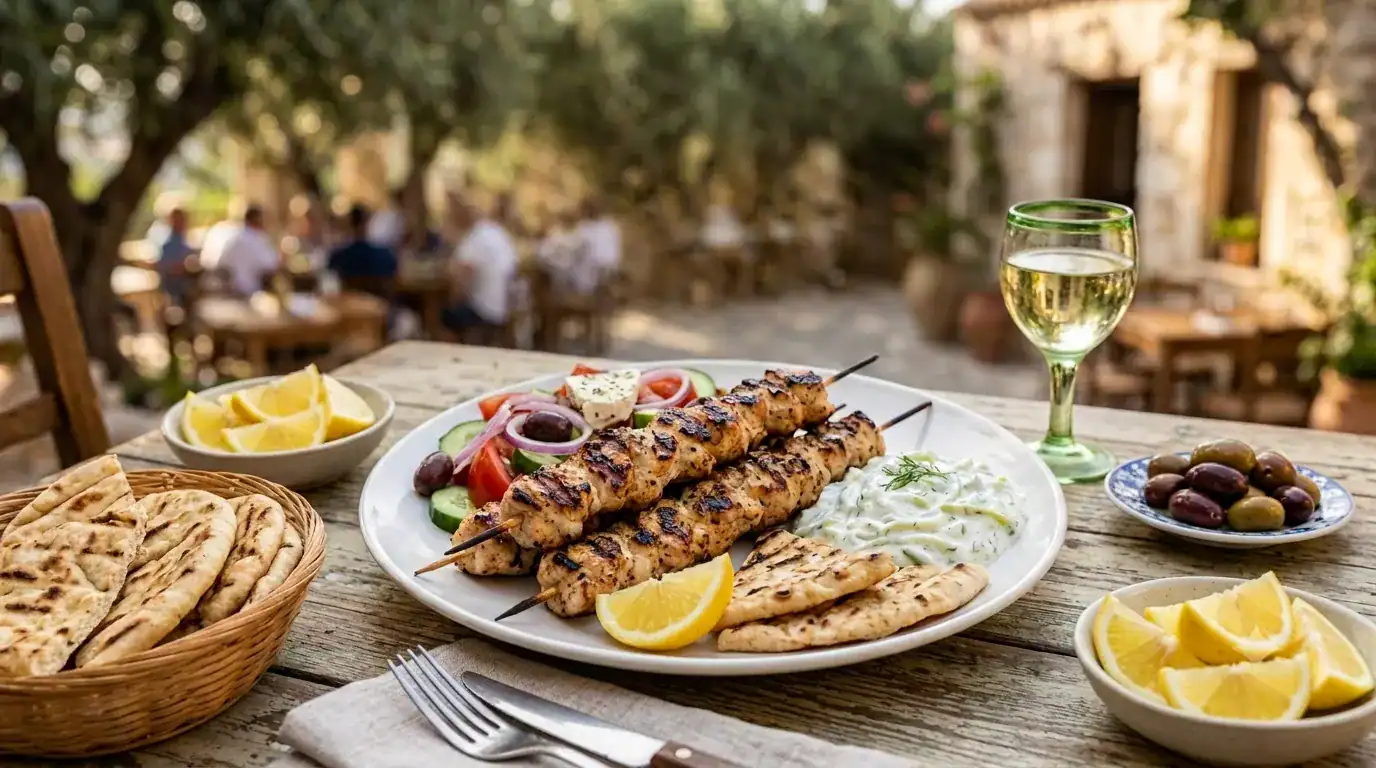
Authentic Chicken Souvlaki with Tzatziki: Juicy Greek Skewers with Creamy Yogurt Sauce
Chicken Souvlaki with Tzatziki is Greek street food at its best: smoky, char-edged chicken skewers pulled straight off the grill and served with a cool, garlicky yogurt sauce that balances every bite. It’s the dish you smell wafting from taverna grills across Greece, and it’s just as easy to recreate in your own backyard.
This guide covers the traditional lemon-garlic marinade, the homemade tzatziki that makes or breaks the dish, and the grilling technique that gives you charred edges without drying out the chicken. You’ll also learn the reasoning behind each step, so you can adjust with confidence instead of just following instructions blindly.
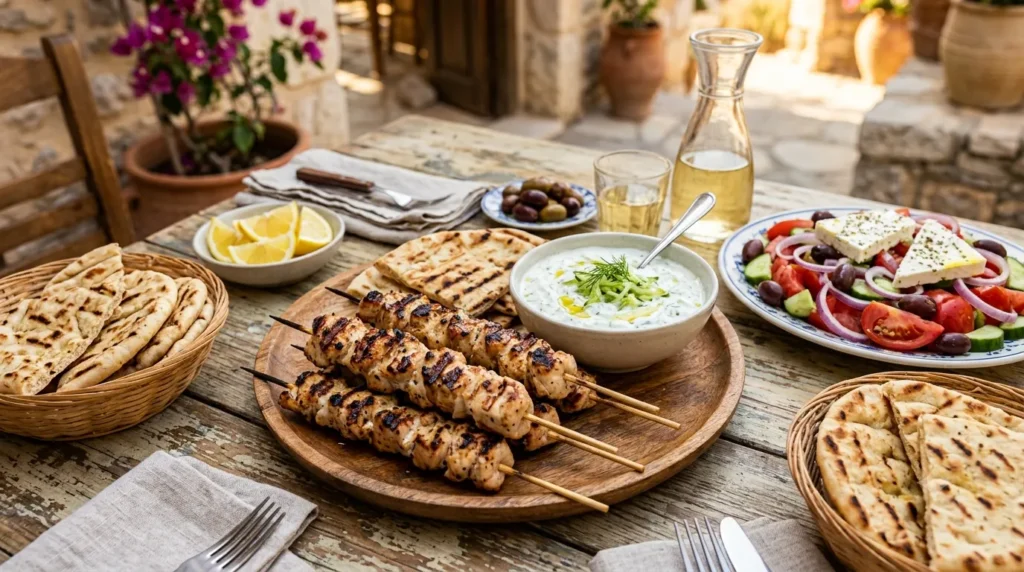
Table of Contents
What Is Chicken Souvlaki with Tzatziki?
Souvlaki (pronounced soo-VLAH-kee) means “little skewer” in Greek, and it refers to small pieces of meat grilled on a stick over an open flame. Chicken Souvlaki with Tzatziki pairs those grilled skewers with tzatziki, a cool sauce made from strained yogurt, cucumber, garlic, and fresh dill.
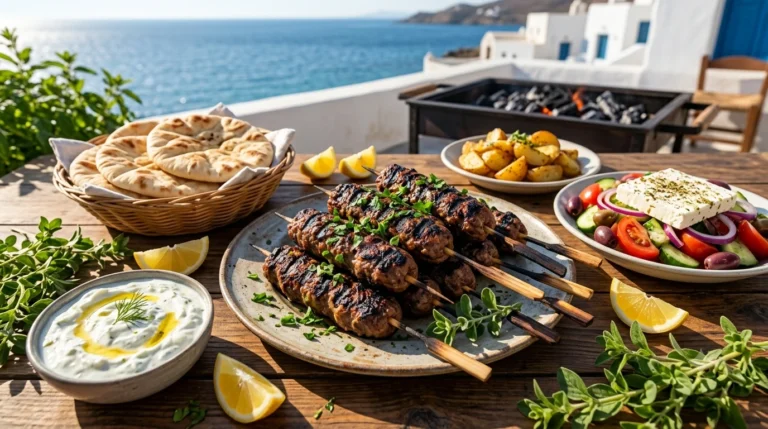
People often confuse souvlaki with gyro or kebab, but they’re distinct. Gyro meat is stacked, roasted vertically on a spit, and shaved off in thin layers. Kebab, a term used more broadly across the Middle East and Mediterranean, can refer to skewered ground or cubed meat cooked in many different styles. Souvlaki specifically refers to cubed meat threaded onto skewers and grilled directly over flame.
How It’s Eaten in Greece
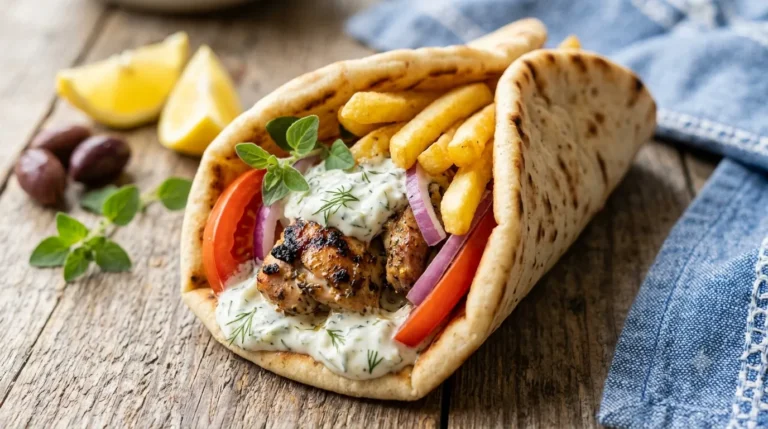
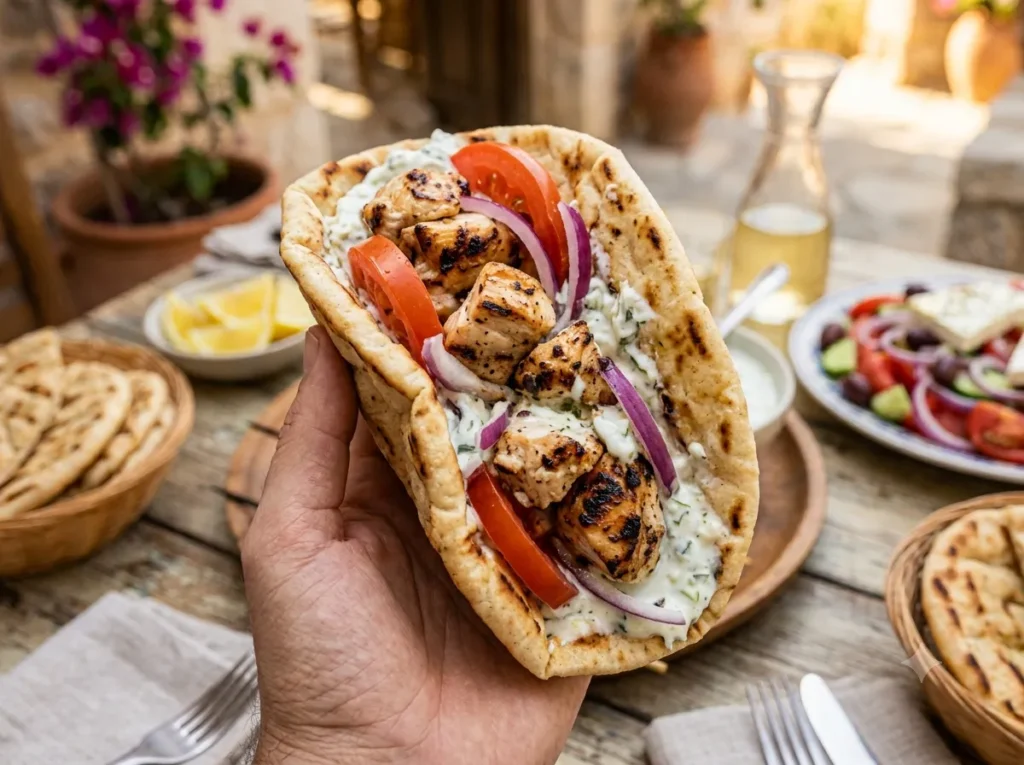
In Greece, souvlaki is often eaten two ways: on its own as a skewer with a side of fries and pita, or wrapped inside warm pita with tzatziki, tomato, onion, and sometimes fries tucked right into the wrap. Both styles work well at home, so feel free to serve it either way.
The History of Chicken Souvlaki with Tzatziki
Skewered, grilled meat has ancient roots in Greece. Archaeological evidence, including sets of bronze skewers and cooking stands found on Santorini, points to grilled meat on skewers being prepared in the region since ancient times. Over centuries, this simple cooking method evolved alongside the growth of Greek cities into the fast, affordable street food recognized today.
Souvlaki became especially popular as urban street food in the 20th century, sold from small stands and carts across Greek cities, where it remains a staple lunch and late-night food. Regional differences exist across Greece, with some areas favoring pork souvlaki over chicken, and variations in the exact herbs and spices used in the marinade. Its combination of speed, affordability, and bold flavor helped it spread well beyond Greece, becoming a familiar dish on Mediterranean menus worldwide.
Why This Recipe Works
- Lemon juice tenderizes the chicken. Its acidity helps break down some of the muscle fibers, resulting in a more tender bite.
- Olive oil carries flavor deep into the meat. Fat-soluble flavor compounds from garlic and herbs dissolve into the oil and coat the chicken evenly.
- Oregano brings the classic Greek aroma. It’s one of the most recognizable herbs in Greek cooking, and it belongs here.
- Tzatziki cools and balances the dish. Its creamy, tangy profile contrasts beautifully with smoky, charred chicken.
- High heat creates char while keeping the center juicy. A hot grill sears the surface quickly, locking in moisture before the interior overcooks.
The Science Behind Juicy Chicken
Protein Denaturation and Marinating Time of Chicken Souvlaki with Tzatziki
Heat and acid both cause proteins in chicken to denature, meaning their structure unfolds and changes. A short marinade with lemon juice begins this process gently, helping the chicken absorb flavor. However, marinating too long allows the acid to break down proteins excessively, leaving the texture mushy instead of tender. Thirty minutes to four hours is the sweet spot for chicken.
Why Thighs Stay Juicier Than Breasts
Chicken thighs contain more fat and connective tissue than breasts, which helps keep them moist even at higher grilling temperatures. Breasts, being leaner, have a much narrower window between perfectly cooked and dry, which is why thighs are generally the more forgiving choice for souvlaki.
Maillard Browning on the Grill
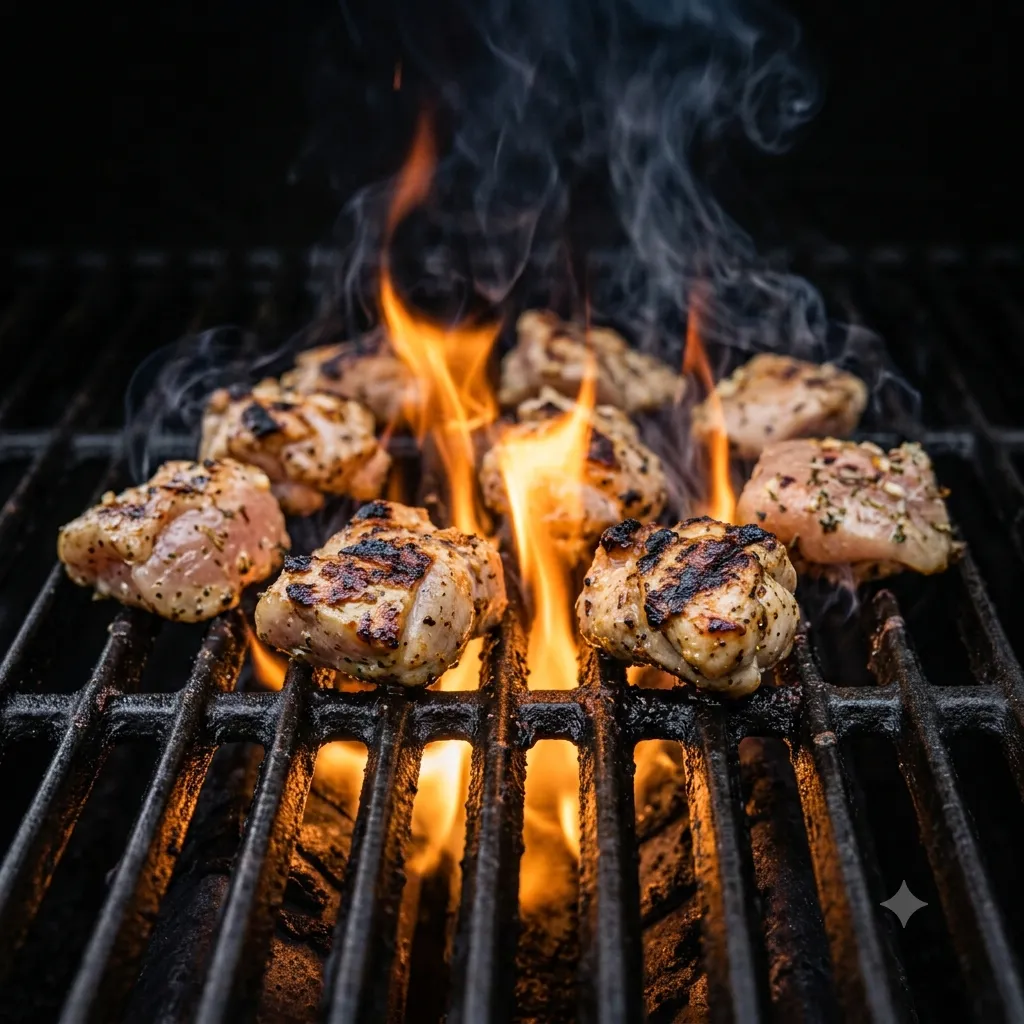
When chicken hits a hot grill, its surface proteins and sugars brown through the Maillard reaction, creating the deep, charred flavor souvlaki is known for. This only happens with direct, high heat, which is why preheating the grill thoroughly matters so much.
Carryover Cooking and Resting
Chicken continues cooking for a few minutes after it comes off the grill, as residual heat keeps working its way through the meat. Resting the skewers briefly before serving allows this carryover cooking to finish evenly and lets juices redistribute, rather than spilling out the moment you cut into the meat.
Choosing the Best Chicken
| Cut | Flavor | Moisture | Cook Time | Beginner Friendliness |
|---|---|---|---|---|
| Chicken thighs | Rich, deep flavor | High | 8–10 minutes | Excellent — very forgiving |
| Chicken breasts | Milder | Lower, dries out easily | 6–8 minutes | Moderate — needs close attention |
| Chicken tenderloins | Mild, tender | Moderate | 5–7 minutes | Good — cooks fast and evenly |
Boneless, skinless chicken thighs are the best choice for souvlaki. They stay juicy even with a few extra minutes on the grill, which takes the pressure off getting the timing exactly right. Chicken breasts can work well too, but they need close monitoring and a slightly shorter cook time to avoid drying out.
Ingredients Explained
- Chicken thighs or breasts: The base of the dish; thighs offer more forgiveness for juiciness.
- Olive oil: Carries fat-soluble flavors from garlic and herbs into the chicken.
- Fresh lemon juice: Adds brightness and helps tenderize the meat.
- Lemon zest: Concentrated lemon aroma without added acidity.
- Garlic: Builds the savory backbone of the marinade.
- Dried oregano: A pantry staple that adds a deep, earthy herbal note.
- Fresh oregano: Brightens the finished dish when added at the end.
- Paprika: Adds color and mild sweetness to the marinade.
- Salt: Essential for both the chicken and the tzatziki.
- Black pepper: Rounds out the seasoning.
- Greek yogurt: The base of tzatziki; its thickness comes from straining out excess whey.
- Cucumber: Adds crunch and freshness; excess moisture must be removed for a thick sauce.
- Dill: A traditional herb in tzatziki that adds a distinct, slightly citrusy note.
- Mint: An optional herb that adds a cooling, fresh contrast.
- Red wine vinegar: Adds tang to the tzatziki alongside the yogurt’s natural acidity.
- Extra virgin olive oil: Finishes the tzatziki with richness and flavor.
- Pita bread: The traditional wrap or side for serving souvlaki.
- Red onion: A classic topping that adds sharp crunch.
- Tomato: Adds juicy freshness to the finished wrap or plate.
Step-by-Step Instructions
1. Cut the chicken. Cut chicken into uniform 1 to 1.5-inch cubes so every piece cooks at the same rate.
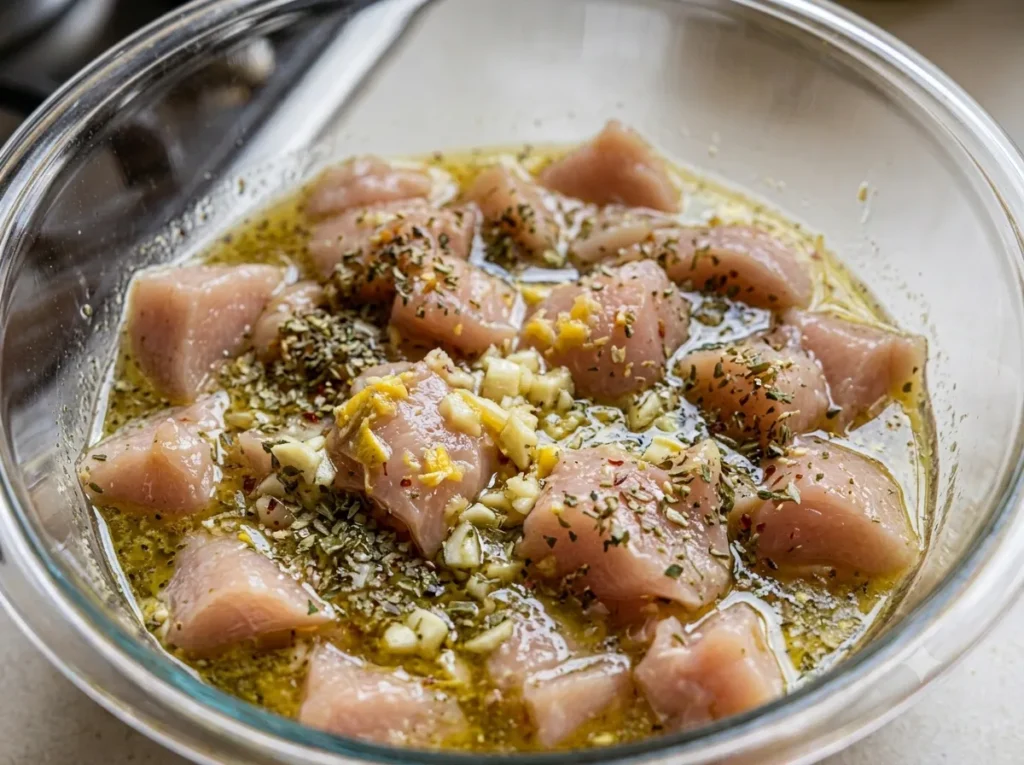
2. Make the marinade. Whisk together olive oil, lemon juice, lemon zest, garlic, dried oregano, paprika, salt, and pepper.
3. Marinate. Toss the chicken in the marinade and refrigerate for 30 minutes to 4 hours. Avoid marinating longer than that, since the acid can start to break down the texture too much.
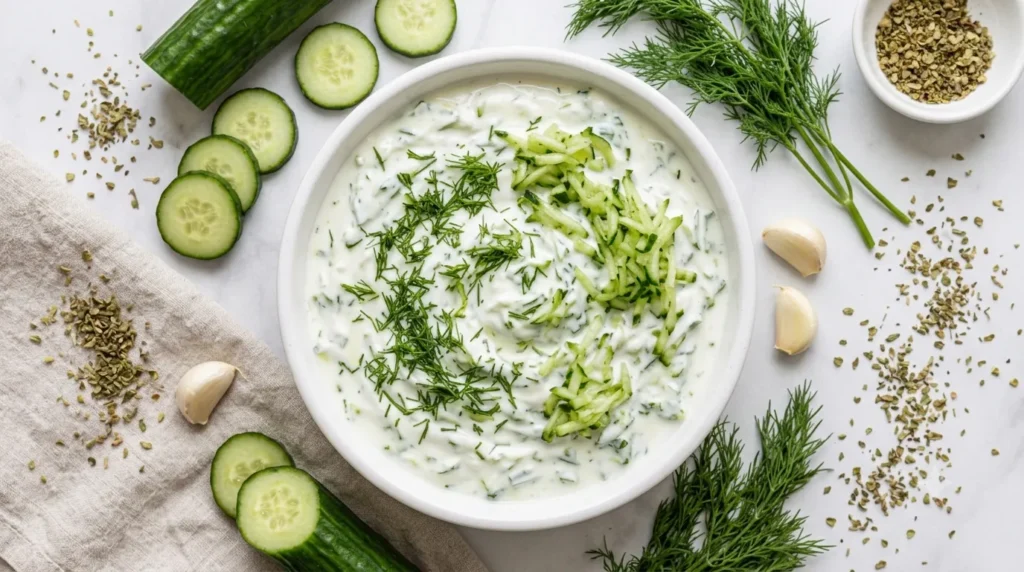
4. Prepare the tzatziki. Grate the cucumber and mix it with the yogurt, garlic, dill, vinegar, and olive oil.
5. Remove excess cucumber moisture. Salt the grated cucumber and let it sit in a strainer for 10–15 minutes, then squeeze out the liquid before mixing it into the yogurt. Skipping this step results in watery tzatziki.
6. Thread the skewers. Thread the marinated chicken onto skewers, leaving a small gap between pieces so heat circulates evenly.
7. Preheat the grill. Heat the grill to medium-high, aiming for direct, consistent heat across the grates.
8. Grill the chicken. Grill for 8–10 minutes, turning every 2–3 minutes, until all sides are charred and golden.
9. Check doneness. Use an instant-read thermometer; chicken is done at 165°F (74°C) at the thickest point.
10. Rest the skewers. Let the chicken rest for 3–5 minutes off the heat before serving.
11. Warm the pita. Warm pita briefly on the grill or in a dry skillet until soft and lightly toasted.
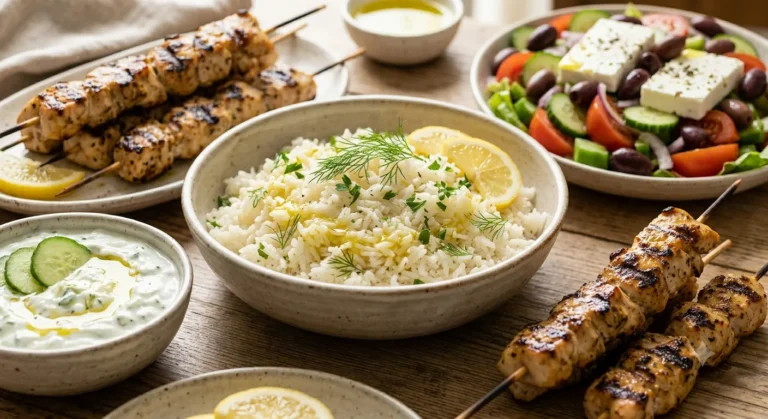
12. Assemble. Layer warm pita with tzatziki, chicken, tomato, and red onion, or serve the skewers on a plate alongside a bowl of tzatziki.
13. Serve. Serve immediately while the chicken is still warm and juicy.
Equipment Needed
- Grill or grill pan
- Metal or soaked wooden skewers
- Mixing bowls
- Chef’s knife
- Box grater
- Fine-mesh strainer
- Tongs
- Instant-read thermometer
Common Mistakes
Common Mistake Callout: Watery tzatziki and dry chicken are the two most common souvlaki failures, and both come down to skipping a single prep step.
- Cutting chicken pieces unevenly. Happens from rushing the prep. Prevent it by cutting uniform 1 to 1.5-inch cubes so everything cooks at the same rate.
- Marinating too long. Happens from assuming more time equals more flavor. Prevent it by staying within 30 minutes to 4 hours; longer breaks down the texture.
- Skipping the salt-and-drain step for cucumber. Happens from wanting to save time. Prevent it by always salting and straining grated cucumber before mixing it into yogurt.
- Using low-fat yogurt for tzatziki. Happens from trying to lighten the dish. Prevent it with full-fat Greek yogurt, which gives a much creamier result.
- Not preheating the grill fully. Happens from impatience. Prevent it by letting the grill reach full temperature before adding skewers; a cool grill won’t char properly.
- Overcrowding skewers. Happens from trying to fit more chicken on fewer skewers. Prevent it by leaving small gaps between pieces for even heat exposure.
- Using wooden skewers without soaking. Happens from forgetting to prep them ahead. Prevent it by soaking wooden skewers in water for at least 30 minutes to avoid burning.
- Turning the skewers too often. Happens from wanting perfectly even color. Prevent it by turning every 2–3 minutes, which allows proper char to develop on each side.
- Not checking internal temperature. Happens from guessing by color alone. Prevent it with an instant-read thermometer at 165°F.
- Using chicken breast without adjusting cook time. Happens from treating all cuts the same. Prevent it by shortening cook time slightly for leaner cuts like breast.
- Skipping the rest period. Happens from serving immediately off the grill. Prevent it by resting skewers 3–5 minutes; this keeps juices in the meat.
- Using bottled lemon juice. Happens from convenience. Prevent it with fresh lemons for brighter, cleaner flavor.
- Adding fresh herbs too early. Happens from combining everything at once. Prevent it by saving fresh oregano for the end so it doesn’t lose its brightness over heat.
- Making tzatziki too far in advance. Happens from meal-prepping too early. Prevent it by making tzatziki no more than a day ahead for the best texture and flavor.
- Serving cold pita. Happens from skipping the warming step. Prevent it by warming pita briefly on the grill or in a dry skillet right before serving.
Pro Greek Chef Tips
- Use bone-in chicken thigh meat cut from the bone for extra flavor if you have time to debone it yourself.
- Zest the lemon before juicing it for easier prep.
- Mince garlic finely so it distributes evenly through the marinade.
- Pat cucumber completely dry after straining for the thickest tzatziki.
- Use full-fat Greek yogurt for the creamiest, most stable tzatziki.
- Let tzatziki rest in the fridge for at least 30 minutes before serving so the flavors meld.
- Oil the grill grates, not just the chicken, to prevent sticking.
- Space chicken pieces slightly apart on skewers for more even charring.
- Use two skewers per portion, laid parallel, to keep chicken from spinning when you turn it.
- Keep a spray bottle of water nearby if flare-ups happen on a live-fire grill.
- Add a pinch of sugar to the marinade to help balance the acidity, if desired.
- Grate garlic on a microplane for tzatziki instead of mincing, for a smoother texture.
- Use fresh dill whenever possible; dried dill has a much milder flavor.
- Add a squeeze of fresh lemon over the finished skewers right before serving.
- Keep extra tzatziki on hand; guests almost always want more.
- Let chicken come to room temperature for about 15 minutes before grilling for more even cooking.
- Use tongs, not a fork, to turn skewers so you don’t pierce the meat and lose juices.
- If grilling indoors, use a well-ventilated grill pan and preheat it thoroughly.
- Add crumbled feta over the assembled pita for extra richness.
- Serve extra lemon wedges on the side for guests who like more acidity.
Delicious Variations
- Pork souvlaki: Use cubed pork shoulder for a traditional alternative to chicken.
- Lamb souvlaki: Use cubed leg of lamb for a richer, more traditional flavor.
- Shrimp souvlaki: Marinate shrimp briefly and grill quickly, since it cooks much faster than chicken.
- Vegetarian halloumi skewers: Grill cubes of halloumi cheese alongside vegetables for a meat-free option.
- Oven-baked version: Broil skewers on a sheet pan lined with foil, turning halfway through.
- Air fryer version: Cook skewers in a single layer at 400°F for about 10–12 minutes, turning halfway.
- Sheet pan version: Skip the skewers entirely and roast cubed chicken with vegetables on a sheet pan.
- Spicy version: Add crushed red pepper flakes or a pinch of cayenne to the marinade.
- Extra-herb version: Add fresh parsley and mint to the marinade for a brighter, greener flavor.
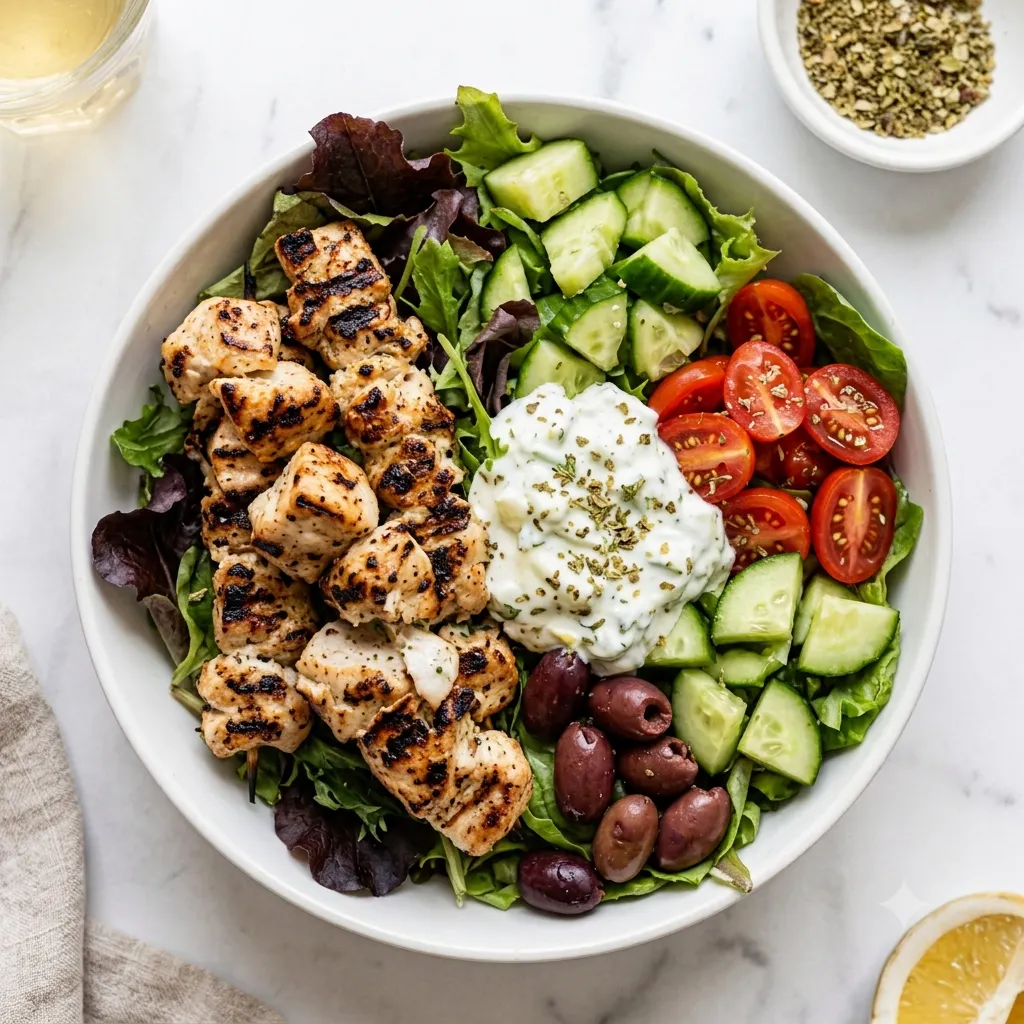
- Low-carb bowl version: Serve the chicken over greens with tzatziki instead of in pita.
Storage & Reheating
Refrigeration: Store cooked chicken and tzatziki separately in airtight containers for up to 4 days.
Freezing marinated chicken: Freeze raw chicken in its marinade for up to 3 months; thaw overnight in the refrigerator before grilling.
Freezing cooked chicken: Cooked skewers can be frozen for up to 2 months, though texture is best when frozen raw in the marinade.
Best reheating methods: Reheat gently in a covered skillet over medium-low heat or in a 300°F oven to avoid drying out the meat.
Food safety: Cool leftovers within two hours of cooking and reheat to an internal temperature of 165°F.
Keeping chicken juicy: Avoid microwaving on high power, which tends to dry out grilled chicken quickly.
Keeping tzatziki fresh: Store tzatziki in an airtight container and stir before serving, since some liquid may separate over time.
What to Serve with Chicken Souvlaki with Tzatziki
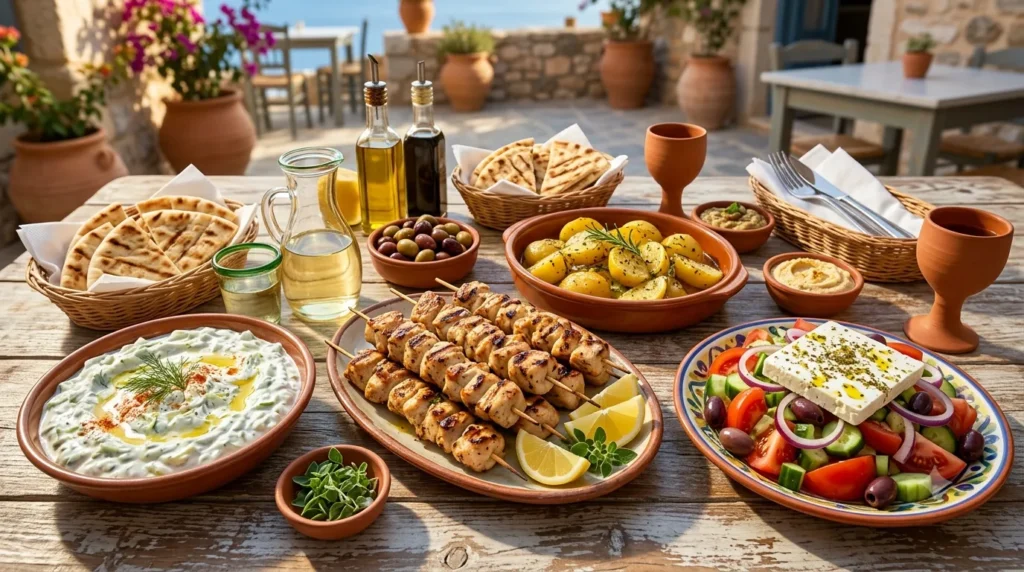
- [Internal Link: Greek Village Salad] (Horiatiki)
- [Internal Link: Greek Lemon Potatoes]
- Rice pilaf
- Grilled vegetables
- Hummus
- Feta cheese
- Olives
- Dolmades
- Greek fries
- [Internal Link: Homemade Pita Bread]
Drink pairings: A glass of Assyrtiko brings bright acidity that complements the char of the grill, while Moschofilero offers a light, floral option. For non-alcoholic pairings, sparkling lemonade, iced tea, or Greek mountain tea all work beautifully alongside the smoky, herby flavors.
Frequently Asked Questions
Can I use chicken breast instead of thighs? Yes, chicken breast works well but requires closer attention, since it dries out more easily than thighs.
How long should I marinate the chicken? Thirty minutes to 4 hours is ideal. Longer than that, and the lemon’s acidity can start to make the texture mushy.
Can I bake the skewers instead of grilling? Yes, broil them on a sheet pan, turning halfway through, for a similar char without an outdoor grill.
Can I make tzatziki ahead of time? Yes, tzatziki can be made up to a day in advance and actually improves as the flavors meld in the refrigerator.
Why is my chicken dry? This usually means it was overcooked or a leaner cut like breast was used without adjusting the cook time.
Can I freeze souvlaki? Yes, raw marinated chicken freezes especially well for up to 3 months.
What is the best yogurt for tzatziki? Full-fat Greek yogurt gives the thickest, creamiest texture and holds up best once strained.
Can I cook chicken souvlaki in an air fryer? Yes, cook skewers in a single layer at 400°F for about 10–12 minutes, turning halfway through.
Do I have to use skewers? No, you can cook the chicken as a sheet pan version without threading it onto skewers at all.
Can I use dried dill instead of fresh in tzatziki? You can, but fresh dill has a noticeably brighter flavor and is worth using if available.
Why is my tzatziki watery? This almost always means the cucumber wasn’t salted and drained thoroughly before mixing it in.
Can I make this recipe dairy free? Tzatziki relies on yogurt for its texture, so a dairy-free yogurt alternative would be needed to keep the dish dairy free.
What’s the ideal grill temperature for souvlaki? Medium-high heat works best, giving you good char without burning the exterior before the inside cooks through.
Can I add vegetables to the skewers? Yes, bell peppers, red onion, and zucchini all grill well alongside the chicken, though they may need slightly different timing.
How do I know when the chicken is fully cooked? Use an instant-read thermometer; the thickest piece should read 165°F (74°C).
Recipe Card
Authentic Chicken Souvlaki with Tzatziki
| Detail | Information |
|---|---|
| Prep Time | 20 minutes |
| Marinating Time | 1 hour |
| Cook Time | 10 minutes |
| Total Time | 1 hour 30 minutes |
| Servings | 4 |
| Cuisine | Greek, Mediterranean |
| Course | Main Dish |
| Calories (estimated) | Approximately 420 per serving |
Ingredients
For the Chicken:
- 1.5 lbs boneless, skinless chicken thighs, cubed
- 3 tablespoons olive oil
- Juice of 1 lemon
- Zest of 1 lemon
- 3 cloves garlic, minced
- 1 teaspoon dried oregano
- 1 teaspoon paprika
- Salt, to taste
- Black pepper, to taste
For the Tzatziki:
- 1 cup Greek yogurt
- 1/2 cucumber, grated and drained
- 1 clove garlic, grated
- 1 tablespoon fresh dill, chopped
- 1 teaspoon red wine vinegar
- 1 tablespoon extra virgin olive oil
- Salt, to taste
For Serving:
- Pita bread
- Red onion, sliced
- Tomato, sliced
Instructions
- Cut chicken into uniform 1 to 1.5-inch cubes.
- Whisk together olive oil, lemon juice, lemon zest, garlic, oregano, paprika, salt, and pepper.
- Toss chicken in the marinade and refrigerate 30 minutes to 4 hours.
- Salt grated cucumber and drain 10–15 minutes, then squeeze out excess liquid.
- Mix drained cucumber with yogurt, garlic, dill, vinegar, olive oil, and salt for the tzatziki.
- Thread chicken onto skewers, leaving small gaps between pieces.
- Preheat grill to medium-high.
- Grill skewers 8–10 minutes, turning every 2–3 minutes, until charred and cooked through.
- Check for an internal temperature of 165°F.
- Rest skewers 3–5 minutes.
- Warm pita, then serve with tzatziki, tomato, and red onion.
Chef Notes For extra char, finish the skewers over direct high heat for the final minute of grilling.
Storage Notes Refrigerate chicken and tzatziki separately for up to 4 days, or freeze raw marinated chicken for up to 3 months.
Nutrition Disclaimer Nutritional values are estimates only and will vary based on specific ingredients and brands used.
[Image Placeholder – 1:1 Image: Overhead flat-lay of plated chicken souvlaki with tzatziki, styled for social sharing.]
- ALT text: Plated chicken souvlaki with tzatziki recipe card image
- SEO filename: plated-chicken-souvlaki-tzatziki.jpg
[Image Placeholder – 9:16 Image: Vertical Pinterest-style image of chicken souvlaki skewers with bold text overlay space at the top.]
- ALT text: Pinterest pin for Authentic Chicken Souvlaki with Tzatziki recipe
- SEO filename: chicken-souvlaki-tzatziki-pinterest.jpg
[Internal Link: Authentic Homemade Tzatziki]
Conclusion
Authentic Chicken Souvlaki with Tzatziki brings the taste of a Greek taverna straight to your own grill. Once you understand why the marinade works, why resting matters, and how to keep tzatziki thick and creamy, you’ll be able to make this dish with confidence any night of the week.
If your family loved this recipe, save it for your next backyard cookout, leave a comment letting us know how it turned out, and explore more authentic Greek recipes on Foxenergie.com.