
Easy Chinese Beef Stir Fry Recipe – Tender, Juicy & Ready in 30 Minutes
Chinese Beef Stir Fry has a specific sound and smell before it even hits the table. Beef sizzling against hot metal. Garlic and ginger hitting oil. A sauce that goes from thin and watery to thick and glossy in under a minute. If your homemade beef stir fry has never come close to that, the problem usually isn’t the recipe. It’s the beef itself, and how it’s handled before it ever touches the wok.
This Chinese Beef Stir Fry recipe leans on a technique Chinese restaurant kitchens use every single service: velveting. It’s a short process that coats the beef in cornstarch and sometimes a pinch of baking soda before cooking, and it’s the real reason takeout beef stir fry tastes so much more tender than most home versions. Once you know how to do it, a weeknight beef stir fry stops being a gamble and starts being something you can pull off with your eyes half closed.
Below, you’ll get the full method: which cut of beef actually works best, how to slice it, how the sauce comes together, and the exact order of operations that keeps the beef juicy and the vegetables crisp instead of gray and soggy. There’s also a rundown of the most common mistakes home cooks make with beef stir fry, twenty professional tips, several variations, and a complete recipe card at the end.
Table of Contents
What Is Chinese Beef Stir Fry?
Chinese Beef Stir Fry is thinly sliced beef cooked fast over very high heat, usually alongside vegetables, in a savory sauce built from soy sauce, oyster sauce, and aromatics like garlic and ginger. It’s one of the most ordered dishes at Chinese restaurants across the US, and for good reason. The beef comes out tender, the sauce clings to everything without drowning it, and the whole plate has a kind of glossy, deeply savory finish that’s hard to get from most other quick-cooking methods.
Stir-frying isn’t the same as sautéing, even though they can look similar from across the kitchen. Sautéing usually happens over medium-high heat, with food resting in the pan a bit longer between stirs. Stir-frying happens at much higher heat, with constant motion, and it’s designed to cook food in minutes rather than in a slow, steady sear. That speed is exactly why a good beef stir fry can go from raw ingredients to dinner in around 30 minutes, prep included.
It’s a natural fit for a busy weeknight. Once the beef and vegetables are cut and the sauce is mixed, the actual cooking takes less time than it takes rice to finish steaming. And despite how complex the flavor tastes, the ingredient list is short: beef, a handful of pantry sauces, garlic, ginger, and whatever vegetables you have around.
Why This Easy Chinese Beef Stir Fry Works
A handful of things need to happen at once for beef stir fry to actually taste like it came from a restaurant.
- Tender, juicy beef. Achieved through the right cut, correct slicing, and velveting, not luck.
- Crisp-tender vegetables. Vegetables go in based on how long they take to cook, so nothing turns to mush.
- Savory umami sauce. Soy sauce and oyster sauce provide the backbone, with a little sugar and Shaoxing wine rounding things out.
- Fast cooking time. Once everything is prepped, the actual cooking is done in well under ten minutes.
- One-pan convenience. Everything, sauce included, happens in a single wok or skillet.
- Easy-to-find ingredients. Nothing here requires a special trip to a specialty grocer, aside from maybe Shaoxing wine.
Skip any one of these and the dish still comes out edible. Hit all of them, and it comes out tasting like something you’d order again.
The Science Behind Restaurant-Style Stir Fry
High heat and the Maillard reaction. Stir-frying relies on heat far above what a typical home burner reaches at a normal setting. That intense heat triggers the Maillard reaction almost instantly, browning the surface of the beef and building the deep, savory flavor that plain boiling or steaming can’t produce.
Wok hei, the “breath of the wok.” Professional wok cooks talk about wok hei, a slightly smoky, charred aroma that comes from food briefly touching an extremely hot wok surface, sometimes with a bit of direct flame contact. Most home stoves can’t fully replicate the intensity restaurant burners produce, but preheating the pan properly and not overcrowding it gets you meaningfully closer.
Velveting with cornstarch and baking soda. Velveting coats beef in a thin layer of cornstarch, sometimes with a small amount of baking soda added to the marinade. The cornstarch forms a protective barrier that holds moisture in during high-heat cooking. Baking soda raises the surface pH of the meat slightly, which interferes with the proteins that cause toughness, making even a leaner cut taste noticeably more tender.
Why batches matter. Cooking beef in a single crowded layer drops the wok’s temperature fast, and once that happens, the beef starts steaming in its own juices instead of searing. Cooking in smaller batches keeps the pan hot enough for a proper sear every time.
Moisture control. Wet beef, straight from a marinade without being patted or from a rinse, lowers the temperature of the oil the second it hits the pan. That temperature drop is one of the most common reasons stir-fried beef ends up gray and chewy instead of browned and tender.
How cornstarch thickens sauce. Cornstarch mixed with a small amount of cold liquid, then stirred into the hot sauce near the end of cooking, thickens almost instantly as it heats. This is what gives stir-fry sauce its glossy, clinging texture instead of a thin, watery consistency.
Choosing the Best Beef
| Cut | Marbling | Tenderness | Flavor | Price | Best For |
|---|---|---|---|---|---|
| Flank Steak | Low | Moderate, needs correct slicing | Beefy, slightly coarse grain | Moderate | Classic stir-fry texture |
| Sirloin Steak | Moderate | Good | Balanced, mild | Moderate | Reliable everyday choice |
| Skirt Steak | Moderate | Good when sliced thin | Rich, slightly chewy grain | Moderate to high | Bold flavor lovers |
| Flat Iron Steak | Good | Very tender | Rich, buttery | Moderate to high | Best overall for beginners |
| Ribeye | High | Very tender | Rich, fatty | High | Splurge-worthy stir fry |
Flat iron steak is the easiest recommendation for a beginner, since it’s naturally tender even without much technique, and it holds up well to high heat without drying out. Flank steak is the traditional choice in a lot of Chinese-American beef stir fry recipes, and it works beautifully as long as it’s sliced correctly. Sirloin is a solid, budget-friendly middle ground. Ribeye brings the richest flavor of the group, though it comes at a higher price point that doesn’t always make sense for a quick weeknight dish.
How to slice beef against the grain. Look closely at the surface of the meat and you’ll see thin lines running in one direction. Those are the muscle fibers. Slicing against the grain means cutting perpendicular to those lines, which shortens the individual fibers in each bite. Skip this step, even with a naturally tender cut, and the beef will taste noticeably chewier than it should. A slight angle while slicing, rather than a straight-down cut, also increases the surface area of each piece, which helps it cook faster and pick up more sauce.

Ingredients Explained
- Beef: The centerpiece of the dish; cut and cooked correctly, it’s what separates a good stir fry from a great one.
- Light soy sauce: The main salty, savory component of the sauce.
- Dark soy sauce: Adds color and a slightly deeper, less salty flavor than light soy sauce alone.
- Oyster sauce: Brings a thick, savory-sweet richness and a bit of natural body to the sauce.
- Shaoxing wine: A Chinese cooking wine that adds depth and helps balance the saltiness of the soy and oyster sauces.
- Cornstarch: Used both to velvet the beef and to thicken the finished sauce.
- Baking soda: An optional velveting ingredient that tenderizes tougher cuts by altering surface pH.
- Sesame oil: Added at the very end for a nutty, aromatic finish; too much heat destroys its flavor quickly.
- Garlic: Builds the aromatic foundation alongside ginger.
- Fresh ginger: Adds brightness and a little heat that keeps the sauce from tasting flat.
- Brown sugar or honey: Balances the saltiness of the soy sauces with a touch of sweetness.
- Beef broth: Loosens the sauce and adds savory depth without piling on more sodium.
- Black pepper: A simple background note that rounds out the sauce.
- Neutral cooking oil: Needs a high smoke point to handle stir-fry heat without burning or turning bitter.
- Green onions: Added near the end for a fresh, sharp finish.
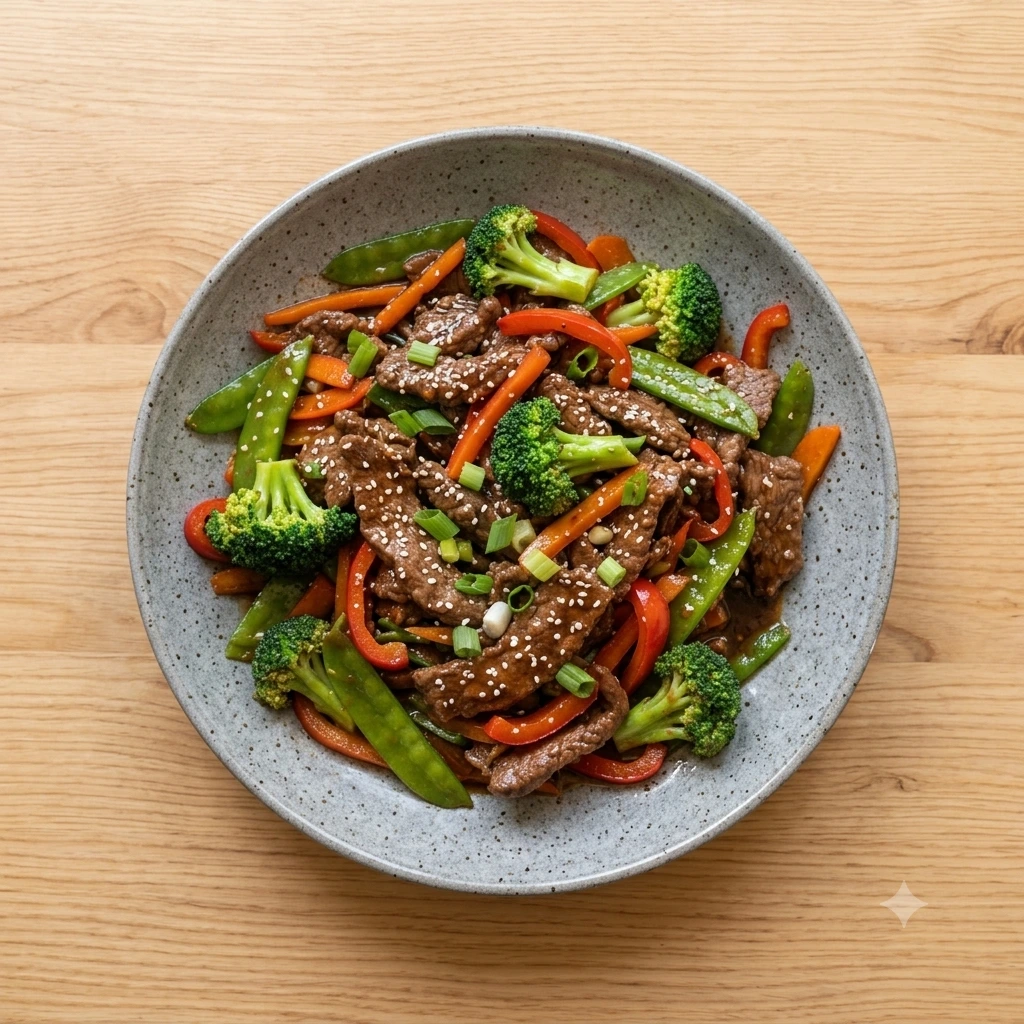
- Vegetables: Broccoli, bell peppers, carrots, snow peas, mushrooms, and onions all work well, each adding its own texture and cooking time to manage.
Step-by-Step Technique
Cooking Timeline Overview
| Step | Approximate Time |
|---|---|
| Slicing beef and vegetables | 10 minutes |
| Velveting the beef | 15–20 minutes (mostly resting time) |
| Making the sauce | 3 minutes |
| Cooking the beef | 3–4 minutes |
| Cooking the vegetables | 4–5 minutes |
| Combining and finishing | 2 minutes |
| Total | About 30 minutes |
1. Preparing the beef. Slice against the grain into thin, even strips, about a quarter inch thick.
2. Velveting. Toss the sliced beef with cornstarch, a splash of Shaoxing wine or water, and a small pinch of baking soda if using. Let it sit for 15 to 20 minutes at room temperature.
3. Preparing vegetables. Cut vegetables into similar-sized pieces, grouped by how long each one takes to cook.
4. Making the sauce. Whisk together soy sauce, dark soy sauce, oyster sauce, beef broth, sugar or honey, and a small amount of cornstarch. Set aside within reach of the stove.
5. Preheating the wok. Heat the wok until it’s very hot, then add oil and swirl it around until it shimmers.
6. Cooking beef in batches. Add the beef in a single layer without crowding the pan, and let it sear undisturbed for about a minute before stirring. Remove once it’s browned but not fully cooked through, since it will finish later.
7. Cooking vegetables. Add more oil if needed, then cook the firmer vegetables first, followed by the faster-cooking ones.
8. Combining everything. Return the beef to the pan with the vegetables.
9. Reducing the sauce. Pour in the sauce and cook, stirring, until it thickens and coats everything in a glossy layer.
10. Final seasoning. Stir in sesame oil and green onions off the heat.
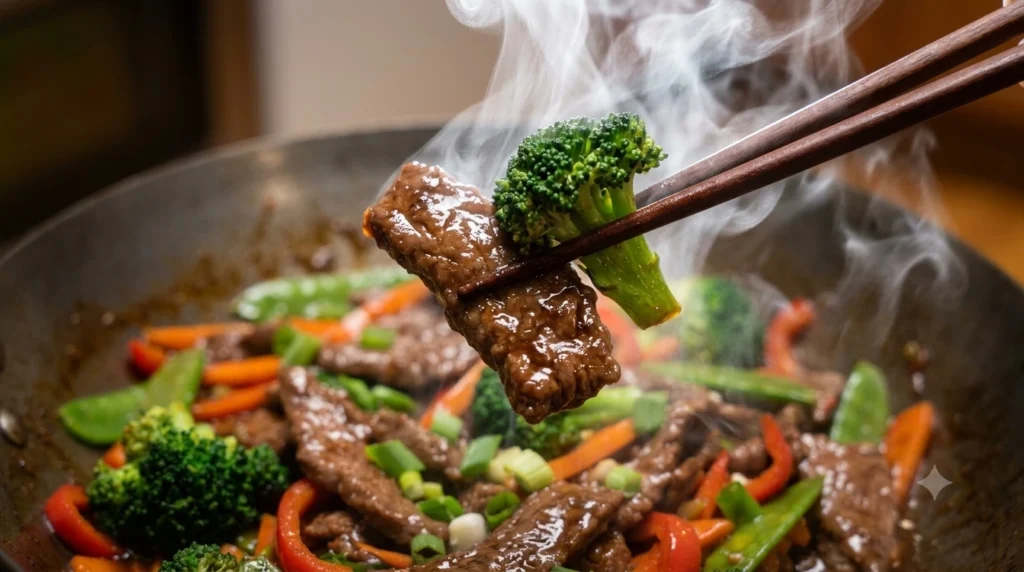
11. Serving. Serve immediately while the vegetables are still bright and the beef is still warm and glossy with sauce.
Visual and texture cues: the beef should look browned at the edges with a slightly pink center when removed from the pan, since it finishes cooking later. The sauce is ready when it’s thick enough to coat the back of a spoon rather than pooling thin at the bottom of the wok.

The Secret to Tender Beef
Tender beef stir fry comes down to a short list of factors, and they all matter.
- Velveting. The single biggest factor separating restaurant beef from home-cooked beef. A thin cornstarch coating protects the meat from drying out over high heat.
- Cornstarch coating. Even without baking soda, cornstarch alone makes a real difference in moisture retention.
- Baking soda method. Raises the pH slightly at the surface of the meat, which slows down the protein bonds that cause toughness. A little goes a long way; too much leaves a slightly soapy taste or a mushy texture.
- Proper slicing. Cutting against the grain shortens muscle fibers, which is often more important than the specific cut of beef used.
- Cooking time. Beef only needs a minute or two of direct heat. Anything longer and it starts to seize up and toughen.
- Resting the meat. Letting sliced beef sit for a few minutes after cutting, and again briefly after cooking, helps it hold onto more of its natural juices.
Equipment Needed
- Carbon steel wok: Heats fast and holds high heat well, which makes a real difference in how the beef sears.
- Large skillet: A workable substitute if a wok isn’t available, as long as it’s wide enough to avoid crowding.
- Chef’s knife: Needed for clean, even slicing of both beef and vegetables.
- Mixing bowls: For velveting the beef and whisking the sauce ahead of time.
- Wooden spatula or wok spatula: Sturdy enough for high-heat tossing without scratching the pan’s surface.
- Measuring spoons: Useful for keeping the sauce balanced.
- Instant-read thermometer (optional): Handy if you want to double-check doneness, though visual cues usually work fine for thin-sliced beef.
Common Mistakes
- Skipping velveting entirely. Leads to noticeably tougher beef. Fix: even a quick cornstarch coating helps.
- Slicing with the grain instead of against it. Makes the beef chewy no matter how good the cut. Fix: identify the muscle fiber direction before slicing.
- Overcrowding the wok. Drops the pan’s temperature and causes steaming instead of searing. Fix: cook beef in smaller batches.
- Using a cold pan. Beef sticks and releases moisture too early. Fix: preheat until the oil shimmers before adding anything.
- Cooking the beef all the way through in the first pass. Leaves it overcooked once it’s combined again later. Fix: remove it slightly underdone and let it finish with the sauce.
- Adding vegetables all at once. Some end up mushy while others stay raw. Fix: stagger vegetables by cooking time.
- Using wet beef straight from the fridge. Lowers pan temperature and prevents browning. Fix: pat dry before it hits the oil.
- Skipping the resting period after slicing. Rushed beef doesn’t hold moisture as well. Fix: let sliced beef sit for a few minutes before cooking.
- Adding too much baking soda. Produces a slightly slippery, soapy texture. Fix: use only a small pinch, around a quarter teaspoon per pound of beef.
- Adding sauce too early. Simmers the vegetables into mush instead of letting them sear. Fix: add sauce only near the very end.
- Not thickening the sauce properly. Leaves a thin, watery result that doesn’t cling to anything. Fix: use a proper cornstarch slurry.
- Using low smoke-point oil. Burns and turns bitter at stir-fry temperatures. Fix: stick to avocado, peanut, or another neutral, high smoke-point oil.
- Stirring constantly instead of letting the beef sit. Prevents browning from forming at all. Fix: let it sear undisturbed for the first 30 to 45 seconds.
- Adding sesame oil too early in the cooking process. High heat destroys its flavor. Fix: stir it in at the very end, off the heat.
- Not tasting the sauce before serving. Soy sauce brands vary widely in saltiness. Fix: taste and adjust just before plating.

Pro Chef Tips
- Slice beef while it’s still slightly frozen for cleaner, thinner cuts.
- Always slice against the grain, even with naturally tender cuts.
- Use a light hand with baking soda. A quarter teaspoon per pound of beef is plenty.
- Let velveted beef rest at room temperature rather than in the fridge for a more even sear.
- Mix the sauce before you start cooking, since stir-frying moves too fast to measure mid-process.
- Preheat the wok for at least a minute before adding any oil.
- Add oil in a thin stream around the edges of the wok so it coats the surface evenly.
- Don’t touch the beef for the first 30 seconds after it hits the pan, so it can develop color.
- Remove beef slightly underdone and let it finish cooking once combined with the sauce.
- Group vegetables by cooking time before turning on the stove.
- Add garlic and ginger for only about 30 seconds before adding other ingredients, since they burn fast.
- Keep a small dish of broth nearby to deglaze the pan if anything starts sticking.
- Use a wide spatula and a tossing motion instead of gentle stirring.
- Taste the sauce on its own first to check the balance between salty, sweet, and savory.
- Reduce the sauce specifically over the vegetables at the end, not over the beef, to avoid overcooking the meat further.
- Finish with green onions off the heat so they stay bright and fresh.
- Toast sesame seeds separately if using them as a garnish, for a deeper flavor.
- Cut vegetables slightly larger than you think you need, since some will shrink with heat.
- If prepping for meal prep, slightly undercook the vegetables since they continue softening after reheating.
- Let the wok fully reheat between batches so each round of ingredients gets the same sear.
Variations
- Beef and Broccoli Stir Fry: The most classic version, pairing beef with steamed or blanched broccoli in the same savory sauce.
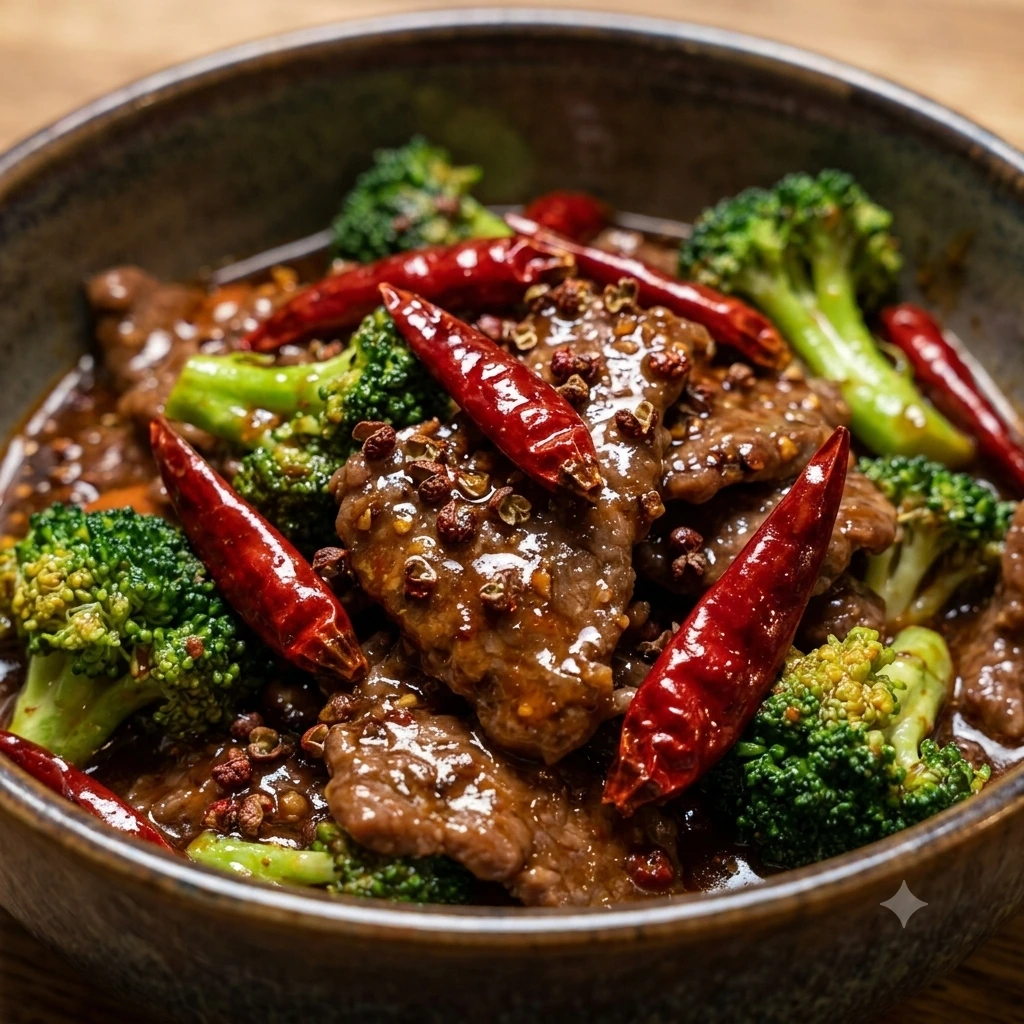
- Spicy Sichuan Beef Stir Fry: Adds dried chilies and a small amount of Sichuan peppercorns for heat and a distinctive tingling sensation.
- Garlic Black Pepper Beef: Leans heavily on cracked black pepper and extra garlic for a punchier, less sweet profile.
- Mongolian-Style Beef: Uses a sweeter, thicker sauce built around soy sauce and brown sugar, often served over crispy noodles.
- Mushroom Beef Stir Fry: Adds mushrooms for an earthy, meaty texture that pairs naturally with the beef.
- Low-Carb Version: Serves the stir fry over cauliflower rice and reduces the sugar in the sauce.
- Gluten-Free Version: Swaps in tamari or a certified gluten-free soy sauce alternative.
- Extra-Spicy Version: Adds fresh sliced chilies or a spoonful of chili garlic sauce directly into the finished dish.
Storage & Meal Prep
Refrigeration. Store leftover beef stir fry in an airtight container in the refrigerator for up to four days.
Freezing. The dish can be frozen for up to two months, though the vegetables will soften somewhat after thawing. Freeze in flat, sealed portions so it thaws faster.
Best reheating methods. A hot skillet for a couple of minutes works better than a microwave, since direct heat helps bring back some of the beef’s texture. If microwaving, cover loosely and heat in short bursts, stirring between each one.
Meal prep tips. Slightly undercook the vegetables if you’re planning to store and reheat the dish later, since they’ll keep softening. Store rice separately so it doesn’t turn soggy sitting in the sauce.
Food safety. Cool the dish to room temperature within two hours of cooking before refrigerating it, and reheat beef to an internal temperature of 165°F before eating leftovers.
What to Serve with Chinese Beef Stir Fry
- Steamed jasmine rice: A simple, classic base that soaks up the sauce.
- Egg fried rice: Adds extra texture and turns the meal into something heartier.
- Brown rice: A fiber-rich alternative with a nuttier flavor.
- Lo mein: Chewy wheat noodles that pair naturally with a savory sauce.
- Rice noodles: A gluten-free noodle option with a lighter texture.
- Vegetable fried rice: Adds another layer of vegetables without competing with the stir fry itself.
- Steamed bok choy: A simple, clean-tasting side that balances the richness of the beef.
- Hot and sour soup: A tangy, warming starter that complements the savory main dish.
- Egg drop soup: A gentle, comforting way to start the meal.
- Spring rolls: A crisp appetizer that adds textural contrast.
- Chinese tea pairings: A pot of jasmine or oolong tea works well alongside the richness of the sauce.

Frequently Asked Questions
1. Why is my beef tough? Tough beef usually comes down to slicing with the grain instead of against it, skipping velveting, or overcooking the meat during the first sear. Any one of these on its own can ruin the texture.
2. Can I use frozen beef? Yes, as long as it’s fully thawed and patted dry before slicing. Partially frozen beef is actually easier to slice thinly and evenly.
3. Can I skip the baking soda? Yes. Cornstarch alone still improves tenderness significantly. Baking soda is an extra step for tougher or leaner cuts, not a requirement.
4. Can I make Chinese Beef Stir Fry ahead of time? Yes. Slice and velvet the beef, prep the vegetables, and mix the sauce up to a day in advance, storing everything separately until you’re ready to cook.
5. Can I freeze it? Yes, for up to two months, though the vegetables will lose some crispness once thawed and reheated.
6. Can I use chicken instead of beef? Yes. The technique is nearly identical, though chicken generally needs a slightly shorter velveting time since it’s more delicate than beef.
7. How do restaurants make beef so tender? Mainly through velveting with cornstarch and sometimes baking soda, combined with very high heat and short cooking times that most home stoves can’t fully match but can get close to.
8. Can I use bottled stir-fry sauce? Yes, though a homemade sauce gives better control over saltiness and sweetness and usually tastes fresher.
9. Why is my sauce watery? This usually means the cornstarch slurry wasn’t added correctly, or the sauce wasn’t given enough time over heat to thicken. A properly mixed slurry stirred in during the last minute of cooking solves this.
10. What’s the best oil for beef stir fry? A neutral, high smoke-point oil like avocado oil or peanut oil holds up best to the intense heat stir-frying requires.
11. Can I make this gluten-free? Yes. Substitute tamari or a certified gluten-free soy sauce, and check that your oyster sauce is labeled gluten-free as well.
12. How thin should I slice the beef? Around a quarter inch thick works well. Thinner slices cook faster and pick up more sauce, but going too thin can make the beef fall apart during cooking.
13. What vegetables cook the fastest in beef stir fry? Snow peas, bell peppers, and mushrooms cook quickly and should go in near the end, after firmer vegetables like broccoli and carrots.
14. Is Chinese Beef Stir Fry healthy? It can be, especially compared to takeout versions. Made at home, you control the amount of oil, sodium, and added sugar, and the dish is naturally high in protein and vegetables.
15. Can I double the recipe? Yes, but cook it in separate batches instead of doubling everything in one pan, since a crowded wok will steam the beef instead of searing it.
Recipe Card
Easy Chinese Beef Stir Fry
| Detail | Info |
|---|---|
| Prep Time | 20 minutes |
| Cook Time | 10 minutes |
| Total Time | 30 minutes |
| Servings | 4 |
| Cuisine | Chinese |
| Course | Main Dish |
| Calories (estimated) | Approximately 340 per serving |
Ingredients
For the beef:
- 1.5 lbs flat iron or flank steak, sliced thin against the grain
- 1 tablespoon cornstarch
- 1 tablespoon Shaoxing wine or water
- 1/4 teaspoon baking soda (optional)
For the vegetables:
- 2 cups broccoli florets
- 1 red bell pepper, sliced
- 1 cup julienned carrots
- 1 cup snow peas
- 1 small onion, sliced
- 3 cloves garlic, minced
- 1 tablespoon fresh ginger, minced
- 2 green onions, sliced
For the sauce:
- 3 tablespoons light soy sauce
- 1 tablespoon dark soy sauce
- 2 tablespoons oyster sauce
- 1/4 cup beef broth
- 1 tablespoon brown sugar or honey
- 1 teaspoon cornstarch
- 1/2 teaspoon black pepper
- 1 teaspoon sesame oil
For cooking:
- 3 tablespoons neutral, high smoke-point oil, divided
Instructions
- Toss sliced beef with cornstarch, Shaoxing wine, and baking soda if using. Let sit for 15 to 20 minutes.
- Whisk together all sauce ingredients except sesame oil in a bowl and set aside.
- Heat 1 tablespoon oil in a wok over high heat until shimmering. Add beef in a single layer, sear for about a minute without stirring, then toss for another minute until browned but not fully cooked. Remove and set aside.
- Add remaining oil to the pan. Add carrots and broccoli first; stir-fry for 2 minutes.
- Add bell pepper, onion, and snow peas; stir-fry for another 2 minutes until crisp-tender.
- Add garlic and ginger; stir-fry for 30 seconds until fragrant.
- Return beef to the pan and pour in the sauce.
- Cook, stirring constantly, for 1 to 2 minutes until the sauce thickens and coats everything evenly.
- Remove from heat and stir in sesame oil and green onions.
- Serve immediately over steamed rice or noodles.
Chef Notes: For extra-tender beef, don’t skip the resting time after slicing and after velveting; both steps help the meat hold onto moisture during cooking.
Storage Notes: Refrigerate for up to 4 days or freeze for up to 2 months in an airtight container.
Nutrition Disclaimer: Nutrition values are estimates and can vary based on specific ingredients and brands used.
Conclusion
The gap between a mediocre homemade beef stir fry and one that tastes like it came from a restaurant usually comes down to a handful of small, controllable things: the right cut of beef, slicing against the grain, a proper velveting step, and a hot enough pan that sears instead of steams. None of that requires special equipment or hard-to-find ingredients. It just requires doing a few steps in the right order.
Next time you’re staring down a busy weeknight with not much time to cook, give this Chinese Beef Stir Fry a try. Once you’ve made it once or twice, the technique sticks, and you’ll find yourself reaching for it any time you want something fast, satisfying, and genuinely better than takeout.