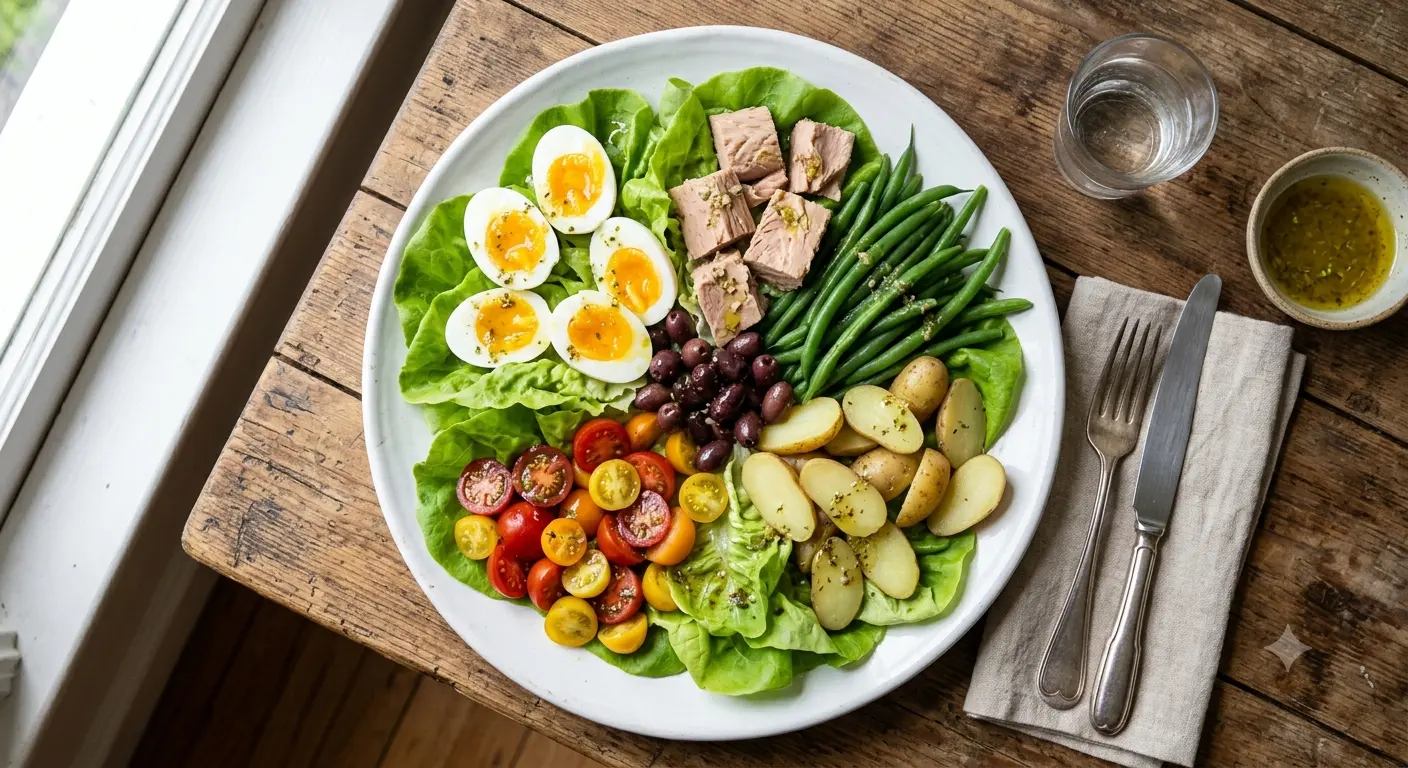
Salade Niçoise Recipe: The Classic French Salad That Actually Satisfies
Table of Contents
Salade Niçoise is the French salad that refuses to behave like a side dish,most salads are an afterthought. A pile of lettuce next to the real meal, something you pick at while you wait for the entree to arrive. Salade Niçoise is not that salad. This one is the meal, and it’s built to prove that a salad can be substantial, elegant, and genuinely satisfying without a single croissant in sight.
If you’ve only ever had the sad desk-lunch version, iceberg lettuce, a can of tuna dumped on top, maybe a hard boiled egg cut in half, you haven’t actually had Salade Niçoise. The real thing is a study in contrasts: briny olives against buttery potatoes, snappy green beans against jammy egg yolks, all of it pulled together by a sharp, glossy vinaigrette. It comes from the south of France, it looks like it belongs on a bistro table in Nice, and it takes about 45 minutes of actual work, most of which can happen days ahead.
This post is going to walk you through the real technique behind each component, why the classic version insists on jarred tuna over canned water-packed tuna, how to build a vinaigrette that doesn’t split, and how to arrange the whole thing so it looks like you know exactly what you’re doing. Because once you understand the logic behind this salad, you’ll never go back to the desk-lunch version again.
What Is a Composed Salad, Exactly?
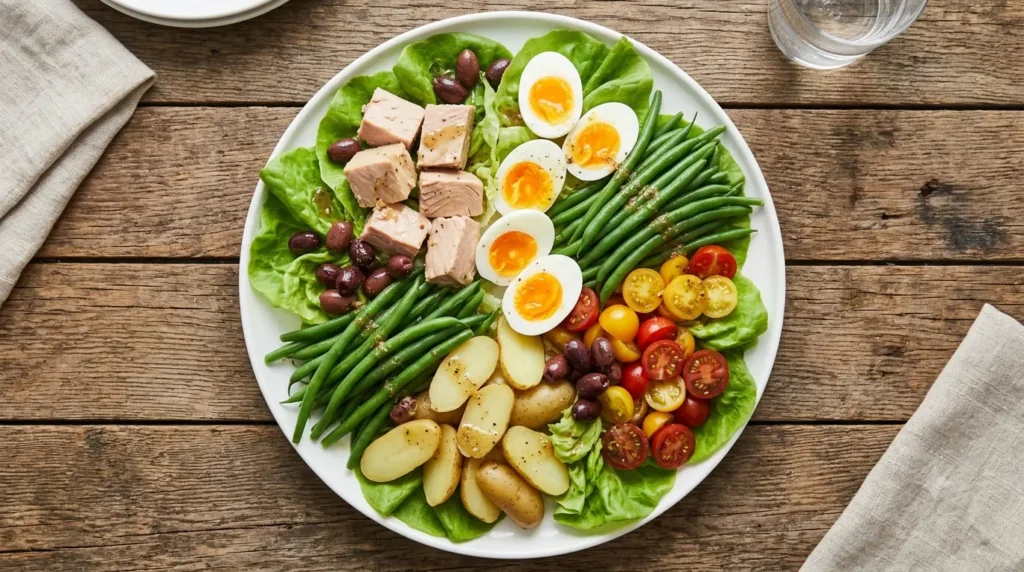
Here’s a distinction worth understanding before you start cooking, because it changes how you approach the whole dish. Most American salads are tossed salads. Everything goes into a bowl, gets mixed together with dressing, and comes out looking more or less uniform. A composed salad works the opposite way. Each ingredient gets prepped separately, then arranged deliberately on a platter in its own distinct section, rather than tossed together. The dressing gets drizzled over the top or served on the side, and the eater essentially builds their own bite, mixing components as they go.
This style of plating has deep roots in
home cooking and traditional bistro service, where visual presentation was treated as part of the meal, not an afterthought. A composed salad is meant to be looked at before it’s eaten. You’re not just feeding someone, you’re presenting something.
Salade Niçoise specifically takes its name from Nice, the coastal city in the south of France, in the Provence region. It’s a dish shaped by what was available locally: tomatoes, olives, and olive oil from the Mediterranean coast, tuna from the nearby waters, and anchovies, which show up in many traditional versions either draped over the top or worked into the vinaigrette itself. The dish has been the subject of genuine culinary debate in France for decades. Purists in Nice will tell you a true Niçoise salad never includes cooked vegetables at all, no potatoes, no green beans, just raw tomatoes, peppers, onions, olives, anchovies, and tuna. The version most Americans know, with warm potatoes and blanched green beans, is technically closer to what’s sometimes called a “composed Niçoise” or the version popularized outside of Nice itself. This post follows that more widely recognized version, since it’s the one that turns this into a satisfying, complete meal rather than a light side dish, but it’s worth knowing the debate exists so you’re not caught off guard if a French friend has strong opinions about your potatoes.
Why This Format Works So Well for a Weeknight Meal
Because every component is prepped on its own, a composed salad is genuinely one of the easiest big dishes to get ahead on. You’re not managing one continuous cooking process, you’re managing five or six small, independent ones, most of which can happen a day or two in advance. That structure is exactly why this salad, despite having several components, is realistic for a regular weeknight rotation once you’ve made it a couple of times.
Ingredient Deep-Dive: The Great Tuna Debate
Let’s start with the ingredient people have the most questions about, because getting this one right changes the entire character of the dish.
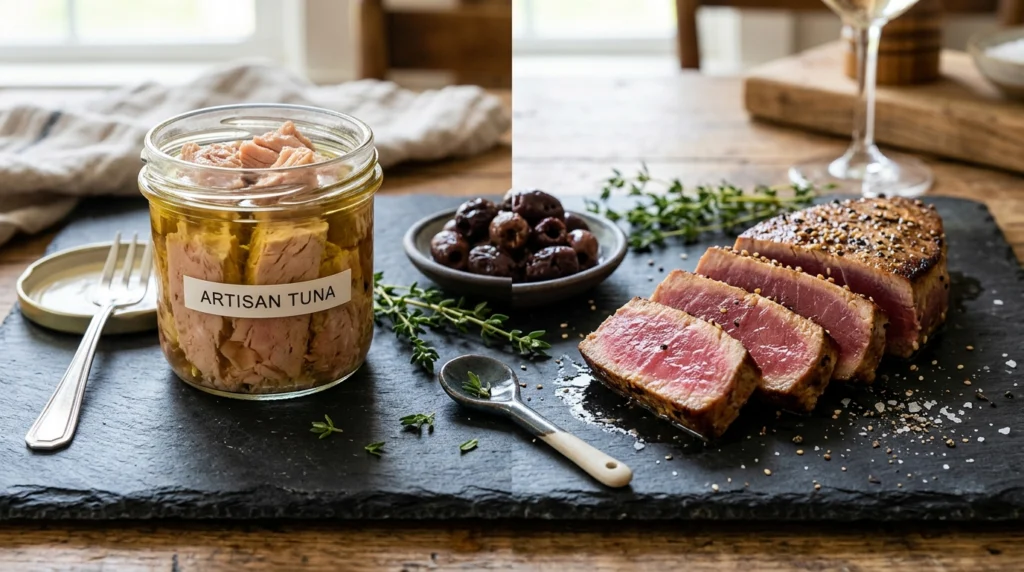
Oil-packed tuna, jarred or canned. Traditional Salade Niçoise uses tuna packed in olive oil, not water. This isn’t just a texture preference, there’s a real reason behind it. Tuna packed in oil stays moist and rich because the fat coats and protects the flesh, keeping it tender and giving it a silky, almost buttery texture that flakes apart in soft pieces rather than dry, stringy shreds. Water-packed tuna, by contrast, has none of that fat to fall back on, so the texture tends to be firmer and drier, and the flavor is noticeably more one dimensional. For this salad specifically, reach for a good quality jarred tuna if your grocery budget allows it, brands like Ortiz, Tonnino, or Genova all pack their tuna in good olive oil and the difference compared to a standard supermarket can is genuinely noticeable. If jarred tuna isn’t in your budget this week, a solid canned oil-packed tuna, drained but not squeezed completely dry, still gets you most of the way there. Don’t rinse it. That residual oil is doing real flavor work.
Fresh seared ahi tuna, the modern American alternative. This isn’t traditional, but it’s become a popular and genuinely delicious variation, especially if you’re already comfortable cooking fish at home. A sushi-grade ahi tuna steak, seasoned simply with salt and pepper, seared hard for about 60 to 90 seconds per side in a screaming hot pan so the outside forms a crust while the center stays rare and rosy, then sliced thin against the grain, brings a completely different but equally satisfying experience to the plate. It’s a heavier lift than opening a jar, and it needs to be genuinely sushi-grade to eat safely at that doneness, but if you want to turn this into a slightly more special occasion dish, this is the direction to go.
Niçoise olives. These small, dark purple-black olives, grown specifically in the Nice region, have a distinctly rich, slightly nutty flavor that’s less aggressively briny than a Kalamata and less one-note than a standard black canned olive. They’re worth seeking out at a well-stocked grocery store, specialty market, or the olive bar at places like Whole Foods. If you truly can’t find them, Kalamata olives are the closest reasonable substitute, just use them a bit more sparingly since their flavor is bolder. Avoid canned black olives entirely here, their soft, almost rubbery texture and muted flavor don’t hold up next to the rest of this salad’s bright, punchy components.
Haricots verts. These are simply thin French green beans, and the reason they matter here is texture. Haricots verts are more slender and tender than standard American green beans, which means they cook faster and end up with a delicate, almost crisp-tender snap rather than the slightly starchy bite of a thicker bean. Most well-stocked grocery stores carry them, often labeled as “French green beans” or sold pre-trimmed in a bag. If you can only find regular green beans, they’ll work fine, just extend your blanching time by a minute or two and slice them in half lengthwise if they’re on the thicker side.
Fingerling or small waxy potatoes. You want a waxy potato here, not a starchy one. Waxy potatoes, fingerlings, baby Yukon golds, or red new potatoes, hold their shape after boiling because they have a lower starch content and a firmer cell structure. A starchy potato, like a russet, tends to fall apart and turn mealy once boiled and cooled, which is exactly what you don’t want in a salad where the potatoes need to hold together as distinct, sliceable pieces.
Eggs. You’re looking for a medium-hard boil here, firm whites, a fully set but still slightly soft, jammy yolk. Not the chalky, gray-ringed hard boiled eggs from a bad Easter memory.
Cherry or grape tomatoes. Ripe, in-season tomatoes make the biggest visual and flavor difference in this salad, since they’re one of the few raw components. If it’s the dead of winter and good tomatoes aren’t available, cherry or grape tomatoes tend to stay reliably sweet year-round in a way that large slicing tomatoes generally don’t.
Anchovies. Traditional versions often include a few whole anchovy fillets draped over the top, or work minced anchovy into the vinaigrette itself for a savory, umami backbone. If you’re anchovy-averse, you can leave them off the top entirely and still get a version of that same savory depth by working a small amount into the dressing, where it dissolves and becomes far less noticeable as a distinct flavor.
Butter lettuce or mixed baby greens. This forms the base layer of the platter. Butter lettuce, sometimes labeled Bibb or Boston lettuce, has tender, slightly sweet leaves that hold up well as a bed for the heavier components without wilting too quickly under the vinaigrette.
The Science of a Proper French Vinaigrette
A vinaigrette sounds simple, oil and vinegar, but the reason a good one tastes dramatically better than a bad one comes down to a specific bit of kitchen chemistry: emulsion.
Oil and vinegar don’t naturally want to combine. They’re chemically incompatible, oil is nonpolar and vinegar is mostly water, which is polar, and left alone they’ll always separate back into two distinct layers no matter how hard you shake the jar. An emulsion is a temporary, or in some cases stabilized, suspension of tiny droplets of one liquid dispersed evenly through the other. To get oil and vinegar to actually combine into a smooth, unified sauce rather than a puddle that separates the second it sits still, you need an emulsifier, an ingredient that can bond with both fat and water simultaneously and hold the whole mixture together.
That’s exactly the job Dijon mustard does in a classic French vinaigrette, and it’s why almost every real French dressing recipe includes it, not as a flavor add-in but as a functional ingredient. Mustard contains compounds that act as natural emulsifiers, allowing it to grab onto both the oil molecules and the vinegar molecules at once, holding them suspended together in a stable mixture instead of letting them separate. This is also why whisking in a slow, steady stream while adding the oil matters so much. You’re not just mixing, you’re physically breaking the oil into tiny droplets small enough for the mustard to surround and stabilize before they can clump back together.
Minced shallot adds a milder, sweeter sharpness than raw garlic or onion would, and letting it sit in the vinegar for a few minutes before you add the oil actually mellows its bite even further through a light pickling effect. Red wine vinegar brings the acidity that balances the richness of the olive oil and the tuna. Good extra virgin olive oil is worth spending a little more on here specifically, since in a dressing this simple, with only a handful of ingredients, the quality of the oil is doing a lot of the flavor heavy lifting.
The general ratio that produces a balanced, not-too-sharp vinaigrette is roughly three parts oil to one part vinegar, adjusted to taste. Add the oil slowly, whisking constantly, rather than dumping it all in at once, which is the single most common reason a homemade vinaigrette breaks before it even makes it to the salad.
Component Prep: Getting Each Element Right
This is where the real technique lives. Each component is simple on its own, but small details make the difference between a good version of this salad and a genuinely great one.
The Potatoes
Start your fingerling or small waxy potatoes in a pot of cold, generously salted water, not boiling water. Starting cold allows the potatoes to heat gradually and cook evenly all the way through, since dropping them into already-boiling water tends to cook the exterior too quickly while the center stays underdone. Bring the pot up to a boil, then reduce to a simmer and cook for 12 to 18 minutes, depending on their size, until a knife slides in with almost no resistance. Drain immediately and let them cool slightly before slicing in half. Toss them with a spoonful of the vinaigrette while they’re still warm, warm potatoes absorb dressing far more effectively than cold ones, soaking up flavor instead of just sitting under it.
The Green Beans
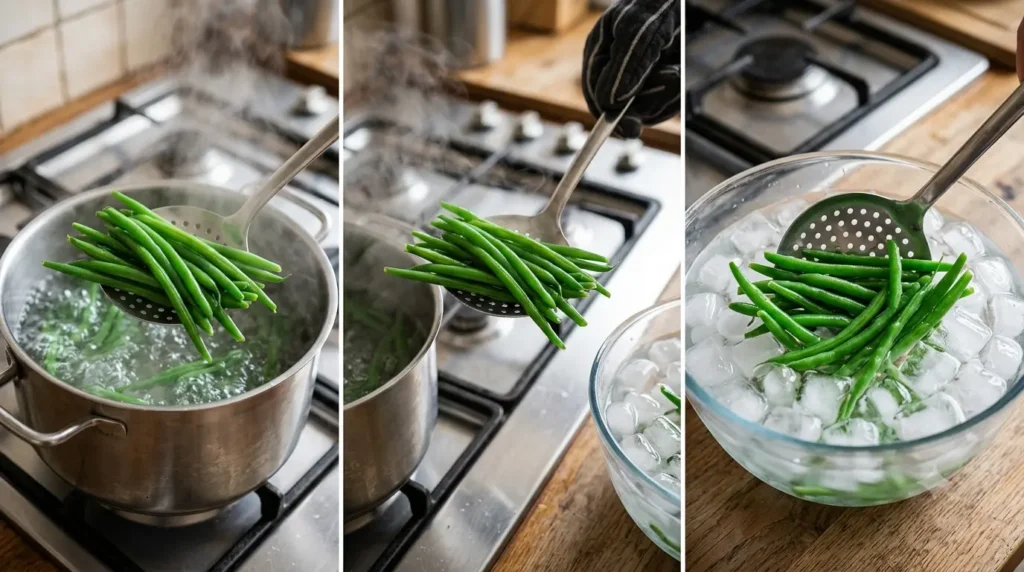
This is the step that gives the beans their bright, almost electric green color and that satisfying, crisp-tender snap, and it involves two stages: blanching and shocking. Bring a pot of well-salted water to a rolling boil and have a large bowl of ice water standing by before you even add the beans. Drop the trimmed haricots verts into the boiling water and cook for just 2 to 3 minutes, you’re looking for a color shift from a dull, matte green to a vivid, almost glossy bright green. The second that happens, pull them out with a spider or slotted spoon and plunge them directly into the ice bath. This is the “shocking” step, and it’s what stops the cooking process instantly, locking in that bright color and crisp texture before the residual heat can carry on cooking them into a dull, limp, olive-drab version of themselves. Let them sit in the ice water for a couple of minutes, then drain thoroughly and pat dry.
The Eggs
For that classic French jammy yolk, not fully hard, not runny, place your eggs gently in a single layer in a saucepan and cover with cold water by about an inch. Bring to a boil over medium-high heat, then as soon as it hits a full boil, cover the pot, remove it from the heat entirely, and let it sit for exactly 9 minutes. This residual heat method gives you a fully set white with a yolk that’s firm at the edges but still soft and slightly creamy in the center. When the timer’s up, transfer the eggs immediately to an ice bath for at least 5 minutes. That gray-green ring you sometimes see around an overcooked yolk is caused by a chemical reaction between iron in the yolk and sulfur in the white, which happens when eggs are cooked too long or too hot. Stopping the cooking promptly with an ice bath is what prevents it.
The Art of Plate Assembly
This is the part that makes people think you spent far more effort than you actually did. Presentation on a composed salad isn’t about fussy garnishes, it’s about deliberate placement.
Start with a large, wide platter rather than a bowl, you want surface area to actually see and separate the components. Lay down a base layer of butter lettuce leaves across the entire platter, this is your canvas. Working around the platter’s edge or in loose sections rather than a strict grid, arrange the halved potatoes in one area, the green beans grouped together in another, the halved cherry tomatoes in another cluster. Flake the tuna into a few generous mounds rather than scattering it thin and even, you want it to read as a substantial component, not a garnish. Nestle the halved eggs in among the vegetables, cut side up so the yolk color shows. Scatter the olives throughout, and if you’re using anchovy fillets, drape them across the top in a loose crosshatch pattern.
Drizzle about two-thirds of your vinaigrette evenly over the entire platter right before serving, and set the rest in a small pitcher or bowl on the side for anyone who wants more. Finish with a scattering of fresh herbs, torn basil or chopped parsley both work well, and a light final crack of black pepper over the whole thing.
Pro Tips and Troubleshooting
How do I keep my lettuce from getting soggy? The biggest culprit is dressing the lettuce too early, or dressing it with warm components still sitting on top. Keep your lettuce completely dry after washing (a salad spinner earns its keep here) and only add the vinaigrette right before serving, not in advance. If you’re prepping ahead, keep the lettuce and dressing completely separate until assembly.
My vinaigrette broke, what do I do? If your dressing looks separated, oil pooling on top with a watery layer underneath, it usually means the oil was added too quickly or the mustard wasn’t given enough time to properly emulsify with the vinegar first. The fix is straightforward: start fresh with a clean bowl, add a fresh small spoonful of Dijon mustard, and slowly whisk your broken dressing back into it in a thin stream, the same way you’d build a fresh vinaigrette. The mustard in the new addition will re-establish the emulsion and pull everything back together.
How do I peel hard boiled eggs cleanly without tearing the whites? Fresh eggs, ironically, are harder to peel than slightly older ones, since the air pocket inside a fresh egg hasn’t had time to expand, and the membrane clings more tightly to the shell. Eggs that have been in your fridge for a week or so peel noticeably easier. After the ice bath, crack the shell all over by gently rolling the egg on the counter, then peel starting from the wider, blunter end, where that air pocket sits, working under running water if you’re having trouble, which helps separate the membrane from the white.
My potatoes fell apart when I sliced them. This almost always means you used a starchy potato, like a russet, instead of a waxy one. Stick with fingerlings, baby Yukon golds, or small red potatoes, and make sure you’re not overcooking them past the point where a knife slides in easily.
Make-Ahead and Meal Prep Guide
This salad’s biggest advantage for a busy week is how well its components separate into ahead-of-time tasks.
Two to three days ahead: Make the full batch of vinaigrette and store it in a sealed jar in the fridge. It’ll keep well for up to a week, just give it a good shake or re-whisk before using since it will separate slightly during storage.
One to two days ahead: Boil and peel your eggs, and boil your potatoes. Store both, separately, in airtight containers in the fridge. Blanch and shock your green beans, dry them thoroughly, and store them in a paper towel lined container to absorb excess moisture.
The day of serving: Wash and dry your lettuce if you haven’t already, slice the tomatoes, flake the tuna, and assemble the platter. This final step realistically takes 10 to 15 minutes once everything else is already prepped, which is what makes this a legitimately doable weeknight meal despite having several distinct components.
A note on the eggs and potatoes specifically: Keep them whole and unsliced until you’re ready to assemble. Slicing too far ahead exposes more surface area to the air, which can dull the color of the egg yolks and dry out the cut edges of the potatoes.
Frequently Asked Questions
What can I substitute for Niçoise olives if I can’t find them? Kalamata olives are the closest widely available substitute, just use them in a slightly smaller quantity since their flavor is more assertive and briny than a true Niçoise olive. Avoid standard canned black olives, their mild flavor and soft texture won’t bring the same character to the dish.
Is Salade Niçoise served warm or cold? It’s traditionally served at room temperature, which is actually part of what makes it so practical for make-ahead meals. The potatoes and green beans are cooked but not served hot, and the rest of the components are naturally room temperature or chilled. Straight-from-the-fridge cold can mute some of the flavors, so if your components have been refrigerated, let the platter sit out for 15 to 20 minutes before serving.
Can I make Salade Niçoise vegetarian? Yes, and it still works well. Skip the tuna and anchovies, and lean a bit more heavily on the eggs, potatoes, and olives to keep the salad feeling substantial rather than like a plate of vegetables missing its protein. Some cooks add marinated white beans or chickpeas in place of the tuna to keep a similar heartiness and protein content.
What’s the difference between Salade Niçoise and a regular tuna salad? A regular American tuna salad typically means tuna mixed with mayonnaise, often served on bread or over a simple bed of lettuce. Salade Niçoise is a composed, multi-component dish built around several distinct elements, potatoes, green beans, eggs, olives, and tomatoes, arranged separately and finished with a vinaigrette rather than mayonnaise. The flavor profile, texture, and overall experience are genuinely different dishes despite both featuring tuna.
Can I use canned green beans instead of fresh haricots verts? Technically you can, but it’s worth knowing the texture will be significantly different. Canned green beans are fully cooked and often quite soft, so you’d lose the crisp-tender snap that blanching and shocking fresh beans provides, which is a meaningful part of what makes this salad texturally interesting. If fresh haricots verts genuinely aren’t available, frozen green beans, blanched briefly from frozen, are a much closer substitute than canned.
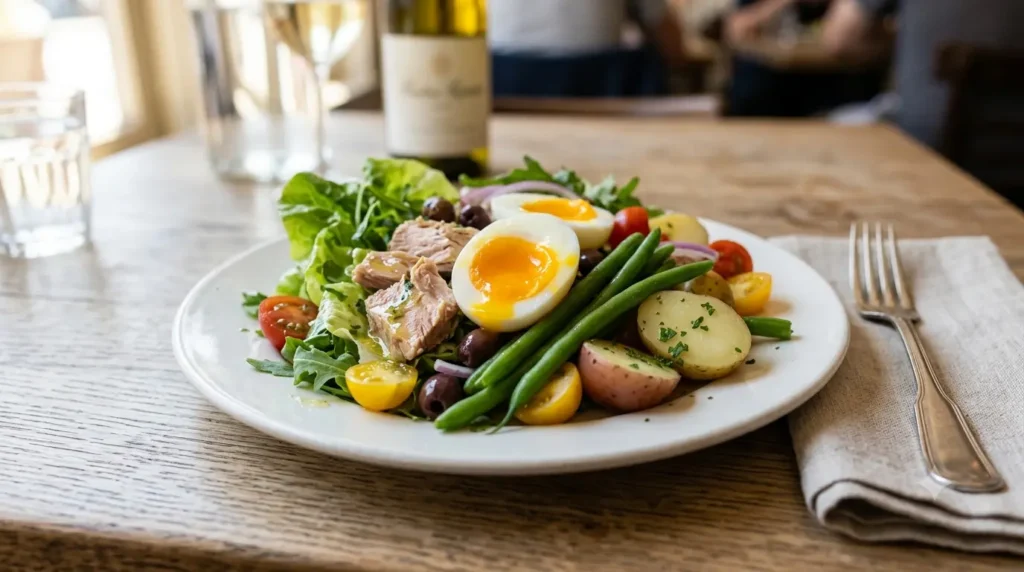
The Recipe Card
Classic Salade Niçoise A composed French salad with tuna, jammy eggs, tender potatoes, and haricots verts, finished with a Dijon vinaigrette.
Prep Time: 30 minutes Cook Time: 20 minutes Total Time: 50 minutes Yield: 4 main-course servings
Ingredients
For the vinaigrette:
- 1 small shallot, minced
- 3 tablespoons red wine vinegar
- 1 tablespoon Dijon mustard
- 1 small anchovy fillet, minced (optional)
- 1/2 cup extra virgin olive oil
- Salt and freshly ground black pepper, to taste
For the salad:
- 1 pound fingerling or small waxy potatoes
- 8 ounces haricots verts, trimmed
- 4 large eggs
- 2 (5 to 6 ounce) jars or cans oil-packed tuna, drained
- 1 head butter lettuce, leaves separated, washed and dried
- 1 pint cherry or grape tomatoes, halved
- 1/2 cup Niçoise olives
- 4 to 6 whole anchovy fillets (optional, for topping)
- Fresh basil or parsley, torn or chopped, for garnish
Instructions
- Make the vinaigrette. Combine the minced shallot, red wine vinegar, Dijon mustard, and minced anchovy (if using) in a small bowl. Let it sit for 5 minutes to mellow the shallot. Whisking constantly, slowly drizzle in the olive oil in a thin stream until fully emulsified and glossy. Season with salt and pepper. Set aside.
- Cook the potatoes. Place potatoes in a pot, cover with cold, generously salted water, and bring to a boil. Reduce to a simmer and cook 12 to 18 minutes, until a knife slides in easily. Drain, let cool slightly, then halve. Toss warm with a spoonful of vinaigrette.
- Blanch the green beans. Bring a pot of salted water to a boil and prepare a bowl of ice water. Boil the haricots verts for 2 to 3 minutes, until bright green. Immediately transfer to the ice bath, then drain and pat dry.
- Boil the eggs. Place eggs in a saucepan, cover with cold water by an inch, and bring to a full boil. Cover, remove from heat, and let sit for exactly 9 minutes. Transfer to an ice bath for 5 minutes, then peel and halve.
- Assemble the platter. Line a large platter with the butter lettuce leaves. Arrange the potatoes, green beans, and tomatoes in separate clusters. Flake the tuna into a few generous mounds. Nestle the halved eggs among the vegetables, cut side up. Scatter the olives throughout, and drape the whole anchovy fillets over the top, if using.
- Finish and serve. Drizzle about two-thirds of the vinaigrette evenly over the platter. Garnish with fresh herbs and a crack of black pepper. Serve immediately with the remaining vinaigrette on the side.
Notes: For a vegetarian version, omit the tuna and anchovies and add marinated white beans or chickpeas. Vinaigrette can be made up to a week ahead and stored in the refrigerator; re-whisk before using.