Taiwanese Three Cup Chicken Recipe (San Bei Ji) – Authentic & Easy
Walk past a Taiwanese kitchen while Three Cup Chicken is cooking and you’ll know it before you see it. Garlic and ginger hit hot sesame oil first, then soy sauce and rice wine go in and start to reduce, and by the time the basil gets thrown in at the very end, it wilts almost instantly and releases a sharp, peppery aroma that fills the whole room. That last handful of basil is the smell most people associate with Taiwanese Three Cup Chicken, and it’s added last for a reason.
Taiwanese Three Cup Chicken, or San Bei Ji, is one of those dishes that looks simple on paper and rewards a cook who understands why each step matters. Bone-in chicken, browned hard, then braised down in a mix of soy sauce, rice wine, and sesame oil until the sauce turns thick, dark, and sticky enough to cling to every piece. No stock, no water, nothing to dilute it. Just those three ingredients reducing together until they build something far more concentrated than any one of them could manage alone.
This guide covers where the dish actually comes from, what “Three Cup” really means today versus its traditional ratio, which chicken cuts work best, and the exact technique for getting a proper caramelized, glossy sauce. By the end, you’ll be able to make Three Cup Chicken the way it’s actually cooked in Taiwanese homes and restaurants, not a watered-down version of it.
Table of Contents
What Is Taiwanese Three Cup Chicken?
Three Cup Chicken, known as San Bei Ji in Mandarin, is a bone-in braised chicken dish built on soy sauce, rice wine, and sesame oil, cooked down with garlic, ginger, and fresh basil until the chicken is coated in a thick, dark, sticky glaze. It’s one of Taiwan’s most recognized signature dishes, served everywhere from home kitchens to night market stalls to sit-down restaurants.
The name comes from its traditional ratio: one cup each of soy sauce, rice wine, and sesame oil, no water or stock added. That’s a strong, concentrated combination, and modern versions typically scale those proportions down and rebalance them, but the core idea, three bold liquid ingredients doing all the work with nothing to dilute them, remains exactly the same.
Its traditional ingredient list is short: chicken, garlic, ginger, soy sauce, rice wine, sesame oil, rock sugar, and fresh basil. Nothing exotic, nothing hard to find, and that accessibility, paired with a flavor that’s far bigger than the ingredient list suggests, is a large part of why it became such a fixture on Taiwanese restaurant menus, both at home and internationally.
The History of Three Cup Chicken
Three Cup Chicken’s roots trace back to Jiangxi cuisine on the Chinese mainland, where a version of the dish using similar core ingredients existed before it made its way to Taiwan. As is common with dishes that travel and settle into a new place, it evolved once it took hold in Taiwanese kitchens, shifting in ways that reflected local ingredients and taste.
The most significant of those changes was the addition of fresh basil, which isn’t part of the dish’s mainland Chinese origins in the same way. Taiwanese basil, with its more peppery, anise-like character compared to the sweeter Italian basil most Americans know, became such a defining element of the Taiwanese version that it’s now considered essential rather than optional.
Traditional preparation uses a clay pot, which retains and distributes heat differently than metal cookware, helping the sauce reduce evenly while keeping the chicken from scorching against direct high heat. Whether cooked in a clay pot or a modern wok, Three Cup Chicken carries real cultural weight in Taiwan, showing up regularly at home dinner tables and functioning as something close to a national comfort food, recognized instantly by both its aroma and its glossy, dark presentation.
Why It’s Called “Three Cup”
The traditional ratio behind the name is straightforward: one cup soy sauce, one cup rice wine, and one cup sesame oil, cooked together with no additional liquid. That’s an intense, concentrated combination by any modern standard, and it reflects an older style of cooking built for feeding a family from simple pantry staples in generous proportion.
Modern recipes, including most versions served in restaurants today, scale that ratio down considerably and adjust the balance, since a full cup of sesame oil per serving would be overwhelming by contemporary standards. A more typical modern approach uses smaller, adjusted quantities of each of the three ingredients, often with less sesame oil relative to soy sauce and wine, while still preserving the core identity of the dish: soy sauce for salt and color, rice wine for depth and aroma, and sesame oil for its distinct nutty richness.
The name has stuck specifically because it’s a memorable, almost formulaic way to describe the dish’s foundation, even as actual measurements have shifted over time to suit modern tastes and portion sizes.
Why Three Cup Chicken Is So Delicious
Caramelized soy sauce. As the sauce reduces, the soy sauce’s natural sugars concentrate and darken, developing a deep, almost caramel-like sweetness underneath its savory saltiness.
Aromatic sesame oil. Toasted sesame oil brings a distinct nutty richness that runs through the entire dish and ties the other flavors together.
Garlic and ginger. Both are cooked hard at the start, building an aromatic base that infuses the oil before anything else goes into the pan.
Fresh basil. Added at the very end, it brings a sharp, peppery brightness that cuts through the richness of the sauce.
Rice wine. Adds acidity and aroma, and helps tenderize the chicken as it braises.
Sticky glaze. As the sauce reduces down to almost nothing, it thickens into a glossy coating that clings to every piece of chicken rather than pooling at the bottom of the pan.
Tender chicken. Bone-in pieces, browned first and then braised in that concentrated sauce, stay moist and flavorful all the way through, since the bones and skin both contribute richness during the cook.
The Science Behind the Recipe
Understanding what’s actually happening in the pan makes it much easier to get consistent, restaurant-quality results.
Why bone-in chicken develops more flavor. Bones and the surrounding connective tissue release gelatin and additional savory compounds during cooking, giving the finished sauce more body and depth than boneless chicken alone would provide.
Browning and the Maillard reaction. Searing the chicken skin and surface before braising triggers the Maillard reaction, a browning process between proteins and sugars that builds hundreds of new flavor compounds. Skipping this step leaves the dish tasting flatter, no matter how long it braises afterward.
Alcohol evaporation. As the rice wine cooks, much of its alcohol content evaporates off, leaving behind its aromatic compounds without a harsh, raw alcohol taste.
Sauce reduction. Because the dish uses no water or stock, the sauce depends entirely on reduction to build body. As liquid cooks off, what remains becomes increasingly concentrated.
Flavor concentration. That reduction is the entire mechanism behind Three Cup Chicken’s intensity. Every ingredient’s flavor becomes more pronounced as the total volume of liquid decreases.
Why basil is added at the end. Fresh basil’s aromatic oils are volatile and fade quickly under sustained heat. Adding it at the very end, off or nearly off the heat, preserves its sharp, peppery aroma instead of cooking it down into something dull and muted.
Choosing the Best Chicken
| Cut | Flavor | Juiciness | Cooking Time | Best For |
|---|---|---|---|---|
| Bone-in thighs | Rich, deep | Very juicy | 20–25 min | Best all-around choice, most authentic |
| Drumsticks | Rich, similar to thighs | Juicy | 25–30 min | Great alternative, slightly longer cook |
| Boneless thighs | Good, slightly less depth | Juicy | 15–18 min | Convenient, faster, still very good |
| Chicken breast | Milder | Prone to drying out | 10–12 min | Least traditional, needs careful attention |
| Whole chicken pieces (mixed) | Varies by cut | Varies | Varies | Traditional but less consistent cook time |
Bone-in chicken thighs, cut into pieces, are the most traditional and reliable choice, offering rich flavor and staying juicy throughout the braise thanks to their higher fat content and the collagen in the bone and skin. Drumsticks work similarly well and are a good alternative if thighs aren’t available. Boneless thighs are a reasonable substitute for convenience, cooking faster, though they won’t build quite as much depth in the sauce as bone-in pieces do.
Chicken breast is the least traditional option and the easiest to overcook in this style of braise, since it has little fat or connective tissue to protect it during the reduction process. If using breast meat, it needs closer attention and a shorter cooking time to avoid drying out.
Ingredients Explained
Chicken, ideally bone-in thighs cut into pieces, is the centerpiece of the dish. Light soy sauce provides the primary salty, savory base. Dark soy sauce, used in a smaller amount, adds color and a touch of extra depth without oversalting the dish. Shaoxing wine, a Chinese rice wine, is traditional and widely used; Taiwanese rice wine (mi jiu) is the more specifically local choice and has a slightly different, milder character. Sesame oil, ideally toasted, provides the dish’s signature nutty aroma. Garlic, typically whole cloves rather than minced, is meant to soften and caramelize rather than dissolve into the sauce. Fresh ginger, sliced into thick coins, infuses the oil at the start and can be eaten alongside the chicken. Rock sugar, in a small amount, balances the saltiness of the soy sauce and helps the sauce caramelize slightly as it reduces. Fresh Thai basil or Taiwanese basil is the dish’s essential finishing element, adding a peppery, aromatic brightness. Fresh chilies, if using, add background heat and color. Scallions, though not always included, can add a mild oniony freshness as a garnish.
Step-by-Step Technique
1. Prepare the chicken. Cut bone-in thighs into bite-sized pieces, keeping the skin and bone intact for maximum flavor.
2. Dry the chicken. Pat the pieces thoroughly dry with paper towels so they brown properly rather than steaming in the pan.
3. Brown the chicken. Heat sesame oil in a wok or heavy pan over medium-high heat. Sear the chicken pieces, skin-side down first, until deeply golden, then turn to brown the other sides.
4. Build the aromatic base. Push the chicken to one side, or remove it briefly, and add whole garlic cloves and sliced ginger to the hot oil, cooking until fragrant and lightly golden.
5. Combine and add liquids. Return the chicken to the pan with the garlic and ginger. Add the light soy sauce, dark soy sauce, and rice wine, along with the rock sugar.
6. Simmer. Bring to a simmer, then reduce heat slightly and cook uncovered, stirring occasionally, until the chicken is fully cooked and tender, about 15 to 20 minutes.
7. Reduce the sauce. Continue cooking, uncovered, until the sauce thickens and reduces down to a glossy, syrupy consistency that coats the chicken rather than pooling in the pan.
8. Add the basil. Once the sauce has reduced properly, remove the pan from the heat (or reduce to the lowest setting) and stir in a generous handful of fresh basil leaves, letting them wilt in the residual heat for just a few seconds.
9. Final seasoning. Taste and adjust with a little more soy sauce if needed.
10. Serve. Serve immediately, directly from the pan or clay pot if using one, alongside steamed rice.
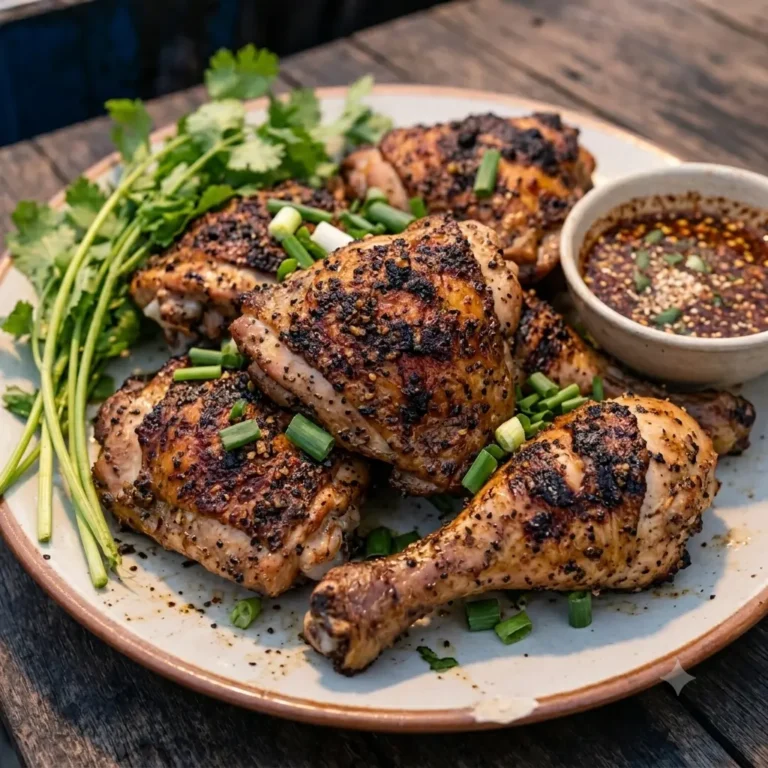
Visual cues: the chicken should look deeply caramelized and glossy, with the sauce clinging tightly rather than pooling. Texture cues: the sauce should be thick enough to coat a spoon, not thin or watery. Color cues: a deep mahogany-brown color across both the chicken and the sauce signals a properly reduced dish; a pale or thin sauce means it needs more time.

Why Taiwanese Basil Makes the Difference
Taiwanese basil has a sharper, more peppery, slightly anise-like character compared to the sweeter, more floral Italian basil commonly found in US grocery stores. That more assertive flavor is exactly what stands up to the rich, salty, sesame-heavy sauce in this dish, rather than getting lost underneath it.
Its aroma is most noticeable and most important the moment it’s added, which is why timing matters so much. Adding it too early, while the sauce is still actively simmering, cooks off much of that fresh, peppery quality and leaves behind a duller, less distinct flavor.
If Taiwanese basil isn’t available, Thai basil is the closest and most commonly recommended substitution, sharing a similar peppery, anise-forward character. Standard Italian basil, while not traditional, can work in a pinch, though the flavor will be noticeably milder and sweeter than the dish traditionally calls for.

Equipment Needed
- Clay pot — traditional cookware that distributes heat evenly and is often used to both cook and serve the dish
- Wok — a practical, widely available alternative that works very well for browning and reducing the sauce
- Cast iron skillet — another solid substitute if a wok isn’t available, offering good heat retention
- Chef’s knife — for cutting chicken into pieces and slicing ginger
- Wooden spoon — for stirring without scratching the pan’s surface
- Measuring cups — useful for keeping the soy sauce, rice wine, and sesame oil ratio properly balanced
Common Mistakes
- Using boneless chicken breast. Dries out quickly in this style of hard reduction. Fix: use bone-in thighs or drumsticks for the best result.
- Not drying the chicken before searing. Prevents proper browning and a good sear. Fix: pat thoroughly dry with paper towels first.
- Skipping the browning step. Produces a flatter, less developed flavor overall. Fix: always sear the chicken well before adding liquid.
- Adding basil too early. Cooks off its distinctive peppery aroma. Fix: stir it in at the very end, off or nearly off the heat.
- Using too much water or stock. This dish traditionally uses no additional liquid beyond the three core ingredients. Fix: rely on the soy sauce, rice wine, and sesame oil alone to build the sauce.
- Not reducing the sauce enough. Leaves it thin and soupy instead of glossy and clinging. Fix: continue cooking uncovered until it visibly thickens.
- Using only light soy sauce with no dark soy sauce. Results in a paler, less visually rich final dish. Fix: include a smaller amount of dark soy sauce for color and depth.
- Overcooking the garlic until burnt. Turns bitter and affects the whole dish’s flavor. Fix: cook garlic just until fragrant and lightly golden, watching closely.
- Using standard Italian basil without adjusting expectations. Produces a milder, less traditional flavor. Fix: use Thai basil as the closest substitute if Taiwanese basil isn’t available.
- Not using enough sesame oil. Leaves out the dish’s signature nutty aroma. Fix: use toasted sesame oil generously, even in a scaled-down modern ratio.
- Crowding the pan while searing. Steams the chicken instead of browning it. Fix: sear in batches if needed.
- Cutting chicken pieces unevenly. Leads to uneven cooking. Fix: cut pieces to a consistent size.
- Rushing the reduction. Pulling the dish off the heat before the sauce has properly thickened results in a thin, underwhelming glaze. Fix: be patient and let it reduce fully.
- Oversalting by not tasting as you go. Since soy sauce varies in saltiness by brand, guessing at quantities can easily oversalt the dish. Fix: taste and adjust gradually rather than dumping in a full fixed amount.
- Serving the dish without the basil freshly wilted. Basil added too far in advance loses its bright aroma before it even reaches the table. Fix: stir it in right before serving, not earlier in the cooking process.
Pro Chef Tips
- Use bone-in, skin-on chicken thighs for the most authentic depth of flavor.
- Pat chicken completely dry before it touches the hot oil.
- Sear skin-side down first and let it develop real color before flipping.
- Use whole garlic cloves rather than minced, so they soften and caramelize rather than burning quickly.
- Slice ginger into thick coins so it holds up through the whole braise without disintegrating.
- Balance dark and light soy sauce for both proper color and controlled saltiness.
- Add rock sugar gradually and taste, since its role is to balance, not overwhelm.
- Keep the pan uncovered during the reduction phase so liquid can properly evaporate.
- Stir occasionally during the reduction to prevent scorching on the bottom of the pan.
- Have your basil washed, dried, and ready to go before the sauce finishes reducing, since timing matters at the very end.
- Use a wok if you have one — its shape helps with even reduction and easy stirring.
- Taste the sauce partway through cooking and adjust seasoning before it fully reduces, since flavors will concentrate further.
- Don’t rinse the pan between searing and adding liquid — those browned bits carry flavor.
- Use toasted sesame oil, not plain, for the correct nutty aroma.
- If the sauce reduces too far before the chicken is fully tender, add a small splash of water rather than more soy sauce, to avoid oversalting.
- Serve directly from a clay pot at the table if you have one, for both presentation and heat retention.
- Pair with plenty of steamed rice, since the sauce is intentionally salty and concentrated.
- Add fresh chilies early with the garlic and ginger if you want their heat to infuse the whole dish.
- Use a splash of extra rice wine at the very end if the sauce tastes too intensely reduced or salty.
- Let the dish rest for a couple of minutes off the heat before serving, allowing the sauce to settle and cling properly to the chicken.
Variations
Spicy Three Cup Chicken: Add extra fresh chilies or a spoonful of chili paste alongside the garlic and ginger for a bolder, spicier version.
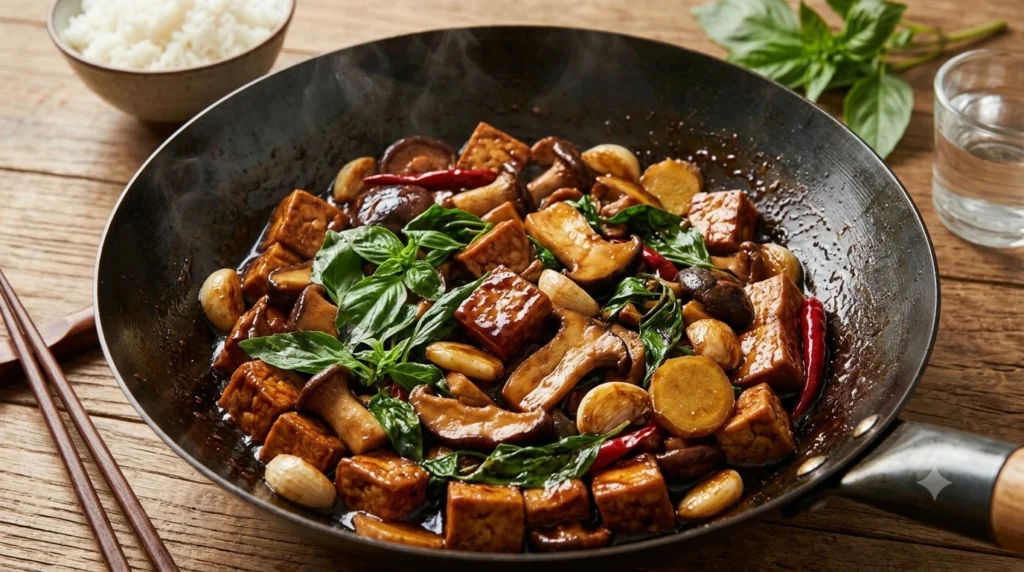
Mushroom Three Cup Chicken: Add hearty mushrooms like king oyster or shiitake alongside the chicken to absorb the sauce and add an earthy note.
Tofu Three Cup: Substitute firm tofu, pan-fried until golden, for chicken in a vegetarian-friendly take on the same sauce.
Seafood Three Cup: Use squid or shrimp instead of chicken, adjusting cooking time significantly downward since seafood cooks much faster.
Vegetarian Three Cup: Combine tofu with mushrooms and other vegetables like eggplant, using the same soy sauce, rice wine, and sesame oil base.
Pressure Cooker version: Sear the chicken and build the aromatic base using the sauté function, then pressure cook briefly before finishing the reduction uncovered on the stovetop to properly thicken the sauce.
Storage & Reheating
Refrigeration: Three Cup Chicken keeps well in an airtight container in the refrigerator for up to 4 days, and the flavor often deepens further after a day. Freezing: The dish freezes well for up to 2 months, since the sauce and bone-in chicken both hold up well to freezing and thawing. Best reheating methods: Reheat gently on the stovetop over medium-low heat, adding a small splash of water if the sauce has thickened too much in the fridge, stirring until warmed through. Food safety: Cool the dish promptly and refrigerate within two hours of cooking, and reheat to a full simmer before serving.
What to Serve with Taiwanese Three Cup Chicken
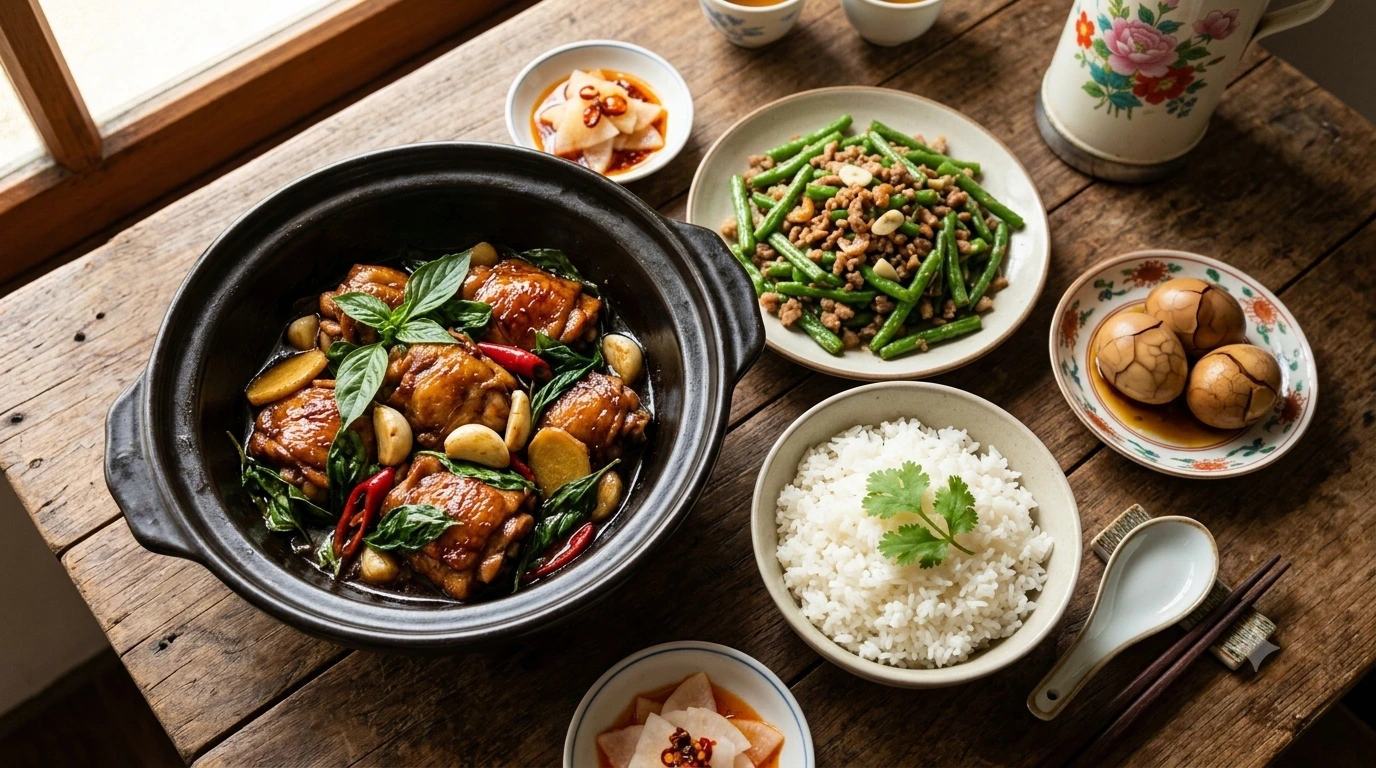
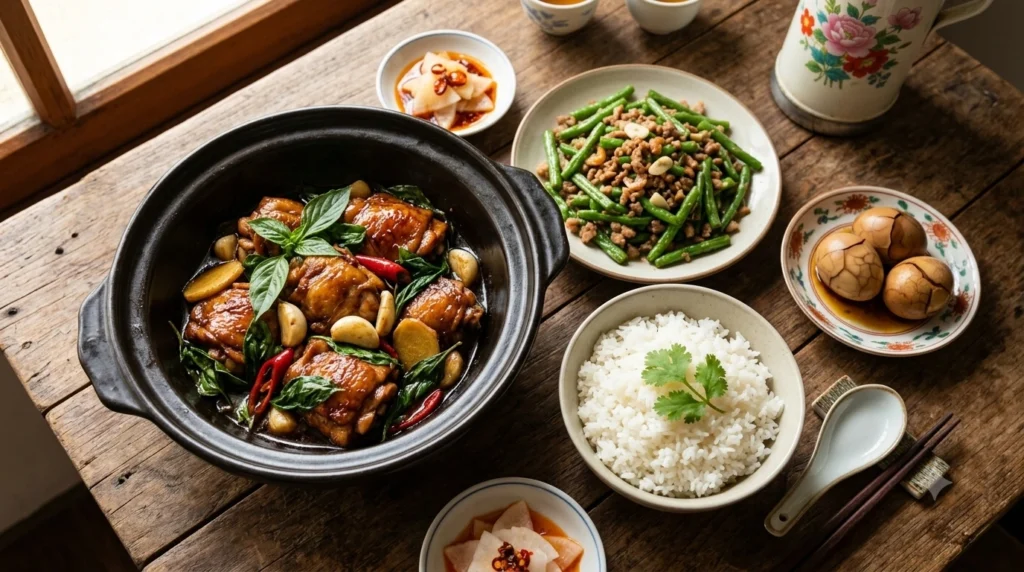
Steamed jasmine rice is the essential pairing, since the dish’s concentrated, salty sauce is built to be eaten over plain rice. Taiwanese cabbage, lightly stir-fried, offers a clean, mild contrast. Garlic greens and stir-fried bok choy both bring a fresh, slightly bitter vegetable component to round out the meal. Pickled cucumbers add a cooling, acidic bite that balances the richness of the sauce. Tea eggs, a classic Taiwanese side, make a natural addition to a larger spread. Scallion pancakes offer a satisfying, savory starter or side.
Beverage pairings: A light, crisp beer pairs naturally with the dish’s richness and saltiness. For wine, an off-dry Riesling or a light, fruity red like Beaujolais can stand up to the sauce without competing with its intensity, and jasmine or oolong tea makes a traditional, non-alcoholic pairing that complements the dish’s aromatics.
Frequently Asked Questions
1. Why is it called Three Cup Chicken? The name comes from its traditional ratio of one cup soy sauce, one cup rice wine, and one cup sesame oil, though modern recipes scale those proportions down considerably.
2. Can I use boneless chicken? Yes, boneless thighs work well and cook faster, though bone-in pieces develop more depth of flavor and stay juicier through the reduction process.
3. Can I use chicken breast? You can, but it’s the least traditional option and can dry out easily in this style of hard reduction. Watch it closely and reduce cooking time accordingly.
4. Can I substitute basil if Taiwanese basil isn’t available? Yes, Thai basil is the closest substitute, sharing a similar peppery, anise-forward character. Italian basil works in a pinch but tastes noticeably milder.
5. Can I make it less salty? Yes, reduce the amount of soy sauce slightly and taste as you go, or use a lower-sodium soy sauce and add a touch more rice wine to balance.
6. Can I make Three Cup Chicken ahead of time? Yes, it reheats very well and the flavor often deepens after resting overnight in the refrigerator.
7. Can I freeze it? Yes, it freezes well for up to about 2 months due to the bone-in chicken and concentrated sauce.
8. Can I use regular cooking wine instead of Shaoxing or Taiwanese rice wine? It’s best to use an actual Chinese rice wine like Shaoxing wine for proper flavor. Generic cooking wine often contains added salt and lacks the same aromatic depth.
9. Can I make it spicy? Yes, add fresh chilies or a spoonful of chili paste alongside the garlic and ginger at the start of cooking.
10. What’s the difference between light and dark soy sauce in this recipe? Light soy sauce provides most of the dish’s saltiness, while dark soy sauce, used in a smaller amount, adds color and a subtle extra depth without oversalting.
11. Do I need a clay pot to make this dish properly? No, a clay pot is traditional and helps with even heat, but a wok or heavy skillet works very well and is far more accessible for most home cooks.
12. Why does my sauce taste thin instead of glossy and thick? This usually means the sauce wasn’t reduced long enough. Continue cooking uncovered until it visibly thickens and clings to the chicken.
13. Can I make a vegetarian version? Yes, substituting tofu and mushrooms for chicken while keeping the same soy sauce, rice wine, and sesame oil base works very well.
14. What rice pairs best with Three Cup Chicken? Plain steamed jasmine rice is the classic pairing, since it absorbs the dish’s concentrated, salty sauce perfectly.
15. How spicy is traditional Three Cup Chicken? The traditional version is not particularly spicy on its own, though fresh chilies are sometimes included for background heat and can easily be adjusted to taste.
Recipe Card
Taiwanese Three Cup Chicken (San Bei Ji)
| Prep Time | 15 minutes |
| Cook Time | 30 minutes |
| Total Time | 45 minutes |
| Servings | 4 |
| Cuisine | Taiwanese |
| Course | Main Dish |
| Calories (estimated) | 420 per serving |
Ingredients
- 2 pounds bone-in, skin-on chicken thighs, cut into pieces
- 3 tablespoons toasted sesame oil
- 10 cloves garlic, peeled and left whole
- 1 (2-inch) piece fresh ginger, sliced into thick coins
- 1/4 cup light soy sauce
- 2 tablespoons dark soy sauce
- 1/2 cup Shaoxing wine or Taiwanese rice wine
- 1 tablespoon rock sugar (or brown sugar)
- 2 to 3 fresh red chilies, sliced (optional)
- 1 1/2 cups fresh Taiwanese or Thai basil leaves
- Steamed jasmine rice, for serving
Instructions
- Pat the chicken pieces thoroughly dry with paper towels.
- Heat the sesame oil in a wok or heavy skillet over medium-high heat. Sear the chicken, skin-side down first, until deeply golden, then turn to brown the other sides. Remove and set aside if needed to avoid crowding.
- In the same pan, add the garlic and ginger, cooking until fragrant and lightly golden.
- Return the chicken to the pan. Add the light soy sauce, dark soy sauce, Shaoxing wine, rock sugar, and chilies if using.
- Bring to a simmer, then reduce heat slightly and cook uncovered, stirring occasionally, for 15 to 20 minutes, until the chicken is fully cooked through.
- Continue cooking uncovered until the sauce reduces to a thick, glossy glaze that coats the chicken.
- Remove from heat (or reduce to the lowest setting) and stir in the fresh basil leaves, letting them wilt for a few seconds.
- Taste and adjust seasoning if needed. Serve immediately with steamed jasmine rice.
Chef Notes: Don’t rush the reduction — a properly thickened, glossy sauce is what separates an authentic result from a thin, soupy one. Add the basil at the very last moment for the brightest aroma.
Storage Notes: Refrigerate up to 4 days or freeze up to 2 months. Reheat gently on the stovetop, adding a small splash of water if needed.
Nutrition Disclaimer: Calorie and nutrition estimates are approximate and will vary based on specific ingredients and portion sizes used.
Conclusion
Taiwanese Three Cup Chicken doesn’t ask for a long ingredient list or complicated technique. It asks for a proper sear, patience during the reduction, and fresh basil added at exactly the right moment. Get those three things right, and you’ll end up with a dish that tastes like it came straight out of a Taiwanese home kitchen, glossy, deeply savory, and impossible to stop eating once the rice is in front of you.
Make it once, watch that sauce reduce down to a proper sticky glaze, and you’ll understand exactly why San Bei Ji has stayed one of Taiwan’s most beloved dishes for so long. That’s Three Cup Chicken done right.