Authentic Mapo Tofu Recipe: Spicy, Silky & Sichuan-Style
Mapo Tofu is deceptively simple on paper: tofu, a little ground meat, and a red, glossy sauce. But the sauce is doing enormous work, built on fermented chili bean paste, whole dried chilies, and Sichuan peppercorns, layered together in a specific order so that heat, numbness, and deep savory funk all show up in the same bite without any one of them taking over. Skip a step, or swap out the wrong ingredient, and you end up with something that’s just spicy, which isn’t the same dish at all.
Take a spoonful of properly made Mapo Tofu and your mouth does two things almost at once: it registers heat from the chilies, and then, a beat later, a strange tingling numbness spreads across your tongue and lips. That second sensation is what separates real Mapo Tofu from the flattened, one-note “spicy tofu” served at a lot of Chinese-American restaurants. It’s called málà, and getting that balance right is the entire point of the dish.
This guide walks through Mapo Tofu the way it’s actually made in Sichuan kitchens: where it comes from, what doubanjiang really is and why nothing else replicates it, how to build málà properly, and the exact technique for keeping the tofu silky instead of broken and mushy. By the end, you’ll understand this dish well enough to make it taste like it came out of Chengdu, not out of a bottle of generic chili sauce.
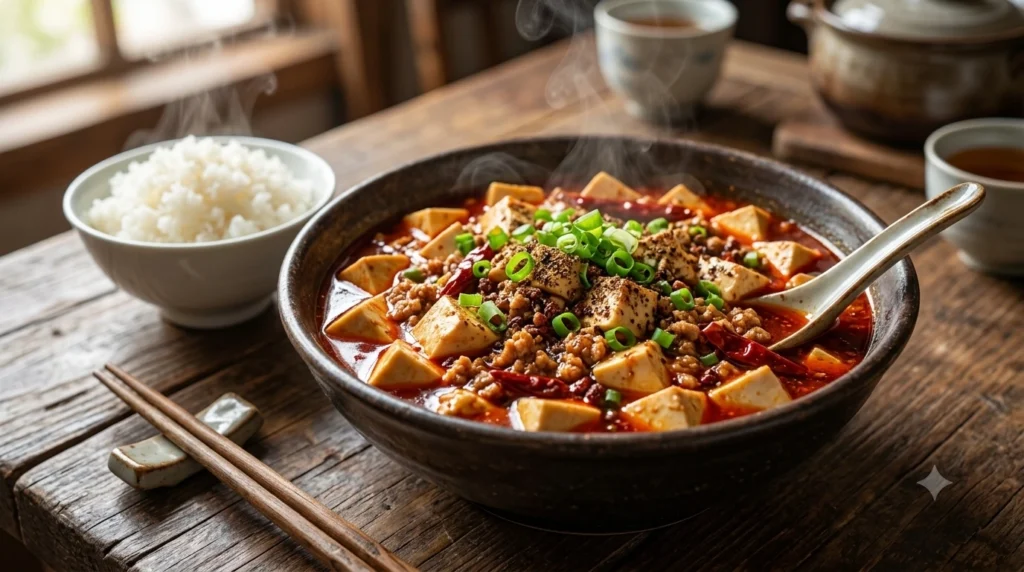
Table of Contents
What Is Mapo Tofu?
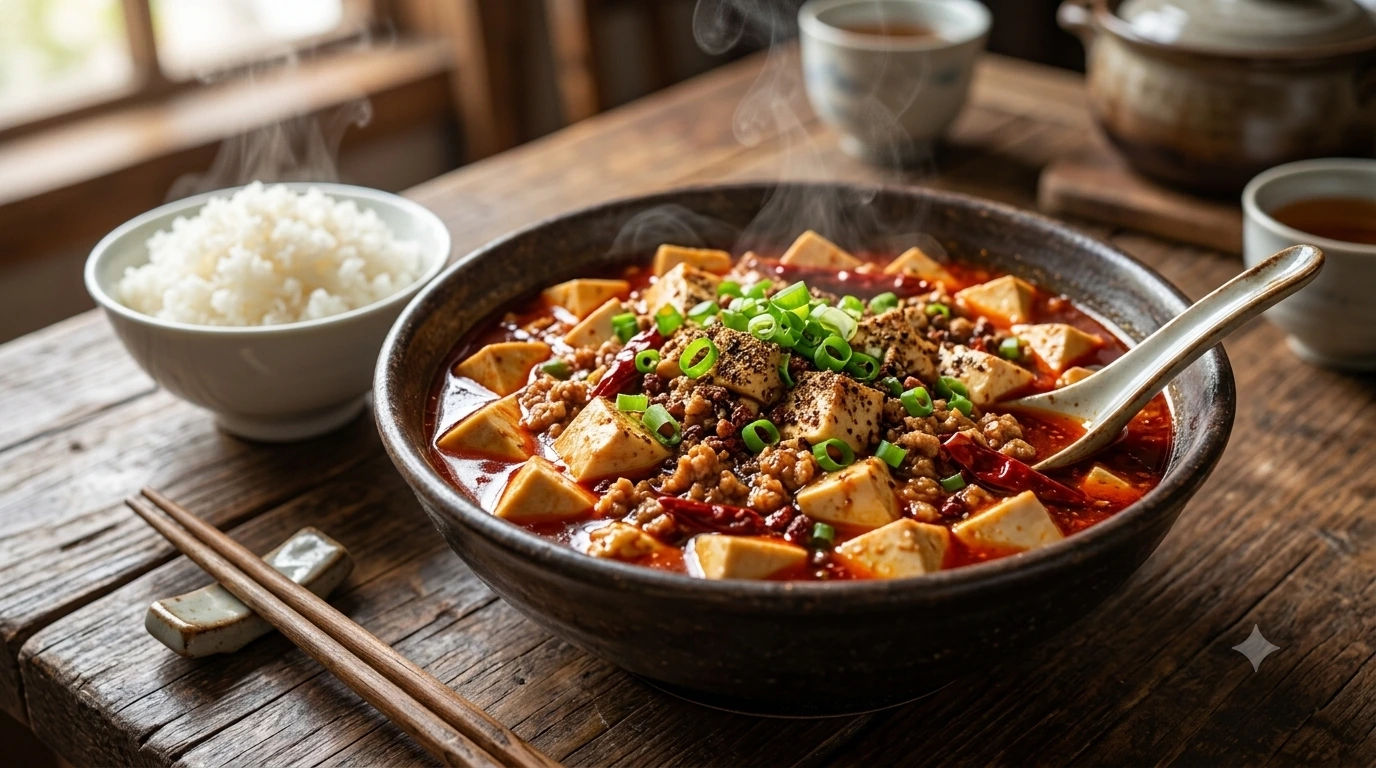
Mapo Tofu is a Sichuan dish of soft tofu cubes simmered in a spicy, numbing sauce built from fermented chili bean paste, ground meat, garlic, ginger, and Sichuan peppercorns, finished with a bright red sheen of chili oil. It’s one of Sichuan cuisine’s most recognized dishes, known well beyond China for its bold flavor and its signature combination of heat and tingling numbness.
The name translates roughly to “pockmarked grandmother’s tofu,” referring to the woman credited with creating the dish rather than describing the tofu itself. Traditional ingredients include soft tofu, ground pork or beef, Pixian doubanjiang (a specific fermented chili bean paste from Sichuan), garlic, ginger, scallions, Sichuan peppercorns, and dried chilies, all built into a glossy, deep red sauce that clings to the tofu.
Mapo Tofu became famous internationally because it delivers something genuinely distinct: a flavor profile most Western palates hadn’t encountered before it spread globally, built on real depth from fermentation rather than heat alone. That combination, unfamiliar but immediately compelling, is a large part of why it’s become one of the most recognized dishes in Chinese cuisine outside of China itself.
The History of Mapo Tofu
Mapo Tofu originated in Chengdu, the capital of Sichuan province, and is traditionally credited to a woman known as Chen Mapo, who is said to have run a small restaurant there in the late 19th century, during the Qing dynasty. “Mapo” itself is a nickname referencing her pockmarked complexion rather than a formal name, and the dish that came out of her restaurant, built from affordable, accessible ingredients, took on that nickname directly.
What began as a humble, working-class dish, using cheap tofu and ground meat stretched with a bold, flavorful sauce, has since grown into one of the most internationally recognized dishes to come out of Sichuan cuisine. Its rise reflects a broader pattern in Sichuan cooking, where intense, layered flavor was historically built out of necessity from inexpensive, widely available ingredients rather than costly ones.
Mapo Tofu carries real cultural weight within Chinese cuisine today, both as a benchmark dish that Sichuan restaurants are often judged by and as an entry point for many people encountering Sichuan cooking’s defining málà flavor for the first time. Few dishes represent the region’s culinary identity as directly or as recognizably.
Why Mapo Tofu Is So Special
Silky tofu. Soft tofu, handled gently and properly blanched, holds together in delicate cubes that practically dissolve on the tongue.
Savory minced meat. Ground pork or beef, browned until crumbly and slightly crisp at the edges, adds savory depth and textural contrast against the soft tofu.
Fermented chili bean paste. Doubanjiang is the backbone of the sauce, contributing deep umami, color, and a distinct fermented complexity that chili sauce alone can’t replicate.
Sichuan peppercorns. These deliver the dish’s signature numbing sensation, a defining characteristic of Sichuan cuisine broadly.
Garlic and ginger. Both build an aromatic foundation that rounds out the sauce’s savory base.
Chili oil. Adds both heat and a glossy, appetizing red sheen across the finished dish.
Layered málà flavor. The interplay between numbing Sichuan peppercorn and genuine chili heat is the dish’s core identity, distinct from food that’s simply spicy.
Balance. What makes Mapo Tofu genuinely great is how none of these elements dominate; heat, numbness, umami, and aroma all show up together in a single, cohesive bite.
The Science Behind Mapo Tofu
Understanding what’s actually happening with these ingredients makes it much easier to build the dish’s flavor correctly.
The chemistry of Sichuan peppercorns. Sichuan peppercorns contain a compound called hydroxy-alpha-sanshool, which triggers touch receptors in the mouth in a way that produces a tingling, buzzing, numbing sensation, distinct from the burning heat produced by chili peppers. This is a completely different chemical mechanism from spiciness, which is exactly why the two sensations feel so different even when experienced together.
Capsaicin from chili peppers. The heat in Mapo Tofu comes primarily from capsaicin, found in both the dried chilies and the doubanjiang, which binds to heat receptors in the mouth and produces the familiar burning sensation associated with spicy food.
Why doubanjiang creates deep umami. Pixian doubanjiang is made from fermented broad beans and chilies, aged over months or years. That fermentation process breaks down proteins into amino acids, including glutamates, which is what gives the paste its deep savory, umami-rich character well beyond what a fresh chili paste could provide.
The importance of blooming spices in oil. Many of the flavor compounds in doubanjiang, dried chilies, and Sichuan peppercorns are fat-soluble rather than water-soluble. Cooking them in hot oil at the start of the recipe extracts and distributes those flavors far more effectively than adding them to a watery sauce later would.
Why tofu is blanched before cooking. Briefly blanching soft tofu in salted, sometimes lightly sugared water firms it up slightly, seasons it from the outside in, and helps prevent it from breaking apart once it’s stirred into the sauce.
Thickening with a cornstarch slurry. A cornstarch and water mixture, added near the end of cooking, thickens the sauce into a glossy coating that clings to the tofu rather than pooling thinly at the bottom of the dish.
Flavor concentration during simmering. As the sauce simmers, some liquid evaporates and the remaining flavors concentrate, deepening the dish’s overall intensity without needing extra seasoning added directly.
Choosing the Best Tofu
| Tofu Type | Texture | Cooking Performance | Best Use |
|---|---|---|---|
| Silken tofu | Very soft, custard-like | Fragile, breaks apart easily | Not ideal, too delicate for stirring |
| Soft tofu | Soft but holds shape when handled gently | Traditional choice, silky once cooked | Best for authentic Mapo Tofu |
| Medium tofu | Slightly firmer | More stable, less silky | Good alternative for beginners |
| Firm tofu | Dense, holds shape well | Very stable, but less traditional texture | Workable but less authentic |
| Extra-firm tofu | Very dense | Holds up extremely well, chewier texture | Least traditional, but very forgiving |
Soft tofu is the traditional and correct choice for authentic Mapo Tofu, offering the silky, delicate texture the dish is known for once properly blanched and gently simmered. Silken tofu, while similarly soft, is generally too fragile to handle through cooking and tends to fall apart entirely.
For beginners nervous about breaking the tofu, medium tofu is a reasonable compromise, holding together more easily while still offering a reasonably tender texture. Firm and extra-firm tofu are more forgiving still, but they shift the dish’s texture away from the silky mouthfeel that defines an authentic version.
Ingredients Explained
Soft tofu, cut into cubes, is the centerpiece of the dish. Ground pork or beef adds savory depth and texture; pork is more traditional, though beef is also commonly used. Pixian doubanjiang, a fermented broad bean and chili paste from Sichuan, is the essential flavor base and cannot be meaningfully substituted. Fermented black beans (douchi), used in a small amount, add an additional layer of salty, funky depth. Garlic and fresh ginger build the aromatic foundation. Scallions, both the white and green parts, are used at different stages, whites cooked into the sauce and greens added at the end for freshness. Sichuan peppercorns, toasted and ground, deliver the dish’s signature numbing sensation. Dried chilies add both visual color and additional heat when bloomed in oil. Chili oil, either homemade or good-quality store-bought, finishes the dish with extra heat and a glossy sheen. Light soy sauce adds salt and umami. Shaoxing wine adds aromatic depth and helps deglaze the pan when the meat is browned. Chicken stock provides the sauce’s liquid base. Cornstarch, mixed with water into a slurry, thickens the finished sauce. Sesame oil (optional), added at the very end, contributes a final layer of nutty aroma.
Step-by-Step Technique
1. Prepare the tofu. Cut soft tofu into approximately 3/4-inch cubes.
2. Blanch the tofu. Gently simmer the cubes in lightly salted water for 1 to 2 minutes, then carefully drain. This firms the tofu slightly and helps prevent it from breaking apart later.
3. Prepare the aromatics. Mince the garlic and ginger, and separate scallion whites from greens.
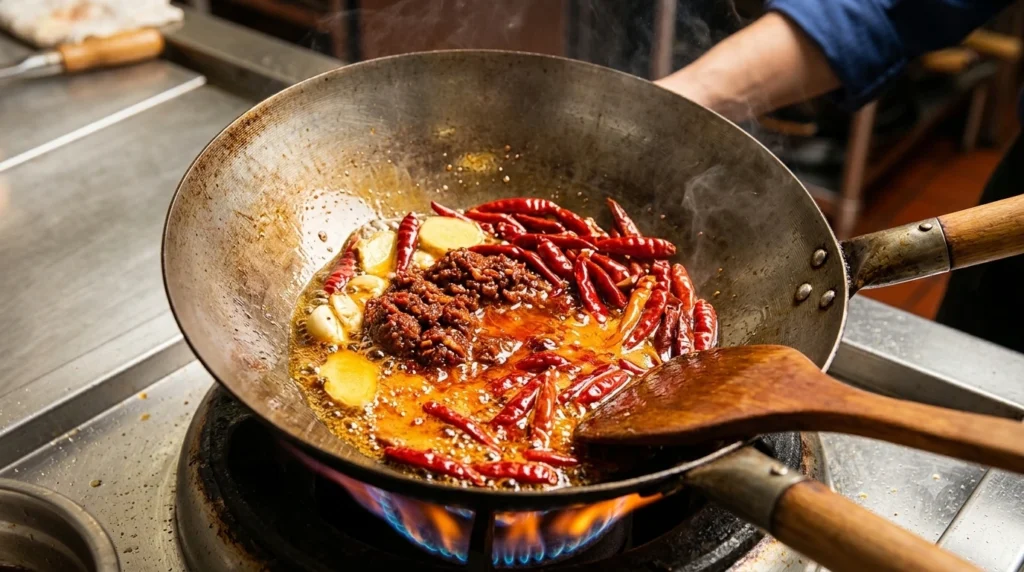
4. Bloom the doubanjiang. Heat oil in a wok over medium heat and add the doubanjiang, along with dried chilies and Sichuan peppercorns, stirring until the oil turns a deep red and becomes fragrant.
5. Cook the meat. Add the ground pork or beef, breaking it apart and cooking until browned and slightly crisp at the edges.
6. Add stock. Pour in the chicken stock, along with soy sauce and a splash of Shaoxing wine, and bring to a simmer.
7. Simmer. Let the sauce simmer for a few minutes to let the flavors meld and slightly reduce.
8. Add the tofu. Gently fold in the blanched tofu cubes, being careful not to stir too aggressively.
9. Thicken. Add the cornstarch slurry gradually, stirring gently, until the sauce thickens into a glossy coating.
10. Finish with Sichuan pepper. Sprinkle freshly ground Sichuan peppercorns and scallion greens over the top, along with a drizzle of chili oil and, if using, a touch of sesame oil.
11. Serve. Serve immediately over steamed rice, while the sauce is still glossy and hot.
Visual cues: the sauce should look deep red and glossy, clinging to the tofu rather than pooling thin and watery at the bottom of the dish. Texture cues: tofu should hold its cube shape but still feel silky and tender when eaten. Color cues: a properly bloomed sauce should look vividly red-orange from the doubanjiang and chili oil, not pale or muddy.
Why Pixian Doubanjiang Is Essential
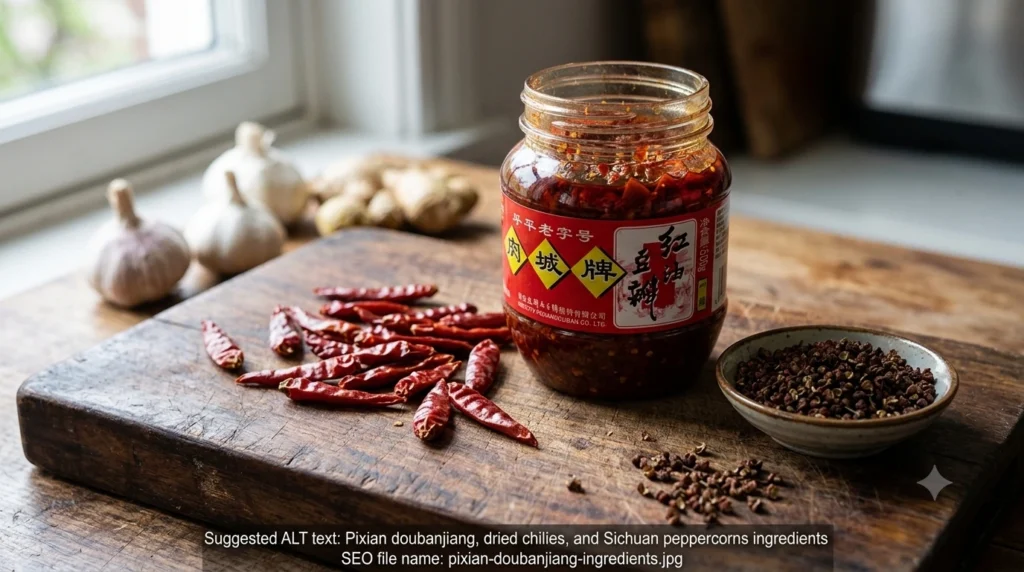
Pixian doubanjiang comes from Pixian, a district near Chengdu with a long, specific history of producing fermented broad bean and chili paste, aged for months or even years in large earthenware jars. That extended fermentation is what gives it its distinct, deeply savory, slightly funky flavor, well beyond what any quickly made chili paste could replicate.
Its color, a deep, almost brick-red, and its flavor, savory and complex rather than simply hot, are both direct results of that long fermentation process. This is why doubanjiang functions less like a condiment and more like a foundational flavor-building ingredient in Sichuan cooking, similar to how miso functions in Japanese cooking.
Substitutes never taste quite the same, since general chili garlic sauce or Korean gochujang, while both flavorful in their own right, are built from entirely different fermentation processes and ingredient bases. If Pixian doubanjiang truly isn’t available, a generic Chinese broad bean chili paste is the closest acceptable alternative, though the flavor will be noticeably less complex. Look for it at Asian grocery stores or online specialty retailers, since it’s become increasingly available outside of China in recent years.
Understanding the “Málà” Flavor
Málà combines two Chinese characters: “má,” meaning numbing, and “là,” meaning spicy. Together, they describe the specific sensory combination that defines much of Sichuan cuisine, and Mapo Tofu is one of its most recognizable expressions.
The two sensations come from entirely different sources and different chemical mechanisms, as covered earlier: capsaicin from chilies produces heat, while hydroxy-alpha-sanshool from Sichuan peppercorns produces numbness. Because they work through different receptors, both sensations can be present at the same time without one canceling the other out, which is exactly the effect the dish is built around.
Balancing both comes down to proportion. Too much chili without enough Sichuan peppercorn leaves the dish simply hot, missing its signature tingle. Too much Sichuan peppercorn without enough chili produces a dish that’s mostly numbing with little actual heat, which misses the mark just as much in the other direction.
Adjusting spice levels is entirely reasonable and common even in Sichuan itself, where spice tolerance varies from cook to cook. Reducing the amount of dried chilies and doubanjiang lowers the heat, while a proportionally smaller amount of Sichuan peppercorn tones down the numbing sensation, without needing to eliminate either element entirely.
Why authentic Mapo Tofu should not simply be “hot.” A dish that’s only spicy, without any numbing sensation or the deep umami from properly bloomed doubanjiang, is missing the core identity of the dish. Real Mapo Tofu is defined by that specific, layered sensory combination, not by heat alone.
Equipment Needed
- Carbon steel wok — ideal for high, even heat and for properly blooming the doubanjiang and spices in oil
- Wok spatula — for gently folding the tofu without breaking it apart
- Chef’s knife — for cutting tofu and mincing aromatics
- Small bowls — useful for organizing prepped ingredients before cooking, since the process moves quickly once it starts
- Saucepan — for blanching the tofu separately
- Measuring spoons — helpful for keeping the doubanjiang, soy sauce, and other seasonings properly balanced
Common Mistakes
- Using firm tofu instead of soft tofu. Produces a denser, less traditional texture. Fix: use soft tofu, handled gently, for an authentic result.
- Skipping the blanching step. Leaves tofu more prone to breaking apart during cooking. Fix: always briefly blanch the tofu cubes first.
- Stirring the tofu too aggressively. Breaks the delicate cubes apart. Fix: fold gently using a spatula rather than stirring vigorously.
- Not blooming the doubanjiang properly in oil. Leaves the sauce tasting flat and underdeveloped. Fix: cook it in oil until the color deepens and it becomes fragrant.
- Using regular chili sauce instead of Pixian doubanjiang. Misses the dish’s core umami and fermented depth. Fix: seek out real Pixian doubanjiang for an authentic result.
- Adding too much heat and not enough Sichuan peppercorn. Produces a dish that’s simply spicy rather than properly málà. Fix: balance both elements deliberately.
- Using pre-ground, stale Sichuan peppercorns. Loses much of its numbing potency over time. Fix: buy whole peppercorns and toast and grind them fresh.
- Adding the cornstarch slurry all at once. Can clump or over-thicken the sauce unevenly. Fix: add it gradually, stirring gently as you go.
- Overcooking the tofu. Turns it rubbery instead of silky. Fix: add it toward the end of cooking and simmer only briefly.
- Not browning the ground meat properly. Leaves it pale and underseasoned in flavor. Fix: cook it until browned and slightly crisp at the edges before adding liquid.
- Using too little oil when blooming spices. Prevents the fat-soluble flavor compounds from properly extracting. Fix: use a generous amount of oil for this step specifically.
- Rushing the simmering step. Doesn’t give the sauce time to develop full depth. Fix: let it simmer for a few minutes before adding the tofu.
- Skipping the chili oil finish. Misses out on extra heat and the dish’s signature glossy sheen. Fix: always finish with a drizzle of good chili oil.
- Not tasting and adjusting seasoning. Doubanjiang brands vary in saltiness and heat, so a fixed recipe amount doesn’t always translate directly. Fix: taste as you build the sauce and adjust accordingly.
- Serving the dish without fresh Sichuan pepper and scallion greens on top. Loses some of the dish’s final aromatic lift. Fix: finish generously right before serving.
Pro Chef Tips
- Always blanch soft tofu briefly before adding it to the sauce.
- Cut tofu cubes to a consistent size for even cooking.
- Use a generous amount of oil to properly bloom the doubanjiang and dried chilies.
- Toast whole Sichuan peppercorns briefly in a dry pan before grinding for the most potent numbing effect.
- Grind Sichuan peppercorns fresh right before using rather than buying pre-ground.
- Brown the ground meat thoroughly before adding any liquid.
- Use real Pixian doubanjiang whenever possible, seeking it out at an Asian grocery store if needed.
- Add the cornstarch slurry gradually, in stages, checking the sauce’s consistency as you go.
- Fold the tofu in gently with the flat side of a spatula rather than stirring with a spoon.
- Keep all ingredients prepped and within reach before you start cooking, since the process moves quickly.
- Balance chili and Sichuan peppercorn deliberately rather than maximizing either one alone.
- Use fresh, high-quality chili oil for the finishing drizzle, since it contributes real flavor, not just heat.
- Add scallion greens at the very end to preserve their fresh, sharp bite.
- Taste the sauce before adding tofu, since it’s much easier to adjust seasoning at that stage.
- Don’t skip the fermented black beans if you can find them; they add a distinct, additional savory layer.
- Use chicken stock rather than water for a more savory sauce base.
- Serve immediately once the sauce has thickened, since the dish is best enjoyed hot and freshly finished.
- If cooking for a milder audience, reduce both chili and peppercorn proportionally rather than eliminating either entirely.
- Use a well-seasoned carbon steel wok if you have one, since it helps build flavor during the blooming stage.
- Pair with plenty of plain steamed rice, since the sauce is intentionally bold and concentrated.
Variations
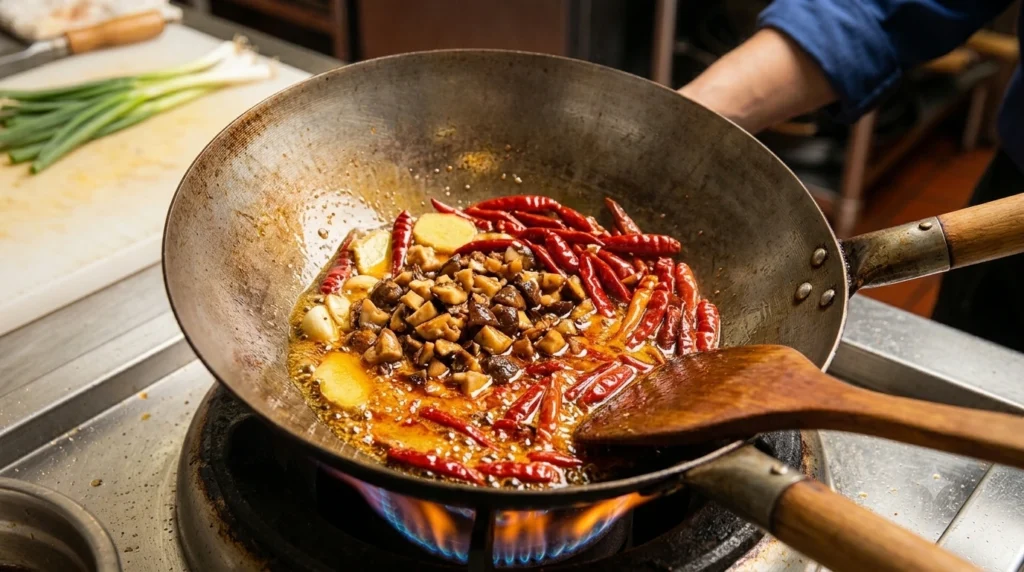
Vegetarian Mapo Tofu: Replace the ground meat with finely chopped mushrooms for a similar texture and added umami, keeping the rest of the sauce the same.
Vegan Mapo Tofu: Use the mushroom substitution above and replace chicken stock with a rich vegetable stock.
Beef Mapo Tofu: Use ground beef instead of pork for a slightly bolder, meatier flavor.
Chicken Mapo Tofu: Ground chicken offers a milder alternative to pork or beef while keeping the same technique.
Seafood Mapo Tofu: Substitute small shrimp or minced fish for the ground meat, adjusting cooking time down since seafood cooks much faster.
Extra-Spicy Sichuan Version: Increase both the doubanjiang and dried chilies for a significantly hotter result, while keeping the Sichuan peppercorn proportionally increased as well to maintain the málà balance.
Japanese Mapo Tofu: A milder, often sweeter adaptation popular in Japan, typically using less doubanjiang and Sichuan peppercorn and sometimes incorporating miso for a different flavor profile, distinct from the authentic Sichuan original.
Storage & Reheating
Refrigeration: Mapo Tofu keeps in an airtight container in the refrigerator for up to 3 days. Freezing: It can be frozen for up to 2 months, though the tofu’s texture will soften somewhat upon thawing, becoming a bit less firm than when freshly made. Best reheating methods: Reheat gently on the stovetop over medium-low heat, stirring carefully to avoid breaking up the tofu, adding a small splash of water or stock if the sauce has thickened too much. Food safety: Cool the dish promptly and refrigerate within two hours of cooking, and reheat thoroughly to a full simmer before serving.
What to Serve with Mapo Tofu
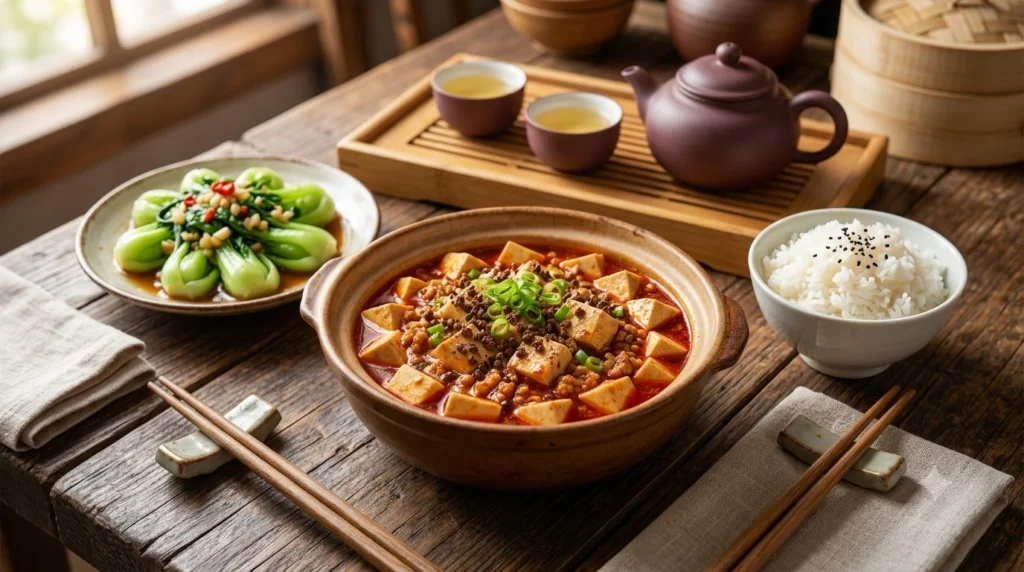
Steamed jasmine rice or short-grain rice are the essential pairing, since the dish’s bold, concentrated sauce is meant to be eaten over plain rice. Stir-fried Chinese greens and garlic bok choy both offer a clean, mildly bitter contrast to the rich sauce. A cucumber salad, often lightly pickled or dressed with vinegar, brings a cooling, refreshing element to balance the heat. For a larger meal, a simple egg drop soup or hot and sour soup rounds things out nicely as a starter.
Beverage pairings: Chinese tea, particularly jasmine tea or a lighter oolong, is a traditional, non-alcoholic pairing that helps cleanse the palate between bites. A crisp, cold beer also works well against the dish’s heat.
Frequently Asked Questions
1. Why is Mapo Tofu spicy? Its heat comes primarily from capsaicin in dried chilies and Pixian doubanjiang, while a separate numbing sensation comes from Sichuan peppercorns, together forming the dish’s signature málà flavor.
2. Can I make Mapo Tofu vegetarian? Yes, finely chopped mushrooms make an excellent substitute for ground meat, keeping a similar texture and adding their own umami depth.
3. Can I use firm tofu instead of soft tofu? You can, and it holds together more easily, but it produces a denser texture than the traditional silky result soft tofu provides.
4. What is doubanjiang? Doubanjiang is a fermented broad bean and chili paste from Sichuan, aged for months or years, that forms the essential savory, umami-rich base of the sauce.
5. Can I substitute Sichuan peppercorns with something else? There’s no true substitute for their specific numbing effect, though black pepper can add heat in a pinch without replicating the same tingling sensation.
6. Why does my tofu break apart during cooking? This usually happens from stirring too aggressively or skipping the blanching step. Blanch the tofu first and fold it in gently rather than stirring hard.
7. Can I freeze Mapo Tofu? Yes, it freezes reasonably well for up to about 2 months, though the tofu’s texture softens somewhat after thawing.
8. How do restaurants make it taste so rich? Properly blooming the doubanjiang and spices in oil, using real Pixian doubanjiang rather than a generic substitute, and building the sauce in stages rather than dumping everything in at once are the biggest factors.
9. What’s the difference between Mapo Tofu and other spicy tofu dishes? Authentic Mapo Tofu is defined specifically by its málà combination of numbing Sichuan peppercorn and chili heat, along with the deep umami from fermented doubanjiang, distinguishing it from dishes that are simply spicy.
10. Can I make Mapo Tofu less spicy? Yes, reduce the amount of doubanjiang and dried chilies proportionally, while keeping a smaller, balanced amount of Sichuan peppercorn to preserve some of the dish’s signature character.
11. Do I need a wok to make this dish properly? A wok is ideal for evenly blooming the spices in oil, but a wide, heavy skillet can work as a reasonable substitute.
12. Can I use ground turkey instead of pork or beef? Yes, though it will produce a milder flavor than traditional pork or beef, similar to using ground chicken.
13. What can I use if I can’t find fermented black beans? The dish will still work well without them, though they add a distinct extra layer of savory depth if you’re able to find them at an Asian grocery store.
14. Is Mapo Tofu traditionally very hot in spice level? It’s meant to be noticeably spicy and numbing, though the exact intensity varies by cook and region, and it can be adjusted to personal preference without losing its core identity.
15. What’s the best way to reheat leftover Mapo Tofu without breaking the tofu further? Reheat gently over low to medium heat, stirring carefully and infrequently, rather than at a hard boil, to keep the tofu as intact as possible.
Recipe Card
Authentic Mapo Tofu
| Prep Time | 20 minutes |
| Cook Time | 20 minutes |
| Total Time | 40 minutes |
| Servings | 4 |
| Cuisine | Sichuan, Chinese |
| Course | Main Dish |
| Calories (estimated) | 340 per serving |
Ingredients
- 14 oz soft tofu, cut into 3/4-inch cubes
- 3 tablespoons vegetable oil
- 3 tablespoons Pixian doubanjiang
- 4 to 6 dried Sichuan chilies
- 1 tablespoon Sichuan peppercorns, plus extra for garnish
- 8 oz ground pork
- 1 tablespoon fermented black beans, rinsed and chopped (optional)
- 3 garlic cloves, minced
- 1 tablespoon fresh ginger, minced
- 3 scallions, whites and greens separated, sliced
- 1 tablespoon light soy sauce
- 1 tablespoon Shaoxing wine
- 3/4 cup chicken stock
- 1 tablespoon cornstarch mixed with 2 tablespoons water
- 1 tablespoon chili oil, for finishing
- 1 teaspoon sesame oil (optional)
Instructions
- Gently simmer the tofu cubes in lightly salted water for 1 to 2 minutes. Drain carefully and set aside.
- Toast the Sichuan peppercorns in a dry pan briefly, then grind and set aside.
- Heat the oil in a wok over medium heat. Add the doubanjiang and dried chilies, stirring until the oil turns deep red and fragrant.
- Add the ground pork, breaking it apart, and cook until browned.
- Stir in the fermented black beans, garlic, ginger, and scallion whites, cooking briefly until fragrant.
- Add the soy sauce, Shaoxing wine, and chicken stock. Bring to a simmer and cook for 3 to 4 minutes.
- Gently fold in the blanched tofu cubes.
- Slowly add the cornstarch slurry, stirring gently, until the sauce thickens and turns glossy.
- Sprinkle in half the ground Sichuan peppercorns and stir gently to combine.
- Transfer to a serving dish and top with scallion greens, remaining Sichuan peppercorn, a drizzle of chili oil, and sesame oil if using.
- Serve immediately with steamed rice.
Chef Notes: Handle the tofu gently throughout, and taste the sauce before adding tofu, since doubanjiang brands vary in saltiness and heat.
Storage Notes: Refrigerate up to 3 days or freeze up to 2 months. Reheat gently, stirring carefully to avoid breaking the tofu.
Nutrition Disclaimer: Calorie and nutrition estimates are approximate and will vary based on specific ingredients and portion sizes used.
Conclusion
Mapo Tofu rewards a cook who respects its balance. It isn’t a dish about maximum heat; it’s about getting numbing Sichuan peppercorn, real chili warmth, and the deep, fermented umami of doubanjiang to show up together in the same bite. Bloom your spices properly, handle the tofu gently, and don’t shortcut the doubanjiang, and you’ll end up with something that tastes genuinely like Chengdu rather than a generic spicy stir-fry.
Make it once, get that málà balance right, and you’ll understand exactly why this dish, born out of a small restaurant kitchen generations ago, became one of the most recognized expressions of Sichuan cooking in the world. That’s Mapo Tofu done right.