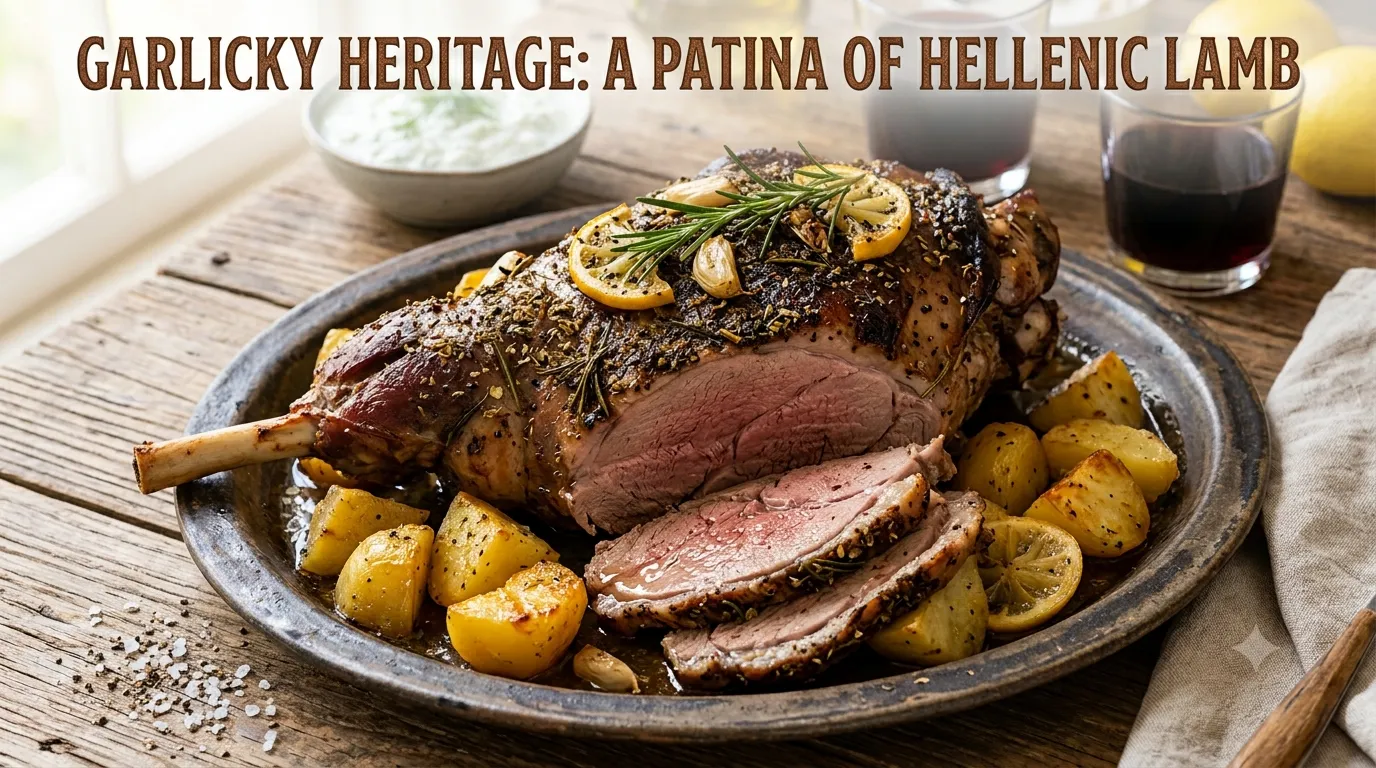
Authentic Greek Slow Roasted Leg of Lamb Recipe
If you are looking for a centerpiece that commands the table, fills the house with the aroma of garlic, lemon, and oregano, and yields meat so tender it falls apart with a fork, you have arrived at the right place.
A proper Greek Slow Roasted Leg of Lamb is an experience. This is not the quick-roasted, pink-in-the-middle lamb you might find in a French bistro. This is the deeply savory, heavily herbaceous, slow-cooked masterpiece that anchors a traditional Greek holiday recipe. Whether you are hosting Easter, preparing a Greek Sunday roast, or simply gathering loved ones around the table, this guide will teach you exactly how to recreate restaurant-quality, authentic Greek lamb right in your own kitchen.
Table of Contents
What Is Greek Slow Roasted Leg of Lamb?
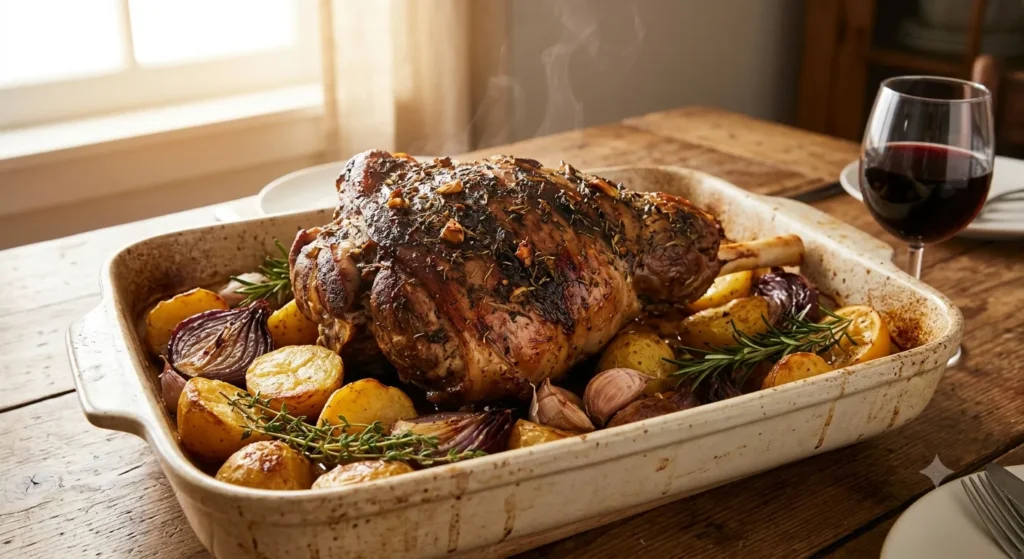
Greek Slow Roasted Leg of Lamb—often referred to as Arni sto Fourno when cooked in the oven—is a foundational dish in Greek cuisine. It consists of a whole leg (or shoulder) of lamb deeply pierced with garlic slivers, bathed in extra virgin olive oil and fresh lemon juice, heavily seasoned with oregano, and cooked low and slow until the meat yields completely to a fork.
This dish is one of Greece’s most celebrated meals. It is the definitive Greek Easter lamb, served after the midnight resurrection service or during the long Sunday feast to break the Lenten fast. During Greek Orthodox Easter, lamb symbolizes sacrifice and renewal. However, its importance extends far beyond April or May. A Greek Sunday roast brings extended families together, turning a standard weekend afternoon into an hours-long event of eating, drinking, and talking.
Slow roasting is essential here. By keeping the oven temperature low and covering the meat for the majority of the cooking time, the tough, hard-working muscles of the leg transform into fork-tender meat. The classic flavor profile—garlic, lemon, olive oil, and oregano—cuts through the natural richness of the lamb, balancing the fat with bright acidity and earthy aromas.
The History of Greek Roast Lamb
The tradition of roasting lamb in Greece stretches back thousands of years. Ancient Greeks routinely roasted meats over open fires and in rudimentary clay ovens for religious festivals and communal gatherings. The cultural significance of lamb during Greek Orthodox Easter specifically ties to the Passover lamb, representing innocence, sacrifice, and the arrival of spring when lambs were historically plentiful.
Regional roasting methods vary across mainland Greece and the islands. In mountainous regions like Epirus, lamb is often roasted whole on a spit (Ovelias) over charcoal. On the islands, where high winds made open fires difficult, locals relied on the village bakery. Families would prepare their roasting pans on Sunday morning and carry them to the local bakery’s communal wood-fired oven (the fournos), picking them up hours later after church.
Today, while the traditional wood-fired ovens impart a distinct smokiness, modern home ovens are perfectly equipped to replicate this tender magic. The core principle remains the same: indirect, consistent heat over a long period. Roast lamb remains central to Greek hospitality because it is designed for sharing, requiring patience, care, and an abundance of local ingredients.
Why This Dish Is So Popular
The enduring popularity of a Traditional Greek Roast comes down to its sensory perfection:
- Fall-apart tenderness: You will not need a sharp carving knife. The meat shreds beautifully.
- Crispy caramelized exterior: Finishing the roast at a high temperature uncovers a dark, savory crust.
- Bright lemon flavor: Lemon juice tenderizes the meat and brightens the heavy, rich fat.
- Fragrant Mediterranean herbs: Oregano and rosemary infuse every bite with the scent of the Greek countryside.
- Rich pan juices: The rendered lamb fat mixes with lemon, garlic, and stock, creating a built-in sauce for potatoes.
- Perfect centerpiece: It visually dominates the table, making holiday hosts look like seasoned chefs.
- Excellent leftovers: The flavor of Garlic Herb Lamb deepens after a day in the fridge, making it ideal for weekday wraps and salads.
The Science Behind Slow Roasting Lamb
Understanding the science of cooking is how you guarantee success. Slow roasted lamb relies on a few fundamental food science principles.
Collagen Breakdown
A leg of lamb contains a high amount of connective tissue, primarily collagen. If you cook it quickly, the collagen shrinks and toughens, resulting in chewy meat. When you cook lamb at a low temperature (around 325°F/160°C) for several hours, that tough collagen gradually breaks down and converts into gelatin. This gelatin coats the muscle fibers, giving the meat that succulent, melt-in-your-mouth texture.
Fat Rendering and Moisture Retention
Slow roasting allows the thick cap of fat on the lamb to render slowly. As it melts, it bastes the meat from the outside in. Keeping the pan tightly covered with foil traps the steam from the lemon juice and stock, braising the meat in a humid environment and preventing moisture loss.
The Maillard Reaction
When you remove the foil at the end of the cooking process and increase the heat, the surface of the lamb undergoes the Maillard reaction. Amino acids and reducing sugars react under high heat to create hundreds of new flavor compounds and a dark, caramelized crust.
Carryover Cooking and Resting
When you remove the lamb from the oven, it continues to cook. The internal temperature can rise by 5 to 10 degrees (F). Resting the meat is strictly non-negotiable. As the meat cooks, muscle fibers tense up and squeeze juices toward the center. Resting allows those fibers to relax and redistribute the juices evenly. If you cut into it immediately, the juices will flood the cutting board, leaving the meat dry.
| Doneness Goal | Target Internal Temp (Before Resting) |
| Traditional Greek (Well Done/Fall-Apart) | 170°F – 175°F (77°C – 79°C) |
| Medium (Pink center, sliceable) | 135°F – 140°F (57°C – 60°C) |
Note: Authentic Greek lamb is historically cooked well-done until it is spoon-tender, aiming for the higher temperature bracket.
Choosing the Best Leg of Lamb
Selecting the right cut is the foundation of the Best Greek Lamb Recipe.
Cut Comparison Table
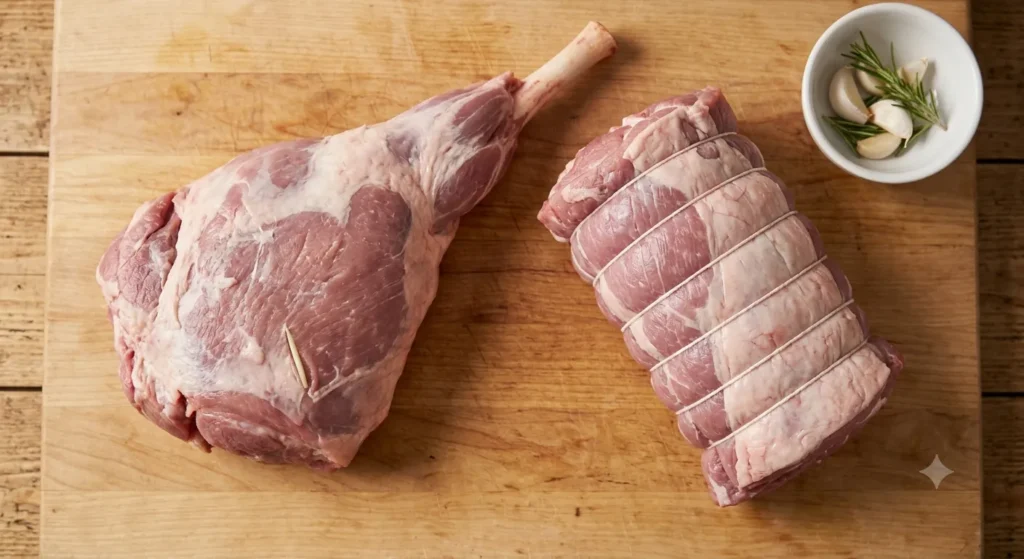
| Feature | Bone-In Leg of Lamb | Boneless Leg of Lamb | Butterflied Leg | Lamb Shoulder |
| Flavor | Deep, rich, marrow adds flavor | Very good, but slightly less robust | Excellent crust-to-meat ratio | Extremely rich and fatty |
| Tenderness | Excellent for slow roasting | Great, easier to slice | Less tender, meant for grilling | The most fork-tender |
| Cooking Time | 3.5 to 4.5 hours | 2.5 to 3.5 hours | 45 to 60 minutes | 4 to 5 hours |
| Ease of Carving | Requires maneuvering around bone | Very easy, slices cleanly | Very easy, flat pieces | Shreds easily (pulled lamb) |
Grass-fed vs Grain-finished Lamb
In the US, you will often find lamb imported from New Zealand or Australia, which is typically 100% grass-fed. This lamb is smaller, leaner, and has a more pronounced, earthy “lamb” flavor. American lamb is generally larger, grain-finished, and has a milder, richer, beef-like flavor due to higher fat marbling. For an authentic Greek taste, grass-fed lamb is much closer to the diet of sheep grazing on Mediterranean hillsides.
Best Choice for Beginners
A semi-boneless or boneless leg of lamb tied with butcher’s twine is highly recommended for first-timers. It cooks more evenly and removes the stress of carving around the bone.
Ingredients Explained
Every ingredient in this Mediterranean Roast Lamb serves a specific purpose.
| Ingredient | Purpose in the Recipe |
| Leg of Lamb (5-7 lbs) | The star of the show; provides rich meat and rendered fat. |
| Extra Virgin Olive Oil | Acts as a binder for the herbs and helps caramelize the exterior. |
| Fresh Garlic (1 whole head) | Slipped into the meat to flavor it from the inside out. |
| Fresh Lemons (3-4) | Tenderizes the meat and cuts through the heavy fat. |
| Fresh & Dried Oregano | The quintessential Greek herb; dried is pungent, fresh is bright. |
| Fresh Rosemary & Thyme | Adds piney, earthy Mediterranean aromas. |
| Salt & Black Pepper | Generous kosher salt is mandatory for drawing out flavors. |
| Dijon Mustard (optional) | Emulsifies the marinade and helps form a savory crust. |
| Chicken Stock or Water | Creates steam to keep the lamb moist while braising. |
| White Wine (dry) | Deglazes the pan and adds aromatic acidity to the pan juices. |
| Baby Yukon Gold Potatoes | Absorbs the rendered lamb fat and lemon juice (liquid gold). |
| Red Onions | Serves as a sweet, caramelized bed for the lamb to rest on. |
The Secret to Authentic Greek Roast Lamb
The difference between a bland piece of meat and an authentic Greek Leg of Lamb Recipe comes down to a few specific techniques utilized by Greek yiayias (grandmothers) for generations.
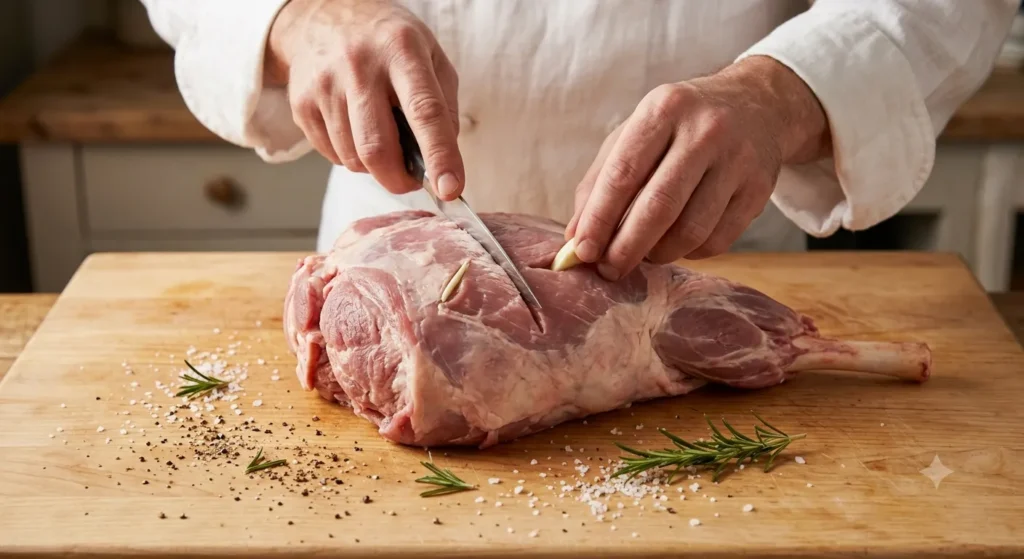
- Garlic Slivers: You cannot just rub minced garlic on the outside; it will burn. You must cut deep, narrow slits into the meat and shove slivers of garlic directly into the muscle.
- Generous Lemon Seasoning: Do not hold back on the lemon. The acid is crucial. Rubbing the meat with lemon halves before applying the marinade ensures the flavor penetrates.
- Proper Overnight Marination: Time is an ingredient. Letting the lamb sit in the fridge for 12 to 24 hours allows the salt to dry-brine the meat, drawing moisture out and pulling the flavors back in.
- Covered to Uncovered Roasting: The steam environment created by a tight foil seal is the secret to the fall-apart texture. If you roast uncovered the whole time, the outside will burn before the inside breaks down.
- Basting: Pouring those rich pan juices back over the meat during the final uncovered roasting phase ensures a lacquered, flavorful crust.
Step-by-Step Technique
Cooking Timeline Overview
- Day 1 (Morning or Evening): Prep and marinate the lamb.
- Day 2 (4 hours before serving): Bring lamb to room temperature, prep potatoes.
- Day 2 (3 hours before serving): Roast covered.
- Day 2 (45 mins before serving): Roast uncovered to brown.
- Day 2 (30 mins before serving): Rest and carve.
1. Preparing the Lamb
Remove the lamb from its packaging and pat it completely dry with paper towels. Moisture on the surface prevents the oil and herbs from sticking. Using a sharp paring knife, score the fat cap in a diamond pattern. This helps the fat render out and allows the seasoning to penetrate.
2. Inserting the Garlic
Cut 4-5 cloves of garlic into thin slivers. Take your paring knife and stab 15 to 20 deep, narrow holes all over the lamb. Push a sliver of garlic deep into each hole. Push it far enough so it does not poke out; otherwise, it will burn.
3. Making and Applying the Marinade
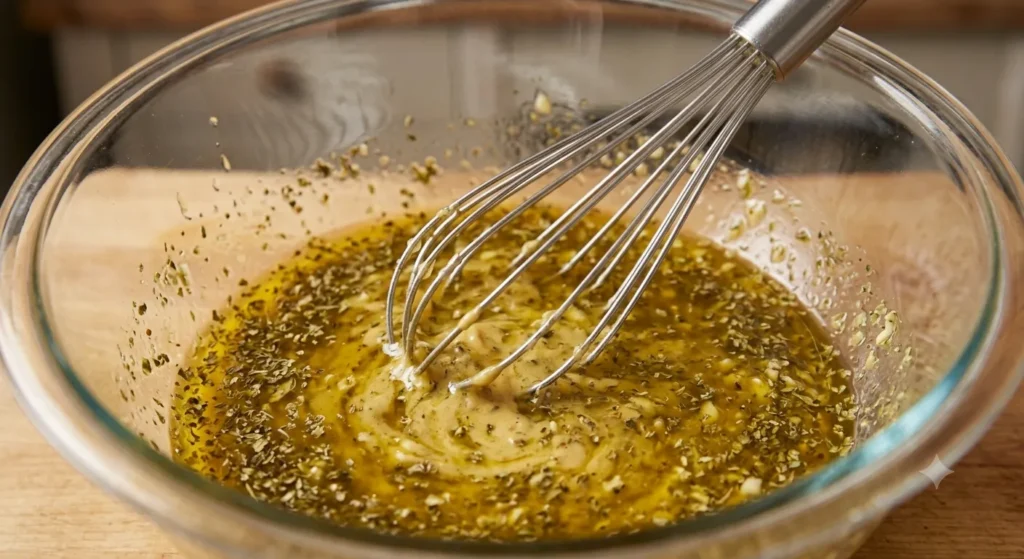
In a bowl, whisk together extra virgin olive oil, the juice of 2 lemons, Dijon mustard, minced garlic, dried oregano, chopped fresh rosemary, salt, and pepper. Massage this paste aggressively all over the lamb, pushing it into the scored fat and all the crevices. Cover tightly and refrigerate overnight.
4. Preparing the Roasting Pan
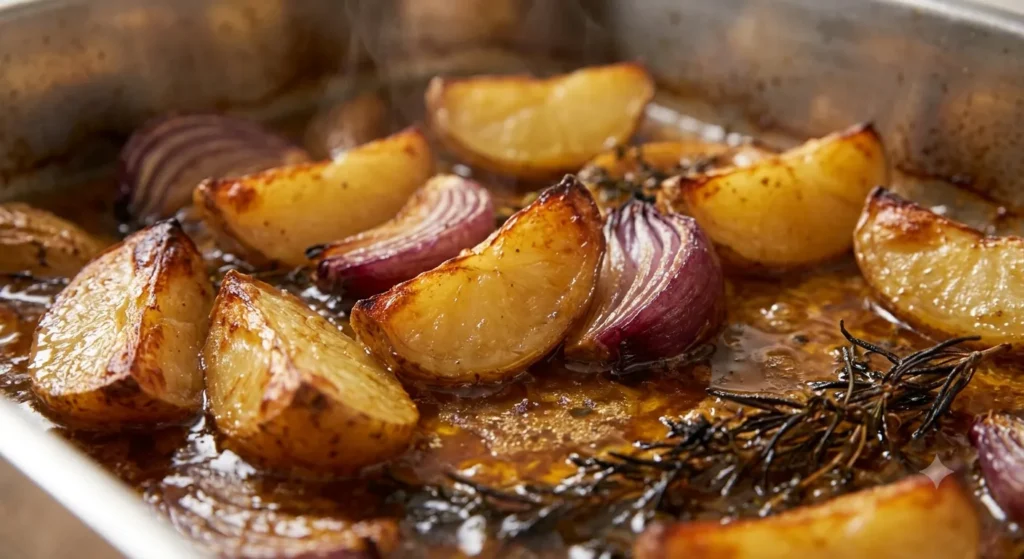
An hour before cooking, take the lamb out of the fridge. Preheat your oven to 325°F (160°C). In a large roasting pan, scatter quartered baby potatoes and thick wedges of red onion. Toss them lightly in olive oil, lemon juice, salt, and oregano.
5. Slow Roasting Covered
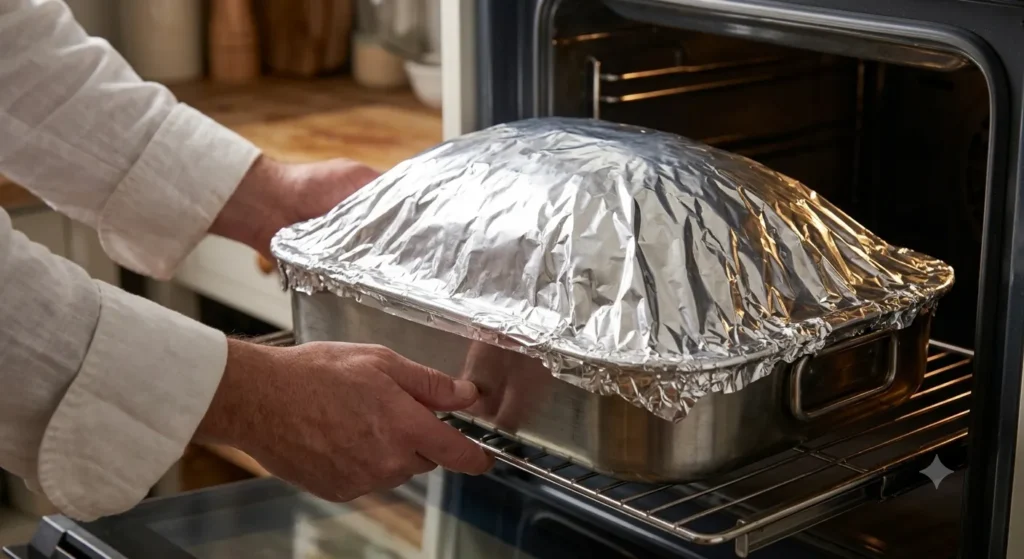
Place the lamb directly on top of the potatoes and onions. Pour a cup of chicken stock and a splash of white wine into the bottom of the pan (avoid pouring it over the meat, which washes away the marinade). Cover the entire pan tightly with two layers of heavy-duty aluminum foil. Roast for 2.5 to 3 hours undisturbed.
6. Browning and Basting
Remove the pan from the oven and carefully peel back the foil (watch out for hot steam). Increase the oven temperature to 400°F (200°C). Baste the lamb heavily with the pan juices. Return it to the oven uncovered for 30 to 45 minutes until the skin is deeply browned and crispy.
7. Resting and Carving
Remove the lamb to a cutting board, tent it loosely with foil, and let it rest for a full 30 to 45 minutes. Leave the potatoes in the warm oven if they need to crisp up further. Carve the lamb against the grain or simply shred it with two forks if you achieved true fall-apart tenderness.
Equipment Needed
You do not need specialized gadgets, but reliable equipment makes the process much smoother:
- Large Heavy-Duty Roasting Pan: Thick walls distribute heat evenly and prevent pan juices from scorching.
- Meat Thermometer: Instant-read or probe style. Essential for avoiding overcooked or undercooked meat.
- Sharp Paring Knife: For creating deep, narrow slits for the garlic.
- Carving Knife: A long, sharp blade for clean slices.
- Kitchen Twine: (If using a boneless leg) to keep the meat in a uniform shape for even cooking.
- Heavy-Duty Aluminum Foil: Standard foil tears easily and lets steam escape; heavy-duty locks moisture in tightly.
- Basting Spoon or Brush: To coat the meat with pan juices during the final high-heat phase.
Common Mistakes
Even experienced cooks can trip up when preparing Oven Roasted Lamb. Here are 15 common mistakes and how to fix them.
1. Cooking straight from the fridge.
Why it happens: Rushing the prep process.
How to fix it: Let the lamb sit at room temperature for 1 hour before roasting. Cold meat cooks unevenly, leaving the center raw while the outside overcooks.
2. Skipping the overnight marinade.
Why it happens: Forgetting to prep the day before.
How to fix it: Even 2 hours of marinating is better than nothing, but aim for overnight so the salt can penetrate the dense leg muscle.
3. Not scoring the fat.
Why it happens: Assuming the fat will just melt on its own.
How to fix it: Always score the fat cap. It prevents the meat from curling and allows the fat to render properly.
4. Roasting uncovered the whole time.
Why it happens: Treating slow roast lamb like a quick roast beef.
How to fix it: Cover tightly with foil for the first 80% of the cook time. Without a cover, the steam escapes, leaving you with dry, tough meat.
5. Leaving garlic exposed on the surface.
Why it happens: Not pushing the garlic slivers deep enough into the slits.
How to fix it: Shove the garlic entirely into the meat using your finger. Exposed garlic turns bitter and black in the oven.
6. Using bottled lemon juice.
Why it happens: Convenience.
How to fix it: Only use fresh lemons. Bottled juice contains preservatives that alter the flavor and make the meat taste metallic.
7. Overcooking (ignoring internal temp).
Why it happens: Relying strictly on the clock rather than a thermometer.
How to fix it: Ovens vary wildly. Check the internal temperature 30 minutes before the recipe says it should be done.
8. Undercooking (not letting collagen melt).
Why it happens: Pulling it out too early because it “looks” done.
How to fix it: If you want fall-apart meat, it must reach 170°F+ internally and feel soft when a fork is twisted in it.
9. Rushing the resting period.
Why it happens: Hungry guests.
How to fix it: Plan your timeline to allow a strict 30-45 minute rest. Slicing early ruins the moisture level of the entire roast.
10. Carving with the grain.
Why it happens: Slicing whatever direction is easiest.
How to fix it: Look at the direction the muscle fibers are running and cut perpendicular (across) them to ensure chewable, tender bites.
11. Not basting.
Why it happens: Walking away during the final 30 minutes.
How to fix it: Set a timer. Baste every 10-15 minutes during the uncovered phase to build that beautiful crust.
12. Adding potatoes too early.
Why it happens: Throwing everything in the pan at once for a 4-hour shoulder roast.
How to fix it: For very long roasts (4+ hours), add the potatoes halfway through so they don’t turn into mashed potatoes. For a standard 3-hour leg, putting them in at the start is fine.
13. Using old, stale dried herbs.
Why it happens: Using a jar of oregano from three years ago.
How to fix it: Smell your dried oregano. If it doesn’t smell punchy and vibrant, throw it out and buy fresh spices.
14. Forgetting to season the cavity of a boneless leg.
Why it happens: Treating a boneless leg like a solid block of meat.
How to fix it: Untie it, season the inside heavily with salt, pepper, and garlic, then tie it back up.
15. Washing the marinade away with stock.
Why it happens: Pouring the cooking liquid directly over the meat before putting it in the oven.
How to fix it: Pour the stock and wine carefully into the corner of the pan, directly into the potatoes.
Pro Chef Tips
To recreate the magic of a bustling Athens taverna, keep these 20 professional tips in your arsenal:
- Stab deep: When making slits for garlic, push your paring knife down a full two inches.
- Salt the garlic: Roll your garlic slivers in kosher salt before inserting them into the meat. The salt draws moisture to the garlic, flavoring the interior.
- Rub with spent lemons: After juicing your lemons, vigorously rub the cut sides over the raw meat before marinating.
- Source Greek oregano: Greek oregano (Origanum vulgare hirtum) has a distinctly savory, earthy flavor compared to Italian oregano. Seek it out.
- Prevent burning: If the pan juices evaporate entirely during the high-heat phase, add half a cup of hot water immediately to prevent the drippings from smoking.
- Mustard is a binder: Dijon mustard doesn’t just add tang; it acts as an emulsifier, helping the oil and lemon juice stick to the meat.
- Bone-in for insulation: The bone conducts heat slowly, keeping the meat closest to it incredibly moist.
- The onion bed: Roasting the meat on top of thick onion slices prevents the bottom of the lamb from boiling in the stock.
- Liquid gold: Never throw away pan juices. Skim the excess fat and pour the remaining jus over the sliced meat.
- Probe the thickest part: Always insert your thermometer into the thickest part of the leg, avoiding the bone, which can give a false hot reading.
- Foil tenting: When resting, just lay the foil gently on top. Do not wrap it tight, or you will steam away your crispy crust.
- Fresh + Dried: Use dried oregano for the marinade (it withstands long cooking better) and fresh herbs for finishing.
- The covered flip: If you are cooking a boneless leg, flip it halfway through the covered cooking time for even braising.
- Potato sizing: Do not cut your potatoes too small. Halves or large quarters are best to withstand a 3-hour cook time.
- Mid-cook lemon boost: Squeeze half a fresh lemon over the potatoes right when you remove the foil for the browning phase.
- Quality olive oil: Use a fruity, high-quality extra virgin olive oil. It is a main flavor component, not just a cooking fat.
- Dry meat equals good crust: We mentioned patting it dry before marinating; this ensures the mustard/oil rub adheres securely.
- Patience is a virtue: If the meat isn’t tender at 3 hours, cover it back up and give it another 45 minutes. Tough meat just needs more time.
- Fat is flavor: Trim excess, hard clumps of fat, but leave a good 1/4 inch cap on the lamb to render and baste the meat.
- Heavy-duty seal: If you only have cheap, thin foil, use three layers and crimp the edges aggressively around the pan to trap the steam.
Delicious Variations
While the traditional Greek Slow Roasted Leg of Lamb is perfect as is, regional and modern variations abound.
Greek Easter Lamb (Ovelias Style in the Oven)
To replicate the smoky flavor of lamb spit-roasted over charcoal for Easter, rub the lamb with a small amount of smoked paprika along with the traditional oregano and garlic.
Boneless Roast
A boneless leg cooks faster. Untie the butcher’s string, stuff the inside with feta cheese, spinach, and garlic, then re-tie it tightly before roasting.
Lamb Shoulder Version
If you prefer meat that completely shreds like pulled pork, use a bone-in lamb shoulder instead of the leg. The shoulder has more marbling and connective tissue. Add an extra hour of covered cooking time.
Red Wine Roast
Swap the lemon juice in the marinade for a robust dry red wine and add two tablespoons of tomato paste to the braising liquid. This creates a deeply rich, stew-like pan sauce.
Slow Cooker / Dutch Oven Version
For hands-off cooking, sear the lamb on the stovetop first. Transfer to a slow cooker or a heavy cast-iron Dutch oven with tight lids. Add the lemon, garlic, oregano, and stock. Cook on LOW for 8 hours (slow cooker) or bake at 300°F (150°C) for 4 hours (Dutch oven).
Storage & Reheating
Greek roast lamb makes exceptional leftovers. Proper storage preserves the moisture and flavor.
Refrigeration
Allow the lamb to cool to room temperature (but do not leave it out longer than two hours). Store the carved meat in an airtight container in the refrigerator for up to 4 days. Keep the pan juices in a separate small jar.
Freezing
Roast lamb freezes wonderfully. Place sliced or shredded meat in a freezer-safe zip-top bag. Pour a few spoonfuls of the pan juices over the meat before sealing to lock in moisture. Squeeze out as much air as possible and freeze for up to 3 months.
Best Reheating Methods
Avoid the microwave, which turns lamb rubbery and gives it an off-flavor.
- Oven Method: Place the lamb in a baking dish, add a splash of chicken stock or saved pan juices, cover tightly with foil, and heat at 325°F (160°C) until warmed through (about 15-20 minutes).
- Stovetop Method: Heat a skillet over medium-low heat. Add a splash of olive oil and gently warm the shredded lamb, tossing frequently.
Using Leftover Lamb
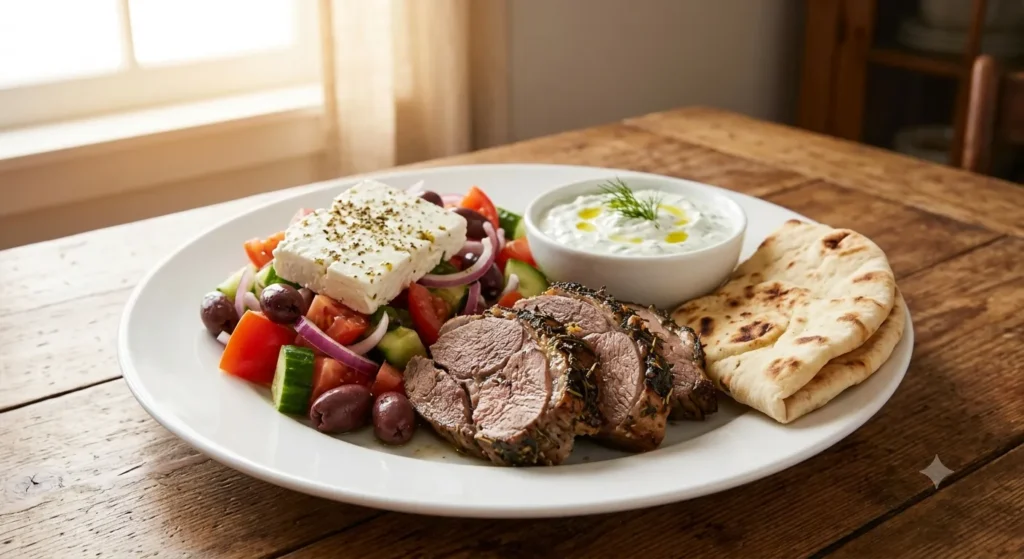
Stuff cold or warmed leftover lamb into warm pita bread with a heavy smear of tzatziki, tomatoes, and red onions for an incredible homemade souvlaki.
What to Serve with Greek Slow Roasted Leg of Lamb
A Greek holiday recipe is never served alone. The table should be overflowing with vibrant sides that complement the rich meat.
Classic Side Dishes:
- Greek Lemon Potatoes: Usually cooked directly in the pan with the lamb, but you can roast an extra batch separately if hosting a crowd.
- Greek Village Salad (Horiatiki): A fresh, acidic mix of tomatoes, cucumbers, red onions, Kalamata olives, and a large slab of Feta cheese (no lettuce).
- Tzatziki: The cool, garlic-and-cucumber yogurt dip is mandatory for dipping the meat.
- Green Beans (Fasolakia): Greek-style green beans braised in tomato sauce and olive oil.
- Warm Crusty Bread: Essential for mopping up the pan juices.
Desserts:
- Baklava: Flaky phyllo dough layered with walnuts and drenched in honey syrup.
- Galaktoboureko: A rich semolina custard baked in phyllo and soaked in lemon syrup.
- Greek Yogurt with Honey: A lighter, digestif-style dessert topped with crushed walnuts.
Drink Pairings:
- Agiorgitiko: A versatile, fruit-forward Greek red wine that handles the garlic well.
- Xinomavro: A bold, tannic Greek red (similar to Nebbiolo) that cuts through the rich lamb fat beautifully.
- Cabernet Sauvignon: If you cannot find Greek wines, a solid Cabernet is a perfect match.
- Assyrtiko: For white wine lovers, this crisp, mineral-heavy wine from Santorini holds up to the heavy lemon flavors.
Frequently Asked Questions
1. Can I use lamb shoulder instead of leg?
Yes, lamb shoulder is an excellent alternative. It has more fat and connective tissue, meaning it yields even softer, pulled-style meat. You will need to increase the covered cooking time by about an hour.
2. How long should I roast it?
For a 5 to 7-pound bone-in leg, slow roast it covered for 2.5 to 3 hours at 325°F (160°C), then uncover and roast for an additional 30 to 45 minutes at 400°F (200°C).
3. Should I marinate overnight?
For the best authentic flavor, yes. Marinating overnight allows the salt and lemon to penetrate the meat, dry-brining it and resulting in a much more flavorful and tender roast.
4. Can I prepare it ahead?
You can do all the prep work, including inserting the garlic and rubbing the meat with the marinade, up to 24 hours in advance. Do not cook it ahead of time; roast lamb is best served fresh from the oven after its initial resting period.
5. Can I freeze leftovers?
Yes. Store the meat with a little bit of the pan juices in a vacuum-sealed or zip-top freezer bag for up to 3 months. Thaw overnight in the fridge before reheating.
6. Why is my lamb tough?
If your slow-roasted lamb is tough, you likely did not cook it long enough. Connective tissue (collagen) takes hours to break down into gelatin. If it is tough, cover it back up and put it in the oven for another 45 minutes.
7. Should I cover the roast?
Yes. Covering the roasting pan tightly with heavy-duty foil traps steam, ensuring the meat braises and remains incredibly moist. Only uncover it at the very end to crisp the exterior.
8. What internal temperature is best?
For traditional, fall-apart Greek lamb, aim for an internal temperature of 170°F to 175°F (77°C – 79°C). For sliceable, medium-pink lamb, aim for 135°F to 140°F (57°C – 60°C).
9. Boneless vs. bone-in?
Bone-in provides a slightly better flavor and helps insulate the meat. Boneless is easier to carve, cooks a bit faster, and allows you to season the interior cavity. Both work wonderfully.
10. Can I add carrots?
While not strictly traditional for this specific dish, you can add large chunks of carrots to the pan along with the potatoes for extra sweetness.
11. Convection or conventional oven?
A conventional oven setting is preferred for the low-and-slow covered phase. You can switch to convection (fan) for the final uncovered 30 minutes to get an extra crispy crust.
12. How to reheat without drying out?
Reheat covered in the oven at a low temperature (325°F) with a splash of broth or pan juices. Avoid the microwave.
13. Is this recipe gluten-free?
Yes, this authentic Greek lamb recipe is naturally gluten-free. Ensure any chicken stock or mustard you use is certified gluten-free.
14. Can I use dried garlic?
No. Fresh garlic is absolutely critical to the flavor profile of Greek food. Garlic powder will burn on the exterior and will not penetrate the meat.
15. Can I use a roasting rack?
You can, but it is better to place the lamb directly on top of the potatoes and onions. This allows the meat juices to drip directly onto the vegetables, flavoring them perfectly.
Recipe Card
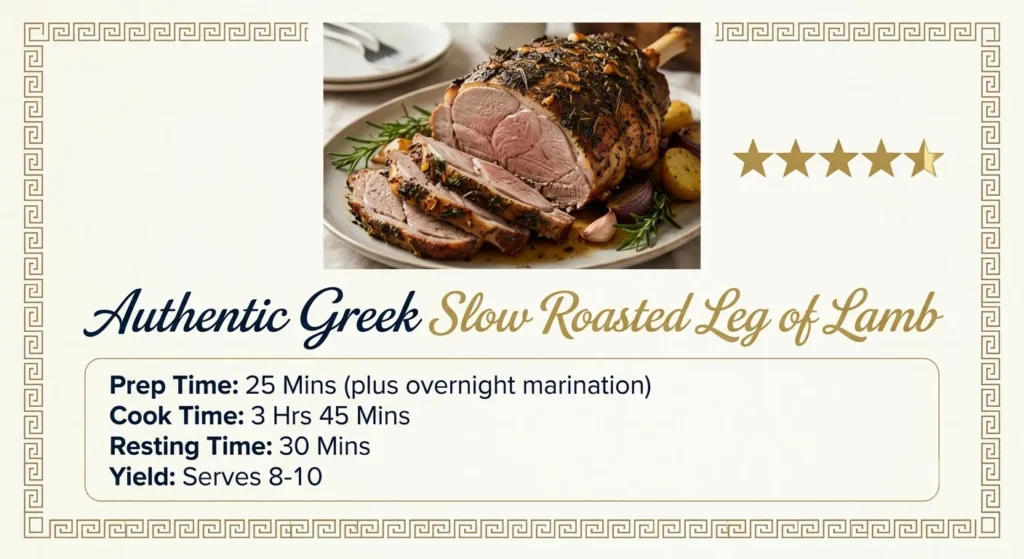
| Authentic Greek Slow Roasted Leg of Lamb | |
| Prep Time: 25 mins | Marinating Time: 12 – 24 hrs |
| Cook Time: 3 hrs 45 mins | Resting Time: 30 mins |
| Total Time: 4 hrs 40 mins (excluding marinade) | Servings: 8 – 10 |
| Course: Main Course | Cuisine: Greek / Mediterranean |
| Calories: ~550 kcal per serving |
Ingredients
For the Lamb & Marinade:
- 1 (5-7 lb) bone-in leg of lamb (or 4-5 lb boneless, tied)
- 4-5 cloves fresh garlic, cut into thin slivers (for inserting)
- 3 cloves fresh garlic, minced (for marinade)
- 1/2 cup extra virgin olive oil
- 1/2 cup fresh lemon juice (about 3 lemons)
- 2 tbsp Dijon mustard
- 2 tbsp dried Greek oregano
- 1 tbsp fresh rosemary, finely chopped
- 1 tbsp kosher salt
- 1 tsp freshly cracked black pepper
For the Roasting Pan:
- 2.5 lbs baby Yukon Gold potatoes, quartered
- 2 large red onions, cut into thick wedges
- 1/4 cup extra virgin olive oil
- Juice of 1 lemon
- 1 tbsp dried oregano
- 1 cup chicken stock or water
- 1/2 cup dry white wine
Instructions
- Prep the Meat: Pat the leg of lamb completely dry with paper towels. Using a sharp paring knife, score the fat cap in a crisscross diamond pattern.
- Insert Garlic: Pierce the meat with the tip of the paring knife, creating 15-20 deep, narrow slits all over the lamb. Push a sliver of garlic deep into each slit.
- Marinate: In a small bowl, whisk together the 1/2 cup olive oil, 1/2 cup lemon juice, minced garlic, mustard, dried oregano, fresh rosemary, salt, and pepper. Rub this mixture aggressively all over the lamb, massaging it into the cuts. Cover and refrigerate for 12 to 24 hours.
- Prep the Oven & Pan: Remove the lamb from the fridge 1 hour before cooking. Preheat oven to 325°F (160°C). In a large roasting pan, toss the potatoes and onions with 1/4 cup olive oil, juice of 1 lemon, 1 tbsp oregano, and a pinch of salt and pepper. Spread them into an even layer.
- Assemble: Place the marinated lamb directly on top of the potatoes. Pour the chicken stock and white wine into the bottom corners of the pan (do not pour over the meat).
- Roast Covered: Cover the entire pan very tightly with heavy-duty aluminum foil. Roast in the preheated oven for 2.5 to 3 hours undisturbed.
- Roast Uncovered: Remove the pan from the oven and carefully take off the foil. Increase the oven temperature to 400°F (200°C). Baste the lamb with the pan juices. Return to the oven, uncovered, for 30 to 45 minutes until a deep, dark crust forms and the internal temperature reaches 170°F (77°C) for fall-apart tender meat.
- Rest and Serve: Transfer the lamb to a cutting board. Tent loosely with foil and let rest for 30 to 45 minutes. (If potatoes need more crisping, leave them in the warm oven). Carve the lamb and serve alongside the potatoes, drizzled with the remaining pan juices.
Chef Notes:
If pan juices dry out during the uncovered roasting phase, immediately add 1/2 cup of hot water to the pan to prevent burning.
Storage Notes:
Store leftovers in an airtight container in the fridge for up to 4 days, or freeze for up to 3 months.
(Nutrition disclaimer: Calorie counts are estimates and vary based on the specific cut of meat and amount of rendered fat consumed).
Conclusion
Mastering a Greek Slow Roasted Leg of Lamb is about embracing the core philosophies of Mediterranean cooking: respect for quality ingredients, patience in the process, and the joy of feeding others. By utilizing deep garlic penetration, heavy lemon and oregano seasoning, a tight foil seal, and a proper resting period, you will consistently produce meat that is incredibly flavorful and wonderfully tender.
Whether you are preparing a grand Greek Orthodox Easter feast or simply want to impress your family with a remarkable Sunday roast, this method guarantees success. Gather your ingredients, prepare your marinade tonight, and get ready to enjoy the timeless, savory flavors of Greece. Thank you for visiting Foxenergie.com, and happy roasting!