One-Pot Greek Chicken Risoni (Orzo): The delicious Creamy Comfort 45-min Dinner
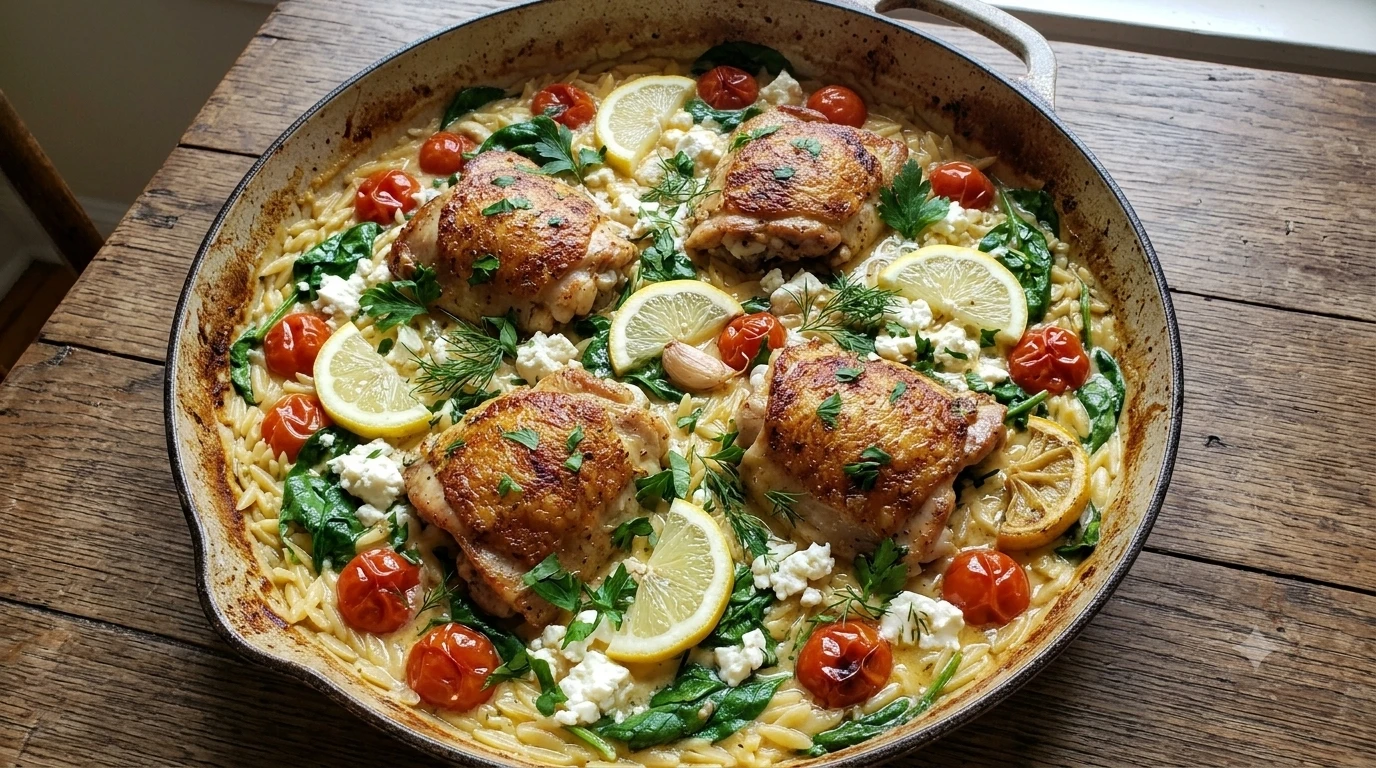
One-Pot Greek Chicken Risoni is the dinner you make on a weeknight when you want something that tastes like it took real effort but leaves you with exactly one pan to wash. Golden seared chicken thighs rest in a pool of creamy, lemon-bright orzo, studded with cherry tomatoes, wilted spinach, and salty crumbles of feta. Every part of it comes from one pot, built in stages that layer flavor on top of flavor rather than dumping everything in at once and hoping for the best.
This guide covers what risoni, or orzo, actually is, how this dish draws on classic Greek ingredients without pretending to be a centuries-old recipe, the food science behind orzo that turns out creamy rather than gluey, and a complete recipe you can have on the table in under forty-five minutes. You will also find a chicken cut comparison, a full ingredient breakdown, fifteen common mistakes, twenty professional tips, and a complete recipe card.
Table of Contents
Table of Contents
- What Is One-Pot Greek Chicken Risoni (Orzo)?
- The Story Behind Greek Chicken and Orzo
- Why This Dish Is So Popular
- The Science Behind Perfect One-Pot Orzo
- Choosing the Best Chicken
- Ingredients Explained
- Step-by-Step Technique
- The Secret to Creamy One-Pot Orzo
- Equipment Needed
- Common Mistakes
- Pro Chef Tips
- Delicious Variations
- Storage & Reheating
- What to Serve with One-Pot Greek Chicken Risoni
- Frequently Asked Questions
- Recipe Card
- Conclusion
What Is One-Pot Greek Chicken Risoni (Orzo)?
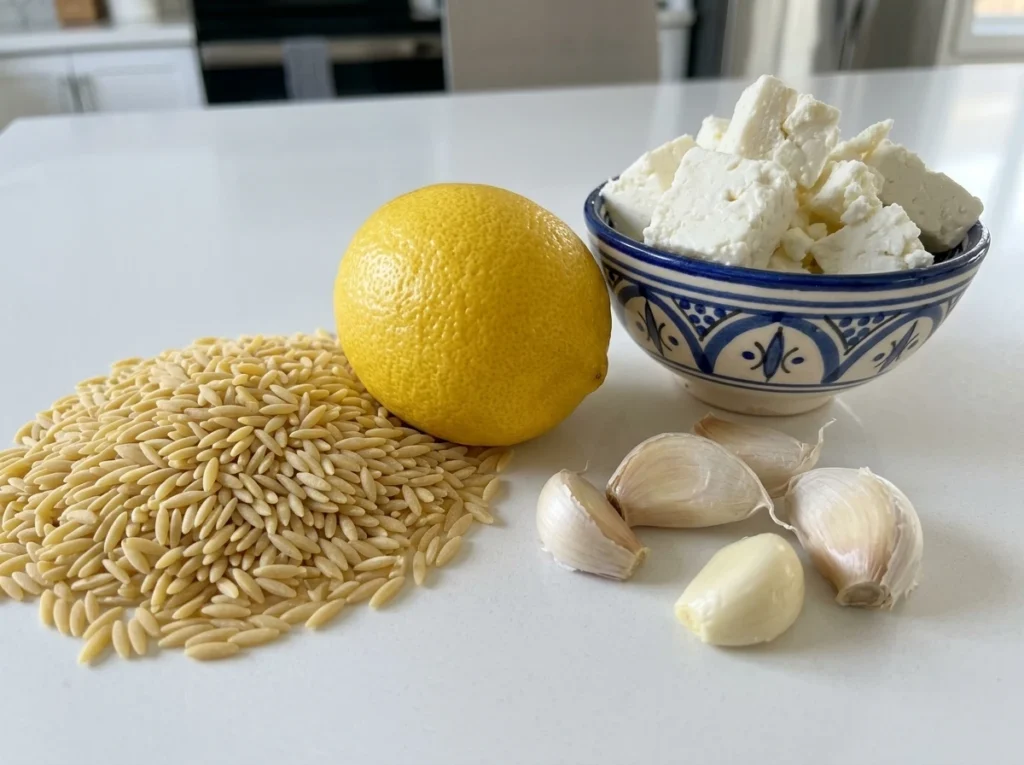
Risoni, more commonly called orzo in the United States, is a small, rice-shaped pasta made from wheat, not an actual grain. The confusion is understandable; orzo looks enough like a plump grain of rice that plenty of home cooks assume it belongs in the same category, when it is really closer in nature to any other short pasta shape, just formed smaller and narrower.
One-Pot Greek Chicken Risoni combines that pasta with Greek-inspired ingredients, chicken, lemon, garlic, oregano, and feta, cooked together in a single pan so the orzo absorbs stock and chicken drippings as it simmers, releasing its own starch along the way to build a naturally creamy texture without any heavy cream involved.
This dish has become a favorite for busy weeknight dinners because it delivers real Mediterranean flavor with minimal cleanup and a fairly short ingredient list. Everything happens in one pan, in stages, which keeps the process approachable even for cooks who do not consider themselves confident in the kitchen.
It is worth being direct about what this dish is and is not. This is a modern, Greek-inspired one-pot adaptation, not a traditional or historic Greek recipe passed down through generations. Traditional Greek cooking absolutely uses orzo, lemon, oregano, and feta, often in baked pasta dishes or orzo-based soups, but the specific one-pan, skillet-to-table format covered in this guide reflects a contemporary approach to home cooking rather than an old family recipe from a Greek kitchen. It borrows real, classic Greek flavors and applies them to a format built for modern convenience.
The Story Behind Greek Chicken and Orzo
Orzo, known in Greek as kritharaki, holds a genuine and long-standing place in Greek cuisine, distinct from the one-pot dish this guide covers. Kritharaki appears throughout Greek cooking in forms like giouvetsi, a baked dish of orzo cooked with braised meat, typically beef or lamb, in a rich tomato sauce, and in various soups where the small pasta shape adds body without the heaviness of larger noodles.
Traditional Greek baked pasta dishes, including giouvetsi and pastitsio, which uses a different pasta shape, reflect a broader Greek tradition of combining pasta with meat and baking everything together, often finished in the oven rather than cooked entirely on the stovetop. These dishes typically take considerably longer to prepare than the one-pot version in this guide, involving separate braising and baking stages.
Mediterranean home cooking more broadly favors ingredients that keep well and combine easily: olive oil, lemon, garlic, oregano, and feta show up across an enormous range of Greek dishes, from grilled meats to salads to baked casseroles. This dish pulls directly from that same pantry of flavors, just reassembled into a format built for speed.
One-pot versions of dishes like this have become popular in modern kitchens largely because of changing cooking habits: less time available on weeknights, a strong preference for minimal cleanup, and the rise of skillet-based recipes shared widely online. This particular combination, chicken, orzo, lemon, and feta, took the flavor profile of more traditional Greek pasta dishes and adapted it into something that could go from raw ingredients to dinner table in under an hour, using only one pan throughout.
Common regional flavor influences woven through this dish, lemon, oregano, garlic, olive oil, and feta, are about as core to Greek cooking as any ingredients could be, which is exactly why this one-pot adaptation still tastes recognizably Greek-inspired even though the format itself is a modern convenience rather than a dish with deep historical roots.
Why This Dish Is So Popular
One-pan convenience is the most obvious draw. Everything, chicken and orzo alike, cooks in the same pot, which means less time spent washing dishes and more time actually eating.
Tender, juicy chicken results from searing it first and letting it finish cooking gently while resting on top of the simmering orzo, a technique covered in detail in the science section below. Creamy, flavorful orzo develops naturally from the pasta’s own starch mixing with stock and chicken drippings, no cream required.
Bright lemon freshness cuts through the richness of the chicken and feta, keeping the dish from feeling heavy despite its comforting, pasta-based nature. Mediterranean herbs, primarily oregano and fresh dill or parsley, layer in an aromatic quality that plain chicken and pasta would otherwise lack entirely.
This dish also carries genuine family-friendly appeal; the mild, savory-tangy flavor profile tends to please both adventurous eaters and picky ones, and the pasta base makes it an easy sell for kids specifically. And, circling back to where we started, the easy cleanup that comes from a true one-pot method is not a small factor in why this dish keeps showing up in weeknight dinner rotations across the country.
The Science Behind Perfect One-Pot Orzo
Why toasting orzo improves flavor. Briefly toasting dry orzo in oil or the fat left behind from searing chicken triggers light browning on the pasta’s surface, developing a nuttier, more complex flavor through the Maillard reaction before any liquid is added. Skipping this step leaves the orzo tasting flatter and less developed.
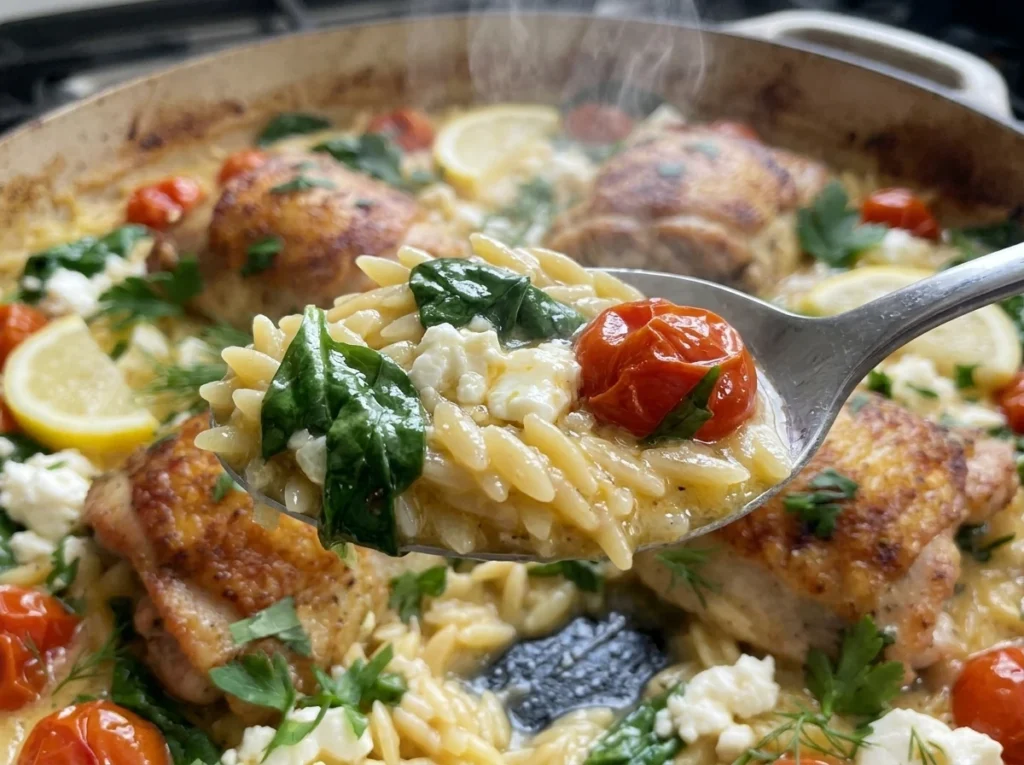
How pasta absorbs stock while releasing starch. As orzo simmers in stock, it absorbs liquid into its starch structure while simultaneously releasing some of its own starch into the surrounding liquid. This two-way exchange is what creates a naturally thickened, creamy sauce around the pasta without needing any added cream or a separate roux.
Why searing chicken first builds flavor. Searing chicken in the pan before anything else creates browned bits stuck to the bottom, called fond, that carry deep, savory flavor. When stock is added later to cook the orzo, it lifts and dissolves that fond back into the dish, seasoning the entire pan rather than just the chicken itself.
Carryover cooking. Chicken continues cooking slightly from residual heat even after it is removed from direct contact with the pan’s hottest surface. This is why chicken is typically seared until nearly, but not fully, cooked through, then returned to rest on top of the simmering orzo to finish gently, avoiding the toughness that comes from cooking chicken all the way through over direct high heat.
Balancing liquid-to-orzo ratios. Orzo generally needs slightly less liquid relative to its volume than long pasta shapes cooked in a large pot of boiling water, since here the liquid is meant to be almost fully absorbed rather than drained off. Too much liquid leaves the dish soupy; too little leaves the orzo undercooked and the pan dry before it finishes.
Preventing mushy pasta. Orzo cooks quickly, generally in eight to ten minutes, and continues to soften slightly even after heat is reduced, thanks to residual moisture and heat in the pan. Pulling the orzo from direct heat a minute or two before it seems fully done, and letting residual heat finish the job, helps avoid an overcooked, mushy texture.
How feta and Parmesan create natural creaminess without heavy cream. Both cheeses melt partially into the hot orzo and stock mixture, feta softening into small, creamy pockets rather than fully dissolving, and Parmesan, if used, melting more smoothly and adding a savory depth. Together they thicken and enrich the dish’s texture in a way that mimics cream’s mouthfeel without the added dairy fat.
Choosing the Best Chicken
| Cut | Flavor | Juiciness | Cooking Time | Best For |
|---|---|---|---|---|
| Bone-in Thighs | Rich, deep | Very high | 30-35 minutes | Best flavor, most forgiving |
| Boneless Skinless Thighs | Rich, slightly milder | High | 20-25 minutes | Great balance of flavor and speed |
| Chicken Breasts | Milder | Moderate, dries out easily | 15-20 minutes | Workable with careful timing |
| Chicken Tenderloins | Mild | Moderate | 10-15 minutes | Fastest option, less traditional |
Boneless, skinless chicken thighs are, in my experience, the best overall choice for this dish. They carry more fat than breast meat, staying juicy through both the sear and the simmering finish, while cooking faster than bone-in cuts, which matters for a dish meant to come together on a weeknight.
Bone-in thighs offer the richest flavor of any option, since the bone and any skin left on add extra depth to the pan as they cook, but they take noticeably longer, which pushes this dish further from its “quick weeknight” appeal.
Chicken breasts work, though they require more careful attention to timing, since their low fat content makes them prone to drying out if seared too long or simmered too aggressively at the finish. Chicken tenderloins cook fastest of all but carry the mildest flavor and are the least traditional choice for a dish built around richer, more savory flavor.
For beginners, boneless skinless thighs are the safest, most forgiving starting point, offering a wide margin for error in both searing and simmering.
Ingredients Explained
| Ingredient | Role in the Dish |
|---|---|
| Chicken (thighs recommended) | Main protein; searing builds the flavor base |
| Orzo (risoni) | The pasta base; absorbs stock and releases starch for creaminess |
| Extra virgin olive oil | Cooking fat and finishing flavor |
| Garlic | Essential aromatic |
| Yellow onion | Adds sweetness and body to the base |
| Chicken stock | Cooking liquid for the orzo; carries flavor throughout |
| Lemon juice | Bright acidity that balances richness |
| Lemon zest | Concentrated citrus aroma without added liquid |
| Cherry tomatoes | Sweetness and a pop of color and acidity |
| Baby spinach | Adds freshness, color, and nutrition |
| Feta cheese | Salty, tangy creaminess |
| Parmesan (optional) | Adds umami depth alongside feta |
| Fresh parsley | Bright, herbal finish |
| Fresh dill | Distinctly Greek herbal note |
| Fresh oregano | Earthy, slightly peppery Greek staple |
| Dried oregano | A reliable substitute if fresh is unavailable |
| Salt | Essential seasoning throughout |
| Black pepper | Background warmth |
| Butter (optional) | Adds richness at the finish |
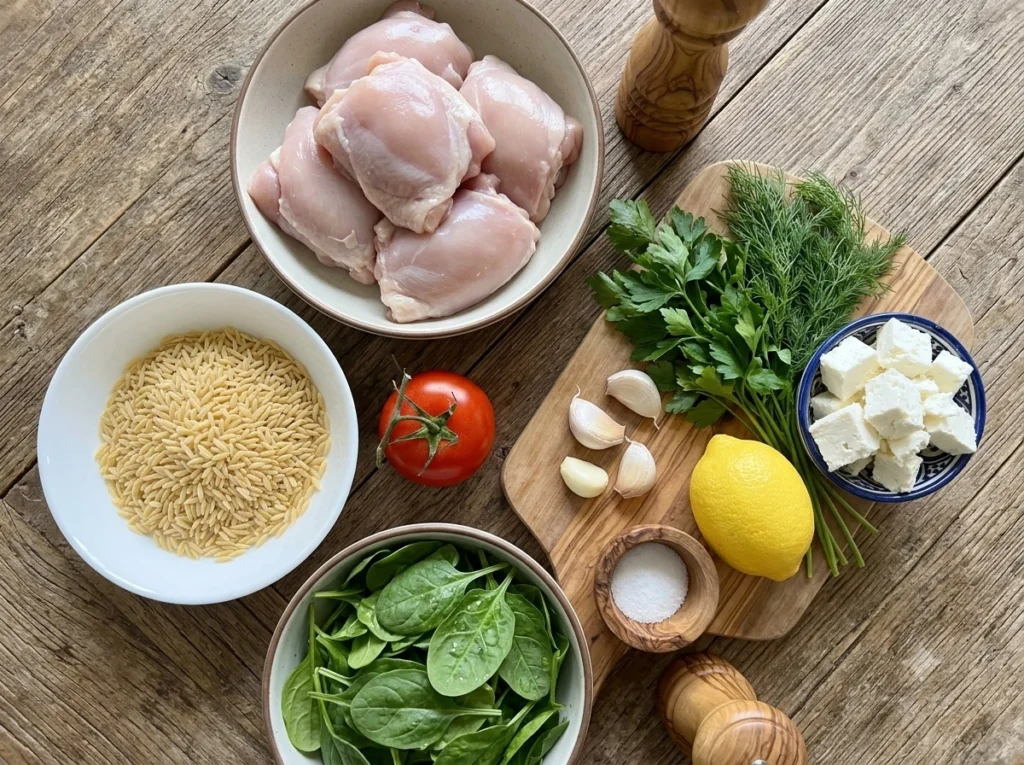
Chicken stock is doing more than just cooking the orzo; it is the primary carrier of flavor throughout the entire dish, absorbing the fond left behind from searing the chicken and infusing the pasta as it simmers. Using a good-quality stock, homemade or a well-seasoned store-bought version, makes a noticeable difference in the final result.
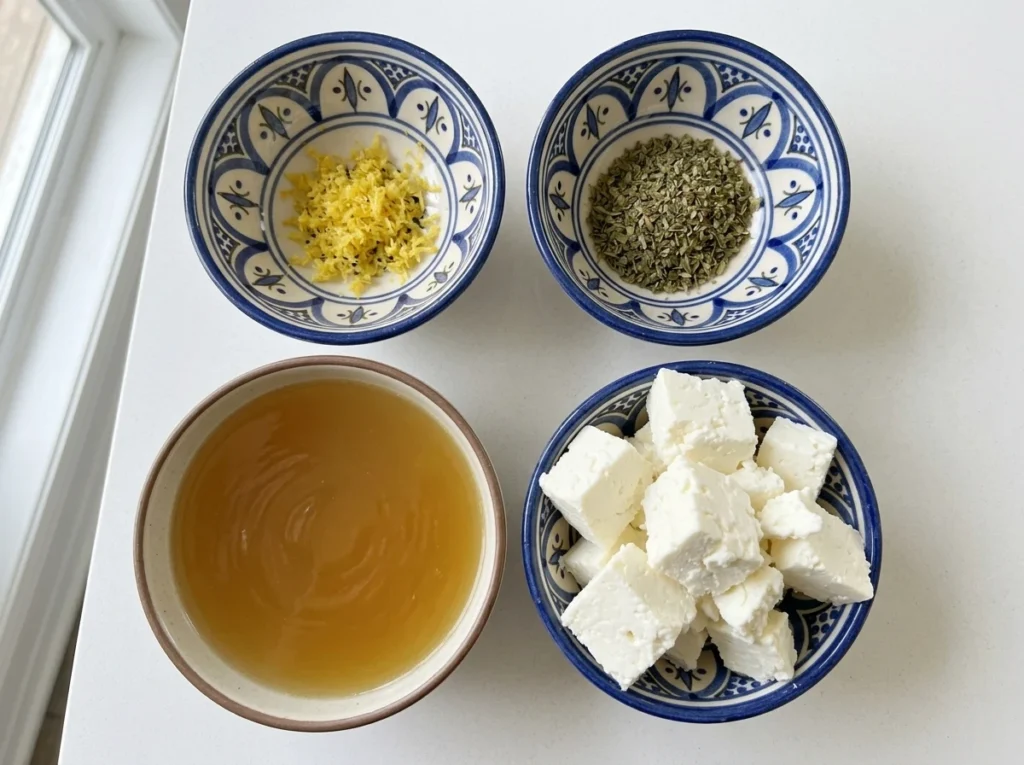
Lemon juice and zest work together rather than as substitutes. Juice provides the acidity that balances the richness of the chicken, feta, and any butter used, while zest concentrates the citrus aroma without adding extra liquid that would throw off the orzo’s cooking ratio.
Feta should be added toward the end of cooking rather than at the start, since prolonged direct heat can cause it to separate rather than melt into soft, creamy pockets throughout the dish. Fresh oregano and dill bring a brightness that dried herbs cannot fully replicate, though dried oregano specifically holds its flavor reasonably well and is an acceptable substitute if fresh is not available.
Step-by-Step Technique
1. Season the chicken (5 minutes)
Pat chicken thighs dry and season generously with salt, pepper, and a pinch of dried oregano on both sides.
2. Sear the chicken (6-8 minutes)
Heat olive oil in a large sauté pan or Dutch oven over medium-high heat. Sear chicken for 3-4 minutes per side, until deeply golden but not fully cooked through.
3. Remove the chicken
Transfer the chicken to a plate and set aside; it will finish cooking later on top of the orzo.
4. Sauté onions and garlic (2-3 minutes)
Lower heat to medium. Add a bit more oil if needed, then onion, cooking until softened. Add garlic and cook just until fragrant.
5. Toast the orzo (1-2 minutes)
Add the dry orzo directly to the pan, stirring constantly until it turns lightly golden and smells toasted.
6. Add stock (1 minute)
Pour in chicken stock, scraping up any browned bits from the bottom of the pan as you stir. Bring to a gentle simmer.
7. Simmer (8-10 minutes)
Let the orzo simmer, stirring occasionally to prevent sticking, until it is nearly tender and the liquid has mostly absorbed.
8. Return the chicken
Nestle the seared chicken back into the pan on top of the orzo. Cover and let simmer for another 5-8 minutes, until the chicken reaches 165°F internally and the orzo finishes cooking.
9. Add spinach and tomatoes
Stir in cherry tomatoes during the last few minutes of simmering, and fold in baby spinach just until wilted.
10. Finish with lemon
Remove from heat and stir in lemon juice and zest, tasting and adjusting salt as needed.
11. Crumble feta
Scatter feta over the top, letting it soften slightly from the residual heat without fully melting away.
12. Garnish and serve
Top with fresh parsley and dill, and serve immediately while everything is hot and the orzo is at its creamiest.
The Secret to Creamy One-Pot Orzo
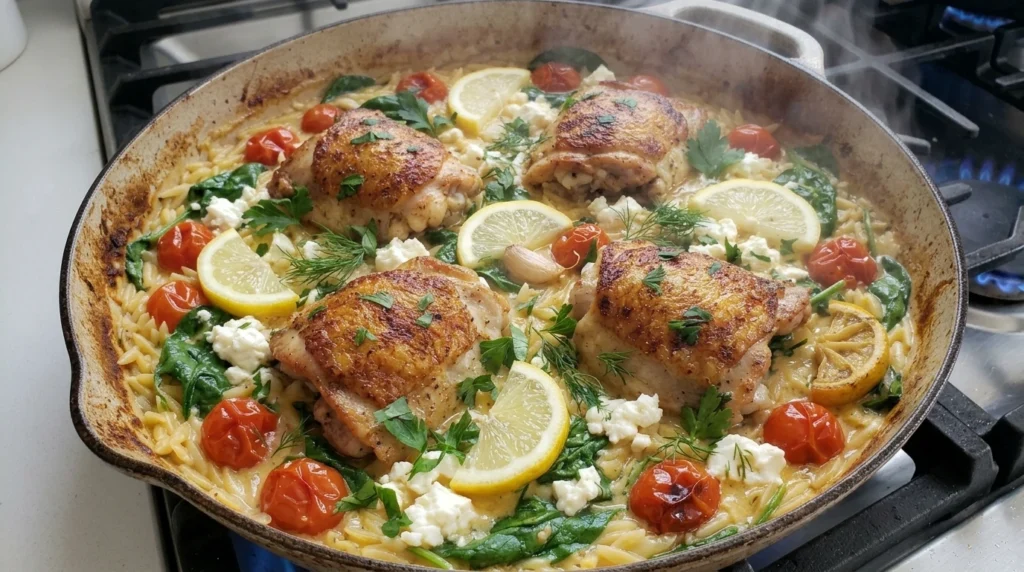
Proper stirring matters more than most home cooks expect. Stirring the orzo occasionally as it simmers, rather than either constantly agitating it or leaving it completely alone, helps release its starch evenly into the surrounding liquid without breaking the pasta apart or causing it to stick and scorch on the bottom of the pan.
Cooking over medium heat, rather than a high, aggressive simmer, gives the orzo time to absorb liquid gradually and release starch at a controlled pace. Too high a heat can cause the liquid to reduce and evaporate faster than the orzo actually cooks, leaving you with undercooked pasta and a pan that has already gone dry.
Knowing when to add cheese is a small but important detail. Feta added too early, while the pan is still at a rolling simmer, can break down into a grainy texture rather than staying in soft, creamy pockets. Add it off heat or at the very end of cooking instead.
Adjusting consistency is easy if you know what to reach for. If the finished dish looks too thick or dry, a small splash of warm stock or water loosens it back to the right consistency. If it looks too loose or soupy, a few more minutes of gentle simmering, uncovered, will reduce it down.
Balancing lemon and salt is worth doing carefully at the very end rather than guessing earlier in the process, since the dish’s saltiness shifts as the feta melts in and the orzo continues absorbing liquid. Taste right before serving and adjust both together, since lemon and salt tend to balance against each other.
Avoiding overcooked pasta comes down to timing and trust in carryover heat. Pull the orzo from direct heat slightly before it looks fully done; residual heat in the pan will finish softening it during the few minutes it takes to plate and serve.
Equipment Needed
- Large sauté pan: Wide enough to sear chicken in a single layer and later hold the simmering orzo comfortably.
- Dutch oven: An excellent alternative, offering even heat retention throughout the longer simmering stage.
- Wooden spoon: For stirring the orzo without scratching your pan.
- Chef’s knife: For dicing onion and mincing garlic.
- Microplane: Ideal for zesting the lemon finely without pulling up the bitter white pith underneath.
- Instant-read thermometer: The most reliable way to confirm the chicken has reached a safe internal temperature.
Common Mistakes
1. Skipping the sear on the chicken. This misses out on building the fond that flavors the entire dish. Always sear before adding liquid.
2. Cooking the chicken fully before returning it to the pan. This risks overcooking the chicken by the time it finishes simmering with the orzo. Sear until nearly, not fully, cooked through.
3. Not toasting the orzo before adding stock. Skipping this step leaves the dish tasting flatter and less developed than it should.
4. Using too much liquid relative to the orzo. This results in a soupy, under-thickened dish rather than a creamy, cohesive one. Follow the recipe’s ratio closely.
5. Using too little liquid. This leaves the orzo undercooked and the pan too dry before the pasta has had time to fully absorb what it needs.
6. Cooking the orzo over heat that is too high. This can cause liquid to evaporate faster than the pasta cooks, leading to underdone orzo in a dry pan.
7. Not stirring occasionally during the simmer. This can cause orzo to stick and scorch on the bottom of the pan.
8. Adding feta too early in the cooking process. Feta exposed to prolonged direct heat can turn grainy rather than staying in soft, creamy pockets.
9. Adding spinach too early. Spinach wilts within a minute or two; adding it too soon results in overly soft, less vibrant greens by the time the dish is done.
10. Skipping the resting period for the orzo before serving. Orzo continues to thicken slightly as it sits, and serving immediately from a very hot pan can make the dish seem thinner than it will be a few minutes later.
11. Not tasting and adjusting lemon and salt at the end. The dish’s balance shifts as feta melts in and the orzo finishes absorbing liquid, so final seasoning matters.
12. Using pre-shredded feta instead of block feta. Pre-shredded feta often contains anti-caking agents and does not melt into creamy pockets as effectively as block feta crumbled by hand.
13. Overcrowding the pan with chicken during the sear. This lowers the pan’s temperature and prevents a proper sear, resulting in steamed rather than browned chicken.
14. Not scraping up the fond after adding stock. This leaves behind flavor that should be incorporated into the dish rather than left stuck to the bottom of the pan.
15. Reheating leftovers on very high heat. This can cause the orzo to overcook further and the chicken to dry out. Reheat gently over low to medium heat instead.
Pro Chef Tips
- Pat the chicken thoroughly dry before searing for the best browning.
- Season the chicken generously; it is seasoning both itself and, indirectly, the entire dish through the fond it leaves behind.
- Toast the orzo until it is visibly golden, not just warmed through, for the best flavor development.
- Use a good-quality chicken stock, since it carries much of the dish’s overall flavor.
- Scrape the bottom of the pan thoroughly after adding stock to incorporate all the browned bits.
- Stir the orzo occasionally, not constantly, to release starch evenly without breaking up the pasta.
- Nestle the chicken back into the orzo rather than laying it fully submerged, allowing the top to stay slightly crisp.
- Add cherry tomatoes whole or halved, depending on preference; halved tomatoes release more juice into the dish.
- Fold in spinach during the last minute or two of cooking so it wilts without overcooking.
- Add feta off heat or at the very end for the creamiest, least grainy texture.
- Use fresh lemon juice and zest rather than bottled lemon juice for the brightest flavor.
- Taste and adjust salt and lemon together at the end, since they balance against each other.
- Let the dish rest for a couple of minutes off heat before serving; it thickens slightly as it sits.
- Use a splash of warm stock, not cold liquid, if you need to loosen the dish’s consistency.
- Reserve a small amount of fresh herbs to add just before serving for the brightest garnish.
- Use block feta and crumble it by hand rather than buying pre-crumbled feta.
- Add a small pat of butter at the end if you want an extra layer of richness alongside the feta.
- Keep the lid on during the final simmering stage to help the chicken finish cooking gently through steam as well as direct heat.
- Double the recipe if cooking for a crowd, using a wider pan to avoid overcrowding during the sear.
- Serve immediately for the best texture; orzo continues to absorb liquid and can thicken further the longer it sits.
Delicious Variations
Creamy Spinach Version Add extra spinach and a small splash of heavy cream at the end for a richer, more indulgent take on the base recipe.
Sun-Dried Tomato Version Add chopped sun-dried tomatoes alongside the cherry tomatoes for a deeper, more concentrated tomato flavor.
Mushroom Version Sauté sliced mushrooms alongside the onion and garlic for an earthy, savory addition.
Artichoke Version Fold in quartered marinated artichoke hearts during the last few minutes of cooking for extra Mediterranean flavor and texture.
Roasted Red Pepper Version Add chopped roasted red peppers along with the tomatoes for a sweeter, slightly smoky variation.
Shrimp and Orzo Substitute peeled, deveined shrimp for the chicken, searing briefly since shrimp cooks much faster and should be added toward the end rather than simmered the whole time.
Turkey Version Use ground or sliced turkey breast in place of chicken for a leaner protein option, adjusting cooking time down slightly since turkey breast cooks faster than chicken thighs.
Gluten-Free Adaptation Substitute a gluten-free orzo alternative, checking the package for slightly different liquid ratios and cooking times, since gluten-free pasta often behaves differently than wheat-based orzo.
Extra Vegetable Version Add diced zucchini or bell pepper alongside the onion for a more vegetable-forward version of the dish.
Storage & Reheating
One-Pot Greek Chicken Risoni keeps in the refrigerator for up to four days in an airtight container. Let it cool to room temperature within an hour of cooking before sealing, to avoid trapping excess steam that can further soften the orzo.
Freezing is possible but not ideal, since orzo’s texture can turn slightly softer and less distinct after thawing. If freezing, use within two months and thaw overnight in the refrigerator before reheating.
To revive the dish’s creamy texture when reheating, use a skillet over low to medium heat with a small splash of chicken stock or water, stirring gently until warmed through. A microwave works in a pinch, using short intervals and stirring between them, along with a splash of liquid to loosen the orzo, which tends to firm up and separate slightly in the refrigerator.
As with any dish containing chicken, reheat leftovers to an internal temperature of 165°F, and do not leave the finished dish out at room temperature for more than two hours.
What to Serve with One-Pot Greek Chicken Risoni
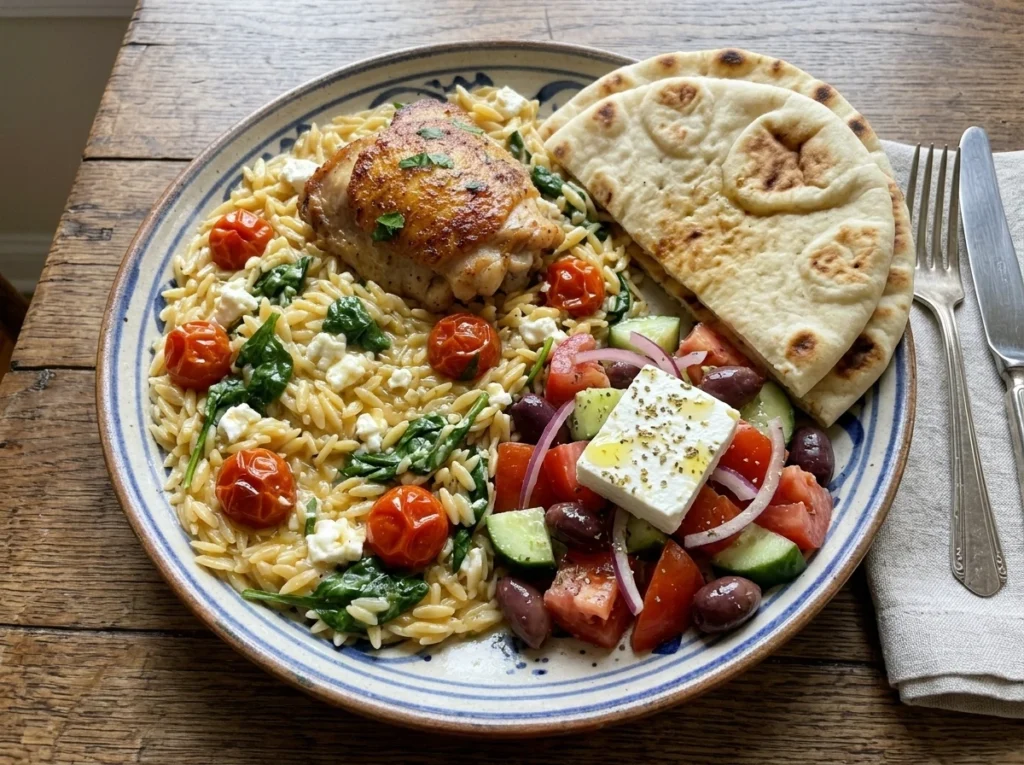
Greek village salad, or Horiatiki, with tomatoes, cucumber, olives, and feta, brings fresh, acidic contrast that complements the dish’s richness.
Warm pita bread is useful for scooping up any extra creamy orzo left on the plate.
Roasted asparagus or green beans, simply seasoned with olive oil and lemon, add a light vegetable side without competing with the dish’s own flavors.
Grilled zucchini rounds out the meal with another Mediterranean-style vegetable option, especially good in summer.
Tzatziki, while not traditionally paired with pasta, works surprisingly well here as a cool, tangy side, especially if you enjoy extra lemon and garlic flavor throughout the meal.
Marinated olives make an easy, no-cook addition to the table, echoing the Mediterranean flavor profile of the main dish.
For drinks, a crisp Assyrtiko from Santorini pairs naturally with the dish’s lemon and feta notes. Sauvignon Blanc and Pinot Grigio both offer similar bright acidity if Greek wine is not available. Sparkling lemonade and iced herbal tea make refreshing non-alcoholic pairings for a family dinner.
Frequently Asked Questions
Can I use rice instead of orzo? You can, though cooking times and liquid ratios will differ significantly, since rice absorbs liquid differently than orzo. Adjust the recipe’s liquid amount and simmering time accordingly if substituting.
Can I make this dish ahead of time? You can prep ingredients ahead, but the dish is best cooked and served close to mealtime, since orzo continues to absorb liquid and can thicken considerably if it sits too long before serving.
Can I use chicken thighs instead of breasts? Yes, and thighs are actually the recommended choice in this guide. They stay juicier through both the sear and the simmering finish compared to leaner chicken breast.
Can I freeze leftovers? You can, though the orzo’s texture softens somewhat after freezing and thawing. For the best texture, refrigerate rather than freeze if you plan to eat leftovers within a few days.
Why is my orzo mushy? This usually happens from using too much liquid, cooking the orzo longer than needed, or not accounting for the fact that orzo continues to soften slightly even after heat is reduced. Pull it from direct heat a bit earlier than you think necessary.
Can I make this dish vegetarian? Yes. Skip the chicken and use vegetable stock instead of chicken stock, adding extra vegetables like mushrooms, zucchini, or artichokes for substance.
Can I use vegetable stock instead of chicken stock? Yes, particularly for a vegetarian version. The flavor will be slightly lighter and less rich than with chicken stock, but the dish still works well.
How do I keep the chicken juicy? Sear the chicken until nearly, not fully, cooked through, then let it finish gently while simmering on top of the orzo. This carryover cooking method prevents the chicken from drying out over direct high heat.
Is this a traditional Greek recipe? No, this is a modern, Greek-inspired one-pot adaptation built around classic Greek ingredients like orzo, lemon, oregano, and feta, rather than a specific traditional or historic dish passed down in Greek households.
What is the difference between orzo and risoni? They are the same pasta shape; “orzo” is the more common term in the United States, while “risoni” is used more often in Australia and parts of Europe.
Can I add more vegetables to this dish? Yes. Zucchini, bell pepper, mushrooms, and artichokes all work well added alongside the onion and garlic or folded in near the end of cooking.
Why does my dish taste bland? This is usually a seasoning issue. Make sure to season the chicken generously before searing, taste and adjust salt and lemon at the end, and consider whether your stock is well-seasoned to begin with.
Can I make this dish spicy? Yes, though it is not traditional. A pinch of crushed red pepper flakes added along with the garlic can add gentle heat without overwhelming the lemon and herb flavors.
Is this dish gluten-free? Not as written, since orzo is made from wheat. A gluten-free orzo alternative can be substituted, though liquid ratios and cooking times may need slight adjustment.
How many servings does this recipe make? This recipe as written serves about four people generously, though it can easily be doubled using a larger pan to accommodate the additional volume.
Recipe Card
One-Pot Greek Chicken Risoni (Orzo)
| Detail | Info |
|---|---|
| Prep Time | 15 minutes |
| Cook Time | 30 minutes |
| Total Time | 45 minutes |
| Servings | 4 |
| Cuisine | Greek-inspired |
| Course | Main Dish |
| Calories (estimated) | 520 per serving |
Ingredients
- 1.5 lbs boneless, skinless chicken thighs
- 2 tablespoons extra virgin olive oil
- 1 small yellow onion, diced
- 4 cloves garlic, minced
- 1 1/2 cups dry orzo
- 3 cups chicken stock
- 1 cup cherry tomatoes, halved
- 2 cups baby spinach
- 1/2 cup feta cheese, crumbled
- 2 tablespoons Parmesan, grated (optional)
- 2 tablespoons fresh lemon juice
- 1 teaspoon lemon zest
- 2 tablespoons fresh parsley, chopped
- 1 tablespoon fresh dill, chopped
- 1 teaspoon dried oregano
- Salt and black pepper, to taste
- 1 tablespoon butter (optional)
Instructions
- Pat chicken dry and season with salt, pepper, and dried oregano.
- Heat olive oil in a large sauté pan over medium-high heat. Sear chicken for 3-4 minutes per side, until golden but not fully cooked through. Remove and set aside.
- Lower heat to medium. Add onion, cooking until softened, about 2 minutes. Add garlic and cook until fragrant.
- Add dry orzo, stirring constantly for 1-2 minutes, until lightly toasted.
- Pour in chicken stock, scraping up any browned bits from the bottom of the pan. Bring to a simmer.
- Simmer, stirring occasionally, for 8-10 minutes, until the orzo is nearly tender and liquid has mostly absorbed.
- Nestle the chicken back into the pan. Cover and simmer for 5-8 minutes, until chicken reaches 165°F internally.
- Stir in cherry tomatoes during the last few minutes. Fold in spinach just until wilted.
- Remove from heat. Stir in lemon juice and zest. Taste and adjust salt as needed.
- Scatter feta and Parmesan, if using, over the top, along with butter if desired.
- Garnish with fresh parsley and dill. Serve immediately.
Chef Notes Sear the chicken until just short of fully cooked; it finishes gently while the orzo simmers. Add feta at the very end to keep it creamy rather than grainy.
Storage Notes Refrigerate in an airtight container for up to 4 days. Freezing works but softens the orzo’s texture. Reheat gently with a splash of stock or water.
Nutrition Disclaimer Calorie and nutrition estimates are approximate and will vary based on specific ingredients, chicken cut, and portion size used.
Conclusion
One-Pot Greek Chicken Risoni takes classic Greek flavors, lemon, oregano, garlic, feta, and reshapes them into a format built for a real weeknight: one pan, under an hour, minimal cleanup. It is not a dish with centuries of history behind its exact form, but the ingredients carrying that flavor certainly are, and that honesty is part of what makes it worth cooking well rather than rushing through.
Sear the chicken properly, toast the orzo before adding stock, and save the feta and lemon for the very end. Get those three things right, and you will have a dinner that tastes considerably more thought-out than the one pan sitting in your sink afterward would suggest.