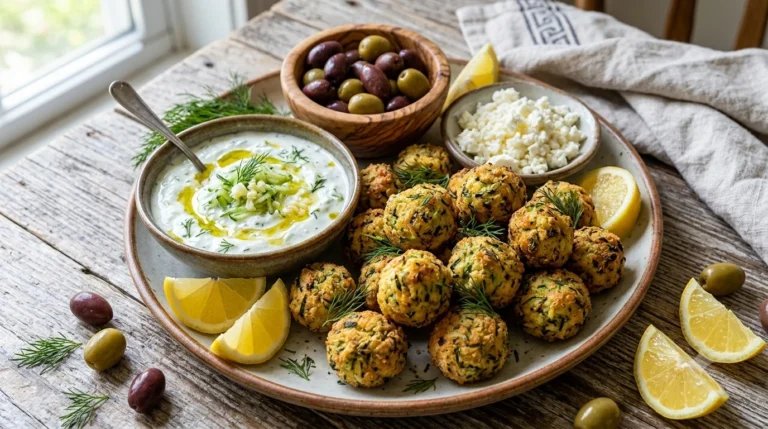

Authentic Pastitsio: Creamy, Comforting & Irresistibly Delicious 25 minute recipe
Few dishes capture the soul of a Greek kitchen quite like Pastitsio. Pull a tray of it from the oven and you’ll understand instantly: bubbling béchamel turned golden on top, a deep cinnamon-scented beef sauce underneath, and tubes of pasta holding it all together like a warm, edible hug. This is the dish grandmothers make on Sundays, that tavernas sell out of by 8 p.m., and that shows up at every Greek holiday table without fail.
If you’ve only had a mediocre version — dry, bland, or missing that unmistakable spice note — you’re in for a real treat. This guide walks you through every layer, every technique, and every little trick that separates good Pastitsio from unforgettable Pastitsio. By the end, you’ll be able to build a bakery-quality, taverna-style Pastitsio (Greek Beef Pasta Bake) right in your own kitchen.
Table of Contents
What Is Pastitsio?
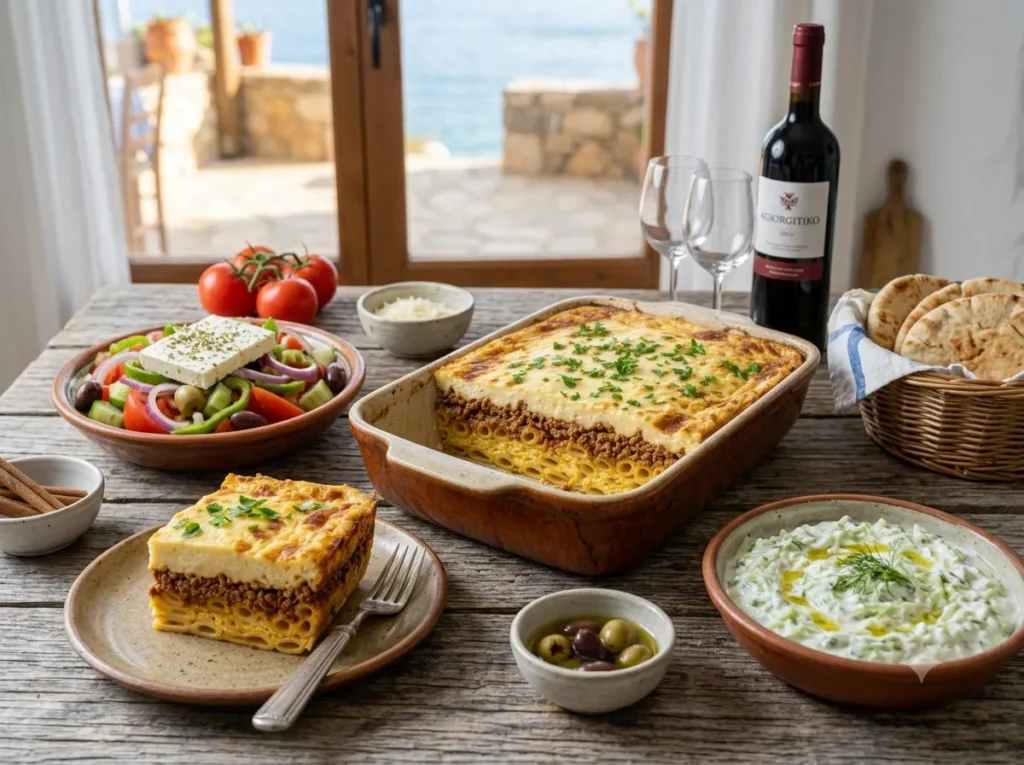
Pastitsio is Greece’s answer to the baked pasta casserole: thick tubular pasta layered with a rich, cinnamon-spiced ground beef sauce, then crowned with a thick, custardy béchamel that bakes into a golden crust. Say it with us: pah-STEE-tsee-oh. It rolls off the tongue once you’ve made it a few times.
People often call it “Greek lasagna,” and the comparison makes sense at first glance. Both are layered, baked pasta dishes with a meat component and a creamy topping. However, the similarities stop there. Traditional Italian lasagna uses flat sheets of pasta, layers of ricotta or mozzarella, and typically leans on basil and oregano for its herbal backbone. Pastitsio, on the other hand, relies on long tube-shaped pasta (often called “pastitsio noodles” or a thick bucatini), a béchamel-only top layer instead of layered cheese throughout, and warm baking spices like cinnamon and nutmeg that give the dish its distinctly Greek character.
The defining layers of Pastitsio are simple in concept but precise in execution:
- A bottom layer of pasta, often mixed with egg and cheese to help it bind
- A middle layer of slow-simmered beef sauce, deeply flavored with tomato, cinnamon, and nutmeg
- A top layer of thick béchamel, baked until golden and set
Get those three layers right, and you have real Pastitsio.
The History of Pastitsio
The word “pastitsio” traces back to the Italian “pasticcio,” meaning a baked pasta pie or a “mess” of ingredients baked together — a nod to the dish’s Eastern Mediterranean and Italian-influenced roots. Greece has long sat at a culinary crossroads, absorbing influence from Italian, Ottoman, and broader Mediterranean cooking traditions, and Pastitsio reflects that blend: Italian-style pasta bakes meeting Middle Eastern warming spices like cinnamon and clove.
The dish as most people know it today owes a great deal to Nikolaos Tselementes, the influential 20th-century Greek chef and cookbook author who helped codify and popularize many now-classic Greek recipes, including Pastitsio and Moussaka. His cookbooks helped standardize the béchamel-topped version that spread throughout Greek households and tavernas.
Regional variations exist across Greece, with some households favoring a mix of beef and pork, others insisting on a touch of red wine in the sauce, and island regions sometimes incorporating local cheeses in place of Kefalotyri. Despite these variations, Pastitsio has remained a fixture of the Sunday family table and holiday spread for generations, prized for how well it feeds a crowd and how good the leftovers taste the next day.

Why Everyone Loves Pastitsio
Pastitsio earns its place as ultimate comfort food for a handful of very good reasons.
First, there’s the béchamel. A well-made béchamel is silky, rich, and just barely sweet from the nutmeg, and it sets into a soft custard-like layer once baked. Second, the beef sauce brings deep savory flavor rounded out by warm spice — it tastes complex without being complicated. Third, the pasta itself, when cooked properly, holds its shape and gives the dish structure instead of turning mushy.
Beyond flavor, Pastitsio wins on practicality. It’s a fantastic make-ahead dish: assemble it the night before, refrigerate, and bake the next day. It reheats beautifully, making it a meal-prepper’s dream. And because it feeds a crowd from one baking dish, it’s a natural choice for Sunday family dinners, holiday buffets, and potlucks where you need something hearty that travels well.
The Science Behind Perfect Pastitsio
Understanding the “why” behind each technique makes it far easier to get consistently great results.
Browning and the Maillard Reaction
When you brown ground beef over real heat instead of just simmering it in liquid, you trigger the Maillard reaction — a chemical process between amino acids and sugars that creates hundreds of new flavor compounds and that deep brown color. Skipping this step, or crowding your pan so the meat steams instead of sears, means missing out on a huge portion of the dish’s savory depth.
Why Cinnamon and Nutmeg Work
Cinnamon and nutmeg aren’t randomly Greek quirks — they’re balancing agents. The warm, slightly sweet notes cut through the richness of the beef and butter, while also complementing the acidity of the tomato. Used in small amounts, they round out flavors rather than announcing themselves as “dessert spices.”
Tomato Reduction
Simmering the beef sauce long enough to reduce the tomato content concentrates both flavor and sugars, deepening the sauce’s color and taste while cooking off excess liquid. A watery meat sauce is the number one cause of a Pastitsio that falls apart when sliced.
Starch Gelatinization in the Pasta
Cooking the pasta just to al dente allows the starches on the surface to gelatinize slightly, which helps the pasta bind with the egg and cheese mixture during baking rather than sliding apart in the final dish.
Béchamel Emulsification
Béchamel is essentially a roux (butter and flour cooked together) loosened with milk, then thickened as the starch swells and the proteins in the egg (if used) set during baking. Whisking constantly prevents lumps by keeping the flour evenly distributed as it absorbs liquid.
Why Resting Matters
Pulling Pastitsio straight from the oven and slicing immediately is the fastest way to end up with a soupy mess on the plate. Resting for at least 20–30 minutes allows the béchamel to firm up and the layers to set, so your slices hold their shape.

Choosing the Best Ingredients
Great Pastitsio starts with quality, well-understood ingredients. Here’s what each one brings to the dish.
| Ingredient | Why It Matters |
|---|---|
| Ground beef (80/20) | Provides richness and enough fat for flavor without becoming greasy |
| Ground lamb (optional) | Adds a traditional, slightly gamey depth some regions prefer |
| Pastitsio pasta or bucatini | Thick tubes hold sauce and give the dish its signature bite |
| Onion | Builds the aromatic base of the sauce |
| Garlic | Adds savory depth without overpowering |
| Olive oil | Traditional Greek fat for sautéing; adds fruity depth |
| Tomato paste | Concentrated tomato flavor and color |
| Crushed tomatoes | Body and acidity for the sauce |
| Red wine (optional) | Adds acidity and depth; cooks off the alcohol |
| Cinnamon | Signature warm spice that defines Greek meat sauces |
| Nutmeg | Rounds out the béchamel and subtly seasons the meat |
| Oregano | Earthy, herbal backbone typical of Greek cooking |
| Bay leaf | Adds background aromatic complexity during simmering |
| Butter | Base for the béchamel roux; adds richness |
| Flour | Thickens the béchamel |
| Whole milk | Creates the creamy body of the béchamel |
| Eggs | Bind the béchamel and pasta layers; add richness |
| Kefalotyri or Parmesan | Salty, hard cheese that seasons every layer |
| Salt | Essential seasoning throughout |
| Black pepper | Balances the richness with subtle heat |
Using whole milk rather than low-fat milk gives the béchamel its proper silky body; skim milk tends to produce a thinner, less luxurious sauce. Similarly, Kefalotyri (a hard, salty Greek sheep’s milk cheese) is traditional, but a good aged Parmesan works well as a substitute if Kefalotyri isn’t available near you.
Step-by-Step Instructions
Prepare the Meat Sauce
Heat olive oil in a Dutch oven over medium-high heat. Add the diced onion and cook until softened and translucent, about 4–5 minutes. Add garlic and cook for another minute until fragrant. Add the ground beef, breaking it up as it browns — look for a deep brown color, not gray, which signals the Maillard reaction is working. This should take about 8–10 minutes.
Reduce the Sauce
Stir in tomato paste and cook for 1–2 minutes to deepen its flavor. Add crushed tomatoes, red wine (if using), cinnamon, oregano, and bay leaf. Simmer uncovered for 25–35 minutes, stirring occasionally, until the sauce has thickened significantly and no longer looks watery. The sauce should coat the back of a spoon.
Cook the Pasta
Boil pasta in well-salted water until just al dente — usually 1–2 minutes less than the package instructions, since it will continue cooking in the oven. Drain well. Toss with a beaten egg, a bit of grated cheese, and a small amount of the béchamel to help bind the layer.
Make the Béchamel
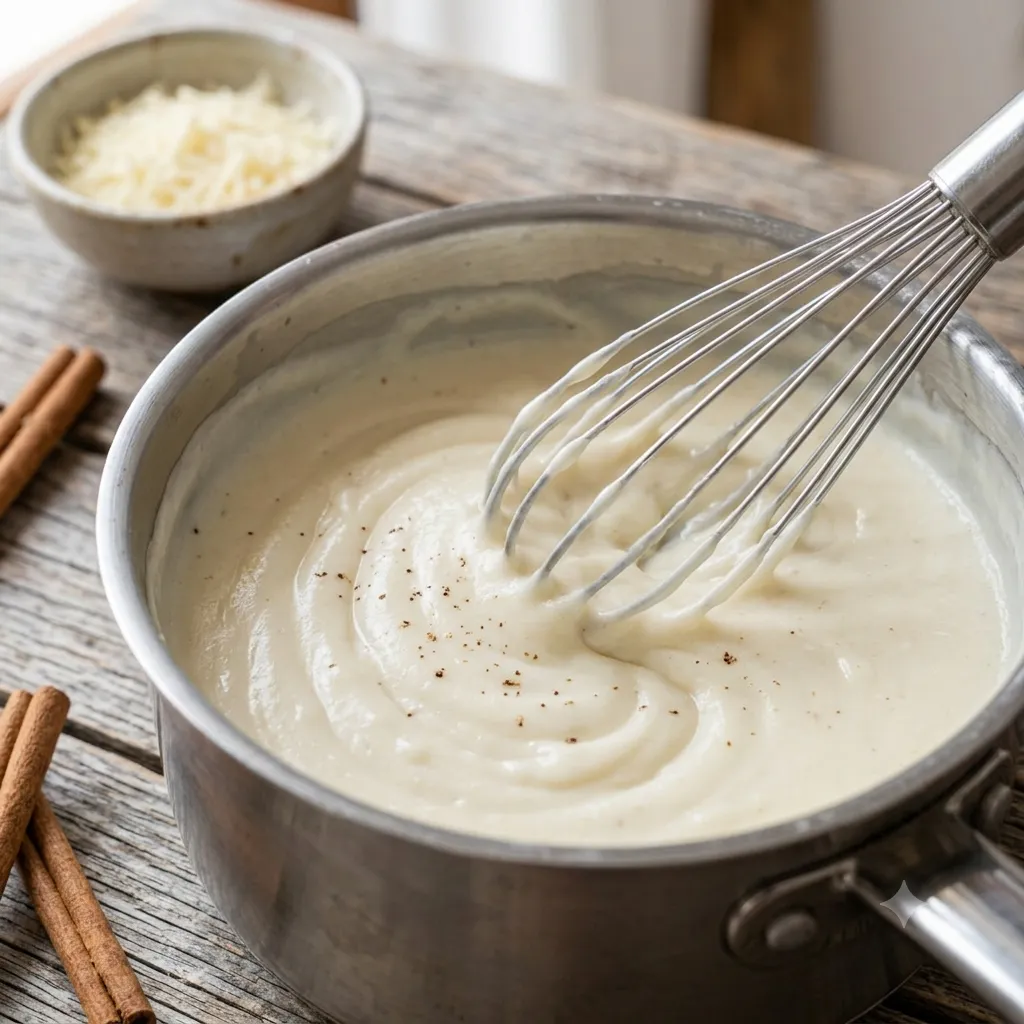
Melt butter in a saucepan over medium heat. Whisk in flour and cook for 1–2 minutes to remove the raw flour taste, stirring constantly. Slowly whisk in warm milk in a steady stream, whisking continuously to prevent lumps. Cook until thickened enough to coat a spoon, about 8–10 minutes. Remove from heat, then temper in beaten eggs by adding a small amount of the hot béchamel to the eggs first, then stirring the mixture back in. Season with nutmeg, salt, and pepper.
Assemble the Layers
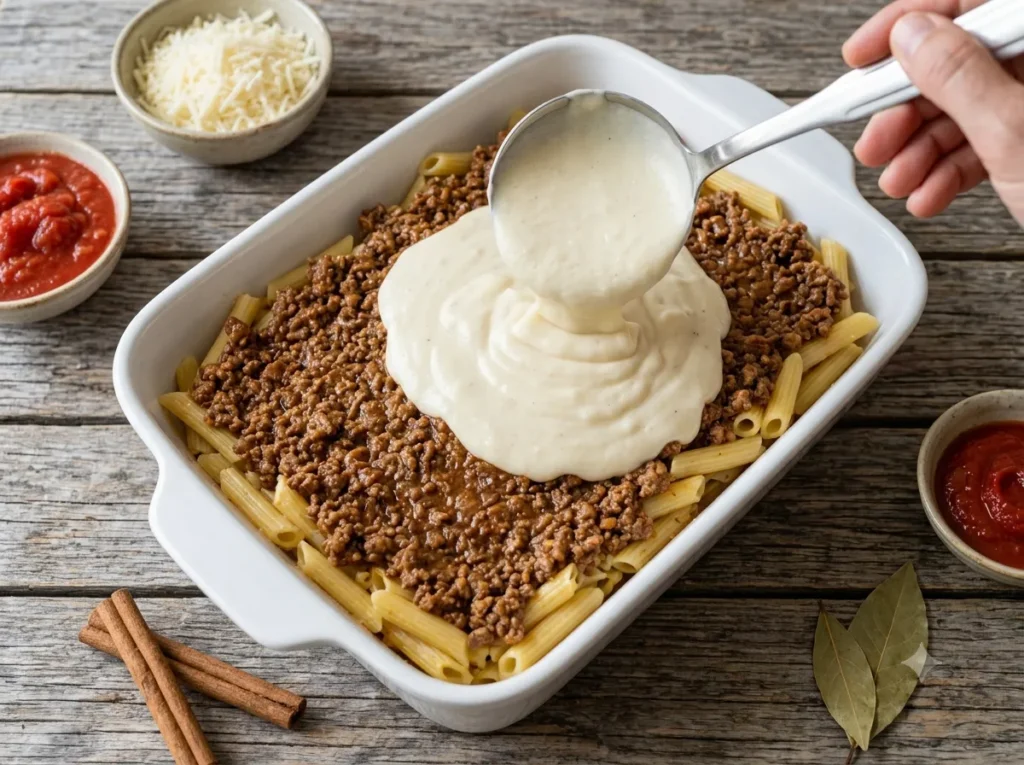
In a buttered baking dish, spread half the pasta mixture evenly. Add the meat sauce in an even layer. Top with the remaining pasta. Pour the béchamel over the top, spreading it to the edges so it seals the dish. Sprinkle with extra grated cheese.
Bake
Bake at 350°F (175°C) for 45–55 minutes, until the top is deep golden brown and the sauce is bubbling at the edges.
Rest
Let the Pastitsio rest for at least 20–30 minutes before slicing. This isn’t optional — it’s what gives you clean, structured slices instead of a puddle.
Slice and Serve
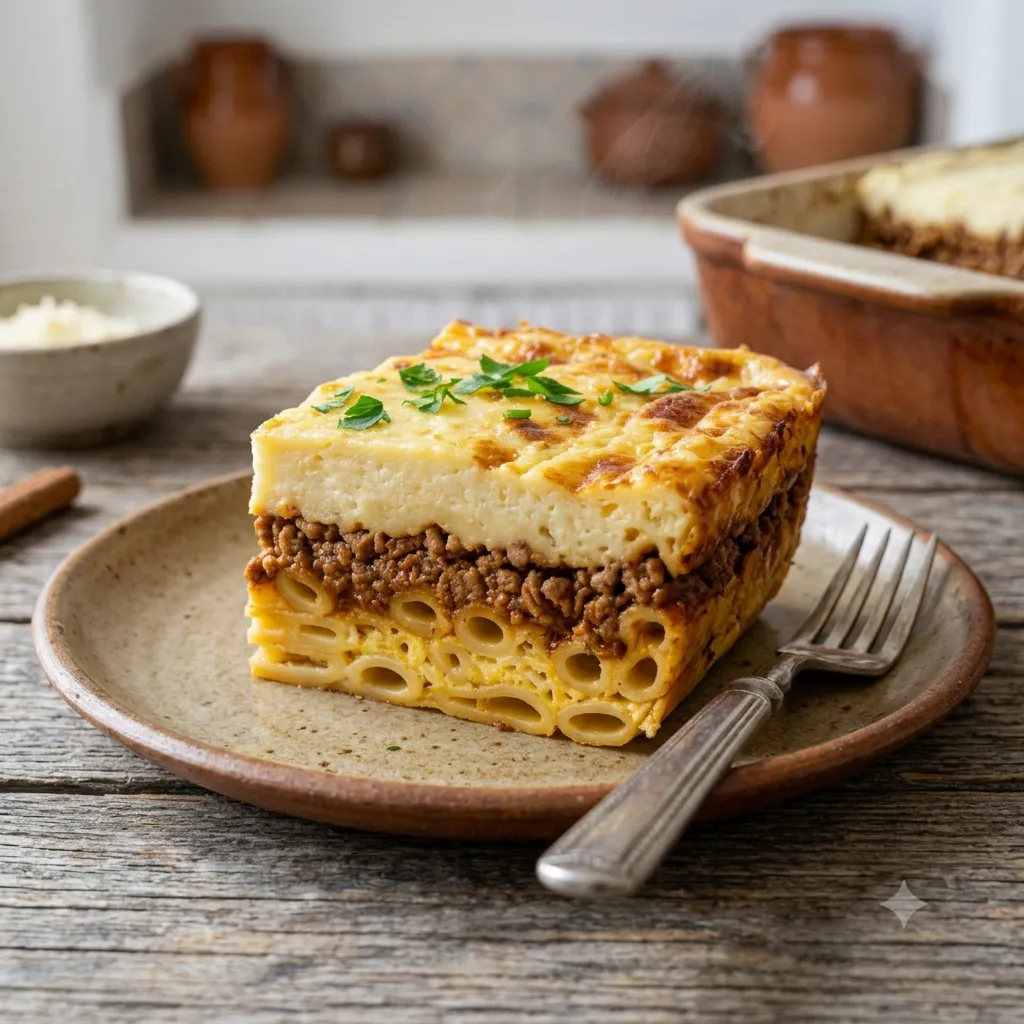
Use a sharp knife to cut clean squares. Serve warm, ideally with a simple side salad to cut through the richness.
Equipment Needed
- Dutch oven (for the meat sauce)
- Medium saucepan (for the béchamel)
- Whisk (essential for a smooth béchamel)
- 9×13-inch baking dish
- Chef’s knife
- Wooden spoon
- Cheese grater
- Instant-read thermometer (to confirm the center reaches at least 165°F)
Common Mistakes
Common Mistake #1: Watery Meat Sauce Why it happens: Not simmering long enough to reduce the tomato liquid. How to prevent it: Simmer uncovered until thick and glossy, not soupy. How to fix it: If already assembled, bake longer and rest longer before slicing.
Common Mistake #2: Lumpy Béchamel Why it happens: Adding milk too quickly or not whisking constantly. How to prevent it: Add milk gradually while whisking continuously. How to fix it: Strain the béchamel through a fine sieve before using.
Common Mistake #3: Overcooked Pasta Why it happens: Boiling pasta to full doneness before it goes in the oven. How to prevent it: Cook pasta 1–2 minutes less than package directions. How to fix it: There’s no fix once baked; note it for next time.
Common Mistake #4: Skipping the Egg in the Pasta Layer Why it happens: Assuming it’s an unnecessary step. How to prevent it: Always toss pasta with egg and cheese; it’s what holds the layer together. How to fix it: Not fixable after baking; the layer will simply be looser.
Common Mistake #5: Slicing Too Soon Why it happens: Impatience after a long cook. How to prevent it: Rest for a full 20–30 minutes minimum. How to fix it: Refrigerate leftovers; they’ll firm up and slice cleanly the next day.
Common Mistake #6: Under-Seasoned Meat Sauce Why it happens: Forgetting to taste and adjust salt as the sauce reduces. How to prevent it: Taste at multiple stages, not just at the start. How to fix it: Stir in more salt and a splash of tomato paste to balance.
Common Mistake #7: Too Much Cinnamon Why it happens: Overestimating how much is needed for a subtle background note. How to prevent it: Start with a small amount; you can always add more. How to fix it: Balance with extra tomato and a bit more salt.
Common Mistake #8: Using Skim Milk for Béchamel Why it happens: Trying to lighten the dish. How to prevent it: Use whole milk for proper richness and body. How to fix it: Add a small amount of butter or cream to compensate.
Common Mistake #9: Overcrowding the Beef While Browning Why it happens: Cooking too much meat in too small a pan. How to prevent it: Brown in batches if needed so the meat sears instead of steams. How to fix it: Continue cooking uncovered on higher heat to evaporate excess liquid.
Common Mistake #10: Not Sealing the Béchamel to the Edges Why it happens: Rushing the assembly step. How to prevent it: Spread béchamel fully to the corners and sides of the dish. How to fix it: Not fixable after baking, but note it for a cleaner presentation next time.
Common Mistake #11: Using the Wrong Pasta Shape Why it happens: Substituting with thin spaghetti or short macaroni. How to prevent it: Use thick tubular pasta made for Pastitsio, or bucatini as a substitute. How to fix it: The dish will still taste good, just with a different texture.
Common Mistake #12: Skipping the Resting Step for Béchamel Tempering Why it happens: Adding eggs directly to boiling béchamel. How to prevent it: Temper eggs gradually with warm (not boiling) béchamel first. How to fix it: Strain out any scrambled bits before using.
Common Mistake #13: Baking at Too High a Temperature Why it happens: Trying to speed up cooking time. How to prevent it: Stick to 350°F for even cooking without burning the top. How to fix it: Tent with foil if the top browns too quickly.
Common Mistake #14: Not Greasing the Baking Dish Why it happens: Assuming the béchamel will prevent sticking. How to prevent it: Butter the dish generously before assembling. How to fix it: Run a thin knife around the edges before serving.
Common Mistake #15: Storing Before Fully Cooled Why it happens: Wanting to refrigerate leftovers quickly. How to prevent it: Let the dish cool to room temperature before covering and refrigerating. How to fix it: If already stored warm, check for excess condensation and pat dry before reheating.
Pro Greek Chef Tips
- Toast the cinnamon briefly in the pan with the onions to bloom its flavor.
- Use full-fat Greek yogurt in place of a small portion of milk for extra tang in the béchamel.
- Grate your cheese fresh — pre-shredded cheese doesn’t melt as smoothly.
- Let the meat sauce cool slightly before layering so it doesn’t melt the pasta layer beneath it.
- Add a pinch of sugar to the tomato sauce if it tastes too acidic.
- Use a wide, shallow pan for the meat sauce so liquid reduces faster.
- Always taste your béchamel before assembling — season boldly, since it mellows once baked.
- Reserve a little pasta cooking water in case your béchamel needs loosening later.
- Let the pasta cool slightly before mixing in the egg so it doesn’t scramble.
- Bake on the middle rack for even heat distribution.
- Use a metal baking dish for a crisper bottom layer, or ceramic for gentler, even heat.
- Add a bay leaf to the béchamel milk while it warms for subtle background flavor.
- Don’t skip the nutmeg — it’s what makes béchamel taste “Greek” rather than generic.
- Keep a close eye during the last 10 minutes of baking to avoid over-browning.
- If your sauce still looks thin after 30 minutes, raise the heat slightly and reduce faster.
- A splash of red wine vinegar at the end of simmering brightens the whole sauce.
- Use freshly ground black pepper for a sharper, more aromatic finish.
- Let leftovers rest overnight in the fridge — Pastitsio often tastes even better the next day.
- Cut clean slices with a serrated knife dipped in hot water between cuts.
- Double the recipe and freeze one unbaked pan for an easy future dinner.
Delicious Variations
Lamb Pastitsio: Substitute half or all of the ground beef with ground lamb for a richer, more traditional flavor profile favored in many Greek households.
Vegetarian Pastitsio: Replace the meat sauce with a lentil and mushroom ragù, keeping the same tomato, cinnamon, and nutmeg seasoning.
Chicken Pastitsio: Use ground chicken for a lighter version, adding a bit more olive oil to compensate for the lower fat content.
Seafood-Inspired Variation: Some coastal Greek regions swap in a light shrimp and tomato sauce in place of beef for a completely different, brighter take.
Gluten-Free Version: Use gluten-free tubular pasta and substitute the flour in the béchamel with a gluten-free all-purpose blend or cornstarch slurry.
Whole-Wheat Pasta: Swap in whole-wheat pasta for extra fiber; expect a slightly nuttier flavor and firmer bite.
Extra-Cheesy Version: Add a thin layer of grated cheese between the pasta and meat sauce for extra richness.
Mini Individual Portions: Assemble in ramekins for individually portioned servings, perfect for entertaining.
Freezer-Friendly Version: Assemble fully but don’t bake; wrap tightly and freeze for up to three months, then bake straight from frozen with extended cook time.
Storage & Reheating
Refrigeration: Store cooled, covered Pastitsio in the refrigerator for up to 4 days.
Freezing Before Baking: Assemble the full dish, wrap tightly in plastic wrap and foil, and freeze unbaked for up to 3 months.
Freezing After Baking: Baked Pastitsio can also be frozen in individual portions for up to 3 months; thaw overnight in the fridge before reheating.
Best Reheating Methods: Reheat in the oven at 325°F, covered with foil, until warmed through (about 20–25 minutes for a full dish, less for individual portions). Microwave reheating works for a single portion but can slightly soften the béchamel’s texture.
Food Safety: Always reheat to an internal temperature of at least 165°F, and never leave Pastitsio at room temperature for more than 2 hours.
Maintaining Creamy Texture: Covering with foil while reheating traps steam and helps keep the béchamel from drying out or forming a skin.
What to Serve with Pastitsio
Pastitsio is rich, so lighter, acidic, or fresh sides balance the meal beautifully.
- Greek Village Salad (Horiatiki) — [Internal Link: Greek Village Salad]
- Tzatziki — [Internal Link: Homemade Tzatziki]
- Roasted vegetables
- Garlic bread
- Feta cheese
- Kalamata olives
- Dolmades
Drink Pairings:
- Assyrtiko (crisp, mineral white wine)
- Agiorgitiko (medium-bodied Greek red)
- Light red wine
- Sparkling lemonade
- Greek mountain tea
If you love this dish, you might also enjoy [Internal Link: Authentic Greek Moussaka] or [Internal Link: Spanakopita Recipe] for more classic Greek comfort food.
Frequently Asked Questions
Can I make Pastitsio ahead of time? Yes. You can assemble it up to a day in advance, refrigerate it unbaked, and bake it fresh when ready to serve.
Can I freeze Pastitsio? Absolutely. Freeze it either unbaked (wrapped tightly) or fully baked in individual portions, both for up to 3 months.
Can I substitute lamb for beef? Yes, ground lamb is a traditional substitute and adds a richer, slightly gamier flavor.
Why is my béchamel lumpy? Lumps usually form when milk is added too quickly or the whisking isn’t constant. Straining the finished béchamel through a fine sieve solves the problem.
Why is my Pastitsio falling apart when I slice it? This typically happens when the meat sauce wasn’t reduced enough, the pasta wasn’t mixed with egg, or the dish wasn’t rested long enough before slicing.
Can I use penne instead of tubular pasta? You can, though the texture will differ. Traditional Pastitsio pasta or bucatini gives the most authentic bite.
Can I make Pastitsio gluten-free? Yes. Use gluten-free tubular pasta and substitute the béchamel’s flour with a gluten-free blend or cornstarch.
How long does Pastitsio last in the fridge? Properly stored, it keeps for up to 4 days refrigerated.
Do I have to add egg to the béchamel? Egg helps the béchamel set into a firmer, custard-like layer once baked, which is traditional, though it can be omitted for a softer, looser topping.
Can I make this dish vegetarian? Yes, substituting a lentil and mushroom ragù for the meat sauce works well while keeping the same spices.
What’s the best cheese if I can’t find Kefalotyri? A good aged Parmesan is the most accessible substitute, offering a similarly salty, savory bite.
Why does the recipe use cinnamon in a savory dish? Cinnamon is a traditional Greek seasoning that balances the acidity of tomato and the richness of the meat, rather than adding sweetness.
Can I double this recipe for a crowd? Yes, Pastitsio scales well; just use a larger baking dish and extend the baking time slightly.
How do I know when the meat sauce is reduced enough? It should be thick enough to coat the back of a spoon without pooling liquid.
Is Pastitsio the same as Greek lasagna? It’s often nicknamed that, but it differs in pasta shape, layering, and its béchamel-only top instead of layered cheese throughout.
Recipe Card
Prep Time: 30 minutes Cook Time (Sauce): 35 minutes Bake Time: 50 minutes Rest Time: 25 minutes Total Time: About 2 hours 20 minutes Servings: 8 Cuisine: Greek Course: Main Dish Calories (estimated): Approximately 520 per serving
Ingredients
For the Meat Sauce:
- 2 tablespoons olive oil
- 1 medium onion, finely diced
- 3 garlic cloves, minced
- 2 pounds ground beef (80/20)
- 2 tablespoons tomato paste
- 1 can (28 oz) crushed tomatoes
- 1/4 cup red wine (optional)
- 1/2 teaspoon ground cinnamon
- 1/4 teaspoon ground nutmeg
- 1 teaspoon dried oregano
- 1 bay leaf
- Salt and black pepper, to taste
For the Pasta Layer:
- 1 pound pastitsio pasta or bucatini
- 1 egg, beaten
- 1/2 cup grated Kefalotyri or Parmesan
For the Béchamel:
- 6 tablespoons butter
- 6 tablespoons all-purpose flour
- 4 cups whole milk, warmed
- 2 eggs, beaten
- 1/4 teaspoon ground nutmeg
- 1/2 cup grated Kefalotyri or Parmesan
- Salt and black pepper, to taste
Instructions
- Sauté onion in olive oil until translucent, then add garlic and cook until fragrant.
- Add ground beef and brown thoroughly, breaking it up as it cooks.
- Stir in tomato paste, then add crushed tomatoes, wine, cinnamon, nutmeg, oregano, and bay leaf. Simmer uncovered 25–35 minutes until thick.
- Boil pasta until al dente, drain, then toss with beaten egg and grated cheese.
- Melt butter in a saucepan, whisk in flour, and cook 1–2 minutes. Gradually whisk in warm milk until thickened.
- Temper beaten eggs into the béchamel, then stir in nutmeg, cheese, salt, and pepper.
- Layer half the pasta in a buttered baking dish, top with meat sauce, then remaining pasta, then béchamel.
- Bake at 350°F for 45–55 minutes until golden brown on top.
- Rest for 20–30 minutes before slicing and serving.
Chef Notes: Reduce the meat sauce until no liquid pools at the edges — this is the single biggest factor in whether your Pastitsio holds its shape when sliced.
Storage Notes: Refrigerate up to 4 days, or freeze baked or unbaked for up to 3 months.
Nutrition Disclaimer: Nutrition values are estimates only and will vary based on specific ingredients and brands used.
Conclusion
Pastitsio rewards patience with layers of flavor that no shortcut version can match. Once you understand why each step matters — the browned beef, the reduced sauce, the silky béchamel, the essential rest before slicing — you’ll be able to make this Greek classic with real confidence every single time.
Save this recipe for your next family dinner or holiday gathering, and don’t be surprised when it becomes a regular request at your table. If you make it, leave a comment below and let us know how it turned out — and be sure to explore more authentic Greek recipes on Foxenergie.com.