Korean Beef Bulgogi Rice Bowls – Easy Korean BBQ at Home
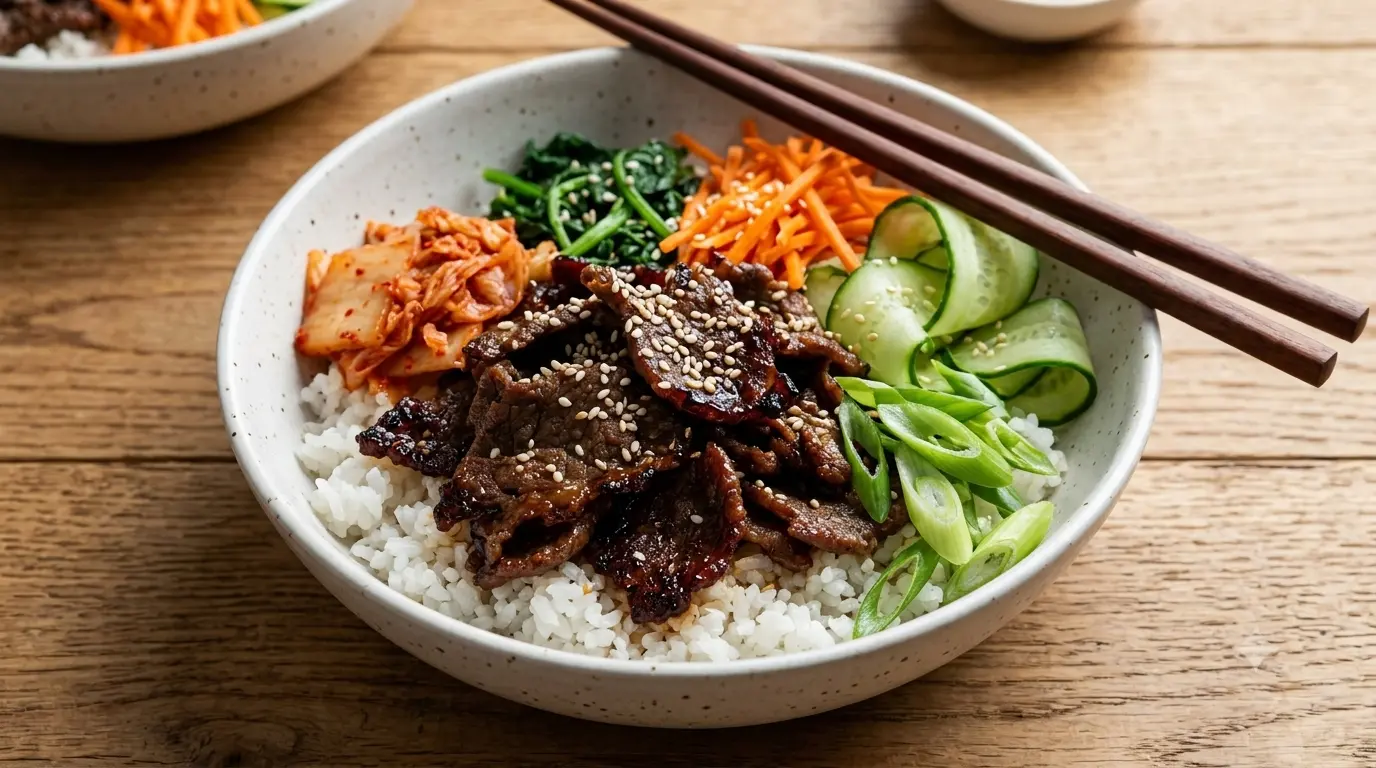
The first time you get bulgogi right in your own kitchen, you’ll know it. The pan hisses, the edges of the beef go dark and sticky in spots, and the smell of garlic, sesame oil, and caramelized sugar fills the room before the meat even hits the rice. That’s Korean Beef Bulgogi Rice Bowls in one sentence: thin, marinated beef cooked hot and fast, piled over steamed rice with crisp vegetables and a spoonful of kimchi on the side.
This isn’t a shortcut version of bulgogi. It’s the same marinade, the same technique, and the same balance of sweet and savory that Korean cooks have used for generations, just built around a bowl instead of a tabletop grill. That makes it one of the easiest ways to bring real Korean BBQ flavor to a Tuesday night, without a grill, a marinating machine, or a trip to a specialty market for anything you can’t find at a regular grocery store.
Table of Contents
By the end of this guide, you’ll understand what bulgogi actually means, why the marinade works the way it does, which cuts of beef give you the best texture, and exactly how to build a bowl that tastes like it came from a Korean BBQ restaurant. You’ll also get a full recipe card, storage and meal-prep instructions, ingredient swaps, and answers to the questions people ask most about making Korean Beef Bulgogi Rice Bowls at home.
What Are Korean Beef Bulgogi Rice Bowls?
Bulgogi translates roughly to “fire meat,” from bul (fire) and gogi (meat). The name describes the cooking method as much as the dish: thin strips of marinated beef cooked directly over intense heat until the outside catches color and the inside stays tender. A Korean Beef Bulgogi Rice Bowl takes that same marinated beef and serves it over steamed rice with vegetables, turning a shared tabletop dish into a complete single-serving meal.
In Korea, bulgogi is traditionally grilled at the table, often on a domed pan, and eaten with lettuce wraps, rice, and side dishes called banchan. The rice bowl format is a home-cooking adaptation that keeps the flavor of true bulgogi but simplifies the presentation into something you can make on a weeknight, portion into containers, or serve to a family without setting up a grill.
What makes this version work so well for busy cooks is that almost all of the flavor happens in the marinade, not in complicated technique. Once the beef has marinated, the actual cooking takes five to seven minutes in a hot pan. That’s the appeal: a dish with real depth of flavor that still fits into a normal weeknight schedule.
The History of Bulgogi
Bulgogi’s roots go back roughly two thousand years to the Goguryeo kingdom (37 BCE–668 CE), where a grilled skewered meat dish called maekjeok was prepared over open flame. During the Joseon Dynasty (1392–1897), a refined version of thinly sliced, marinated, grilled beef known as neobiani, meaning “thinly spread meat,” became a favorite of the royal court and the nobility. A nineteenth-century Korean text called the Dongguksesi also records a version of the dish under the name yeomjeok, meaning “fire meat,” describing meat skewered and grilled over a charcoal brazier in thin pieces.
The word “bulgogi” as it’s used today came into common use in the twentieth century, gradually replacing “neobiani” as the standard term for marinated, grilled beef. As Korean home cooks moved away from skewers and toward pan-grilling and tabletop cooking, the dish took the form most people recognize now: thin beef marinated in a soy-based sauce and cooked quickly over high heat.
From there, bulgogi followed Korean communities abroad. As Korean families immigrated to the United States and elsewhere in the twentieth century, they brought the dish with them, and it became one of the most recognizable Korean foods outside Korea, often serving as many people’s introduction to Korean cuisine before dishes like bibimbap or kimchi jjigae. The rice bowl format you’ll build in this recipe is a natural extension of that history: the same marinade and cooking method, adapted for a single-pan, weeknight-friendly meal.
Why These Rice Bowls Are So Good
A well-made bulgogi rice bowl works because it hits several textures and flavors at once, all in a single spoonful.
- Tender, marinated beef that’s been sliced thin and soaked in a sauce built to both season and soften the meat.
- A sweet-savory glaze clinging to every piece, built from soy sauce, sugar, garlic, and sesame oil.
- Fluffy steamed rice underneath, soaking up the extra sauce from the pan.
- Fresh, crunchy vegetables like carrots, cucumber, and spinach that cut through the richness of the beef.
- A punch of fermented flavor from kimchi or pickled radish on the side.
- Speed: once marinated, the beef cooks in minutes, making this realistic for a weeknight.
- Meal-prep friendliness: the beef, rice, and vegetables all hold up well in the refrigerator, so one cooking session can cover several lunches.
None of these elements need to be complicated. The dish earns its flavor from a marinade that’s been refined over generations, not from a long ingredient list or advanced technique.
The Science Behind Tender Bulgogi
Good bulgogi isn’t an accident. A few things are happening at once, and understanding them will make your beef taste noticeably better than a rushed version.
Thin slicing shortens cooking time. Beef sliced to about one-eighth of an inch cooks through in under two minutes per side. That short cooking window matters because it limits how much moisture the meat can lose. Thicker slices need longer in the pan, and the extra time dries out the muscle fibers before the surface has a chance to properly brown.
Soy sauce, sugar, and sesame oil do three different jobs. Soy sauce seasons the meat and, because it’s salty, helps the proteins hold onto more moisture through a light brining effect. Sugar (usually from brown sugar or honey) balances the saltiness and helps the surface caramelize once it hits the hot pan. Sesame oil coats the meat, carries flavor, and helps prevent sticking.
Asian pear or kiwi contain enzymes that break down protein. Asian pear contains a protease enzyme that gently breaks down the muscle fibers in beef, which is why a grated pear in the marinade makes the meat taste more tender without any extra cooking technique. Kiwi works the same way, more aggressively, which is why it’s typically used sparingly and for a shorter marinating time.
High heat drives the Maillard reaction. This is the chemical browning reaction between amino acids and sugars that gives seared beef its deep color and roasted, savory aroma. Maillard browning only happens efficiently at high temperatures, generally above 300°F on the surface of the food, which is one reason a properly preheated pan matters more than almost any other single step in this recipe.
Marinating time has a ceiling. More time isn’t always better. Thirty minutes to a few hours is usually enough for thin-sliced beef; marinating overnight in a strongly acidic or enzyme-heavy marinade can start to break the meat down too far, leaving it mushy instead of tender.
Crowding the pan causes steaming instead of searing. If too much beef goes into the pan at once, the moisture it releases has nowhere to evaporate quickly, and the temperature of the pan drops. Instead of browning, the beef simmers in its own liquid. Cooking in batches keeps the pan hot enough for real caramelization.
Chef Tip: If your bulgogi tastes flat instead of deeply savory, the pan probably wasn’t hot enough. Real bulgogi should smell slightly smoky and show dark, sticky edges, not just gray, boiled-looking meat.
Choosing the Best Beef
Traditional bulgogi is made from lean, well-marbled cuts sliced thin against the grain. Here’s how the common options compare.
| Cut | Marbling | Tenderness | Flavor | Price | Best For |
|---|---|---|---|---|---|
| Ribeye | High | Very tender | Rich, beefy | $$$ | Best overall flavor and texture |
| Top Sirloin | Moderate | Tender | Clean, beefy | $$ | Best everyday balance of price and quality |
| Sirloin | Moderate | Tender | Slightly leaner | $$ | Good all-around choice |
| Flank Steak | Low-moderate | Chewier if not sliced correctly | Beefy, slightly coarse | $$ | Budget option, needs thin against-the-grain slicing |
| Chuck Eye | Moderate-high | Tender when sliced thin | Deep, rich | $ | Best value option |
For home cooks, top sirloin or chuck eye offer the best combination of price and result. Ribeye gives the most restaurant-like texture because of its fat content, but it’s the most expensive option.
How to slice beef paper-thin at home: Wrap the beef tightly in plastic wrap and freeze it for 30 to 45 minutes before slicing. Partially frozen meat firms up just enough to let you cut clean, even, thin slices with a sharp knife, which is exactly how Korean butchers and restaurants prepare bulgogi beef for sale.
Ingredients Explained
Beef: Thin-sliced top sirloin, ribeye, or chuck eye. Ground beef bulgogi is a valid, faster variation covered later in this article.
Soy sauce: The backbone of the marinade, providing salt and umami depth.
Brown sugar and honey: Balance the saltiness of the soy sauce and help the beef caramelize in the pan.
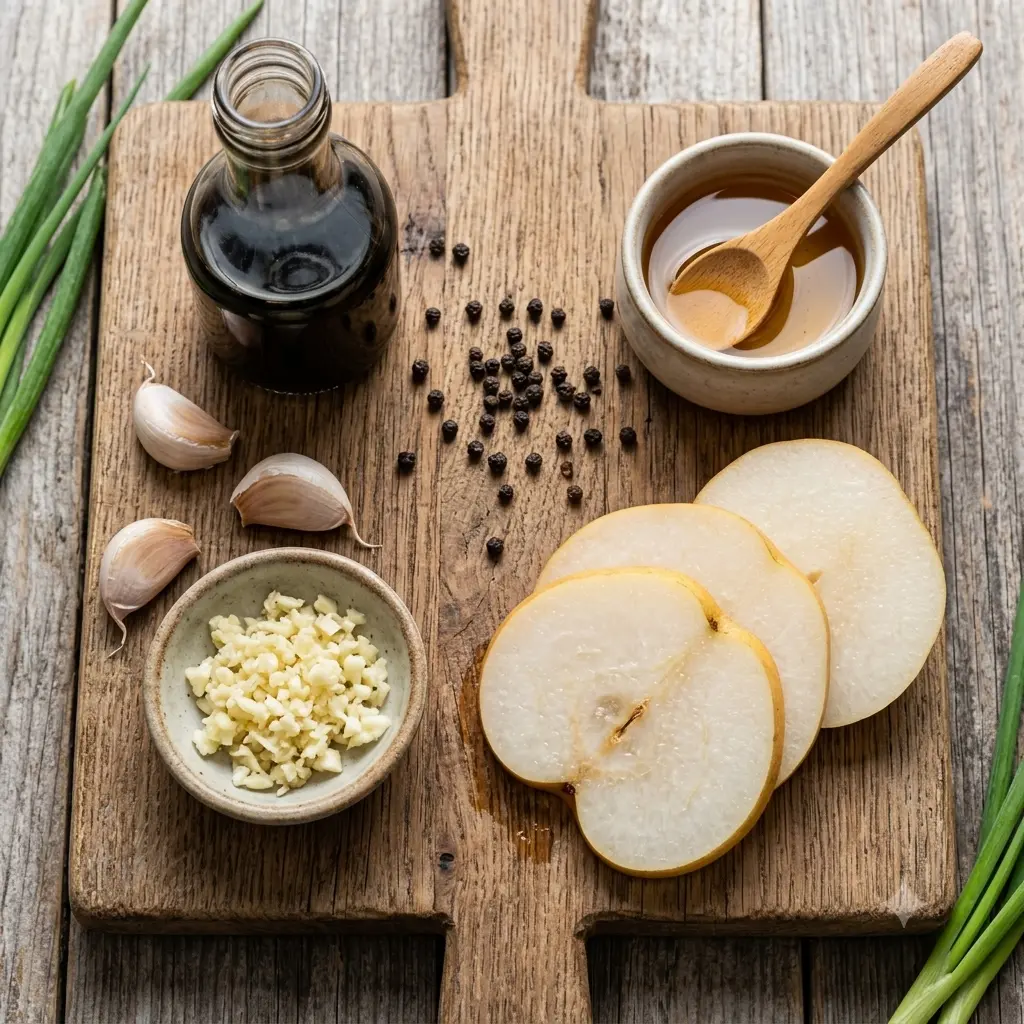
Asian pear (or apple substitute): Naturally tenderizes the meat and adds subtle sweetness. Apple works as a substitute, though the tenderizing effect is milder.
Garlic: Adds sharp, aromatic depth; freshly minced garlic matters more here than almost any other ingredient.
Fresh ginger: A small amount rounds out the marinade and cuts through the richness of the beef.
Sesame oil: Adds nutty aroma and helps carry flavor across the meat.
Gochujang (optional): Korean fermented chili paste, used for a spicy variation.
Black pepper: Adds mild heat and rounds out the seasoning.
Green onions and sesame seeds: Used both in the marinade and as a finishing garnish for color, crunch, and aroma.
Steamed rice: Short-grain white rice is traditional and holds sauce well; it’s the foundation of the bowl.
Vegetables:
- Carrots – add color and a light crunch.
- Cucumber – adds a cool, refreshing contrast to the hot beef.
- Spinach – often lightly sautéed or blanched, adding a savory, slightly mineral note.
- Kimchi – fermented cabbage that adds tang, heat, and probiotic depth.
- Pickled radish – a bright, acidic bite that resets the palate between mouthfuls of rich beef.
Step-by-Step Technique
1. Prepare the beef. Slice the beef paper-thin against the grain, using the partial-freeze method described above if needed.
2. Make the marinade. Whisk together soy sauce, brown sugar, honey, grated Asian pear, minced garlic, grated ginger, sesame oil, and black pepper until the sugar dissolves.
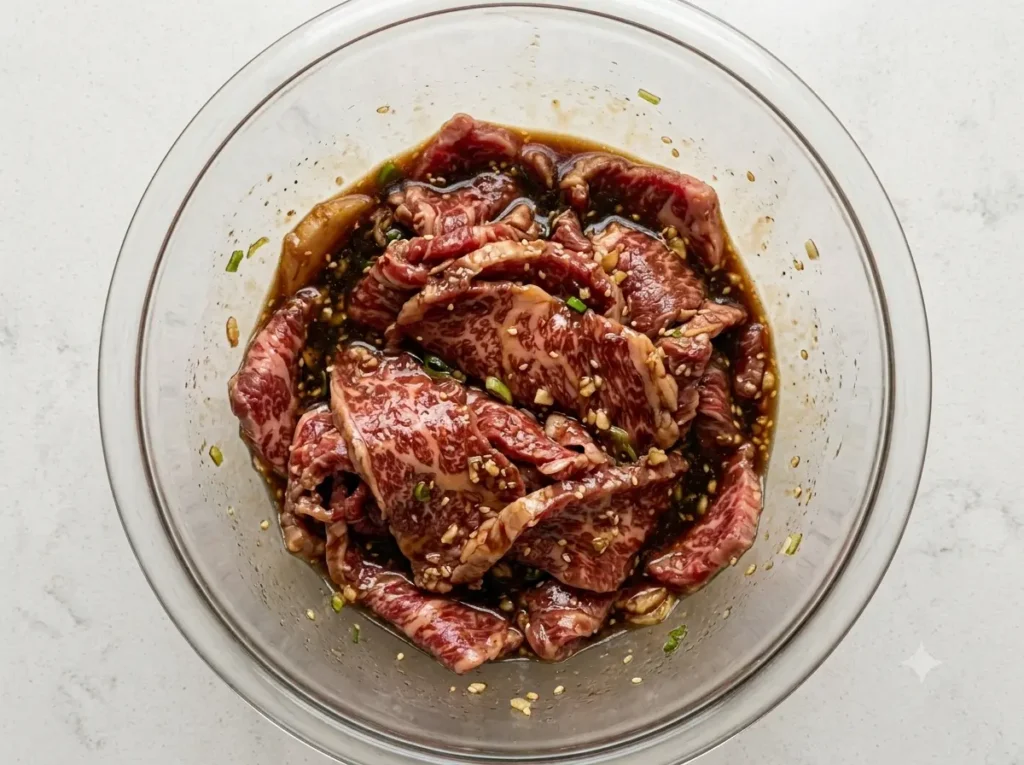
3. Marinate. Toss the beef in the marinade, cover, and refrigerate for at least 30 minutes and up to 4 hours. The meat should look slightly darker and glossy once it’s absorbed the sauce.
4. Prepare the vegetables. Julienne the carrots, slice the cucumber into thin ribbons or half-moons, and lightly wilt the spinach if using. Prep kimchi and pickled radish for garnish.
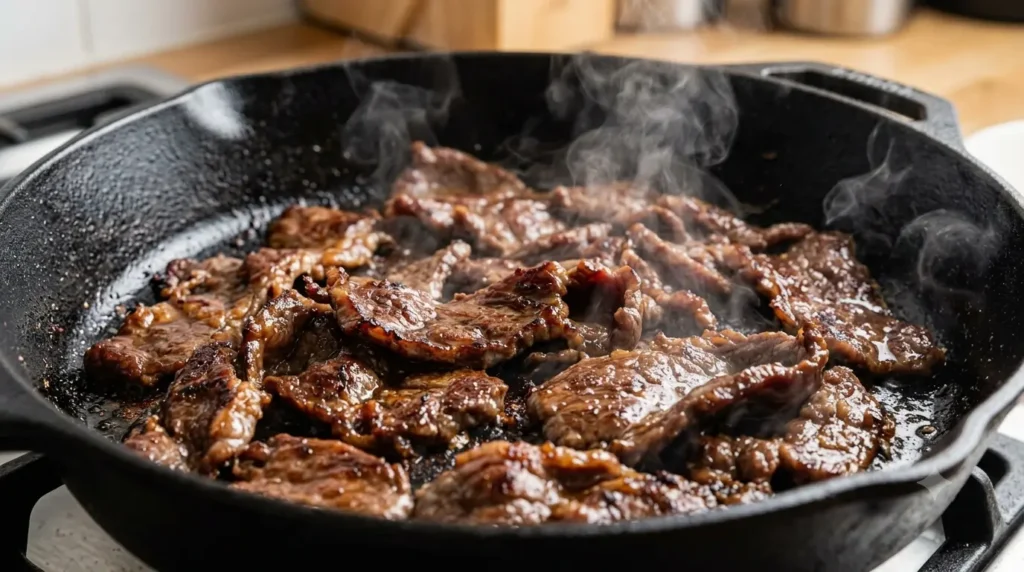
5. Cook over high heat. Heat a skillet or cast iron pan until it’s visibly shimmering. Add the beef in a single layer, in batches if needed, and let it sit undisturbed for 60 to 90 seconds before stirring. Look for dark, caramelized edges and a glossy, slightly sticky sauce clinging to the meat; this is your visual cue that the Maillard reaction is working.
6. Build the rice bowls. Add a scoop of hot steamed rice to each bowl.
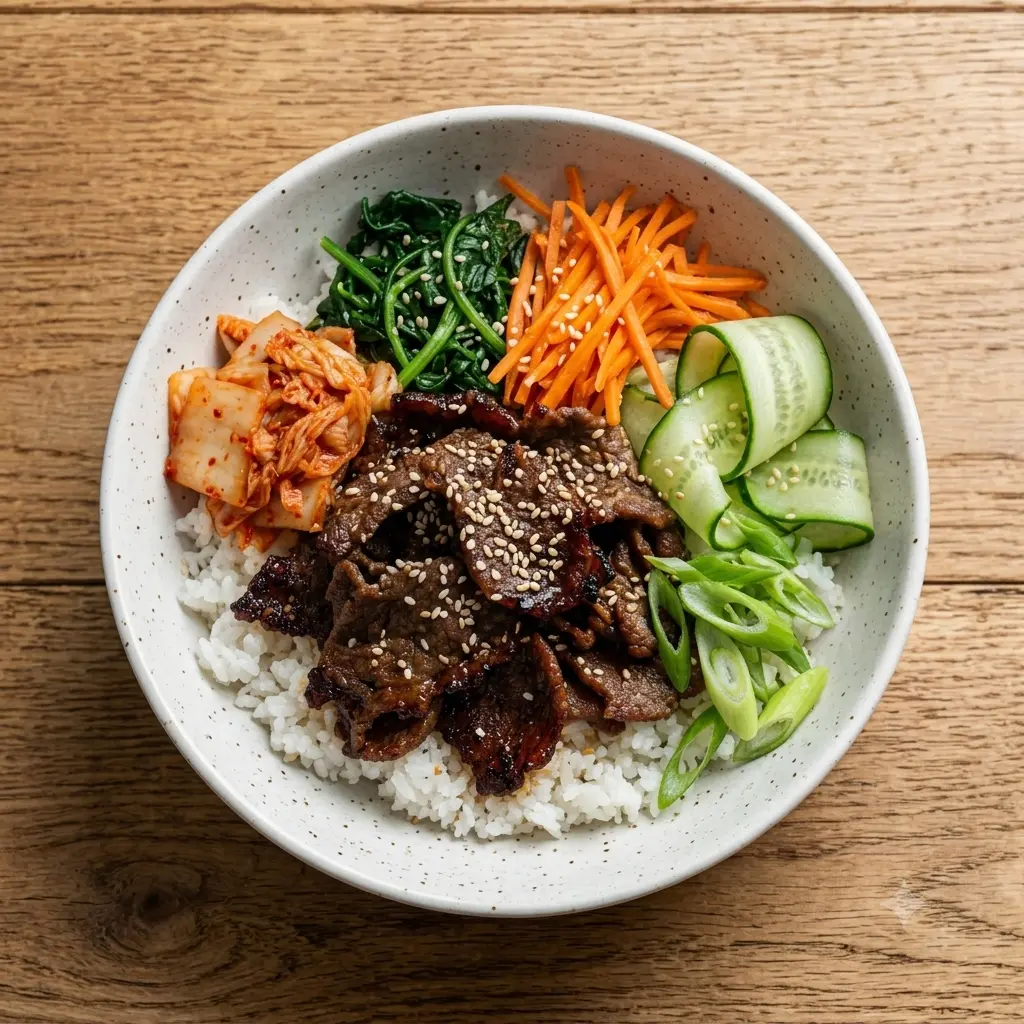
7. Add the beef and vegetables. Arrange the cooked beef over the rice alongside the prepared vegetables, kimchi, and pickled radish.
8. Garnish and serve. Finish with sliced green onions, a sprinkle of sesame seeds, and a light drizzle of sesame oil. Serve immediately while the beef is still glossy and warm.
The Secret to Authentic Bulgogi Flavor
If you take nothing else from this article, take this: authentic bulgogi flavor comes from five things working together, and skipping any one of them noticeably changes the result.
- Fresh garlic, not garlic powder, which lacks the sharp aromatic oils that define the marinade.
- Real sesame oil, used both in the marinade and as a finishing touch, for its distinct roasted, nutty aroma.
- Asian pear, which tenderizes the beef naturally and adds a subtle sweetness that white sugar alone can’t replicate.
- High, consistent heat, so the sugars in the marinade caramelize instead of just melting into liquid.
- Proper marinating time, long enough for the flavor to penetrate the beef but not so long that the texture turns mushy.
Restaurants that serve memorable bulgogi are almost always doing all five of these correctly, not just one or two.
Equipment Needed
- Large skillet (12-inch or wider recommended)
- Cast iron pan or grill pan for the best caramelization
- Mixing bowls for the marinade
- Chef’s knife for slicing beef and vegetables
- Rice cooker (optional, but useful for consistent rice)
- Tongs for turning the beef
Common Mistakes
Common Mistake #1: Slicing the beef too thick. Why it happens: Many home cooks don’t realize how thin restaurant-style bulgogi actually is. How to avoid it: Partially freeze the beef before slicing, and aim for about one-eighth of an inch. How to fix it: If your slices are thick, pound them gently with a meat mallet before marinating.
Common Mistake #2: Overcrowding the pan. Why it happens: It feels faster to cook all the beef at once. How to avoid it: Cook in batches, leaving space between pieces. How to fix it: If the pan is already crowded and steaming, remove some beef, let the pan reheat, and continue in smaller batches.
Common Mistake #3: Skipping the fruit in the marinade. Why it happens: Asian pear isn’t always on hand. How to avoid it: Keep a pear or apple in the fridge specifically for marinades. How to fix it: Use grated apple, or a small amount of pineapple juice, as a substitute.
Common Mistake #4: Marinating too long. Why it happens: Assuming more time always means more flavor. How to avoid it: Stick to 30 minutes to 4 hours for thin-sliced beef. How to fix it: If the beef has been marinating overnight, cook it as soon as possible and expect a softer, slightly different texture.
Common Mistake #5: Using a cold pan. Why it happens: Rushing the preheating step. How to avoid it: Let the pan heat for a few minutes before adding oil and beef. How to fix it: Remove the beef, raise the heat, and let the pan come back up to temperature before continuing.
Common Mistake #6: Using garlic powder instead of fresh garlic. Why it happens: Convenience. How to avoid it: Mince fresh garlic cloves for the marinade every time. How to fix it: Add extra fresh garlic to the pan while cooking to compensate.
Common Mistake #7: Not slicing against the grain. Why it happens: The direction of the grain isn’t always obvious on cuts like flank steak. How to avoid it: Look for the parallel muscle fibers and cut perpendicular to them. How to fix it: If the beef turns out chewy, slice any leftovers thinner against the grain before reheating.
Common Mistake #8: Using low-sodium soy sauce without adjusting the recipe. Why it happens: Health-conscious substitutions. How to avoid it: If using low-sodium soy sauce, add a touch more salt or soy sauce to compensate. How to fix it: Season the finished dish with a small amount of extra soy sauce or salt.
Common Mistake #9: Skipping the resting step for the pan between batches. Why it happens: Trying to save time. How to avoid it: Let the pan return to full heat before adding the next batch. How to fix it: Wipe the pan, raise the heat, and wait for it to shimmer again.
Common Mistake #10: Adding vegetables to the same pan too early. Why it happens: Trying to cook everything at once. How to avoid it: Cook vegetables separately, or add quick-cooking ones like spinach at the very end. How to fix it: Remove the beef, sauté vegetables briefly, and recombine.
Common Mistake #11: Using rice that’s too fresh or too wet. Why it happens: Not draining or resting rice properly after cooking. How to avoid it: Let steamed rice rest, covered, for 5 to 10 minutes before serving. How to fix it: Fluff with a fork and let excess steam escape before building the bowl.
Common Mistake #12: Forgetting to reserve some marinade as a sauce. Why it happens: Not planning ahead. How to avoid it: Set aside a small amount of unused marinade before adding raw beef to the rest. How to fix it: Simmer the reserved marinade separately until thickened, then drizzle it over the finished bowl.
Common Mistake #13: Cooking beef straight from the refrigerator. Why it happens: Skipping the resting step. How to avoid it: Let marinated beef sit at room temperature for 10 to 15 minutes before cooking. How to fix it: If it goes into the pan cold, extend the initial searing time slightly.
Common Mistake #14: Using the wrong pan. Why it happens: Nonstick pans don’t get hot enough for deep caramelization. How to avoid it: Use cast iron, carbon steel, or stainless steel for better browning. How to fix it: If using nonstick, cook in smaller batches and accept a lighter caramelization.
Common Mistake #15: Not tasting and adjusting the marinade before use. Why it happens: Assuming the recipe is automatically balanced for personal taste. How to avoid it: Taste a small spoonful of the marinade and adjust sweetness or saltiness before adding the beef. How to fix it: Add extra soy sauce, sugar, or a splash of water to balance an overly strong marinade.
Pro Chef Tips
- Slice beef while it’s still slightly frozen for cleaner, thinner cuts.
- Grate the Asian pear instead of dicing it so the enzymes distribute evenly.
- Use a microplane for garlic and ginger to release more flavor than mincing.
- Preheat the pan for a full two to three minutes before adding oil.
- Use a neutral oil with a high smoke point, like avocado or grapeseed oil, for searing.
- Don’t move the beef for the first 60 seconds; let it develop color before stirring.
- Cook in batches rather than all at once to preserve caramelization.
- Reserve a spoonful of raw marinade to simmer into a finishing sauce.
- Toast sesame seeds briefly in a dry pan before garnishing for extra aroma.
- Use short-grain rice, which holds sauce better than long-grain varieties.
- Let cooked rice rest for a few minutes before serving to firm up the texture.
- Add a small splash of water to the marinade if it tastes too concentrated.
- Use kitchen shears to trim excess fat from beef slices before marinating.
- Keep vegetables raw or lightly cooked to maintain contrast with the warm beef.
- Warm the serving bowls slightly so the dish doesn’t cool too quickly.
- Add a drizzle of raw sesame oil right before serving, not during cooking, to preserve its aroma.
- Use tongs instead of a spatula for more control when searing thin slices.
- If using flank steak, pound it lightly before slicing to improve tenderness.
- Let marinated beef come to room temperature for 10 minutes before cooking for more even searing.
- Double the marinade recipe and freeze half for a faster meal next time.
- Taste the beef straight from the pan before assembling bowls to check seasoning.
- Balance the richness of the beef with something acidic, like pickled radish or a squeeze of citrus.
Variations
Spicy Bulgogi Bowls: Add a spoonful of gochujang to the marinade for heat and color.
Ground Beef Bulgogi Bowls: Use ground beef instead of sliced beef for a faster version; cook it crumbled in the same marinade, and reduce the marinating time to 15-20 minutes since ground beef absorbs flavor quickly.
Chicken Bulgogi: Substitute thin-sliced chicken thigh for beef; it takes on the marinade well and cooks even faster.
Pork Bulgogi: Use thin-sliced pork shoulder or belly for a slightly fattier, richer variation.
Low-Carb Bowl: Swap steamed rice for cauliflower rice or extra sautéed vegetables.
Bibimbap-Inspired Bowl: Add a fried egg, extra seasoned vegetables, and a spoonful of gochujang sauce for a bibimbap-style presentation.
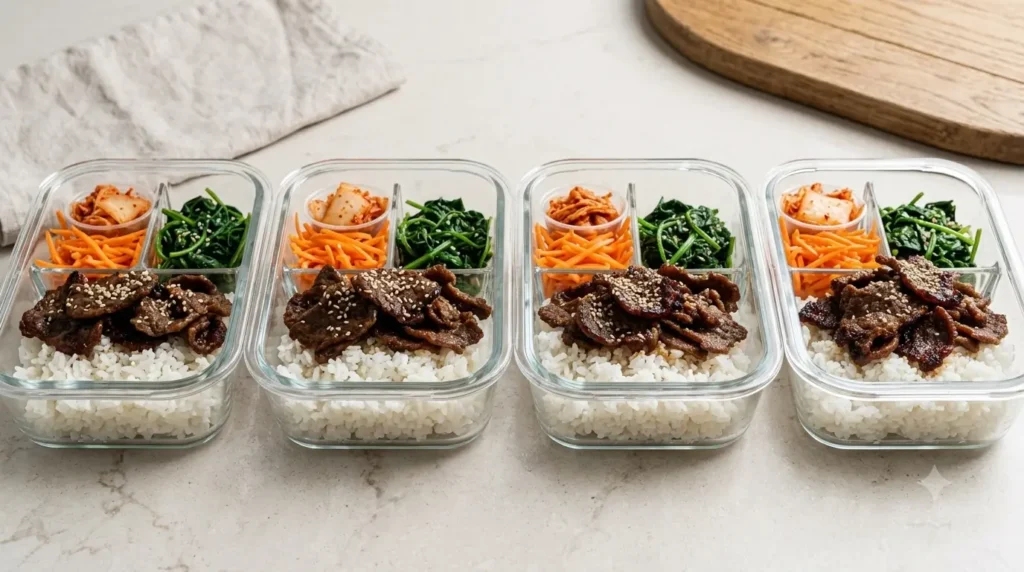
Meal Prep Version: Cook a double batch of beef and portion it with rice and vegetables into separate containers for the week.
Vegetarian Bulgogi: Substitute thick-sliced mushrooms, such as king oyster or portobello, marinated the same way, for a plant-based version.
Storage & Meal Prep
Refrigeration: Store cooked bulgogi beef in an airtight container for up to 4 days. Keep rice and vegetables in separate containers to maintain texture.
Freezing: Cooked bulgogi freezes well for up to 3 months. Freeze it flat in a sealed bag so it thaws and reheats evenly.
Reheating: Reheat beef in a hot skillet for a couple of minutes to restore some caramelization, rather than microwaving alone, which can make it steam instead of sear.
Packing lunches: Pack rice, beef, and vegetables in separate compartments of a bento-style container to keep textures distinct until eating.
Food safety: Cool cooked beef to room temperature within two hours before refrigerating, and always reheat to a safe internal temperature before eating.
What to Serve with Korean Beef Bulgogi Rice Bowls
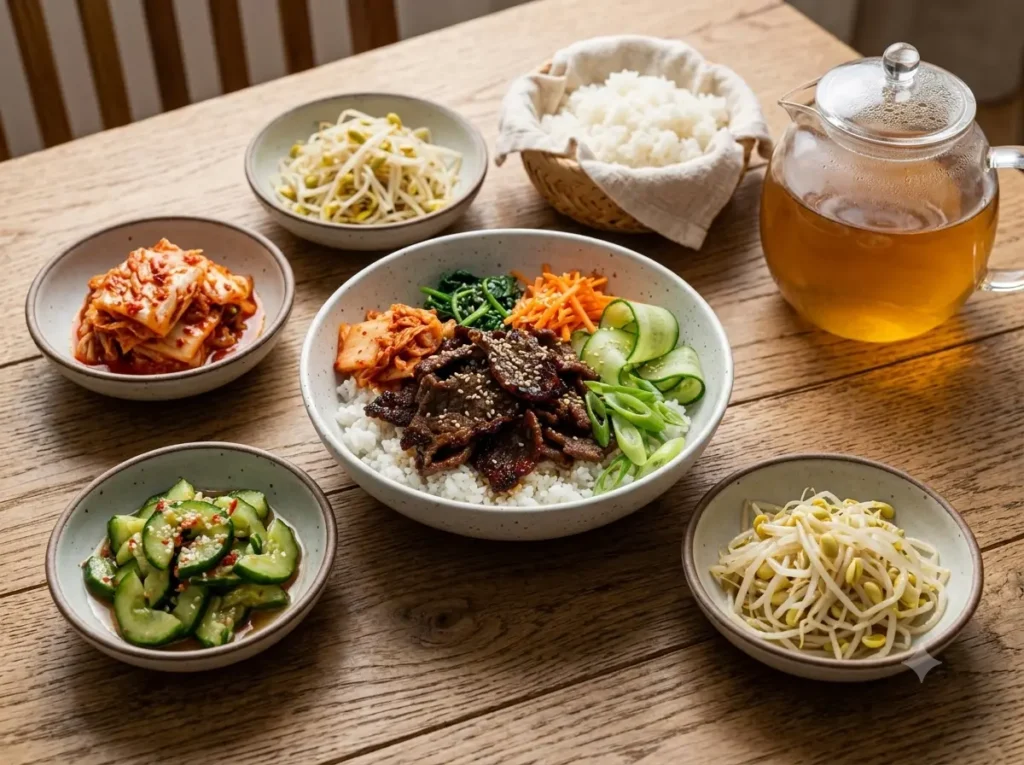
- Kimchi – classic fermented cabbage for tang and heat.
- Korean cucumber salad – a quick, vinegar-based side that adds crunch.
- Japchae – stir-fried glass noodles with vegetables, a common companion dish.
- Steamed broccoli – a simple, neutral vegetable side.
- Bean sprouts (kongnamul) – lightly seasoned, a common Korean banchan.
- Korean potato salad – a slightly sweet, creamy contrast to the savory beef.
- Miso soup – not traditionally Korean, but a common, comforting pairing in many households.
- Korean beverages – barley tea or a cold sujeonggwa (cinnamon-ginger punch) work well.
- Wine pairings – an off-dry Riesling or a light, fruity Pinot Noir both complement the sweetness of the marinade.
Frequently Asked Questions
What does bulgogi mean? Bulgogi means “fire meat,” from the Korean words for fire (bul) and meat (gogi), describing the dish’s traditional cooking method over direct high heat.
Can I use ground beef for bulgogi rice bowls? Yes. Ground beef bulgogi cooks faster and absorbs the marinade quickly, making it a good option for a faster weeknight version, though thin-sliced beef gives a more traditional texture.
Can I make bulgogi ahead of time? Yes. You can marinate the beef up to a day in advance, or cook it fully ahead and reheat it in a hot pan when ready to serve.
Can I freeze Korean Beef Bulgogi Rice Bowls? Cooked beef freezes well for up to three months. Rice also freezes reasonably well, but fresh vegetables should be added after reheating rather than frozen.
Can I use chicken instead of beef? Yes. Thin-sliced chicken thigh works well in the same marinade and typically cooks even faster than beef.
Do I need Asian pear, or can I skip it? Asian pear helps tenderize the beef and adds natural sweetness, but grated apple is a reasonable substitute if pear isn’t available.
Can I grill bulgogi instead of pan-searing it? Yes. Bulgogi can be grilled on skewers or a grill pan, which is closer to its traditional preparation, though thin slices need close attention since they cook very quickly over an open flame.
Why is my beef tough after cooking? Tough bulgogi usually comes from slicing the beef too thick, cooking it too long, or not marinating it long enough to allow the tenderizing ingredients to work.
How do restaurants make bulgogi so tender? Restaurants typically use well-marbled cuts, slice the beef very thin against the grain, and use a properly balanced marinade with a tenderizing fruit like Asian pear, combined with very high, quick cooking heat.
Is bulgogi spicy? Traditional bulgogi is not spicy; it’s sweet and savory. Spicy versions typically add gochujang to the marinade.
What’s the difference between bulgogi and galbi? Galbi refers to marinated, grilled short ribs, while bulgogi is typically made from thin slices of boneless beef like sirloin or ribeye.
What kind of rice works best for these bowls? Short-grain white rice is traditional and holds the bulgogi sauce well, though brown rice or cauliflower rice can be used for dietary preferences.
Can I make this dish dairy-free or gluten-free? The dish is naturally dairy-free. For a gluten-free version, substitute tamari or a certified gluten-free soy sauce for regular soy sauce.
How long should I marinate the beef? Thirty minutes is enough for noticeable flavor, while up to four hours gives a deeper result. Overnight marinating is not necessary for thin-sliced beef and can affect texture.
Can I double this recipe for meal prep? Yes. This recipe scales easily; just cook the beef in batches to avoid overcrowding the pan, regardless of how much total beef you’re preparing.
Recipe Card
Korean Beef Bulgogi Rice Bowls
| Prep Time | 20 minutes |
| Marinating Time | 30 minutes – 4 hours |
| Cook Time | 10 minutes |
| Total Time | 1 hour (with minimum marinating time) |
| Servings | 4 |
| Cuisine | Korean |
| Course | Main Dish |
| Calories (estimated) | Approximately 480 per bowl |
Ingredients
For the beef and marinade:
- 1.5 lbs top sirloin or ribeye, thinly sliced
- 1/3 cup soy sauce
- 2 tbsp brown sugar
- 1 tbsp honey
- 1/4 cup grated Asian pear (or apple)
- 4 cloves garlic, minced
- 1 tsp grated fresh ginger
- 2 tbsp sesame oil
- 1/2 tsp black pepper
- 2 green onions, chopped
- 1 tbsp neutral oil, for cooking
For the bowls:
- 4 cups steamed short-grain rice
- 1 cup julienned carrots
- 1 cup sliced cucumber
- 1 cup lightly sautéed spinach
- 1/2 cup kimchi
- 1/2 cup pickled radish
- Sesame seeds, for garnish
- Extra sliced green onion, for garnish
Instructions
- Slice the beef thinly, using the partial-freeze method if needed.
- Whisk together soy sauce, brown sugar, honey, grated pear, garlic, ginger, sesame oil, and black pepper.
- Toss the beef in the marinade and refrigerate for 30 minutes to 4 hours.
- Prepare the carrots, cucumber, spinach, kimchi, and pickled radish.
- Heat a skillet over high heat until shimmering, then add the neutral oil.
- Cook the beef in batches, letting each batch sear undisturbed for about 60 seconds before stirring, until caramelized and cooked through.
- Divide the rice among four bowls.
- Top each bowl with cooked beef and the prepared vegetables.
- Garnish with sesame seeds and green onion, and serve immediately.
Chef Notes: For deeper flavor, reserve a spoonful of raw marinade before adding the beef, then simmer it separately until thickened and drizzle it over the finished bowls.
Storage Notes: Refrigerate leftovers for up to 4 days, or freeze cooked beef for up to 3 months. Reheat beef in a hot pan rather than the microwave for the best texture.
Nutrition Disclaimer: Calorie and nutrition estimates are approximate and will vary based on specific ingredients, cuts of beef, and portion sizes used.
Conclusion
Korean Beef Bulgogi Rice Bowls give you nearly everything that makes Korean BBQ so satisfying: caramelized, marinated beef, a sweet and savory sauce, and the contrast of fresh, crunchy vegetables, all built around a bowl of rice instead of a full tabletop spread. The technique isn’t complicated. What makes the difference is fresh garlic, real sesame oil, a properly tenderized cut of beef, and a hot enough pan to let the sugars in the marinade caramelize the way they’re supposed to.
Once you’ve made this recipe a couple of times, it becomes one of those dishes you can put together from memory: a fast marinade, a hot skillet, and a bowl that tastes like it took a lot more effort than it actually did. Whether you’re cooking for a weeknight family dinner or packing lunches for the week, Korean Beef Bulgogi Rice Bowls are a reliable way to bring real Korean BBQ flavor to your own kitchen.