
Authentic Moussaka (Greek Beef and Eggplant Lasagna): The Ultimate Mediterranean Comfort Food
Moussaka is the dish Greek cooks reach for when a meal needs to feel substantial, layered, and a little bit ceremonial. Silky roasted eggplant sits beneath a deeply spiced meat sauce, all of it capped with a thick, golden layer of béchamel that browns and puffs slightly in the oven. Cut into a slice and you get clean, distinct bands of texture, soft eggplant, rich meat, creamy custard-like topping, in a single forkful.
This guide covers what Moussaka actually is, the layered history behind it, including a specific twentieth-century chef whose changes shaped the dish most people know today, the food science behind roasted eggplant and silky béchamel, and a complete recipe you can build this weekend. You will also find an ingredient comparison, a full breakdown of every component, fifteen common mistakes, twenty professional tips, and a complete recipe card.
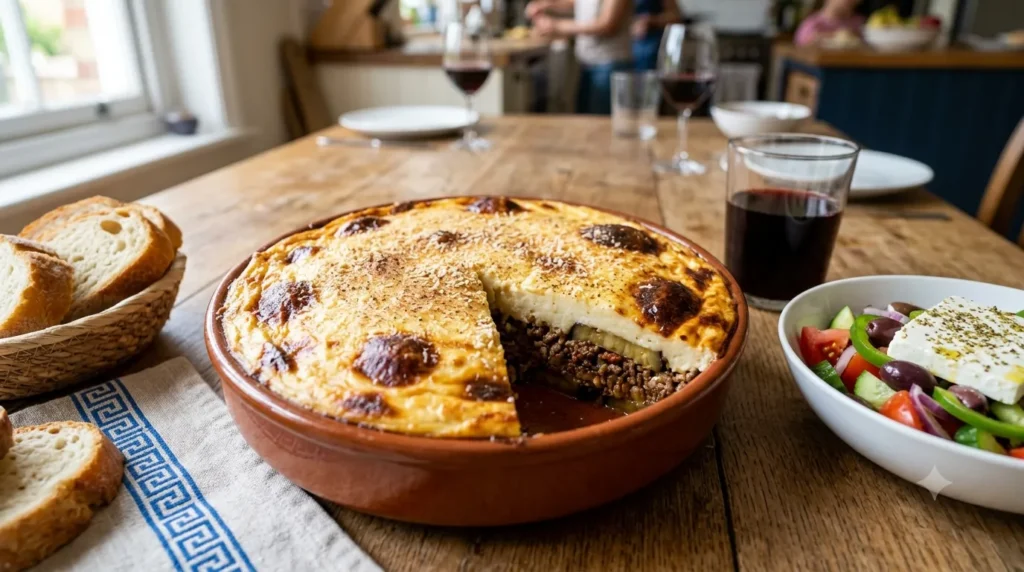
Table of Contents
- What Is Moussaka?
- The History of Moussaka
- Why Moussaka Is So Popular
- The Science Behind Perfect Moussaka
- Choosing the Best Ingredients
- Ingredients Explained
- The Secret to Restaurant-Quality Moussaka
- Step-by-Step Technique
- Equipment Needed
- Common Mistakes
- Pro Chef Tips
- Delicious Variations
- Storage & Reheating
- What to Serve with Moussaka
- Frequently Asked Questions
- Recipe Card
- Conclusion
What Is Moussaka?
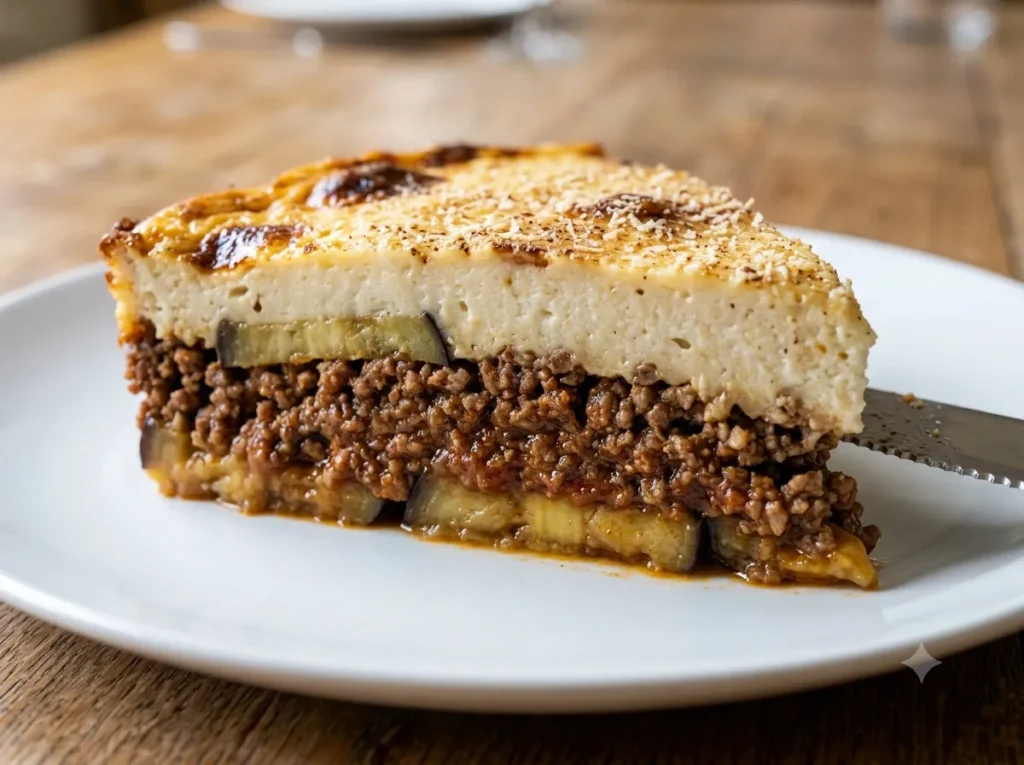
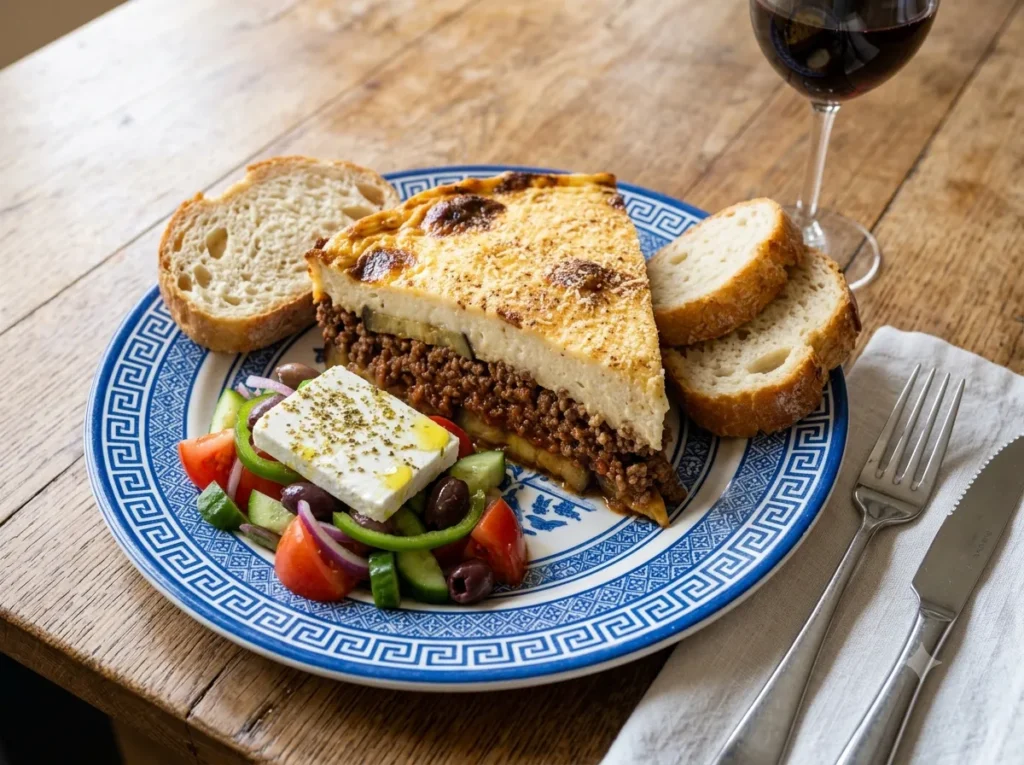
Moussaka is a layered Greek casserole built from roasted eggplant, a richly spiced ground meat sauce, and a thick, creamy béchamel topping, all baked together until the top turns deep golden brown and the layers underneath have fully set. Sliced and served, it reveals distinct bands: soft, silky eggplant on the bottom, a dense, aromatic meat layer in the middle, and a custard-like béchamel crown on top.
Moussaka is widely considered one of Greece’s signature dishes, recognized internationally as a symbol of Greek cooking in roughly the same way ratatouille represents French cuisine or paella represents Spanish cooking. Its combination of vegetable, meat, and a rich, baked topping makes it a genuine centerpiece dish rather than a side or a light course.
Comparisons to Italian lasagna are common and not unreasonable, since both are layered, baked casseroles finished with a rich, often cheese-topped layer. But Moussaka’s identity is distinctly its own. It has no pasta at all, relying on eggplant as its structural base instead of noodles, and its spicing, built around cinnamon, allspice, and nutmeg, gives it a warmth entirely different from lasagna’s typically more straightforward tomato and herb profile.
Moussaka appears regularly at Greek family gatherings and special occasions, in part because of the real time and effort it takes to prepare properly. Roasting eggplant, building a slow-simmered meat sauce, and whisking a silky béchamel are not weeknight tasks for most home cooks, which is exactly why this dish tends to show up when a meal is meant to feel like an event rather than routine.
The History of Moussaka
Layered eggplant dishes have a long history across the ancient and medieval Mediterranean and Middle East, well before the dish known today as Moussaka took its current form. Eggplant itself arrived in the Mediterranean region through trade routes connecting to South Asia, where it originated, and various eggplant-based casseroles and layered preparations developed across the Eastern Mediterranean, the Levant, and North Africa over subsequent centuries.
Ottoman culinary influence across the Eastern Mediterranean played a substantial role in spreading and shaping eggplant-based casseroles, including early forms of what would eventually be called Moussaka. Versions of the dish, generally featuring layered eggplant and spiced ground meat but without a béchamel topping, are documented across several countries in the region, including Turkey and various parts of the Balkans and the Levant, each with its own name and regional variation.
The specific, now-iconic Greek Moussaka, capped with a thick, French-inspired béchamel topping, is credited to Nikolaos Tselementes, a Greek chef trained in French culinary technique who worked to modernize and codify Greek cuisine in the early twentieth century. Tselementes incorporated béchamel sauce, a French culinary staple, into the traditional layered eggplant and meat dish, a change that gave Moussaka the rich, creamy, distinctly baked-casserole quality that most people associate with the dish today. This is worth stating plainly: while layered eggplant and meat dishes existed across the Eastern Mediterranean well before Tselementes, the specific béchamel-topped version now recognized worldwide as Greek Moussaka reflects his early twentieth-century contribution to Greek cuisine, not an ancient or unchanged recipe.
Regional variations persist across Greece and neighboring countries even after Tselementes’s influence took hold. Some regions and households add a layer of sliced potatoes beneath the eggplant, a heartier, more filling variation. Neighboring countries maintain their own related dishes under different names, generally without the béchamel topping that defines the Greek version, reflecting the shared ancestry of these dishes without collapsing them into a single, identical recipe.
Moussaka became an international symbol of Greek cuisine over the course of the twentieth century, spreading through Greek immigration and later through Greece’s tourism industry, which introduced the dish widely to visitors as a defining example of Greek cooking. Its rich, layered structure and satisfying combination of flavors made it an easy dish to promote as representative of Greek culinary identity to an international audience.
Why Moussaka Is So Popular
Rich layers of flavor build on top of each other rather than blending into one uniform taste, giving each bite a sense of structure and depth that a simpler, single-component dish cannot match. That layered quality is a big part of why Moussaka feels substantial and special rather than merely filling.
Its texture strikes a genuine balance between creamy and hearty. The béchamel topping contributes a smooth, custard-like richness, while the meat sauce and eggplant beneath it provide real, satisfying weight, together avoiding the trap of feeling either too heavy or too light.
Aromatic spices, cinnamon and allspice chief among them, give Moussaka a warmth that separates it clearly from other tomato-based meat sauces found in Italian or other Mediterranean cooking. This spicing is part of what makes the dish instantly recognizable as Greek rather than generically Mediterranean.
Its comfort-food appeal is undeniable, and it works as a genuinely excellent make-ahead meal, since Moussaka often tastes even better the day after baking, once the layers have had time to fully set and the flavors have settled together. It also produces excellent leftovers for exactly this reason, and its structure makes it ideal for entertaining, since a single large pan can serve a crowd with minimal last-minute effort required.
The Science Behind Perfect Moussaka
Why roasting eggplant removes excess moisture. Eggplant, similar to zucchini, holds a significant amount of water within its spongy flesh. Roasting at high, dry heat evaporates much of this moisture directly, concentrating the eggplant’s flavor and preventing a watery, diluted final casserole.
Salting eggplant and osmosis. Salting sliced eggplant before cooking draws water out of its cells through osmosis, the same process used with zucchini in other dishes. This step, done before roasting, reduces the total moisture the eggplant carries into the oven, resulting in a firmer, less watery texture in the finished dish.
The Maillard reaction during roasting. As eggplant roasts at high heat, its surface undergoes the Maillard reaction, a browning process between proteins and sugars that develops deep, savory, slightly caramelized flavor. This is part of why roasted eggplant tastes so much richer and more complex than boiled or steamed eggplant.
Why the meat sauce should be reduced before assembling. A meat sauce that still carries excess liquid when layered into the casserole will release that liquid during baking, pooling at the bottom of the dish and making slices messy and watery. Reducing the sauce on the stovetop until it is thick and clings to the meat, rather than pooling around it, prevents this problem before assembly even begins.
How béchamel thickens through starch gelatinization. Béchamel’s thickness comes from flour’s starch granules absorbing liquid and swelling as the sauce heats, a process called gelatinization. This is why béchamel must be cooked gently and stirred continuously; rushing the heat or under-cooking the flour-butter roux at the start results in a thin, starchy-tasting sauce rather than a smooth, properly thickened one.
The role of egg yolks and cheese in stabilizing the topping. Egg yolks, whisked into cooled béchamel before baking, add richness and help the sauce set into a firmer, more custard-like texture once baked, rather than staying loose and pourable. Cheese, typically Parmesan or a Greek hard cheese like kefalotyri, adds both flavor and additional protein structure that helps the topping hold its shape when sliced.
Why resting after baking creates cleaner slices. Moussaka needs time after baking for its layers, particularly the béchamel and meat sauce, to firm up and set fully. Cutting into it immediately, while everything is still piping hot, often results in layers sliding apart rather than holding together in a clean, structured slice.
Choosing the Best Ingredients
| Comparison | Flavor | Texture | Fat Content | Traditional Choice? |
|---|---|---|---|---|
| Ground Beef | Milder, familiar | Firm | Moderate | Common, widely used |
| Ground Lamb | Rich, distinctly gamey | Tender | Moderate-high | Traditional, especially in older recipes |
| Half Beef, Half Lamb | Balanced richness | Tender and firm | Moderate-high | Popular modern balance |
| Italian Eggplant | Slightly sweeter, thinner skin | Creamy when roasted | N/A | Good, widely available choice |
| Globe Eggplant | Slightly more bitter, thicker skin | Sturdier, holds shape well | N/A | Most common choice in the US |
| Fresh Tomatoes | Brighter, more variable | Requires more prep | N/A | Used in some traditional versions |
| Canned Crushed Tomatoes | Consistent, concentrated | Convenient | N/A | Very common and reliable |
| Homemade Stock | Deeper, more complex | N/A | N/A | Ideal if time allows |
| Store-Bought Stock | Milder, more neutral | N/A | N/A | Reliable, convenient substitute |
Ground beef is common and widely used in modern Moussaka recipes, offering a familiar, moderately rich flavor. Ground lamb, more traditional in older and more classic versions of the dish, carries a distinctly richer, gamier flavor that pairs particularly well with the dish’s warm spicing. A blend of half beef and half lamb has become a popular modern choice, balancing lamb’s richness against beef’s more neutral, widely appealing flavor.
Globe eggplant, the large, dark purple variety most commonly found in US grocery stores, is the standard choice for Moussaka, sturdy enough to hold its shape through roasting and layering. Italian eggplant, smaller and slightly sweeter with a thinner skin, works well too and is a fine substitute if available.
Canned crushed tomatoes offer more consistency than fresh tomatoes, which vary significantly in ripeness and water content depending on season and source. Fresh tomatoes can absolutely be used in a traditional preparation, but canned tomatoes are the more reliable choice for a home cook aiming for a consistent result. Homemade stock adds noticeably more depth to the meat sauce, though a good store-bought stock is an entirely reasonable substitute for most home kitchens.
For beginners, ground beef and canned crushed tomatoes offer the most forgiving, accessible starting point, with globe eggplant as the standard, widely available vegetable base.
Ingredients Explained
| Ingredient | Role in the Dish |
|---|---|
| Ground beef | Base protein for the meat sauce |
| Ground lamb (optional) | Adds richness alongside or instead of beef |
| Eggplant | Structural base layer of the casserole |
| Potatoes (optional traditional layer) | Adds heartiness in some regional versions |
| Olive oil | Used for roasting eggplant and building the meat sauce |
| Yellow onion | Aromatic base of the meat sauce |
| Garlic | Essential aromatic depth |
| Tomato paste | Concentrated tomato flavor and color |
| Crushed tomatoes | Main liquid and body of the meat sauce |
| Dry red wine | Adds depth and helps deglaze the pan |
| Beef stock | Adds body and richness to the meat sauce |
| Cinnamon | Signature warm spice of Greek meat sauces |
| Nutmeg | Traditional warmth in both the meat sauce and béchamel |
| Allspice | Adds complexity alongside cinnamon |
| Bay leaves | Subtle herbal background note |
| Fresh parsley | Freshness and color in the meat sauce |
| Butter | Base fat for the béchamel roux |
| Flour | Thickens the béchamel through starch gelatinization |
| Whole milk | Liquid base of the béchamel |
| Egg yolks | Enriches and helps set the béchamel topping |
| Parmesan or Kefalotyri cheese | Adds flavor and structure to the béchamel topping |
| Salt | Essential seasoning throughout every layer |
| Black pepper | Background warmth throughout |
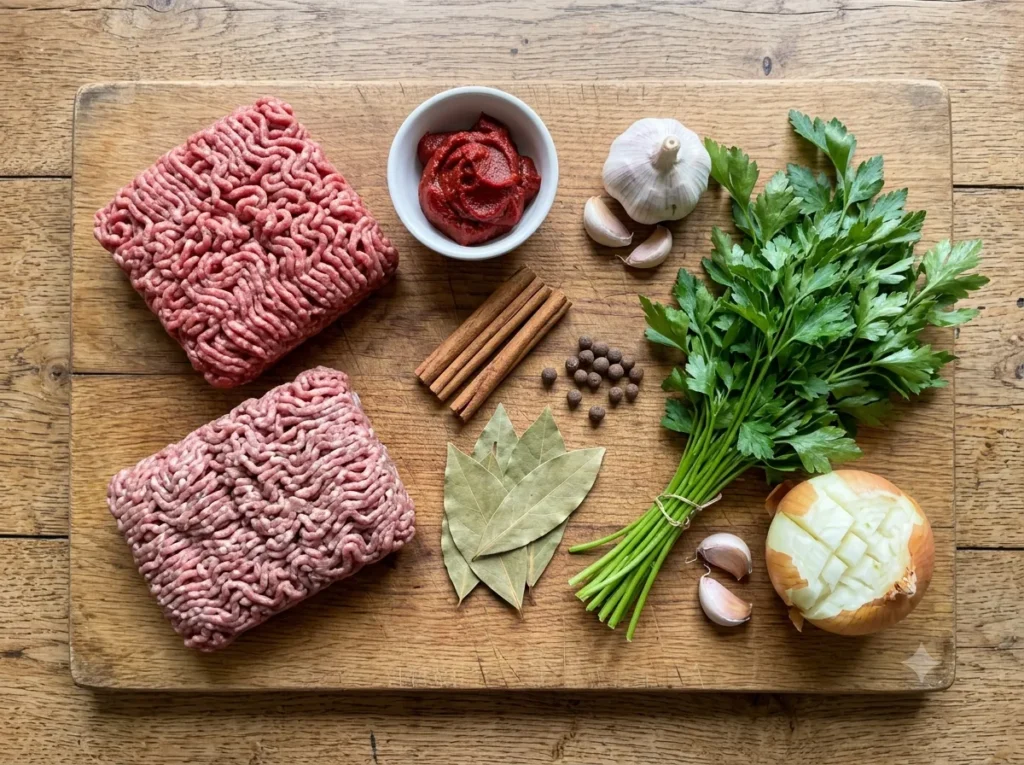
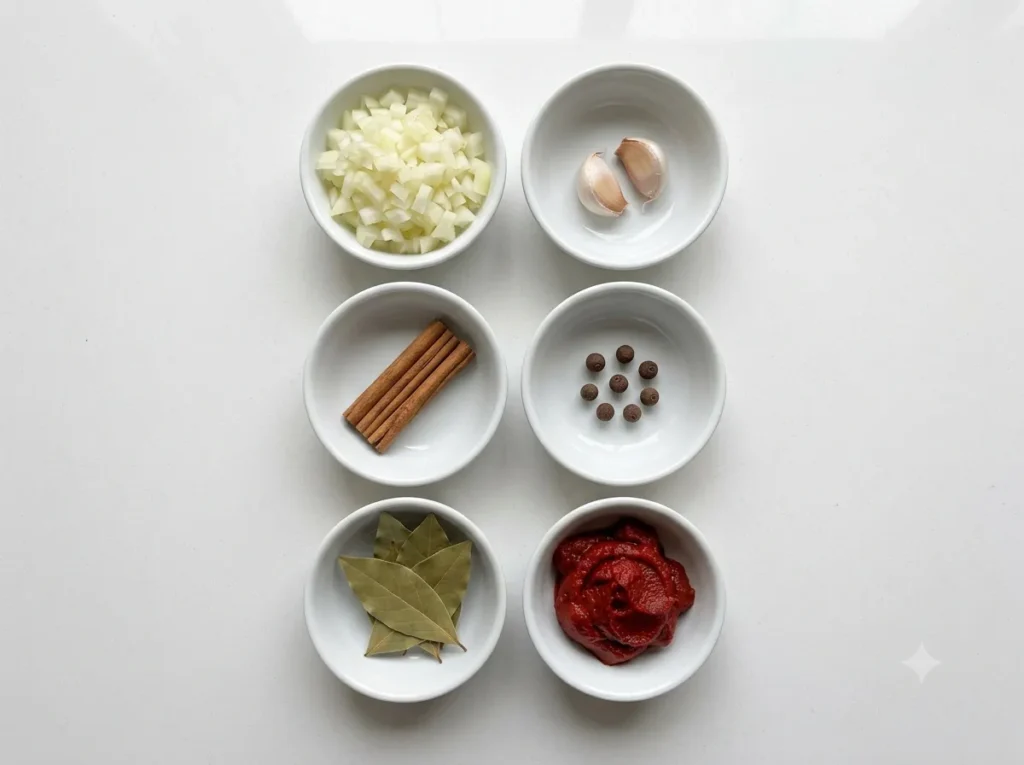
Cinnamon, allspice, and nutmeg together form the backbone of Moussaka’s distinct spice profile, a combination rarely found in Italian-style meat sauces and one of the clearest signals that distinguishes this dish from lasagna. These spices should be used with a confident hand but not so heavily that they overwhelm the meat and tomato base underneath.
Dry red wine, added to the meat sauce and allowed to reduce, contributes acidity and depth that plain stock or water cannot replicate on its own. Kefalotyri, a hard, salty Greek cheese, is the more traditional choice for the béchamel topping, though Parmesan is a widely available and perfectly suitable substitute for home cooks outside of specialty grocery access.
Egg yolks in the béchamel are not optional if you want the topping to set into that distinct, slightly firm, custard-like texture Moussaka is known for; without them, the topping stays looser and less structured once baked.
The Secret to Restaurant-Quality Moussaka
Roasting instead of frying eggplant is the single biggest difference between a heavy, greasy Moussaka and a lighter, more refined one. Traditional recipes sometimes call for frying eggplant slices in oil, which produces a rich result but adds significant fat and moisture. Roasting achieves a similarly silky texture with far less oil and considerably less mess.
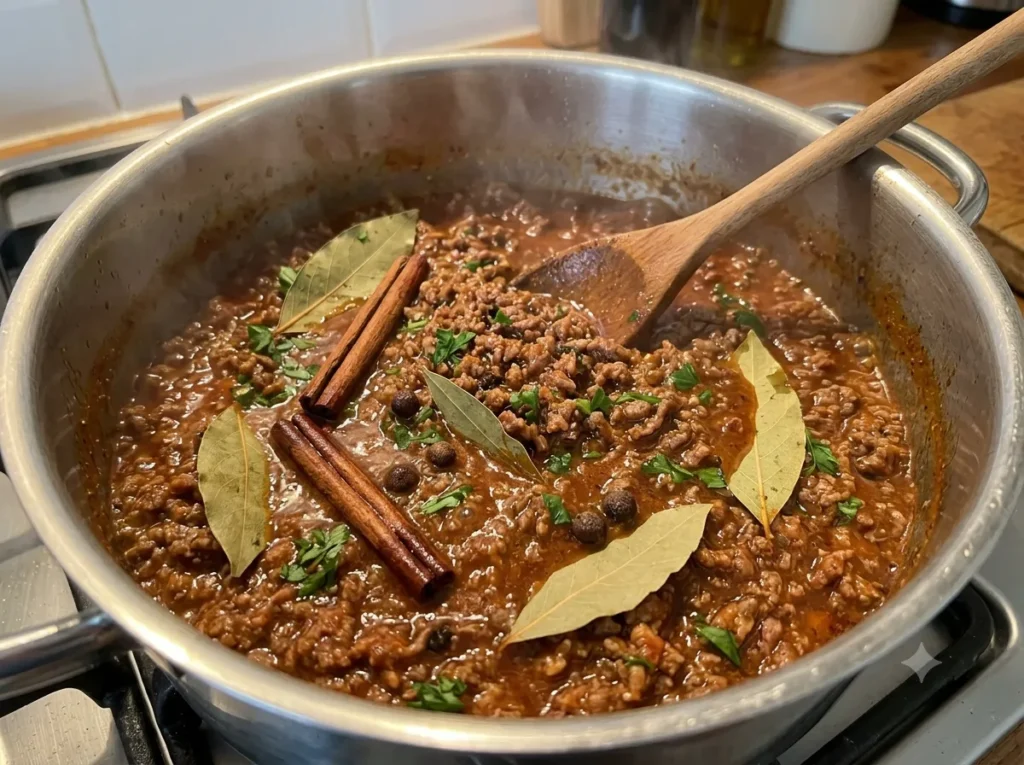
Building a deeply flavored meat sauce takes real time, not a rushed fifteen minutes. Letting the sauce simmer long enough for the wine to fully reduce, the spices to bloom, and the liquid to thicken naturally produces a far more concentrated, restaurant-quality result than a quick, undercooked version.
Creating silky, lump-free béchamel depends entirely on patience and constant whisking. Adding milk gradually to the roux, whisking continuously rather than intermittently, and cooking over moderate rather than high heat all contribute to a smooth, professional-quality sauce.
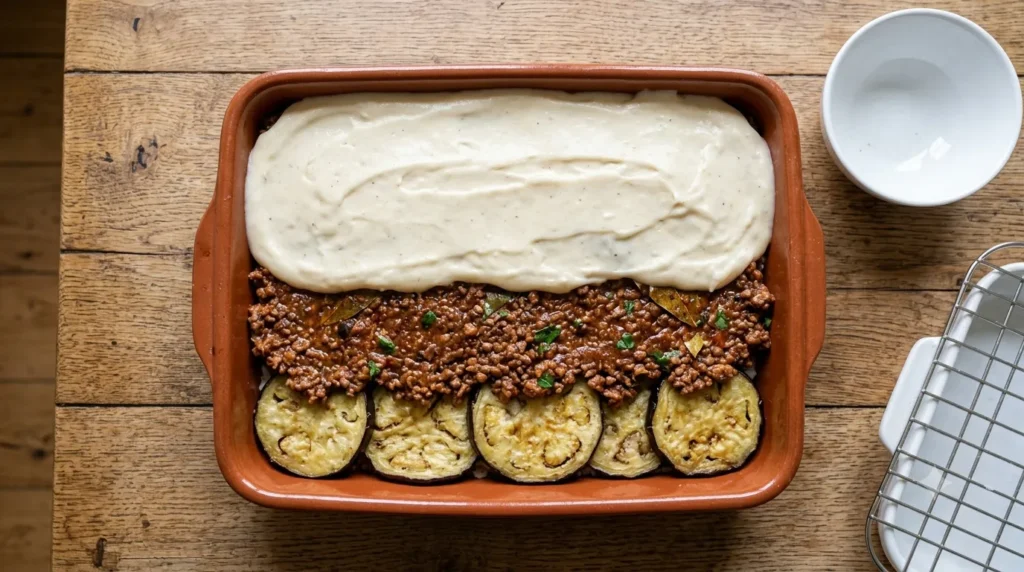
Proper layering matters for both presentation and texture. Distinct, even layers, eggplant, then meat sauce, then béchamel, allow each component to hold its own texture and flavor rather than blending into an undifferentiated mush.
Cooling before slicing is non-negotiable if clean, restaurant-style slices matter to you. A Moussaka cut too soon after baking will not hold its layers together nearly as well as one given proper time to rest and set.
Balancing spices without overpowering the dish is a matter of restraint. Cinnamon, allspice, and nutmeg should be present and recognizable but never so heavy that they read as a spiced dessert rather than a savory main course.
Step-by-Step Technique
1. Prepare the eggplant (10 minutes)
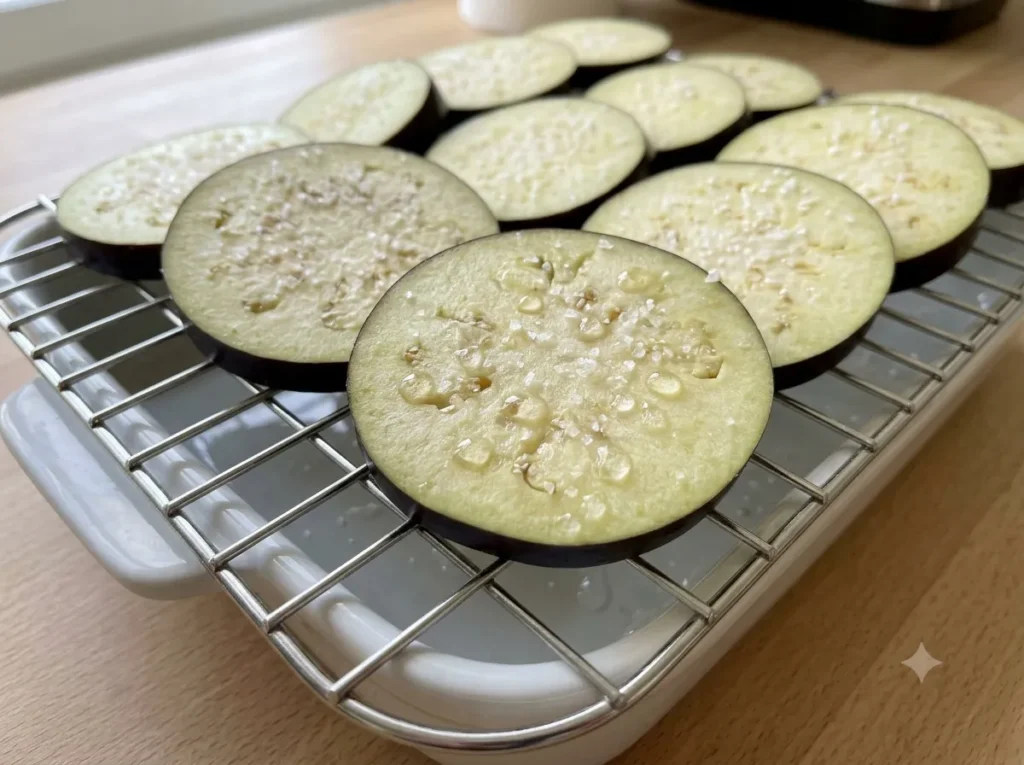
Slice eggplant into rounds about half an inch thick. Salt generously and let rest on a wire rack or paper towels for 20-30 minutes to draw out moisture.
2. Roast the eggplant (25-30 minutes)
Pat eggplant dry, brush lightly with olive oil, and roast at 425°F on a baking sheet until golden and tender, flipping halfway through.
3. Make the meat sauce (40-50 minutes)
Sauté onion and garlic in olive oil until softened. Add ground beef, or beef and lamb, browning thoroughly. Stir in tomato paste, cooking briefly, then add crushed tomatoes, wine, stock, cinnamon, allspice, nutmeg, and bay leaves. Simmer, uncovered, until thick and reduced, stirring occasionally.
4. Prepare the béchamel (15-20 minutes)
Melt butter in a saucepan, whisk in flour, and cook briefly to form a roux. Gradually whisk in warmed milk, continuing to whisk until thickened and smooth. Remove from heat, let cool slightly, then whisk in egg yolks and cheese.
5. Assemble the layers (10-15 minutes)
Layer roasted eggplant in the bottom of a baking dish, followed by the meat sauce spread evenly, then a second layer of eggplant if using, finished with the béchamel poured evenly over the top.
6. Add the cheese topping
Sprinkle additional grated cheese over the béchamel layer before baking, if desired, for extra browning and flavor.
7. Bake (40-50 minutes)
Bake at 375°F until the top is deeply golden brown and the casserole is bubbling gently at the edges.
8. Cool
Let the Moussaka rest for at least 20-30 minutes before slicing, allowing the layers to fully set.
9. Serve
Slice and serve warm, with a Greek salad and warm bread alongside.
Equipment Needed
- 9×13-inch baking dish: The standard size for a full Moussaka, providing enough depth for distinct layers.
- Large skillet: For browning the meat and building the sauce.
- Saucepan: For preparing the béchamel separately.
- Whisk: Essential for a smooth, lump-free béchamel.
- Chef’s knife: For slicing eggplant and dicing onion and garlic.
- Baking sheets: For roasting the eggplant in a single layer.
- Cooling rack: Helps the eggplant drain excess moisture before roasting and allows the finished casserole to cool evenly.
Common Mistakes
1. Skipping the salting step for the eggplant. This leaves more moisture in the eggplant, resulting in a wetter, less concentrated final texture. Always salt and let it rest before cooking.
2. Frying the eggplant instead of roasting it. This adds significant excess oil and moisture to the finished dish. Roasting achieves a similar texture with far less added fat.
3. Not reducing the meat sauce enough before assembling. A watery meat sauce releases liquid during baking, making the finished casserole soggy and difficult to slice cleanly.
4. Rushing the béchamel by adding milk too quickly. This can result in a lumpy, poorly thickened sauce. Add milk gradually, whisking continuously.
5. Not cooking the roux long enough before adding milk. An undercooked roux leaves the béchamel tasting raw and starchy rather than smooth and rich.
6. Adding egg yolks to hot béchamel without tempering. This can scramble the yolks. Let the béchamel cool slightly before whisking in the yolks, or temper them with a small amount of the warm sauce first.
7. Using too much cinnamon or allspice. Overdoing the warm spices can make the meat sauce taste more like a dessert than a savory main course. Use them with a confident but restrained hand.
8. Cutting into the Moussaka immediately after baking. This results in layers sliding apart rather than holding together. Rest for at least twenty to thirty minutes before slicing.
9. Using a baking dish that is too shallow. This can cause the layers to overflow or bake unevenly. A proper 9×13-inch dish with adequate depth is important.
10. Not letting the meat sauce cool slightly before layering. Assembling with very hot meat sauce can cause the béchamel to slide or separate before baking even begins.
11. Skipping the wine in the meat sauce. This misses out on the acidity and depth wine contributes; a splash of stock alone will not replicate the same flavor complexity.
12. Under-seasoning each individual layer. Every component, eggplant, meat sauce, and béchamel, needs its own seasoning; relying on just one layer to season the whole dish results in a bland final casserole.
13. Using pre-shredded cheese instead of freshly grated. Pre-shredded cheese often contains anti-caking agents that affect how it melts and browns on top of the béchamel.
14. Not checking the eggplant for doneness before assembling. Undercooked, still-firm eggplant will not soften fully during baking and can leave an unpleasant, spongy texture in the finished dish.
15. Reheating leftovers on very high heat. This can cause the béchamel to separate and the meat sauce to dry out. Reheat gently, ideally in the oven, at a moderate temperature.
Pro Chef Tips
- Salt the eggplant generously and let it rest for a full twenty to thirty minutes for the best moisture removal.
- Roast eggplant in a single layer without overcrowding the baking sheet, for even browning.
- Let the meat sauce simmer uncovered long enough for the wine to fully reduce and the flavors to concentrate.
- Warm the milk slightly before adding it to the roux; this helps the béchamel come together more smoothly.
- Whisk the béchamel continuously, never leaving it unattended, to prevent lumps and scorching.
- Temper egg yolks with a small amount of warm béchamel before whisking them fully into the sauce.
- Use freshly grated Parmesan or kefalotyri rather than pre-shredded cheese for the best melting and browning.
- Let the meat sauce cool slightly before assembling the casserole, to prevent the béchamel from sliding.
- Build distinct, even layers rather than mixing components together, for the cleanest presentation once sliced.
- Rest the finished Moussaka for a full twenty to thirty minutes before cutting, longer if you want especially clean slices.
- Taste each component, the eggplant, the meat sauce, and the béchamel, individually before assembling, adjusting seasoning as needed.
- Use a mix of beef and lamb if you want richness without leaning too far into lamb’s more assertive flavor.
- Add a bay leaf or two to the meat sauce for a subtle, traditional herbal background note.
- Don’t skip the nutmeg in the béchamel; it is a small but essential traditional touch.
- Use a serrated knife for the cleanest slices once the Moussaka has fully rested and set.
- Make the components a day ahead and assemble just before baking if you want to break up the workload.
- Double the recipe for a crowd, using two separate baking dishes rather than one overly large one for more even baking.
- Reheat leftovers in the oven rather than a microwave to preserve the béchamel’s texture.
- Let roasted eggplant cool slightly before layering it into the dish, to avoid warming the meat sauce prematurely.
- Garnish the finished, baked Moussaka with a small amount of fresh parsley for color and a touch of brightness.
Delicious Variations
Traditional Lamb Moussaka Uses one hundred percent ground lamb for the richest, most traditional flavor profile associated with older, classic versions of the dish.
Vegetarian Lentil Moussaka Substitutes cooked green or brown lentils for the ground meat, seasoned with the same warm spices, for a plant-based version that still carries the dish’s signature flavor profile.
Zucchini Moussaka Adds a layer of roasted zucchini alongside or instead of some of the eggplant, for a lighter, slightly different vegetable base.
Potato Moussaka Adds a layer of thinly sliced, roasted potatoes beneath the eggplant, reflecting a heartier regional variation found in some Greek households.
Low-Carb Version Reduces or eliminates any potato layer and leans entirely on eggplant and zucchini as the vegetable base, keeping the dish lower in carbohydrates.
Gluten-Free Adaptation Substitutes a gluten-free flour blend for the béchamel’s roux, adjusting the ratio slightly since gluten-free flours can thicken differently than wheat flour.
Mini Individual Moussakas Assembles the same layered components in individual ramekins for a more elegant, portion-controlled presentation suited to formal entertaining.
White Moussaka Variation A lighter regional variation that uses a béchamel-forward sauce throughout rather than a tomato-based meat sauce, resulting in a paler, creamier overall dish.
Storage & Reheating
Moussaka keeps in the refrigerator for up to four days in an airtight container once baked and cooled. Let it cool fully to room temperature before sealing, to avoid trapping excess steam that could affect the béchamel’s texture.
Freezing before baking works well: assemble the full casserole, wrap tightly, and freeze unbaked for up to three months. Bake directly from frozen, adding significant extra time, generally forty-five minutes to an hour longer than the standard baking time, and checking that the center is fully heated through before serving.
Freezing after baking is also possible, though the béchamel’s texture may be slightly less silky upon reheating compared to a freshly baked casserole. Wrap cooled, baked Moussaka tightly and freeze for up to two months.
To maintain a creamy texture when reheating, use an oven at 350°F, covered loosely with foil, for about twenty to twenty-five minutes rather than a microwave, which can cause the béchamel to separate and turn slightly grainy.
As with any dish containing ground meat, dairy, and eggs, reheat leftovers to an internal temperature of 165°F, and do not leave baked Moussaka out at room temperature for more than two hours.
What to Serve with Moussaka
Greek village salad, or Horiatiki, with tomatoes, cucumber, olives, and feta, is a classic, refreshing pairing that balances Moussaka’s richness.
Warm crusty bread is useful for the table generally, though Moussaka is substantial enough to stand entirely on its own as a main course.
Tzatziki, while more commonly served alongside grilled meats, also works well as a cool, tangy contrast to Moussaka’s warm spicing.
Roasted vegetables or simple green beans add a lighter side dish option without competing with the casserole’s own depth of flavor.
Marinated olives and a wedge of feta cheese make easy, no-cook additions to round out a full Greek-style spread.
Stuffed grape leaves, or dolmades, are a traditional mezze addition if serving Moussaka as part of a larger, multi-dish meal.
For dessert, baklava or Greek yogurt drizzled with honey both make fitting, traditionally Greek ways to close out the meal.
For drinks, Agiorgitiko and Xinomavro, two well-known Greek red wines, both pair naturally with Moussaka’s rich, spiced flavor. Assyrtiko, a crisp white, and a dry Rosé both offer lighter alternatives if you prefer something less bold. Sparkling water with lemon is a solid non-alcoholic option for the table.
Frequently Asked Questions
Can I make Moussaka ahead of time? Yes, and it is genuinely recommended. Moussaka often tastes even better the next day, once the layers have had time to fully set. You can also assemble it fully a day ahead and bake it closer to serving time.
Can I freeze Moussaka? Yes, both before and after baking. Freezing unbaked generally produces the best texture once baked, since the casserole has not yet gone through a full bake-and-cool cycle before freezing.
Do I have to salt the eggplant? It is strongly recommended, though not strictly mandatory. Salting draws out excess moisture through osmosis, resulting in a firmer, less watery texture once roasted and baked into the casserole.
Can I substitute zucchini for eggplant? Yes, either as a partial substitute alongside eggplant or as a full replacement for a lighter variation. The overall texture will be slightly different, since zucchini holds even more water than eggplant and requires similarly thorough draining.
Can I use lamb instead of beef? Yes. Ground lamb is actually the more traditional choice in older, classic Moussaka recipes, offering a richer, more distinctly gamey flavor than beef alone.
Why is my béchamel runny? This usually means the roux was undercooked, the milk was added too quickly, or the sauce simply was not cooked long enough for the starch to fully thicken. Cook the roux briefly before adding milk, and add milk gradually while whisking continuously.
Why is my Moussaka watery? This most often comes from insufficiently drained eggplant, an under-reduced meat sauce, or both. Salt and rest the eggplant before roasting, and simmer the meat sauce until it is notably thick before assembling.
Can I make Moussaka gluten-free? Yes. Substitute a gluten-free flour blend for the béchamel’s roux, checking consistency as you go, since gluten-free flours can thicken slightly differently than wheat flour.
Is Moussaka the same as lasagna? No, though the comparison is understandable given the layered, baked casserole format. Moussaka uses eggplant instead of pasta and features a distinct warm spice profile built around cinnamon and allspice, quite different from lasagna’s typical herb-and-tomato flavor base.
Who created the modern version of Moussaka with béchamel? Nikolaos Tselementes, a Greek chef trained in French technique, is credited with adding béchamel to the traditional layered eggplant and meat dish in the early twentieth century, giving Moussaka the form most widely recognized today.
Can I make a vegetarian version? Yes. Substituting cooked lentils for the ground meat, while keeping the same warm spice profile, produces a satisfying plant-based version of the dish.
How long should Moussaka rest before slicing? At least twenty to thirty minutes, allowing the béchamel and meat sauce to fully set so the layers hold together cleanly when cut.
Can I add a potato layer? Yes. Some regional and family versions include a layer of thinly sliced, roasted potatoes beneath the eggplant for a heartier, more filling result.
Why does my meat sauce taste too spiced or too much like a dessert? This usually means cinnamon or allspice was used too heavily. Both spices should be present and recognizable but restrained, supporting the savory meat and tomato base rather than dominating it.
Can I make individual portions instead of one large casserole? Yes. Assemble the same layered components in individual ramekins for a more elegant, portion-controlled presentation, adjusting baking time down slightly for the smaller size.
Recipe Card
Authentic Moussaka (Greek Beef and Eggplant Lasagna)
| Detail | Info |
|---|---|
| Prep Time | 45 minutes |
| Cook Time | 1 hour 30 minutes |
| Total Time | 2 hours 45 minutes (includes resting) |
| Servings | 8 |
| Cuisine | Greek |
| Course | Main Dish |
| Calories (estimated) | 480 per serving |
Ingredients
For the eggplant:
- 3 large globe eggplants, sliced into half-inch rounds
- Salt, for drawing out moisture
- 3 tablespoons olive oil, for roasting
For the meat sauce:
- 2 tablespoons olive oil
- 1 large yellow onion, diced
- 3 cloves garlic, minced
- 1 lb ground beef
- 1 lb ground lamb (or additional ground beef)
- 3 tablespoons tomato paste
- 1 (28 oz) can crushed tomatoes
- 1/2 cup dry red wine
- 1/2 cup beef stock
- 1 teaspoon ground cinnamon
- 1/4 teaspoon ground allspice
- 1/4 teaspoon ground nutmeg
- 2 bay leaves
- 2 tablespoons fresh parsley, chopped
- Salt and black pepper, to taste
For the béchamel:
- 6 tablespoons butter
- 6 tablespoons all-purpose flour
- 4 cups whole milk, warmed
- 3 egg yolks
- 1 cup Parmesan or kefalotyri cheese, grated
- 1/4 teaspoon ground nutmeg
- Salt, to taste
Instructions
- Slice eggplant and salt generously. Let rest on a wire rack for 20-30 minutes, then pat dry.
- Brush eggplant with olive oil and roast at 425°F for 25-30 minutes, flipping halfway, until golden and tender.
- For the meat sauce, sauté onion and garlic in olive oil until softened. Add ground beef and lamb, browning thoroughly.
- Stir in tomato paste, cooking for 1-2 minutes. Add crushed tomatoes, wine, stock, cinnamon, allspice, nutmeg, and bay leaves.
- Simmer uncovered for 30-40 minutes, stirring occasionally, until thick and reduced. Stir in parsley and remove bay leaves. Season with salt and pepper.
- For the béchamel, melt butter in a saucepan and whisk in flour. Cook for 1-2 minutes to form a roux.
- Gradually whisk in warmed milk, whisking continuously until smooth and thickened, about 8-10 minutes.
- Remove from heat and let cool slightly. Whisk in egg yolks, cheese, and nutmeg. Season with salt.
- Preheat oven to 375°F. Layer roasted eggplant in a 9×13-inch baking dish, spread meat sauce evenly over the top, then pour béchamel evenly over the meat sauce.
- Bake for 40-50 minutes, until deeply golden brown on top and bubbling at the edges.
- Let rest for 20-30 minutes before slicing.
- Serve warm with a Greek salad and crusty bread.
Chef Notes Reduce the meat sauce until genuinely thick before assembling, and let the casserole rest fully before slicing for the cleanest presentation.
Storage Notes Refrigerate baked Moussaka for up to 4 days. Freeze unbaked for up to 3 months, or baked for up to 2 months. Reheat in the oven, covered, to maintain the béchamel’s texture.
Nutrition Disclaimer Calorie and nutrition estimates are approximate and will vary based on specific ingredients, meat blend, and portion size used.
Conclusion
Moussaka asks for patience at several distinct points: draining the eggplant properly, reducing the meat sauce until it is genuinely thick, whisking the béchamel with real attention, and resting the finished casserole before you cut into it. None of these steps are difficult on their own, but skipping any one of them shows up clearly in the final slice.
This is a dish shaped by centuries of Eastern Mediterranean cooking and reshaped again in the early twentieth century by a chef who added a French technique to a much older tradition. Build it properly, give it the rest it needs, and you will end up with a casserole that earns its place as one of Greece’s most recognized dishes, worth the real effort it takes to get right.