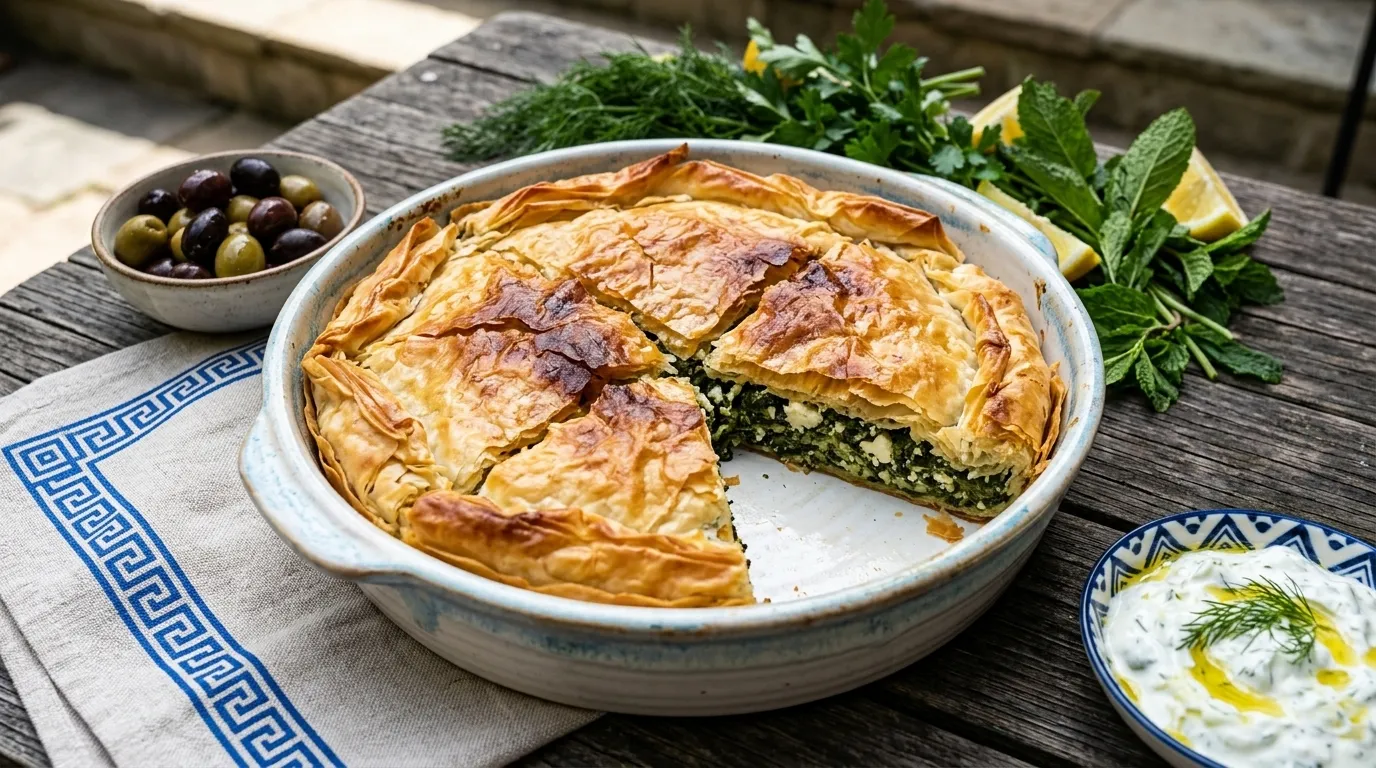
Spanakopita (Greek Spinach Pie): The Ultimate Crispy & Delicious Greek Classic 55-min
Spanakopita is the dish that convinces people phyllo pastry is worth the trouble. Layer after layer of thin, golden dough, brushed lightly with olive oil or butter, shatters at the first bite and gives way to a filling built from spinach, feta, dill, and a few other herbs, all held together just enough to slice cleanly without falling apart. It is breakfast in some Greek households, a light lunch in others, and a fixture on any table set for guests.
This guide covers what Spanakopita actually is, the long history of pie-making in Greece that it grew out of, the baking science behind phyllo that turns out crisp instead of soggy, and a complete recipe you can bake this weekend. You will also find an ingredient comparison, a full breakdown of what makes phyllo behave the way it does, fifteen common mistakes, twenty professional tips, and a complete recipe card.
Table of Contents
What Is Spanakopita?
Spanakopita is a savory Greek pie built from layers of thin phyllo pastry filled with cooked spinach, feta cheese, eggs, and herbs, most notably fresh dill. The name comes directly from the Greek words for spinach, “spanaki,” and pie, “pita,” making it a plainly descriptive name for exactly what it is: spinach pie.
Spanakopita holds a place as one of Greece’s most recognized dishes, both within the country and internationally, showing up on bakery shelves, taverna menus, and home tables in roughly equal measure. Few Greek dishes cross as easily between casual snacking and a proper sit-down meal the way Spanakopita does.
It genuinely works at any point in the day. A wedge of Spanakopita, still slightly warm, makes a satisfying breakfast alongside coffee. A larger portion, paired with a salad, becomes a full lunch. Cut into smaller squares or folded into individual triangles, it works as an appetizer at a dinner party or a portable snack pulled from a lunch bag.
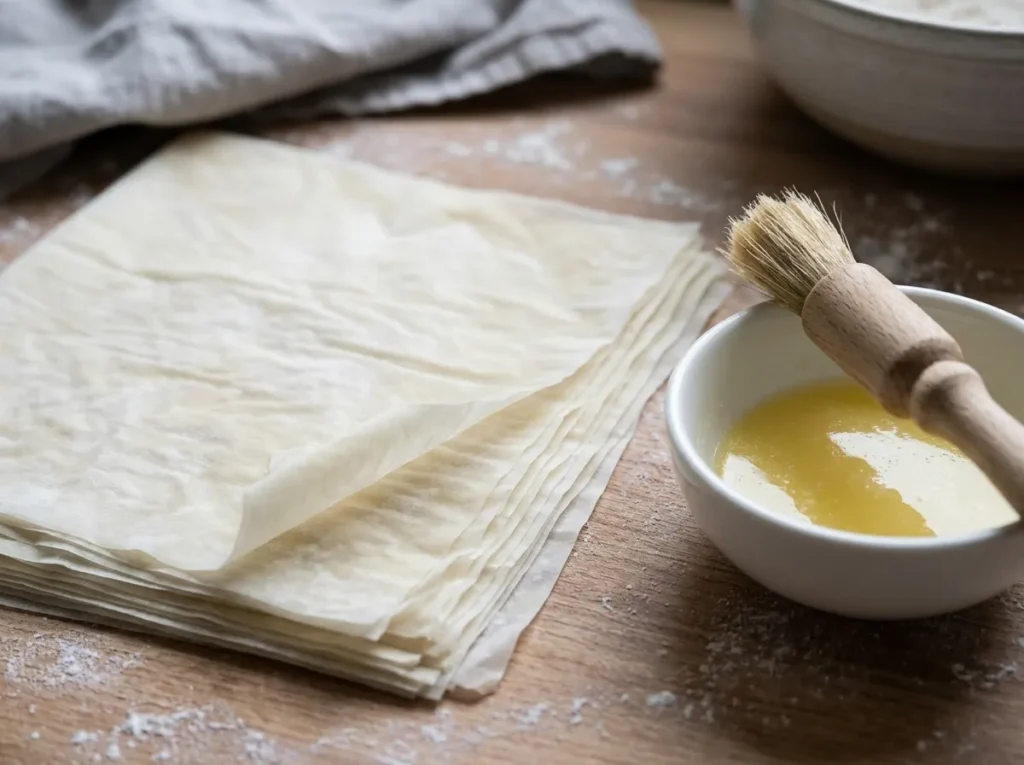
Phyllo pastry and feta cheese are the two ingredients doing the most defining work here. Phyllo, paper-thin sheets of dough layered and brushed with fat between each sheet, is what gives the pie its signature crackling, flaky texture. Feta, salty and tangy, anchors the filling’s flavor, balanced against spinach’s mild earthiness and dill’s bright, slightly anise-like aroma.
The History of Spanakopita
Pie-making in Greece traces back a remarkably long way. Ancient Greek writers described early forms of layered dough dishes, and historians studying ancient Greek cuisine have noted evidence of thin, layered pastries used to wrap or encase fillings, a foundational idea that would develop over centuries into the phyllo-based pies familiar today.
Byzantine cooking, which followed and built upon earlier Greek and Roman culinary traditions across the Eastern Mediterranean, played a significant role in developing and refining layered pastry techniques. Many food historians point to this era as central to the spread and refinement of thin, layered dough used to wrap savory and sweet fillings alike, techniques that Greek regional cooking carried forward and that also traveled outward into neighboring culinary traditions across the broader Eastern Mediterranean and Balkans.
Regional variation across Greece is significant, and Spanakopita itself takes different forms depending on where you find it. Some regions favor a thinner, crispier pie with less filling relative to pastry, while others build a thicker, more substantial pie. Islands and coastal regions sometimes incorporate local herbs or slightly different cheese blends, reflecting the same broader pattern of regional adaptation found throughout Greek cuisine generally.
Wild greens, known collectively as horta, hold deep importance in Greek cuisine, foraged and cooked simply as a side dish or incorporated into pies for centuries, particularly in rural and island communities where foraging supplemented what was grown or purchased. Spanakopita’s close relative, hortopita, made with a mix of foraged wild greens rather than cultivated spinach, reflects this older, foraging-based tradition directly, and in many households, greens pies using whatever was locally available likely predate the more standardized spinach-and-feta version most commonly found today.
Spanakopita became an international favorite as Greek immigration spread the dish, along with much of Greek cuisine, to communities across the United States, Australia, the United Kingdom, and beyond throughout the twentieth century. Greek bakeries and diners in these communities introduced Spanakopita to a much wider audience, and its combination of familiar ingredients, spinach, cheese, egg, in an unfamiliar but delicious pastry format helped it gain popularity well beyond Greek households specifically.
Why Spanakopita Is So Popular
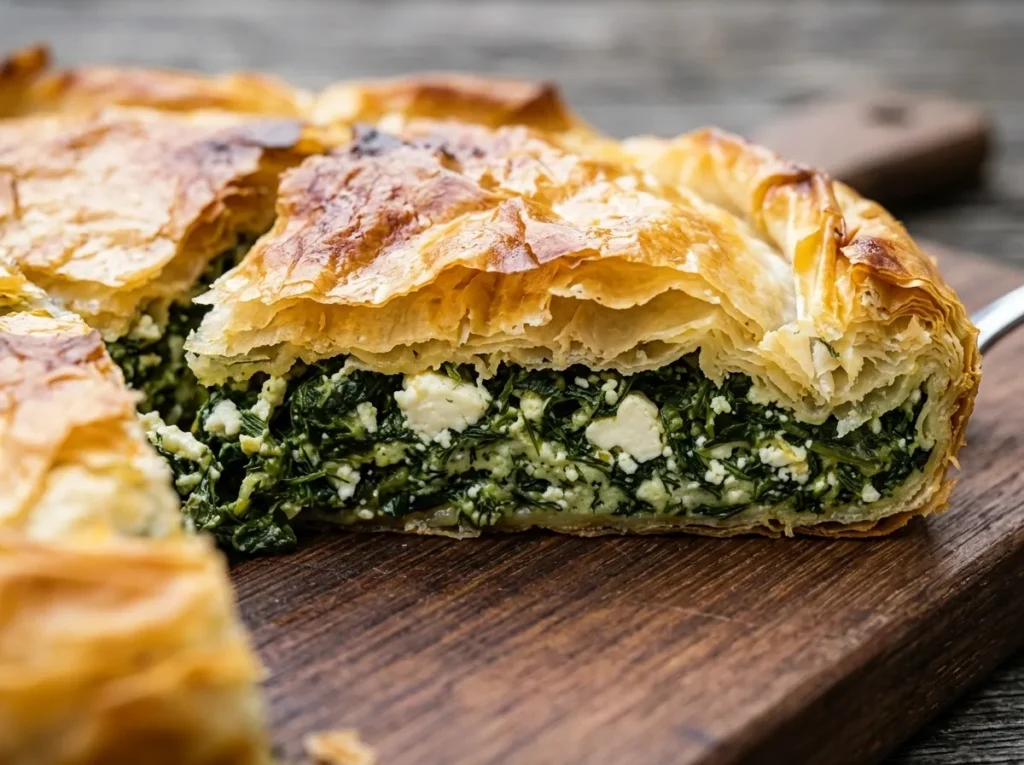
Crisp, flaky pastry is the first and most immediate draw. That audible crackle when you cut or bite into a well-made Spanakopita signals real technique, and it is a texture that few other savory pies achieve quite as dramatically.
Creamy feta, salty and slightly tangy, provides a flavor anchor throughout the filling, while fresh spinach contributes a mild, earthy backdrop that keeps the pie from tasting one-dimensional. Aromatic herbs, dill above all, bring a distinctly Greek brightness that separates Spanakopita from spinach-and-cheese pastries found in other culinary traditions.
Make-ahead convenience matters a great deal for a dish with this many steps involved. Spanakopita can be assembled hours or even a day ahead and refrigerated unbaked, or frozen well in advance, making it a genuinely practical option for entertaining rather than something that demands last-minute effort.
Its versatility for meals and entertaining rounds out the appeal. A full pan works for a family dinner or potluck, while smaller triangles or squares suit a cocktail party or appetizer spread, all from the same base recipe.
The Science Behind Perfect Spanakopita
Why phyllo must remain lightly buttered or oiled. Phyllo dough is extremely thin and dries out within minutes of exposure to air, becoming brittle and impossible to work with. A light coating of melted butter or olive oil between each sheet not only adds flavor but also creates a moisture barrier that keeps the dough pliable long enough to layer and shape before baking.
How steam creates flaky layers. As Spanakopita bakes, residual moisture trapped between the buttered or oiled layers of phyllo turns to steam, and that steam pushes the thin layers apart slightly as they bake and crisp. This is the same basic mechanism responsible for flakiness in puff pastry and croissants, just achieved through many pre-layered sheets rather than a laminated dough folded during preparation.
Why excess moisture ruins the pastry. While a small amount of steam is essential for flakiness, too much moisture, typically from an improperly drained filling, oversaturates the bottom layers of phyllo before they have a chance to crisp in the oven’s heat. The result is a soggy, dense bottom crust rather than the crisp, shattering texture Spanakopita is known for throughout.
The importance of draining spinach thoroughly. Spinach, whether fresh and wilted or thawed from frozen, holds a significant amount of water within its cell structure. Squeezing it thoroughly, ideally by hand in a clean kitchen towel, removes this excess water before it ever has a chance to seep into the surrounding phyllo during baking.
Protein structure in feta and eggs. Egg proteins coagulate and firm up as the pie bakes, helping bind the spinach and feta into a cohesive filling that slices cleanly rather than crumbling apart. Feta, already a firm, salted cheese, holds its structure well under heat, contributing texture to the filling without melting into a fully liquid state the way a softer cheese might.
Why resting before slicing improves texture. Cutting into Spanakopita immediately after it comes out of the oven, while the filling is still piping hot and not fully set, often results in a filling that spills or slides rather than holding together in a clean slice. Resting for at least fifteen to twenty minutes allows the egg proteins to finish setting and the filling to firm up enough to hold its shape when cut.
The Maillard reaction responsible for the golden crust. The deep golden-brown color and toasty aroma of properly baked phyllo comes from the Maillard reaction, a chemical process between proteins and sugars in the dough that occurs at high oven temperatures. This reaction is why a well-brushed, properly baked Spanakopita develops such a distinct, appetizing color rather than staying pale.
Choosing the Best Ingredients
| Comparison | Flavor | Texture | Convenience | Best for Beginners? |
|---|---|---|---|---|
| Fresh Spinach | Bright, slightly grassy | Requires wilting and thorough draining | More labor-intensive | Good once comfortable with draining technique |
| Frozen Spinach | Slightly milder once thawed | Already wilted; still needs thorough draining | Very convenient | Excellent starting point |
| Sheep’s Milk Feta | Tangy, rich, traditional | Firm, slightly crumbly | Widely available at Greek or specialty grocers | Recommended for the most authentic flavor |
| Cow’s Milk Feta | Milder, less tangy | Softer, creamier | Very widely available | Good, more accessible substitute |
| Store-Bought Phyllo | N/A | Consistent, reliable thinness | Extremely convenient | Strongly recommended |
| Homemade Phyllo | N/A | Variable, requires significant skill | Time-consuming and difficult | Not recommended for beginners |
| Extra Virgin Olive Oil | Fruity, slightly peppery | Lighter, less rich crust | Aligns with traditional preparation | Good all-around choice |
| Melted Butter | Rich, buttery | Slightly richer, more golden crust | Widely available | Good alternative for a richer result |
| Fresh Herbs | Bright, aromatic | N/A | Requires more prep | Recommended for best flavor |
| Dried Herbs | Milder, more subdued | N/A | Very convenient | Acceptable substitute in a pinch |
Frozen spinach is, honestly, the more practical and forgiving choice for most home cooks, since it comes pre-wilted and only needs thorough draining rather than a separate wilting step. Fresh spinach delivers a brighter flavor but requires wilting it down first, which reduces its volume dramatically and adds an extra step before draining even begins.
Sheep’s milk feta is the more traditional and generally more flavorful option, carrying a tangier, richer taste than cow’s milk feta, which tends to be milder and creamier. Either works well in this dish; sheep’s milk feta is worth seeking out for a more authentic result if you can find it at a Greek or specialty grocery store.
Store-bought phyllo is strongly recommended over homemade phyllo for essentially everyone outside of a professional or highly experienced home baking context. Making phyllo by hand requires stretching dough to a translucent thinness that takes years of practice to master reliably, and store-bought versions, widely available in the frozen section of most grocery stores, are entirely appropriate for an authentic result.
Extra virgin olive oil aligns most closely with traditional Greek preparation and produces a lighter, slightly more savory crust. Melted butter is a common substitution, particularly in some regional and diaspora variations, producing a richer, more deeply golden crust. Fresh herbs, particularly dill, contribute meaningfully more flavor than dried, though dried herbs remain an acceptable substitute if fresh is unavailable.
Ingredients Explained
| Ingredient | Role in the Dish |
|---|---|
| Fresh spinach | Main filling vegetable; requires wilting and draining |
| Frozen spinach | Convenient alternative; requires thorough draining after thawing |
| Feta cheese | Salty, tangy anchor flavor of the filling |
| Ricotta (optional) | Adds creaminess and mellows the feta’s sharpness |
| Eggs | Binds the filling together during baking |
| Phyllo pastry | The defining crisp, flaky layer of the dish |
| Extra virgin olive oil | Traditional fat for brushing phyllo layers |
| Butter | Alternative fat for brushing; adds richness |
| Yellow onion | Adds sweetness and depth to the filling base |
| Green onions | Milder, sharper allium note alongside onion |
| Garlic | Background aromatic depth |
| Fresh dill | The signature herb of Spanakopita |
| Fresh parsley | Adds freshness and color |
| Fresh mint (optional) | A brighter, less common addition in some regional versions |
| Nutmeg | A traditional, subtle warm spice note |
| Salt | Essential seasoning, used carefully given feta’s saltiness |
| Black pepper | Background warmth |
| Sesame seeds (optional) | A textural, decorative topping in some variations |
Dill deserves particular attention, since it is the herb most responsible for Spanakopita’s distinctive aroma and flavor, separating it clearly from other spinach-and-cheese pastries found in different culinary traditions. Using dried dill in place of fresh noticeably changes the character of the dish, so fresh is worth prioritizing whenever possible.
Nutmeg, used sparingly, is a traditional addition that adds a subtle warmth without announcing itself directly, a detail some modern recipes skip but which many traditional versions include.
Onion should be cooked down until soft and slightly sweet before combining with the raw spinach and other filling ingredients, both for flavor and to remove some of its own moisture before it becomes part of the filling. Salt should be added carefully and tasted throughout, since feta already carries significant salinity, and over-salting is an easy mistake if you season as though starting from a blank slate.
The Secret to Crispy, Flaky Phyllo
Keeping phyllo covered while you work is essential and often the single detail beginners skip. Phyllo dries out within just a few minutes of exposure to open air, so keep the stack covered with a slightly damp kitchen towel, removing only one sheet at a time as you build the layers.
Working quickly matters just as much as covering the dough. Have your filling, brushing fat, and pan all ready before you unwrap the phyllo, since every extra minute spent searching for ingredients is a minute the exposed dough spends drying out and becoming brittle.
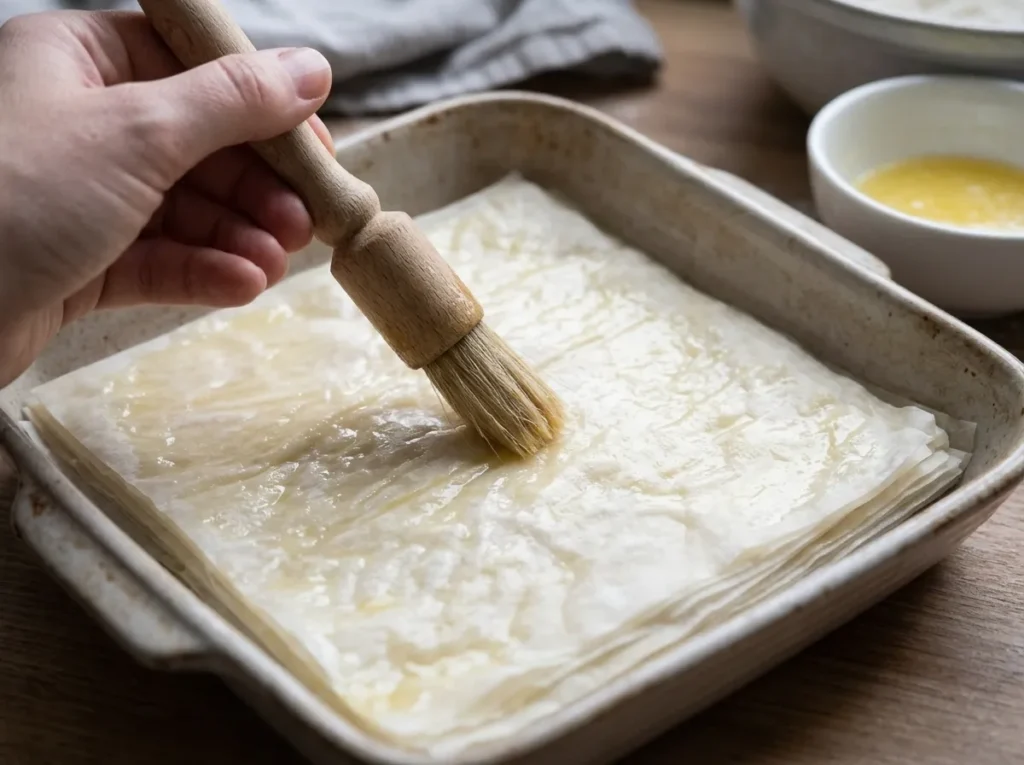
Brushing each layer lightly, rather than heavily, is the correct technique. A thin, even coating of oil or butter on each sheet is enough to create the moisture barrier needed for flakiness; oversaturating each layer makes the finished pie greasy rather than crisp.
Preventing tears comes down to gentle handling and accepting that a few minor tears are completely normal and largely invisible once the pie is assembled in multiple layers. If a sheet tears significantly, patch it with a small piece from another sheet rather than discarding the whole thing.
Avoiding soggy bottoms starts with thoroughly drained spinach, as covered in the science section, but also benefits from a properly preheated oven and a baking dish that conducts heat well, both of which help the bottom layers crisp rather than steam.
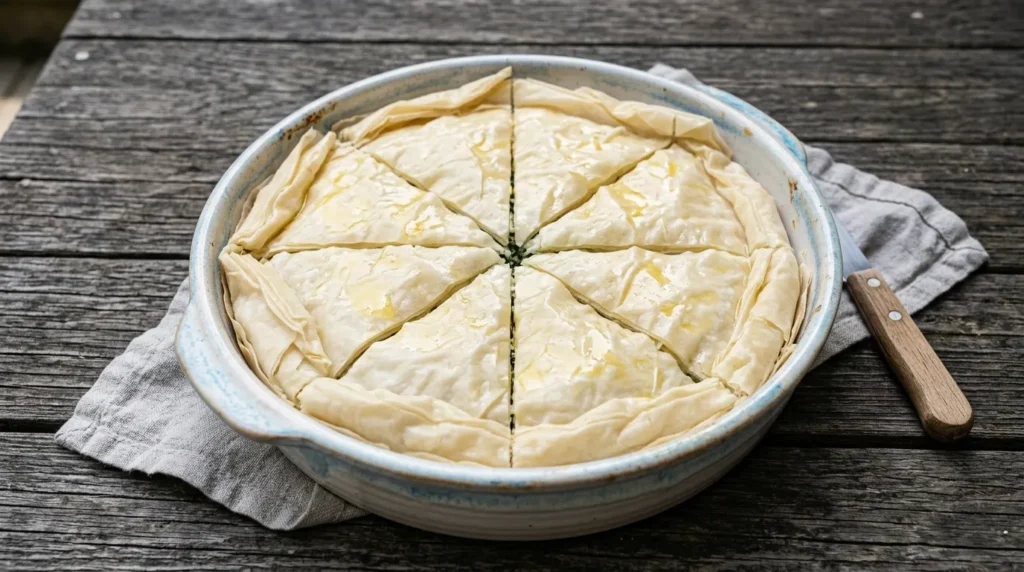
Scoring the top layers of phyllo before baking, cutting the portion lines partway through the pastry with a sharp knife, makes slicing after baking far cleaner and prevents the crisp top layers from shattering unevenly when you cut into the fully baked pie.
Achieving an evenly browned crust depends on brushing every layer, including the very top, thoroughly and evenly, along with baking at a properly hot, well-preheated oven temperature so the Maillard reaction develops consistently across the entire surface.
Step-by-Step Technique
1. Prepare the spinach (10-15 minutes)
If using fresh spinach, wilt it in batches in a hot pan until reduced significantly, then let it cool. If using frozen, thaw completely.
2. Remove excess moisture (5-10 minutes)
Squeeze the spinach thoroughly by hand in a clean kitchen towel or cheesecloth until it feels notably dry and compact, releasing as much liquid as possible.
3. Cook the onions (5 minutes)
Sauté diced onion in olive oil until soft and translucent. Add garlic and green onions, cooking just until fragrant. Let cool slightly.
4. Mix the filling (5 minutes)
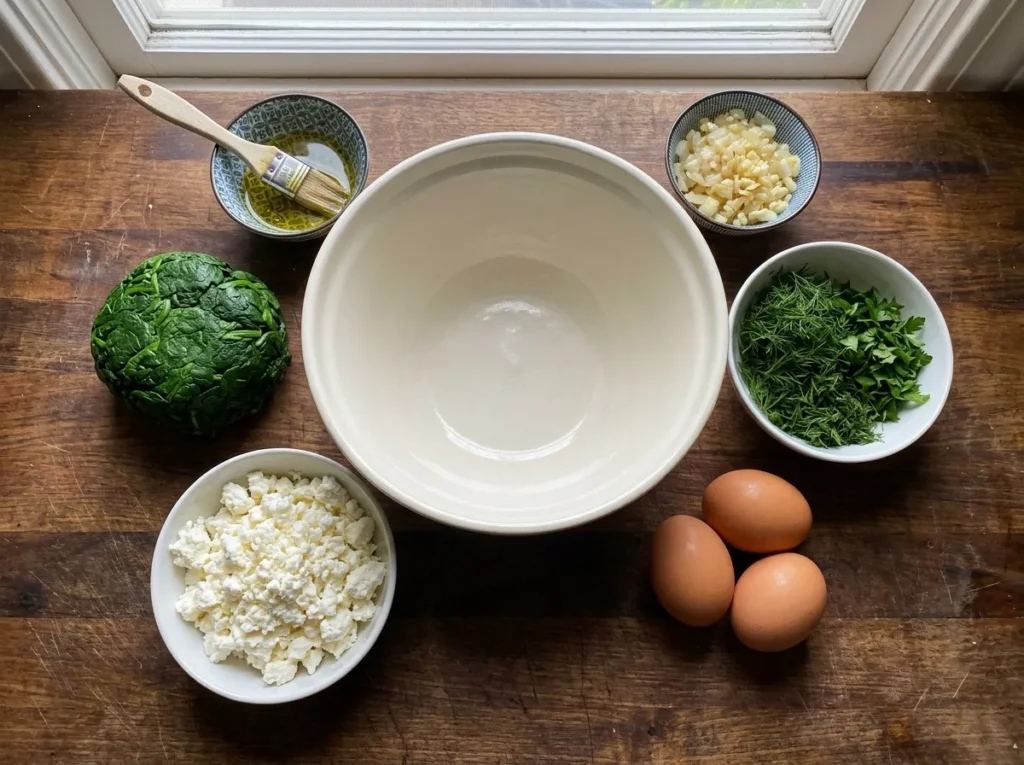
Combine the drained spinach, cooked onion mixture, crumbled feta, eggs, dill, parsley, mint if using, nutmeg, and black pepper in a large bowl. Mix until evenly combined.
5. Prepare the phyllo
Keep the phyllo stack covered with a damp towel, removing one sheet at a time as you work.
6. Layer the bottom pastry (10-15 minutes)
Brush your baking dish with oil or butter. Layer about half of the phyllo sheets one at a time in the dish, brushing lightly between each sheet, letting the edges hang over the sides slightly.
7. Add the filling
Spread the spinach and feta filling evenly over the layered phyllo base.
8. Layer the top pastry (10-15 minutes)
Fold any overhanging bottom phyllo over the filling, then layer the remaining sheets on top, brushing each one lightly, tucking in the edges neatly.
9. Score before baking
Using a sharp knife, score the top layers into individual portions, cutting about halfway through the pastry without cutting all the way to the filling.
10. Brush the top
Brush the top layer generously and evenly with oil or butter for the best color and crispness.
11. Bake (40-50 minutes)
Bake in a preheated oven at 375°F until deeply golden brown across the entire surface.
12. Rest
Let the Spanakopita rest for at least fifteen to twenty minutes before slicing, allowing the filling to set fully.
13. Serve
Cut along your scored lines and serve warm or at room temperature.
Equipment Needed
- 9×13-inch baking dish: The standard size for a full Spanakopita, providing enough surface area for even layering and baking.
- Pastry brush: Essential for evenly and lightly coating each phyllo layer with oil or butter.
- Chef’s knife: For dicing onions, chopping herbs, and scoring the pastry before baking.
- Mixing bowls: For combining the filling ingredients thoroughly.
- Colander: Useful for an initial drain of wilted or thawed spinach before the final squeeze.
- Kitchen towels: Needed both for keeping phyllo covered and for squeezing excess moisture from the spinach.
- Cooling rack: Helps air circulate underneath the baked pie as it rests, keeping the bottom crust from steaming and softening.
Common Mistakes
1. Not covering the phyllo while working. Exposed phyllo dries out and becomes brittle within minutes. Keep it covered with a damp towel, removing one sheet at a time.
2. Not draining the spinach thoroughly enough. Excess moisture seeps into the phyllo during baking, causing a soggy bottom crust. Squeeze until the spinach feels genuinely dry.
3. Brushing phyllo layers too heavily. This makes the finished pastry greasy rather than crisp. A thin, even coating is all that is needed.
4. Brushing phyllo layers too lightly, or skipping some entirely. This leaves those layers dry and prone to shattering rather than developing flaky texture.
5. Overmixing the filling. This can break down the feta too much and result in a denser, less textured filling than intended.
6. Skipping the scoring step before baking. This makes slicing the fully baked pie messy, causing the crisp top layers to crack unevenly.
7. Cutting into the pie immediately after baking. The filling has not fully set yet, resulting in a messy, sliding slice. Rest for at least fifteen to twenty minutes.
8. Using a baking dish that is too small. This can cause the filling to overflow or the layers to compress unevenly during baking.
9. Not preheating the oven fully before baking. An underheated oven prevents proper browning and can leave the bottom layers undercooked and soggy.
10. Using too much salt in the filling. Feta already carries significant salinity; season carefully and taste as you go rather than salting heavily from the start.
11. Using pre-shredded feta instead of block feta. Pre-shredded feta often contains anti-caking agents and has a different texture than freshly crumbled block feta.
12. Letting the assembled pie sit too long before baking without refrigeration. This can allow moisture from the filling to begin seeping into the bottom layers before baking even starts.
13. Not tucking in the edges neatly. Loose or overhanging edges can dry out and burn before the rest of the pie finishes baking.
14. Storing warm, freshly baked Spanakopita in a sealed container immediately. This traps steam and softens the crisp pastry. Let it cool to room temperature first.
15. Reheating in a microwave. This significantly softens the phyllo’s crisp texture. An oven or toaster oven reheats far more effectively for maintaining crispness.
Pro Chef Tips
- Thaw frozen phyllo in the refrigerator overnight rather than at room temperature, which can cause uneven thawing and sticking.
- Keep a damp towel over your phyllo stack at all times while assembling the pie.
- Have all your ingredients and tools ready before unwrapping the phyllo to minimize its exposure to air.
- Squeeze spinach in smaller batches for more thorough moisture removal than trying to wring out one large amount at once.
- Use block feta and crumble it by hand for the best texture in the filling.
- Taste the filling before assembling the pie, adjusting salt and pepper as needed, keeping feta’s saltiness in mind.
- Brush each phyllo layer thin and even; a light hand produces the crispest final texture.
- Score the top layers before baking, cutting about halfway through the pastry, for the cleanest slices later.
- Preheat your oven fully before baking; a properly hot oven is essential for both browning and preventing a soggy bottom.
- Use a metal or glass baking dish rather than a dark nonstick pan, which can cause the bottom to brown too quickly relative to the top.
- Let the pie rest for a full fifteen to twenty minutes before slicing for the cleanest presentation.
- Add a small amount of ricotta to the filling if you prefer a creamier, milder result alongside the feta.
- Use fresh dill whenever possible; it is the single most important herb for authentic flavor.
- Do not skip the nutmeg; a small amount adds a traditional warmth that rounds out the filling.
- If a sheet of phyllo tears, patch it with a scrap from another sheet rather than discarding it.
- Freeze extra phyllo sheets you do not use immediately, well wrapped, for future use.
- Use a serrated knife for the cleanest slices once the pie has rested and set.
- Sprinkle sesame seeds over the top layer before baking for extra texture and a traditional touch in some regional variations.
- Reheat leftover slices in an oven or toaster oven rather than a microwave to preserve crispness.
- Make the filling a day ahead and refrigerate it separately, assembling the pastry layers fresh the next day for the best results.
Delicious Variations
Spanakopita Triangles Cut phyllo sheets into long strips, add a spoonful of filling at one end, and fold in a triangular flag pattern for individual, portable portions.
Mini Spanakopita Bites Use a muffin tin lined with small phyllo squares and a spoonful of filling for bite-sized appetizers perfect for a party spread.
Cheese Pie (Tiropita) A close relative made without spinach, relying entirely on feta and sometimes other cheeses for the filling, reflecting Greece’s broader tradition of savory phyllo pies.
Wild Greens Pie (Hortopita) Made with a mix of foraged wild greens instead of cultivated spinach, reflecting an older, more rural Greek tradition that likely predates the standardized spinach version.
Leek and Spinach Pie Adds sautéed leeks alongside the spinach for extra sweetness and a slightly different aromatic profile.
Vegan Spanakopita Substitutes a plant-based feta alternative and a flax or cornstarch slurry in place of eggs, along with olive oil instead of butter for brushing the phyllo.
Gluten-Free Adaptation Uses gluten-free phyllo alternatives, which are less widely available and behave somewhat differently, requiring extra care with moisture and handling.
Whole-Wheat Phyllo Variation Uses whole-wheat phyllo sheets, where available, for a heartier, slightly nuttier flavor and a bit more fiber than traditional white phyllo.
Storage & Reheating
Spanakopita keeps in the refrigerator for up to five days in an airtight container once baked and cooled. Let it cool fully to room temperature before sealing, to avoid trapping steam that softens the crisp pastry.
Freezing before baking works very well: assemble the pie completely, wrap tightly, and freeze unbaked for up to three months. Bake directly from frozen, adding roughly fifteen to twenty extra minutes to the baking time.
Freezing after baking is also possible, though the pastry’s texture will be slightly less crisp upon reheating compared to freezing unbaked. Wrap cooled, baked Spanakopita tightly and freeze for up to two months, then reheat directly from frozen in the oven.
To maintain crisp pastry when reheating, use an oven or toaster oven at 350°F for about ten to fifteen minutes rather than a microwave, which softens the phyllo significantly. If reheating from frozen, allow extra time and check that the center has warmed through fully.
As with any dish containing eggs and dairy, reheat leftovers to an internal temperature of 165°F, and do not leave baked Spanakopita out at room temperature for more than two hours.
What to Serve with Spanakopita
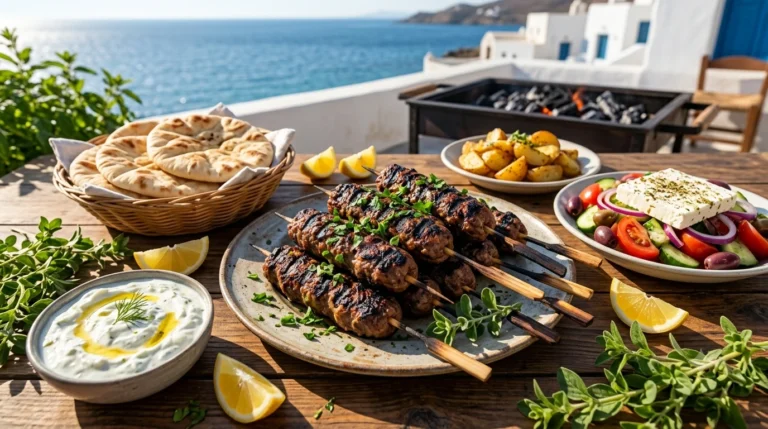
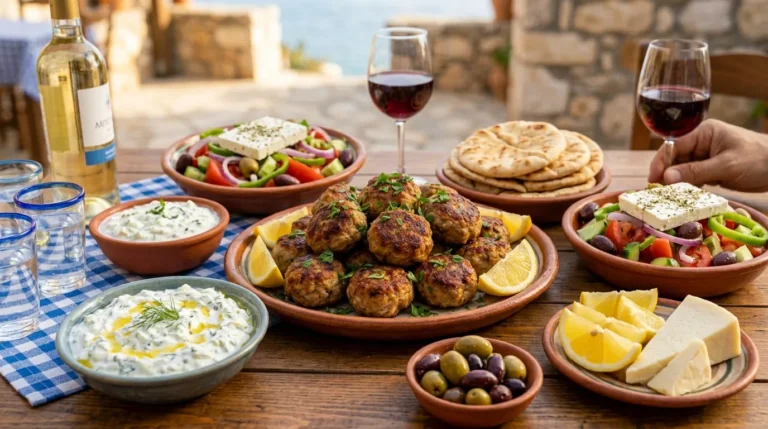
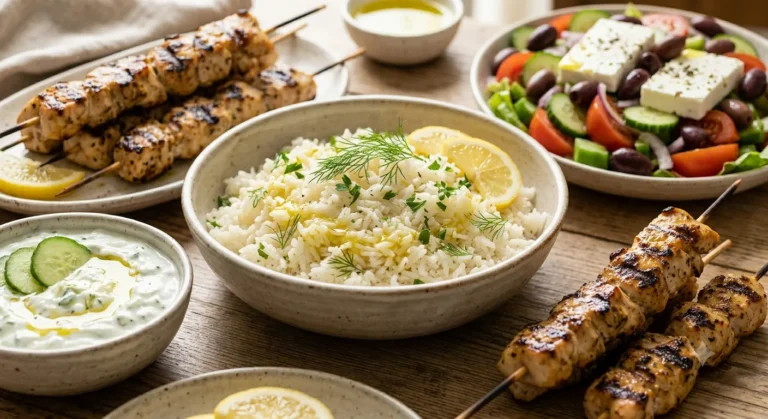
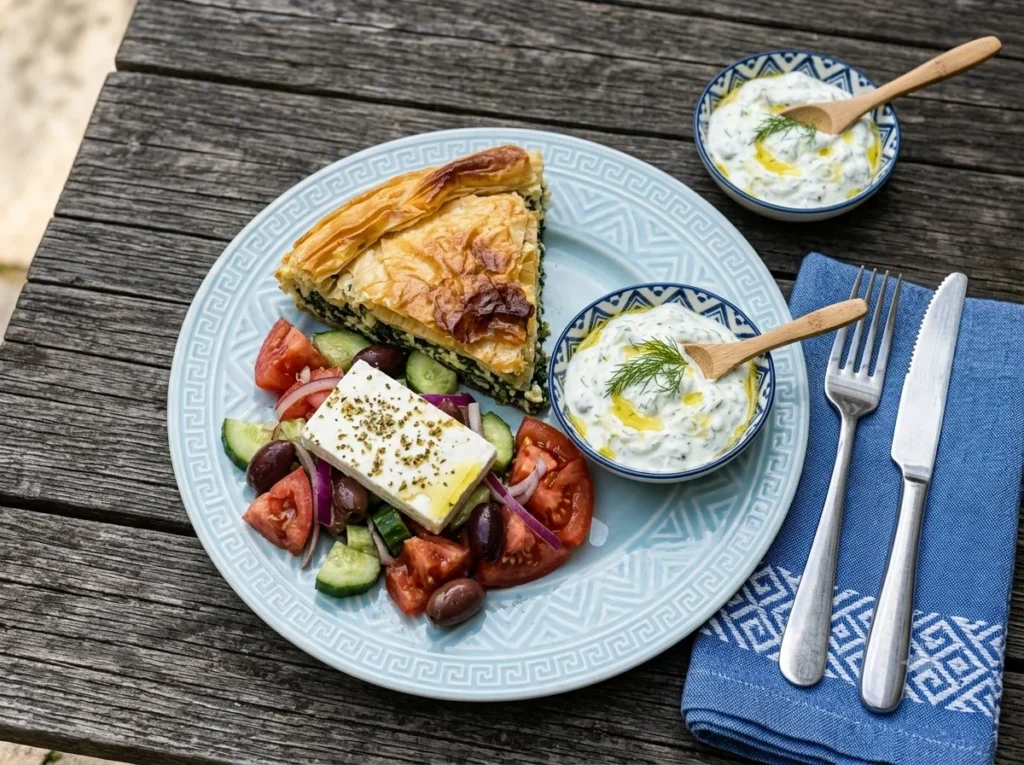
Greek village salad, or Horiatiki, with tomatoes, cucumber, olives, and feta, is a natural, classic pairing that echoes several of Spanakopita’s own flavors.
Tzatziki, though more commonly paired with grilled meats, also works well alongside Spanakopita for those who enjoy extra garlic and cool yogurt with their meal.
Lemon roasted potatoes make a heartier side if serving Spanakopita as a main course rather than an appetizer.
Grilled chicken or lamb souvlaki both round out the meal nicely if you want more protein alongside the pie.
A simple tomato cucumber salad offers a lighter, more refreshing side than a full Greek salad, letting Spanakopita remain the clear centerpiece.
Marinated olives and fresh fruit both make easy, no-cook additions to a Spanakopita-centered spread, particularly for a warm-weather gathering.
For drinks, a crisp Assyrtiko pairs beautifully with the dish’s herbal, salty flavors. Sauvignon Blanc and a dry Rosé both offer similar bright, food-friendly acidity. Sparkling water with lemon and traditional Greek mountain tea both make excellent non-alcoholic pairings.
Frequently Asked Questions
Can I use frozen spinach instead of fresh? Yes, and it is actually a convenient, reliable choice. Thaw it completely and squeeze thoroughly to remove excess moisture before mixing it into the filling.
Why is my Spanakopita soggy? This almost always comes down to insufficiently drained spinach. Make sure to squeeze the spinach thoroughly, ideally in a clean towel, until very little liquid remains, and confirm your oven was fully preheated before baking.
Can I make Spanakopita ahead of time? Yes. You can assemble the entire pie a day ahead and refrigerate it unbaked, or prepare the filling separately in advance and assemble the phyllo layers closer to baking time.
Can I freeze Spanakopita? Yes, both before and after baking. Freezing unbaked generally produces the best texture once baked, since the phyllo has not yet gone through a full bake-and-cool cycle before freezing.
How do I keep phyllo from drying out while I work? Keep the unused sheets covered with a slightly damp kitchen towel at all times, removing only one sheet at a time as you build the layers.
Can I substitute ricotta for feta? You can use ricotta alongside feta for added creaminess, but replacing feta entirely changes the dish significantly, since feta’s saltiness and tang are central to Spanakopita’s flavor.
Why did my phyllo crack or tear? Phyllo is naturally delicate and prone to minor tears, especially if it dries out from being left uncovered too long. Small tears are normal and mostly invisible once multiple layers are assembled; patch larger tears with scraps from another sheet.
Can I make individual triangles instead of a full pan? Yes. Cut phyllo sheets into long strips, add a spoonful of filling near one end, and fold into a triangular shape, similar to folding a flag, for individual portions.
Is Spanakopita the same as Tiropita? No. Tiropita is a related Greek phyllo pie made with cheese but without spinach, while Spanakopita specifically combines spinach with feta and other filling ingredients.
What is the difference between Spanakopita and Hortopita? Hortopita uses a mix of foraged wild greens rather than cultivated spinach, reflecting an older, more rural tradition, while Spanakopita specifically features spinach as its primary green.
Can I make Spanakopita vegan? Yes. Substitute a plant-based feta alternative and use a flax or cornstarch slurry in place of eggs, along with olive oil for brushing the phyllo layers.
Why does my filling taste too salty? Feta already carries significant salinity on its own. Taste the filling before adding additional salt, and consider using slightly less salt than a typical savory filling might call for.
Can I use butter instead of olive oil for brushing the phyllo? Yes. Butter produces a richer, more deeply golden crust, while olive oil aligns more closely with traditional Greek preparation and produces a slightly lighter result.
How long should Spanakopita rest before slicing? At least fifteen to twenty minutes, allowing the egg proteins in the filling to finish setting so the pie holds together cleanly when cut.
Is Spanakopita served hot or at room temperature? Both are common and traditional. It is delicious warm right out of the oven, but also holds up very well and is frequently served at room temperature, particularly at gatherings.
Recipe Card
Spanakopita (Greek Spinach Pie)
| Detail | Info |
|---|---|
| Prep Time | 40 minutes |
| Cook Time | 45 minutes |
| Total Time | 1 hour 45 minutes (includes resting) |
| Servings | 8 |
| Cuisine | Greek |
| Course | Main Dish or Appetizer |
| Calories (estimated) | 310 per serving |
Ingredients
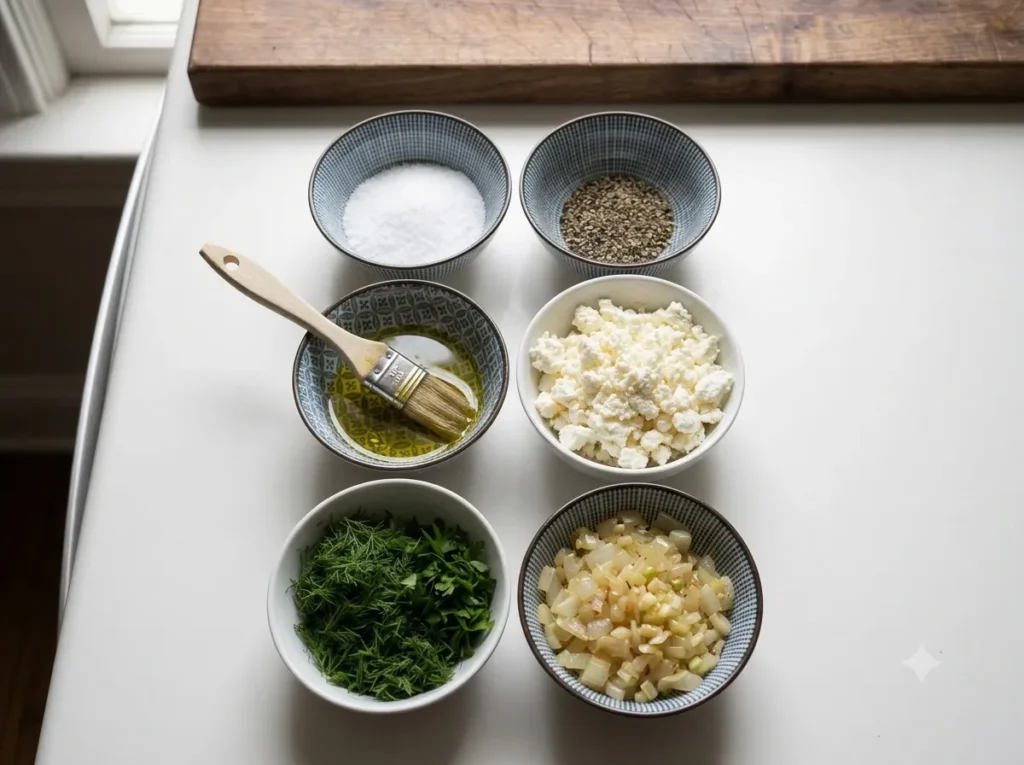
- 2 lbs fresh spinach, wilted (or 2 lbs frozen spinach, thawed)
- 1 tablespoon olive oil, plus more for brushing
- 1 medium yellow onion, diced
- 3 green onions, sliced
- 2 cloves garlic, minced
- 8 oz feta cheese, crumbled
- 1/4 cup ricotta (optional)
- 3 large eggs, beaten
- 1/3 cup fresh dill, chopped
- 2 tablespoons fresh parsley, chopped
- 1/4 teaspoon ground nutmeg
- 1/2 teaspoon salt (adjust to taste)
- 1/4 teaspoon black pepper
- 1 lb phyllo pastry, thawed if frozen
- 1/2 cup melted butter or olive oil, for brushing
- 1 tablespoon sesame seeds (optional)
Instructions
- Wilt fresh spinach in batches in a hot pan, or thaw frozen spinach completely. Let cool slightly.
- Squeeze the spinach thoroughly in a clean kitchen towel to remove as much liquid as possible.
- Sauté onion in olive oil until soft. Add garlic and green onions, cooking until fragrant. Let cool slightly.
- In a large bowl, combine drained spinach, cooked onion mixture, feta, ricotta if using, eggs, dill, parsley, nutmeg, salt, and pepper. Mix until evenly combined.
- Preheat oven to 375°F. Brush a 9×13-inch baking dish with oil or butter.
- Keeping phyllo covered with a damp towel, layer about half the sheets in the dish one at a time, brushing lightly between each layer.
- Spread the filling evenly over the layered base.
- Layer the remaining phyllo sheets on top, brushing each one lightly, tucking in the edges neatly.
- Score the top layers into portions using a sharp knife, cutting about halfway through the pastry.
- Brush the top generously with butter or oil. Sprinkle with sesame seeds if using.
- Bake for 40-50 minutes, until deeply golden brown across the entire surface.
- Let rest for 15-20 minutes before slicing along the scored lines.
- Serve warm or at room temperature.
Chef Notes Thorough spinach draining is essential for crisp results. Keep phyllo covered at all times while assembling to prevent it from drying out.
Storage Notes Refrigerate baked Spanakopita for up to 5 days. Freeze unbaked for up to 3 months, or baked for up to 2 months. Reheat in the oven to maintain crispness.
Nutrition Disclaimer Calorie and nutrition estimates are approximate and will vary based on specific ingredients and portion size used.
Conclusion
Spanakopita rewards patience in a few specific places: draining the spinach until it genuinely stops releasing water, keeping the phyllo covered so it never has the chance to dry out, and letting the finished pie rest before you cut into it. Master those three details, and the rest of the process, layering, brushing, baking, becomes far more forgiving than it looks from the outside.
This is a dish that has carried spinach, feta, and thin, flaky pastry through Greek kitchens across generations and regions, evolving alongside its close relatives like Tiropita and Hortopita along the way. Bake one properly, let it rest the full twenty minutes even though the smell coming from your oven will make that difficult, and you will understand exactly why Spanakopita has held its place at the center of Greek cooking for so long.