
Vietnamese Caramel Ginger Chicken: Easy Gà Kho Gừng
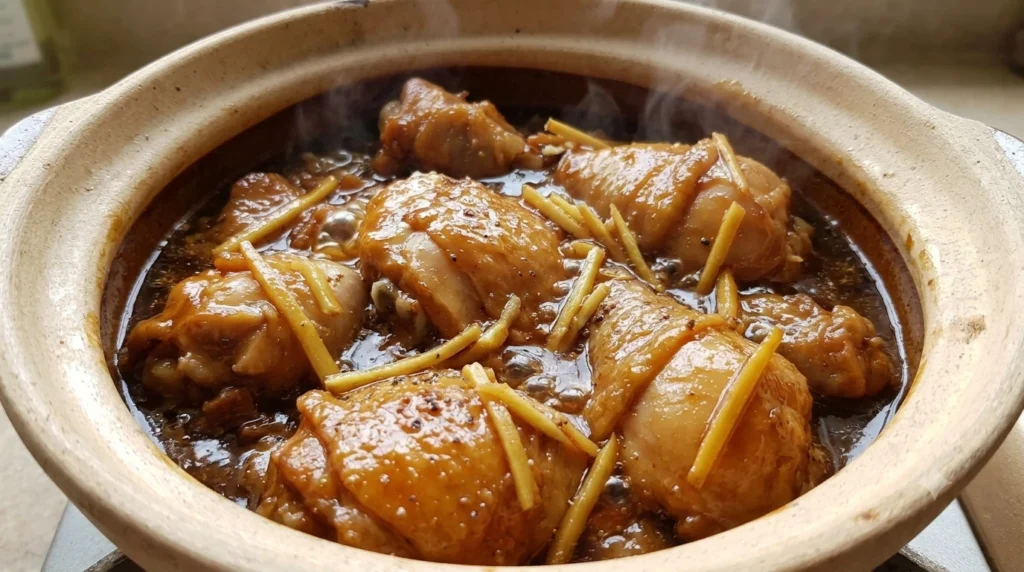
Vietnamese Caramel Ginger Chicken is the dish that shows up on a weeknight table when nobody has the energy to cook something complicated, and yet somehow tastes like it took hours of care. Chicken pieces braise in a dark caramel sauce until the meat falls tender and the sauce clings to every piece, thick and glossy, with ginger cutting through the sweetness and fish sauce holding the whole thing together. This is Gà Kho Gừng, and once you understand the handful of techniques that make it work, it becomes one of the easiest dinners in your rotation.
This guide covers what Gà Kho Gừng actually is, where the kho braising tradition comes from, the science behind building real Vietnamese caramel sauce without burning it into bitterness, and a complete recipe you can cook tonight. You will also find a chicken cut comparison, an ingredient breakdown, regional variations from north to south, fifteen common mistakes, twenty professional tips, and a full recipe card.

Table of Contents
Table of Contents
- What Is Vietnamese Caramel Ginger Chicken?
- The History of Gà Kho Gừng
- Why This Dish Is So Special
- The Science Behind Caramel Braising
- Choosing the Best Chicken
- Ingredients Explained
- The Secret to Vietnamese Caramel Sauce
- Step-by-Step Technique
- Equipment Needed
- Common Mistakes
- Pro Chef Tips
- Regional Variations
- Storage & Reheating
- What to Serve with Vietnamese Caramel Ginger Chicken
- Frequently Asked Questions
- Recipe Card
- Conclusion
What Is Vietnamese Caramel Ginger Chicken?
Vietnamese Caramel Ginger Chicken, known as Gà Kho Gừng in Vietnamese, is chicken braised in a dark caramel sauce built from sugar, fish sauce, garlic, shallots, and a generous amount of fresh ginger. “Gà” means chicken, “kho” refers to the braising method itself, and “gừng” means ginger, so the name is really a description of the technique and its defining ingredient rather than a fancy title.
The whole dish rests on balance. Too much sugar and it turns cloying. Too much fish sauce and it turns sharp and salty without any depth. Too little ginger and you lose the warmth that keeps the richness from feeling heavy. A good Gà Kho Gừng holds sweet, salty, savory, and aromatic in close tension, with black pepper adding a final layer of gentle heat at the end.
This is not a special-occasion dish. It is a Tuesday-night dish, the kind a Vietnamese mother or grandmother makes without measuring anything, tasting as she goes and adjusting by instinct built over decades. Its everyday status is part of what makes it worth learning properly. Once the caramel technique clicks, this becomes one of the fastest, most reliable dinners you can put together.
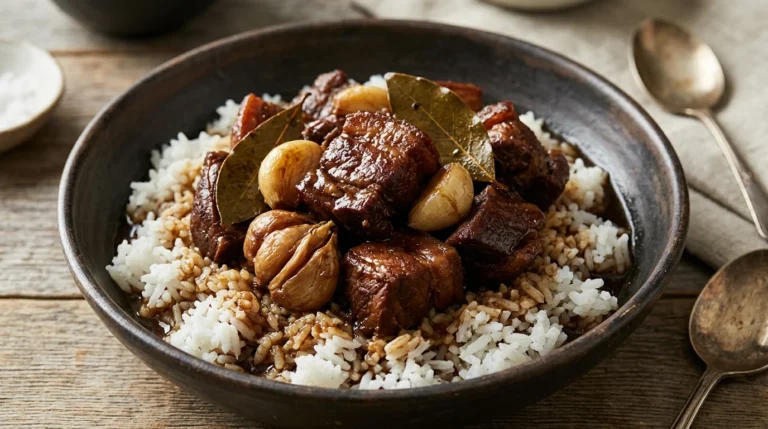
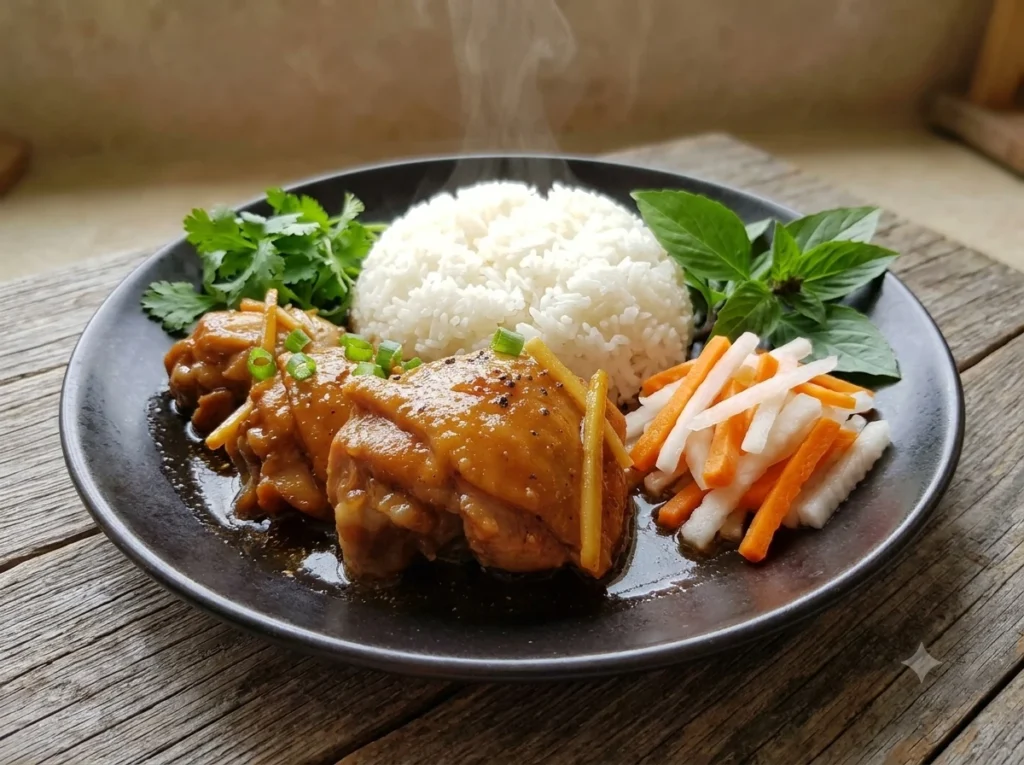
Steamed jasmine rice is the traditional and, frankly, only real way to serve it. The rice is plain on purpose, built to soak up the caramel sauce rather than compete with it, and a bowl of Gà Kho Gừng without rice underneath it is missing half the point.
The History of Gà Kho Gừng
Vietnamese home cooking relies heavily on “kho,” a braising method that cooks proteins and sometimes vegetables slowly in a seasoned liquid until the liquid reduces into a thick, concentrated sauce clinging to the food. Kho dishes exist across the country in dozens of forms: kho with pork, kho with fish, kho with tofu, and, in this case, kho with chicken and ginger. The technique itself grew out of practical need, a way to stretch modest amounts of protein into a flavorful, sauce-heavy dish that goes a long way over rice.
Fish sauce sits at the center of almost every Vietnamese savory dish, and kho cooking is no exception. It provides the salt and the umami backbone that Vietnamese cooking builds around, in the same way soy sauce anchors many other East Asian cuisines. Caramelized sugar, meanwhile, gives kho dishes their signature dark color and a bittersweet depth that plain sugar alone could never provide.
Regional differences show up clearly in how a family makes their kho. Southern Vietnamese cooking tends toward sweeter, richer flavors, often with coconut water added to the braise for natural sweetness and body. Central Vietnamese cooking, shaped by a history of spicier, boldly seasoned food, often adds chilies to kho dishes for real heat. Northern Vietnamese cooking generally favors a lighter hand with sugar, letting the fish sauce and aromatics carry more of the dish’s character.
Gà Kho Gừng specifically leans on ginger as its signature aromatic, more so than the garlic-forward or shallot-forward versions of other kho dishes. Ginger’s role here goes beyond flavor. In Vietnamese home cooking, ginger is also associated with warmth and digestive comfort, which is part of why ginger-heavy dishes like this one are often the first thing a Vietnamese family cooks when someone in the house has a cold or feels run down.
The dish remains a staple of family dinners because it asks so little of the cook in exchange for so much flavor. A handful of pantry ingredients, one pot, and forty-five minutes of mostly unattended simmering produce a meal that tastes like it required far more effort than it did.
Why This Dish Is So Special
The tenderness of the chicken is the first thing you notice. A proper simmer breaks down connective tissue in bone-in cuts until the meat pulls away with almost no resistance, while still staying moist rather than drying out the way overcooked chicken breast does.
The caramel glaze is the dish’s signature. Built correctly, it clings to each piece of chicken in a thin, glossy coat rather than pooling thin and watery at the bottom of the pot. That glaze carries a bittersweet complexity that plain sugar could never achieve on its own, the direct result of caramelizing sugar before anything else goes into the pot.
Fresh ginger cuts through all that richness. Where the caramel and fish sauce build weight and depth, ginger adds brightness and a clean, warming heat that keeps every bite from feeling heavy, even after a second helping.
Fish sauce supplies the umami foundation the entire dish depends on. Without it, Gà Kho Gừng would taste like a plain sweet glaze. With it, the dish gains a savory backbone that makes it satisfying rather than simply sweet.
Black pepper, added generously near the end, gives the dish its final layer: a gentle, warming heat that lingers after the sweetness fades, rounding out the whole plate. What makes this dish worth mastering is exactly this transformation. Sugar, fish sauce, ginger, and chicken are humble, everyday ingredients, and yet combined with the right technique, they become something that tastes far more sophisticated than the ingredient list suggests.
The Science Behind Caramel Braising
How caramel develops flavor and color. Heating sugar past its melting point triggers caramelization, a chemical reaction where sugar molecules break down and recombine into hundreds of new compounds responsible for caramel’s characteristic color and complex, slightly bitter-sweet flavor. This is different from simply dissolving sugar in liquid; true caramelization only happens once sugar reaches roughly 340°F to 350°F and begins to turn from clear to amber to deep brown.
Dry caramel versus wet caramel. Dry caramel melts sugar alone in a dry pan, while wet caramel dissolves sugar in a small amount of water first before heating. Wet caramel is more forgiving for beginners since the water helps the sugar melt more evenly and reduces the risk of scorching in one spot before the rest has melted. Dry caramel develops slightly faster and deeper flavor once you have the timing down, which is why many experienced Vietnamese cooks prefer it, but it also punishes inattention more severely.
Why fish sauce deepens umami. Fish sauce is fermented and rich in free glutamates and amino acids, the building blocks of umami taste. Added to the caramel base, it does not just season the dish with salt; it builds a savory depth that plain salt cannot replicate, which is why substituting soy sauce changes the character of the dish more than most home cooks expect.
How ginger balances richness. Fresh ginger contains gingerol, a compound with a sharp, slightly peppery bite that cuts through fat and sugar on the palate. This is a real sensory effect, not just a flavor preference; ginger’s pungency actively counterbalances the heaviness of caramelized sugar and chicken fat, which is why the dish tastes lighter than its ingredient list would suggest.
Protein changes during braising. As chicken braises in the caramel sauce, its muscle fibers gradually loosen and connective tissue converts into gelatin, particularly in bone-in cuts with more collagen. This is the same collagen-to-gelatin conversion responsible for tender braised meat in cuisines around the world, and it is the reason bone-in thighs or drumsticks outperform lean, boneless breast in this dish.
Why gentle simmering matters. A rolling boil agitates the chicken too aggressively and can toughen the exterior of the meat before the interior has time to tenderize. A slow, gentle simmer, with small, lazy bubbles rather than a vigorous boil, gives the connective tissue time to break down evenly without overcooking the meat’s surface.
Why reducing the sauce creates a glossy finish. As the braising liquid simmers uncovered near the end of cooking, water evaporates and the remaining sugar and fish sauce solids concentrate, thickening the sauce until it coats a spoon and clings visibly to the chicken. This reduction step is what turns a thin, soupy braise into the glossy, sauce-coated dish Gà Kho Gừng is known for.
Choosing the Best Chicken
| Cut | Flavor | Moisture | Cooking Time | Best For |
|---|---|---|---|---|
| Bone-in Thighs | Rich, deep | High, stays juicy | 35-40 minutes | Traditional and most reliable choice |
| Drumsticks | Rich, slightly milder | High | 35-40 minutes | Great for families, easy to eat |
| Whole Chicken Pieces (bone-in, mixed) | Varied, well-rounded | Varies by piece | 40-45 minutes | Good for feeding a crowd |
| Boneless Thighs | Rich, milder than bone-in | Moderate-high | 25-30 minutes | Good weeknight shortcut |
| Chicken Breast | Milder | Low, dries out easily | 15-20 minutes | Not recommended |
Bone-in thighs are the traditional and most forgiving choice for Gà Kho Gừng. The bone and skin add flavor to the braising liquid as it cooks, and the higher fat content keeps the meat moist through the full simmer and reduction. Drumsticks work nearly as well and are often the choice for family-style meals since kids tend to prefer the built-in handle.
Whole chicken pieces, cut into a mix of thighs, drumsticks, and wings, make sense when cooking for a larger group, though cooking times will vary slightly by piece, so check smaller pieces for doneness earlier than larger ones.
Boneless thighs are a reasonable shortcut for a faster weeknight version. They cook faster than bone-in cuts and still hold up reasonably well, though they will not develop quite the same depth of flavor in the sauce.
Chicken breast is the one cut I would tell beginners to avoid here. It has almost no fat or connective tissue to render during the braise, so it dries out well before the sauce has had time to properly reduce and concentrate. If breast is genuinely all you have, cut the cooking time significantly and pull it the moment it is cooked through.
Ingredients Explained
| Ingredient | Role in the Dish |
|---|---|
| Chicken (bone-in thighs recommended) | Main protein; fat and collagen build richness and texture |
| Fresh ginger | Signature aromatic; cuts richness and adds warmth |
| Garlic | Aromatic base alongside shallots |
| Shallots | Sweet, mellow aromatic depth |
| Sugar | Builds the caramel base and defining color |
| Fish sauce | Salt and umami backbone of the dish |
| Soy sauce (optional) | Adds extra depth in some family recipes |
| Coconut water | Natural sweetness and body, common in Southern-style versions |
| Chicken stock | Adjusts braising liquid if coconut water isn’t used |
| Black pepper | Warming, peppery finish added near the end |
| Cooking oil | Used to build the caramel and sauté aromatics |
| Green onions | Fresh, bright garnish at the end |
| Bird’s eye chilies (optional) | Heat, common in Central Vietnamese-style versions |
| Salt | Fine-tunes seasoning alongside fish sauce |
Every ingredient here plays a specific role, and none of them are filler. Sugar is not just for sweetness; caramelized properly, it becomes the entire flavor base of the dish before a single other ingredient goes in. Fish sauce is doing the job soy sauce does in other cuisines, but with a funkier, more savory character that soy sauce alone cannot replace, which is why substitutions change the dish more than people expect.
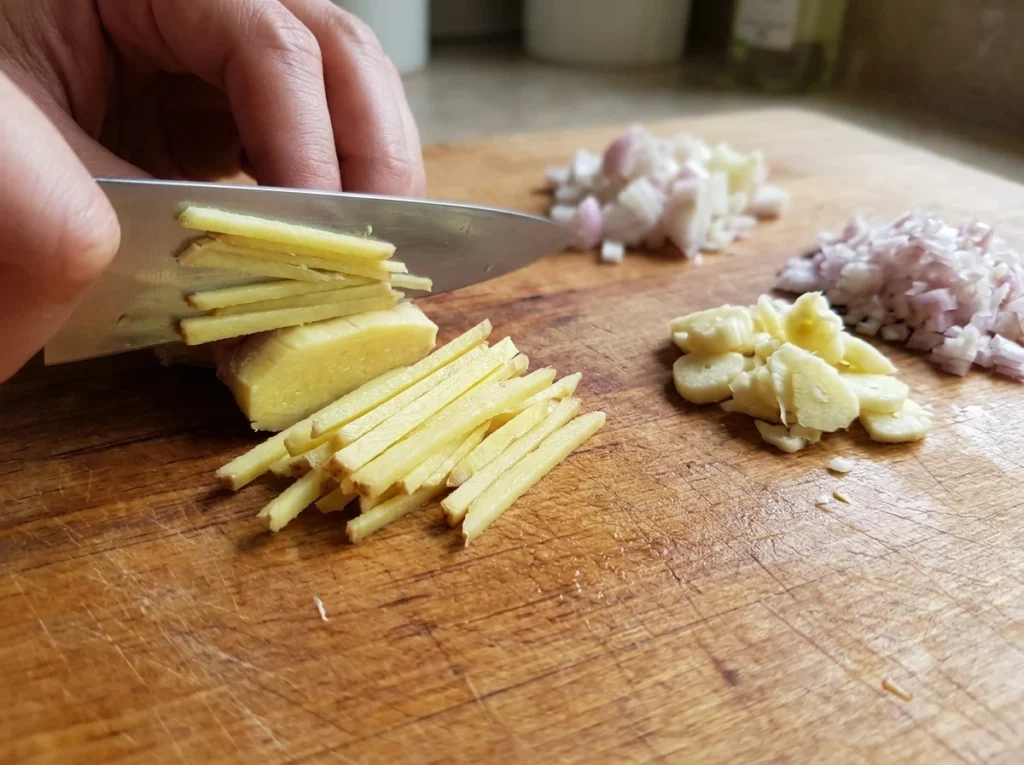
Fresh ginger should be sliced into thin matchsticks or coins rather than minced, so it stays visible throughout the dish and can be bitten into directly, releasing its sharp aroma in each mouthful rather than disappearing into the sauce. Garlic and shallots work together as a base layer of sweetness and depth, with shallots contributing more mellow sweetness than garlic alone would provide.
Coconut water, common in Southern-style versions of this dish, adds a natural sweetness and slight richness to the braising liquid, an easy way to build flavor without reaching for more sugar. Chicken stock is a fine substitute if coconut water is not available, though the final flavor will be slightly less sweet and rounded.
Black pepper deserves more attention than it usually gets. Added generously near the end of cooking rather than at the start, it stays sharp and aromatic instead of mellowing into the background over a long simmer.
The Secret to Vietnamese Caramel Sauce
The foundation of Gà Kho Gừng, and of most kho dishes, is a Vietnamese caramel sauce called nước màu, sometimes referred to as thắng nước màu, made by caramelizing sugar until it turns dark and slightly bitter before adding liquid to stop the cooking. This is different from Western caramel used in desserts. Vietnamese cooking pushes the sugar darker on purpose, into a deep amber-to-mahogany color, because that bitterness balances the sweetness of the sugar itself and gives kho dishes their distinctive savory-sweet character.
Dry caramel method. Add sugar alone to a dry pot over medium heat. As it melts, it will pass through several visible stages: first clear and bubbling, then light gold, then amber, and finally a deep reddish-brown. Watch closely once it hits amber, since the color shifts fast in the final moments and can go from perfect to burnt in under thirty seconds.
Wet caramel method. Combine sugar with a small splash of water in the pot before heating. The water helps the sugar melt more evenly and buys you a slightly longer window to catch the right color, making this the better choice for anyone making nước màu for the first time.
When to add the chicken. Once the caramel reaches a deep amber-brown, usually with a faint wisp of smoke and a nutty, slightly bitter aroma, add the chicken immediately, or a splash of water first if working with dry caramel, to stop the sugar from cooking any further. Adding the chicken too early, while the caramel is still light gold, produces a sauce that is sweet without the depth and complexity that makes this dish distinctive.
Avoiding burnt bitterness. Burnt caramel crosses from pleasantly bitter into acrid and inedible very quickly, usually signaled by a sharp, almost smoky smell and a color noticeably darker than reddish-brown, closer to black. If you smell that shift, do not try to salvage the batch. Discard it, wipe the pot, and start again; there is no fixing caramel once it has gone that far.
Store-bought caramel sauce alternatives. Bottled Vietnamese caramel sauce, sometimes labeled nước màu or caramel color for cooking, is sold at most Asian grocery stores and is a legitimate shortcut for busy weeknights. It will not taste quite as complex as caramel made fresh in the pot, but it is a reliable substitute when time is tight.

Step-by-Step Technique
1. Prepare the chicken (5 minutes)
Pat chicken pieces dry and season lightly with a pinch of salt and black pepper. Set aside while you build the caramel.
2. Make the caramel (5-8 minutes)
In a heavy pot or Dutch oven, combine sugar with a small splash of water over medium heat. Swirl occasionally rather than stirring, and watch closely as the color shifts from clear to gold to deep amber-brown.
3. Add the chicken (immediately once caramel is ready)
As soon as the caramel reaches a deep amber-brown, add the chicken pieces directly into the pot. The caramel will bubble and seize slightly; this is expected. Stir to coat the chicken evenly.
4. Sauté the aromatics (2-3 minutes)
Push the chicken to one side or remove briefly if the pot is crowded. Add garlic, shallots, and half the ginger, cooking just until fragrant.
5. Add fish sauce (1 minute)
Pour in fish sauce and stir to combine, letting it sizzle briefly against the hot pot before the next liquid goes in.
6. Add coconut water or stock
Pour in coconut water or chicken stock until the liquid comes about halfway up the chicken pieces. Bring to a gentle simmer.
7. Simmer (30-35 minutes)
Reduce heat to low, cover partially, and simmer gently, with small, lazy bubbles rather than a hard boil. Check at the 30-minute mark for tenderness.
8. Reduce the sauce (8-10 minutes)
Remove the lid and raise the heat slightly to reduce the sauce until it thickens and clings to the chicken, coating the back of a spoon.
9. Finish with pepper and green onions
Stir in the remaining ginger and a generous amount of black pepper. Turn off the heat and scatter sliced green onions over the top.
10. Serve
Serve hot over steamed jasmine rice, spooning extra sauce generously over each portion.
Equipment Needed
- Heavy pot or Dutch oven: Even heat distribution prevents the caramel from scorching in one spot and keeps the braise cooking evenly.
- Chef’s knife: For breaking down chicken pieces and slicing ginger and shallots cleanly.
- Wooden spoon: Will not scratch your pot and handles the hot caramel stage safely.
- Measuring spoons: Useful for balancing fish sauce and sugar precisely, since small changes shift the flavor noticeably.
- Fine grater or microplane: Handy if you prefer grated ginger in part of the dish alongside sliced pieces.
Common Mistakes
1. Walking away during the caramel stage. Sugar shifts from perfect to burnt in seconds once it hits amber. Stay at the stove the entire time.
2. Adding the chicken too early, while the caramel is still light gold. This produces a sweet sauce without the depth that dark caramel provides.
3. Boiling instead of simmering. A hard boil toughens the chicken before the collagen has time to break down. Keep the heat low and gentle.
4. Using chicken breast instead of bone-in thighs. Lean, boneless breast dries out quickly during the braise and lacks the fat needed for a rich sauce.
5. Substituting soy sauce for fish sauce without adjusting anything else. This changes the dish’s entire umami character, since fish sauce brings a distinct funk soy sauce cannot replicate.
6. Adding too much sugar out of habit. Excess sugar overwhelms the savory and aromatic balance the dish depends on. Follow the ratio and adjust gradually from there.
7. Mincing the ginger instead of slicing it. Minced ginger disappears into the sauce; sliced ginger stays visible and gives distinct bites of aroma throughout the dish.
8. Not reducing the sauce long enough. A thin, watery sauce misses the glossy, clinging texture that defines a properly finished Gà Kho Gừng.
9. Over-reducing until the sauce turns sticky and jam-like. Pull the pot off the heat once the sauce coats a spoon, not once it has turned syrupy and thick.
10. Adding black pepper too early. Pepper added at the start of a long simmer loses its sharpness. Add it near the end instead.
11. Overcrowding the pot with too much chicken at once. This can cause uneven cooking and prevent the sauce from reducing properly around all the pieces.
12. Using stale or old fish sauce. Fish sauce loses some of its aromatic punch over time once opened. If yours has been open for over a year, consider a fresh bottle.
13. Skipping the taste-and-adjust step before serving. Every batch of chicken and every brand of fish sauce varies slightly in saltiness.
14. Reheating on high heat. This can cause the sauce to separate or the chicken to toughen. Reheat gently over low to medium heat instead.
15. Discarding the ginger before serving, assuming it is just for aroma. The ginger slices are meant to be eaten alongside the chicken, not removed like a bay leaf.
Pro Chef Tips
- Use the wet caramel method if you are making nước màu for the first time; the water gives you a longer window to catch the right color.
- Have your chicken and liquid ingredients measured and within reach before starting the caramel, since it moves fast once it starts darkening.
- Slice ginger into thin matchsticks rather than mincing it, so it stays visible and bitable throughout the dish.
- Taste your fish sauce before cooking; brands vary in saltiness and funk, and knowing your bottle helps you season accurately.
- Add fish sauce gradually and taste as you build the braising liquid rather than dumping it all in at once.
- Keep the simmer gentle, with small, lazy bubbles, never a hard boil.
- Add black pepper generously and near the end, not at the start of cooking.
- Use bone-in, skin-on thighs for the richest, most forgiving results.
- If your caramel seizes when the chicken hits the pot, keep stirring over low heat; it will loosen as it cooks with the other liquids.
- Double the recipe if you have the pot space; this dish reheats and holds beautifully over several days.
- Use coconut water instead of stock for a naturally sweeter, more rounded sauce, especially for a Southern-style version.
- Add a small handful of bird’s eye chilies with the aromatics if you want a Central Vietnamese-style kick.
- Rest the dish for a few minutes off heat before serving; the sauce continues to settle and cling to the chicken.
- Keep a bowl of water nearby while making the caramel in case you need to quickly stop the cooking process.
- Skim excess oil off the top only if you prefer a leaner sauce; otherwise, that fat carries flavor through the dish.
- Add hard-boiled eggs during the last ten minutes of simmering for a classic, filling variation.
- If your sauce tastes flat, more black pepper often fixes it faster than more salt.
- Use a nonstick or well-seasoned pot for the caramel stage, since sugar sticks aggressively to bare stainless steel.
- Store-bought nước màu is a legitimate shortcut on busy weeknights; keep a bottle on hand if you cook this dish often.
- Serve leftovers the next day when you can. Like most braised dishes, the flavors settle and deepen overnight.

Regional Variations
Southern-Style Sweeter Version Leans on more sugar and often coconut water, producing a richer, sweeter sauce typical of Southern Vietnamese cooking’s general preference for sweetness in savory dishes.
Northern-Style Lighter Version Uses less sugar and lets fish sauce and aromatics take a more prominent role, resulting in a lighter, saltier, more savory-forward version of the dish.
Central Vietnamese Spicy Version Adds bird’s eye chilies alongside the ginger and garlic, reflecting Central Vietnam’s culinary reputation for bold, spicy flavors.
Chicken with Eggs Hard-boiled eggs are added partway through the simmer, soaking up the caramel sauce and turning a deep amber-brown by the time the dish is finished, a popular addition for stretching the meal further.
Chicken with Young Coconut Fresh young coconut meat, along with its water, is added to the braise for extra sweetness and a subtle chew, a variation especially popular in the south.
Chicken with Lemongrass Bruised lemongrass stalks are added alongside the ginger for a citrusy, floral aromatic layer that complements rather than replaces the ginger.
Storage & Reheating
Vietnamese Caramel Ginger Chicken keeps well in the refrigerator for up to four days in an airtight container. Let it cool to room temperature for no more than an hour before sealing to avoid trapping excess condensation.
For longer storage, this dish freezes well for up to three months. Freeze in a flat, sealed container so it thaws quickly and evenly, and thaw overnight in the refrigerator rather than at room temperature.
Like many braised dishes, Gà Kho Gừng genuinely tastes better the next day. Overnight in the refrigerator, the caramel sauce settles further into the chicken, the ginger mellows slightly, and the overall flavor rounds out into something even more cohesive than the night it was cooked.
Reheat gently on the stovetop over low to medium heat, adding a small splash of water or stock if the sauce has thickened too much in storage. A microwave works in a pinch, using short intervals and stirring between them to avoid toughening the chicken.
As with any dish containing poultry, reheat leftovers to an internal temperature of 165°F, and do not leave the cooked dish out at room temperature for more than two hours.
What to Serve with Vietnamese Caramel Ginger Chicken
Steamed jasmine rice is the essential, non-negotiable pairing, built specifically to soak up the caramel sauce.
Pickled vegetables, often a quick pickle of carrot and daikon called đồ chua, add a sharp, crunchy contrast that cuts through the richness of the sauce.
Stir-fried morning glory, or rau muống, cooked simply with garlic, is one of the most common vegetable sides served alongside kho dishes in Vietnamese homes.
Vietnamese cucumber salad brings cool, refreshing acidity that balances the dish’s sweetness.
A plate of fresh herbs, such as cilantro, Thai basil, and mint, adds brightness and lets each diner customize their own bite.
Steamed bok choy offers a simple, mild vegetable side when something lighter than morning glory is preferred.
A light vegetable soup, served alongside rather than as a starter, is a common way Vietnamese family meals round out a spread of several dishes eaten together.
For drinks, jasmine tea is the classic, everyday pairing found in most Vietnamese homes. Sparkling water with a squeeze of lime echoes the dish’s brightness. A light lager complements the richness of the caramel sauce well. A Riesling, with its balance of sweetness and acidity, is a surprisingly good match for the dish’s sweet-savory profile.
Frequently Asked Questions
Can I use chicken breast instead of thighs? You can, but it is not recommended. Chicken breast is lean and dries out quickly during the braise. If using breast, reduce the cooking time significantly and watch it closely.
Can I substitute soy sauce for fish sauce? You can, but the dish will taste noticeably different. Fish sauce brings a distinct fermented, savory funk that soy sauce cannot fully replicate, and the dish will lose some of its traditional depth without it.
Can I use brown sugar instead of white sugar for the caramel? Yes, brown sugar works and adds a slightly deeper, more molasses-like flavor, though it can caramelize a bit faster, so watch it closely during the caramel stage.
Can I make Gà Kho Gừng ahead of time? Yes, and it is actually recommended. This dish tastes better the next day once the flavors settle, so making it a day ahead and reheating gently is a great strategy for meal planning.
Why is my caramel bitter or tastes burnt? This happens when the sugar is cooked past the deep amber-brown stage into a much darker, almost black color. Once caramel crosses into burnt territory, there is no fixing it; discard it and start over with closer attention to the color.
Can I freeze leftovers? Yes, this dish freezes well for up to three months in a sealed, freezer-safe container. Thaw in the refrigerator overnight before reheating gently.
Can I make it spicy? Yes. Add bird’s eye chilies along with the garlic and shallots, following the Central Vietnamese tradition of spicier kho dishes.
Can I use coconut soda instead of coconut water? It is not recommended. Coconut soda contains added sugar and carbonation that will throw off the dish’s balance. Stick with plain coconut water or chicken stock instead.
What does “kho” mean in Vietnamese cooking? Kho refers to a braising technique common across Vietnamese cuisine, where proteins and sometimes vegetables cook slowly in a seasoned liquid until it reduces into a thick, flavorful sauce.
Do I need a special pot to make this dish? No. A heavy pot or Dutch oven works well. The key is even heat distribution, which helps prevent the caramel from scorching unevenly.
Can I add vegetables to this dish? Yes, though it is less traditional. Some home cooks add hard-boiled eggs or young coconut meat, both of which soak up the caramel sauce nicely.
Why does my sauce taste too sweet? This usually means the sugar-to-fish-sauce ratio leaned too heavily toward sugar. Add a bit more fish sauce to rebalance, tasting gradually as you go.
Can I make this dish without fish sauce for a milder flavor? You can reduce the amount of fish sauce, but removing it entirely changes the dish significantly, since it provides the primary savory backbone alongside the caramel.
How spicy is traditional Gà Kho Gừng? Traditional versions are not spicy at all; the warmth comes from ginger and black pepper rather than chili heat. Spice is a regional addition, most associated with Central Vietnam.
Is Vietnamese Caramel Ginger Chicken gluten-free? Yes, as long as your fish sauce and any optional soy sauce are confirmed gluten-free, since some brands include wheat as a filler ingredient.

Recipe Card
Vietnamese Caramel Ginger Chicken (Gà Kho Gừng)
| Detail | Info |
|---|---|
| Prep Time | 15 minutes |
| Cook Time | 50 minutes |
| Total Time | 65 minutes |
| Servings | 4 |
| Cuisine | Vietnamese |
| Course | Main Dish |
| Calories (estimated) | 410 per serving |
Ingredients
- 2 lbs bone-in, skin-on chicken thighs
- 1/3 cup granulated sugar
- 2 tablespoons water (for wet caramel)
- 3 tablespoons fish sauce
- 3 cloves garlic, minced
- 2 shallots, thinly sliced
- 2-inch piece fresh ginger, half sliced thin, half reserved
- 1 cup coconut water (or chicken stock)
- 1 tablespoon cooking oil
- 1 teaspoon black pepper, plus more to taste
- 2 green onions, sliced
- Salt, to taste
- 1-2 bird’s eye chilies (optional)
Instructions
- Pat chicken dry and season lightly with salt and pepper. Set aside.
- In a heavy pot or Dutch oven, combine sugar and water over medium heat. Swirl occasionally until the sugar turns a deep amber-brown, watching closely in the final moments.
- Immediately add chicken pieces to the caramel, stirring to coat. The caramel will bubble and seize; this is normal.
- Push chicken to one side. Add oil, garlic, shallots, and half the ginger. Cook until fragrant, about 2 minutes.
- Add fish sauce and stir to combine, letting it sizzle briefly.
- Pour in coconut water or stock until it comes about halfway up the chicken. Bring to a gentle simmer.
- Reduce heat to low, cover partially, and simmer for 30-35 minutes, until chicken is tender.
- Remove the lid, raise heat slightly, and reduce for 8-10 minutes, until the sauce coats the back of a spoon.
- Stir in remaining ginger and black pepper. Taste and adjust with more fish sauce or pepper as needed.
- Turn off heat, scatter green onions over the top, and serve hot over steamed jasmine rice.
Chef Notes Bone-in thighs give the richest, most forgiving results. Watch the caramel closely in its final moments; it darkens fast once it hits amber.
Storage Notes Refrigerate in an airtight container for up to 4 days, or freeze for up to 3 months. Reheat gently over low to medium heat.
Nutrition Disclaimer Calorie and nutrition estimates are approximate and will vary based on specific ingredients, cut of chicken, and portion size used.
Conclusion
Vietnamese Caramel Ginger Chicken asks very little of your pantry and quite a bit of your attention during one short window: the minute or two when sugar turns from clear to gold to that deep amber-brown that gives Gà Kho Gừng its character. Get that stage right, keep the simmer gentle, and let the sauce reduce until it clings to the chicken, and everything else falls into place.
This is a dish built for repetition. Make it once, adjust the ginger or the fish sauce to your own taste the second time, and within a few tries you will have a version that tastes like it belongs to your own kitchen rather than a recipe card. That is exactly how it has survived in Vietnamese homes for as long as it has: cooked from memory, adjusted by taste, and served over rice on whatever night calls for something warm and familiar.