Crispy Thai Pork Bites with Sweet Chilli Sauce
There’s a sound that tells you Crispy Thai Pork Bites are done right before you even taste them: a dry, sharp crackle when the coating hits your teeth, followed by the give of juicy pork underneath. That contrast, glass-shard crisp on the outside, tender and well-seasoned on the inside, is the whole point of the dish. Get it wrong and you end up with something greasy or tough. Get it right and you understand why this snack sells out at street carts across Bangkok before the lunch rush even ends.
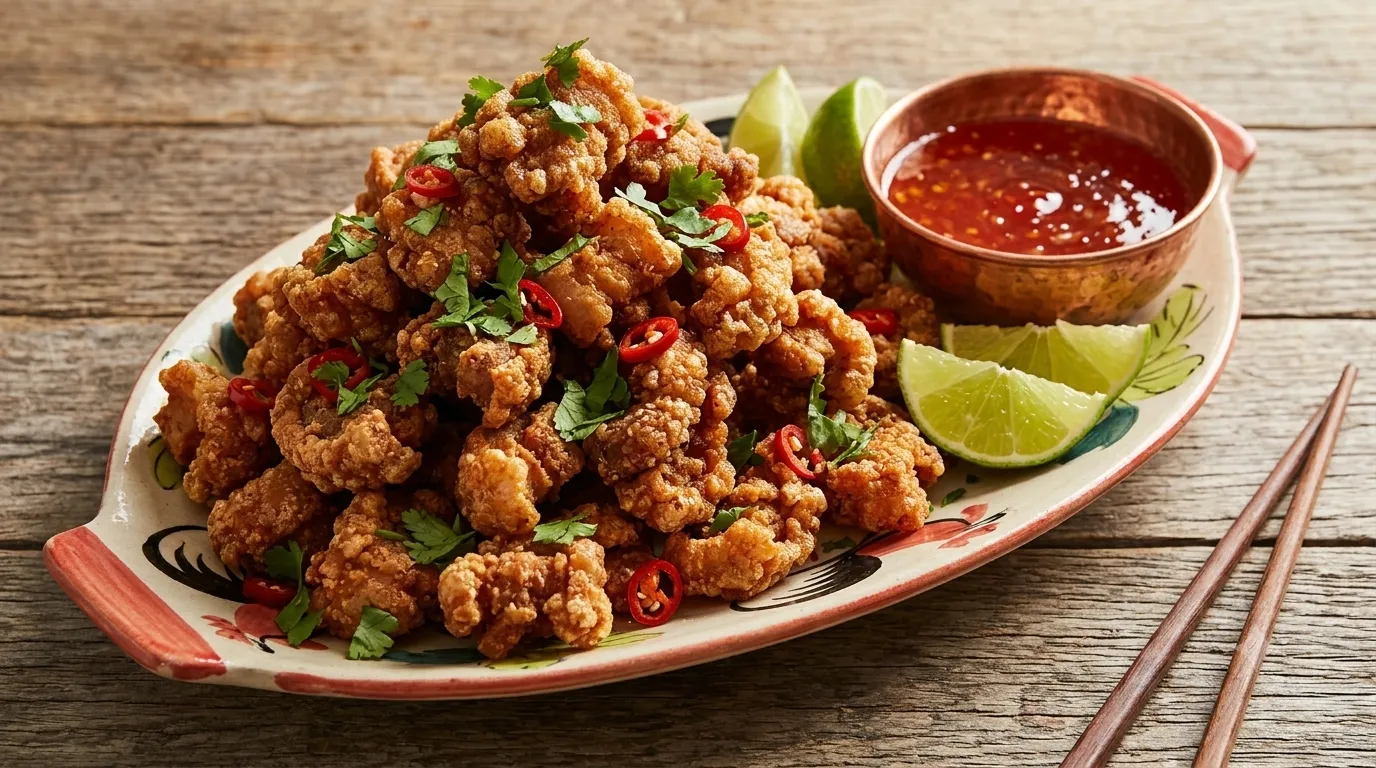
Crispy Thai Pork Bites are bite-sized pieces of marinated pork, coated in a light, seasoned batter, and fried until the outside shatters and the inside stays juicy. They’re served hot, usually within minutes of coming out of the oil, alongside a glossy, sweet-and-spicy chilli sauce for dipping. Street vendors sell them by the bag. Home cooks make them for parties because a tray disappears in about the time it takes to refill it.
Table of Contents
By the end of this guide, you’ll know why the coating on street-cart pork bites is so much crispier than anything you’ve made at home, what’s actually happening to the meat and the batter in the fryer, and how to fix the specific mistakes that leave most home versions soggy, greasy, or bland. You’ll also get a full recipe card, a homemade sweet chilli sauce, storage instructions, and answers to the questions people ask most about making Crispy Thai Pork Bites at home.
What Are Crispy Thai Pork Bites?
Crispy Thai Pork Bites are small, marinated pieces of pork, coated in a seasoned cornstarch-and-rice-flour batter and deep-fried until the outside turns golden and audibly crisp. They’re a fixture of Thai street food carts, sold hot out of the fryer in paper bags or on skewers, usually next to a small container of sweet chilli sauce for dipping.
Street vendors in Thailand fry these in huge batches because they’re fast, cheap to make, and disappear just as fast. The pork itself is marinated with garlic, white pepper, and fish sauce, so even without the sauce, each bite carries real flavor. That’s different from a lot of fried snacks that rely entirely on the dipping sauce to taste like anything.
What makes the dish work as an appetizer or party food is portion size. Each piece is one or two bites, no fork required, no plate needed. That makes Crispy Thai Pork Bites a natural fit for a party table, a game-day spread, or a starter before a bigger Thai meal. The balance the dish is built around, a coating crisp enough to crackle and pork juicy enough to stay tender underneath, is what separates a good version from a forgettable one.
Sweet chilli sauce is the traditional pairing for a reason beyond tradition alone. The sauce is sweet, slightly tangy, and mildly spicy, and that combination cuts through the richness of the fried coating instead of just adding more flavor on top of it. Without it, the pork bites still work. With it, they’re better.
The History of Thai Fried Pork
Thai street food culture grew up around carts and stalls that had to cook fast, sell fast, and use ingredients that traveled well in the heat. Frying fit that model better than almost any other cooking method. Hot oil cooks quickly, kills off spoilage risk, and produces food that’s ready to eat the moment it’s handed over.
Regional fried pork dishes in Thailand vary by province, but most share a few core techniques: thin marinades built on fish sauce and garlic, a light coating rather than a heavy batter, and frying in small batches over intense heat. Central Thai versions tend to lean sweeter, southern versions often carry more chili, and northeastern (Isan) versions frequently include a stronger fish sauce presence and a more pronounced garlic-pepper bite.
Garlic and coriander root marinades in particular show up across a wide range of Thai grilled and fried meat dishes, not just pork bites. Coriander root, the part of the cilantro plant most Western cooks throw away, has a more concentrated, earthy flavor than the leaves, and Thai cooks have used it as a marinade base for generations because it works with garlic and white pepper to season meat all the way through, not just on the surface.
The evolution from street cart snack to modern party appetizer happened as Thai food spread internationally and home cooks looked for dishes that traveled well from stovetop to serving platter. Crispy Thai Pork Bites fit that shift naturally: they hold their crunch for a reasonable stretch after frying, they’re easy to eat standing up with a drink in hand, and they don’t require a full sit-down meal around them.
Why These Pork Bites Are So Addictive
A good batch of Crispy Thai Pork Bites hits several things at once, and it’s worth breaking down exactly what’s doing the work.
- Crispy exterior. The coating shatters rather than chews, which is a different sensation from most home-fried food, and it’s the first thing people notice.
- Juicy pork. Underneath that crunch, the meat should still have moisture and give. Dry pork under a great coating is still a disappointing bite.
- Garlic. Worked into the marinade rather than added at the end, so it seasons the meat instead of just sitting on the surface.
- White pepper. Sharper and more floral than black pepper, and the standard pepper used in Thai savory marinades for a reason: it doesn’t dominate the way black pepper can.
- Fish sauce. The salt source and the umami source at the same time, doing two jobs most Western recipes need two ingredients for.
- Sweet chilli dipping sauce. Sweet, tangy, and mildly spicy, cutting through the richness of the fried coating instead of just layering more flavor on top.
- Fresh herbs. Cilantro and green onion add a cool, sharp contrast right before serving.
- Contrast of textures and flavors. Crunchy against tender, salty against sweet, rich against bright. None of these elements work as well alone as they do together.
That layering of contrasts, rather than any single ingredient, is why people keep reaching for one more piece.
The Science Behind Crispy Fried Pork
Understanding what’s actually happening in the fryer will change how you fry, not just how you follow steps.
The Maillard reaction is the browning reaction between amino acids and sugars on the surface of the pork and the coating, and it’s responsible for both the golden color and the savory, roasted aroma of a well-fried piece. It only kicks in efficiently above roughly 300°F on the food’s surface, which is one reason a fryer that’s too cool produces pale, greasy pieces instead of deeply colored ones.
Cornstarch creates extra crispness because it forms a thinner, more brittle crust than wheat flour does when it hits hot oil. Wheat flour contains gluten, which creates a chewier, bread-like structure once fried. Cornstarch has none, so the coating sets into something closer to glass: thin, hard, and quick to shatter under a bite.
Rice flour vs. wheat flour matters for the same reason. Rice flour, like cornstarch, has no gluten, and it fries up lighter and crisper than wheat flour. A blend of cornstarch and rice flour is common in Thai fried coatings because rice flour adds a bit more structure and a very light textured crunch, while cornstarch keeps the overall coating thin and glassy.
Oil temperature (350–375°F / 175–190°C) is the range where pork bites fry fast enough on the outside to seal in juice before the inside overcooks, while staying hot enough to trigger real Maillard browning. Below 350°F, the coating absorbs oil instead of crisping, which is the single most common cause of greasy pork bites. Above 375°F, the outside can scorch before the inside finishes cooking.
Double-frying for maximum crunch works because the first fry cooks the pork through and sets the coating, while the resting period in between lets residual steam escape from inside the crust. The second, hotter fry then crisps the surface further without overcooking the meat, since the pork is already close to done. Restaurants rely on this two-stage method specifically because a single fry rarely produces a coating that stays crisp for more than a few minutes.
Resting before serving on a wire rack, not a paper towel-lined plate, keeps steam moving away from the coating instead of trapping it underneath the food. A few minutes of rest after the final fry also lets the coating’s structure set fully.
Preventing soggy coating comes down to three things working together: dry pork before coating, oil that’s hot enough, and a rack instead of a stacked plate for resting. Skip any one of those and moisture finds its way back into the crust.
Choosing the Best Pork
| Cut | Marbling | Tenderness | Flavor | Cooking Time | Best For |
|---|---|---|---|---|---|
| Pork Shoulder | High | Very tender when cut small | Rich, well-suited to marinades | Moderate | Best overall choice |
| Pork Loin | Low | Can dry out if overcooked | Mild, clean | Fast | Leaner option, needs care |
| Pork Tenderloin | Very low | Tender but low-fat | Mild | Fast | Good for a leaner bite, less forgiving |
| Pork Belly | Very high | Tender, rich | Very rich, fatty | Moderate-long | Best for indulgent, restaurant-style bites |
Pork shoulder is the best choice for beginners. It has enough fat marbled through the muscle to stay juicy through two rounds of frying, and it’s forgiving if your timing is slightly off. Pork loin and tenderloin fry up leaner, which some cooks prefer, but they punish overcooking more severely since there’s less fat to buffer against dryness. Pork belly makes the richest, most restaurant-style version of this dish, closer to what you’d get from a Thai street cart that specializes in fried pork, but it’s also the most indulgent option and not what most home cooks reach for on a weeknight.
Cut the pork into pieces roughly three-quarters of an inch to one inch across. Smaller pieces cook through faster and give you more crispy surface area per bite; larger pieces risk an undercooked center by the time the coating is done.
Ingredients Explained
| Ingredient | Why It Matters |
|---|---|
| Pork (shoulder recommended) | The base of the dish; fat content determines juiciness |
| Garlic | Core aromatic; worked into the marinade for flavor that penetrates the meat |
| Fish sauce | Salt and umami in one ingredient; the backbone of Thai savory marinades |
| Light soy sauce | Adds additional savory depth without the heaviness of dark soy |
| Oyster sauce | Adds a touch of sweetness and body to the marinade |
| White pepper | Sharper and more floral than black pepper; standard in Thai marinades |
| Coriander root (or cilantro stems) | Earthier and more concentrated than the leaves; a classic base for Thai marinades |
| Sugar | Balances the saltiness of the fish sauce and soy sauce |
| Cornstarch | Creates a thin, glassy, shatter-crisp coating |
| Rice flour | Adds light texture and extra crunch alongside cornstarch |
| Baking powder | A small amount lightens the coating and helps it puff slightly during frying |
| Neutral frying oil | High smoke point oil (vegetable, canola, or peanut) that won’t scorch at frying temperature |
| Fresh cilantro | Bright, herbal garnish added after frying |
| Green onions | Sharp, fresh contrast to the richness of the fried pork |
| Sweet chilli sauce | The traditional dipping sauce; sweet, tangy, and mildly spicy |
| Lime wedges | A squeeze of acidity cuts through the richness right before eating |
Every one of these ingredients is doing a specific job, not just adding to a long list. Skip the coriander root and the marinade loses its earthy backbone. Skip the baking powder and the coating stays denser and less shatter-crisp. Understanding what each ingredient contributes makes it much easier to substitute intelligently if something’s missing from your pantry.
Step-by-Step Technique
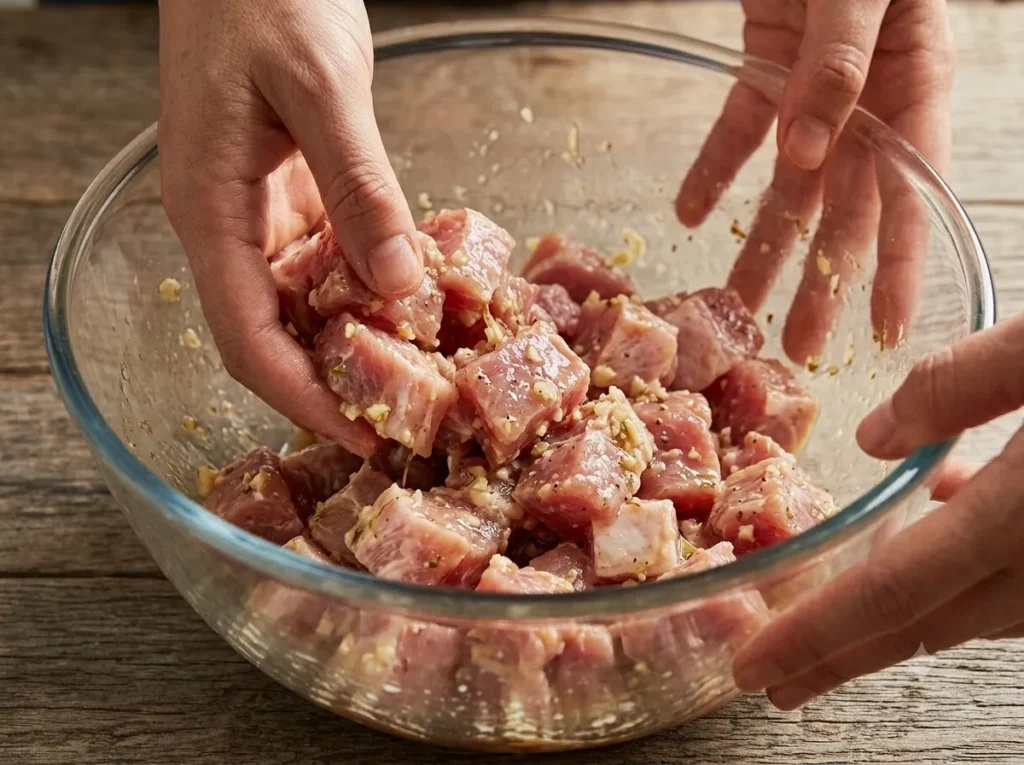
1. Prepare the pork. Cut pork shoulder into roughly one-inch pieces. Pat the pieces dry with paper towels; this step matters more than it looks like it should, since any surface moisture will thin out the coating once you dredge the pork.
2. Make the marinade. Combine minced garlic, minced coriander root, fish sauce, light soy sauce, oyster sauce, white pepper, and sugar in a bowl. Stir until the sugar dissolves.
3. Marinate. Toss the pork in the marinade and refrigerate for at least 30 minutes, up to 4 hours. The pork should look slightly darker and glossy once it’s absorbed the sauce.
4. Prepare the coating. Whisk together cornstarch, rice flour, and a small amount of baking powder in a separate bowl. Toss the marinated pork through the dry coating, pressing lightly so it clings to every surface.
5. Heat the oil. Bring oil to 350–375°F in a heavy-bottomed pot or Dutch oven. Use an instant-read thermometer rather than guessing; oil temperature is the single biggest variable in this recipe.
6. First fry. Fry the pork in small batches, giving each piece room in the oil, for about 3 to 4 minutes, until pale gold and cooked through. Don’t crowd the pot, or the oil temperature will drop and the coating will absorb grease instead of crisping.
7. Rest. Transfer the pork to a wire rack and let it rest for 5 to 10 minutes. This is where trapped steam escapes and the coating sets up for its final crisp.
8. Second fry. Return the oil to 375°F and fry the pork again, this time for just 1 to 2 minutes, until deep golden and audibly crisp. This second fry is what separates a street-cart-crisp coating from an average home-fried one.
9. Sauce and garnish. Serve the pork bites hot with sweet chilli sauce on the side, or toss lightly with a spoonful of sauce for a glazed finish. Scatter cilantro and green onion over the top.
10. Serve immediately. Crispy Thai Pork Bites are best within the first 10 to 15 minutes after the second fry, while the coating is still at its crispest.

The Secret to Extra Crispy Pork
If there’s one section of this guide to reread before you fry, it’s this one.
- Double frying. A single fry cooks the pork but rarely produces a coating that holds its crunch. The second fry is what makes the difference between good and street-cart-level crisp.
- Proper coating. A thin, even layer works better than a thick one. Press the coating on lightly rather than packing it, and shake off the excess before frying.
- Drying the pork before coating. Surface moisture is the enemy of a crisp coating. Pat pork dry both before marinating and, if there’s excess marinade clinging to it, before dredging.
- Small batch frying. Overcrowding drops the oil temperature fast, and a cooler fryer means a greasier coating. Fry in batches small enough that the pieces have space around them.
- Oil temperature control. Check the temperature between batches, not just at the start. A thermometer left in the pot the whole time will save you from a slow, silent temperature drop.
- Resting between fries. Skipping the rest and going straight into the second fry defeats the purpose. The rest is what lets trapped steam escape before you crisp the surface again.
Homemade Sweet Chilli Sauce
Store-bought sweet chilli sauce works in a pinch, but a homemade version balances sweetness, acidity, and heat far better, and it takes about ten minutes.
Ingredients: rice vinegar, sugar, water, minced garlic, red chili (fresh or dried flakes, adjusted to taste), a pinch of salt, and a small amount of cornstarch slurry to thicken.
Cooking method: Combine vinegar, sugar, water, garlic, and chili in a small saucepan. Bring to a simmer and cook for about 5 minutes, until the sugar fully dissolves and the mixture smells fragrant rather than sharply vinegary. Stir in the cornstarch slurry and simmer another minute or two, until the sauce turns glossy and coats the back of a spoon.
Balancing sweetness, acidity, and heat: Taste before you thicken. If it’s too sharp, add a bit more sugar. If it’s too sweet, a small splash of extra vinegar will pull it back. The finished sauce should taste sweet first, with tang and heat arriving right behind it, not fighting for first place.
Adjusting spice level: Use fewer chili flakes or seed fresh chilies for a milder sauce. For more heat, leave the seeds in or add a small amount of Thai bird’s eye chili, minced fine.
Storage tips: Homemade sweet chilli sauce keeps in an airtight container in the refrigerator for up to two weeks. The flavor actually improves slightly after the first day, once the garlic and chili have had time to mellow into the syrup.
Equipment Needed
- Dutch oven or deep fryer
- Heavy-bottomed pot, if not using a dedicated fryer
- Wire rack, for resting between fries
- Instant-read thermometer, non-negotiable for oil temperature
- Mixing bowls, for marinade and coating
- Tongs, for lowering and turning pork in the oil
- Spider strainer, for lifting pork out cleanly without excess oil
Common Mistakes
Mistake #1: Skipping the second fry. Why it happens: it feels like an extra, unnecessary step. How to avoid it: treat the second fry as mandatory, not optional, especially if you’re serving a crowd. How to fix it: if your pork already went soft after one fry, a quick second fry at high heat can still rescue most of the crunch.
Mistake #2: Frying at too low a temperature. Why it happens: home stovetops run cooler than commercial fryers, and it’s easy to misjudge. How to avoid it: use a thermometer every time, not just guesswork. How to fix it: pull the pork, raise the oil temperature back to 350–375°F, and finish frying once it’s recovered.
Mistake #3: Overcrowding the pot. Why it happens: it feels faster to fry everything at once. How to avoid it: fry in small batches with room between pieces. How to fix it: remove excess pork, let the oil recover, and continue in smaller rounds.
Mistake #4: Not drying the pork before coating. Why it happens: skipping the pat-dry step to save time. How to avoid it: always pat pork dry with paper towels before dredging. How to fix it: if the coating is already wet and clumpy, shake off the excess before it goes into the oil.
Mistake #5: Using wheat flour instead of cornstarch or rice flour. Why it happens: wheat flour is what’s already in the pantry. How to avoid it: keep cornstarch and rice flour on hand specifically for Thai-style frying. How to fix it: mix in what cornstarch you have on hand to lighten a too-heavy wheat coating.
Mistake #6: Resting fried pork on paper towels instead of a rack. Why it happens: it’s the default habit for most home cooks. How to avoid it: use a wire rack set over a baking sheet so steam escapes downward instead of getting trapped. How to fix it: transfer pork to a rack as soon as you notice it softening on paper towels.
Mistake #7: Cutting pork pieces too large. Why it happens: fewer cuts feels like less prep work. How to avoid it: aim for pieces around three-quarters of an inch to one inch. How to fix it: if pieces are already large, extend the first fry slightly to make sure the center cooks through.
Mistake #8: Marinating too briefly. Why it happens: rushing straight from prep to frying. How to avoid it: give the pork at least 30 minutes in the marinade. How to fix it: if you’re short on time, cut the pork smaller so the marinade penetrates faster.
Mistake #9: Using pork loin without adjusting technique. Why it happens: loin looks leaner and healthier on the package. How to avoid it: if using loin, watch the fry time closely, since there’s less fat to protect against drying out. How to fix it: pull loin pieces from the oil a little earlier than shoulder to avoid overcooking.
Mistake #10: Skipping the coriander root or cilantro stems. Why it happens: most home cooks throw the stems away out of habit. How to avoid it: save cilantro stems specifically for marinades like this one. How to fix it: if you’re out, extra garlic and a bit more white pepper will partially cover the gap.
Mistake #11: Not checking oil temperature between batches. Why it happens: assuming the oil stays at the same temperature throughout frying. How to avoid it: check the thermometer before every new batch goes in. How to fix it: pause and let the oil climb back to temperature before continuing.
Mistake #12: Adding sauce too early. Why it happens: wanting the pork to look glossy and finished right away. How to avoid it: toss with sauce only right before serving, not while the pork is still resting. How to fix it: if the coating has already gone soft from early saucing, serve the sauce on the side instead of tossed.
Mistake #13: Using old or reused oil. Why it happens: trying to save oil from a previous fry. How to avoid it: use fresh, clean oil for the best flavor and crispest results. How to fix it: if oil smells off or looks dark, replace it rather than pushing through with it.
Mistake #14: Not seasoning the coating itself. Why it happens: assuming the marinade alone carries enough flavor. How to avoid it: add a pinch of salt and white pepper directly to the cornstarch and rice flour mixture. How to fix it: finish fried pieces with a light sprinkle of salt straight out of the fryer.
Mistake #15: Serving pork bites too long after frying. Why it happens: prepping everything ahead of a party and letting the pork sit. How to avoid it: time the final fry as close to serving as possible. How to fix it: a quick pass through a hot oven (400°F for a few minutes) can revive crispness if serving is delayed.
Pro Chef Tips
- Pat pork completely dry before both marinating and coating.
- Use a thermometer for oil temperature every single time, not just the first batch.
- Cut pork into uniform pieces so everything cooks at the same rate.
- Mix cornstarch and rice flour rather than using either alone.
- Add a small pinch of baking powder to lighten the coating.
- Marinate for at least 30 minutes for real flavor penetration.
- Never skip the rest between the first and second fry.
- Fry in small batches, always.
- Use fresh oil, and don’t reuse it more than once for this dish.
- Keep the coating thin; press it on lightly rather than packing it.
- Shake off excess coating before the pork hits the oil.
- Season the dry coating itself, not just the marinade.
- Use a spider strainer, not tongs alone, to lift pork out cleanly.
- Rest fried pork on a wire rack, never on stacked paper towels.
- Taste your sweet chilli sauce before you thicken it, and adjust while it’s still easy to fix.
- Garnish with herbs at the very last moment, right before serving.
- Serve pork bites within 15 minutes of the second fry for peak crunch.
- Save coriander root specifically for marinades like this one; don’t discard it.
- Use white pepper, not black, to stay true to the traditional flavor profile.
- If reheating leftovers, use an oven or air fryer, never a microwave.
- Keep a lid nearby when frying, in case oil spatters unexpectedly.
- Double the marinade and freeze a batch for a faster version next time.
Variations
Spicy Thai Pork Bites: Add finely minced Thai bird’s eye chili directly to the marinade for heat that runs through the meat, not just the dipping sauce.
Lemongrass Pork Bites: Add finely minced fresh lemongrass to the marinade for a citrusy, aromatic edge that pairs especially well with the sweet chilli sauce.
Five-Spice Pork Bites: Add a small amount of five-spice powder to the marinade for a warmer, slightly sweeter background flavor.
Air Fryer Version: Coat the pork as directed, spray lightly with oil, and air fry at 375°F for about 12 minutes, shaking the basket halfway through. The crunch won’t fully match deep frying, but it comes close with far less oil.
Oven-Baked Version: Arrange coated pork on a wire rack over a baking sheet and bake at 425°F for 20 to 25 minutes, flipping once. Expect a lighter crunch than frying, but still a satisfying texture.
Gluten-Free Version: This recipe is naturally gluten-free as written, since it relies on cornstarch and rice flour rather than wheat flour. Double-check that your soy sauce and oyster sauce are labeled gluten-free, since some brands contain wheat.
Chicken Bites Version: Substitute boneless, skinless chicken thigh for pork, cut to the same size. Chicken thigh holds up well to the same marinade and double-fry method; chicken breast works too, but dries out more easily.
Storage & Reheating
Refrigeration: Store leftover pork bites in an airtight container in the refrigerator for up to 3 days. Keep the sweet chilli sauce in a separate container.
Freezing: Freeze fried pork bites in a single layer on a baking sheet before transferring to a freezer bag; this keeps them from clumping together. They’ll keep well for up to 2 months.
Best reheating methods: An oven or air fryer at 375–400°F for 8 to 10 minutes restores most of the original crunch. A microwave will heat the pork through but leaves the coating soft and chewy, so it’s worth avoiding here.
Food safety: Reheat pork bites to an internal temperature of 165°F before serving. Never leave fried pork sitting at room temperature for more than two hours.
What to Serve with Crispy Thai Pork Bites
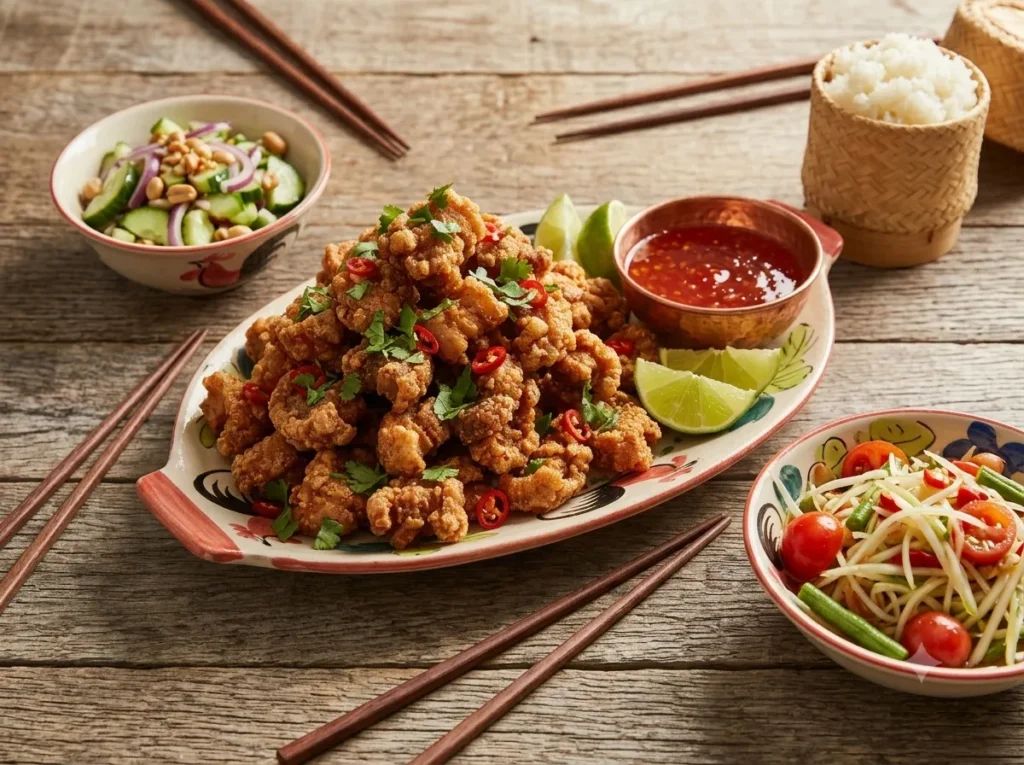
- Thai cucumber salad: A cool, vinegar-based side that balances the richness of the fried pork.
- Sticky rice: A traditional, filling pairing that turns pork bites into more of a meal.
- Jasmine rice: A lighter, more neutral base if you’d rather skip sticky rice.
- Papaya salad (Som Tam): Its sharp, spicy, tangy profile contrasts sharply with the richness of fried pork.
- Fresh herbs: Extra cilantro, mint, or Thai basil on the side lets guests brighten each bite further.
- Pickled vegetables: Quick-pickled carrots or daikon add acidity and crunch alongside the fried texture.
- Thai iced tea: Sweet and creamy, a classic pairing that cools the palate between bites.
- Thai lager: A light, crisp beer cuts through the richness without competing with the flavors.
- Light white wines: A dry, high-acid white, like a Sauvignon Blanc, plays a similar role to Thai lager for wine drinkers.
Frequently Asked Questions
Can I use pork loin instead of pork shoulder? Yes. Pork loin works, but it’s leaner and cooks faster, so watch the fry time closely to avoid drying it out. Pork shoulder remains the more forgiving option for a first attempt at Crispy Thai Pork Bites.
Can I air fry Crispy Thai Pork Bites? Yes. Coat the pork as directed, lightly spray with oil, and air fry at 375°F for about 12 minutes, shaking the basket halfway through. The crunch is good, though not quite as sharp as deep frying.
Can I make Crispy Thai Pork Bites ahead of time? You can marinate the pork up to a day ahead and refrigerate it, but fry it as close to serving as possible. Once fried, the coating starts softening within an hour, even at its best.
Can I freeze Crispy Thai Pork Bites? Yes, after frying. Freeze in a single layer before bagging, then reheat directly from frozen in an oven or air fryer at 375–400°F until crisp and heated through.
Why isn’t my coating crispy? Usually one of three things: the oil wasn’t hot enough, the pork wasn’t dried before coating, or the second fry got skipped. Check oil temperature with a thermometer and don’t shortcut the double fry.
Can I use chicken instead of pork? Yes. Boneless, skinless chicken thigh works especially well with the same marinade and frying method, and cooks in roughly the same amount of time as pork.
Can I use store-bought sweet chilli sauce? You can, and it will still taste good. A homemade version gives you more control over sweetness, heat, and thickness, and takes about ten minutes to make.
How do restaurants keep fried pork crispy for so long? Mainly through the double-fry method and proper resting on a rack instead of a stacked plate. Commercial fryers also hold temperature more consistently than home stovetops, which helps.
What’s the best oil for frying Crispy Thai Pork Bites? A neutral, high-smoke-point oil like vegetable, canola, or peanut oil. Avoid oils with strong flavors, like olive oil, which can overpower the dish and smoke at frying temperatures.
Can I make this dish gluten-free? Yes, it’s naturally gluten-free if made with cornstarch and rice flour instead of wheat flour. Just confirm your soy sauce and oyster sauce brands are labeled gluten-free.
Why did my pork come out tough instead of tender? This usually points to oil that was too hot for too long, or pork pieces cut too large for even cooking. Smaller, uniform pieces and correct oil temperature solve most toughness issues.
Can I bake these instead of frying? Yes. Bake coated pork on a wire rack at 425°F for 20 to 25 minutes, flipping once. The texture is lighter than fried, but still enjoyable.
How spicy is the sweet chilli sauce? Mild by default, with heat you can control by adjusting the amount of chili flakes or fresh chili used. It’s built to be sweet first, with tang and heat close behind.
What’s the ideal oil temperature range? 350–375°F (175–190°C). Staying in this range is the single biggest factor separating a crisp result from a greasy one.
Can I double this recipe for a party? Yes, but fry in the same small batches regardless of total quantity. Doubling the recipe doesn’t mean doubling what goes into the pot at once.
Recipe Card
Crispy Thai Pork Bites with Sweet Chilli Sauce
| Prep Time | 20 minutes |
| Marinating Time | 30 minutes (up to 4 hours) |
| Cook Time | 15 minutes |
| Total Time | About 1 hour 5 minutes |
| Servings | 4–6 as an appetizer |
| Cuisine | Thai |
| Course | Appetizer, Snack |
| Calories (estimated) | Approximately 320 per serving |
Ingredients
- 1.5 lbs pork shoulder, cut into 1-inch pieces
- 4 garlic cloves, minced
- 1 tablespoon coriander root or cilantro stems, minced
- 2 tablespoons fish sauce
- 1 tablespoon light soy sauce
- 1 tablespoon oyster sauce
- 1 teaspoon white pepper
- 1 teaspoon sugar
- 1 cup cornstarch
- 1/2 cup rice flour
- 1/2 teaspoon baking powder
- Neutral oil, for frying
- Fresh cilantro and green onion, for garnish
- Sweet chilli sauce, for serving
- Lime wedges, for serving
Instructions
- Pat pork dry and combine with garlic, coriander root, fish sauce, soy sauce, oyster sauce, white pepper, and sugar. Marinate 30 minutes to 4 hours, refrigerated.
- Whisk cornstarch, rice flour, and baking powder together. Toss marinated pork through the mixture, coating evenly.
- Heat oil to 350–375°F in a heavy-bottomed pot.
- Fry pork in small batches for 3 to 4 minutes, until cooked through and pale gold.
- Rest fried pork on a wire rack for 5 to 10 minutes.
- Return oil to 375°F and fry a second time for 1 to 2 minutes, until deep golden and crisp.
- Serve hot with sweet chilli sauce, garnished with cilantro, green onion, and lime wedges.
Chef Notes: Don’t skip the second fry. It’s the single step most responsible for the difference between an average batch and a street-cart-crisp one.
Storage Notes: Refrigerate up to 3 days or freeze up to 2 months. Reheat in an oven or air fryer, not a microwave, to preserve crunch.
Nutrition Disclaimer: Calorie and nutrition estimates are approximate and will vary based on specific ingredients, portion sizes, and oil absorption during frying.
Conclusion
Crispy Thai Pork Bites earn their place on Thai street carts the same way they’ll earn a spot on your appetizer table: a coating that actually crackles, pork that stays juicy underneath, and a sweet chilli sauce that ties the whole bite together. None of it depends on complicated technique. It depends on a handful of details done correctly: dry pork, the right coating, oil held at the right temperature, and a second fry that most home cooks skip. Get those right, and Crispy Thai Pork Bites with Sweet Chilli Sauce will hold their own against anything you’ve had from an actual Thai street vendor. Try them for your next party, your next family dinner, or the next time you just want something worth frying for.