
Vietnamese Red Fried Rice: The Colorful Tomato and Garlic Fried Rice That Elevates Any Meal
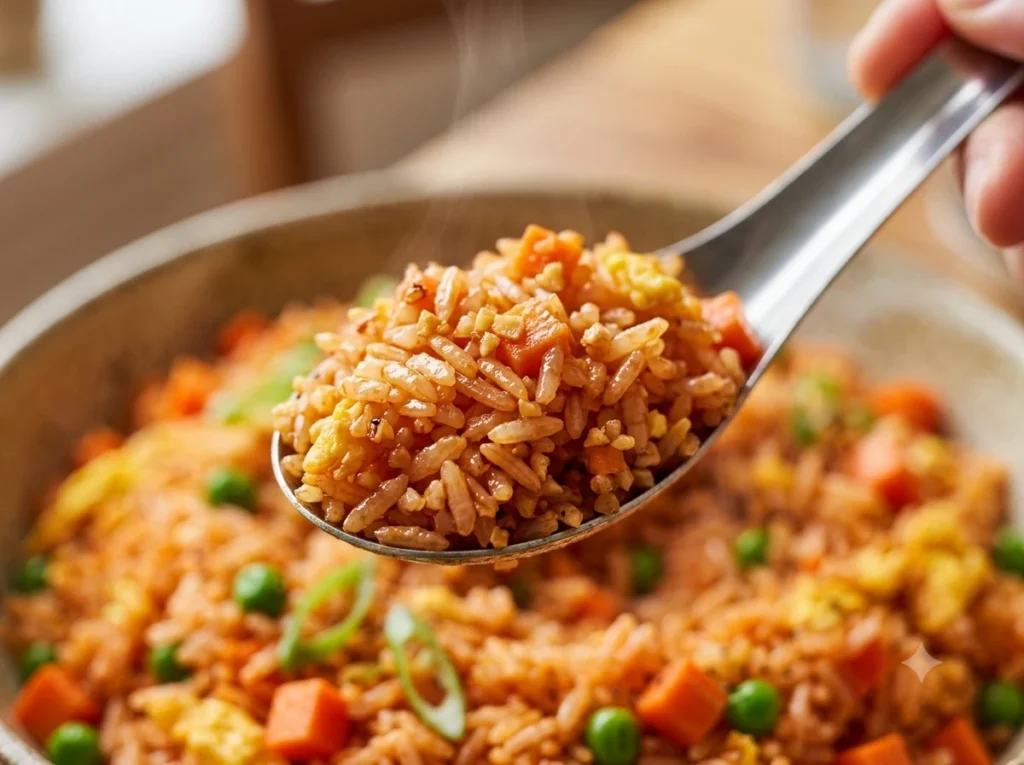
Vietnamese Red Fried Rice shows up on the table looking like something festive even on an ordinary Tuesday. Fluffy jasmine rice, each grain coated in a deep tomato-orange color, tossed with garlic, scrambled eggs, carrots, and peas, finished with a scatter of scallions. This is Cơm Chiên Đỏ, and its color is not the result of food dye or a trick. It comes from tomato paste and, in many home versions, a spoonful of ketchup, caramelized properly in hot oil until the whole pan turns a rich, warm red.
This guide covers what Vietnamese Red Fried Rice actually is, how Chinese fried rice technique evolved into this distinctly Vietnamese version, the food science behind rice that fries up separate and fluffy instead of clumping into mush, and a complete recipe you can cook in under thirty minutes. You will also find a rice comparison, an ingredient breakdown, the real secret behind that signature red color, fifteen common mistakes, twenty professional tips, and a full recipe card.
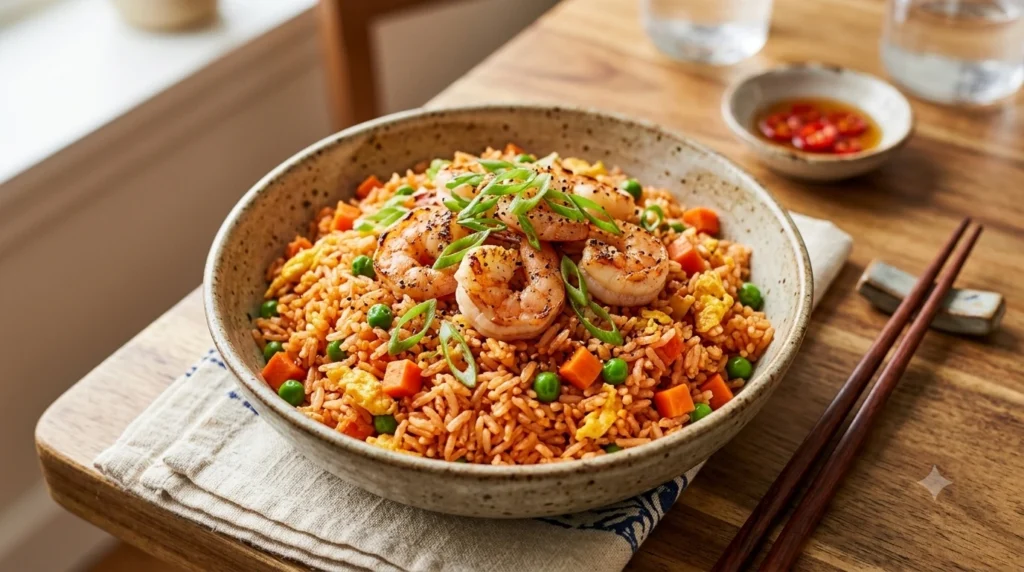
Table of Contents
- What Is Vietnamese Red Fried Rice?
- The History of Vietnamese Fried Rice
- Why This Dish Is So Popular
- The Science Behind Perfect Fried Rice
- Choosing the Best Rice
- Ingredients Explained
- The Secret to the Signature Red Color
- Step-by-Step Technique
- Equipment Needed
- Common Mistakes
- Pro Chef Tips
- Delicious Variations
- Storage & Reheating
- What to Serve with Vietnamese Red Fried Rice
- Frequently Asked Questions
- Recipe Card
- Conclusion
What Is Vietnamese Red Fried Rice?
Vietnamese Red Fried Rice, called Cơm Chiên Đỏ in Vietnamese, is a fried rice dish built on day-old jasmine rice, garlic, and a tomato-based mixture that gives every grain its signature warm red-orange hue. “Cơm” means cooked rice, “chiên” means fried, and “đỏ” means red, so the name is a plain, literal description of exactly what you are looking at once it hits the plate.
This dish is a familiar sight in Vietnamese homes and casual restaurants alike, often served as a side to grilled meats or as a stand-alone lunch with a fried egg on top. It occupies a comfortable middle ground between simple garlic fried rice and something more elaborate, colorful enough to feel a little special without requiring rare ingredients or advanced technique.
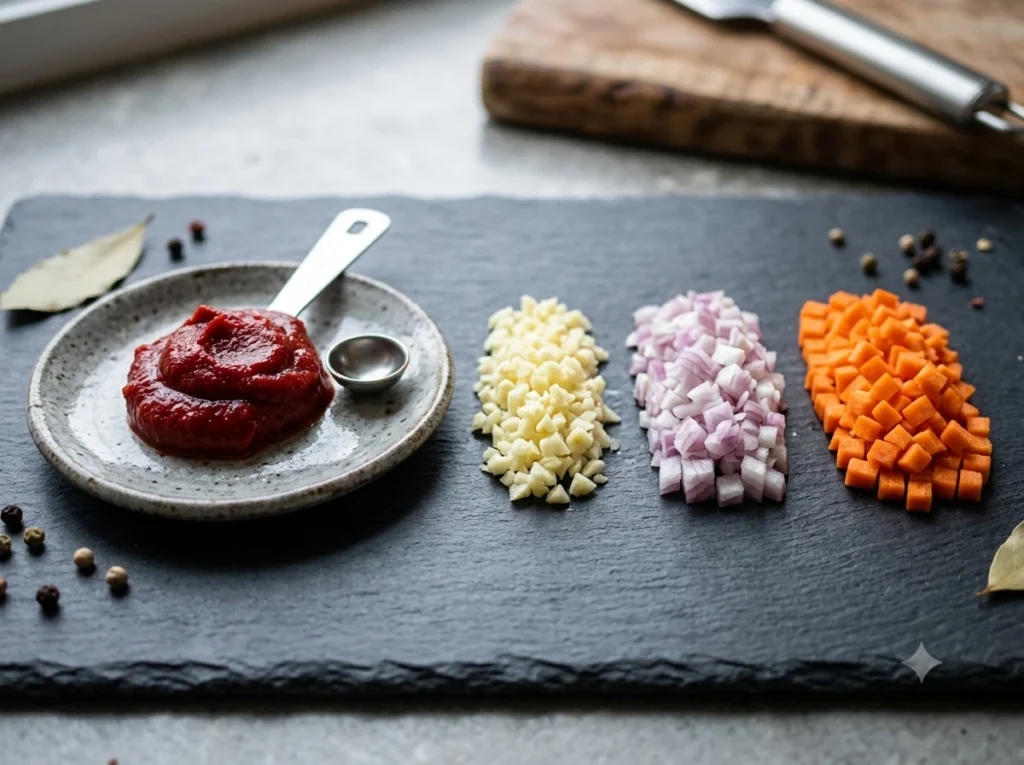
The signature red-orange color comes almost entirely from tomato paste, sometimes supplemented with ketchup, cooked down in oil until it deepens in color and loses its raw acidity. Unlike some brightly colored dishes that rely on food coloring for visual appeal, this color is a direct result of real caramelization happening in the pan, which also means it carries genuine flavor rather than just appearance.
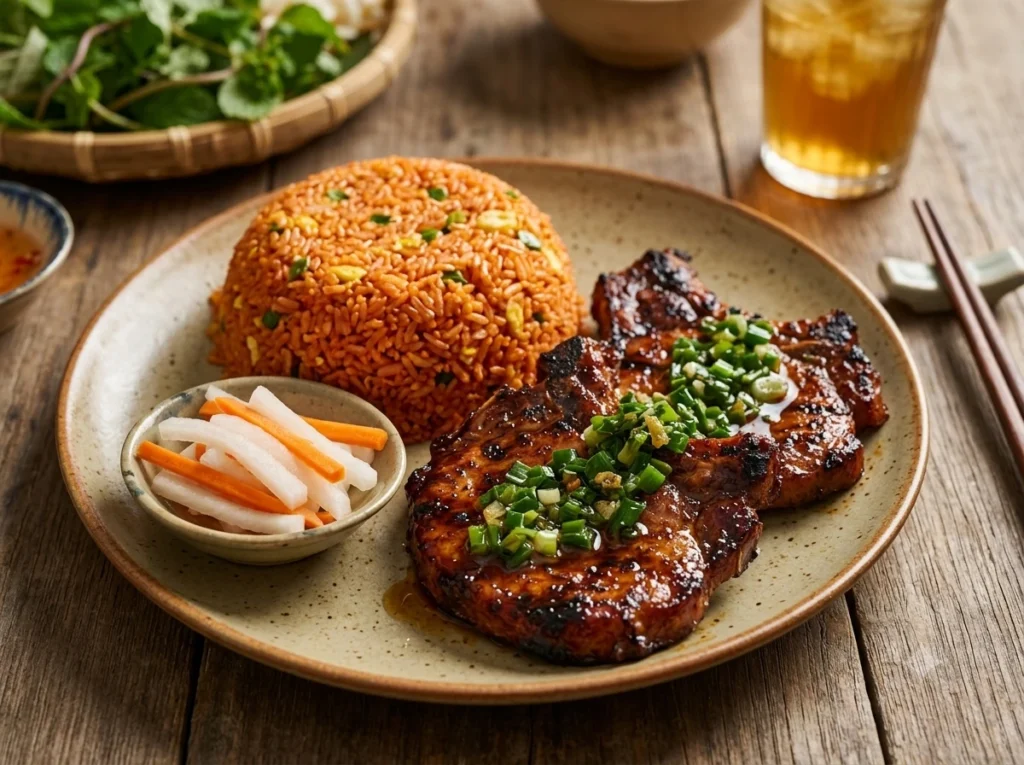
Vietnamese Red Fried Rice pairs particularly well with grilled meats, seafood, and roasted chicken, since its slightly sweet, tomato-forward flavor complements smoky, charred proteins without competing against them. It shows up often alongside dishes like grilled pork chops or lemongrass chicken at Vietnamese family meals, playing a supporting role that still manages to stand out on the plate.
The History of Vietnamese Fried Rice
Fried rice as a broader category arrived in Vietnam through centuries of Chinese culinary influence, a common thread across much of Southeast Asian cooking. The basic technique, using cooked rice fried quickly in hot oil with aromatics and whatever protein or vegetables are on hand, mirrors Chinese fried rice traditions closely enough that the connection is not in dispute among food historians who study the region’s cuisine.
What happened next is where Vietnamese cooking took the technique somewhere distinctly its own. Vietnamese home cooks adapted fried rice with ingredients and flavors that reflected local tastes and available pantry staples, moving away from the soy-sauce-forward profile common in Chinese versions and toward a slightly sweeter, tomato-based flavor that became one of several recognizably Vietnamese styles of fried rice.
Vietnamese home-cooking traditions favor resourceful, ingredient-driven cooking, often built around whatever is left in the refrigerator or pantry from the day before. Fried rice fits naturally into this tradition, since it is essentially designed to use up leftover rice, and Vietnamese cooks have applied that same practical spirit to different regional and family variations over the years.
Regional differences exist here as they do across most Vietnamese dishes. Some households lean more heavily on fish sauce for a saltier, more savory profile, while others favor a sweeter, more ketchup-forward version. Neither is more correct; both reflect the same underlying flexibility that defines Vietnamese home cooking generally.
Tomato ketchup and tomato paste became popular in modern Vietnamese versions of this dish partly through the influence of French colonial-era food culture, which introduced tomato-based condiments more broadly into Vietnamese kitchens, and partly through simple practicality. Both ingredients are affordable, shelf-stable, and widely available, making them easy staples for a dish built around convenience and adaptability. Over time, tomato paste and ketchup became so associated with this particular style of fried rice that the resulting red-orange color gave the dish its name.
Why This Dish Is So Popular
Simple pantry ingredients are the first reason. Rice, garlic, eggs, tomato paste, and a few vegetables are things most home cooks already have on hand, which makes this a genuinely easy dish to throw together without a special grocery trip.
The vibrant appearance does real work too. A plate of red-orange fried rice, studded with green peas and scallions, looks considerably more festive than plain white fried rice, which makes it a natural choice for gatherings or whenever a meal could use a little visual lift.
Savory tomato flavor, balanced against garlic’s aroma, gives the dish a warmth that plain soy-sauce fried rice does not have. That garlic aroma, released properly through the technique covered below, perfumes the whole kitchen while cooking, which is part of the appeal for many home cooks.
Preparation is quick, usually under thirty minutes from start to finish once the rice is already cooked and cooled. And the dish is genuinely versatile: served plain as a side, dressed up with shrimp or chicken as a full meal, or topped with a fried egg for a simple, satisfying lunch on its own.
The Science Behind Perfect Fried Rice
Why day-old rice works best. Freshly cooked rice holds a high moisture content within each grain, and that moisture makes the rice soft and prone to clumping together when stir-fried. Rice that has cooled and rested in the refrigerator overnight has had time to lose some of that surface moisture and firm up slightly, which allows it to separate into individual grains far more easily once it hits a hot pan.
Moisture evaporation. As rice cools, water gradually migrates out of the starch structure and evaporates from the surface of each grain. This drying process is exactly what fried rice technique depends on; rice with less surface moisture fries up light and separate rather than steaming into a sticky mass.
Starch retrogradation. When cooked rice cools, its starch molecules realign into a firmer, more ordered structure, a process called retrogradation. This is the scientific reason day-old rice feels firmer than rice straight out of the cooker, and that firmness is precisely what allows the grains to hold their shape under high heat instead of breaking down into mush.
High-heat stir-frying. Cooking rice over high heat sears the surface of each grain quickly, driving off remaining surface moisture almost instantly rather than allowing it to build up in the pan. This is why a properly hot wok produces drier, more separate fried rice than a lukewarm pan ever could.
Preventing mushy rice. Mushy fried rice is almost always the result of one of two things: rice with too much residual moisture, or a pan that was not hot enough to evaporate that moisture quickly. Both problems compound each other, since a cooler pan gives excess moisture more time to soften the rice further before it has a chance to cook off.
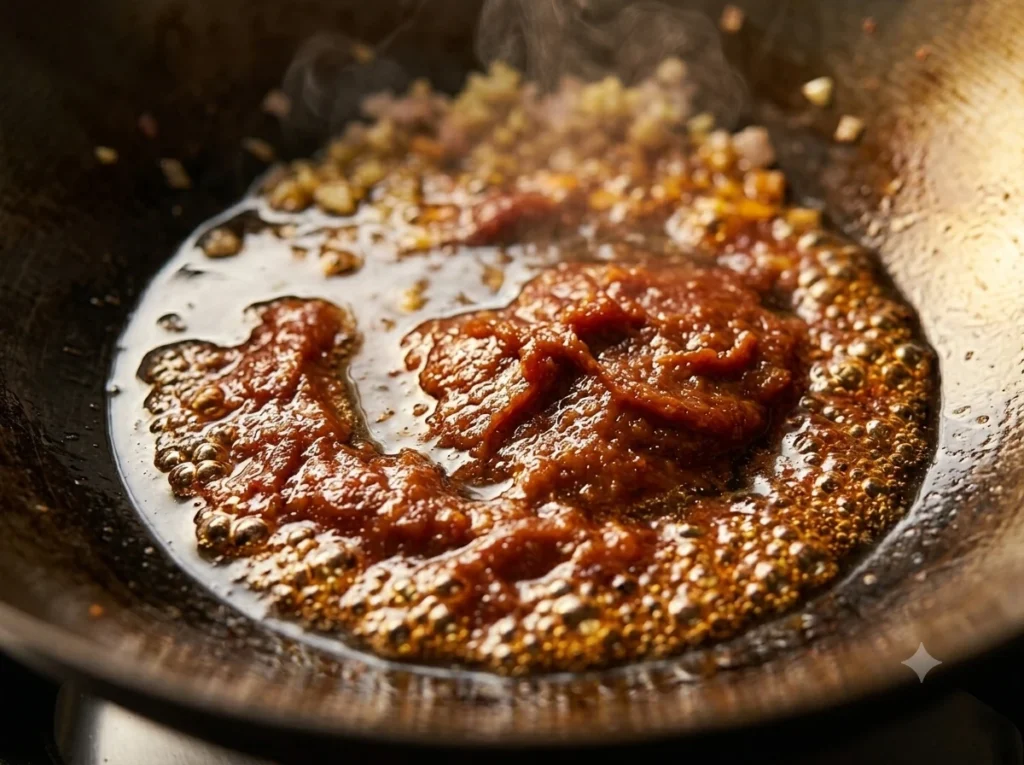
How tomato paste caramelizes. Tomato paste is rich in natural sugars and glutamates. Cooked in hot oil rather than simply stirred in raw, those sugars begin to caramelize, deepening in color from a bright red to a darker, richer red-orange while the paste’s raw, sharp acidity mellows into something rounder and more savory.
Why cooking in batches improves texture. Just as with any stir-fry, adding too much rice to the pan at once drops its temperature and traps steam, undoing the drying effect a hot pan is supposed to provide. Cooking rice in smaller batches, or using an appropriately sized pan for the amount of rice, keeps the temperature high enough throughout cooking to maintain that separate, fluffy texture.
Choosing the Best Rice
| Rice Type | Texture | Moisture | Best Choice? |
|---|---|---|---|
| Jasmine Rice | Light, fragrant, slightly sticky when fresh | Moderate | Best traditional choice |
| Medium-Grain Rice | Softer, stickier | Higher | Less ideal; clumps more easily |
| Long-Grain Rice | Firm, separates easily | Lower | Good alternative to jasmine |
| Fresh Rice (same day) | Soft, high moisture | High | Not recommended without extra drying steps |
| Day-Old Rice | Firm, dry surface | Low | Essential for best texture, any rice type |
| Brown Rice | Chewy, nutty | Moderate | Workable but changes the dish’s character significantly |
Jasmine rice is the traditional and most common choice for Vietnamese Red Fried Rice, valued for its fragrance and light texture once fried properly. Long-grain rice is a solid alternative if jasmine is unavailable, since it naturally holds less moisture and separates well even without as much advance planning.
Medium-grain rice is workable but requires extra care, since its higher starch content makes it more prone to clumping if not sufficiently dried out first. Fresh, same-day rice is the one option I would steer beginners away from entirely; without the overnight rest that dries out the grains, it tends to clump and turn gummy no matter how hot your pan is.
Day-old rice, regardless of which variety you start with, is genuinely the most important factor here, more important than the type of rice itself. Brown rice can be used for a heartier, nuttier version of the dish, though its chewier texture and more assertive flavor shift the final result further from a traditional Cơm Chiên Đỏ.
Ingredients Explained
| Ingredient | Role in the Dish |
|---|---|
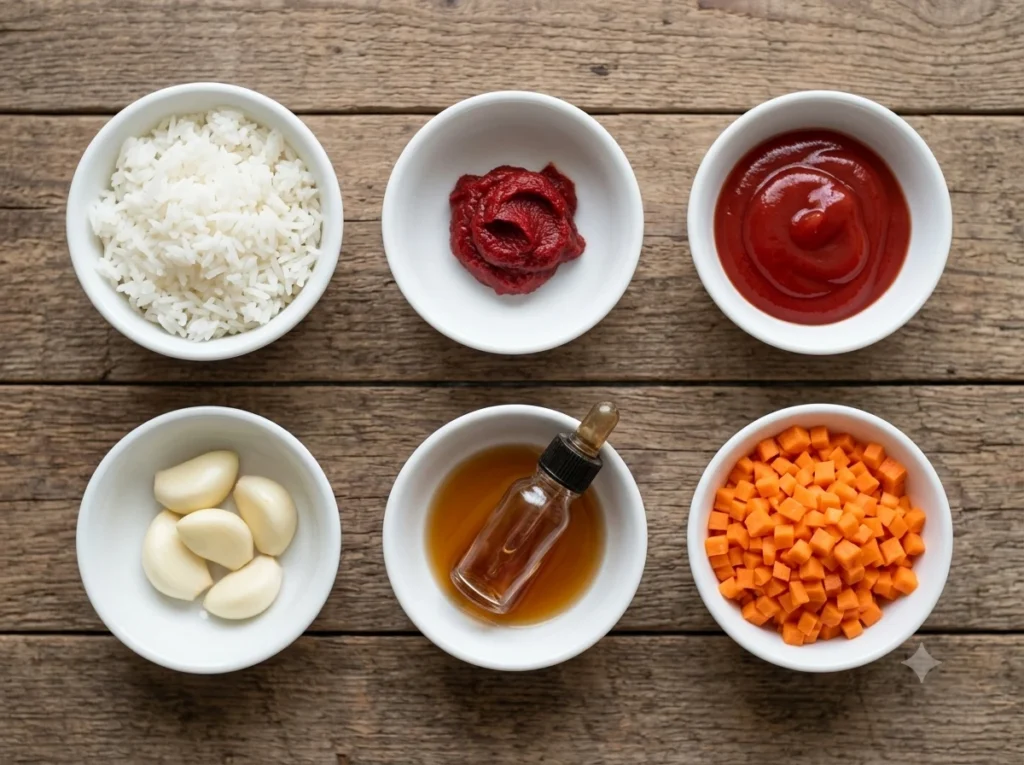
| Cooked jasmine rice (day-old) | The base of the dish; dry, separate grains are essential |
| Garlic | Primary aromatic, cooked before the tomato paste |
| Shallots | Adds sweetness and depth alongside garlic |
| Tomato paste | Builds the signature red color and deep, caramelized flavor |
| Ketchup | Adds sweetness and rounds out the tomato paste’s acidity |
| Eggs | Adds richness and a soft textural contrast |
| Carrots | Sweetness, color, and gentle crunch |
| Green peas | Pops of sweetness and color throughout the rice |
| Scallions | Fresh, sharp finishing element |
| Soy sauce | Adds salt and background umami |
| Fish sauce | Deeper savory backbone, distinctly Vietnamese |
| White pepper | Warm, subtle heat |
| Sesame oil | Nutty aroma, added at the very end |
| Neutral cooking oil | High smoke point oil for proper searing |
| Butter (optional) | Adds richness and a slightly rounder flavor |
| Shrimp (optional) | Adds seafood flavor and protein |
| Chinese sausage (optional) | Adds smoky, slightly sweet depth |
| Chicken (optional) | Adds protein for a full-meal version |
Tomato paste and ketchup work together rather than as substitutes for one another. Tomato paste provides concentrated flavor and the deep base color once caramelized, while ketchup adds a touch more sweetness and rounds out any sharpness left from the tomato paste alone. Using only ketchup tends to produce a sweeter, less complex result, while using only tomato paste can taste slightly more acidic without ketchup’s sugar to balance it.
Fish sauce is what keeps this dish distinctly Vietnamese rather than tasting like a generic tomato fried rice. It adds a savory depth that soy sauce alone does not provide, though it should be used in moderation here, since the dish is meant to taste tomato-forward rather than fish-sauce-forward.
Garlic and shallots should be cooked before the tomato paste goes into the pan, giving them a chance to turn fragrant without burning underneath a coating of thick tomato paste later. White pepper, rather than black pepper, is the traditional choice in most Vietnamese cooking, offering a warmer, slightly different heat.
Sesame oil belongs at the very end, off heat if possible, since its aroma is delicate and easily lost or turned bitter under sustained high heat.
The Secret to the Signature Red Color
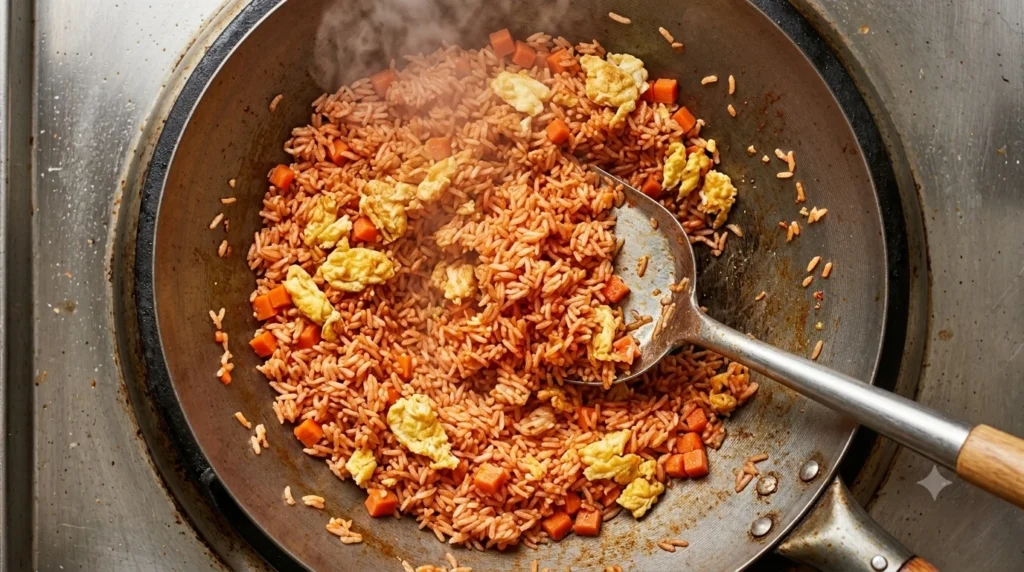
Tomato paste is doing most of the visual work in this dish. Unlike fresh tomatoes, which carry a lot of water weight and would make the rice soggy, tomato paste is concentrated, and cooking it briefly in hot oil deepens its color from a bright red toward a richer, slightly darker red-orange while also mellowing its raw acidity.
Ketchup contributes a lighter sweetness and a touch more brightness to the color, and many home versions combine both ketchup and tomato paste specifically to balance sweetness against the tomato paste’s more concentrated, slightly tangy depth.
Caramelization is the technical process behind the color shift you are watching happen in the pan. As tomato paste cooks in oil over medium-high heat, its natural sugars begin to brown slightly, the same basic chemistry behind caramelizing onions or reducing a sauce, deepening both color and flavor at the same time.
Balancing sweetness and acidity matters more than most home cooks realize. Too much tomato paste without enough ketchup, garlic, or fish sauce to round it out can leave the dish tasting sharp rather than warm and savory. A small pinch of sugar can help if your tomato paste runs particularly acidic.
Restaurants achieve this vibrant color without any artificial food coloring by using a generous, confident amount of tomato paste, cooked properly rather than added at the last minute. Some also use a touch of achiote or paprika for extra depth, though this is a modern addition rather than a traditional requirement, and a well-executed tomato paste and ketchup base is entirely sufficient on its own.
Step-by-Step Technique
1. Prepare the rice (ahead of time)
Use rice cooked and refrigerated at least several hours earlier, ideally overnight. Break apart any large clumps with your hands or a fork before cooking.
2. Prepare the vegetables (5 minutes)
Dice carrots small so they cook quickly and evenly. Have peas, minced garlic, and sliced shallots ready before you turn on the heat.
3. Cook the eggs (1 minute)
Heat a small amount of oil in a hot wok or skillet. Add beaten eggs and scramble quickly into loose curds. Remove to a plate.
4. Bloom the tomato paste (1-2 minutes)
Add a bit more oil, then garlic and shallots, cooking until fragrant. Add tomato paste and ketchup, stirring constantly as the color deepens and the raw tomato smell mellows.
5. Add seasonings (30 seconds)
Stir in soy sauce, fish sauce, and white pepper, letting them combine fully with the tomato mixture.
6. Stir-fry the rice (3-4 minutes)
Add the day-old rice, breaking up any remaining clumps as you go. Toss continuously so the tomato mixture coats every grain evenly, rather than pooling in one section of the pan.
7. Add the vegetables (1-2 minutes)
Add carrots and peas, tossing until the carrots soften slightly and the peas warm through.
8. Final seasoning (30 seconds)
Return the scrambled eggs to the pan, tossing to combine. Taste and adjust with more soy sauce, fish sauce, or a pinch of sugar as needed.
9. Add scallions
Stir in most of the scallions, reserving a small amount for garnish. Drizzle sesame oil over the top and give one last toss.
10. Serve immediately
Plate right away, topped with the reserved scallions. Fried rice loses its texture the longer it sits, so serve it hot.
Equipment Needed
- Carbon steel wok: Retains and distributes high heat evenly, ideal for keeping the rice moving and drying properly.
- Large skillet: A solid substitute if a wok is not available; cast iron or stainless steel works well.
- Wok spatula: Its shape makes tossing rice far easier than a standard spoon, helping distribute the tomato mixture evenly.
- Chef’s knife: For dicing carrots and mincing garlic and shallots.
- Mixing bowls: For holding prepped vegetables and beaten eggs before cooking starts.
- Rice paddle: Useful for breaking apart clumps of cold rice before it goes into the wok.
Common Mistakes
1. Using freshly cooked, warm rice. Fresh rice holds too much moisture and clumps together instead of frying up separate and light. Use rice that has rested in the refrigerator for several hours or overnight.
2. Not breaking apart clumps before cooking. Cold rice often forms dense clumps in the refrigerator. Break these apart by hand before adding rice to the wok.
3. Overcrowding the pan. Too much rice at once drops the pan’s temperature and traps steam, leading to soggy rather than fried rice. Cook in batches if needed.
4. Using a pan that is not hot enough. A lukewarm pan cannot evaporate the rice’s surface moisture quickly enough. Preheat longer than feels necessary.
5. Adding tomato paste directly without cooking it first. Raw tomato paste tastes sharp and one-dimensional. Cook it in oil until the color deepens and the raw acidity mellows.
6. Using only ketchup without any tomato paste. This produces a sweeter, thinner-tasting result that lacks the deeper, more caramelized flavor tomato paste provides.
7. Adding too much fish sauce. This dish is meant to taste tomato-forward, not fish-sauce-forward. Use it in moderation to add depth, not to dominate the dish.
8. Overcooking the eggs before adding them back to the rice. Eggs continue cooking once returned to the hot pan. Scramble them just until barely set, then set aside.
9. Adding vegetables too early. Carrots and peas added at the same time as the rice can turn mushy by the time everything finishes cooking. Add them after the rice has already started frying.
10. Not tasting and adjusting seasoning before serving. Every batch of rice and every brand of tomato paste varies slightly in sweetness and acidity.
11. Using too much oil. Excess oil makes the finished rice greasy rather than light and separate. A modest amount, enough to coat the pan, is sufficient.
12. Letting the finished dish sit before serving. Fried rice continues to soften with residual steam the longer it sits in the pan or on the plate.
13. Adding sesame oil too early in the cooking process. High heat can burn off its aroma and turn it slightly bitter. Add it at the very end, off heat if possible.
14. Skipping the day-old rice step entirely for convenience. This is the single most common reason home versions of this dish turn out mushy rather than fluffy.
15. Reheating leftovers in a way that adds more moisture than necessary. Covering the dish tightly while reheating traps steam and softens the rice further than needed.
Pro Chef Tips
- Cook rice at least several hours, ideally the night before, and refrigerate uncovered briefly to let excess steam escape before sealing.
- Break apart cold rice clumps by hand for the most even texture once it hits the wok.
- Cook tomato paste in oil until its color visibly deepens before adding any other liquid ingredients.
- Use both tomato paste and ketchup for the most balanced sweetness and depth.
- Preheat your wok or skillet longer than feels necessary; a properly hot pan is essential here.
- Scramble eggs separately and set them aside, adding them back only near the end.
- Dice carrots small so they cook through in the same short window as the rest of the dish.
- Add fish sauce in small amounts, tasting as you go, since its saltiness varies by brand.
- Keep the rice moving constantly once it hits the pan to prevent any one section from overcooking or sticking.
- Use a rice paddle or spatula with a flat edge for the best control when tossing rice.
- Add a small pinch of sugar if your tomato paste tastes overly acidic.
- Add sesame oil at the very end, off heat, to preserve its aroma.
- Cook rice in smaller batches rather than crowding the pan, even if it takes two rounds.
- If using shrimp, cook it separately first and add it back near the end to avoid overcooking.
- Add Chinese sausage, if using, early alongside the garlic so its fat renders into the dish.
- Use day-old rice regardless of which variety you choose; it matters more than the rice type itself.
- Reserve a portion of scallions for garnish, adding the rest during cooking for even flavor distribution.
- Taste the dish at two points: right after the tomato mixture is built, and again just before serving.
- A small pat of butter stirred in at the end can add a subtle richness some Vietnamese households favor.
- Serve immediately; this dish does not hold its texture well once plated and left to sit.
Delicious Variations
Chicken Red Fried Rice Add diced, cooked chicken thigh along with the vegetables for a heartier, protein-forward version suited to a full meal.
Shrimp Red Fried Rice Add peeled, deveined shrimp, cooked separately and folded in near the end, echoing a classic combination seen in many Vietnamese and Chinese restaurant kitchens.
Seafood Fried Rice Combine shrimp with squid or crab meat for a more elaborate, restaurant-style version built for special occasions.
Vegetarian Version Skip any meat entirely and add extra vegetables like corn, bell pepper, or mushrooms, using soy sauce alone in place of fish sauce.
Spicy Version Add sliced fresh chili or a spoonful of chili garlic sauce alongside the tomato paste for a version with real heat behind the tomato sweetness.
Pineapple Fried Rice Fold in small pieces of fresh pineapple near the end of cooking for a sweet, tangy twist that pairs particularly well with shrimp.
Extra Garlic Version Double the garlic and add a few crispy fried garlic chips as a garnish for those who want the aromatic base to lead the dish even more.
Low-Sodium Version Reduce soy sauce and fish sauce, leaning more on tomato paste, ketchup, and fresh aromatics like garlic and shallots to carry the flavor instead.
Storage & Reheating
Vietnamese Red Fried Rice keeps in the refrigerator for up to four days in an airtight container. Let it cool to room temperature within an hour of cooking before sealing, to avoid trapping excess steam that can soften the rice further in storage.
Freezing works reasonably well for up to two months, though the texture will soften somewhat compared to fresh. Freeze in a flat, sealed container so it thaws quickly and evenly, and thaw overnight in the refrigerator rather than at room temperature.
To restore fluffy texture when reheating, use a hot skillet or wok with a small splash of oil rather than a microwave alone, tossing frequently until heated through. If using a microwave, cover loosely and add a small splash of water first, since dry, direct microwaving tends to toughen rather than refresh the grains.
As with any dish containing eggs or optional meat and seafood, reheat leftovers to an internal temperature of 165°F, and do not leave the finished dish out at room temperature for more than two hours.
What to Serve with Vietnamese Red Fried Rice
Grilled pork chops, marinated in a classic Vietnamese lemongrass and fish sauce marinade, are one of the most common pairings for this dish, the charred, smoky flavor balancing nicely against the rice’s sweetness.
Vietnamese Caramel Ginger Chicken, with its own rich, savory-sweet sauce, complements the tomato notes in the rice without the two dishes competing for attention.
Lemongrass chicken, bright and aromatic, offers a lighter pairing than heavier braised dishes.
Grilled shrimp, simply seasoned, echoes the dish’s own optional shrimp variation and makes a natural side if you kept the rice itself vegetarian.
A fried egg on top turns this side dish into a simple, satisfying meal on its own, a common way many Vietnamese households eat it for a quick lunch.
Pickled vegetables and a fresh cucumber salad both bring acidity and crunch that balance the rice’s richness.
Vietnamese spring rolls make a light, crisp starter that rounds out the meal without overwhelming the main dish.
For drinks, jasmine tea is the classic, everyday pairing. Iced Vietnamese coffee, strong and slightly sweet, is a distinctly Vietnamese pairing for a heartier meal. Sparkling water with lime offers something lighter, and for those who prefer wine or beer, a dry Riesling or a light lager both pair comfortably with the dish’s sweet, savory profile.
Frequently Asked Questions
Can I use freshly cooked rice instead of day-old rice? It is not recommended. Fresh rice holds too much moisture and tends to clump and turn mushy when stir-fried. If you must use fresh rice, spread it on a baking sheet to cool and dry out for at least an hour first.
Can I use brown rice instead of jasmine rice? Yes, though it changes the dish’s character. Brown rice has a chewier texture and nuttier flavor, shifting the final result away from a traditional Cơm Chiên Đỏ, but it still works with the same technique.
Why is my fried rice mushy? This usually comes from using rice that is too fresh and moist, overcrowding the pan, or cooking over heat that is not hot enough to evaporate surface moisture quickly. Address all three for the best texture.
Can I make Vietnamese Red Fried Rice vegetarian? Yes. Skip any meat or seafood, use soy sauce in place of fish sauce, and add extra vegetables like corn, bell pepper, or mushrooms for substance.
Can I freeze Vietnamese Red Fried Rice? Yes, for up to two months in a sealed, freezer-safe container. The texture softens somewhat after thawing, so reheating in a hot pan rather than a microwave helps restore some fluffiness.
Can I use ketchup only, without tomato paste? You can, but the result will taste sweeter and less complex, missing the deeper, caramelized flavor tomato paste provides once properly cooked in oil.
How do restaurants get a smoky flavor in their fried rice? Much of that smoky character comes from wok hei, the effect of ingredients briefly touching an extremely hot wok surface, along with quick flare-ups from oil and juices meeting high heat, something a very hot home stove and pan can approximate with practice.
Can I cook this dish without a wok? Yes. A large, heavy skillet, ideally cast iron or stainless steel, works as a substitute. Use high heat and cook in batches to avoid overcrowding.
Is Vietnamese Red Fried Rice spicy? Traditionally, no. The dish is sweet and savory from the tomato paste and ketchup, without built-in heat. Spice can be added easily with fresh chili or chili garlic sauce if desired.
Can I add shrimp and chicken together? Yes, this combination works well for a heartier, protein-forward version. Cook each protein separately and combine them with the rice near the end to avoid overcooking either one.
What gives this dish its red color if not food coloring? The color comes from tomato paste, and often ketchup, cooked in oil until the natural sugars caramelize and deepen in color, a real chemical process rather than an artificial additive.
Can I make this dish ahead of time for a gathering? The rice and vegetables can be prepped ahead, but the actual stir-frying is best done close to serving time, since fried rice loses its ideal texture the longer it sits after cooking.
Why does my tomato flavor taste flat instead of rich? This usually means the tomato paste was added without being cooked first in oil. Bloom it properly until its color deepens and its raw acidity mellows before adding the rice.
Is this dish gluten-free? It can be, as long as you confirm your soy sauce and any oyster sauce substitutes are labeled gluten-free, since some brands include wheat. Fish sauce and tomato paste are typically gluten-free on their own.
What is the ideal ratio of tomato paste to ketchup? A common home ratio is about two parts tomato paste to one part ketchup, though this can be adjusted to taste depending on how sweet or tangy you prefer the final dish.
Recipe Card
Vietnamese Red Fried Rice (Cơm Chiên Đỏ)
| Detail | Info |
|---|---|
| Prep Time | 10 minutes (plus overnight rice rest) |
| Cook Time | 15 minutes |
| Total Time | 25 minutes (excluding rice rest) |
| Servings | 4 |
| Cuisine | Vietnamese |
| Course | Side Dish or Main Dish |
| Calories (estimated) | 340 per serving |
Ingredients
- 4 cups cooked jasmine rice, refrigerated overnight
- 3 tablespoons neutral cooking oil, divided
- 3 cloves garlic, minced
- 1 shallot, minced
- 3 tablespoons tomato paste
- 1 tablespoon ketchup
- 2 large eggs, beaten
- 1/2 cup carrots, small diced
- 1/2 cup green peas
- 2 tablespoons soy sauce
- 1 tablespoon fish sauce
- 1/4 teaspoon white pepper
- 1 teaspoon sesame oil
- 3 scallions, sliced
- Salt, to taste
Instructions
- Break apart any clumps in the cold, day-old rice using your hands or a fork.
- Heat 1 tablespoon oil in a wok or large skillet over high heat. Add beaten eggs and scramble quickly. Remove to a plate.
- Add remaining oil. Add garlic and shallot, cooking until fragrant, about 1 minute.
- Add tomato paste and ketchup. Cook, stirring constantly, for 1-2 minutes, until the color deepens and the raw tomato smell mellows.
- Stir in soy sauce, fish sauce, and white pepper.
- Add the cold rice, tossing continuously to coat every grain evenly and break up any remaining clumps. Cook for 3-4 minutes.
- Add carrots and peas, tossing for another 1-2 minutes, until carrots soften slightly.
- Return the scrambled eggs to the pan. Toss to combine. Taste and adjust seasoning with more soy sauce, fish sauce, or a pinch of sugar if needed.
- Stir in most of the scallions, reserving a small amount for garnish. Drizzle with sesame oil and give one final toss.
- Serve immediately, topped with reserved scallions.
Chef Notes Day-old rice is essential for the best texture. Cook the tomato paste fully before adding the rice for the deepest color and flavor.
Storage Notes Refrigerate in an airtight container for up to 4 days, or freeze for up to 2 months. Reheat in a hot skillet with a splash of oil for the best texture.
Nutrition Disclaimer Calorie and nutrition estimates are approximate and will vary based on specific ingredients, optional proteins, and portion size used.
Conclusion
Vietnamese Red Fried Rice takes a handful of pantry staples, tomato paste, garlic, day-old rice, and turns them into something that looks far more festive than the ingredient list suggests. The technique behind it is not complicated. Use rice that has had time to dry out overnight, cook the tomato paste properly until its color and flavor deepen, and keep everything moving in a hot pan.
Once you have made it a few times, you will find your own balance of tomato paste to ketchup, your own preference for how much fish sauce to add, and probably your own favorite protein to fold in. That is exactly how this dish has lived in Vietnamese kitchens for generations: practical, adaptable, and reliably good, no matter what else is happening on the rest of the table.