Classic Fish with White Wine Sauce – Easy French Recipe
Table of Contents
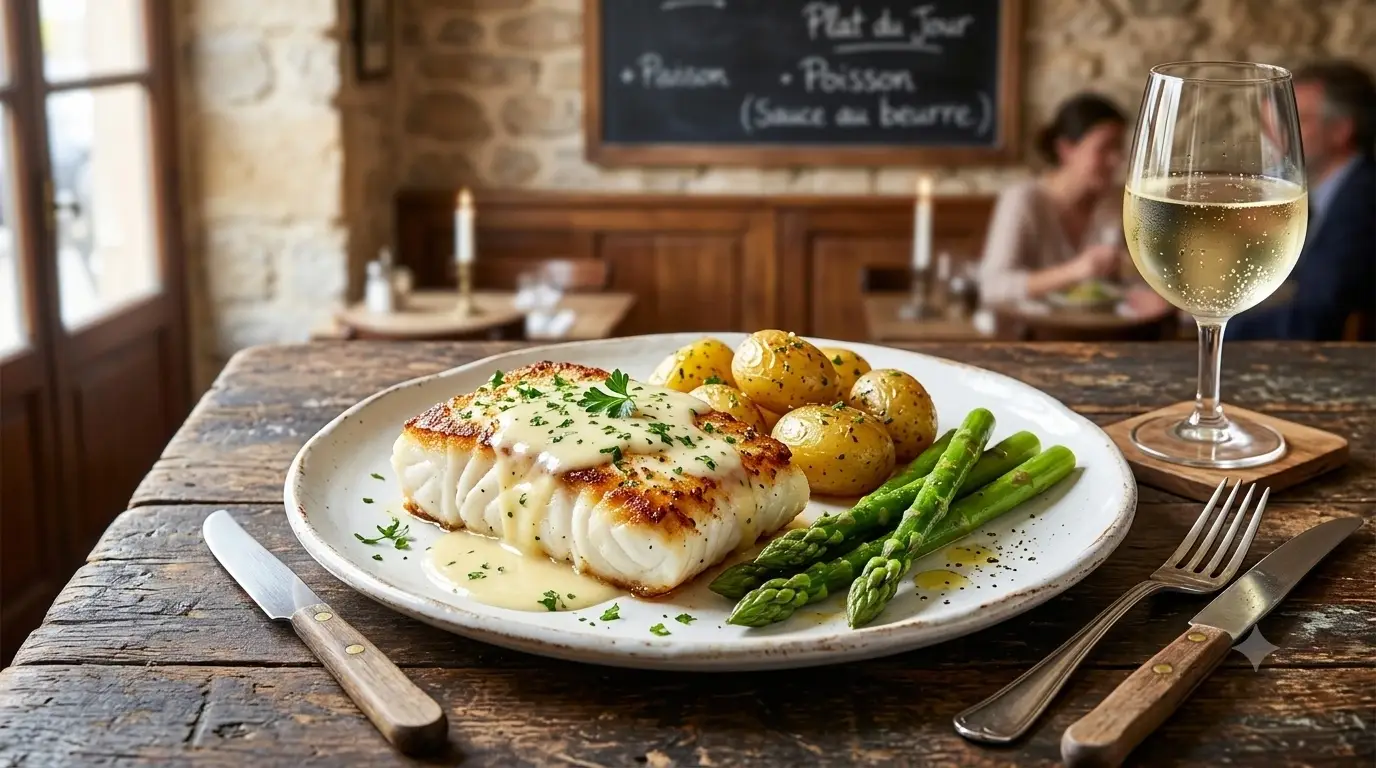
There’s a particular sound a good fillet makes when it hits a hot, buttered pan — a sharp sizzle that settles almost immediately into something quieter. That’s the moment Fish with White Wine Sauce starts to come together, and from there it moves fast. Ten minutes later, you’ve got a fillet with a lightly golden crust, sitting under a glossy, pale sauce that tastes like butter, wine, and shallot all at once, with nothing pulling too hard in any direction.
This dish has a reputation for being restaurant-only, the kind of thing you order rather than cook. That reputation isn’t earned. Fish with White Wine Sauce is genuinely one of the more forgiving French classics once you understand the two things it depends on: not overcooking delicate fish, and building a sauce that stays emulsified instead of breaking or turning greasy. Neither takes more than a little attention.
This guide walks through the whole dish — which fish actually work best, which wine to reach for, the science behind why the sauce comes together (or doesn’t), and the exact technique for getting both right at the same time. By the end, you’ll be able to put together a genuinely elegant dinner on a weeknight, start to finish, in well under an hour.
Table of Contents
- What Is Fish with White Wine Sauce?
- The History of Fish with White Wine Sauce
- Why This Dish Is So Special
- The Science Behind Perfect Fish and White Wine Sauce
- Choosing the Best Fish
- Choosing the Best White Wine
- Ingredients Explained
- Step-by-Step Technique
- Building the Perfect White Wine Sauce
- Equipment Needed
- Common Mistakes
- Pro Chef Tips
- Delicious Variations
- Storage & Reheating
- What to Serve with Fish with White Wine Sauce
- Frequently Asked Questions
- Recipe Card
- Conclusion
What Is Fish with White Wine Sauce?
Fish with White Wine Sauce is a pan-seared or lightly poached white fish fillet, served under a silky sauce built from a reduction of white wine, shallots, and butter, often finished with a splash of cream and fresh herbs. It’s a staple of French coastal and bistro cooking, a dish that shows up equally at a simple neighborhood restaurant and a much more polished one.
Part of what’s made it endure is how directly it lets the fish speak. Delicate white fish doesn’t need a heavy sauce or aggressive seasoning; it needs something bright enough to lift its flavor and rich enough to feel indulgent, without covering it up entirely. A properly made white wine sauce does exactly that.
This is also one of the more versatile French seafood preparations. The same base sauce technique works across a wide range of fish and can be adjusted toward richer (with cream) or lighter (without) depending on the occasion, which is a large part of why it’s remained a go-to on so many French menus for so long.
The History of Fish with White Wine Sauce
French coastal cooking, particularly along the coastlines of Normandy and Brittany, has long centered on quick, simple preparations that let fresh, local seafood be the focus rather than the technique. Both regions have strong culinary traditions built around what came off the boats that morning, and white wine, shallots, and butter were staples readily on hand in coastal kitchens.
Classical French sauce-making gave this tradition its formal structure. Beurre blanc, a butter-and-wine emulsion sauce, developed in the Loire Valley region and became one of the defining French sauces for fish, prized for its silky texture and the way it lets a delicate protein shine rather than competing with it.
From there, French chefs adapted and simplified the technique into the kind of quick pan sauce home cooks and neighborhood bistros could realistically make on a nightly basis: sear the fish, build a fast reduction in the same pan, and finish it with butter. That practical, repeatable approach is exactly what turned Fish with White Wine Sauce from a formal restaurant preparation into an everyday French classic.
Why This Dish Is So Special
Tender, flaky fish. Properly cooked white fish should separate easily into moist flakes, offering almost no resistance to a fork.
Bright acidity from white wine. Wine reduced in the sauce carries real acidity that keeps the whole dish from tasting flat or overly rich.
Rich, buttery finish. Butter whisked into the reduction gives the sauce body and a glossy sheen, without needing anything heavier.
Fresh herbs. Parsley, chives, or dill added at the end bring a clean, fresh note that keeps the finished dish tasting light rather than heavy.
Balanced flavors. Nothing in this sauce is meant to overpower delicate seafood; the whole point is a supporting cast of flavors that lifts the fish rather than competing with it.
Restaurant-quality results with simple ingredients. Fish, wine, shallot, butter, and herbs. That’s essentially the whole list, and yet the finished dish looks and tastes like something considerably more involved than it actually is.
The Science Behind Perfect Fish and White Wine Sauce
Understanding what’s happening in the pan on both sides of this dish makes a real difference in the final result.
Why fish cooks quickly. Fish muscle fiber is shorter and has far less connective tissue than red meat, which is why it cooks through in minutes rather than hours and why it’s so easy to overcook without realizing it.
Internal temperature and doneness. Most white fish is properly cooked at an internal temperature of about 130 to 135°F (54–57°C), where the flesh turns opaque and flakes easily but still holds moisture. Cooking beyond that range quickly dries the fish out.
Protein coagulation. As fish proteins heat, they firm up and turn from translucent to opaque. This happens fast and is largely irreversible, which is why fish needs closer attention than heartier proteins.
Moisture retention. Because fish has so little connective tissue to protect it, moisture loss happens quickly once it’s overcooked, leaving the texture dry and chalky instead of moist and flaky.
Wine reduction. Simmering wine down concentrates its flavor while cooking off much of its alcohol, leaving behind the acidity and aromatic depth that give the sauce its character without a raw, sharp alcohol bite.
Butter emulsification. Whisking cold or cool butter into a hot reduction, a little at a time, creates a stable emulsion where tiny fat droplets suspend evenly through the liquid, giving the sauce its silky, cohesive texture.
Why the sauce should never boil after adding butter. Once butter is whisked in, high heat can cause the emulsion to break, separating the fat back out and leaving a greasy, thin sauce instead of a glossy one. The sauce needs gentle, low heat from this point forward.
How acidity balances richness. The wine’s acidity is what keeps a butter-based sauce from tasting flat or overly heavy, cutting through the richness so each bite still feels balanced rather than cloying.
Choosing the Best Fish
| Fish | Flavor | Texture | Thickness | Cooking Time | Best For |
|---|---|---|---|---|---|
| Cod | Mild, slightly sweet | Firm, large flakes | Thick | 8–10 min | Excellent beginner choice |
| Halibut | Mild, clean | Firm, meaty | Thick | 8–10 min | Great texture, holds up well |
| Sea bass | Mild, slightly buttery | Delicate, tender | Medium | 6–8 min | Elegant, restaurant-style result |
| Snapper | Mild, slightly sweet | Firm, moist | Medium | 6–8 min | Good flavor, widely available |
| Haddock | Mild, delicate | Soft, flaky | Medium | 6–8 min | Similar to cod, slightly softer |
| Sole | Very mild | Very delicate, thin | Thin | 3–4 min | Cooks fast, needs gentle handling |
| Flounder | Very mild | Delicate, thin | Thin | 3–4 min | Similar to sole |
| Tilapia | Very mild | Soft, can be watery | Thin-medium | 5–6 min | Budget-friendly, less traditional |
| Mahi-mahi | Slightly sweet, more assertive | Firm, meaty | Thick | 8–10 min | Holds up well, slightly bolder flavor |
| Salmon (variation) | Rich, distinct | Firm, oily | Thick | 8–10 min | Works well but shifts the dish’s character |
For beginners, cod and halibut are the most forgiving choices, since their thickness and firm texture make them harder to overcook by accident. Sole and flounder produce a very elegant, classic result but cook fast enough that they demand close attention.
Fresh vs. frozen: High-quality frozen fish, properly thawed in the refrigerator, works very well for this dish and is often more consistent than “fresh” fish that’s actually been previously frozen and thawed at the store. Wild vs. farm-raised: Wild-caught fish generally has a firmer texture and more pronounced flavor, though farm-raised options like tilapia and some salmon are widely available and perfectly workable for this preparation.
For US grocery store shopping, look for fillets with a clean, ocean-fresh smell (never a strong “fishy” odor), firm flesh that springs back when pressed, and, if buying frozen, a well-sealed package free of ice crystals or freezer burn.
Choosing the Best White Wine
| Wine | Character | Works Well? |
|---|---|---|
| Sauvignon Blanc | Crisp, high acidity, citrusy | Excellent — classic choice |
| Pinot Grigio | Light, clean, mild | Good, slightly less complex |
| Unoaked Chardonnay | Balanced acidity, subtle fruit | Very good, avoid oaked versions |
| Muscadet | Very dry, mineral, high acidity | Excellent, traditional with seafood |
| Dry Vermouth | Herbal, aromatic, fortified | Good in a pinch, adds extra complexity |
Sauvignon Blanc and Muscadet are the most classic, reliable choices, both offering the bright acidity a good white wine sauce needs. Unoaked Chardonnay works well too, but an oaked, buttery Chardonnay can push the sauce toward tasting muddled rather than bright, so it’s best avoided here.
Wines to avoid: anything sweet, heavily oaked, or labeled specifically as “cooking wine,” which typically contains added salt and lower-quality grapes that flatten the sauce’s flavor.
Should cooking wine ever be used? No. Its added salt makes seasoning the finished sauce difficult to control, and its flavor is generally inferior to an actual drinking wine.
Affordable bottle recommendations: a solid, dry Sauvignon Blanc or Muscadet in the twelve to twenty dollar range works beautifully here. As with most sauce-making, a moderately priced, genuinely drinkable bottle serves the dish far better than an expensive one that won’t taste meaningfully different once reduced.
Ingredients Explained
White fish fillets are the centerpiece of the dish. Butter builds the emulsified sauce and adds richness. Olive oil, used alongside butter for searing, raises the smoke point and helps prevent the butter from burning. Shallots, finely minced, form the aromatic base of the sauce. Garlic adds depth without overpowering the delicate fish. Dry white wine provides the sauce’s acidity and aromatic backbone. Fish stock rounds out the sauce with savory depth beyond what wine alone provides. Heavy cream (optional) can be added for a richer, more Normandy-style version of the sauce. Fresh parsley, fresh chives, and fresh dill each bring a different herbal note; use one or a light combination depending on preference. Lemon juice, added at the end, brightens the finished sauce. Capers (optional) add a briny, salty pop that pairs especially well with a richer version of the sauce. Salt and white pepper season both the fish and the sauce; white pepper is traditionally preferred here since it doesn’t leave visible dark flecks in a pale sauce.
Step-by-Step Technique
1. Prepare the fish. Pat the fillets completely dry with paper towels. Moisture on the surface prevents proper browning.
2. Season. Season both sides with salt and white pepper.
3. Light flour coating (optional). A very light dusting of flour helps the fish brown more evenly and can lightly thicken the pan juices.
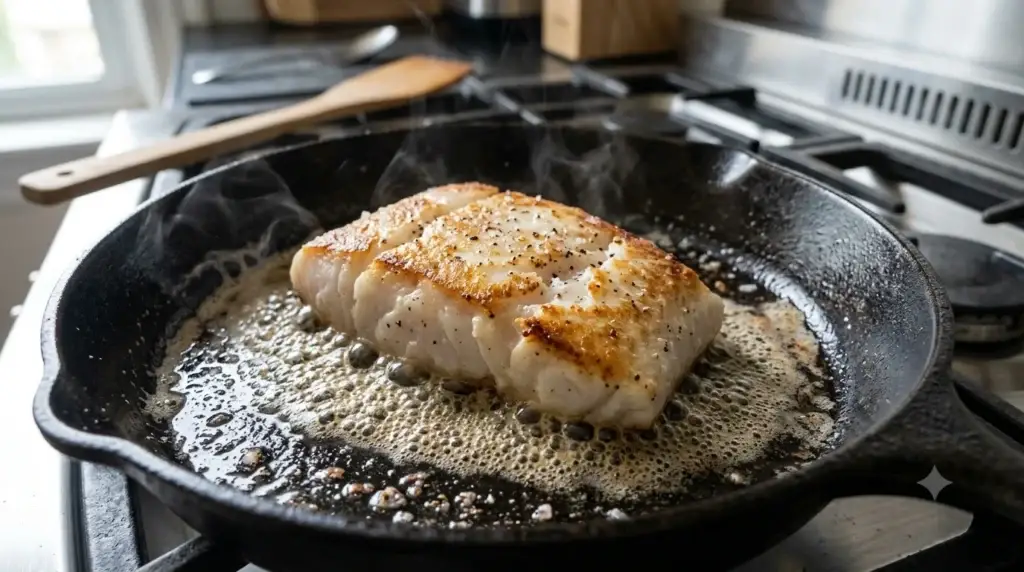
4. Pan-sear. Heat butter and olive oil in a large skillet over medium-high heat. Sear the fish for 3 to 4 minutes per side, depending on thickness, until golden and just cooked through.
5. Remove and rest the fish. Transfer the cooked fillets to a warm plate while you build the sauce in the same pan.
6. Make the wine reduction. In the same skillet, sauté the shallots and garlic briefly, then add the white wine, scraping up any browned bits. Simmer until reduced by about half.
7. Add stock. Pour in the fish stock and continue simmering to reduce further, concentrating the flavor.
8. Reduce the sauce. Keep reducing until the liquid has thickened slightly and coats the back of a spoon.
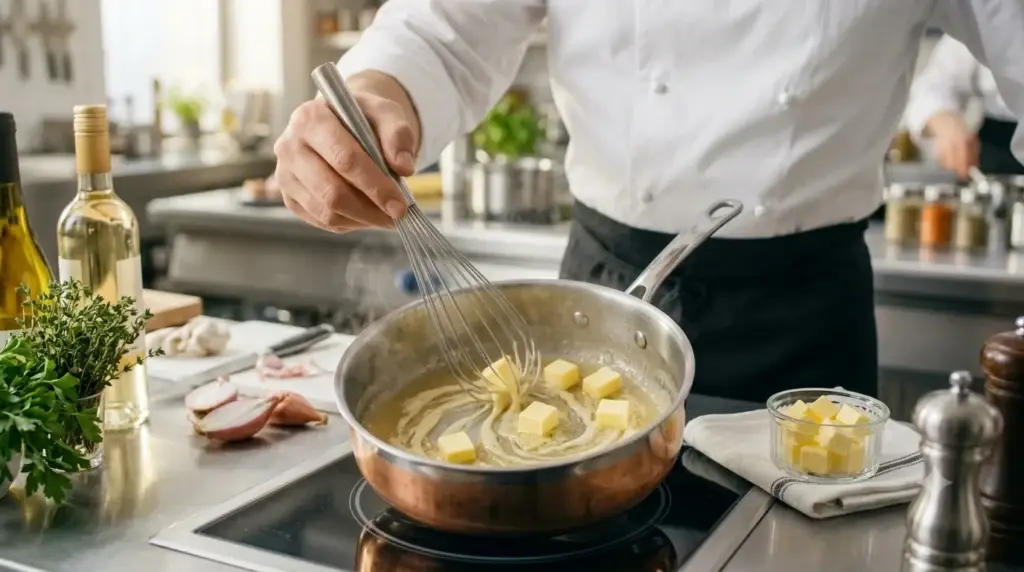
9. Whisk in butter. Remove the pan from direct heat and whisk in cold butter, a piece or two at a time, until the sauce turns glossy and emulsified.
10. Finish with herbs. Stir in fresh herbs and a squeeze of lemon juice, adjusting seasoning to taste.
11. Serve immediately. Spoon the sauce over the fish right away, while both are still warm.
Visual cues: the sauce should look pale, glossy, and slightly opaque, never oily or separated. Texture cues: fish should flake easily with a fork but still look moist inside, not chalky. Timing: total active cooking time for the fish itself is usually under 10 minutes, so have the sauce ingredients prepped and ready before you start searing.
Building the Perfect White Wine Sauce
Reduction is the foundation of the sauce’s flavor: wine and stock, simmered down, concentrate both acidity and savoriness into a much smaller volume of liquid.
Emulsification happens as cold butter is whisked into that hot reduction. The butter’s milk solids and the reduction’s remaining liquid work together to suspend tiny fat droplets evenly, creating a smooth, cohesive sauce rather than a separated, oily one.
Balancing acidity means tasting as you go. If the sauce tastes flat after the butter goes in, a small squeeze of fresh lemon juice usually brings it back into balance without needing more wine.
Adjusting consistency: if the sauce feels too thin, continue reducing gently before adding butter. If it’s too thick, a small splash of stock or wine can loosen it slightly.
How to rescue a broken sauce: if the butter-based sauce separates, remove it from the heat, add a tablespoon of cold water or cream to a clean pan, and slowly whisk the broken sauce back into it over very low heat, which often re-establishes the emulsion.
Beurre blanc vs. cream-based white wine sauce: classic beurre blanc relies entirely on butter for its richness and body, with no cream at all, producing a very light, glossy sauce. A cream-based version adds heavy cream to the reduction before the butter, producing a slightly thicker, more stable, and more forgiving sauce that’s a little harder to break, though it carries a noticeably richer flavor.
Equipment Needed
- Large skillet — for searing the fish and building the sauce in the same pan
- Fish spatula — thin and flexible, ideal for turning delicate fillets without breaking them
- Whisk — essential for building a smooth, emulsified sauce
- Saucepan — useful if building the sauce separately from the searing pan
- Fine mesh strainer — for straining out shallot and garlic if you want a perfectly smooth sauce
- Instant-read thermometer — helpful for confirming the fish has reached proper doneness without overcooking
- Microplane — useful for zesting lemon if adding extra citrus aroma to the finished dish
Common Mistakes
- Overcooking the fish. Leaves it dry and chalky instead of moist and flaky. Fix: pull it from the heat right around 130–135°F internal temperature.
- Not drying the fillets before searing. Prevents a proper golden crust from forming. Fix: pat thoroughly dry with paper towels first.
- Moving the fish too much while searing. Disrupts crust formation and can tear delicate fillets. Fix: let it sear undisturbed until it releases easily from the pan.
- Boiling the sauce after adding butter. Breaks the emulsion, leaving a greasy, separated sauce. Fix: keep the heat low once butter is whisked in.
- Adding butter too quickly. Doesn’t give it time to properly emulsify. Fix: add it gradually, a piece at a time, whisking constantly.
- Using low-quality cooking wine. Produces a flat, overly salty sauce. Fix: use a real, drinkable dry white wine.
- Skipping the reduction step. Leaves the sauce thin and underdeveloped in flavor. Fix: always reduce the wine and stock properly before adding butter.
- Using a delicate fish like sole without adjusting cook time. Thin fillets overcook in seconds if treated the same as a thick cod fillet. Fix: watch thinner fillets closely and reduce cook time accordingly.
- Not seasoning the sauce at the end. Can leave the finished dish tasting flat. Fix: taste and adjust salt, pepper, and acidity right before serving.
- Over-reducing the sauce. Can turn it overly thick or greasy once the butter is added. Fix: reduce just until the liquid coats the back of a spoon.
- Letting the fish sit too long before serving. Cools and continues to firm up past its ideal texture. Fix: serve promptly once cooked.
- Using cold fish straight from the refrigerator. Cooks unevenly compared to fish brought closer to room temperature first. Fix: let fillets sit out for about 10 minutes before cooking.
- Crowding the pan. Drops the pan’s temperature and steams the fish instead of searing it. Fix: cook in batches if needed.
- Skipping the resting step for the fish while building the sauce. Can lead to overcooked fish if left directly on residual heat. Fix: transfer it to a separate plate while finishing the sauce.
- Making the sauce too far in advance. A butter-based sauce doesn’t hold or reheat especially well. Fix: build it just before serving, ideally while the fish rests.
Pro Chef Tips
- Pat fish completely dry before it touches the pan for the best possible sear.
- Use a combination of butter and oil when searing to prevent the butter from burning.
- Let the fish release naturally from the pan rather than forcing it with a spatula too early.
- Reduce the wine and stock in the same pan you seared the fish in, to capture all the flavorful browned bits.
- Use cold butter, cut into small cubes, for the smoothest possible emulsion.
- Keep the sauce off direct high heat the moment butter goes in.
- Taste the reduction on its own before adding butter to check the acid balance.
- Add lemon juice at the very end, off the heat, to preserve its brightness.
- Use white pepper instead of black in the sauce to keep it visually clean and pale.
- Warm your serving plates slightly so the sauce doesn’t cool too quickly once plated.
- Have all sauce ingredients prepped before you start searing the fish, since timing moves fast.
- Use a fish spatula, not a standard spatula, for handling delicate fillets.
- If using a thicker fillet, finish cooking it gently in a low oven rather than risking a burnt exterior on the stovetop.
- Strain the sauce through a fine mesh strainer for an ultra-smooth, restaurant-style finish.
- Add a splash of cream if you want a more forgiving, less easily broken sauce.
- Keep fresh herbs whole until the last moment, then chop them just before adding to preserve their aroma.
- Don’t walk away from thin fillets like sole — they cook in a matter of minutes.
- Use a thermometer if you’re unsure about doneness rather than guessing by eye alone.
- Serve the sauce spooned over the fish rather than the fish placed on top of a pool of sauce, to keep the fish’s crust intact longer.
- Reserve a spoonful of the original reduction to whisk back in if the finished sauce needs a touch more brightness.
Delicious Variations
Normandy-style fish with cream: Add a generous splash of heavy cream to the reduction before finishing with butter, for a richer, more indulgent sauce closely associated with Normandy cooking.
Mushroom white wine sauce: Sauté sliced mushrooms with the shallots before deglazing, adding an earthy depth to the finished sauce.
Lemon beurre blanc: Emphasize lemon juice and zest in the finished sauce for a brighter, more citrus-forward result.
Garlic herb version: Increase the garlic and use a generous mix of fresh herbs for a more assertive, aromatic sauce.
Mediterranean variation: Add chopped tomatoes and capers to the sauce for a brighter, more acidic, herb-forward take.
Low-carb version: Skip the optional flour coating on the fish and serve with a low-carb side like steamed vegetables instead of potatoes or rice.
Gluten-free version: Simply omit the flour dusting on the fish, since the sauce itself contains no flour or thickeners.
Storage & Reheating
Refrigeration: Leftover fish and sauce can be refrigerated separately in airtight containers for up to 2 days. Freezing is not recommended, since both the delicate fish texture and the butter emulsion tend to break down and separate upon thawing. Best reheating methods: Gently reheat the fish in a low oven, around 275°F, just until warmed through, to avoid drying it out further. Reheat the sauce separately, very gently over low heat, whisking constantly, since it can break if reheated too quickly or at too high a temperature. Preserving delicate fish texture: Avoid microwaving, which tends to overcook fish unevenly and dry it out. Food safety: Refrigerate leftovers promptly within two hours of cooking, and reheat fish to an internal temperature of 145°F if food safety is a concern, understanding this will affect the final texture.
What to Serve with Fish with White Wine Sauce
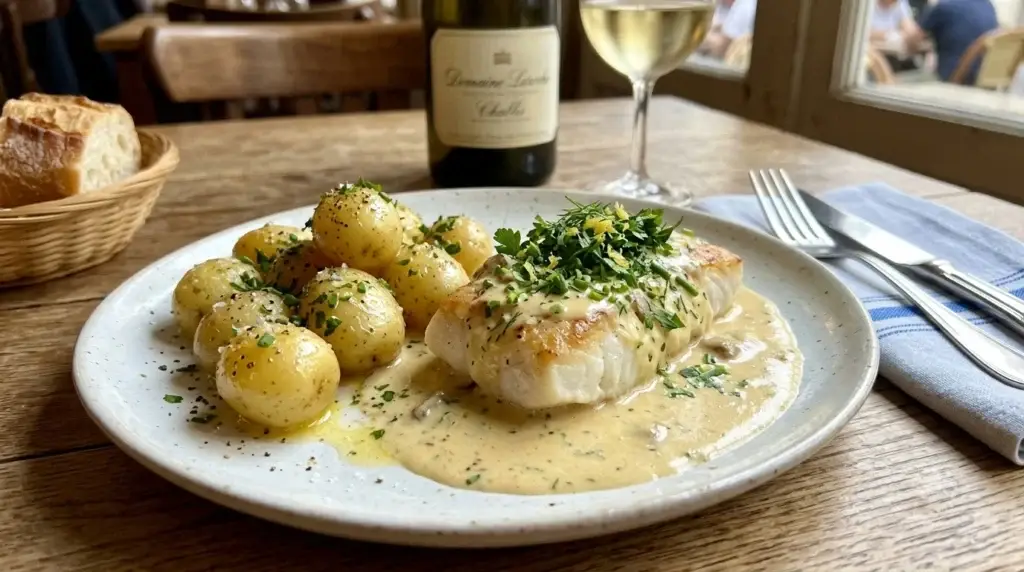
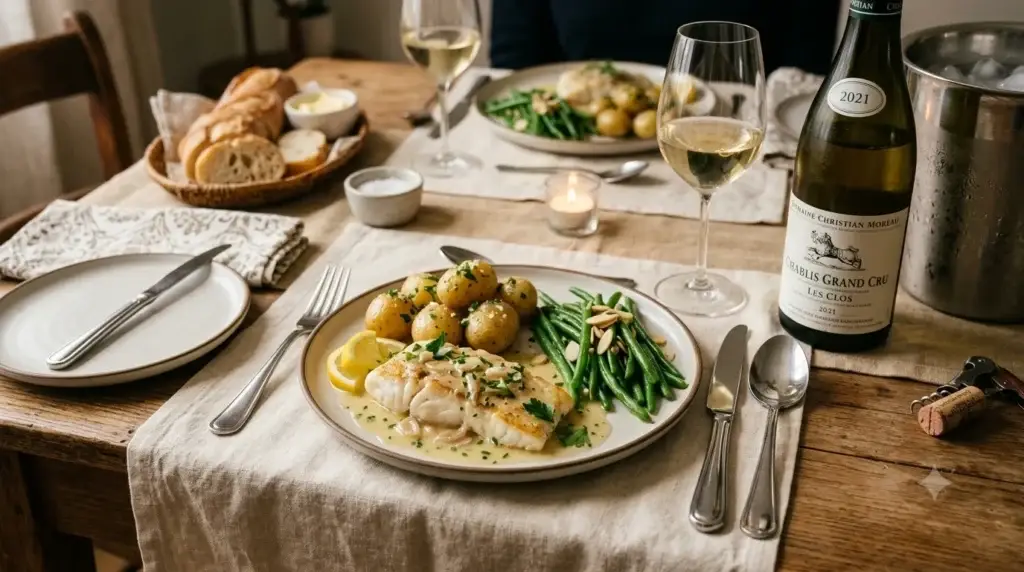
Classic pairings include pommes purée or buttered new potatoes, both of which soak up extra sauce beautifully. A simple rice pilaf offers a lighter alternative. Haricots verts or steamed asparagus bring a clean, slightly crisp counterpoint to the rich sauce, and roasted vegetables work well for a heartier dinner. A French baguette is always welcome for mopping up any leftover sauce, and a simple green salad with a light vinaigrette rounds out the meal nicely.
Wine pairings: Serve the same style of wine used in the sauce, whether that’s a crisp Sancerre, mineral-driven Chablis, bright Sauvignon Blanc, or clean unoaked Chardonnay. A glass of Champagne also makes an elegant, celebratory pairing for this dish.
Frequently Asked Questions
1. What is Fish with White Wine Sauce? It’s a pan-seared or lightly poached white fish fillet served with a silky sauce made from reduced white wine, shallots, and butter, often finished with fresh herbs.
2. Can I use frozen fish for this recipe? Yes, high-quality frozen fish, thawed properly in the refrigerator, works very well and is often more consistent than fish that was previously frozen and sold as “fresh.”
3. Can I substitute chicken stock for fish stock? Yes, in a pinch, though fish stock provides a more complementary, seafood-forward depth to the sauce.
4. Can I make the sauce ahead of time? It’s best made fresh, close to serving, since a butter-based sauce doesn’t hold or reheat especially well without some risk of breaking.
5. Why did my sauce separate? This usually happens when the sauce is boiled after the butter is added, or when butter is added too quickly. Keep the heat low and add butter gradually.
6. Can I use cream in the sauce? Yes, adding cream produces a richer, more stable, Normandy-style sauce that’s somewhat more forgiving than a pure butter emulsion.
7. Can I use salmon instead of a white fish? Yes, though salmon’s richer, oilier flavor shifts the character of the dish somewhat compared to a milder white fish.
8. Can I make this dish dairy-free? The classic butter emulsion relies on dairy, but a dairy-free butter alternative can be used with somewhat different results in texture and richness.
9. How do restaurants keep their fish so moist? Careful attention to internal temperature, not overcooking past 130–135°F, and serving immediately rather than letting the fish sit are the biggest factors.
10. What’s the difference between beurre blanc and this white wine sauce? Classic beurre blanc is a pure butter-and-wine emulsion with no stock or cream, while this style of sauce typically incorporates fish stock and sometimes cream for a slightly fuller flavor and body.
11. Can I use a thicker fish like salmon or halibut instead of a delicate one like sole? Yes, thicker fish is actually easier for beginners, since it’s more forgiving and harder to overcook by accident compared to very delicate, thin fillets.
12. Why is white pepper used instead of black pepper? White pepper seasons the pale sauce without leaving visible dark flecks, keeping the presentation clean, though black pepper can be used if appearance isn’t a concern.
13. Can I double the recipe for a dinner party? Yes, though it’s best to sear the fish in batches to avoid crowding the pan, and the sauce can typically be scaled up in one larger batch.
14. What’s the best way to reheat leftover fish without drying it out? Reheat gently in a low oven, around 275°F, rather than in a microwave, which tends to overcook and dry out delicate fish.
15. Is this dish gluten-free? Yes, as long as the optional flour dusting on the fish is omitted, since the sauce itself contains no flour or thickening agents.
Recipe Card
Classic Fish with White Wine Sauce
| Prep Time | 15 minutes |
| Cook Time | 20 minutes |
| Total Time | 35 minutes |
| Servings | 4 |
| Cuisine | French |
| Course | Main Dish |
| Calories (estimated) | 410 per serving |
Ingredients
- 4 white fish fillets (cod, halibut, or sea bass), about 6 oz each
- Salt and white pepper, to taste
- 2 tablespoons all-purpose flour (optional)
- 2 tablespoons butter, plus 4 tablespoons cold butter, cubed, for the sauce
- 1 tablespoon olive oil
- 2 shallots, finely minced
- 2 garlic cloves, minced
- 3/4 cup dry white wine (Sauvignon Blanc or Muscadet)
- 1/2 cup fish stock
- 2 tablespoons heavy cream (optional)
- 2 tablespoons fresh parsley or chives, chopped
- 1 teaspoon fresh lemon juice
- Capers, for garnish (optional)
Instructions
- Pat the fish fillets completely dry and season with salt and white pepper. Lightly dust with flour if using.
- Heat 2 tablespoons butter and the olive oil in a large skillet over medium-high heat. Sear the fillets for 3 to 4 minutes per side, until golden and just cooked through.
- Transfer the fish to a warm plate and tent loosely with foil.
- In the same skillet, sauté the shallots and garlic briefly until fragrant.
- Add the white wine, scraping up any browned bits, and simmer until reduced by about half.
- Add the fish stock and continue simmering until the liquid is reduced and slightly thickened.
- If using, stir in the heavy cream and simmer briefly.
- Remove the pan from direct heat and whisk in the cold, cubed butter a little at a time until the sauce is glossy and emulsified.
- Stir in the fresh herbs and lemon juice, and adjust seasoning to taste.
- Spoon the sauce over the fish immediately and garnish with capers if desired. Serve at once.
Chef Notes: Keep the sauce off direct high heat once the butter is added — gentle, low heat is what keeps it glossy and emulsified rather than greasy or broken.
Storage Notes: Refrigerate leftovers separately for up to 2 days; freezing is not recommended. Reheat gently, avoiding the microwave.
Nutrition Disclaimer: Calorie and nutrition estimates are approximate and will vary based on specific ingredients and portion sizes used.
Conclusion
Fish with White Wine Sauce rewards attention more than it demands skill. Dry the fish properly, don’t crowd the pan, and keep the heat gentle once the butter goes into the sauce, and you’ll have a dish that looks and tastes like it came straight from a coastal French bistro. It’s one of the few truly elegant dinners that comes together start to finish in well under an hour.
Make it once, get a feel for how quickly the fish cooks and how the sauce comes together, and you’ll find yourself reaching for this recipe again and again. That’s exactly why it’s stayed a fixture of French cooking for as long as it has.