
Bissara Moroccan Fava Bean Soup: An Easy Recipe
Bissara (Moroccan Fava Bean Soup)
Bissara Moroccan Fava Bean Soup turns a short list of pantry ingredients into a warming, satisfying meal. Dried split fava beans soften into a pale golden-green soup flavored with garlic, earthy cumin, gentle paprika, and fruity extra-virgin olive oil. The finished texture can be velvety and pourable or thick enough to scoop with bread.
You may also see the name written as Bessara or Bisarra. Spellings vary because the Arabic name is transliterated into English in different ways. The dish itself also varies: some cooks favor fava beans, some use split peas, and the consistency changes between regions and households.
This guide shows you how to choose the correct beans, simmer them until completely tender, and blend hot soup safely. You will also learn how to correct the consistency, store leftovers, and adapt the seasonings. The recipe uses water, so it remains vegan, but unsalted vegetable stock is an easy modern option.

Table of Contents
Quick Recipe Overview
| Detail | Information |
|---|---|
| Preparation time | 15 minutes |
| Optional soaking time | 2 hours |
| Cooking time | 1 hour 15 minutes |
| Total time | 1 hour 30 minutes, excluding optional soaking |
| Servings | 6 |
| Yield | About 8 cups |
| Cuisine | Moroccan |
| Course | Soup; main course |
| Difficulty | Easy |
| Cooking method | Stovetop simmering and blending |
| Dietary information | Vegan, dairy-free, gluten-free |
What Is Bissara?
Bissara is a Moroccan bean or pulse preparation cooked until very tender and usually seasoned with garlic, cumin, olive oil, and salt. In a soup-style version, it is smooth and spoonable. With less liquid, it becomes a thick purée that is often eaten with bread.
There is no single consistency or formula shared by every household. Fava-bean versions are common, while split-pea versions also appear in Morocco. Both may be called Bissara, but their flavors differ: fava beans taste fuller and earthier, while split peas are sweeter and brighter.
This dish should not be confused with ful medames. Ful usually features cooked whole fava beans that remain recognizable. Bissara relies on dried split beans or peas cooked down and puréed.
Bissara is commonly served hot with olive oil, cumin, paprika, or chile at the table. Bread makes the bowl more substantial and helps scoop a thick version. Variations reflect local practice, ingredient availability, and personal preference rather than one exclusive definition of authenticity.
What Does Bissara Taste Like?
The base has an earthy, gently nutty flavor. Garlic adds savory depth without needing to dominate, while cumin supplies a warm aroma that identifies the dish immediately. Olive oil rounds the edges and gives the surface a rich, glossy finish.
Paprika contributes color and mild sweetness. Cayenne adds clean heat when desired, and lemon cuts through the bean richness with acidity. Once blended, the soup feels smooth and substantial; a shorter blend leaves small bean pieces for a rustic texture.
Why You’ll Love This Moroccan Soup
- It starts with practical pantry ingredients. Dried beans, spices, garlic, and oil do most of the work.
- The beans create natural creaminess. No cream, flour, or dairy is required.
- You control the texture. Add water for soup or simmer longer for a spoonable purée.
- It suits plant-based meals. Water keeps the recipe vegan, while vegetable stock is optional.
- The seasonings remain flexible. Keep it mild or increase cumin and cayenne at the table.
- It works well ahead. The flavor holds nicely, and reheating is straightforward.
- It makes an economical meal. Bread and a simple salad can turn one pot into six servings.
Ingredients You’ll Need
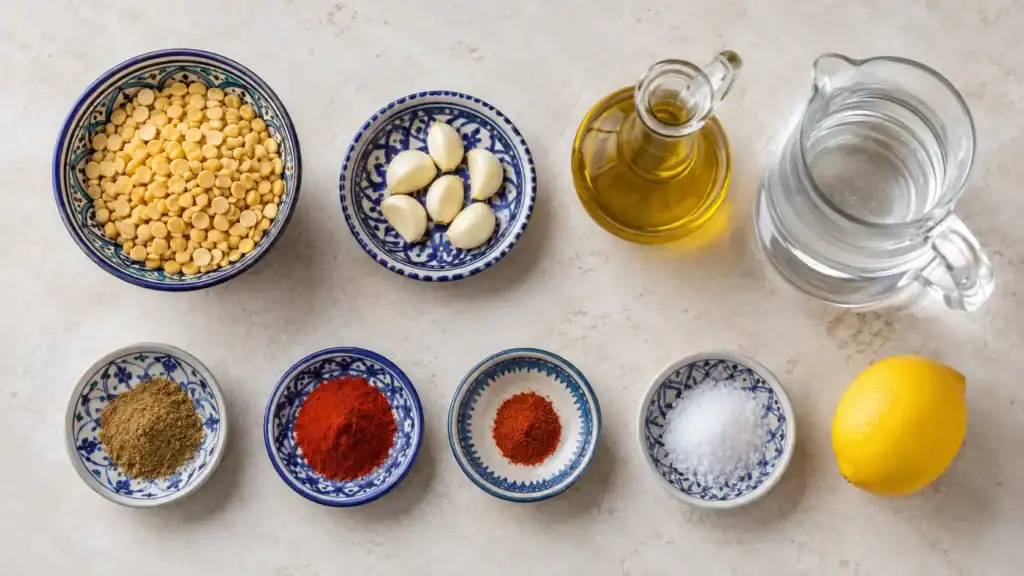
- 2 cups (400 g) dried split fava beans: Buy peeled, split dried fava beans, sometimes labeled split broad beans. They are flat, pale yellow, and sold in international markets or online. They cook down readily and do not require soaking. Whole dried fava beans need longer cooking; canned whole favas produce a different flavor and texture.
- 7 cups (1.65 L) water: Water gives a clean, traditional-tasting base. An equal amount of unsalted vegetable stock is a modern substitute, but it adds its own flavor and may require less salt.
- 6 medium garlic cloves, peeled (about 18 g): Garlic simmers with the beans and softens into the base. Use firm fresh cloves. Two teaspoons jarred garlic works in a pinch but tastes less rounded.
- 2 teaspoons ground cumin (4 g), plus more to serve: Cumin provides warm, earthy aroma. Freshly opened ground cumin tastes livelier than an old jar.
- 1 teaspoon sweet paprika (2 g), plus more to serve: Sweet paprika adds color without strong heat. Hot paprika may replace it, but reduce or omit the cayenne.
- 1½ teaspoons fine sea salt (9 g), divided: Salt sharpens the beans and spices. Begin with one teaspoon, then adjust after blending and reducing.
- ¼ teaspoon cayenne (0.5 g), optional: This creates mild heat. Use less, omit it, or serve it separately.
- 3 tablespoons extra-virgin olive oil (45 ml), divided: Two tablespoons enrich the pot; one tablespoon finishes the bowls. Choose an oil with a fresh, fruity aroma rather than a neutral refined oil.
- 1 lemon, cut into wedges, optional: A squeeze brightens the finished soup. It is a serving garnish, not part of the simmering liquid.
- Serving garnishes, optional: Use up to ½ teaspoon each additional cumin and paprika, plus chopped parsley or cilantro. Each changes the finish without altering the base recipe.
Equipment You’ll Need
Use a fine-mesh strainer, a 5- to 6-quart heavy-bottomed pot, a wooden spoon, measuring tools, a ladle, and an immersion blender. A heavy base spreads heat more evenly, reducing the risk of thick beans catching and scorching.
If using a countertop blender, have a heat-resistant container ready for batches. You will also need a clean kitchen towel to cover the vented lid safely.
How to Make Bissara Moroccan Fava Bean Soup

- Sort and rinse. Spread the 2 cups of split fava beans on a tray. Remove stones, dark pieces, or debris. Transfer them to a fine-mesh strainer and rinse under cool water until the runoff is mostly clear.
- Soak only if desired. Split, peeled beans need no soaking. A two-hour soak may shorten the simmer by about 10 to 15 minutes, depending on age. Drain soaked beans before cooking; the stated total time excludes this optional step.
- Start the pot. Combine the beans, 7 cups water, and garlic in the heavy-bottomed pot. The water should cover the beans generously. Bring to a boil over medium-high heat, watching closely as foam rises.
- Skim and lower the heat. Skim off excessive foam with a spoon, although a small amount is harmless. Reduce to a gentle simmer and partially cover. Strong boiling can cook the liquid away before the beans soften.
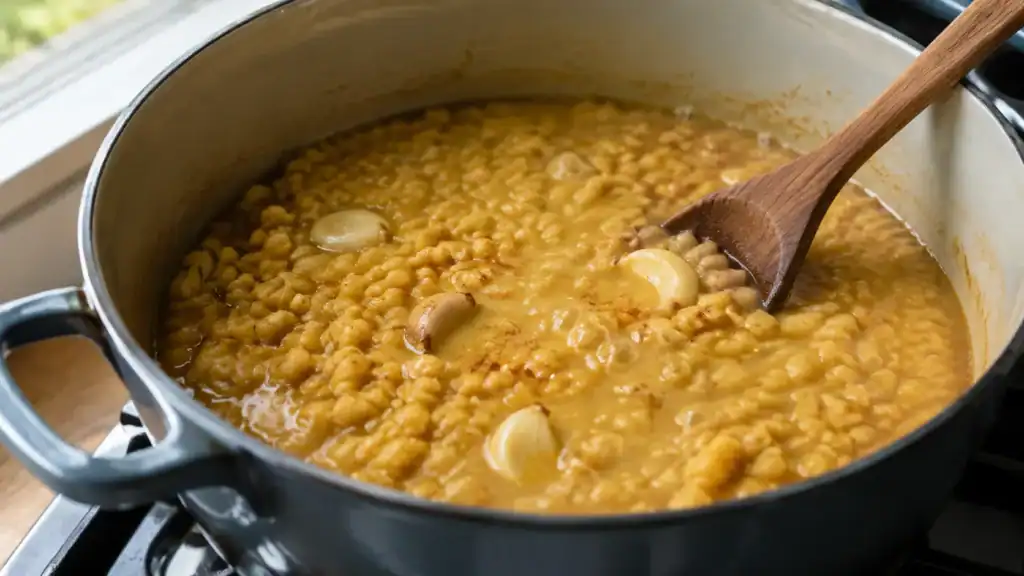
- Simmer until completely tender. Cook for 55 to 70 minutes unsoaked, or about 45 to 60 minutes after soaking. Stir every 10 to 15 minutes, scraping the base more frequently as the liquid thickens. The beans are ready when they collapse against the spoon with no chalky center.
- Season the base. Stir in 2 teaspoons cumin, 1 teaspoon paprika, 1 teaspoon salt, and the optional cayenne. Simmer for 5 minutes so the spices lose their raw edge and smell warm and fragrant.
- Blend safely. Remove the pot from the heat and let vigorous bubbling subside. With an immersion blender fully submerged, blend until smooth. Tilt the pot slightly if necessary, but keep the blade below the surface to prevent splashing.
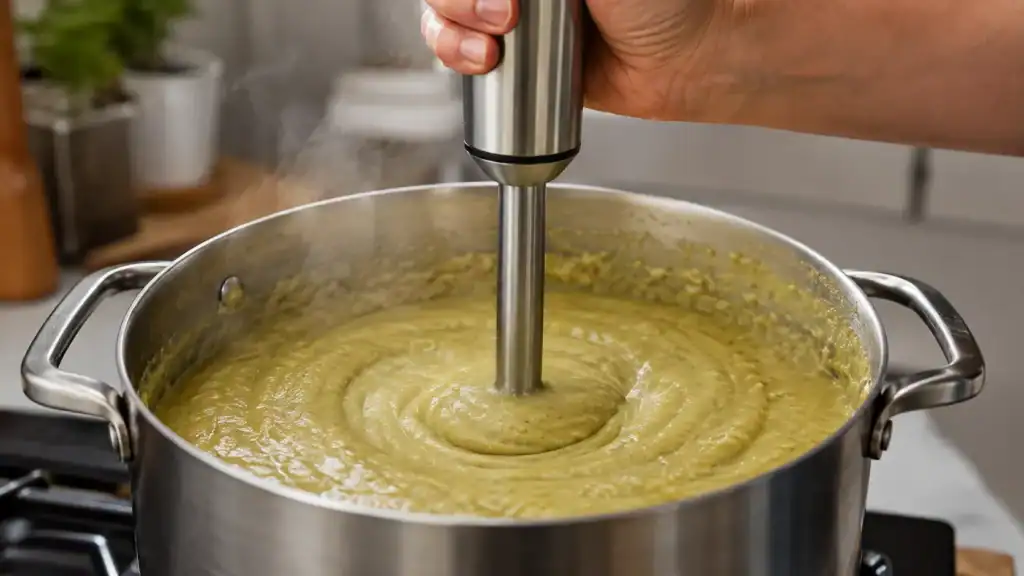
For a countertop blender, work in small batches. Never fill the jar more than halfway with hot soup. Remove or loosen the center cap, cover the opening with a folded towel, and begin on low speed so steam can escape.
- Adjust and finish. Return the soup to low heat. Stir in 2 tablespoons olive oil and enough extra hot water to reach your preferred consistency. Simmer gently for about 5 minutes, stirring often, then add the remaining ½ teaspoon salt only if needed.
- Serve. Ladle the soup into warm bowls. Finish with the remaining tablespoon of olive oil and, if desired, cumin, paprika, herbs, cayenne, and lemon wedges. Serve hot with bread.
Tips for the Best Bissara
Choose peeled split fava beans, not whole dried or canned beans, because the split beans break down evenly. Always sort them; agricultural products can occasionally contain small stones.
Keep the simmer gentle. A hard boil causes rapid evaporation and makes the thickening beans more likely to stick. Stir across the entire base of the pot, especially during the final 20 minutes.
Blend only after the beans feel completely soft. No blender can remove the dry, grainy impression of undercooked beans. For rustic Bissara, pulse briefly rather than blending continuously.
Season in stages because reducing concentrates salt. A fresh, fruity olive oil deserves to go in at the end, where its aroma remains noticeable. If the chilled soup becomes very thick, loosen it gradually with water while reheating.
Common Mistakes and How to Fix Them
Using the wrong beans
Canned whole favas or unpeeled dried beans will not follow this timing. Use dried, peeled split beans. If you already started with another type, follow its package cooking time and expect a different result.
Stopping before the beans are tender
Firm centers make the soup gritty. Continue simmering with small additions of hot water until every bean crushes effortlessly.
Adding too much water at once
An overly diluted soup needs lengthy reduction. Simmer uncovered while stirring, or blend in a small amount of separately cooked fava beans.
Scorching the bottom
High heat and infrequent stirring let thick purée catch. Transfer the unburned top layer to a clean pot without scraping the scorched base, then continue over low heat.
Blending hot soup unsafely
Steam can force a sealed blender lid upward. Use an immersion blender or vent a half-filled countertop blender and cover the opening with a towel.
Under-seasoning or oversalting
Beans need enough seasoning, but salt concentrates during reduction. Add most salt near the end. Dilute an oversalted batch with unsalted cooked beans or water.
Making it too spicy
Cayenne varies in strength. Begin with a pinch or serve it separately. Extra plain purée or water will soften excessive heat better than oil alone.
Forgetting that Bissara thickens
Bean starches set as the soup cools. Stop cooking while it is slightly looser than your final target, then adjust again during reheating.
Recipe Variations
- Spicy Bissara: Increase cayenne to ½ teaspoon or pass chile at the table. Heat levels are often a household choice.
- Mild Bissara: Omit cayenne and use sweet paprika only.
- Thick purée: Begin with 6 cups water or reduce the blended soup longer. Serve it with bread for scooping.
- Thin soup: Add hot water, ¼ cup at a time, until it pours easily from the ladle.
- Split-pea Bissara: Replace the favas by weight with yellow or green split peas. This recognized Moroccan variation tastes sweeter and may cook faster.
- Lemon-forward version: Serve extra wedges and squeeze them into individual bowls rather than the whole pot.
- Fresh-herb finish: Add chopped parsley or cilantro at serving time. This garnish varies by cook.
- Pressure cooker adaptation: A modern shortcut, this method needs appliance-specific liquid minimums. Cook rinsed unsoaked beans under high pressure for about 20 minutes, allow 15 minutes natural release, then season, blend, and reduce as needed.
- Instant Pot adaptation: Use the same modern pressure-cooker approach. Do not fill above the appliance line for foods that foam, and consult your model’s instructions.
What to Serve With Bissara
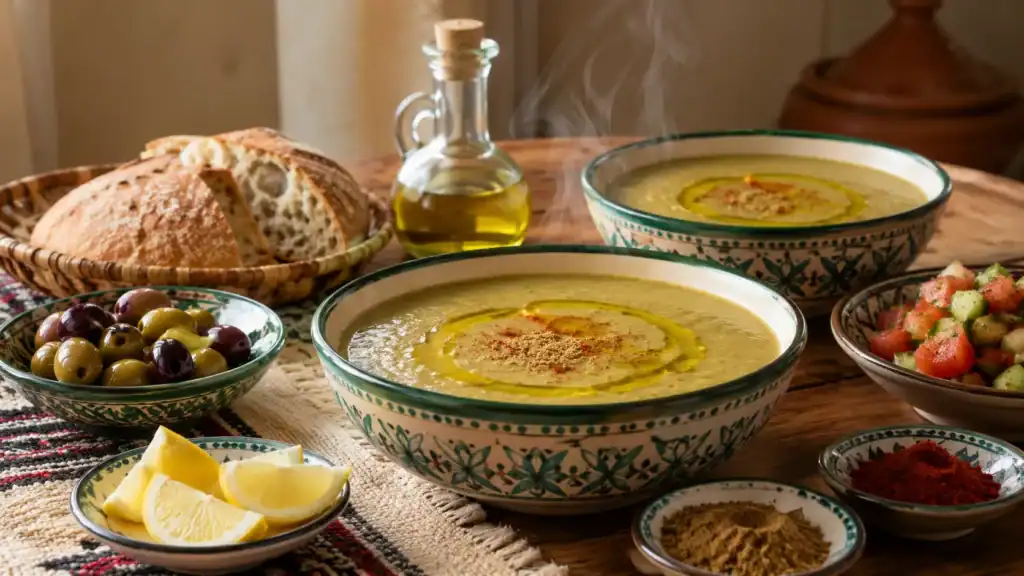
Moroccan bread is the classic partner, but any sturdy crusty loaf works. Set out olive oil, cumin, paprika, cayenne, and lemon so each person can customize the bowl. Olives, sliced fresh vegetables, or a simple Moroccan tomato-and-cucumber salad add contrast.
Arrange the soup in a broad ceramic bowl so the garnish remains visible. Add a thin olive-oil spiral, then dust spices lightly rather than covering the surface. Hot Moroccan mint tea can follow or accompany the meal according to preference.
Storage, Freezing, and Reheating
Refrigerate Bissara within two hours of cooking, or within one hour when the surrounding temperature exceeds 90°F (32°C). Divide large amounts among shallow containers so they cool promptly. Keep covered leftovers in the refrigerator for 3 to 4 days.
The soup freezes well for up to 3 months for best quality. Cool it safely, portion it into airtight freezer containers, and leave a little expansion space. Thaw overnight in the refrigerator or use a microwave’s defrost setting before reheating immediately.
Reheat on the stovetop over medium-low heat, stirring frequently and adding water or stock as needed. In a microwave-safe bowl, cover loosely, heat in short intervals, and stir between intervals. Bring leftovers to 165°F (74°C), measured in the center. Thickening after refrigeration is normal because cooked bean starch absorbs and holds water.
Frequently Asked Questions
What is Bissara made from?
This version uses dried split fava beans, water, garlic, cumin, paprika, salt, olive oil, and optional cayenne.
Are Bissara, Bessara, and Bisarra the same dish?
They are common English spellings of the same Arabic dish name.
Is traditional Bissara made with fava beans or split peas?
Moroccan versions use fava beans or split peas. Practices differ by region and household.
Do split fava beans need soaking?
No. A two-hour soak is optional and may shorten cooking by 10 to 15 minutes.
Can you use canned fava beans?
They can make a quick bean purée, but they do not reproduce this recipe’s flavor, cooking process, or texture.
Is Moroccan Bissara vegan?
It can be. This recipe uses water and contains no animal products.
How do you make Bissara thicker?
Simmer it uncovered over low heat, stirring frequently. It will also thicken naturally as it cools.
How do you thin Bissara?
Whisk in hot water or unsalted stock, a small amount at a time.
Why does Bissara thicken after cooling?
Cooked bean starch continues to absorb water as the soup cools.
Can you freeze Bissara?
Yes. Freeze cooled portions in airtight containers for up to three months for best quality.
Can you prepare it in an Instant Pot?
Yes. Pressure-cook rinsed beans for about 20 minutes, naturally release for 15 minutes, then season, blend, and adjust.
What can replace split fava beans?
Yellow or green split peas work well, but their flavor is sweeter and cooking time may differ.
How can you make the soup less spicy?
Omit cayenne and serve it at the table. Dilute excess heat with unseasoned purée or water.
What should you serve with Bissara?
Serve it with Moroccan or crusty bread, olive oil, spices, olives, lemon, and a simple salad.
Printable Recipe Card
Bissara (Moroccan Fava Bean Soup)
Description: A smooth Moroccan soup of split fava beans, garlic, cumin, paprika, and olive oil.
Prep: 15 minutes
Optional soak: 2 hours
Cook: 1 hour 15 minutes
Total: 1 hour 30 minutes, excluding soaking
Servings: 6
Yield: About 8 cups
Cuisine: Moroccan
Course: Soup; main course
Method: Stovetop simmering and blending
Difficulty: Easy
Diet: Vegan, dairy-free, gluten-free
Equipment
Fine-mesh strainer; 5- to 6-quart heavy-bottomed pot; wooden spoon; measuring cups and spoons; ladle; immersion blender or countertop blender; heat-resistant container.
Ingredients
- 2 cups (400 g) dried peeled split fava beans
- 7 cups (1.65 L) water, plus more as needed
- 6 medium garlic cloves, peeled (about 18 g)
- 2 teaspoons (4 g) ground cumin, plus up to ½ teaspoon for serving
- 1 teaspoon (2 g) sweet paprika, plus up to ½ teaspoon for serving
- 1½ teaspoons (9 g) fine sea salt, divided
- ¼ teaspoon (0.5 g) cayenne, optional
- 3 tablespoons (45 ml) extra-virgin olive oil, divided
- 1 lemon, cut into wedges, optional
- Chopped parsley or cilantro, optional
Instructions
- Sort the beans, discard debris, and rinse thoroughly in a fine-mesh strainer.
- Optionally soak for 2 hours, then drain. Soaking may reduce cooking by 10 to 15 minutes.
- Combine beans, water, and garlic in the pot. Bring to a controlled boil and skim excessive foam.
- Partially cover and gently simmer for 55 to 70 minutes unsoaked, or 45 to 60 minutes soaked. Stir regularly until the beans collapse completely.
- Add cumin, paprika, 1 teaspoon salt, and optional cayenne. Simmer 5 minutes.
- Remove from heat. Blend with a submerged immersion blender, or blend half-full batches in a vented countertop blender.
- Return to low heat. Add 2 tablespoons olive oil and hot water as needed. Simmer about 5 minutes, stirring, then add remaining salt to taste.
- Divide among six bowls. Finish with the remaining tablespoon oil and optional cumin, paprika, herbs, cayenne, and lemon.
Notes and substitutions
No soaking is required. Unsalted vegetable stock can replace water but changes the flavor and salt level. Split peas can replace favas by weight, producing a sweeter variation with potentially shorter cooking. Canned whole favas are not a direct substitute.
Storage, freezing, and reheating
Refrigerate in shallow airtight containers within two hours and use within 3 to 4 days. Freeze portions for up to 3 months for best quality. Thaw in the refrigerator, then reheat to 165°F (74°C), adding water to restore the consistency.
Estimated nutrition per serving
Approximately 310 calories; 16 g protein; 46 g carbohydrate; 10 g fiber; 7 g fat; 1 g saturated fat; 590 mg sodium. All values are estimates and vary with brands, garnishes, and serving size.

Conclusion
Bissara shows how much character a few staples develop with patient simmering. Split fava beans provide body, while garlic, cumin, paprika, and olive oil build a savory finish. Careful blending controls the texture.
Prepare this Bissara Moroccan Fava Bean Soup as a pourable soup or reduce it to a thick purée for scooping with bread. Adjust cayenne, lemon, herbs, and olive oil at the table so every bowl feels balanced. It also stores and reheats well, making it a practical recipe to cook ahead.