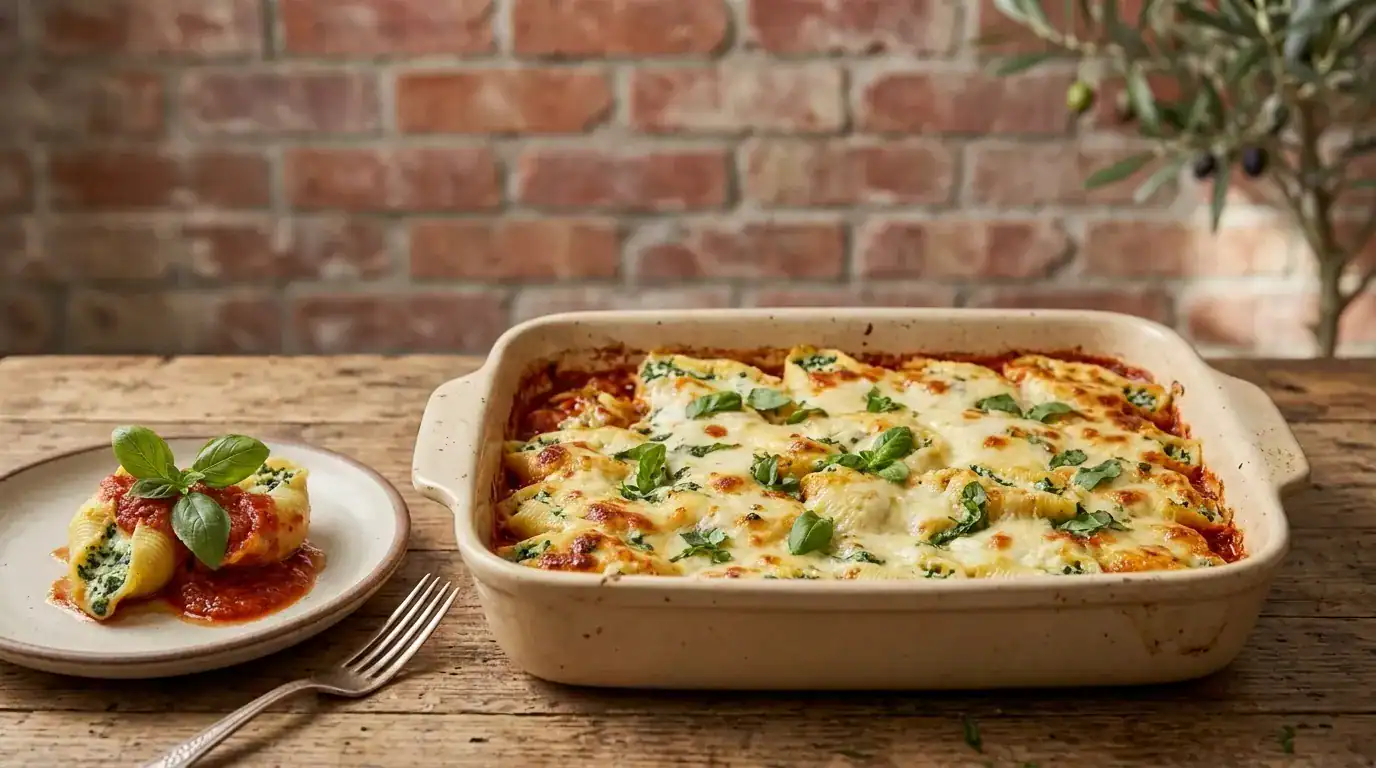
Spinach Ricotta Stuffed Shells: famous Creamy Italian Classic
Few baked pasta dishes deliver comfort quite like Spinach Ricotta Stuffed Shells: tender jumbo pasta filled with a creamy ricotta and spinach mixture, nestled in rich marinara, and finished under a blanket of bubbling mozzarella. It’s the kind of dish that looks impressive enough for a holiday table yet comes together with straightforward, forgiving technique.
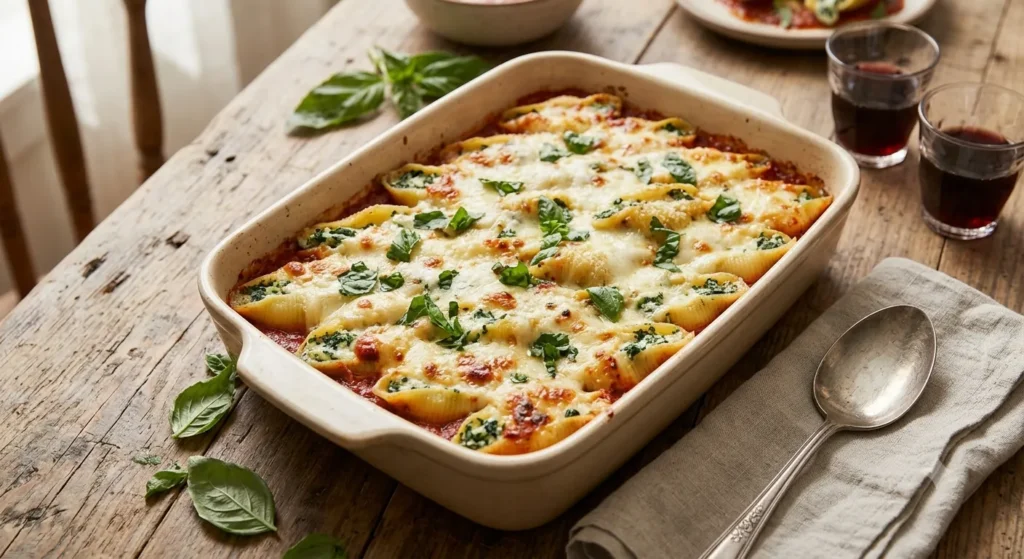
Table of Contents
I’ve made this dish more times than I can count, both for weeknight family dinners and for holiday spreads where a vegetarian main needs to hold its own next to everything else on the table. This guide breaks down exactly why the filling turns out creamy instead of watery, how to keep the shells from tearing, and every step needed for Spinach Ricotta Stuffed Shells that taste like they came from a real Italian kitchen.
Table of Contents
- What Are Spinach Ricotta Stuffed Shells?
- The History of Stuffed Pasta
- Why This Recipe Works
- The Science Behind Perfect Stuffed Shells
- Choosing the Best Cheese
- Ingredients Explained
- The Secret to Restaurant-Quality Stuffed Shells
- Step-by-Step Instructions
- Equipment Needed
- Common Mistakes to Avoid
- Pro Chef Tips
- Delicious Variations
- Storage & Reheating
- What to Serve with Spinach Ricotta Stuffed Shells
- Frequently Asked Questions
- Recipe Card
- Conclusion
What Are Spinach Ricotta Stuffed Shells?
Spinach Ricotta Stuffed Shells start with conchiglioni, the jumbo pasta shells whose deep, curved shape exists specifically to cradle a generous filling. Each shell gets packed with a creamy mixture of ricotta, spinach, mozzarella, and Parmesan, then arranged over marinara sauce and baked until the filling turns warm and the top layer of cheese turns golden and bubbling.
The shell’s large, ridged interior is what makes this dish work so well. Unlike flat pasta, which needs to be rolled or layered, jumbo shells are essentially self-contained vessels, holding their filling in place through baking without any folding or rolling required.
How It Differs from Cannelloni and Manicotti
Cannelloni and manicotti use tube-shaped pasta, stuffed by piping filling into a hollow cylinder, which produces a more uniform, log-like shape once baked. Stuffed shells, by contrast, use an open, cup-like pasta that’s simply spooned full, making the filling process faster and far more forgiving for home cooks who don’t want to wrestle with a piping bag.
A Favorite for Family Dinners
Because the shells can be assembled ahead and baked later, this dish has become a genuine favorite for family dinners, potlucks, and holiday gatherings, where a make-ahead vegetarian main is often exactly what a table needs.
The History of Stuffed Pasta
Stuffed pasta has deep roots in Italian cooking, with hand-shaped versions documented in Italy since at least the 13th century, traditionally reserved for holidays and special occasions because of how labor-intensive they were to make by hand. Conchiglioni, the jumbo shell shape specifically, is a comparatively recent addition to Italy’s pasta lineup, since its ridged, curved shape requires mechanical dies rather than hand-rolling, tracing its origins to the industrial pasta production that took hold in Southern Italy during the 18th and 19th centuries.
That connection to Southern Italy runs through the dish’s identity even now. Conchiglioni stuffed with cheese, generally called conchiglioni ripieni in Italy, drew on the country’s older tradition of pasta ripiena, or “stuffed pasta,” using whatever filling ingredients a region had on hand.
From Italy to Italian-American Kitchens
When Italian immigrants brought their culinary traditions to the United States, they adapted stuffed pasta dishes to the ingredients and habits available in their new home. The American version of stuffed shells that emerged tends to be simpler and lighter than its Italian counterpart, typically built on a straightforward ricotta and mozzarella filling rather than more elaborate regional variations.
Chef Tip Box: A Dish Shaped by Two Traditions
This recipe follows that same Italian-American path: a ricotta-based filling, brightened with spinach, that keeps things approachable for a home kitchen while still nodding to its Southern Italian origins.
Why This Recipe Works
The creamy ricotta filling is the heart of this dish, and getting its texture right depends on controlling moisture before it ever goes into the shells. Combined with well-drained spinach, the filling stays rich and cohesive instead of turning the whole dish watery once it bakes.
Rich marinara sauce underneath the shells keeps the pasta from drying out, while a generous layer of mozzarella on top delivers that bubbling, golden finish everyone associates with a great baked pasta dish. Because the shells hold their shape well, the whole recipe comes together with minimal fuss compared to hand-rolled alternatives.
Make-Ahead Convenience
Since the shells can be stuffed a day in advance and refrigerated before baking, this dish fits naturally into meal prep or holiday planning, letting you handle the most time-consuming part well before guests arrive.
The Science Behind Perfect Stuffed Shells
Ricotta naturally holds a good deal of water, and if that moisture isn’t addressed before mixing, it works its way into the filling during baking and leaves you with a loose, watery result instead of a creamy one. Draining ricotta in a fine-mesh strainer for at least 20 minutes solves this at the source.
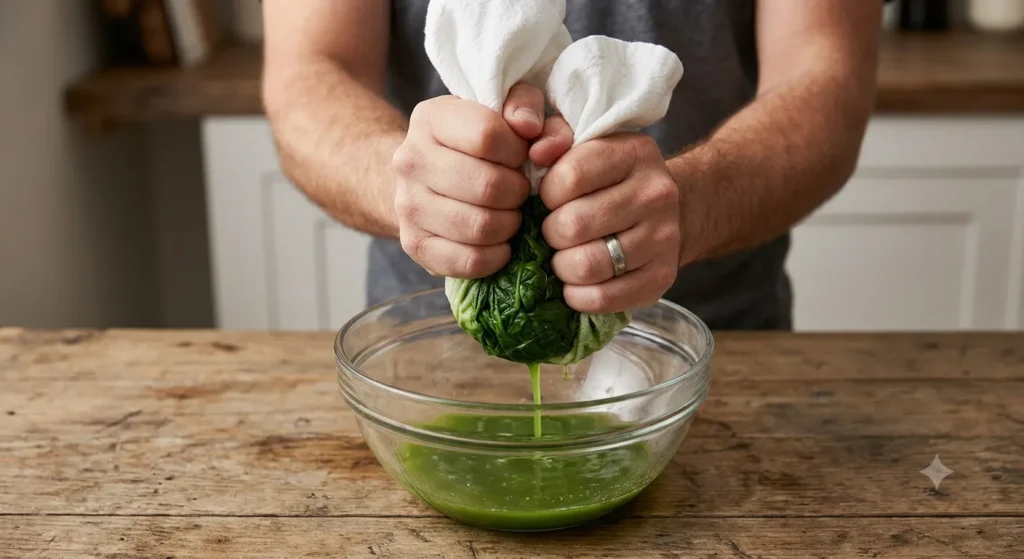
Spinach carries its own moisture problem. Cooked spinach releases a surprising amount of liquid, so squeezing it thoroughly dry, ideally in a clean kitchen towel, is essential before it goes anywhere near the ricotta mixture.
Why Egg Matters as a Binder
An egg stirred into the filling acts as a binder, since its proteins set as they heat, holding the ricotta, spinach, and cheese together in a cohesive mass rather than letting the filling slump apart once you cut into a baked shell.
Kitchen Science Box: Covered vs. Uncovered Baking
Baking the dish covered with foil for the first stretch of time traps steam, which gently warms the filling through without drying out the pasta’s edges. Removing the foil for the final several minutes then lets the surface moisture evaporate, allowing the mozzarella on top to brown and blister properly.
Choosing the Best Cheese
| Cheese | Flavor | Texture | Best For |
|---|---|---|---|
| Whole milk ricotta | Rich, slightly sweet | Creamy, smooth | The classic, most flavorful filling base |
| Part-skim ricotta | Milder, leaner | Slightly looser | A lighter option, still workable |
| Fresh mozzarella | Delicate, milky | Very soft, high moisture | Best in small amounts to avoid excess liquid |
| Low-moisture mozzarella | Savory, concentrated | Firm, melts evenly | Ideal for the topping layer |
| Parmesan | Salty, nutty | Hard, granular | Adds sharpness throughout the filling |
| Pecorino Romano | Sharp, tangy | Hard, granular | A bolder alternative to Parmesan |
Whole milk ricotta and low-moisture mozzarella are the most reliable choices for beginners, since together they strike the best balance between rich flavor and manageable moisture. Fresh mozzarella tastes wonderful but releases more liquid as it melts, so it works best in smaller amounts mixed into the filling rather than as the primary topping cheese.
Ingredients Explained
| Ingredient | Purpose |
|---|---|
| Jumbo pasta shells | The pasta vessel that holds the filling |
| Ricotta cheese | Creamy base of the filling |
| Fresh spinach | Adds color, nutrients, and mild earthiness |
| Mozzarella | Melts into gooey pockets throughout and on top |
| Parmesan | Salty depth in both filling and topping |
| Egg | Binds the filling so it holds together when sliced |
| Garlic | Essential aromatic foundation |
| Onion | Adds sweetness to the filling’s background flavor |
| Marinara sauce | Keeps the shells moist and adds bright acidity |
| Basil | Fresh, fragrant finishing note |
| Parsley | Adds brightness and color to the filling |
| Oregano | Classic Italian herbal backbone |
| Olive oil | Base fat for sautéing aromatics |
| Salt | Essential seasoning throughout |
| Black pepper | Sharp, warming contrast |
| Nutmeg (optional) | A subtle warmth that pairs traditionally with ricotta and spinach |
A small pinch of nutmeg is optional, but it’s a classic pairing with ricotta and spinach in Italian cooking, adding warmth without announcing itself directly in the finished dish.
The Secret to Restaurant-Quality Stuffed Shells
Restaurant kitchens rely on a handful of specific habits that make the difference between good stuffed shells and great ones. Cooking the pasta slightly under al dente is the first, since the shells continue softening in the oven and can turn mushy if boiled fully beforehand.
Draining the ricotta and squeezing the spinach completely dry prevents a watery filling, while mixing everything gently, rather than overworking it, keeps the texture light instead of dense and pasty. Layering a thin bed of marinara sauce underneath the shells before baking, rather than skipping straight to placing them in a dry dish, is what keeps the bottom layer of pasta tender all the way through.
Chef Tip Box: Resting After Baking
Let the finished dish rest for 5 to 10 minutes after it comes out of the oven. The filling continues to set slightly as it cools, which makes each shell hold together far better when served.
Step-by-Step Instructions
Step 1: Cook the Shells
Boil the jumbo shells in well-salted water until just shy of al dente, a minute or two less than the package suggests, since they’ll finish cooking in the oven. Drain gently and lay them out separately so they don’t stick together.
Step 2: Prepare the Spinach
Sauté fresh spinach with a little olive oil and garlic until just wilted, then transfer it to a clean kitchen towel and squeeze out as much liquid as possible before chopping it finely.
Step 3: Mix the Filling
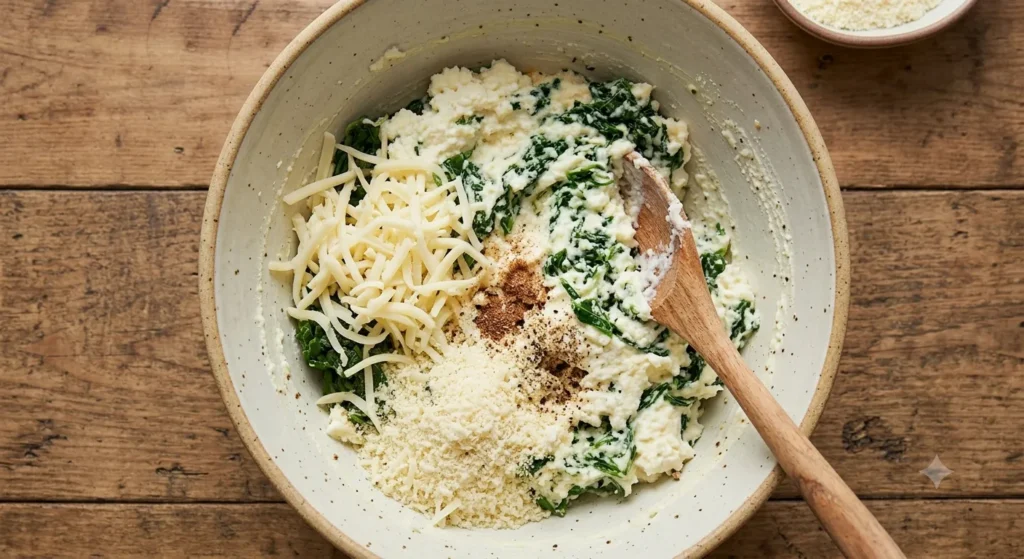
In a large bowl, combine the drained ricotta, chopped spinach, mozzarella, Parmesan, egg, sautéed onion, salt, pepper, and a pinch of nutmeg. Mix gently just until combined, since overmixing can make the filling dense.

Step 4: Stuff the Shells
Spoon a generous portion of filling into each cooked shell, using a small spoon to press it in gently without tearing the pasta’s delicate edges.
Step 5: Assemble the Casserole
Spread a thin layer of marinara sauce across the bottom of a baking dish, arrange the stuffed shells filling-side up, then spoon more marinara over the top before scattering shredded mozzarella and Parmesan across the entire dish.
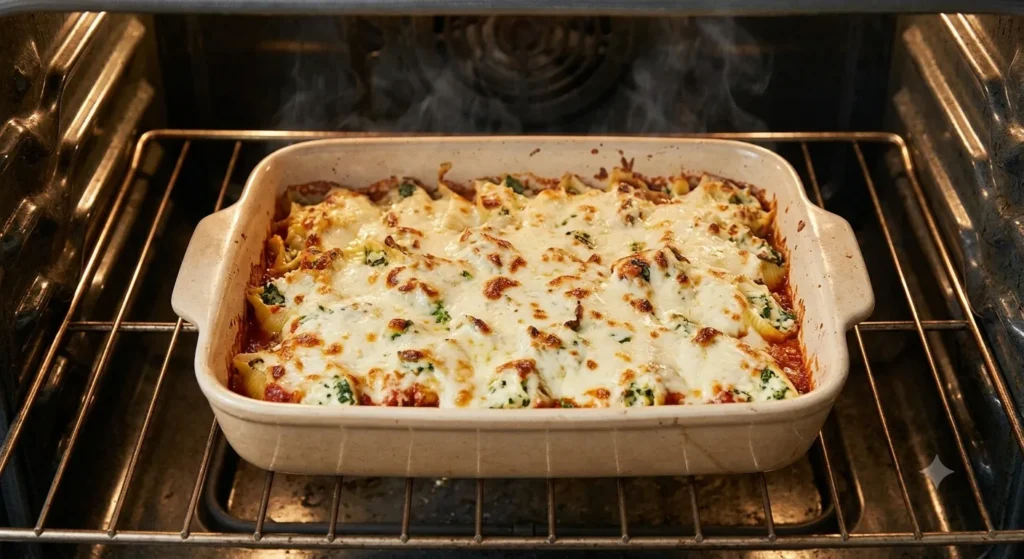
Step 6: Bake Covered
Cover the dish tightly with foil and bake at 375°F for about 25 minutes, allowing the filling to heat through gently without drying out the pasta’s edges.
Step 7: Uncover and Finish
Remove the foil and continue baking for another 10 to 15 minutes, until the cheese on top turns golden and bubbling.
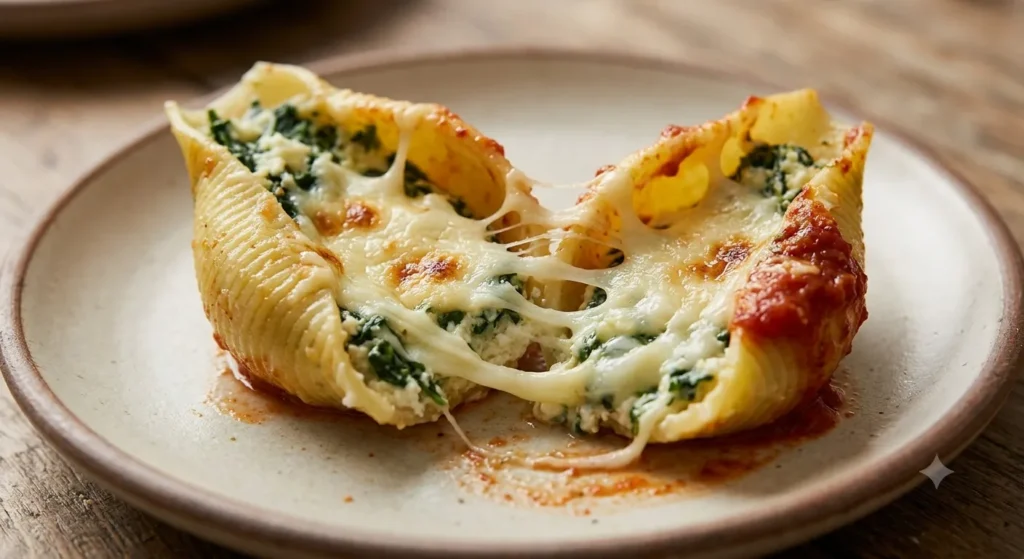
Step 8: Rest and Serve
Let the dish rest for 5 to 10 minutes before serving, then garnish with fresh basil or parsley just before bringing it to the table.
Cooking Timeline
| Time | Task |
|---|---|
| 0–10 min | Boil pasta shells |
| 0–8 min | Sauté and drain spinach |
| 8–15 min | Mix the filling |
| 15–25 min | Stuff the shells |
| 25–30 min | Assemble the casserole |
| 30–55 min | Bake covered |
| 55–70 min | Bake uncovered until golden |
| 70–80 min | Rest before serving |
Equipment Needed
- Large pasta pot
- Colander
- Mixing bowls
- 9×13-inch baking dish
- Cheese grater or microplane
- Chef’s knife
- Cutting board
- Measuring cups
Common Mistakes to Avoid
- Boiling the shells fully al dente, which leads to mushy pasta after baking.
- Skipping the ricotta draining step, resulting in a watery filling.
- Not squeezing the spinach dry, which waters down the entire mixture.
- Overmixing the filling, making it dense instead of light and creamy.
- Overstuffing the shells, causing them to tear or overflow during baking.
- Skipping the sauce layer underneath the shells, leaving the bottom pasta dry.
- Using only fresh mozzarella on top, which can release excess moisture while baking.
- Baking uncovered the entire time, drying out the pasta’s exposed edges.
- Skipping the egg, resulting in a filling that slumps apart once sliced.
- Using frozen spinach without draining it thoroughly, adding even more excess liquid.
- Under-seasoning the filling, since ricotta on its own tastes quite mild.
- Serving immediately without resting, making the shells harder to plate neatly.
- Using pre-shredded mozzarella exclusively, which melts less smoothly than freshly grated.
- Not checking for doneness before removing foil, risking undercooked centers.
- Cramming too many shells into one dish, preventing even heat circulation.
Common Mistake Box
The most frequent issue home cooks run into is a watery casserole, and it almost always traces back to skipping either the ricotta drain or the spinach squeeze. Both steps take only a few extra minutes but make a significant difference in the final texture.
Pro Chef Tips
- Drain ricotta in a fine-mesh strainer for at least 20 minutes before mixing.
- Squeeze cooked spinach in a towel until no more liquid comes out.
- Cook pasta shells slightly under al dente since they finish in the oven.
- Lay boiled shells in a single layer so they don’t stick together.
- Mix the filling gently, folding rather than stirring vigorously.
- Use a small spoon or piping bag for neat, mess-free stuffing.
- Spread a thin sauce layer underneath the shells before baking.
- Reserve some sauce to spoon generously over the top before adding cheese.
- Use low-moisture mozzarella for the topping to avoid excess liquid.
- Grate Parmesan freshly rather than using pre-shredded bags.
- Cover tightly with foil for the first bake to trap steam evenly.
- Uncover for the final stretch so the cheese browns properly.
- Let the dish rest at least 5 minutes before serving.
- Garnish with fresh herbs only right before serving to keep them vibrant.
- Assemble the dish a day ahead and refrigerate before baking to save time.
- Add a pinch of nutmeg to the filling for classic Italian depth.
- Taste the filling before stuffing, since it’s your last chance to adjust seasoning.
- Use a 9×13 dish for even spacing; overcrowding leads to uneven baking.
- Keep extra marinara warm on the side for anyone who wants more sauce.
- Freeze extra stuffed, unbaked shells individually before combining into a dish for easy future meals.
Delicious Variations
Meat Stuffed Shells
Brown Italian sausage or ground beef and fold it into the ricotta filling for a heartier, protein-rich version.
Chicken Alfredo Stuffed Shells
Swap the marinara for Alfredo sauce and fold shredded rotisserie chicken into the ricotta filling for a creamier, richer take.
Four-Cheese Stuffed Shells
Add a mix of fontina, provolone, and extra Parmesan to the filling for a deeper, more complex cheese flavor.
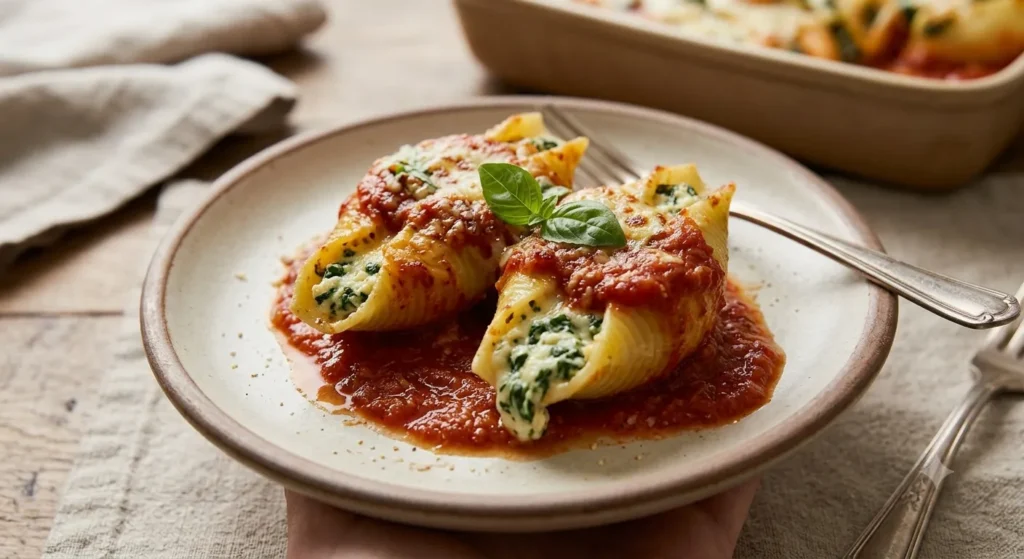
Mushroom Stuffed Shells
Sauté finely chopped mushrooms with the spinach for an earthy, umami-rich addition to the filling.
Sausage Stuffed Shells
Mix crumbled, browned Italian sausage directly into the ricotta and spinach filling for extra savory depth.
Pesto Stuffed Shells
Swirl a spoonful of basil pesto into the ricotta filling, or use it in place of marinara, for a brighter, herbaceous variation.
Gluten-Free Stuffed Shells
Use a quality gluten-free jumbo shell pasta, watching the boiling time closely since these can soften faster than traditional wheat pasta.
Vegan Stuffed Shells
Substitute a cashew-based or tofu ricotta alternative along with dairy-free mozzarella for a fully plant-based version of the dish.
Storage & Reheating
Let leftover stuffed shells cool before transferring them to an airtight container. Refrigerate for up to 4 days, or freeze either before or after baking for up to 3 months, keeping in mind that unbaked, stuffed shells generally hold their texture slightly better after freezing than fully baked ones.
To reheat, cover the dish with foil and warm in a low oven until heated through, or microwave individual portions in short bursts. Following USDA safe minimum cooking temperatures, leftovers containing cheese and eggs should be reheated to an internal temperature of 165°F to ensure food safety, as outlined by the USDA Food Safety and Inspection Service.
Kitchen Science Box: Why Frozen Unbaked Shells Hold Up Better
Freezing baked pasta causes some of the moisture in the ricotta filling to separate as ice crystals form. Freezing the shells before baking avoids that extra heating and cooling cycle, which is why unbaked shells tend to reheat with a creamier, more cohesive texture.
What to Serve with Spinach Ricotta Stuffed Shells
- Warm [Internal Link: Homemade Garlic Bread] for soaking up extra marinara
- A rich batch of [Internal Link: Homemade Marinara Sauce] on the side for extra saucing
- Fresh [Internal Link: Focaccia Bread] as a heartier bread option
- A crisp [Internal Link: Caesar Salad] to balance the richness
- An Italian chopped salad for a lighter, tangy contrast
- Roasted broccolini for a simple vegetable side
- Bruschetta or a classic Caprese salad as a bright starter
- [Internal Link: Classic Tiramisu] to finish the meal
For wine, a Chianti pairs well with the tomato sauce’s acidity, while a Pinot Grigio or Sauvignon Blanc offers a lighter, crisper contrast to the rich cheese filling. For a non-alcoholic option, sparkling lemonade or a classic Italian soda both complement the dish nicely.
Frequently Asked Questions
1. Can I make Spinach Ricotta Stuffed Shells ahead of time? Yes, you can stuff and assemble the dish a day ahead, then refrigerate it covered until you’re ready to bake.
2. Can I freeze stuffed shells? Yes, you can freeze them either before or after baking for up to 3 months, though unbaked shells tend to hold their texture slightly better.
3. Why are my shells tearing? Shells usually tear from overcooking during the initial boil or from overstuffing them past their natural capacity.
4. Can I use frozen spinach instead of fresh? Yes, just be sure to thaw it completely and squeeze out as much liquid as possible before adding it to the filling.
5. Can I substitute cottage cheese for ricotta? Yes, though blending it briefly first will give you a smoother texture closer to traditional ricotta.
6. How do I keep the filling creamy instead of watery? Draining the ricotta and thoroughly squeezing the spinach dry are the two most important steps for a creamy result.
7. Can I make stuffed shells without eggs? Yes, though the filling will be slightly looser, since the egg acts as a binder that helps it hold its shape.
8. What’s the best marinara sauce to use? A simple, high-quality jarred marinara works well, or a homemade version lets you control the seasoning more precisely.
9. How long do leftovers last in the fridge? Leftovers keep well for up to 4 days when stored in an airtight container in the refrigerator.
10. Can I make this dish without spinach? Yes, the filling still works well as a classic cheese-only version, though the spinach adds color and a mild earthy flavor.
11. What cheese works best for the topping? Low-moisture mozzarella melts more evenly than fresh mozzarella and produces a better golden, bubbling top layer.
12. Can I use a different pasta shape? Jumbo shells are ideal for their capacity, though large manicotti tubes can work in a pinch with adjusted filling technique.
13. Why is my filling bland? Ricotta is naturally mild, so be sure to season generously with salt, pepper, and a pinch of nutmeg for balanced flavor.
14. Can I make a smaller batch? Yes, simply halve the ingredients and use a smaller baking dish, adjusting bake time slightly if the dish is more shallow.
15. What’s the best cheese for the filling itself? Freshly grated Parmigiano Reggiano PDO adds noticeably deeper, nuttier flavor than pre-grated alternatives.
Recipe Card
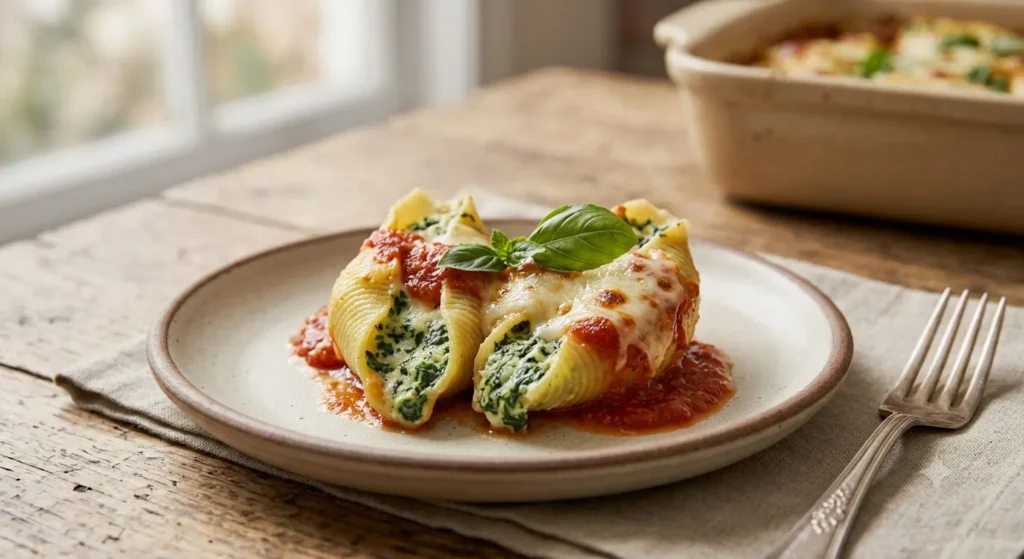
Spinach Ricotta Stuffed Shells
Prep Time: 30 minutes Cook Time: 40 minutes Total Time: 1 hour 10 minutes Servings: 6 Cuisine: Italian-American Course: Main Course Calories (per serving, approximate): 420
Ingredients
| Ingredient | Amount |
|---|---|
| Jumbo pasta shells | 20–24 shells |
| Ricotta cheese, drained | 15 oz |
| Fresh spinach | 8 oz |
| Mozzarella, shredded, divided | 2 cups |
| Parmesan, grated, divided | ¾ cup |
| Egg | 1 large |
| Garlic, minced | 2 cloves |
| Onion, finely diced | ½ small |
| Marinara sauce | 3 cups |
| Fresh basil, torn | For garnish |
| Fresh parsley, chopped | 2 tbsp |
| Dried oregano | 1 tsp |
| Olive oil | 1 tbsp |
| Salt and pepper | To taste |
| Nutmeg (optional) | A small pinch |
Instructions
- Boil the jumbo shells until just shy of al dente. Drain and lay out separately.
- Sauté spinach, garlic, and onion in olive oil until wilted. Squeeze dry and chop finely.
- Mix drained ricotta, spinach mixture, 1½ cups mozzarella, ½ cup Parmesan, egg, oregano, parsley, salt, pepper, and nutmeg.
- Spoon filling into each shell.
- Spread 1 cup marinara in a baking dish. Arrange stuffed shells over the sauce, then top with remaining marinara.
- Sprinkle remaining mozzarella and Parmesan over the top.
- Cover with foil and bake at 375°F for 25 minutes.
- Uncover and bake 10 to 15 minutes more, until golden and bubbling. Rest 5 to 10 minutes, garnish with basil, and serve.
Chef Notes
For the creamiest filling, don’t skip draining the ricotta or squeezing the spinach; both steps directly determine whether the finished dish is creamy or watery.
Storage Notes
Refrigerate leftovers for up to 4 days, or freeze before or after baking for up to 3 months. Reheat covered in a low oven until warmed through.
Nutrition Disclaimer: Nutrition values are estimates and will vary based on exact brands, portion sizes, and ingredient substitutions used.
Conclusion
Spinach Ricotta Stuffed Shells earn their place as a family favorite for good reason: a creamy, well-seasoned filling, rich marinara, and bubbling mozzarella come together in a dish that’s genuinely easy to make ahead and simple to reheat. Once you understand why draining the ricotta and squeezing the spinach dry matter so much, you’ll be able to recreate this Italian-American classic with confidence every time. Give this Spinach Ricotta Stuffed Shells recipe a try, and it’s likely to become one of the most requested dishes at your table.