Duck Confit Recipe: The Classic French Duck With Crispy Skin
Duck confit is a classic French technique in which duck legs are salt-cured, slowly cooked in duck fat, and finished hot to create exceptionally tender meat and crisp skin.
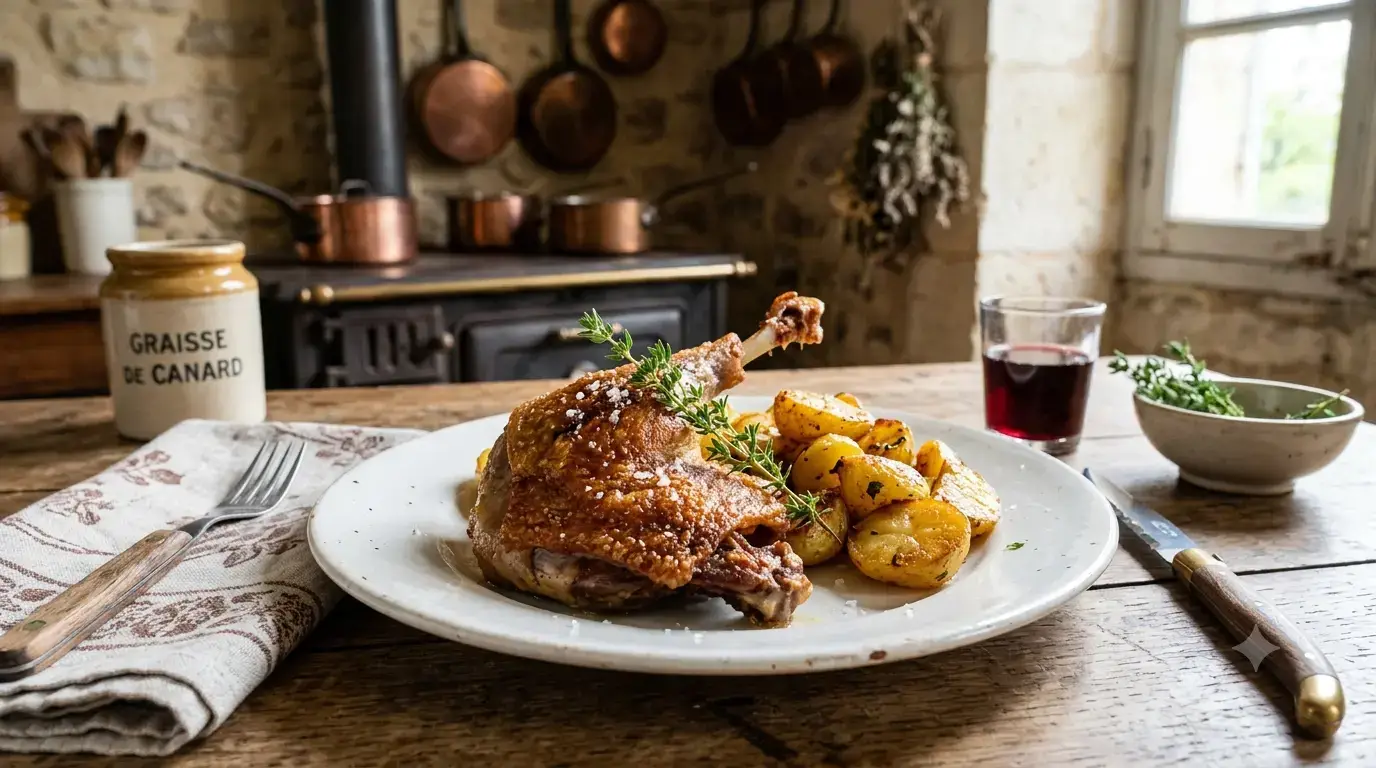
The first time I pulled a leg of duck confit out of its fat, I didn’t understand why it felt almost weightless in the tongs, the meat barely holding to the bone. Then I crisped the skin in a hot pan, and it shattered like glass under the fork while the meat underneath fell apart in ribbons. That contrast is duck confit in one bite: skin that cracks, meat that yields without any resistance at all.
Duck confit is one of those dishes that looks intimidating on a menu and is, in practice, mostly about waiting. The technique is old, born out of necessity in farmhouses in the southwest of France long before refrigerators existed, and it has barely changed since. Salt, time, and duck fat do almost all the work.
This guide walks through duck confit the way I’d teach a cook standing next to me — what salt curing actually does to the meat, why the fat has to stay well below a simmer, which ducks are worth buying, and how to get skin that crackles instead of skin that goes soft and sad on the plate. By the end, you’ll have everything you need to make real duck confit at home, without guessing.

Table of Contents
Table of Contents
- What Is Duck Confit?
- Why Duck Confit Is So Special
- The Science Behind Duck Confit
- Choosing the Best Duck
- Ingredients Explained
- The Traditional Salt Cure
- Cooking Duck Confit
- How to Get Crispy Skin
- Duck Fat: Liquid Gold
- Equipment Needed
- Common Mistakes
- Pro Chef Tips
- Variations
- Storage
- What to Serve with Duck Confit
- Frequently Asked Questions
- Recipe Card
- Conclusion
What Is Duck Confit?
“Confit de canard” translates simply to “preserved duck,” and that name tells you everything about where this dish came from. The word “confit” itself comes from the French verb “confire,” meaning to preserve, and it’s the same root behind confit garlic, confit tomatoes, and other slow-cooked, fat- or sugar-preserved foods in French cooking.
Duck confit comes out of Gascony, in the southwest of France, a region famous for duck and goose farming long before it was famous for food tourism. Farmers there needed a way to keep meat edible through the winter without refrigeration, so they salted duck legs, then submerged them in rendered duck fat and cooked them low and slow. The fat sealed out air once the duck cooled, and a jar of confit could sit in a cool cellar for months.
What started as a preservation method turned into one of the defining dishes of French country cooking, then made its way onto the menus of serious restaurants around the world. The technique never really changed. It didn’t need to. Salt draws out moisture and seasons the meat deeply, and the low, steady heat of the fat turns tough duck leg into something silky. Necessity produced a genuinely great dish, and that’s rarer than it sounds.
Why Duck Confit Is So Special
Duck confit works on more levels than most braised or roasted meat, and each one is worth understanding on its own.
Rich duck flavor. Duck leg has more fat and connective tissue than chicken, and both of those render down during the long cook, concentrating flavor rather than diluting it. The result tastes deeply of duck, not just “poultry.”
Crisp skin. Properly rendered and finished duck skin turns brittle and shattering, a texture that’s hard to get from any other cooking method on a leg this fatty.
Tender meat. Hours in warm fat break down collagen until the meat pulls apart with almost no resistance, closer to the texture of a good pulled pork than a roasted duck breast.
Long shelf life. Properly cured and stored under fat, duck confit keeps for weeks in the refrigerator, and traditionally for months in a cool cellar. Few cooked meats hold that long without freezing.
Simple ingredients, extraordinary results. Duck, salt, fat, and a handful of aromatics. That’s the whole ingredient list. The transformation from raw duck leg to confit comes entirely from technique, not from a long list of additions, which is exactly why it rewards a cook who understands what each step is doing.

The Science Behind Duck Confit
Understanding what’s actually happening at each stage makes it much easier to get consistent results.
Salt curing and osmosis. When salt sits directly on the duck’s surface, it draws moisture out of the meat through osmosis, moving water from an area of low salt concentration (inside the meat) to an area of high concentration (on the surface). That drawn-out liquid dissolves the salt into a light brine, which is then reabsorbed into the meat, seasoning it from the inside rather than just coating the surface.
Moisture removal and flavor concentration. As water leaves the meat during curing, the remaining proteins and fat carry a more concentrated flavor. This is the same basic principle behind curing bacon or making prosciutto, just on a much shorter timeline.
Fat rendering. Duck fat, both in the skin and in the layer just beneath it, liquefies as it warms, basting the meat continuously throughout the long cook. This is part of why confit tastes so rich without needing any added fat beyond what’s already in the pot.
Collagen conversion into gelatin. Duck legs are full of connective tissue, mostly collagen, which is tough and chewy when raw. Held at a steady, low temperature for hours, collagen slowly breaks down into gelatin, which is soft, silky, and part of why properly made confit meat falls apart without shredding into dry strands.
Why 190–225°F (88–107°C) matters. This range sits well below a boil, which is exactly the point. At these temperatures, the fat is warm enough to slowly render collagen into gelatin over several hours, but never hot enough to actively boil the meat’s moisture away or toughen the proteins through violent, fast cooking.
Why boiling the fat ruins the texture. Once the fat gets hot enough to bubble and simmer hard, it cooks the meat too aggressively. The proteins seize and tighten instead of slowly softening, and moisture cooks out too fast, leaving the meat dry and stringy instead of tender. Low and slow isn’t a stylistic choice here — it’s the entire mechanism that makes confit work.
Choosing the Best Duck
Not all duck is the same, and the type you choose changes both the flavor and the amount of fat you’ll have to work with.
Moulard duck is a cross between Muscovy and Pekin duck, prized specifically for confit because its legs are larger, meatier, and carry more fat than a typical Pekin duck leg. Most foie gras production also uses Moulard ducks, and the legs left over from that process are a common source of confit-specific duck legs sold in the US.
Pekin duck is the most widely available duck in American grocery stores, milder in flavor, with thinner skin and less fat than Moulard. It works fine for confit but produces a slightly less rich result.
Muscovy duck has a leaner, more intensely flavored, almost beef-like taste, with less fat than Moulard. It can work for confit but benefits from added fat during cooking since the legs alone may not render enough on their own.
Duck legs vs. whole duck. For confit specifically, buying legs alone (rather than a whole duck) is almost always the better choice, since the leg is the cut that benefits most from long, slow cooking, while the breast is better suited to quick searing and would overcook badly in a confit bath.
Fresh vs. frozen. Fresh duck legs, when available, offer slightly better texture, but high-quality frozen duck legs, properly thawed in the refrigerator, work extremely well for confit and are far more widely available.
Skin quality and fat content. Look for legs with intact, unblemished skin and a visible layer of fat beneath it. Thin, pale skin with little visible fat won’t render or crisp as well.
Bone-in vs. boneless. Bone-in is standard and traditional for confit — the bone helps the meat hold its shape through the long cook, and boneless duck legs are far less commonly sold in any case.
Buying tips for US grocery stores: specialty butchers and stores like Whole Foods often carry duck legs, sometimes labeled specifically for confit. Online purveyors that specialize in duck (many originating from foie gras producers in the Midwest and Northeast) are a reliable source if your local store doesn’t stock them.
Ingredients Explained
Duck legs are the base of the dish and the only meat component. Duck fat, either rendered from the legs themselves or purchased separately, is the cooking medium and should fully submerge the legs during cooking. Kosher salt is used for curing because its larger, flatter crystals are easier to control by weight and don’t dissolve as unpredictably as table salt. Garlic, usually crushed or sliced, adds a mellow background note during curing. Black pepper provides a light background heat. Fresh thyme contributes an earthy, slightly floral aroma that pairs naturally with duck fat. Bay leaves add a subtle, herbal depth during both curing and cooking. Juniper berries, crushed lightly, bring a piney, slightly sweet note traditional to Gascon cooking and closely associated with duck and game dishes. Optional aromatics like shallot or orange zest can be added for a more personalized flavor, though the classic version stays quite restrained.
The Traditional Salt Cure
The cure is a short but essential step, and skipping or rushing it is one of the most common reasons home versions fall short.
Proper salt ratios. A standard cure uses roughly 1 tablespoon of kosher salt per duck leg, rubbed generously over all sides, including under any loose skin.
Cure duration. 12 to 24 hours in the refrigerator is standard. Curing much beyond 24 hours risks making the meat too salty and firm; curing much less than 12 hours doesn’t give the salt enough time to fully penetrate and season the meat.
Refrigeration. The legs should cure uncovered or loosely covered on a wire rack over a tray, which allows air to circulate and helps the surface dry slightly, both of which aid the later crisping step.
Aromatics. Garlic, thyme, bay leaf, and crushed juniper berries are added directly onto the salted legs during the cure, so their flavors infuse alongside the salt.
Why curing overnight matters. A short cure doesn’t just add saltiness — it kicks off the moisture-drawing, flavor-concentrating process described earlier. Skipping it produces bland, under-seasoned meat no matter how well the rest of the cooking goes.
Cure Timing Chart
| Cure Time | Result |
|---|---|
| Under 8 hours | Under-seasoned, salt hasn’t fully penetrated |
| 12–24 hours | Ideal — well-seasoned without over-curing |
| 24–36 hours | Noticeably saltier, firmer texture |
| Over 48 hours | Overly salty, meat texture becomes dense |
Cooking Duck Confit
Preparing the duck. After curing, rinse the salt and aromatics off the legs and pat them completely dry with paper towels. Any residual moisture will cause the fat to spatter and can slow proper rendering.
Drying. Letting the legs air-dry uncovered in the refrigerator for an hour or two before cooking helps the skin dry out further, which pays off later when crisping.
Rendering fat. If using duck fat rendered from trimmings, melt it gently over low heat before adding the legs, so you start with fully liquid fat rather than solid chunks.
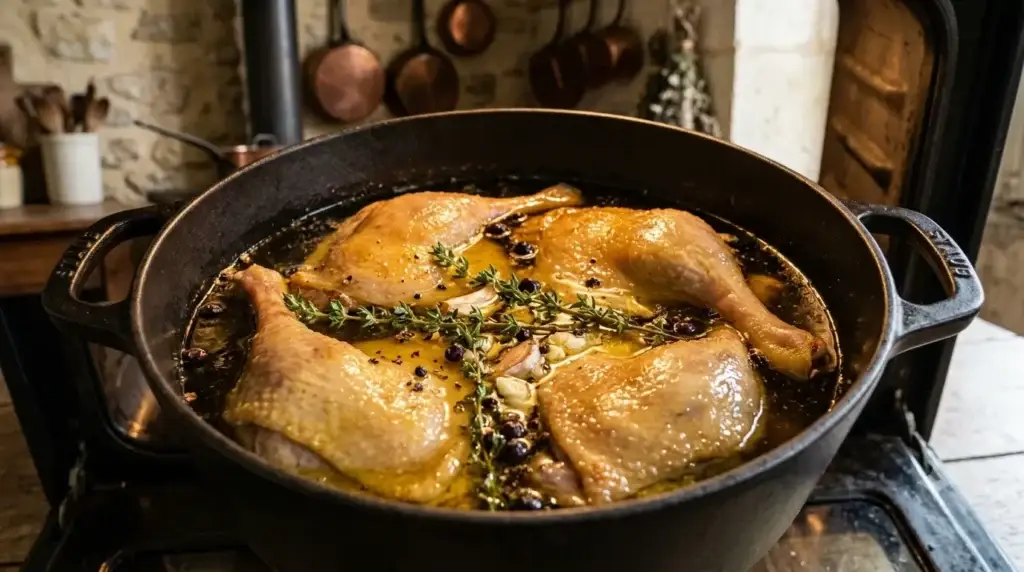
Cooking temperature. Submerge the legs fully in fat and cook in a 190–225°F (88–107°C) oven — low enough that the fat barely moves, showing only the occasional small bubble rather than an active simmer.
Cooking time. Plan for 2.5 to 3.5 hours, depending on the size of the legs. Larger Moulard duck legs will need the longer end of that range.
Visual cues. Properly cooked confit meat pulls slightly away from the bone at the joint, and the fat around the leg turns clear and fully rendered rather than cloudy.
Texture cues. The meat should offer almost no resistance when pressed or pierced with a fork — it should feel closer to very soft, well-rested braised meat than anything roasted.
Testing doneness. A skewer or thin knife inserted into the thickest part of the leg should slide in and out with no resistance at all.
Cooling. Let the legs cool in the fat itself, rather than removing them immediately. This helps redistribute moisture and makes the meat easier to handle without falling apart prematurely.
Storing under fat. Once cooled, the legs can be stored fully submerged in the same fat in an airtight container. The fat forms a seal against air, which is exactly the preservation mechanism the dish was built around in the first place.
How to Get Crispy Skin
Cooking the confit is only half the job — crisping it properly right before serving is what makes the dish memorable.
| Method | Best Temperature | Notes |
|---|---|---|
| Oven | 425°F (218°C) | Even crisping, gentler on the meat underneath |
| Cast iron skillet | Medium-high, skin-side down | Fast, deeply browned, needs close attention |
| Air fryer | 380–400°F (193–204°C) | Quick and consistent, works well for single portions |
| Broiler | High, watched closely | Fastest option, highest risk of burning |
Rendering excess fat. Whatever method you choose, start the leg skin-side down (in a pan) or skin-side up (in an oven or air fryer) to allow any remaining fat under the skin to render out before the surface crisps.
Preventing burnt skin. Since the meat is already fully cooked from the confit process, this final stage is purely about texture and color. Watch it closely — a minute or two of inattention is the difference between shattering skin and a burnt, bitter crust.
Restaurant finishing techniques. Many kitchens finish confit in a hot cast iron skillet, pressing the skin gently against the pan with a spatula for a few seconds at a time to ensure even, full contact and consistent browning across the whole surface.
Duck Fat: Liquid Gold
Duck fat is prized in French cooking for good reason. It carries a rich, savory flavor that’s noticeably more complex than neutral cooking oils, with a relatively high smoke point that makes it excellent for roasting and searing.
Storage. Strained duck fat keeps well refrigerated for several weeks, or frozen for several months.
Reuse. Fat used for confit can be strained and reused for future batches or other cooking, picking up more flavor with each use, much like a well-seasoned stock.
Other dishes to cook with duck fat:
- Roasted potatoes, which turn deeply golden and take on a savory richness
- Roasted vegetables, especially root vegetables like carrots and parsnips
- Pan-seared steaks, finished with a spoonful of duck fat for extra richness
- Fried or scrambled eggs, cooked in a small amount of duck fat instead of butter
- French fries, twice-fried in duck fat for exceptional crispness and flavor
Equipment Needed
- Dutch oven or heavy, oven-safe pot — needed to hold the legs fully submerged in fat during the slow cook
- Heavy roasting pan — an alternative vessel if cooking a larger batch of legs at once
- Wire rack and tray — for air-drying the legs during curing
- Instant-read thermometer — useful for monitoring oven and fat temperature accuracy
- Cast iron skillet — ideal for the final skin-crisping step
- Fine-mesh strainer — for straining and reusing duck fat after cooking
Common Mistakes
- Skipping the salt cure. Produces bland, under-seasoned meat. Always cure for at least 12 hours.
- Curing too long. Leaves the meat overly salty and dense. Stay within the 12–24 hour window.
- Not drying the legs before cooking. Excess moisture causes fat to spatter and slows crisping later. Pat thoroughly dry after rinsing off the cure.
- Cooking at too high a temperature. Boils the meat instead of gently rendering it, resulting in dry, stringy texture. Stay within 190–225°F.
- Not fully submerging the legs in fat. Uneven exposure leads to uneven cooking. Add extra fat if needed to cover completely.
- Rushing the cook time. Pulling the legs too early leaves tough connective tissue that hasn’t converted to gelatin. Give it the full 2.5 to 3.5 hours.
- Removing the legs from the fat while still hot. Can cause the delicate meat to fall apart prematurely. Let them cool in the fat first.
- Skipping the crisping step. Confit served straight from the fat without a final crisp misses the textural contrast that defines the dish.
- Crisping at too low a temperature. Produces soft, greasy skin instead of a crackling crust. Use high, direct heat for the final step.
- Walking away during the final crisp. Because the meat is already cooked, burning happens fast. Stay close and watch it constantly.
- Using low-quality or thin duck legs. Less fat and skin means less flavor and a less satisfying final texture.
- Discarding the cooking fat. That fat carries enormous flavor and can be strained and reused multiple times.
- Storing confit without enough fat covering it. Any exposed meat is vulnerable to spoilage; the fat needs to fully seal the surface.
- Not patting the legs dry before crisping. Residual moisture on the skin prevents proper browning.
- Over-salting during the cure by using table salt instead of kosher salt. Table salt is denser by volume and can lead to accidental over-salting if measured the same way.
Pro Chef Tips
- Weigh your salt rather than measuring by volume for consistent curing results.
- Use a wire rack during curing so air circulates on all sides of the legs.
- Warm the duck fat gently before adding legs, rather than starting from cold, solid fat.
- Keep the fat at a bare simmer — a few small, lazy bubbles, never a rolling boil.
- Check the fat temperature with a thermometer rather than guessing by eye.
- Cook a small test batch the first time to dial in your oven’s actual temperature versus its dial setting.
- Let the legs rest in the fat for at least a few hours, or ideally overnight, before crisping and serving.
- Reuse strained duck fat for roasting vegetables — it only gets better with each use.
- Crisp the skin just before serving, never far in advance.
- Use a heavy cast iron skillet for the most even, controlled crisping.
- Press the skin gently against the pan for full, even contact while crisping.
- Season the meat again lightly after crisping, since some salt is inevitably lost during the long cook.
- Save duck bones and trim for a rich stock if you’re breaking down whole ducks.
- Add a splash of orange zest to the cure for a subtle, classic French pairing with duck.
- Store confit in a container just large enough to keep the legs submerged, minimizing wasted fat.
- Bring cold confit to room temperature briefly before crisping, so the interior warms through evenly.
- Use tongs, not a fork, to move the legs — piercing the meat lets flavorful juices escape.
- Double-check that legs are fully submerged before placing the pot in the oven; add extra fat if any part is exposed.
- Let rendered fat settle after cooking so you can strain off any drippings or juices from the bottom.
- Pair confit with something acidic on the plate, like a sharp vinaigrette, to cut through its richness.
Variations
Confit with orange: Adding orange zest to the salt cure gives a subtle citrus note that pairs classically with rich duck.
Confit with juniper and gin: A small splash of gin added to the cure amplifies the juniper’s piney character for a more assertive, game-forward flavor.
Faster oven-braise method: For cooks short on time, a covered braise in stock instead of fat, at a slightly higher temperature, can approximate the tenderness of confit, though it sacrifices some of the classic richness and the traditional storage method.
Duck confit with olive oil blend: In a pinch, a blend of duck fat and neutral olive oil can stretch a smaller quantity of duck fat to fully submerge the legs, though pure duck fat gives the best flavor.
Storage
Properly cured and cooked duck confit, stored fully submerged in its own fat in an airtight container, keeps in the refrigerator for up to 2 weeks, and traditionally much longer in a very cold cellar environment. For longer storage, the fat-covered legs can be frozen for up to 3 months. To reheat, gently warm the container until the fat softens enough to remove the legs, then crisp as usual in a hot pan or oven. Always keep enough fat covering the meat between uses to maintain the seal that keeps it fresh.
What to Serve with Duck Confit
Classic Gascon plates pair duck confit with sarladaise potatoes (potatoes roasted in duck fat with garlic and parsley), simple frisée salad with a sharp mustard vinaigrette to cut the richness, or braised lentils, another southwest French staple that soaks up the meat’s savory juices beautifully. For wine, a medium-bodied red from the southwest of France, such as Cahors or Madiran, mirrors the region the dish comes from and stands up to its richness. A dry, food-friendly red Burgundy also works well if those are hard to find locally.

Frequently Asked Questions
1. What does duck confit mean? “Confit de canard” means preserved duck, referring to the traditional method of salt curing and slow-cooking duck legs submerged in their own fat.
2. Is duck confit hard to make at home? It requires patience and time rather than complicated technique. The steps themselves — salting, submerging in fat, and slow cooking — are simple to follow.
3. What temperature should duck confit be cooked at? Between 190°F and 225°F (88–107°C), low enough that the fat only shows the occasional gentle bubble rather than an active simmer.
4. Can I use olive oil instead of duck fat? Duck fat gives the most authentic flavor. A blend with olive oil can work if you’re short on duck fat, though pure duck fat is traditional and preferred.
5. How long does duck confit need to cure? 12 to 24 hours in the refrigerator is the standard window for proper seasoning without over-salting the meat.
6. Why is my duck confit tough instead of tender? This usually means the legs were cooked at too high a temperature or for too short a time, preventing the collagen from fully converting to gelatin.
7. Can duck confit be frozen? Yes, fully submerged in its cooking fat, for up to about 3 months.
8. What’s the best way to get crispy skin on duck confit? Finish the already-cooked legs in a hot cast iron skillet or a 425°F oven, watching closely since the meat is already cooked and only needs the skin browned.
9. What type of duck is best for confit? Moulard duck legs are considered ideal due to their larger size and higher fat content, though Pekin duck legs work well too.
10. Can I reuse the duck fat after cooking confit? Yes, strained duck fat can be reused multiple times for future batches of confit or for roasting vegetables and potatoes.
11. Do I need to remove the skin before curing? No, the skin stays on throughout curing and cooking, and is essential for the final crisping step.
12. Why does duck confit last so long in storage? The fat forms an airtight seal around the meat once cooled, which was the original reason this technique was developed before refrigeration existed.
Recipe Card
Classic Duck Confit
| Prep Time | 20 minutes (plus 12–24 hour cure) |
| Cook Time | 3 hours |
| Total Time | Approximately 15–27 hours (including cure) |
| Yield | 4 servings |
| Cuisine | French |
| Course | Main Dish |
| Calories (estimated) | 520 per serving |
Ingredients
- 4 duck legs
- 4 tablespoons kosher salt
- 6 garlic cloves, crushed
- 2 teaspoons black peppercorns, cracked
- 8 sprigs fresh thyme
- 3 bay leaves
- 1 teaspoon juniper berries, crushed
- 4 to 6 cups duck fat, melted (enough to fully submerge the legs)
Instructions
- Rub the duck legs generously with kosher salt on all sides. Place them on a wire rack over a tray with the garlic, cracked pepper, thyme, bay leaves, and juniper berries.
- Refrigerate uncovered for 12 to 24 hours to cure.
- Rinse off the salt and aromatics, then pat the legs completely dry with paper towels.
- Preheat the oven to 200°F (93°C).
- Arrange the legs snugly in a Dutch oven and pour in the melted duck fat until fully submerged.
- Cook uncovered in the oven for 2.5 to 3.5 hours, until the meat is fork-tender and pulls slightly from the bone.
- Let the legs cool in the fat before removing, or store them submerged in the fat until ready to serve.
- To serve, remove the legs from the fat, pat off excess fat, and crisp skin-side down in a hot cast iron skillet or in a 425°F oven for 8 to 12 minutes until the skin is deeply golden and shattering.
- Serve immediately.
Chef Notes: Letting the cooked confit rest in its fat in the refrigerator for at least a day before crisping and serving improves both flavor and texture. Strain and save the fat for future batches or for roasting vegetables.
Nutrition Disclaimer: Calorie and nutrition estimates are approximate and will vary depending on duck size, fat absorption, and specific ingredients used.
Conclusion
Duck confit rewards exactly the kind of patience that most modern cooking tries to avoid. There’s no way to shortcut the salt cure, no way to rush collagen into gelatin, and no way to fake the contrast between shattering skin and meat that falls apart at the touch of a fork. But once you understand what the salt, the fat, and the low, steady heat are each doing to the meat, the process stops feeling mysterious.
Cure the legs properly, keep the fat well below a simmer, and finish the skin hot and fast right before serving, and you’ll have a dish that tastes like it came from a farmhouse kitchen in Gascony, built to last through winter and good enough to define a whole region’s cooking. That’s duck confit, done right.