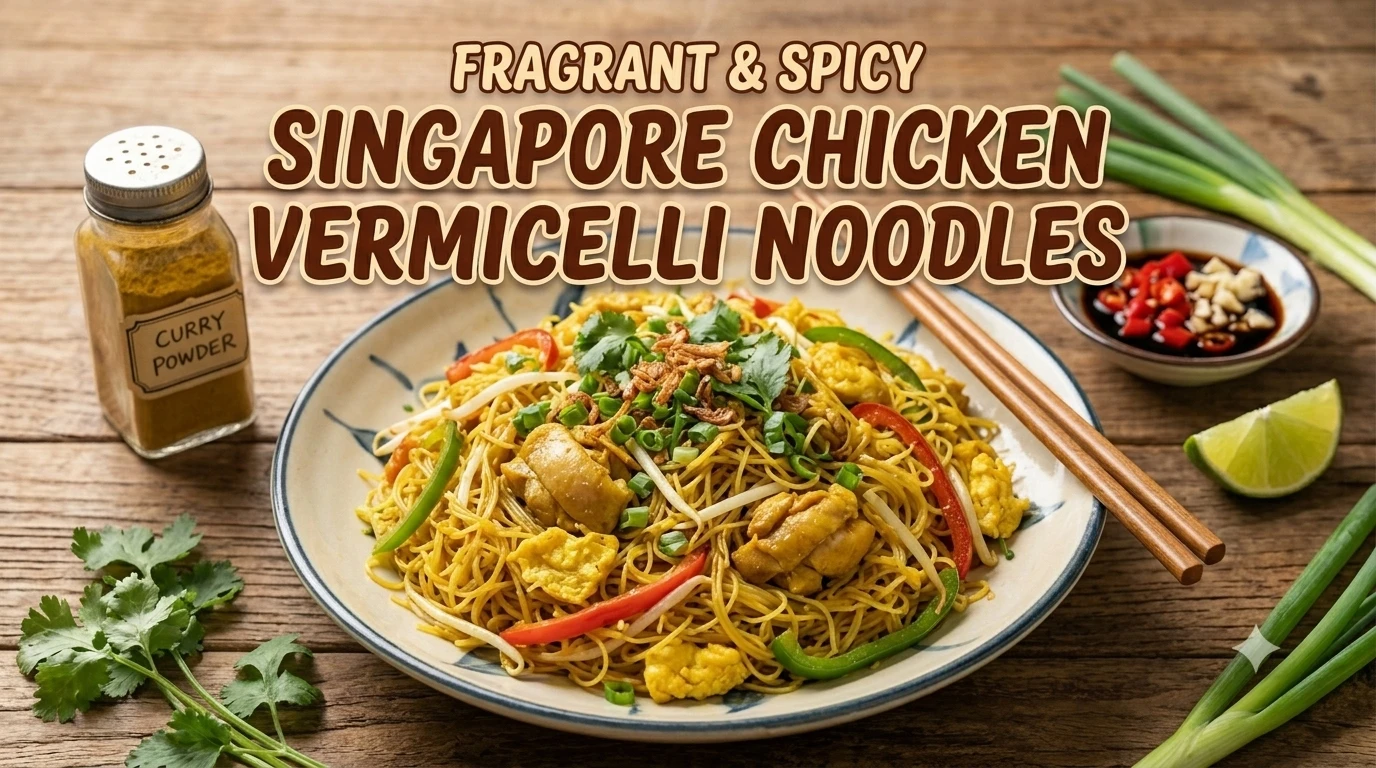
Singapore Chicken Vermicelli Noodles: The Fragrant Hawker Classic That’s Ready in Under 30 Minutes
Singapore Chicken Vermicelli Noodles show up on nearly every Chinese takeout menu in America, usually a few lines below the fried rice, always described the same way: thin rice noodles, curry powder, a little heat, maybe some shrimp thrown in with the chicken. Order it once and you understand the appeal immediately. The noodles are light, the curry is fragrant rather than heavy, and the whole plate comes together in less time than it takes to get delivery to your door.
Here is the part most menus will not tell you: this dish almost certainly did not start in Singapore. This guide covers where Singapore Chicken Vermicelli Noodles actually came from, why the name stuck anyway, the wok technique that separates a good version from a soggy one, and a full recipe you can have on the table in under thirty minutes. Along the way you will find ingredient breakdowns, fifteen common mistakes, twenty professional tips, and a complete recipe card.
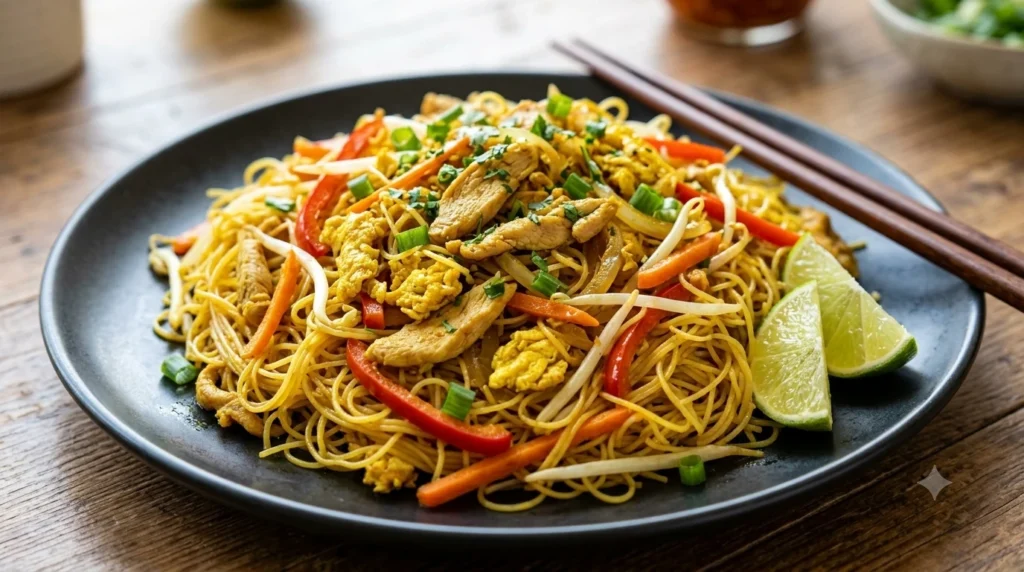
Table of Contents
- What Are Singapore Chicken Vermicelli Noodles?
- Why This Dish Is So Popular
- The Science Behind Perfect Stir-Fried Vermicelli
- Choosing the Best Ingredients
- Ingredients Explained
- Step-by-Step Technique
- Mastering Wok Cooking
- Equipment Needed
- Common Mistakes
- Pro Chef Tips
- Delicious Variations
- Storage & Reheating
- What to Serve with Singapore Chicken Vermicelli Noodles
- Frequently Asked Questions
- Recipe Card
- Conclusion
What Are Singapore Chicken Vermicelli Noodles?
Singapore Chicken Vermicelli Noodles is a stir-fried noodle dish built around thin rice vermicelli, sometimes labeled mei fun, tossed with curry powder, chicken, egg, and a mix of vegetables until everything takes on a warm, golden-yellow color. The curry is the signature here. It coats each strand of vermicelli without turning the dish into a sauce-heavy curry in the way you might picture from a bowl of curry over rice.
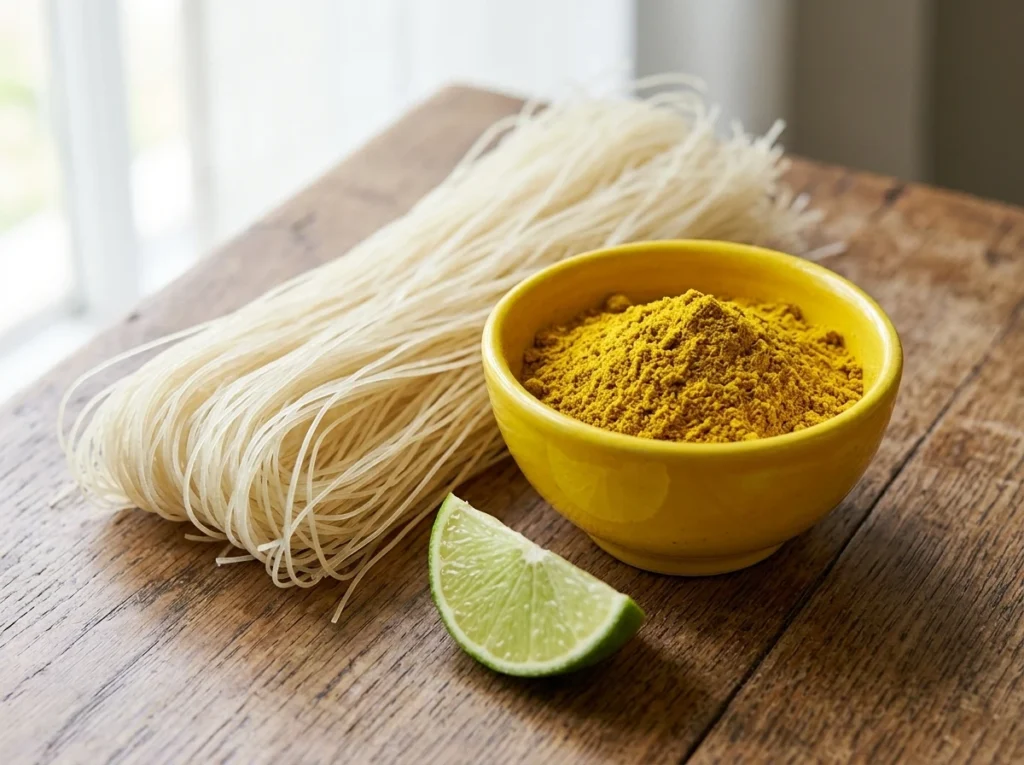
That bright yellow color comes almost entirely from curry powder bloomed in hot oil, sometimes with a touch of turmeric added for extra depth. The vermicelli itself is thin dried rice noodles, nearly translucent when raw, that soak up whatever they are cooked with rather than carrying much flavor on their own. This is exactly why the dish works: neutral noodles plus an assertive curry seasoning equals a plate that tastes bold in every bite.
You will find a version of this dish on the menu of nearly every Cantonese-style Chinese restaurant in the United States, the United Kingdom, Australia, and Canada. It has become a diaspora staple, the kind of order that shows up at family dinners and office lunch runs alike.
Here is where the history gets interesting, and where a lot of recipe blogs get it wrong. Singapore Chicken Vermicelli Noodles is widely believed to have originated in Hong Kong’s Cantonese restaurant scene, not in Singapore itself. Cantonese cooks, drawing inspiration from the curry powders and Southeast Asian flavors popular in Singapore and Malaysia, built a stir-fried noodle dish that borrowed the region’s spice profile without being a dish that Singaporean hawkers were actually cooking and eating at home. Food historians and culinary writers have pointed to this Hong Kong origin repeatedly, noting that the dish is essentially absent from Singapore’s own hawker centers, which serve their own noodle dishes entirely, like char kway teow, mee goreng, and Hokkien mee.
So why does the name persist? Marketing, mostly. “Singapore” on a menu signaled something exotic, spiced, and Southeast Asian to diners in Hong Kong and later around the world, even if the dish itself was a Cantonese kitchen’s invention. The curry powder, a genuine nod to Singapore and Malaysia’s Indian and Malay culinary influences, gave the name enough truth to stick. Think of it less as a geographic label and more as a flavor label, similar to how “Mongolian beef” has little to do with actual Mongolian cuisine.
Why This Dish Is So Popular
Speed is the first reason. From dry noodles to a finished plate, this dish rarely takes more than thirty minutes, which puts it firmly in weeknight-dinner territory even on a night when cooking feels like a chore.
The curry flavor is bold without being heavy. Unlike a simmered curry sauce, the curry powder here is toasted briefly in oil and tossed through the noodles, so the flavor is present in every bite but never sits in a pool at the bottom of your bowl.
Texture does a lot of the work too. Tender chicken, noodles with a slight chew, and vegetables that still have some snap to them create a plate with real contrast, instead of everything softening into the same mush.
It is also genuinely a one-pan dish. Once your prep is done, the actual cooking happens in a single wok or skillet, which means less cleanup and a shorter distance between “I’m hungry” and “dinner is ready.”
The Science Behind Perfect Stir-Fried Vermicelli
Soaking the noodles correctly. Rice vermicelli needs to soak in room-temperature or lukewarm water, not boiling water, until it turns pliable but still has a slight firmness, usually eight to ten minutes depending on the brand. Boiling water cooks the noodles too fast and unevenly, leaving some strands mushy and others still stiff in the center.
Why over-soaking ruins the texture. Vermicelli left in water too long absorbs excess moisture it cannot shed during the quick stir-fry that follows. Once in the wok, those waterlogged noodles turn gummy and clump together instead of separating into individual strands. Aim for noodles that still feel slightly firm when you drain them; they will finish cooking in the wok.
High heat is not optional. Stir-frying relies on very high heat to cook ingredients quickly while keeping moisture from pooling in the pan. A properly hot wok sears vegetables and chicken almost instantly, sealing in texture rather than slowly releasing water into the pan the way a lukewarm pan does.
Wok hei, or “the breath of the wok.” This refers to the faint charred, smoky flavor that develops when food briefly touches the extremely hot metal of a well-seasoned wok, along with quick flare-ups from oil and juices hitting high heat. Home stoves rarely reach the output of a professional wok burner, but you can approximate the effect by working in small batches and keeping the pan as hot as your stove allows throughout cooking.
Moisture management. Every ingredient added to the wok releases some water as it cooks. Adding too much at once, especially vegetables with high water content, drops the pan’s temperature and causes steaming instead of searing. Cook proteins and vegetables in stages rather than dumping everything in together.
Blooming curry powder. Curry powder is a blend of dried, ground spices, and like most ground spices, its aromatic oils are locked up until heat releases them. Adding curry powder directly to hot oil for thirty seconds to a minute, before other ingredients go in, wakes up those aromatics far more effectively than sprinkling it over the noodles at the end.
Balancing soy sauce against curry. Soy sauce is salty and can easily overpower the more delicate spice notes in curry powder if you pour it in heavy-handed. Add it gradually, tasting as you go, and lean on white pepper and a touch of sesame oil to round out the seasoning rather than reaching for more soy sauce every time something tastes flat.
Choosing the Best Ingredients
| Noodle Type | Texture | Works for This Dish? |
|---|---|---|
| Rice Vermicelli (Mei Fun) | Thin, light, slightly chewy when cooked correctly | Yes, the traditional and correct choice |
| Bean Thread Noodles (Glass Noodles) | Springy, translucent, made from mung bean starch | Not traditional; different chew and flavor absorption |
| Egg Noodles | Thicker, eggier, more filling | Substitute, but changes the dish’s character significantly |
| Fresh Rice Noodles | Soft, wide, delicate | Not suited to this dish; tears apart in a hot wok |
Rice vermicelli is the correct and traditional noodle here, chosen specifically because its thin strands soak up the curry oil quickly and cook through in barely a minute once added to the wok. Bean thread noodles look similar when dry but behave very differently once cooked, staying springier and absorbing less of the curry flavor. Egg noodles will work in a pinch and are a reasonable substitute for anyone who cannot find rice vermicelli, though the dish shifts toward something closer to a curry lo mein. Fresh rice noodles are too delicate for this style of high-heat, fast stir-fry and tend to break apart into pieces.
For the protein, chicken thighs hold up better than chicken breast in a hot wok, staying juicy through the quick, high-heat cooking, while breast meat can turn stringy if it overcooks even slightly. Both work, but thighs are more forgiving for home cooks still building their wok timing.
Fresh vegetables matter more than people expect. Bell peppers and carrots should be cut thin enough to cook through in under two minutes, and bean sprouts should go in last, since they lose their crunch fast under heat.
Shrimp is a common and welcome addition alongside the chicken, cooked separately for a minute or two before joining the noodles at the end, since shrimp turns rubbery fast if left in the pan too long. Char siu, Cantonese roast pork, is a popular substitution or addition in restaurants, sliced thin and added toward the end since it is already cooked.
For curry powder, a standard Madras-style curry powder found in most US grocery stores works well here. Look for one with visible turmeric, coriander, and cumin in the ingredient list, and avoid pre-made “curry sauce” jars, which are wet and formulated for simmered dishes rather than a dry stir-fry seasoning.
Ingredients Explained
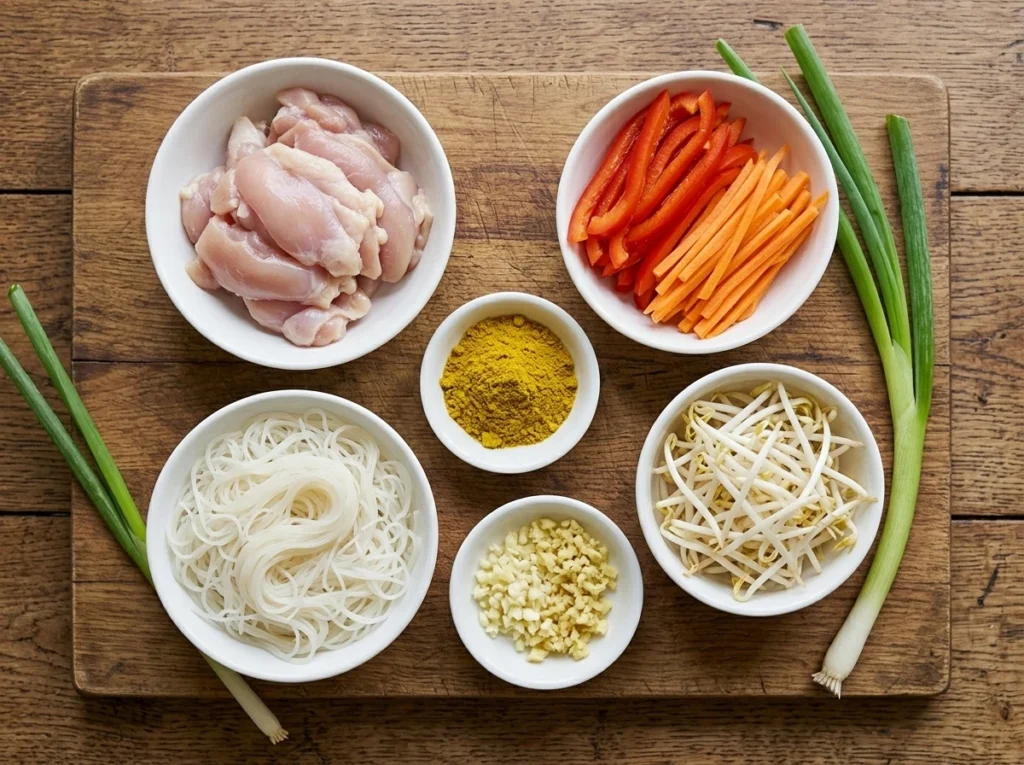
| Ingredient | Role in the Dish |
|---|---|
| Rice vermicelli | The base noodle; absorbs curry flavor and oil |
| Chicken (thigh recommended) | Main protein; stays juicy under high heat |
| Eggs | Adds richness and a soft textural contrast |
| Shrimp (optional) | Adds seafood flavor and variety in texture |
| Curry powder | Defines the dish’s signature color and aroma |
| Garlic | Aromatic base, cooked briefly before curry |
| Ginger | Sharp, warming aromatic that cuts richness |
| Yellow onion | Adds sweetness and body |
| Bell peppers | Color, crunch, and mild sweetness |
| Carrots | Crunch and subtle sweetness |
| Bean sprouts | Fresh crunch added at the very end |
| Green onions | Bright, sharp finishing garnish |
| Soy sauce | Salt and umami depth |
| Oyster sauce | Savory depth and slight sweetness |
| Sesame oil | Nutty aroma, used sparingly at the end |
| White pepper | Warm, subtle heat different from black pepper |
| Chicken stock | Adds moisture and helps loosen the noodles |
| Cooking oil | High smoke point oil for proper searing |
| Lime wedges | Brightens the dish with fresh acidity at serving |
Curry powder is doing the heaviest lifting in this dish, so buy a fresh jar if yours has been sitting in the cabinet for over a year; ground spices lose potency over time. Garlic and ginger should go into the oil just before the curry powder, since both burn quickly at wok temperatures and turn bitter if left too long.
White pepper is worth calling out specifically. It has a different, slightly more musky heat than black pepper and shows up in a lot of Cantonese and Southeast Asian cooking for exactly that reason. It is a small ingredient that makes a noticeable difference here.
Oyster sauce rounds out the soy sauce with a touch of sweetness and thickness, helping the seasoning cling to the noodles rather than pooling at the bottom of the pan. Sesame oil should go in at the very end, off heat if possible, since high heat can burn off its aroma and turn it bitter.
Step-by-Step Technique
1. Soak the noodles (8-10 minutes)
Submerge rice vermicelli in room-temperature or lukewarm water until pliable but still slightly firm. Drain and set aside; do not let them sit in water any longer than needed.
2. Marinate the chicken (10 minutes, can overlap with noodle soaking)
Toss sliced chicken with a small amount of soy sauce, a pinch of white pepper, and a teaspoon of cornstarch if you want extra tenderness. Let it sit while you prep vegetables.
3. Prep the vegetables (5-8 minutes)
Slice bell peppers, carrots, and onion thin and evenly, so everything cooks at roughly the same speed. Mince garlic and ginger. Have bean sprouts and green onions ready separately, since they go in last.
4. Heat the wok
Heat your wok or large skillet over high heat until a bead of water flicked onto the surface skitters and evaporates almost instantly. Add oil and swirl to coat.
5. Cook the eggs (1 minute)
Pour beaten eggs into the hot oil, scramble quickly into loose curds, and remove to a plate. This keeps the eggs from overcooking into rubber later.
6. Cook the chicken (2-3 minutes)
Add a bit more oil if needed, then add the chicken in a single layer. Let it sear for a minute before stirring, listening for a strong sizzle the whole time. Remove once just cooked through and set aside with the eggs.
7. Bloom the curry powder (30-60 seconds)
Lower heat slightly, add a touch more oil, then add garlic, ginger, and curry powder together. Stir constantly until fragrant; this is the step that builds the dish’s entire flavor base, so do not rush it, but do not let it sit long enough to burn either.
8. Stir-fry the vegetables (2 minutes)
Raise the heat back up and add onion, bell peppers, and carrots. Toss quickly, keeping them moving so they sear rather than steam.
9. Add the noodles (1-2 minutes)
Add the drained vermicelli along with a splash of chicken stock. Use tongs or a spatula to lift and toss the noodles through the curry and vegetables, breaking up any clumps.
10. Add the sauces (1 minute)
Return the chicken and eggs to the wok. Add soy sauce and oyster sauce, tossing continuously so everything coats evenly without any one spot getting oversaturated.
11. Final toss (30 seconds)
Add bean sprouts and green onions last, tossing just enough to warm them through while keeping their crunch. Drizzle sesame oil over the top and give one final toss off the heat.
12. Serve immediately
Plate right away with lime wedges on the side. This dish does not wait well; the noodles continue absorbing moisture and softening the longer they sit in the pan.
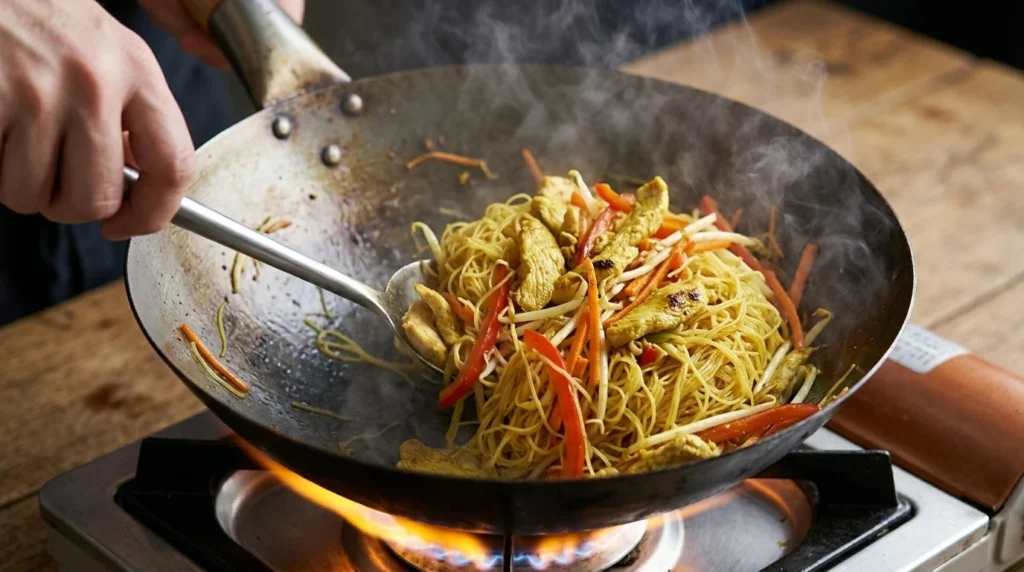
Mastering Wok Cooking
Proper wok temperature is the single biggest factor separating a restaurant-quality plate from a soggy one at home. The pan should be hot enough that oil shimmers within seconds of hitting the surface, and ingredients should sizzle loudly and immediately on contact.
Cooking in batches matters more than most home cooks expect. A crowded pan drops in temperature fast, and once that happens, ingredients release water and start steaming instead of searing. Cook the eggs, then the chicken, then the vegetables, each as its own step, rather than combining them all from the start.
Preventing steaming comes down to two things: heat and moisture. Pat chicken dry before it goes in the pan, and do not add liquid ingredients like stock or sauce until the noodles and vegetables are already in the wok and moving.
Keeping vegetables crisp means timing them by how long each one actually takes to cook. Carrots and bell peppers can handle two minutes of direct heat; bean sprouts need only thirty seconds. Add them in that order, not all at once.
If you do not own a wok, a large, heavy skillet, ideally cast iron or stainless steel, can get you most of the way there. The sloped sides of a wok help toss ingredients more easily, but a flat skillet with high heat and a steady hand with a spatula produces a very similar result. The key is using the largest, heaviest pan you have and not overcrowding it, even if that means cooking the dish in two smaller rounds.
Equipment Needed
- Carbon steel wok: Retains and distributes high heat better than most other cookware, ideal for this style of cooking.
- Large skillet: A solid substitute if a wok is not available; cast iron or stainless steel works best.
- Wok spatula: Its flat edge and curved shape make tossing and scraping noodles far easier than a regular spoon.
- Chef’s knife: For thin, even slicing of chicken and vegetables.
- Mixing bowls: For marinating chicken and holding prepped vegetables before cooking starts.
- Colander: For draining soaked vermicelli quickly and thoroughly.
- Microplane: Useful for finely grating fresh ginger if you prefer that texture over mincing.
Common Mistakes
1. Over-soaking the vermicelli. This leaves noodles waterlogged and prone to turning mushy in the wok. Soak just until pliable, then drain.
2. Soaking noodles in boiling water. This cooks them unevenly and too fast. Use room-temperature or lukewarm water instead.
3. Not having ingredients prepped before turning on the heat. Stir-frying moves fast, and stopping to chop mid-cook drops your pan’s temperature and overcooks whatever is already in it.
4. Overcrowding the wok. Too much food at once steams rather than sears. Cook proteins and vegetables in stages.
5. Adding curry powder too late. Sprinkling curry powder on at the end, rather than blooming it in oil early, leaves the flavor flat and underdeveloped.
6. Burning the curry powder or aromatics. Ground spices and minced garlic burn fast at high heat. Keep them moving and do not walk away during this step.
7. Using cold noodles straight from the fridge if pre-soaked ahead of time. Cold noodles shock the pan’s temperature down. Let them come closer to room temperature first.
8. Adding too much soy sauce. This overwhelms the curry’s more delicate spice notes. Add gradually and taste as you go.
9. Overcooking the chicken before it joins the rest of the dish. Chicken continues cooking once returned to the wok with everything else, so pull it slightly before you think it is fully done.
10. Adding bean sprouts too early. They lose their crunch fast. Add them in the final thirty seconds, not with the other vegetables.
11. Using a pan that is not hot enough. A lukewarm pan cannot deliver the sear this dish depends on. Preheat longer than feels necessary.
12. Skipping the egg-and-protein-first method. Cooking everything together in one long simmer, rather than in separate quick stages, results in uneven textures throughout.
13. Not tossing the noodles enough once sauce is added. Uneven tossing leaves some noodles clumped and under-seasoned while others get soggy with too much sauce.
14. Letting the finished dish sit in the pan before serving. The noodles keep absorbing moisture off the heat and turn softer than intended. Plate immediately.
15. Using low-quality, stale curry powder. Ground spices lose potency over time, and a flat curry powder produces a flat-tasting dish no matter how well you execute the technique.
Pro Chef Tips
- Buy fresh curry powder at least once a year; stale spice blends taste dull no matter the technique.
- Cut all vegetables to a similar thickness so everything finishes cooking at the same time.
- Marinate chicken with a small amount of cornstarch for a noticeably more tender bite.
- Cook eggs first and set them aside; this keeps them from turning rubbery later in the process.
- Bloom curry powder in oil for at least thirty seconds before adding liquid ingredients.
- Keep bean sprouts and green onions separate from the other vegetables until the very end.
- Preheat your wok or skillet longer than feels necessary; a properly hot pan makes every later step easier.
- Add a splash of chicken stock with the noodles to help loosen them and prevent clumping.
- Use tongs in addition to a spatula for better control when tossing noodles.
- Taste as you build the sauce rather than adding all seasonings at once.
- Add sesame oil at the very end, off heat, to preserve its aroma.
- Cook proteins and vegetables in separate batches rather than crowding the pan.
- Have every ingredient prepped and within reach before you turn on the burner.
- Use chicken thighs over breast for a more forgiving, juicier result.
- Serve immediately; this dish does not hold well once plated.
- Add shrimp separately toward the end of cooking to avoid overcooking it.
- If using char siu, add it in the final minute since it is already cooked.
- A small pinch of sugar can round out the curry powder’s flavor if it tastes flat.
- Keep a small bowl of water near the wok to deglaze quickly if anything starts sticking.
- Double the vegetables if you want a lighter, more vegetable-forward version without changing the core technique.
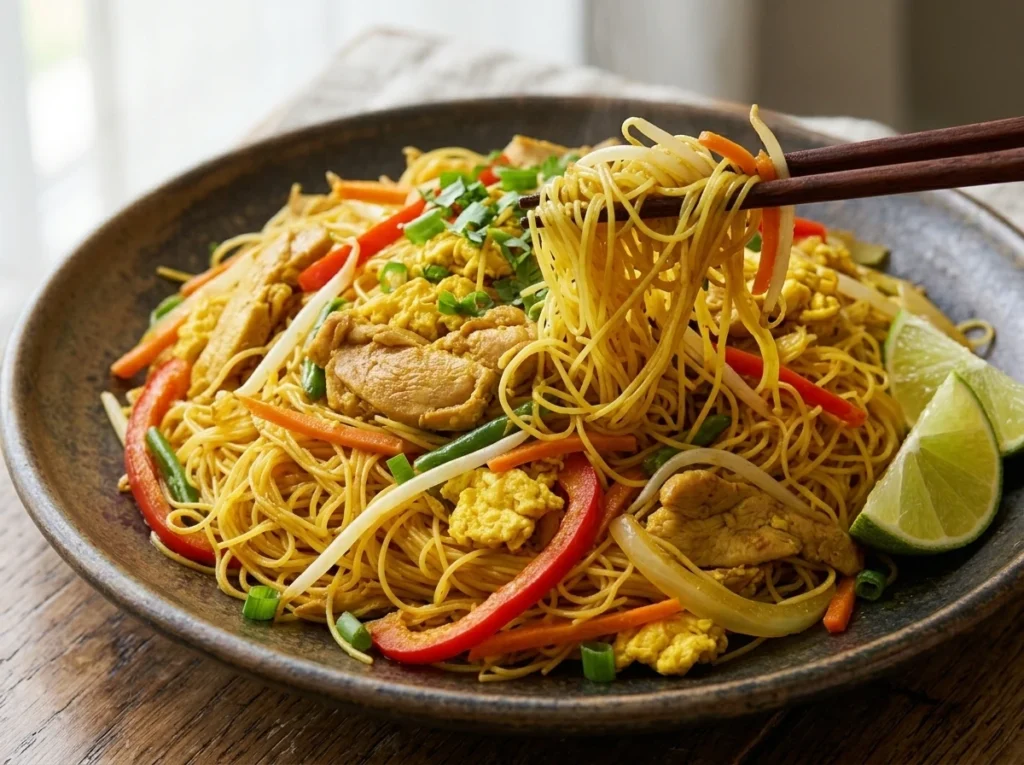
Delicious Variations
Chicken and Shrimp Add peeled, deveined shrimp alongside the chicken for the classic combination seen on most restaurant menus. Cook the shrimp separately for a minute or two to avoid overcooking.
Vegetarian Skip the chicken and shrimp entirely, and lean on a wider mix of vegetables like mushrooms, snow peas, and baby corn for texture and substance.
Tofu Use pressed, pan-fried firm tofu cubes in place of chicken for a plant-based protein that still holds up to the high heat of the wok.
Beef Thinly sliced flank steak or sirloin, marinated similarly to the chicken, makes a heartier variation. Sear briefly since thin-sliced beef cooks fast.
Extra Spicy Add sliced fresh chili or a spoonful of chili garlic sauce along with the curry powder for a version with real heat behind the curry.
Low-Carb Version Substitute the rice vermicelli with shirataki noodles or thinly spiralized vegetables, adjusting cooking time down since these need far less time in the wok.
Gluten-Free Version Use tamari or a certified gluten-free soy sauce alternative in place of regular soy sauce, and double check that your oyster sauce is gluten-free, since some brands include wheat.
Extra Vegetable Version Increase the ratio of bell peppers, carrots, snap peas, and bean sprouts relative to noodles for a lighter, more vegetable-forward plate.
Storage & Reheating
Singapore Chicken Vermicelli Noodles keep in the refrigerator for up to four days in an airtight container. Let the dish cool to room temperature before sealing it, ideally within an hour of cooking, to avoid trapping too much steam inside the container.
Freezing is possible but not ideal. Rice vermicelli tends to turn soft and slightly gummy after freezing and thawing, since the noodles’ structure does not hold up as well as it does with wheat noodles. If you do freeze it, thaw overnight in the refrigerator rather than at room temperature.
To reheat without drying the noodles out, use a skillet over medium heat with a small splash of water or chicken stock, tossing frequently until warmed through. A microwave works too, but cover the dish loosely and add a splash of water first, since microwaving dry noodles directly tends to toughen them.
As with any dish containing chicken, reheat leftovers to an internal temperature of 165°F, and do not leave the finished dish out at room temperature for more than two hours.
What to Serve with Singapore Chicken Vermicelli Noodles
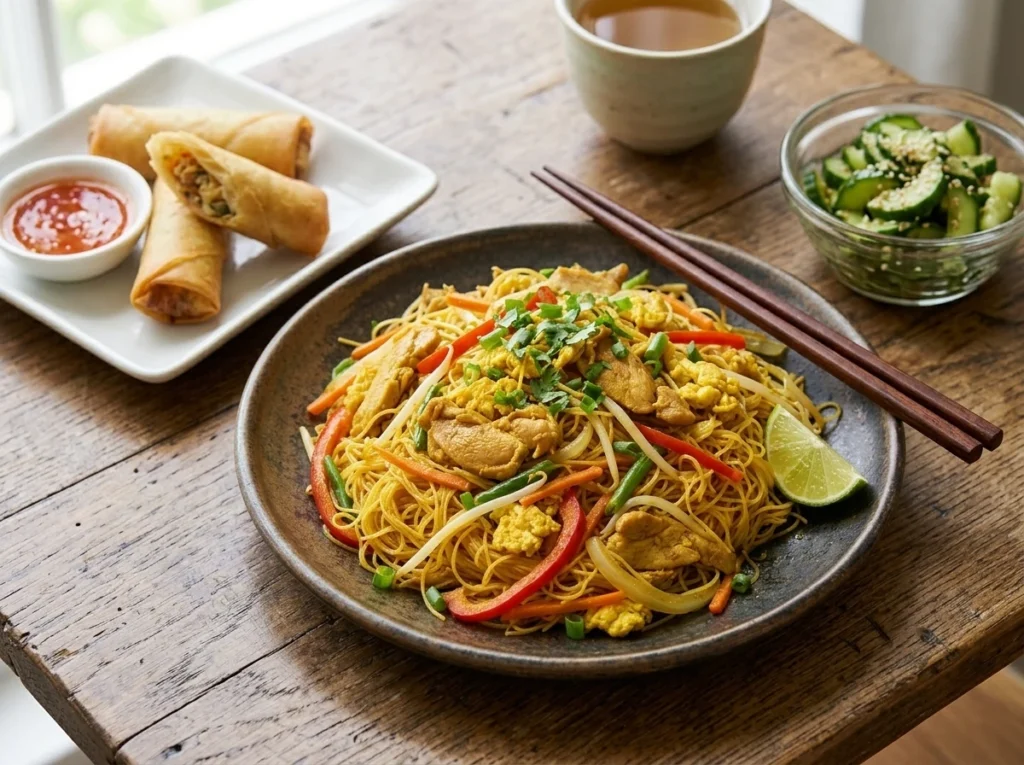
Spring rolls make an easy, crunchy appetizer that contrasts nicely with the soft texture of the noodles.
Chicken satay, with its charred, peanut-forward flavor, pairs well with the curry notes already in the noodles without competing against them.
Hot and sour soup is a classic starter in many Chinese-American restaurants and works as a light opener before the richer noodle dish.
Asian cucumber salad brings cool, sharp acidity that cuts through the richness of the curry and oil.
Steamed dumplings, whether pork, chicken, or vegetable, round out the meal without overshadowing the noodles as the main event.
Stir-fried bok choy or Chinese broccoli, cooked simply with garlic, adds a fresh, slightly bitter vegetable side that balances the meal.
For drinks, jasmine tea is the classic, food-safe pairing that cleanses the palate between bites. Sparkling water with a squeeze of lime echoes the citrus finish of the dish itself. A Riesling or Sauvignon Blanc, both with enough acidity to stand up to curry spice, work well for those who prefer wine. A light lager is a solid, no-fuss beer pairing for casual dinners.
Frequently Asked Questions
Can I use egg noodles instead of rice vermicelli? Yes, though the dish will taste and feel different. Egg noodles are thicker and eggier, shifting the result closer to a curry lo mein rather than the light, thin-noodle texture traditional to Singapore Chicken Vermicelli Noodles.
Can I make this gluten-free? Yes. Rice vermicelli is naturally gluten-free. Swap regular soy sauce for tamari or a certified gluten-free soy sauce, and confirm your oyster sauce brand does not contain wheat, since some do.
Can I use rotisserie chicken instead of raw chicken? Yes. Shred or slice the rotisserie chicken and add it toward the end of cooking, since it is already cooked and only needs to warm through with the rest of the dish.
Why are my noodles sticky or clumped together? This usually means the vermicelli either over-soaked before cooking or sat too long in the wok without enough tossing. Soak just until pliable, drain well, and keep the noodles moving once they hit the pan.
Can I prepare this ahead of time? You can prep the vegetables, marinate the chicken, and soak the noodles ahead, but the actual stir-frying should happen right before serving, since this dish is best eaten immediately.
Can I freeze leftovers? You can, though rice vermicelli tends to soften more than wheat-based noodles after freezing and thawing. For best texture, refrigerate rather than freeze if you plan to eat leftovers within a few days.
Can I make it less spicy? Yes. The base curry powder itself is more warm and aromatic than sharply spicy. If your curry powder blend runs hot, reduce the amount slightly or choose a milder blend.
Can I cook this without a wok? Yes. A large, heavy skillet, ideally cast iron or stainless steel, works well as a substitute. Use high heat and avoid overcrowding the pan, cooking in batches if needed.
Is Singapore Chicken Vermicelli Noodles actually from Singapore? Most food historians and culinary writers trace the dish to Hong Kong’s Cantonese restaurant scene, where cooks borrowed curry flavors associated with Singapore and Malaysia. It is largely absent from Singapore’s own hawker food culture.
What curry powder should I use? A standard Madras-style curry powder from any US grocery store works well. Look for one listing turmeric, coriander, and cumin, and avoid pre-made wet curry sauces meant for simmered dishes.
Can I add shrimp along with the chicken? Yes, this is a common and popular combination. Cook the shrimp separately for a minute or two to avoid overcooking it before adding it to the noodles.
Why does my curry flavor taste flat? This usually means the curry powder was added too late, or it was stale. Bloom fresh curry powder in hot oil for thirty to sixty seconds before adding other ingredients.
Can I make a vegetarian version? Yes. Skip the chicken and shrimp and add more vegetables, tofu, or mushrooms in their place, keeping the same curry-forward stir-fry technique.
How do I keep the vegetables from turning soggy? Add vegetables in order of how long they take to cook, thicker vegetables like carrots first and delicate ones like bean sprouts last, and keep the heat high throughout.
What is the best protein-to-noodle ratio for this dish? A common home-cook ratio is about half a pound of protein to eight ounces of dry vermicelli, which keeps the dish noodle-forward without skimping on protein.
Recipe Card
Singapore Chicken Vermicelli Noodles
| Detail | Info |
|---|---|
| Prep Time | 15 minutes |
| Cook Time | 12 minutes |
| Total Time | 27 minutes |
| Servings | 4 |
| Cuisine | Chinese-Southeast Asian fusion |
| Course | Main Dish |
| Calories (estimated) | 380 per serving |
Ingredients
- 8 oz dried rice vermicelli
- 1 lb boneless, skinless chicken thighs, thinly sliced
- 2 large eggs, beaten
- 4 oz shrimp, peeled and deveined (optional)
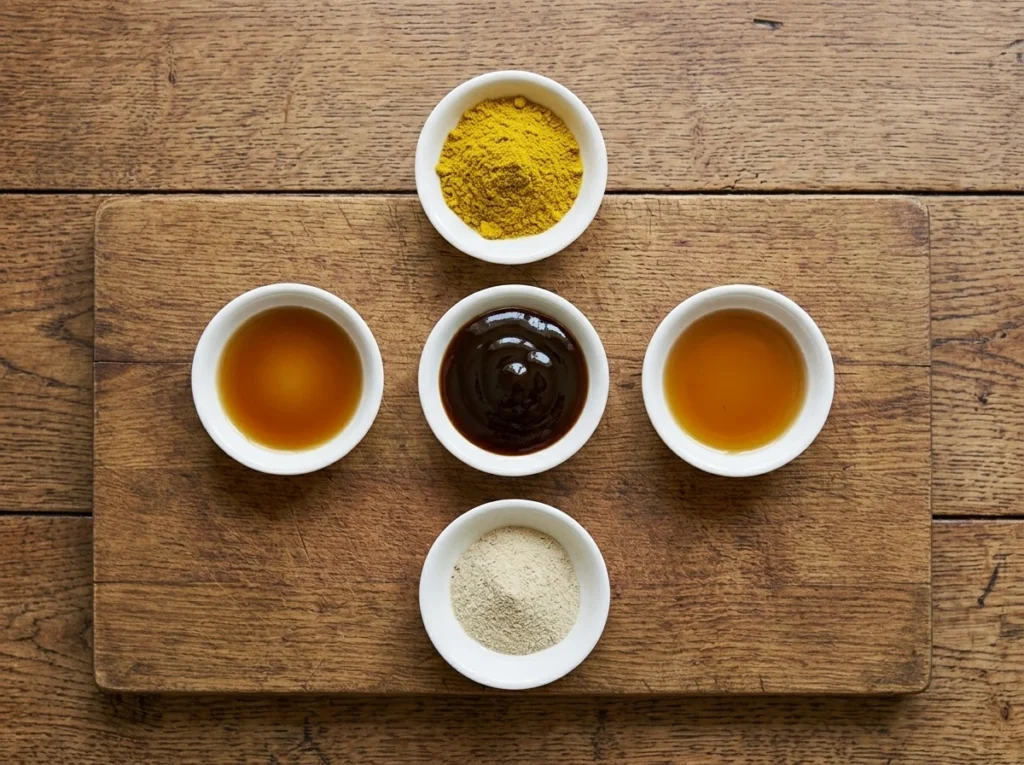
- 2 tablespoons curry powder
- 3 cloves garlic, minced
- 1 tablespoon fresh ginger, minced
- 1/2 yellow onion, sliced
- 1 red bell pepper, thinly sliced
- 1 carrot, julienned
- 1 cup bean sprouts
- 3 green onions, cut into 2-inch pieces
- 2 tablespoons soy sauce
- 1 tablespoon oyster sauce
- 1 teaspoon sesame oil
- 1/4 teaspoon white pepper
- 1/4 cup chicken stock
- 3 tablespoons cooking oil, divided
- Lime wedges, for serving
Instructions
- Soak vermicelli in room-temperature water for 8-10 minutes, until pliable but still slightly firm. Drain well.
- Toss sliced chicken with a small splash of soy sauce and white pepper. Set aside.
- Prep all vegetables and have them within reach of the stove.
- Heat 1 tablespoon oil in a wok or large skillet over high heat. Add eggs and scramble quickly. Remove to a plate.
- Add another tablespoon of oil. Add chicken in a single layer, sear for 1 minute, then stir until just cooked through. Remove and set aside with the eggs.
- Lower heat slightly. Add remaining oil, garlic, ginger, and curry powder. Stir constantly for 30-60 seconds until fragrant.
- Raise heat back to high. Add onion, bell pepper, and carrot. Stir-fry for 2 minutes.
- Add drained vermicelli and chicken stock. Toss continuously to coat the noodles and break up clumps.
- Return chicken and eggs to the wok. Add soy sauce and oyster sauce. Toss until evenly combined.
- Add bean sprouts and green onions. Toss for 30 seconds, just until warmed through.
- Remove from heat, drizzle with sesame oil, and give one final toss.
- Serve immediately with lime wedges.
Chef Notes Chicken thighs stay juicier than breast under high heat. Bloom the curry powder fully before adding vegetables for the best flavor.
Storage Notes Refrigerate in an airtight container for up to 4 days. Reheat in a skillet with a splash of water or stock. Freezing is possible but softens the noodles.
Nutrition Disclaimer Calorie and nutrition estimates are approximate and will vary based on specific ingredients, protein choice, and portion size used.
Conclusion
Singapore Chicken Vermicelli Noodles earns its place on takeout menus honestly, even if the name is more marketing than geography. The dish likely started in Hong Kong’s Cantonese kitchens, built on curry flavors borrowed from Singapore and Malaysia, and it has spent decades since proving that a good idea does not need a perfectly accurate name to become a favorite.
What matters at home is the technique: soak the noodles just enough, keep the wok hot, bloom the curry powder properly, and get everything from pan to plate fast. Do that, and you will have a dish that tastes like it came from a busy restaurant kitchen, in less time than it takes to get delivery.