
Rainbow Chicken Stir Fry: The Colorful 30-Minute Dinner Packed with Crisp Vegetables and Bold Asian Flavors
Rainbow Chicken Stir Fry is the kind of dinner that makes a weeknight feel a little less rushed and a lot more delicious. Juicy strips of chicken get seared until golden, then tossed with a rainbow of crisp vegetables and a glossy, savory-sweet sauce that clings to every bite. The whole thing comes together in one pan, in about thirty minutes, which makes it a lifesaver for busy families, meal preppers, and anyone who wants a healthy dinner without spending the evening in the kitchen.
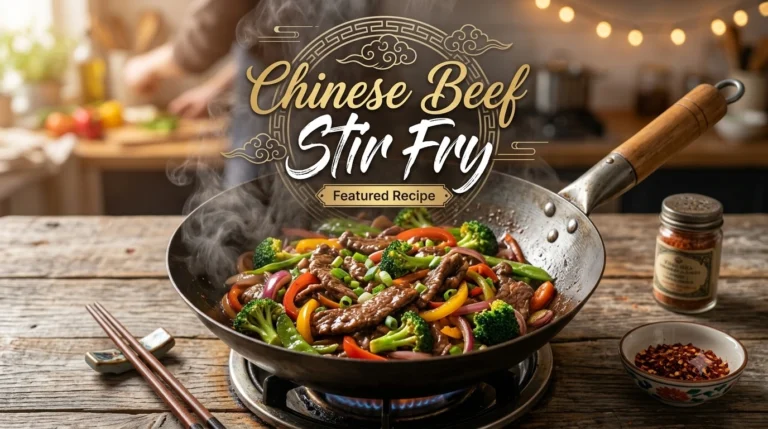
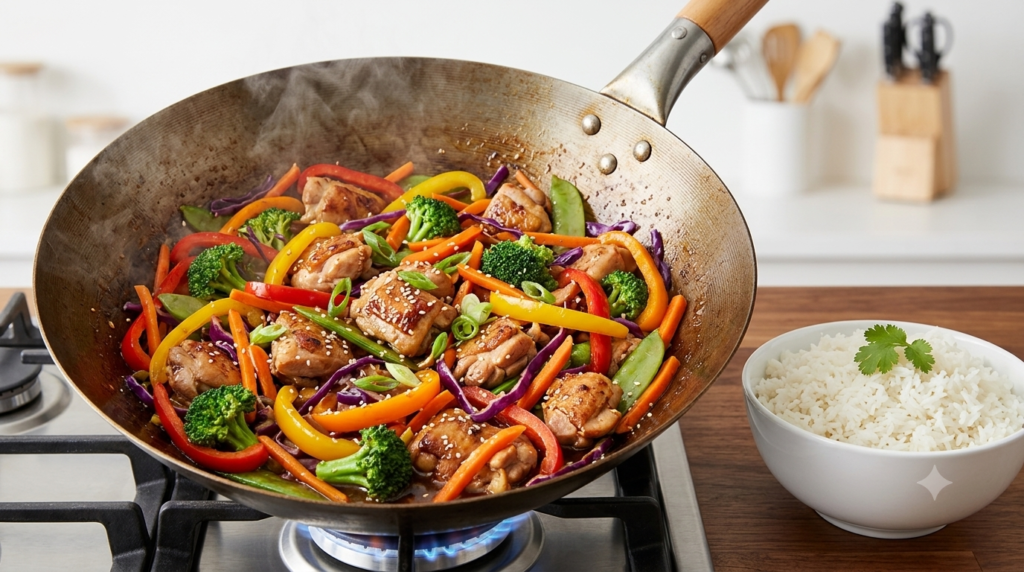
What sets this Rainbow Chicken Stir Fry apart from a plain chicken and vegetable stir fry is the intentional mix of colors: red, yellow, and orange peppers, deep green broccoli, purple cabbage, and bright orange carrots. Each color brings its own nutrients, its own texture, and its own moment of crunch. The result looks like something from a restaurant menu, but it’s built from ingredients you likely already have in your kitchen.
This guide goes far beyond a basic recipe card. You’ll learn the food science behind why restaurant stir fry tastes so different from what most people make at home, how to choose the right cut of chicken, how to pick and cut vegetables so they cook evenly, and how to avoid the fifteen most common mistakes that turn a stir fry into a soggy, gray disappointment. By the end, you’ll be able to make Rainbow Chicken Stir Fry with the same confidence as a professional cook.
Table of Contents
- What Is Rainbow Chicken Stir Fry?
- Why This Stir Fry Is So Good
- The Science of Stir-Frying
- Choosing the Best Chicken
- Choosing the Best Vegetables
- Ingredients Explained
- Step-by-Step Technique
- How to Make Restaurant-Quality Stir Fry
- Equipment Needed
- Common Mistakes
- Pro Chef Tips
- Variations
- Storage & Meal Prep
- What to Serve with Rainbow Chicken Stir Fry
- Frequently Asked Questions
- Recipe Card
- Conclusion
What Is Rainbow Chicken Stir Fry?
Rainbow Chicken Stir Fry is a one-pan dish made by searing bite-sized pieces of chicken over high heat, then quickly cooking a colorful mix of vegetables, and finishing everything in a savory-sweet Asian-style sauce built from soy sauce, garlic, ginger, and a touch of sweetness. The word “rainbow” refers to the deliberate use of vegetables from across the color spectrum: red and yellow peppers, orange carrots, green broccoli, and purple cabbage are common choices.
The color isn’t just for looks. Vegetable pigments are tied directly to different families of nutrients. Red and orange vegetables tend to be rich in carotenoids, the compounds that convert to vitamin A in the body. Purple cabbage carries anthocyanins, the same antioxidant family found in blueberries. Green vegetables like broccoli and snow peas bring vitamin C, fiber, and a dose of chlorophyll-linked compounds. When a plate includes several colors, it naturally includes a wider range of nutrients than a plate of just one or two vegetables.
Stir-frying itself is one of the fastest cooking methods that exists, and that speed is exactly why the dish stays healthy and vibrant. Because the vegetables spend only a few minutes in the pan, they retain more water-soluble vitamins, like vitamin C and several B vitamins, than they would if boiled or slow-braised. The intense heat also caramelizes the surface of the chicken and vegetables quickly, building flavor without needing much oil or salt.
This particular recipe is ideal for busy weeknights because the entire cook time is under fifteen minutes once the prep work is done. It’s also a meal-prep favorite: cooked stir fry reheats well, the vegetables hold their shape better than most cooked vegetables, and a single batch can be portioned into containers for several lunches.
Why This Stir Fry Is So Good
A great Rainbow Chicken Stir Fry hits several notes at once, and each one matters.
- Tender chicken. When cut against the grain and cooked quickly over high heat, chicken breast or thigh stays juicy instead of turning rubbery.
- Crisp-tender vegetables. Vegetables are added in stages based on how long they take to cook, so the broccoli is tender while the snap peas still have a satisfying snap.
- Balanced sauce. The sauce layers soy sauce for saltiness, a touch of honey or brown sugar for sweetness, and garlic and ginger for aromatic depth, with a splash of rice vinegar to keep it from tasting flat.
- Bright, appetizing colors. Because the vegetables are cooked briefly, their colors stay vivid rather than fading to a dull olive green or brown.
- Speed. Almost every step happens in under five minutes once the wok is hot.
- One pan, minimal cleanup. Everything, including the sauce, comes together in a single skillet or wok.
Together, these elements are what separate a memorable Rainbow Chicken Stir Fry from a bland version made by dumping everything into a pan at once and hoping for the best.
The Science of Stir-Frying
Understanding why stir-frying works the way it does will make you a better cook, not just for this recipe but for any quick sauté.
High heat is non-negotiable. Stir-frying relies on very high heat, usually well above what most home stoves reach at their standard setting. High heat sears the surface of the chicken almost instantly, sealing in juices while building a browned, flavorful crust.
The Maillard reaction. That browning is the Maillard reaction, a chemical reaction between amino acids and sugars that happens at high temperatures. It’s the same reaction responsible for the crust on a seared steak or the golden color of toasted bread. In stir-frying, the Maillard reaction is what gives the chicken its savory, slightly caramelized flavor rather than a plain boiled taste.
Why vegetables stay crisp. Vegetables stay crisp when they’re exposed to intense heat for a short amount of time. The heat is strong enough to soften the exterior and release aroma, but brief enough that the internal cell structure, which is what gives vegetables their crunch, doesn’t fully break down.
Moisture control matters. Water is the enemy of a good sear. Wet chicken or vegetables lower the pan’s surface temperature the moment they hit the oil, which shifts the cooking process from searing to steaming. This is why patting chicken dry and avoiding wet vegetables straight from the colander makes a real difference in the final texture.
Overcrowding causes steaming. A crowded pan traps steam that has nowhere to escape. Instead of that dry, high-heat sear, the food essentially cooks in its own released moisture, which produces gray, limp chicken and dull, waterlogged vegetables.
Why batching works. Cooking chicken and vegetables in separate batches keeps the pan hot and dry throughout the process. Each batch gets full contact with the hot surface, develops color, and is removed before it releases too much liquid. Everything is combined again at the end so the flavors merge without sacrificing texture.
Choosing the Best Chicken
| Cut | Flavor | Juiciness | Cooking Time | Best For |
|---|---|---|---|---|
| Chicken Breast | Mild, lean | Can dry out if overcooked | Fast, 3–4 minutes | Lighter, lower-fat meals |
| Chicken Thighs | Richer, more savory | Naturally juicy, forgiving | Slightly longer, 4–5 minutes | Beginners, extra flavor |
| Chicken Tenderloins | Mild, tender | Juicy when sliced thin | Very fast, 2–3 minutes | Quick weeknight cooking |
Chicken breast is the leanest option and works well for anyone watching fat intake, but it needs careful attention because it can turn dry and stringy if it sits in the pan too long. Cutting it into even, bite-sized pieces and removing it from the heat the moment it turns opaque prevents this.
Chicken thighs contain more fat marbled through the meat, which makes them more forgiving. Even if they cook a minute longer than planned, they tend to stay moist. For cooks who are newer to stir-frying, thighs are the more reliable choice.
Chicken tenderloins are naturally tender and cook the fastest of the three. They’re a convenient option when you want minimal prep, since they don’t need much trimming.
For most home cooks making Rainbow Chicken Stir Fry for the first time, chicken thighs are the best starting point because they’re the hardest cut to overcook.
Choosing the Best Vegetables
| Vegetable | Cooking Time | Texture | Color Family | Nutrition Highlight |
|---|---|---|---|---|
| Red Bell Pepper | Fast | Crisp, sweet | Red | Vitamin C |
| Yellow Bell Pepper | Fast | Crisp, mild sweet | Yellow | Vitamin C, carotenoids |
| Orange Bell Pepper | Fast | Crisp, sweet | Orange | Carotenoids |
| Broccoli | Medium | Firm, hearty | Green | Fiber, vitamin K |
| Snow Peas | Fast | Thin, snappy | Green | Fiber, vitamin C |
| Sugar Snap Peas | Fast | Crunchy | Green | Fiber |
| Carrots | Medium-long | Firm, sweet | Orange | Beta-carotene |
| Purple Cabbage | Fast | Crunchy | Purple | Anthocyanins |
| Red Onion | Fast | Crisp, sharp then sweet | Purple-red | Antioxidants |
| Baby Corn | Fast | Crunchy | Yellow | Fiber |
| Mushrooms | Medium | Meaty, absorbs sauce | Brown | B vitamins |
| Zucchini | Fast | Soft when cooked | Green | Potassium |
| Bok Choy | Fast (leaves), medium (stems) | Crisp stem, tender leaf | Green-white | Vitamin A, calcium |
For the classic Rainbow Chicken Stir Fry look, the best combination is red, yellow, and orange bell peppers for color, broccoli for heartiness, carrots for sweetness and crunch, snow peas or sugar snap peas for a fresh bite, and a small amount of purple cabbage or red onion for contrast. Because carrots and broccoli take longer to soften, they should hit the pan first, followed by the faster-cooking peppers and peas.

Ingredients Explained
- Chicken (breast or thigh): The protein base; cut into even, bite-sized strips for consistent cooking.
- Soy sauce: Provides the primary savory, salty backbone of the sauce.
- Oyster sauce: Adds deep umami richness and a slight sheen to the finished dish.
- Sesame oil: Used at the end for a nutty, aromatic finish; too much heat destroys its flavor, so it’s added late.
- Garlic: Builds a fragrant base and pairs naturally with ginger and soy.
- Fresh ginger: Adds brightness and a mild heat that balances the richness of the sauce.
- Cornstarch: Thickens the sauce so it clings to the chicken and vegetables instead of pooling in the pan; also used to coat chicken for a silkier texture.
- Chicken broth: Loosens the sauce and adds savory depth without extra sodium from more soy sauce.
- Rice vinegar: A small amount of acidity keeps the sauce from tasting flat or one-dimensional.
- Honey: Rounds out the salty and savory flavors with natural sweetness.
- Brown sugar: An alternative or addition to honey; adds a deeper, molasses-like sweetness.
- Fresh vegetables: The nutritional and visual core of the dish.
- Green onions: Added at the end for a fresh, sharp finish.
- Sesame seeds: A garnish that adds crunch and visual appeal.
- Cooking oil: A high smoke point oil, such as avocado or peanut oil, is necessary to withstand stir-fry heat without burning.
Step-by-Step Technique
Cooking Timeline Overview
| Step | Approximate Time |
|---|---|
| Prepping vegetables and chicken | 10–15 minutes |
| Making the sauce | 3 minutes |
| Cooking the chicken | 3–4 minutes |
| Cooking the vegetables | 4–5 minutes |
| Combining and finishing | 2–3 minutes |
| Total | About 25–30 minutes |
1. Preparing vegetables. Wash and slice all vegetables into similar-sized pieces before turning on the stove. Stir-frying moves fast, so there’s no time to chop mid-cook.
2. Cutting chicken evenly. Slice chicken against the grain into pieces of roughly the same size, about half an inch thick. Even pieces cook at the same rate, which prevents some pieces from drying out while others are still undercooked.
3. Velveting the chicken (optional). Velveting is a Chinese technique where chicken is coated in a thin layer of cornstarch, egg white, or a light marinade before cooking. This creates a protective layer that seals in moisture, giving the chicken a silky, tender texture similar to what you’d get at a Chinese restaurant.
4. Making the stir-fry sauce. Whisk together soy sauce, oyster sauce, chicken broth, rice vinegar, honey or brown sugar, and a small amount of cornstarch in a bowl. Set aside so it’s ready to pour in quickly later.
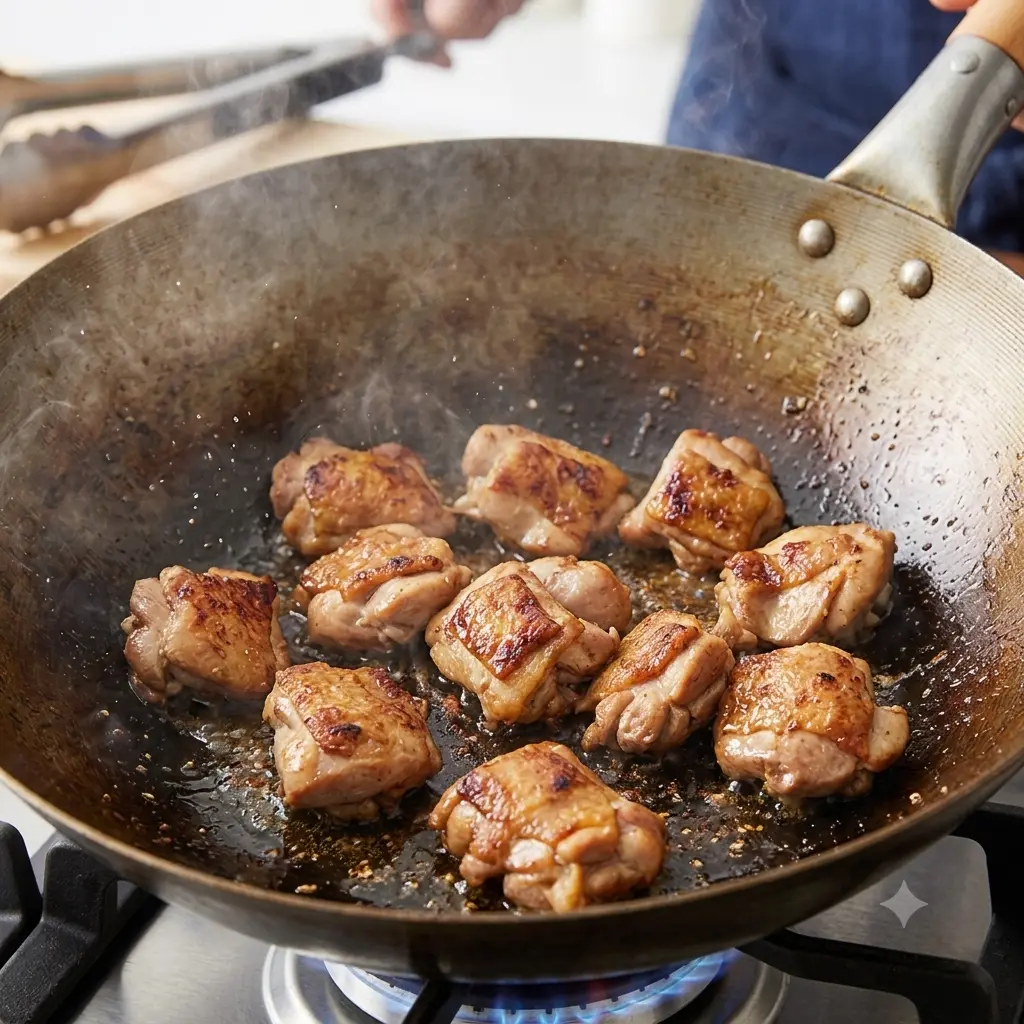
5. Cooking the chicken. Heat oil in the wok or skillet until it shimmers. Add the chicken in a single layer, without stirring immediately, so it can sear. Cook until golden, then remove and set aside.
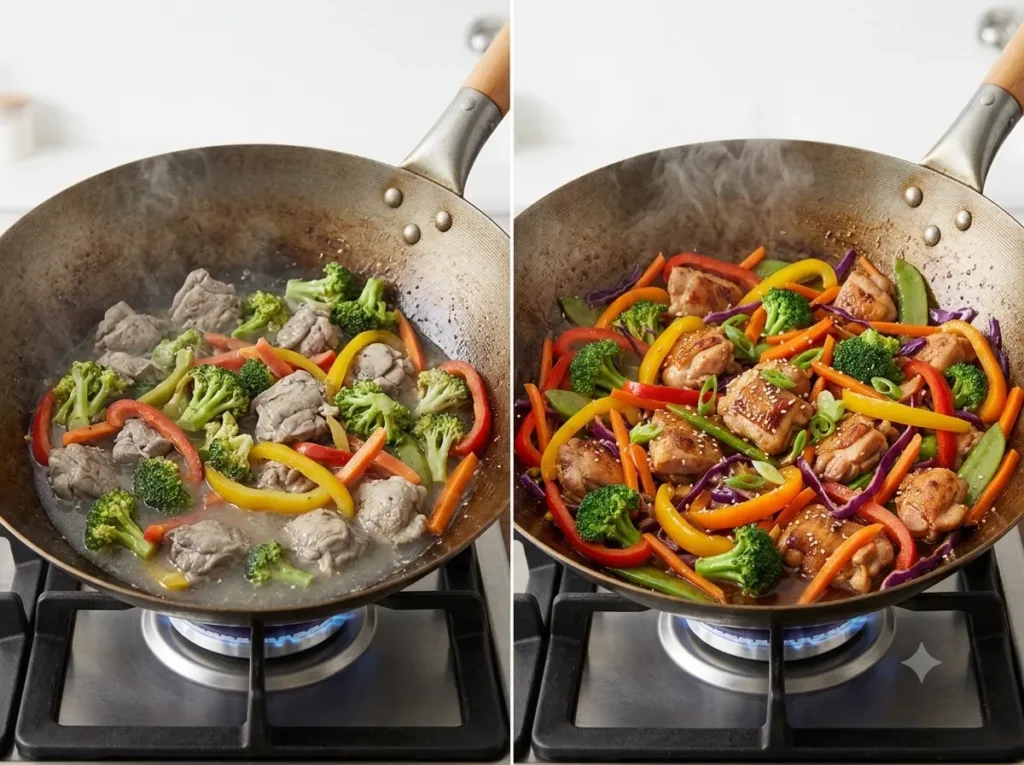
6. Cooking vegetables by firmness. Add more oil if needed, then start with the firmest vegetables, like carrots and broccoli. After a couple of minutes, add the medium vegetables, and finish with the fastest-cooking ones, like snow peas and bell peppers.
7. Combining everything. Return the chicken to the pan with the vegetables, then pour in the sauce.
8. Reducing the sauce. Let the mixture cook for another minute or two, stirring constantly, until the sauce thickens and coats every piece with a glossy finish.
9. Serving. Remove from heat, stir in sesame oil and green onions, and serve immediately while the vegetables are still vibrant and crisp.
Visual cues to watch for: chicken should turn from pink to opaque with light golden edges; vegetables should look glossy and bright, never dull or brown; the sauce should look thick enough to coat a spoon, not watery.
How to Make Restaurant-Quality Stir Fry
Restaurant kitchens rely on wok burners that reach far higher temperatures than a home stove, which is part of why their stir fry tastes different. You can close much of that gap at home with a few adjustments.
Why a wok is ideal. A wok’s shape concentrates heat at the bottom while giving you sloped sides to toss ingredients up and away from the direct heat, which helps prevent overcooking.
How to preheat properly. Heat the empty wok or pan first, then add oil, and wait until the oil shimmers or just begins to ripple before adding food. Adding food to a cold or lukewarm pan is one of the most common reasons home stir fry turns out soggy.
Cooking in batches. As covered earlier, cooking chicken and vegetables separately, then combining them, keeps the pan’s heat consistent and prevents steaming.
Timing ingredients. Add ingredients in order from longest cooking time to shortest, so everything finishes at roughly the same moment.
Keeping vegetables vibrant. Never let vegetables sit in the pan longer than necessary. Once they turn bright and glossy, they’re usually ready to come off the heat.
Equipment Needed
- Carbon steel wok: Heats quickly and retains high heat, ideal for authentic stir-frying.
- Large skillet: A solid substitute if a wok isn’t available; a wide surface area helps prevent overcrowding.
- Chef’s knife: Needed for even, quick vegetable and chicken prep.
- Mixing bowls: For holding prepped ingredients and whisking the sauce.
- Wooden spatula: Sturdy enough for high-heat tossing without scratching the pan.
- Measuring spoons: For accurately building a balanced sauce.
Common Mistakes
- Overcrowding the pan. Causes steaming instead of searing. Fix: cook in smaller batches.
- Using a cold pan. Food sticks and releases moisture too early. Fix: preheat until oil shimmers.
- Cutting vegetables unevenly. Leads to some pieces overcooked and others raw. Fix: slice uniform sizes.
- Skipping the mise en place. Stir-frying moves too fast to chop mid-cook. Fix: prep everything before turning on the heat.
- Adding all vegetables at once. Ignores different cooking times. Fix: add in stages from firmest to softest.
- Using wet chicken or vegetables. Lowers pan temperature and causes steaming. Fix: pat ingredients dry before cooking.
- Using low smoke-point oil. Burns and turns bitter at stir-fry temperatures. Fix: use avocado, peanut, or another high smoke-point oil.
- Overcooking the chicken. Leads to dry, rubbery texture. Fix: remove chicken as soon as it turns opaque.
- Adding sauce too early. Causes vegetables to simmer and soften instead of sear. Fix: add sauce only at the end.
- Not thickening the sauce properly. Leaves a thin, watery result. Fix: use a cornstarch slurry and let it simmer briefly.
- Using too much sauce. Overwhelms the natural flavor and crunch of the vegetables. Fix: start with less and add more to taste.
- Stirring too much or too little. Constant stirring prevents browning; too little causes burning. Fix: let food sit briefly before tossing.
- Skipping aromatics. Garlic and ginger build the flavor foundation. Fix: don’t leave them out or add them too late.
- Adding sesame oil too early. High heat destroys its delicate flavor. Fix: stir it in at the very end, off the heat.
- Not tasting before serving. Sauces vary by brand, so seasoning can be off. Fix: taste and adjust soy sauce, honey, or vinegar right before serving.
Pro Chef Tips
- Slice chicken while it’s still slightly frozen for cleaner, more even cuts.
- Always cut vegetables on a diagonal bias for more surface area and faster, more even cooking.
- Pat chicken completely dry with paper towels before it touches the pan.
- Mix the sauce before you start cooking so you’re never scrambling mid-stir.
- Use a neutral, high smoke-point oil rather than olive oil.
- Preheat the pan for at least a full minute before adding oil.
- Add oil in a thin stream around the edges of the wok to coat the surface evenly.
- Don’t touch the chicken for the first thirty seconds after adding it, to allow a sear to form.
- Remove chicken while it’s slightly underdone; it will finish cooking when returned to the pan later.
- Group vegetables by cooking time before you start, so you’re not sorting while the pan is hot.
- Add garlic and ginger for only about thirty seconds before adding other ingredients, since they burn quickly.
- Keep a small dish of water or broth nearby to deglaze the pan if things start to stick.
- Use a wide spatula and a tossing motion rather than gentle stirring for better heat exposure.
- Taste the sauce on its own before adding it to check the sweet-salty-sour balance.
- Reduce the sauce for the last thirty seconds specifically over the vegetables, not the chicken, to avoid overcooking the meat.
- Finish with fresh herbs or green onions off the heat so their flavor stays bright.
- Toast sesame seeds separately in a dry pan for a deeper, nuttier flavor before garnishing.
- Keep portions of vegetables slightly larger than you think you need, since they shrink with heat.
- If cooking for meal prep, slightly undercook vegetables since they’ll continue softening as they reheat.
- Always let the wok fully heat between batches so each round of ingredients gets the same sear.
Variations
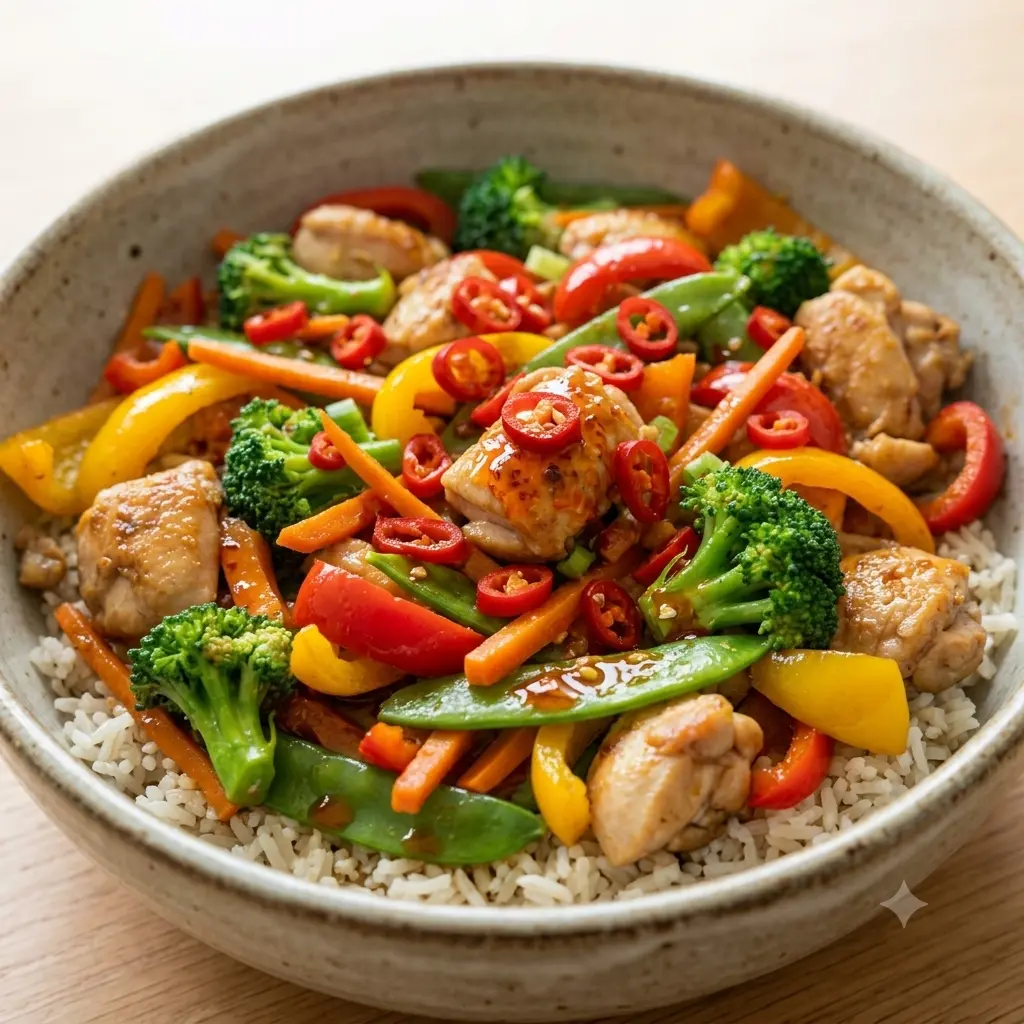
- Spicy Rainbow Stir Fry: Add sliced fresh chili, a spoonful of chili garlic sauce, or a dash of crushed red pepper to the sauce.
- Teriyaki Chicken Stir Fry: Swap the sauce base for a teriyaki-style blend heavier on soy sauce, mirin, and brown sugar.
- Garlic Ginger Stir Fry: Double the garlic and ginger and simplify the sauce to let those aromatics lead.
- Low-Carb Version: Serve over cauliflower rice and reduce the honey or brown sugar in the sauce.
- Gluten-Free Version: Use tamari or a certified gluten-free soy sauce alternative in place of regular soy sauce.
- Vegetarian Version: Replace chicken with extra-firm tofu or a mix of mushrooms and chickpeas.
- Shrimp Stir Fry: Substitute shrimp for chicken; cook for only 1–2 minutes per side since shrimp cooks much faster.
- Beef Stir Fry: Use thinly sliced flank or sirloin steak, sliced against the grain, for a heartier version.
- Tofu Stir Fry: Press tofu well and pan-sear until golden before adding vegetables, to prevent it from falling apart.
Storage & Meal Prep
Refrigeration: Store leftover Rainbow Chicken Stir Fry in an airtight container in the refrigerator for up to four days.
Freezing: The dish can be frozen for up to two months, though the vegetables will soften slightly upon thawing. Freeze in flat, sealed portions for faster thawing.
Best reheating methods: Reheat in a hot skillet for a couple of minutes rather than the microwave when possible, since the direct heat helps restore some crispness to the vegetables. If using a microwave, cover loosely and heat in short intervals, stirring in between.
Meal prep tips: Slightly undercook the vegetables if you plan to store and reheat the dish later, since they will continue to soften. Store rice separately from the stir fry to prevent it from becoming soggy.
Food safety: Cool the dish to room temperature within two hours of cooking before refrigerating, and always reheat chicken to an internal temperature of 165°F before eating.
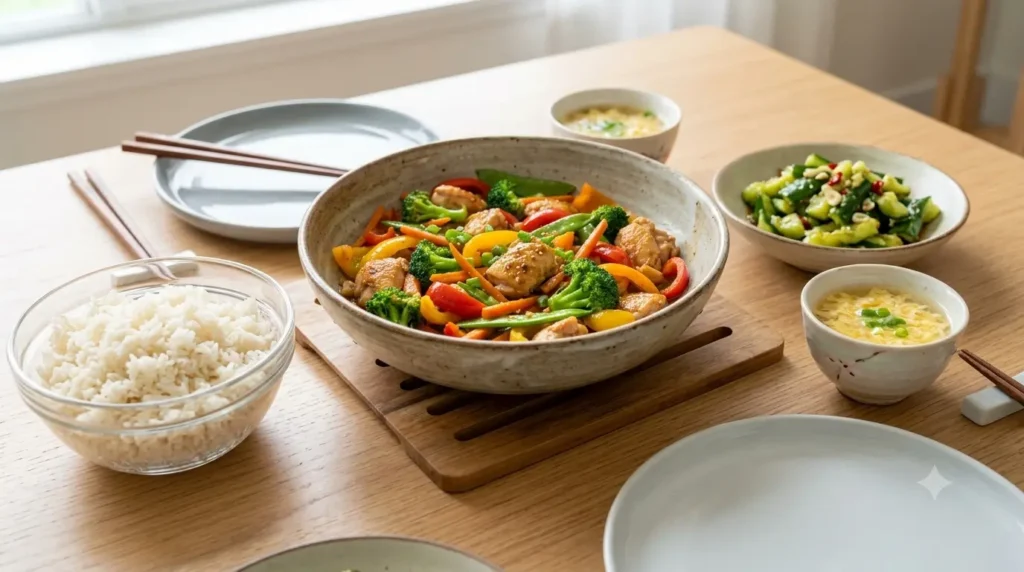
What to Serve with Rainbow Chicken Stir Fry
- Steamed jasmine rice: A classic, fragrant base that soaks up the sauce.
- Brown rice: A fiber-rich alternative with a nuttier flavor.
- Fried rice: Adds extra texture and turns the meal into a heartier plate.
- Rice noodles: A gluten-free noodle option that pairs naturally with the sauce.
- Lo mein: Chewy wheat noodles for a more filling, restaurant-style meal.
- Quinoa: A protein-rich, gluten-free grain option.
- Cauliflower rice: A low-carb base that still soaks up the sauce well.
- Spring rolls: A crisp, light appetizer that complements the stir fry.
- Asian cucumber salad: A cool, tangy side that balances the warm, savory main dish.
- Egg drop soup: A comforting starter that rounds out the meal.
- Beverage pairings: Iced green tea, sparkling water with lime, or a light, crisp white wine all pair well with the sweet-savory sauce.
Frequently Asked Questions
1. Can I use frozen vegetables in Rainbow Chicken Stir Fry? Yes, but thaw and drain them well first. Frozen vegetables release more moisture, so pat them dry to avoid steaming the pan.
2. Can I use chicken thighs instead of breast? Yes. Thighs are actually more forgiving and stay juicier, making them a great choice for this recipe.
3. Can I make Rainbow Chicken Stir Fry ahead of time? Yes. Prep the vegetables, chicken, and sauce a day in advance and store them separately in the refrigerator until you’re ready to cook.
4. Can I freeze Rainbow Chicken Stir Fry? Yes, for up to two months, though the vegetables will lose some of their crispness after thawing.
5. How do restaurants keep their vegetables so crisp? Restaurants use extremely high wok-burner heat and cook vegetables for a very short time, often blanching them briefly beforehand. At home, a hot pan and shorter cooking time achieve a similar effect.
6. Can I make this vegetarian? Yes. Replace the chicken with extra-firm tofu, tempeh, or a mix of mushrooms and chickpeas, and use a vegetarian oyster sauce alternative.
7. Can I use bottled stir-fry sauce? Yes, though a homemade sauce allows better control over sodium and sweetness, and typically tastes fresher.
8. How do I thicken the sauce properly? Whisk cornstarch with a small amount of cold water or broth, then stir it into the sauce during the last minute of cooking until it thickens.
9. What’s the best oil for stir-frying? A high smoke-point oil like avocado oil, peanut oil, or refined vegetable oil works best, since stir-frying requires very high heat.
10. Can I make Rainbow Chicken Stir Fry gluten-free? Yes. Substitute tamari or a gluten-free soy sauce, and confirm that the oyster sauce you use is labeled gluten-free.
11. Why did my stir fry turn out watery? This usually happens from overcrowding the pan, using wet ingredients, or adding the sauce too early. Cooking in batches and patting ingredients dry solves this.
12. How do I keep the chicken from turning rubbery? Cut it into even pieces, don’t overcook it, and consider velveting it with a light cornstarch coating before searing.
13. What vegetables cook the fastest in stir fry? Snow peas, bell peppers, baby corn, and bean sprouts cook the fastest and should be added last.
14. Is Rainbow Chicken Stir Fry healthy? Yes. It’s typically high in protein and fiber, low in added sugar compared to takeout versions, and rich in vitamins from the variety of vegetables, especially when made with controlled amounts of oil, sodium, and sugar.
15. Can I double the recipe? Yes, but cook it in two separate batches rather than doubling everything in one pan at once, since a crowded pan will steam instead of sear.
Recipe Card
Rainbow Chicken Stir Fry
| Detail | Info |
|---|---|
| Prep Time | 15 minutes |
| Cook Time | 15 minutes |
| Total Time | 30 minutes |
| Servings | 4 |
| Cuisine | Asian-inspired |
| Course | Main Dish |
| Calories (estimated) | Approximately 320 per serving |
Ingredients
For the chicken:
- 1.5 lbs chicken breast or thighs, cut into bite-sized strips
- 1 tablespoon cornstarch
- 1 tablespoon soy sauce
For the vegetables:
- 1 red bell pepper, sliced
- 1 yellow bell pepper, sliced
- 1 orange bell pepper, sliced
- 2 cups broccoli florets
- 1 cup snow peas
- 1 cup julienned carrots
- 1 cup purple cabbage, thinly sliced
- 3 cloves garlic, minced
- 1 tablespoon fresh ginger, minced
- 2 green onions, sliced
For the sauce:
- 1/4 cup soy sauce
- 2 tablespoons oyster sauce
- 1/4 cup chicken broth
- 1 tablespoon rice vinegar
- 2 tablespoons honey or brown sugar
- 1 teaspoon cornstarch
- 1 teaspoon sesame oil
For cooking:
- 3 tablespoons high smoke-point oil, divided
- Sesame seeds, for garnish
Instructions
- Toss chicken with cornstarch and soy sauce; set aside.
- Whisk together all sauce ingredients in a bowl; set aside.
- Heat 1 tablespoon oil in a wok or large skillet over high heat until shimmering. Add chicken in a single layer and sear for 3–4 minutes until golden and cooked through. Remove and set aside.
- Add remaining oil to the pan. Add carrots and broccoli first; stir-fry for 2 minutes.
- Add bell peppers, cabbage, and snow peas; stir-fry for another 2 minutes until crisp-tender.
- Add garlic and ginger; stir-fry for 30 seconds until fragrant.
- Return chicken to the pan and pour in the sauce.
- Cook, stirring constantly, for 1–2 minutes until the sauce thickens and coats everything evenly.
- Remove from heat and stir in sesame oil and green onions.
- Garnish with sesame seeds and serve immediately over rice or noodles.
Chef Notes: For extra tender chicken, velvet it first with a light egg white and cornstarch coating before searing.
Storage Notes: Refrigerate for up to 4 days or freeze for up to 2 months in an airtight container.
Nutrition Disclaimer: Nutrition values are estimates and can vary based on specific ingredients and brands used.


Conclusion
Rainbow Chicken Stir Fry proves that a healthy, colorful dinner doesn’t need to be complicated or time-consuming. With a hot pan, a handful of fresh vegetables, and a simple homemade sauce, you can put together a meal that looks like it came from a restaurant kitchen in about thirty minutes. Once you understand the basics of high heat, batch cooking, and timing your vegetables by firmness, you’ll be able to build your own versions of this dish using whatever produce is in season or already in your fridge.
Give this Rainbow Chicken Stir Fry a try on your next busy weeknight, and don’t be afraid to experiment with the variations, from a spicy version with fresh chilies to a vegetarian swap with tofu. Once you’ve made it a few times, it becomes less of a recipe and more of a reliable technique you can return to whenever you want a fast, wholesome, and genuinely satisfying dinner.