Greek Meatballs (Keftedes): Authentic Crispy & Juicy Recipe
In my kitchen, and in nearly every Greek kitchen I’ve ever cooked in, Greek Meatballs (Keftedes) are the dish that gets made without a recipe card in sight. Grandmothers grate onion straight into the bowl by feel. Fathers argue about whether mint belongs. Someone always sneaks one straight from the frying pan before it hits the platter, burning their fingers and not caring. That’s what Keftedes are: a dish built on instinct, passed down through hands rather than measurements.
This guide is my attempt to put that instinct into words. I’ll walk you through what makes Greek Meatballs (Keftedes) different from Italian meatballs or Middle Eastern kofta, the food science that gives them their signature crispy-outside, juicy-inside texture, and the exact technique I use to get taverna-quality results in a home kitchen. By the end, you’ll understand not just how to make Greek Meatballs (Keftedes), but why each step matters.
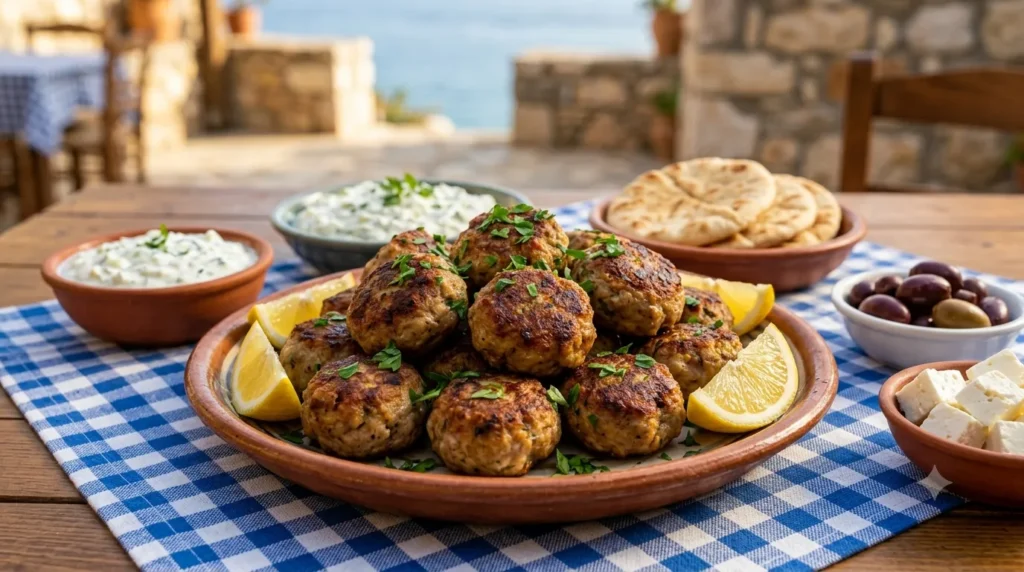
Table of Contents
What Are Greek Meatballs (Keftedes)?Table of Contents
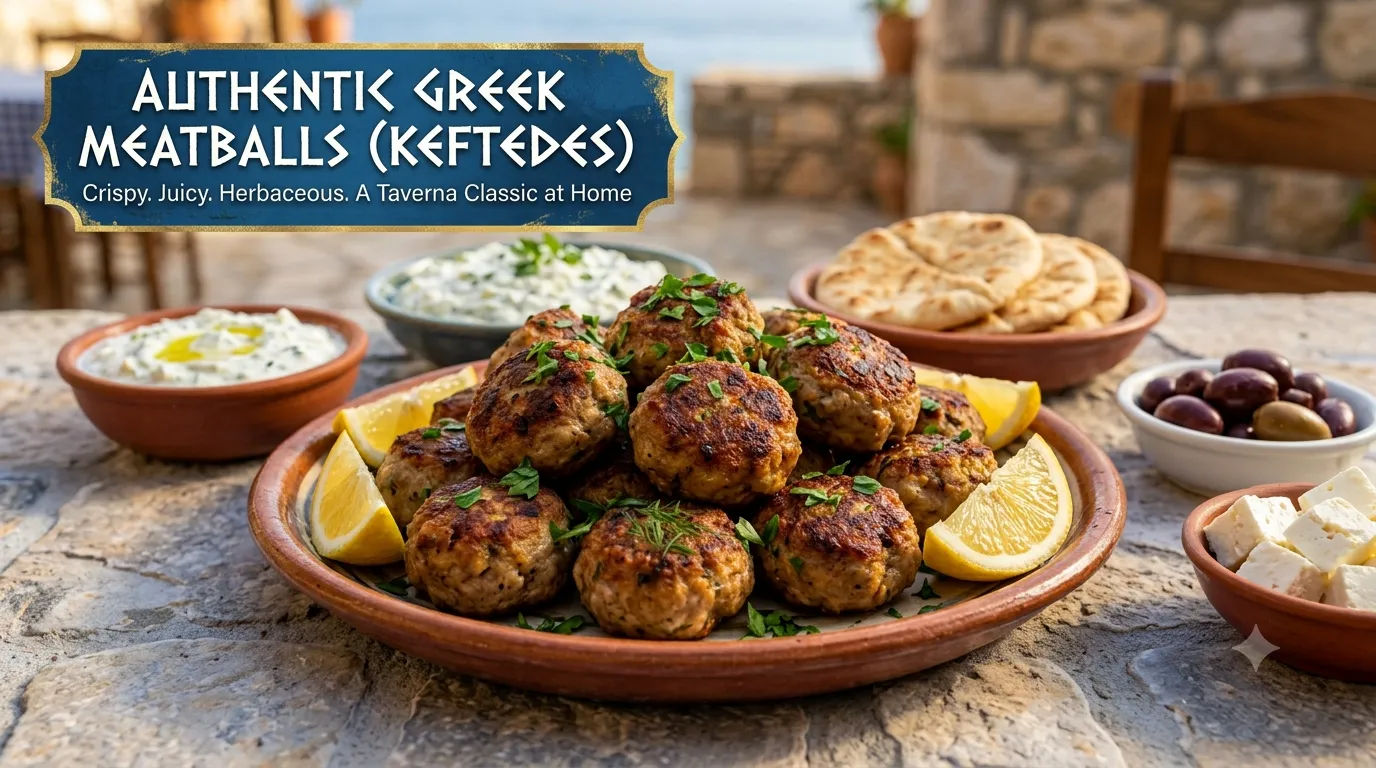
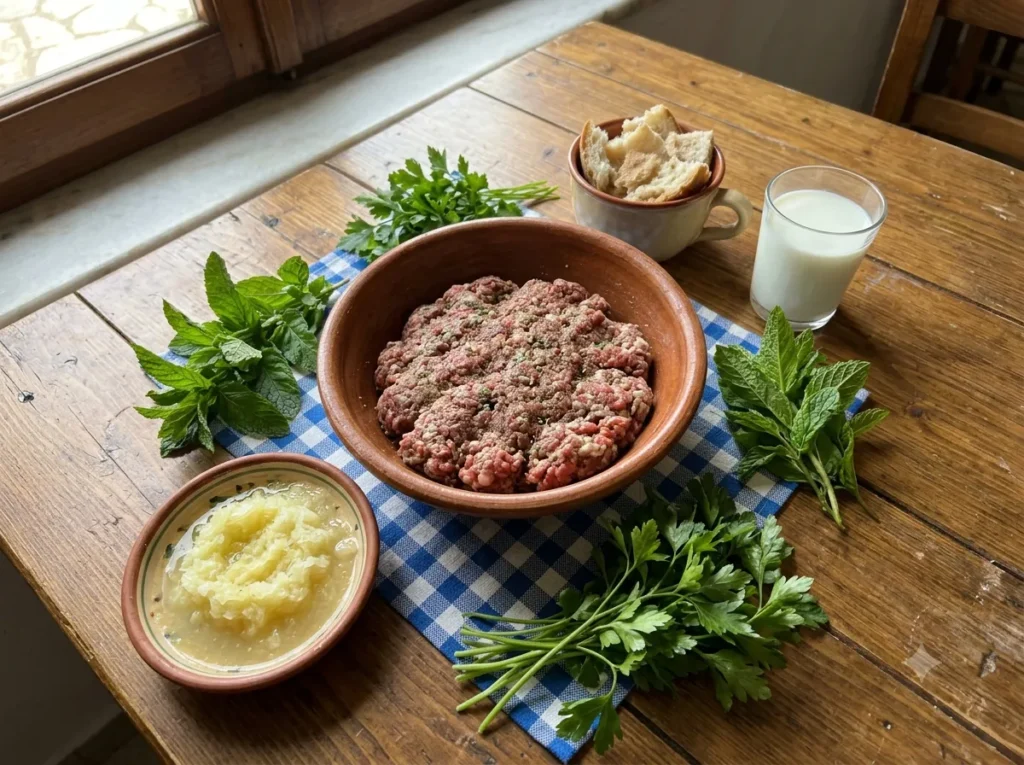
Greek Meatballs, known as Keftedes (pronounced kef-TEH-dess, singular keftés), are pan-fried meatballs made from ground beef or lamb, mixed with soaked bread, grated onion, garlic, egg, and a generous handful of fresh herbs — usually mint, parsley, and oregano. They’re lightly coated in flour before frying, which is what gives them their thin, crisp shell.
The word “keftés” comes from the Persian kofteh, meaning “pounded meat,” a term that traveled west through Ottoman-controlled territories and settled into Greek cooking with its own regional identity. Say it with confidence: kef-TEH-dess.
Keftedes hold a permanent seat at the Greek table. They show up as part of a mezze spread alongside dips and small plates, as a main course with rice or potatoes, and as the thing your yiayia fries up on a Sunday afternoon “just because.” At tavernas along the coast, they’re often the dish tourists order twice, once out of curiosity and once because they can’t stop thinking about them.
What separates Keftedes from their cousins:
- Vs. Italian meatballs: Italian meatballs typically simmer in tomato sauce and lean on Parmesan, breadcrumbs, and Italian herbs like basil. Keftedes are shallow-fried, not simmered, and rely on mint and fresh oregano instead of basil and cheese.
- Vs. Middle Eastern kofta: Kofta is often shaped onto skewers and grilled, seasoned with warm spices like cumin, cinnamon, or allspice. Keftedes are shaped into rounds or ovals, dredged in flour, and fried, with a lighter, herb-forward flavor rather than a spice-forward one.
The shared root of these dishes tells a real story: ground or minced meat cookery spread across the Eastern Mediterranean and Near East over centuries of trade, migration, and empire, and each region shaped it according to local herbs, fats, and cooking methods.
The History of Keftedes
Meat cookery in Greece stretches back to antiquity, though the Keftedes we eat today are a much later development. Ancient Greek texts describe minced meat dishes seasoned with herbs and cooked over open flame, evidence that the basic idea — chopped meat bound and formed into a shape — has deep roots in the region’s food culture. However, the specific dish and its name arrived far more recently.
The direct ancestor of Keftedes came through Ottoman-era Eastern Mediterranean cuisine. During centuries of Ottoman rule and trade across Greece, the Balkans, and the wider region, seasoned minced meat preparations similar to kofta spread and took root locally. Greek cooks adapted the concept to what was on hand: local olive oil instead of other frying fats, bread soaked in water or milk as a binder, and the herbs growing in the yard — mint, oregano, and parsley — rather than the warm spice blends common further east.
Over generations, this borrowed technique became something distinctly Greek. The frying method in olive oil, the emphasis on fresh herbs over dried spice blends, and the light flour coating are all markers of the dish’s Greek identity today.
Regional variations exist throughout the country:
- In Smyrna-influenced recipes (tied to Greek refugee cooking from Asia Minor), you’ll sometimes find a touch of cumin.
- Cretan versions lean harder on fresh mint and sometimes include grated potato for extra tenderness.
- Ionian recipes occasionally add a splash of red wine vinegar to the mixture.
- Peloponnese households often favor a firmer, more rustic texture with less bread.
Keftedes remain a staple of Greek home cooking because they check every box a family meal needs: they use inexpensive ground meat, come together quickly, reheat well, and taste better the longer the herbs sit in the mixture.
Why Greek Meatballs Are So Popular
Ask any Greek cook why Keftedes disappear off the table faster than almost anything else they make, and the answer usually comes down to contrast. A great keftés delivers:
- A crisp, golden exterior from the flour dredge meeting hot olive oil
- A tender, juicy center from soaked bread and a careful hand with the meat
- A burst of fresh herbs — mint and parsley in particular — that keep the flavor bright instead of heavy
- Garlic and onion cooked into the mixture raw, so their sharpness mellows into something rounder as the meatball fries
- Fruity olive oil, which carries flavor into the meat itself, not just onto the surface
Beyond flavor, Keftedes are simply useful. They work as a passed appetizer at a gathering, a main course with lemon potatoes and salad, a packed lunch the next day, and a freezer staple for busy weeks. Few dishes flex between “fancy mezze plate” and “Tuesday night dinner” as easily as this one.
The Science Behind Perfect Keftedes
Understanding what’s actually happening in the bowl and the pan is what separates a good keftés from a dry, dense one.
Fat content matters more than most people think. Ground meat that’s too lean (90/10 or leaner) fries up dry and crumbly because there isn’t enough rendered fat to keep the interior moist during cooking. An 80/20 blend gives you enough fat to baste the meatball from the inside as it cooks.
Protein binding creates structure. When you mix ground meat, the proteins (mainly myosin) start to unravel and link together, forming a network that holds the meatball’s shape. Mix too little, and the meatball falls apart in the pan. Mix too much, and the proteins over-bind, squeezing out moisture and creating a dense, rubbery texture. Gentle, brief mixing is the goal.
Soaking bread does two jobs at once. Bread (or breadcrumbs) soaked in milk or water swells with liquid, then releases that liquid slowly as the meatball cooks, keeping the interior moist. It also physically breaks up the protein network from the meat, preventing the tight, bouncy texture you get from meat alone.
Eggs bind without drying. A single egg helps hold the mixture together by coagulating as it heats, adding structure without stripping away moisture the way excess breadcrumbs can.
Resting improves texture. Letting the mixture sit in the refrigerator for 30 minutes to an hour allows the bread, herbs, and aromatics to fully hydrate and distribute, and lets the fat firm up slightly, which makes shaping easier and helps the meatballs hold together in the pan.
Maillard browning is the flavor engine. The deep, savory crust on a fried keftés comes from the Maillard reaction, a chemical process between amino acids and sugars that occurs at high heat (above roughly 300°F/150°C). This is why a hot pan and a light flour coating matter so much — flour helps the surface dry out and brown faster than the moist meat underneath would on its own.
Frying vs. baking vs. air frying all change the result. Shallow frying in olive oil gives the closest texture to what you’d get at a taverna: a crisp, slightly oil-kissed crust. Baking is more hands-off and lower mess but produces a drier, less crisp surface unless you brush the meatballs with oil first. Air frying lands somewhere in between — crisper than baking, lighter than frying, with less oil overall.
Choosing the Best Meat
| Meat Type | Flavor | Fat Content | Juiciness | Traditional Use | Best For |
|---|---|---|---|---|---|
| Ground beef (80/20) | Mild, savory | Moderate-high | Very juicy | Most common modern choice | Beginners |
| Ground lamb | Rich, slightly gamey | High | Very juicy | Traditional in many regions | Lamb lovers |
| Half beef, half lamb | Balanced, complex | High | Extremely juicy | Classic combination in many households | Best all-around flavor |
| Ground pork | Sweet, mild | Moderate-high | Juicy | Less traditional, sometimes blended | Those avoiding beef/lamb |
| Mixed meats (beef + pork) | Balanced | Moderate | Juicy | Regional, not universal | Milder flavor preference |
For beginners, 80/20 ground beef is the most forgiving option. It’s widely available, has enough fat to stay juicy, and doesn’t carry the stronger flavor of lamb that some cooks need to grow into. Once you’re comfortable with the base recipe, try a half-and-half blend of beef and lamb — it’s the combination most likely to remind you of a taverna’s version, since the lamb fat adds richness that ground beef alone can’t fully replicate.
Avoid meat leaner than 85/15. It fries up tough no matter how carefully you handle everything else in the recipe.
Ingredients Explained
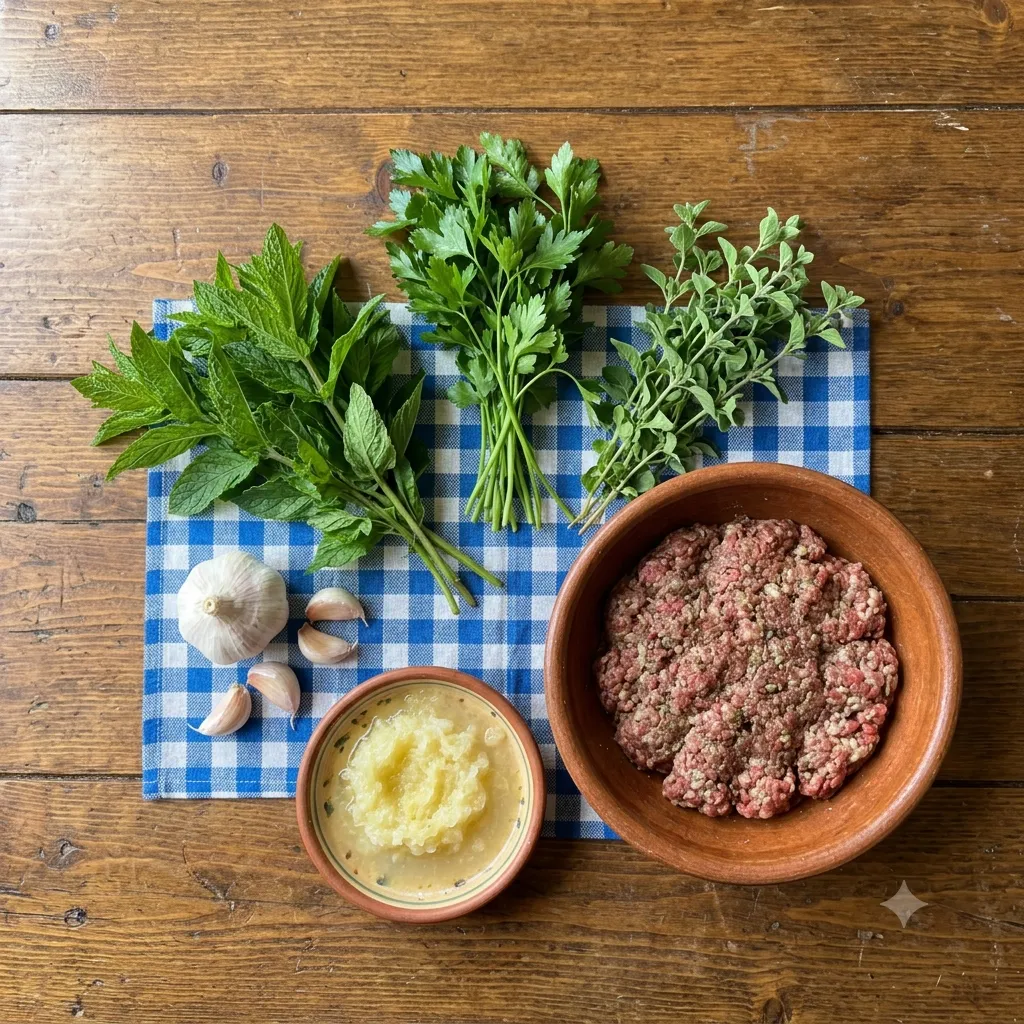
| Ingredient | Why It Matters |
|---|---|
| Ground beef (or beef/lamb blend) | The base protein; fat content drives juiciness |
| Bread, soaked in milk or water | Keeps the meatball tender and moist as it cooks |
| Egg | Binds the mixture without adding excess density |
| Yellow onion, grated | Adds moisture and sweetness that distributes evenly through the mixture |
| Garlic, minced | Sharp, aromatic backbone of the flavor |
| Fresh parsley | Bright, grassy freshness that balances the richness of the meat |
| Fresh mint | The signature Greek herb note; distinguishes Keftedes from other meatball styles |
| Fresh oregano | Earthy, slightly peppery depth |
| Dried oregano | A concentrated top note that fresh oregano alone doesn’t provide |
| Ground cumin (optional) | A regional touch tied to Asia Minor–influenced recipes; adds warmth |
| Olive oil | Used both in the mixture and for frying; carries flavor throughout |
| Salt | Essential for seasoning the meat itself, not just the surface |
| Black pepper | Adds gentle heat and rounds out the seasoning |
| Flour | Creates the thin, crisp coating when frying |
| Lemon wedges | Served alongside; the acidity cuts through the richness of the fried meatball |
A quick note on the bread: stale, crustless white bread works best. Fresh, soft bread turns gummy when soaked; bread with too much crust adds unwanted texture. Squeeze out the excess liquid before adding it to the meat so the mixture isn’t wet.
The Secret to Authentic Greek Keftedes
If there’s one real “secret” to Keftedes, it isn’t a single ingredient — it’s a handful of small habits done consistently.
Use fresh herbs, not dried, wherever possible. Fresh mint and parsley bring a brightness dried versions simply can’t replicate. Dried oregano is the one exception where the traditional recipe actually prefers the dried version for its concentrated, slightly bitter depth.
Season the mixture, not just the surface. Salt needs to go into the meat mixture itself, mixed through evenly, so every bite is seasoned — not just the crust.
Mix gently, and only until combined. Overworking the mixture activates too much protein binding, resulting in dense, bouncy meatballs instead of tender ones.
Rest the mixture before shaping. Thirty minutes in the refrigerator lets flavors marry and makes the mixture firmer and easier to handle.
Shape meatballs uniformly. Consistent size means consistent cooking time, so nothing is raw in the middle while the rest overcooks.
Fry shallow, in olive oil, at the right temperature. Too cool, and the meatballs absorb oil and turn greasy. Too hot, and the outside burns before the inside cooks through.
Serve immediately with fresh lemon. Keftedes are at their best minutes out of the pan, when the crust is still audibly crisp and a squeeze of lemon cuts through the richness.
Step-by-Step Technique
1. Prepare the Bread
Remove the crusts from 2–3 slices of stale white bread. Tear the bread into pieces, soak in milk or water for 2–3 minutes until fully softened, then squeeze firmly to remove excess liquid. You want damp, not wet.
2. Grate the Onion
Grate a medium yellow onion on the large holes of a box grater directly over the mixing bowl, catching the juice along with the pulp. Grating (rather than dicing) releases moisture and sweetness evenly through the meat.
3. Mix the Ingredients
In a large bowl, combine the ground meat, soaked bread, grated onion, minced garlic, one egg, chopped parsley, mint, and oregano, along with salt, pepper, and a drizzle of olive oil. Mix with your hands just until everything is evenly distributed — you should still see small flecks of herb, not a smooth paste.
4. Rest
Cover and refrigerate the mixture for 30 minutes to an hour. The texture will firm up noticeably, and the mixture will hold its shape far more easily.
5. Shape the Meatballs
Using slightly damp hands to prevent sticking, roll the mixture into balls about the size of a golf ball, or flatten slightly into small ovals if you prefer the traditional taverna shape. Aim for uniform size.
6. Coat Lightly with Flour
Dredge each meatball lightly in flour, shaking off the excess. You want a thin, even film, not a thick coating.
7. Heat the Oil
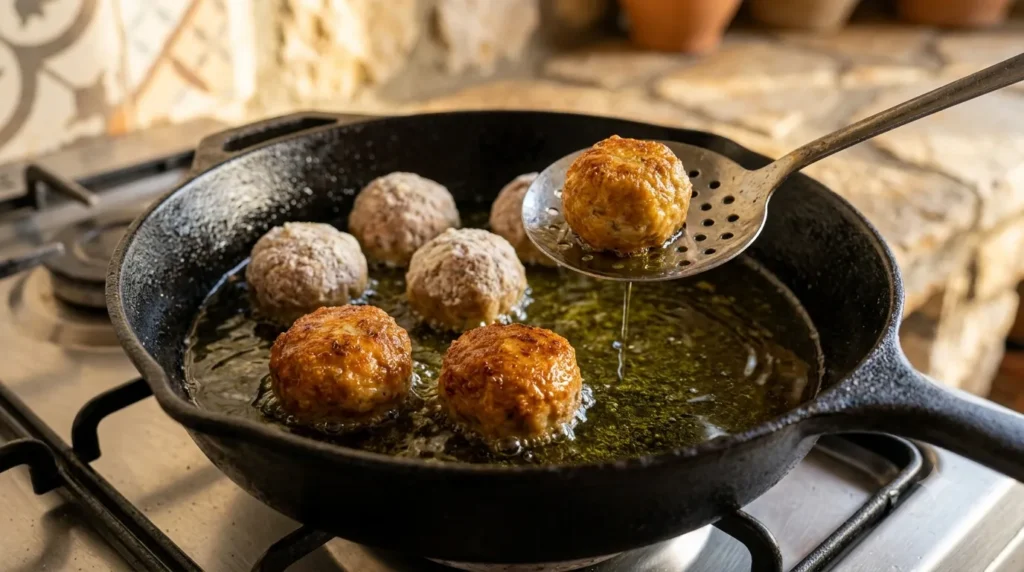
Pour about 1/2 inch of olive oil into a large skillet and heat over medium-high until it shimmers, around 350°F (175°C). A cube of bread dropped in should sizzle immediately and turn golden in about 30–40 seconds.
8. Fry in Batches
Place meatballs into the oil without crowding the pan. Fry for 3–4 minutes per side, turning gently, until deeply golden brown and cooked through (internal temperature of 160°F/71°C for beef). Crowding the pan drops the oil temperature and leads to greasy, unevenly cooked meatballs.
9. Drain
Transfer fried meatballs to a cooling rack set over a baking sheet, rather than paper towels, which trap steam underneath and soften the crust.
10. Serve
Serve hot, with lemon wedges on the side and tzatziki or a simple salad nearby.
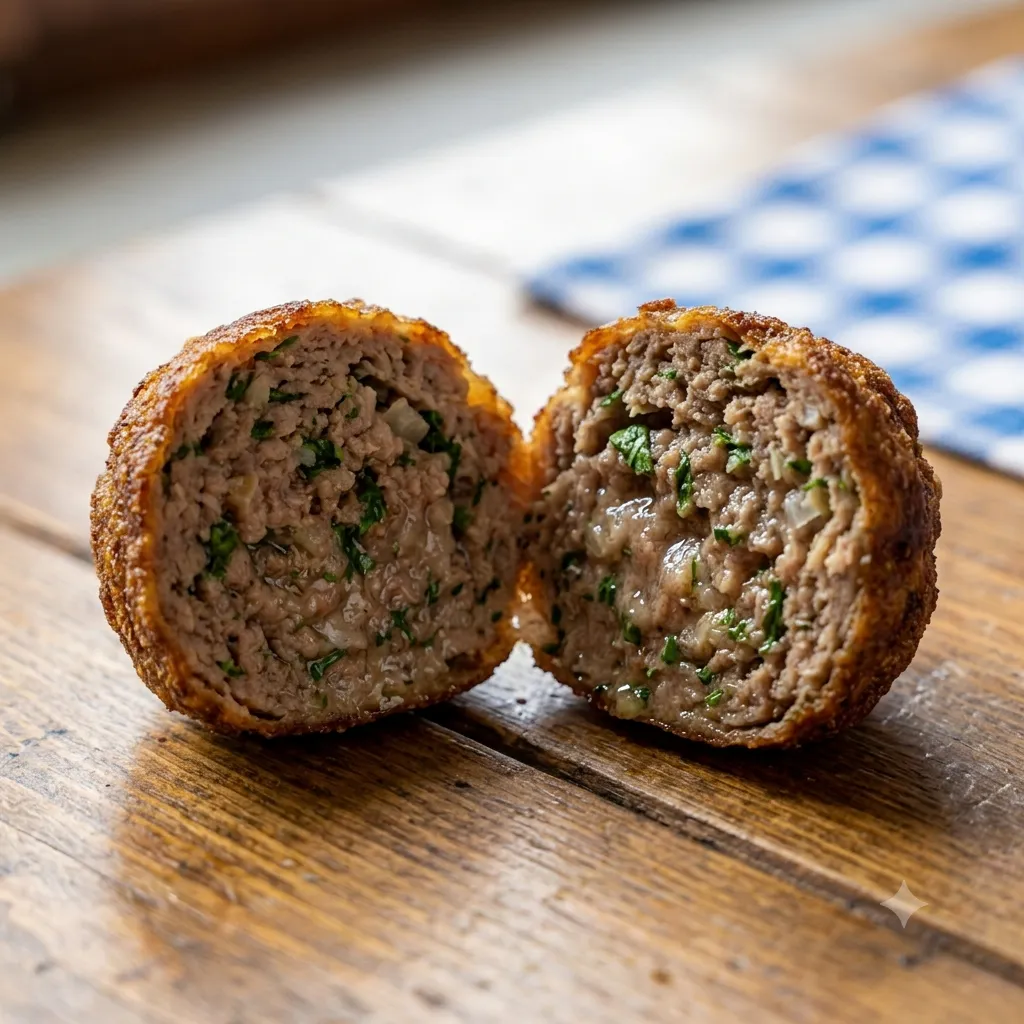
Visual and texture cues to watch for: the meatballs should sizzle actively but not violently when they hit the oil; the crust should be a deep amber-gold, not pale; and the meatball should feel firm but give slightly when pressed, not hard.
Equipment Needed
- Large mixing bowl
- Chef’s knife
- Box grater (for the onion)
- Large skillet (cast iron or heavy-bottomed stainless steel)
- Slotted spoon
- Cooling rack
- Instant-read thermometer
Common Mistakes
1. Using meat that’s too lean. Why it happens: Cooks reach for 90/10 or 93/7 beef thinking “leaner is healthier.” Fix: Use 80/20, or add a spoonful of olive oil to compensate for lost fat.
2. Skipping the bread soak. Why it happens: It feels like an extra step. Fix: Always soak and squeeze the bread; it’s the single biggest factor in juiciness.
3. Overmixing the meat. Why it happens: Cooks assume more mixing means better distribution. Fix: Mix just until combined, using a light hand.
4. Skipping the rest period. Why it happens: Impatience, or not knowing it matters. Fix: Even 20–30 minutes in the fridge dramatically improves texture and shape retention.
5. Making meatballs too large. Why it happens: It seems more efficient. Fix: Keep them golf-ball sized so the inside cooks through before the outside burns.
6. Inconsistent sizing. Why it happens: Shaping by eye without a reference. Fix: Use a small scoop or measure by weight for uniform meatballs.
7. Skipping the flour coating. Why it happens: Trying to save a step or cut carbs. Fix: A light flour dredge is what creates the signature crisp shell — don’t skip it.
8. Coating too heavily in flour. Why it happens: Overcompensating for the last mistake. Fix: Shake off all excess flour; you want a whisper-thin layer.
9. Frying at too low a temperature. Why it happens: Fear of burning the outside. Fix: Preheat oil properly and test with a small piece of the mixture first.
10. Frying at too high a temperature. Why it happens: Trying to speed up cooking. Fix: Medium-high heat, monitored with a thermometer, prevents a burnt exterior with a raw center.
11. Crowding the pan. Why it happens: Trying to save time. Fix: Fry in batches, leaving space between each meatball.
12. Not seasoning the meat itself. Why it happens: Assuming the crust will carry all the flavor. Fix: Mix salt directly into the meat mixture before shaping.
13. Draining on paper towels. Why it happens: It’s the default habit for fried food. Fix: Use a cooling rack so steam escapes instead of softening the crust.
14. Using dried herbs instead of fresh mint and parsley. Why it happens: Fresh herbs aren’t always on hand. Fix: Fresh mint and parsley are what define the dish; dried versions taste flat and dusty by comparison.
15. Serving them cold or reheated in a microwave. Why it happens: Convenience. Fix: Reheat in a skillet or oven to restore crispness; Keftedes are best enjoyed hot from the pan.
Pro Chef Tips
- Grate the onion rather than dicing it for even moisture distribution.
- Squeeze bread thoroughly; excess liquid makes shaping difficult.
- Use your hands to mix, not a spoon — you’ll feel when it’s properly combined.
- Chill the mixture for easier shaping and better texture.
- Wet your hands slightly before rolling meatballs to prevent sticking.
- Keep a small bowl of water nearby while shaping for repeated hand-wetting.
- Test the oil temperature with a small pinch of the mixture before frying the full batch.
- Don’t flip meatballs too early; let a real crust form first.
- Use tongs or a slotted spoon, not a fork, to avoid piercing the meatballs and losing juices.
- Keep fried batches warm in a low oven (200°F/93°C) while frying the rest.
- Add a splash of ouzo or dry white wine to the mixture for a subtle traditional variation.
- Use day-old bread; fresh bread turns gummy when soaked.
- Taste-test the mixture by frying a small patty first and adjusting seasoning before shaping the rest.
- Keep the herb-to-meat ratio generous; Keftedes should taste distinctly herbal, not just meaty.
- Use a neutral olive oil for frying and save your best extra virgin for finishing or dipping.
- Let the oil come back up to temperature between batches.
- Season the flour lightly with salt and pepper for extra flavor on the crust.
- Serve with lemon wedges, not bottled lemon juice, for brighter acidity.
- Pair with a cold, crisp glass of white wine to balance the richness.
- Make a double batch; Keftedes freeze exceptionally well raw or cooked.
- If shaping oval “biftekia-style” Keftedes, flatten slightly for faster, more even cooking.
- Use a thermometer for the oil rather than guessing — consistency matters more than instinct here.
Delicious Variations
Lamb Keftedes: Replace half or all of the beef with ground lamb for a richer, slightly gamey flavor closer to some traditional regional recipes.
Baked Keftedes: Arrange shaped, flour-dusted meatballs on a lightly oiled baking sheet and bake at 400°F (200°C) for 20–25 minutes, flipping halfway. Expect a drier, less crisp exterior than frying.
Air Fryer Keftedes: Lightly spray or brush meatballs with olive oil and air fry at 380°F (193°C) for 12–14 minutes, shaking the basket halfway through, for a crisp exterior with far less oil.
Tomato Sauce Keftedes (Keftedes Yiahni): Simmer fried or baked meatballs in a simple tomato sauce with garlic, oregano, and a bay leaf for a heartier, stew-like main course.
Cheese-Stuffed Keftedes: Press a small cube of feta or kefalotyri into the center of each meatball before shaping for a molten, salty surprise.
Spicy Version: Add a pinch of crushed red pepper or a finely minced hot pepper to the mixture for a modern twist.
Mini Cocktail Keftedes: Shape the mixture into small, bite-sized balls for a party-friendly mezze, and reduce the frying time accordingly.
Gluten-Free Version: Substitute the bread with gluten-free bread or cooked, riced cauliflower, and use a gluten-free flour blend for the coating.
Storage & Reheating
Refrigeration: Store cooked Keftedes in an airtight container for up to 4 days.
Freezing raw meatballs: Shape and flour-coat the meatballs, then freeze on a tray until solid before transferring to a freezer bag. They’ll keep for up to 3 months. Fry directly from frozen, adding a couple of extra minutes per side.
Freezing cooked meatballs: Cool completely, then freeze in a single layer before bagging. Keeps for up to 3 months.
Best reheating methods: A skillet over medium heat restores the most crispness. An oven at 375°F (190°C) for 10–12 minutes is the next best option. Microwaving works in a pinch but softens the crust significantly.
Maintaining juiciness: Avoid overcooking during reheating; you’re warming the meatball through, not cooking it a second time.
Food safety: Cooked Keftedes should reach 160°F (71°C) internally when first cooked, be refrigerated within two hours, and be reheated to a similar internal temperature before serving.
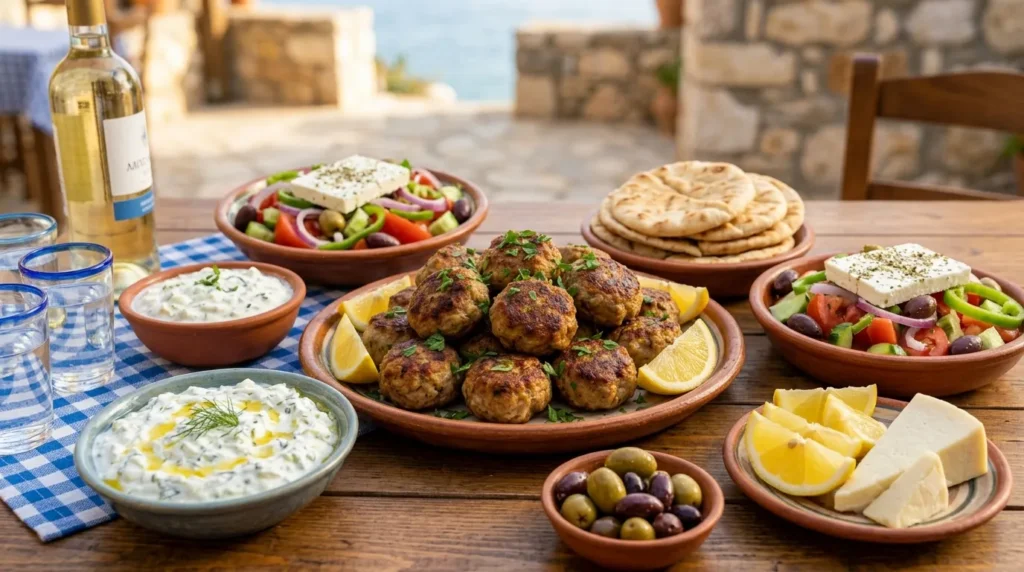
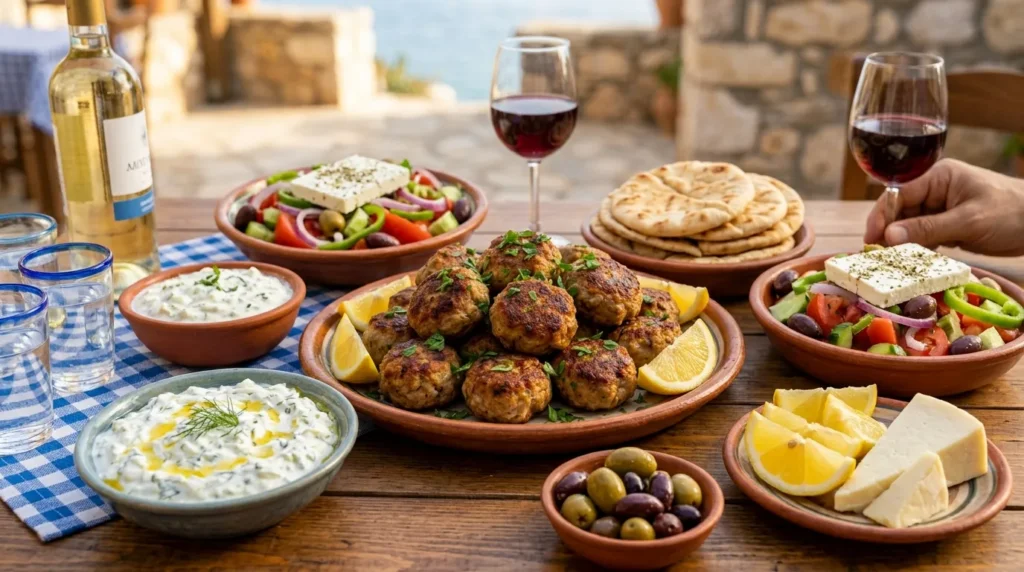
What to Serve with Greek Meatballs
- Tzatziki — the cool, garlicky yogurt dip is the most natural pairing
- Greek village salad (Horiatiki) — tomatoes, cucumber, olives, and feta for freshness
- Warm pita bread — for scooping and wrapping
- Roasted potatoes — classic lemon-oregano Greek potatoes
- Lemon rice — a simple, bright starch pairing
- Gigantes Plaki — baked giant beans in tomato sauce, for a heartier spread
- Marinated olives — a briny counterpoint
- Feta cheese — always welcome alongside
- Hummus — not traditionally Greek, but a popular modern mezze addition in many American Greek restaurants
Drink pairings:
- Assyrtiko — crisp, mineral white wine that cuts through the richness
- Agiorgitiko — a soft, food-friendly red if you prefer wine with the meat
- Light lager — a refreshing, easy pairing for a casual meal
- Sparkling lemonade — a bright, non-alcoholic option
- Greek mountain tea — an herbal, caffeine-free choice that echoes the dish’s herbal notes
Frequently Asked Questions
1. Can I bake Greek Meatballs (Keftedes) instead of frying them? Yes. Bake flour-coated meatballs at 400°F (200°C) for 20–25 minutes, flipping halfway. The texture will be a bit drier and less crisp than frying, since there’s no direct contact with hot oil to trigger the same level of browning.
2. Can I use only beef for Keftedes? Absolutely. Ground beef alone (ideally 80/20) makes an excellent, traditional-tasting keftés. Lamb is a common addition but not a requirement.
3. Can I freeze Keftedes? Yes, both raw and cooked Keftedes freeze well for up to 3 months. Freeze raw meatballs on a tray before bagging to prevent them from sticking together.
4. Why are my meatballs dry? The most common causes are meat that’s too lean, skipping the bread soak, or overcooking. Use 80/20 ground beef, don’t skip the soaked bread, and cook just until the internal temperature hits 160°F (71°C).
5. Can I prepare the mixture ahead of time? Yes. The mixture actually improves with a rest of several hours or even overnight in the refrigerator, as the herbs and aromatics distribute more fully.
6. Can I cook Keftedes in an air fryer? Yes. Brush or spray lightly with olive oil and air fry at 380°F (193°C) for 12–14 minutes, shaking the basket halfway. This gives a crisper result than baking with much less oil than frying.
7. Can I substitute dried herbs for fresh mint and parsley? You can, but the flavor will be noticeably flatter. Fresh mint and parsley are central to what makes Greek Meatballs (Keftedes) distinct, so it’s worth seeking them out. Dried oregano, on the other hand, is traditional and works well.
8. Why are my meatballs falling apart in the pan? This usually means the mixture didn’t rest long enough, the meat-to-binder ratio is off, or the oil wasn’t hot enough when the meatballs went in, causing them to absorb oil and lose structural integrity.
9. What’s the difference between Keftedes and Greek biftekia? Biftekia are typically larger, flatter, grilled patties, while Keftedes are smaller, rounder, and traditionally fried with a flour coating.
10. Do Keftedes always contain mint? Mint is extremely common and considered a defining flavor by many, but some regional and family recipes leave it out in favor of more parsley and oregano.
11. What’s the best oil for frying Keftedes? A neutral, everyday olive oil (not your finest extra virgin) is traditional and gives good flavor without excessive cost.
12. Can I make Greek Meatballs (Keftedes) gluten-free? Yes. Substitute the soaked bread with gluten-free bread or riced cauliflower, and use a gluten-free flour blend for the coating.
13. How do I know when the oil is hot enough? A small piece of the meat mixture dropped into the oil should sizzle immediately and begin browning within 30–40 seconds. An instant-read or oil thermometer reading around 350°F (175°C) is ideal.
14. Can I make mini Keftedes for a party? Yes, simply shape the mixture into smaller balls and reduce the frying time by a couple of minutes per side.
15. What should I serve with Greek Meatballs (Keftedes) for a full meal? Tzatziki, a Greek village salad, warm pita, and lemon potatoes turn Keftedes into a complete, satisfying meal.
Recipe Card
Authentic Greek Meatballs (Keftedes)
| Detail | Information |
|---|---|
| Prep Time | 25 minutes |
| Resting Time | 30–60 minutes |
| Cook Time | 20 minutes |
| Total Time | 1 hour 15 minutes |
| Servings | 4–6 (about 20 meatballs) |
| Cuisine | Greek, Mediterranean |
| Course | Appetizer, Mezze, Main |
| Calories (estimated) | ~90 per meatball |
Ingredients
- 1 lb (450g) ground beef, 80/20
- 2 slices stale white bread, crusts removed
- 1/4 cup milk or water (for soaking)
- 1 large egg
- 1 medium yellow onion, grated
- 2 cloves garlic, minced
- 1/4 cup fresh parsley, finely chopped
- 2 tablespoons fresh mint, finely chopped
- 1 tablespoon fresh oregano, finely chopped
- 1 teaspoon dried oregano
- 1 1/2 teaspoons salt, plus more to taste
- 1/2 teaspoon black pepper
- 2 tablespoons olive oil, plus more for frying
- 1/2 cup all-purpose flour, for coating
- Lemon wedges, for serving
Instructions
- Soak the bread in milk or water for 2–3 minutes, then squeeze out excess liquid.
- In a large bowl, combine the ground beef, soaked bread, egg, grated onion, garlic, parsley, mint, dried and fresh oregano, salt, pepper, and 2 tablespoons olive oil. Mix gently by hand until just combined.
- Cover and refrigerate for 30–60 minutes.
- Shape the mixture into golf-ball-sized rounds or small ovals.
- Lightly coat each meatball in flour, shaking off the excess.
- Heat 1/2 inch of olive oil in a large skillet over medium-high heat until it reaches roughly 350°F (175°C).
- Fry meatballs in batches, 3–4 minutes per side, until deeply golden and cooked through (160°F/71°C internal).
- Drain on a cooling rack, not paper towels.
- Serve hot with lemon wedges and tzatziki.
Chef Notes: Resting the mixture is not optional if you want clean shaping and the best texture. If you’re short on time, even 20 minutes helps.
Storage Notes: Refrigerate cooked Keftedes for up to 4 days, or freeze raw or cooked meatballs for up to 3 months.
Nutrition Disclaimer: Nutrition values are estimates only and will vary based on specific ingredients and portion sizes used.
Conclusion
Greek Meatballs (Keftedes) reward patience more than skill. Soak the bread properly, rest the mixture, keep the oil at the right temperature, and use fresh herbs without hesitation — the rest takes care of itself. What you end up with is a dish that’s been shaped by centuries of Eastern Mediterranean cooking and simplified, generation after generation, into something you can make on a weeknight and still feel proud to serve on a holiday table.
The next time you want a taste of Greece at home, skip the takeout and make a batch of Greek Meatballs (Keftedes) yourself. Serve them hot, with lemon on the side, and watch how quickly the platter empties.