
Panzanella: Authentic Tuscan Tomato & Bread Salad
When ripe summer tomatoes meet crusty, stale bread, a splash of good olive oil, and a handful of torn basil, you get one of Tuscany’s most honest dishes: this panzanella recipe. You don’t need fancy equipment or hard-to-find ingredients to make it — just quality produce, a little patience, and a willingness to let the flavors do the work. This is the kind of salad Tuscan grandmothers have been making for centuries, born out of necessity and perfected through generations of home cooks who refused to waste a single crust of bread. Once you understand why each ingredient matters, you’ll never look at a stale loaf the same way again. If you love dishes like this one, you’ll find plenty more in our collection of Italian recipes.
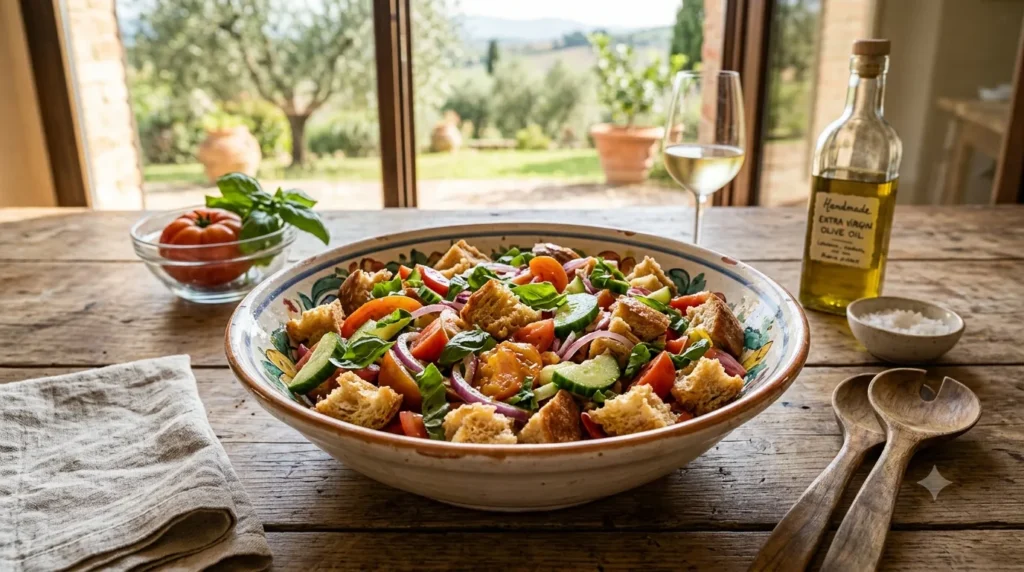
Table of Contents
What Is Panzanella?
Panzanella is a traditional Tuscan bread salad that dates back to the Renaissance, though some food historians trace similar bread-and-vegetable dishes even further into Italy’s rural past. The name likely comes from pane (bread) and zanella, an old Tuscan word for a small bowl or basket. At its core, this dish reflects the cucina povera philosophy — “poor kitchen” cooking — that shaped so much of Italian food culture. Farmers and laborers couldn’t afford to throw away day-old bread, so they soaked it in water, squeezed it dry, and combined it with whatever vegetables were on hand: tomatoes, onions, cucumbers, and herbs from the garden.
Over the centuries, this rustic Italian salad evolved from a simple onion-and-bread mixture into the tomato-forward version you know today. Tomatoes weren’t even part of the earliest recipes, since they arrived in Italy from the Americas in the 16th century and took another two hundred years to become a kitchen staple. Once they did, panzanella transformed into the bright, juicy dish that now represents peak Tuscan summer cooking. For more regional Italian recipes and context, La Cucina Italiana is a long-running and authoritative source on Italian home cooking. You’re not just making a salad when you prepare this recipe — you’re recreating a centuries-old solution to a very practical problem: how to turn humble, leftover ingredients into something genuinely delicious. For more on how Italy’s culinary institutions document and preserve dishes like this one, see the Accademia Italiana della Cucina, the country’s leading cultural authority on traditional Italian cuisine.
Why You’ll Love This Recipe
You’ll find plenty of reasons to make this authentic panzanella a regular part of your summer rotation:
- Real, honest flavor. Ripe tomatoes, good olive oil, and fresh basil need very little help to taste extraordinary.
- Minimal cooking required. Aside from toasting or drying the bread, there’s no stovetop work involved.
- Budget-friendly ingredients. You’re using pantry staples and seasonal produce, not specialty items.
- A genuinely healthy, Mediterranean-style meal. You get fiber, healthy fats, and antioxidants from vegetables and olive oil in every bite.
- A perfect warm-weather dish. Panzanella doesn’t require you to turn on the oven for long, if at all.
- Meal-prep friendly. You can prep the components ahead and assemble just before eating, which makes it ideal for entertaining.
Panzanella also fits neatly alongside our other Mediterranean recipes if you’re building out a full warm-weather menu.
Ingredients
Every ingredient in this traditional panzanella recipe earns its place. Here’s what you’ll need and why.
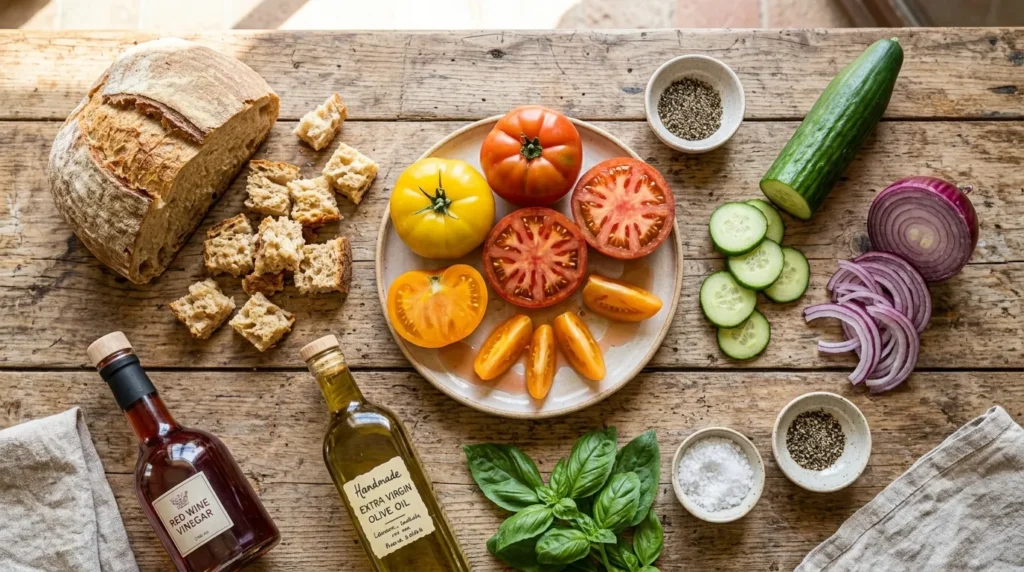
- Stale rustic bread (about 1 pound): Look for a dense, chewy country loaf — Tuscan bread, ciabatta, or a sourdough boule all work well. Traditional Tuscan bread is unsalted, which balances the acidity of the tomatoes and vinegar. Buy your loaf a day or two ahead so it has time to firm up, or dry fresh bread in a low oven if you’re short on time.
- Ripe tomatoes (about 2 pounds): You want tomatoes at their juiciest, most flavorful point. Choose whatever variety gives you the best balance of sweetness and acidity (see the tomato section below).
- Cucumber (1 medium): Adds crunch and a cooling contrast to the richness of the bread and oil. English or Persian cucumbers work well since they have fewer seeds.
- Red onion (1/2, thinly sliced): Contributes sharpness and color. Soaking the slices in cold water for 10 minutes mellows the bite if you prefer a milder flavor.
- Fresh basil (a generous handful): Tear the leaves by hand rather than cutting them with a knife, which helps prevent bruising and browning.
- Extra virgin olive oil (1/2 cup or more): This is the backbone of the dressing, so use the best-quality olive oil you can find. A fruity, peppery Tuscan oil is traditional. If you want guidance on sourcing one, Gambero Rosso publishes respected annual rankings of Italy’s top olive oil producers.
- Red wine vinegar (2–3 tablespoons): Provides the acidity that ties the salad together. Traditional recipes favor red wine vinegar over balsamic, which can be too sweet and overpowering.
- Salt and black pepper: Used both to season the tomatoes as they release their juices and to finish the salad before serving.
Choosing the Best Tomatoes
Your tomato choice will make or break this tomato bread salad, since tomatoes are doing most of the flavor and moisture work.
- Heirloom tomatoes offer the most complex flavor — a mix of sweetness, acidity, and sometimes a faint earthiness. Their irregular shapes and varying water content make every batch slightly different, which is part of their charm.
- Vine-ripened tomatoes are a reliable middle ground: consistently juicy, balanced in acidity, and widely available.
- Roma tomatoes have less water and more flesh, which means a slightly firmer bite and less risk of a watery salad, though you’ll sacrifice some of the juiciness that makes panzanella so satisfying.
- Cherry or grape tomatoes bring concentrated sweetness and hold their shape well, making them a good option when large slicing tomatoes aren’t in season.
Whichever variety you choose, look for tomatoes that feel heavy for their size and give slightly under gentle pressure — a sign of ripeness and high sugar content. Avoid tomatoes that are still firm and pale near the stem, since they haven’t developed their full sweetness yet. Once sliced, salt the tomatoes lightly and let them sit for 10–15 minutes before combining them with the bread. This draws out their juices, which the bread will absorb, and concentrates their flavor at the same time.
Why Stale Bread Matters
Stale bread isn’t a shortcut or an afterthought in this recipe — it’s the entire foundation of the dish, and understanding the science behind it will make you a better cook.
When bread goes stale, its starch molecules undergo a process called retrogradation, where the structure firms up and the crumb becomes less porous than fresh bread but still absorbent. This matters because fresh bread, with its soft, airy crumb, breaks down into mush almost immediately when it meets liquid. Stale bread, by contrast, can soak up the tomato juices, olive oil, and vinegar while still holding its shape, giving you that signature texture where each bite is moist but never soggy. If you’re curious to go deeper on the chemistry involved, Serious Eats’ food science coverage has several excellent breakdowns of how and why bread stales.
If you only have fresh bread on hand, you’re not out of luck. Cut it into cubes or thick slices and dry it out in a low oven (around 300°F) for 10–15 minutes until it’s firm and slightly crisp but not deeply browned. This mimics the texture of naturally stale bread. Some cooks also lightly toast or grill the bread instead of simply drying it, which adds a smoky note and an extra layer of texture — a popular modern variation, though not the most traditional approach.
The key mistake to avoid is skipping the resting period once the bread meets the tomatoes. You want to give the bread enough time to absorb liquid gradually, which is why panzanella almost always tastes better after sitting for at least 20–30 minutes rather than being served immediately.
Step-by-Step Instructions
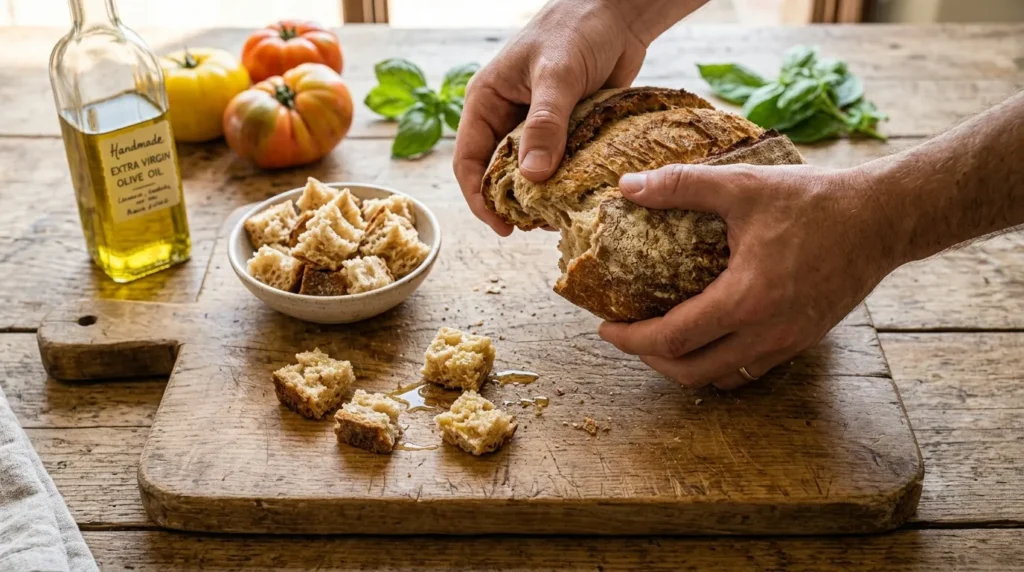
- Prepare the bread. Tear or cut your stale bread into rough 1 to 1.5-inch chunks. You want irregular pieces with plenty of surface area, since a uniform, machine-cut dice won’t absorb liquid as evenly. If your bread is fresh, dry it in a 300°F oven for 10–15 minutes first.
- Salt and rest the tomatoes. Cut your tomatoes into wedges or chunks, place them in a large bowl, and sprinkle generously with salt. Let them sit for 10–15 minutes. You’re watching for visible juice pooling at the bottom of the bowl — that’s your cue that the tomatoes are ready and have released their natural liquid.
- Prep the remaining vegetables. While the tomatoes rest, slice your cucumber into half-moons and thinly slice the red onion. If you find raw onion too sharp, soak the slices in cold water for 10 minutes, then drain and pat dry.
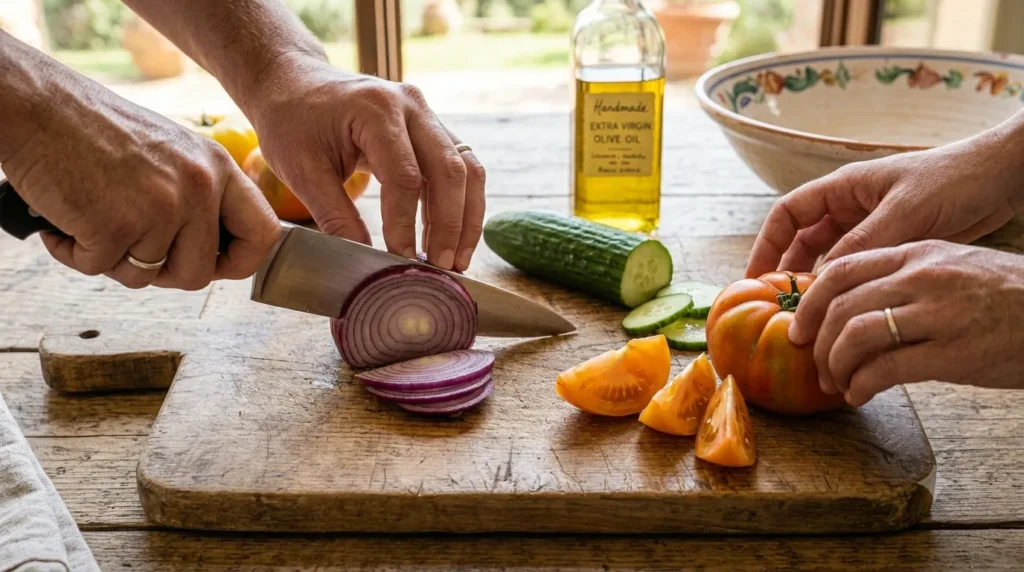
- Combine the bread and tomato juices. Add the torn bread directly into the bowl with the tomatoes and their released juices. Toss gently so the bread starts absorbing the liquid. This is the step that defines the texture of your finished salad, so don’t rush it.
- Add the remaining vegetables and herbs. Fold in the cucumber, red onion, and torn basil leaves. Tear the basil at the last possible moment to preserve its aroma and prevent it from browning.
- Dress the salad. Drizzle the olive oil and red wine vinegar over the top. Start with the amounts listed, then taste and adjust — you’re looking for a balance where the acidity brightens the tomatoes without overwhelming them.
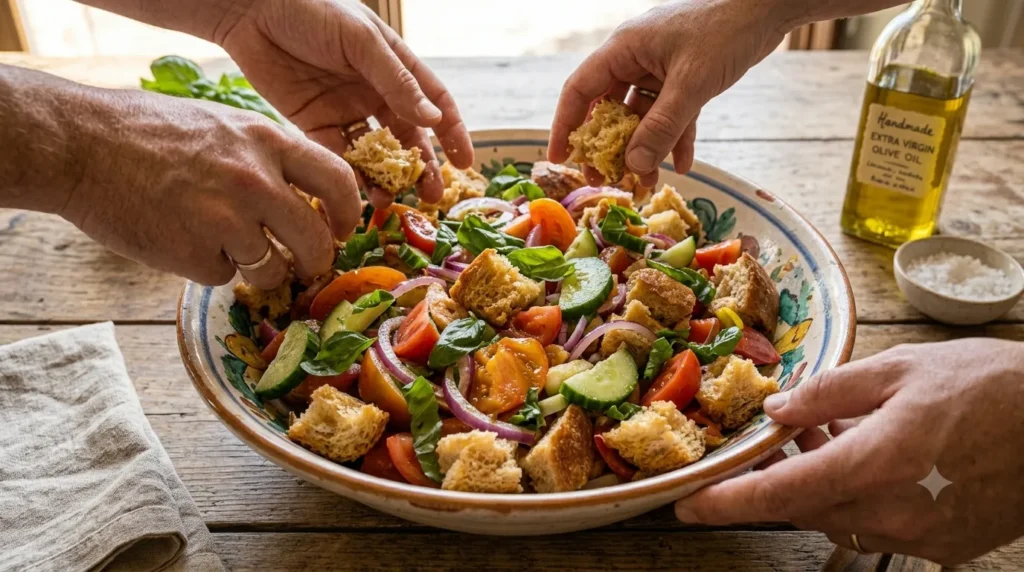
- Let it rest. Cover the bowl and let the salad sit at room temperature for at least 20–30 minutes, and up to an hour. This resting period allows the bread to fully absorb the dressing and juices without becoming mushy, and lets the flavors meld together.
- Taste and adjust. Before serving, taste a piece of bread and a piece of tomato together. Add more salt, pepper, oil, or vinegar as needed — the balance should taste bright, not flat, and rich, not greasy.
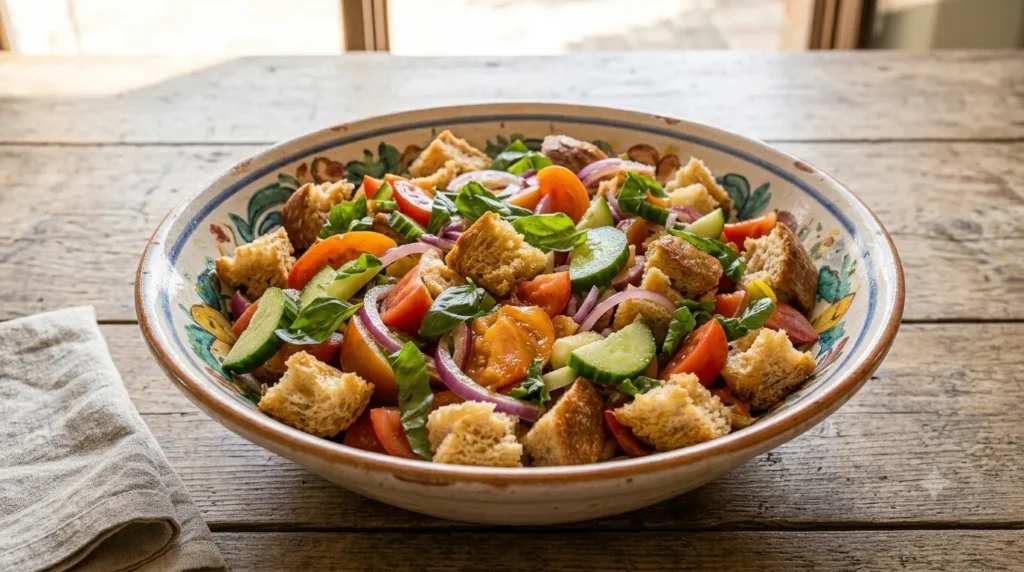
- Serve. Give the salad one final gentle toss and transfer it to a serving bowl. Garnish with a few extra basil leaves and a final drizzle of olive oil.
Chef Tips
- Use the ripest tomatoes you can find. This salad has nowhere to hide mediocre produce, so shop at a farmers market if possible.
- Don’t skip salting the tomatoes. This step draws out the juices that hydrate the bread and is non-negotiable for proper texture.
- Tear the bread by hand. Irregular surfaces absorb liquid more evenly than clean-cut cubes.
- Rest the salad before serving. Twenty to thirty minutes minimum lets the bread soften properly without turning to mush.
- Add basil at the very end. Basil bruises and blackens quickly once cut, so tear it just before serving.
- Taste as you go. The right balance of salt, acid, and oil varies depending on how sweet or acidic your tomatoes are.
- Use real extra virgin olive oil. This isn’t the dish to use a bargain bottle — the oil’s flavor is front and center.
- Soak sharp onions in cold water. This mellows their bite without dulling their crunch.
- Avoid refrigerating the finished salad if possible. Cold temperatures dull the flavor of tomatoes and firm up the olive oil, so serve at room temperature when you can.
- Layer your seasoning. Season the tomatoes, then season again at the end — one round of salt rarely reaches every component evenly.
- Adjust bread quantity to your tomatoes’ juiciness. Extra-juicy heirlooms may call for a bit more bread than the recipe states.
Common Mistakes
- Using fresh, soft bread without drying it first. This results in a mushy, soggy salad instead of a pleasantly moist one.
- Skipping the tomato-salting step. Without this, you lose the juice that’s essential for hydrating the bread properly.
- Serving the salad immediately. Panzanella needs resting time for the flavors and textures to come together.
- Using bland, out-of-season tomatoes. Since tomatoes are the star, weak ones make for a disappointing dish.
- Over-dressing the salad. Too much oil or vinegar can drown out the natural sweetness of the tomatoes.
- Cutting the bread into uniform, dense cubes. Irregular, torn pieces absorb liquid far more effectively.
- Adding basil too early. Pre-cut basil left sitting in the dressing turns dark and loses its fragrance.
- Using low-quality olive oil. Since the oil isn’t cooked or masked by other flavors, its quality is very noticeable.
- Refrigerating leftovers for too long. The bread continues to soften and can turn unpleasantly mushy after a day or two.
- Forgetting to taste and adjust before serving. Every batch of tomatoes is different, so a fixed recipe ratio won’t always be perfect.
Variations
You can adapt this classic Italian salad while still respecting its roots:
- Burrata Panzanella: Top the finished salad with a whole ball of burrata for a creamy, luxurious twist.
- Mozzarella Panzanella: Add torn fresh mozzarella for extra protein and richness.
- Peach Panzanella: Swap in ripe, sliced peaches alongside or instead of some of the tomatoes for a sweeter, summery variation.
- White Bean Panzanella: Fold in cooked cannellini beans for added protein and a heartier, more filling dish.
- Tuna Panzanella: Top with good-quality canned or fresh grilled tuna for a Mediterranean bread salad that works as a full meal.
- Grilled Chicken Panzanella: Add sliced grilled chicken breast to turn this side dish into a satisfying main course.
- Avocado Panzanella: Fold in cubed avocado for extra creaminess and healthy fats.
- Grilled Vegetable Panzanella: Add grilled zucchini, bell peppers, or eggplant for a smokier, more substantial version.
Looking for another bold Italian dish to try next? Our Penne all’Arrabbiata brings the same rustic, regional spirit to a spicy pasta plate.
What to Serve with Panzanella
This rustic Italian salad pairs beautifully with simple, classic Italian dishes:
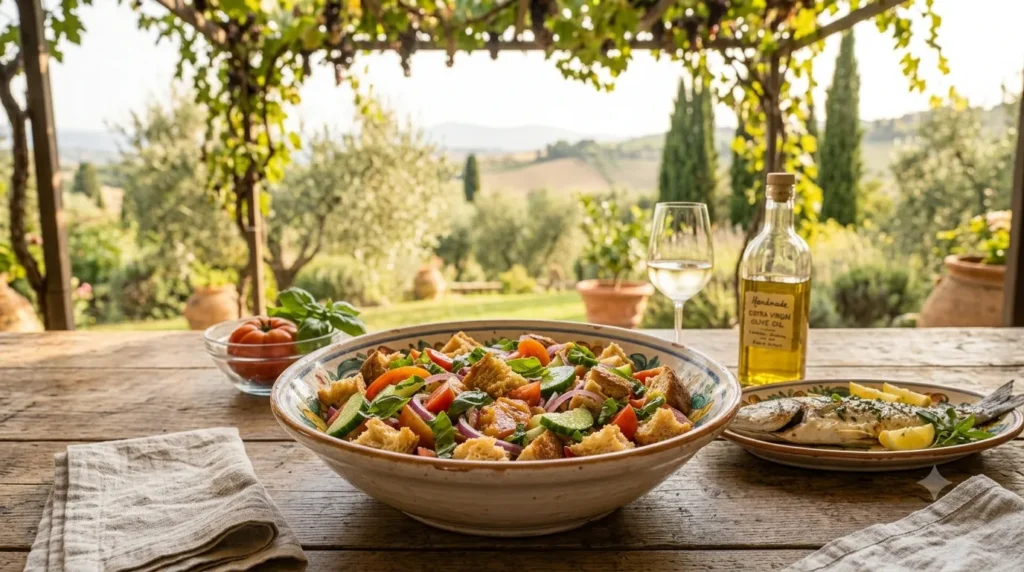
- Grilled fish, such as branzino or swordfish
- Roasted or grilled chicken
- Grilled Italian sausages
- A simple platter of cured meats and cheeses
- Crusty bread and a bowl of olives as a starter
- A chilled glass of Vermentino or Chianti
Panzanella also works beautifully as a starter or side before a heartier pasta main, like our Sausage Ragu with Pappardelle Pasta or a classic Spaghetti Bolognese. For a lighter pairing, try it alongside our Spinach Ricotta Stuffed Shells.
Storage & Make-Ahead Tips
You can prep components of this easy panzanella recipe ahead of time, but the fully assembled salad is best enjoyed the day it’s made. Store leftovers in an airtight container in the refrigerator for up to 1–2 days. Keep in mind that the texture will continue to change as the bread keeps absorbing liquid, so leftovers will be softer and less crisp than the freshly made version. Bring refrigerated panzanella back to room temperature before serving, since cold temperatures mute the flavor of both the tomatoes and the olive oil. If you want to prep ahead for a gathering, chop the vegetables and dry the bread separately, then combine everything with the dressing about 30–45 minutes before you plan to serve.
Frequently Asked Questions
What is panzanella made of? Panzanella is made of stale bread, ripe tomatoes, cucumber, red onion, fresh basil, extra virgin olive oil, red wine vinegar, salt, and pepper.
Why is stale bread used in panzanella? Stale bread has firmer structure than fresh bread, which allows it to absorb tomato juices and dressing without turning to mush.
Can I use fresh bread instead of stale bread? Yes — dry fresh bread cubes in a low oven for 10–15 minutes to mimic the texture of naturally stale bread.
What is the best bread for panzanella? A dense, chewy, unsalted country loaf like Tuscan bread, ciabatta, or sourdough works best.
What tomatoes are best for panzanella? Ripe heirloom or vine-ripened tomatoes offer the best balance of sweetness and juiciness, though Roma and cherry tomatoes also work well.
How long should panzanella rest before serving? Let it rest for at least 20–30 minutes, and up to an hour, so the bread can properly absorb the dressing and juices.
What vinegar is traditional in panzanella? Red wine vinegar is the traditional choice, offering a sharp acidity that balances the sweetness of the tomatoes.
Can panzanella be made ahead of time? You can prep the components ahead, but it’s best to combine and dress the salad no more than 30–45 minutes before serving for the best texture.
How do you store panzanella leftovers? Store leftovers in an airtight container in the refrigerator for up to 1–2 days, and bring back to room temperature before eating.
Is panzanella served cold or at room temperature? Panzanella is traditionally served at room temperature, which allows the full flavor of the tomatoes and olive oil to come through.
What protein goes well with panzanella? Grilled chicken, tuna, white beans, or burrata all pair well and can turn the salad into a heartier meal.
Is panzanella healthy? Yes — it’s rich in vegetables, fiber, and healthy fats from olive oil, making it a wholesome Mediterranean-style dish.
Can I make panzanella vegan? Yes, the base recipe is naturally vegan as long as you skip any cheese-based variations.
What’s the difference between panzanella and caprese salad? Caprese salad features tomatoes, mozzarella, and basil without bread, while panzanella centers on bread soaked in tomato juices and dressing.
Why does my panzanella turn out soggy? Soggy panzanella usually results from using fresh, un-dried bread or over-dressing the salad with too much oil and vinegar.
Conclusion
Once you’ve made this panzanella recipe a few times, you’ll understand exactly why it’s remained a Tuscan staple for centuries. It rewards good ingredients and a little patience rather than complicated technique, and it turns something as ordinary as day-old bread into a dish worth building a summer meal around. Give the tomatoes time to release their juices, let the bread soak up every bit of that flavor, and taste as you go — that’s really all it takes. Gather your ripest tomatoes, your best olive oil, and a stale loaf of bread, and give this traditional panzanella recipe a place at your table this summer.