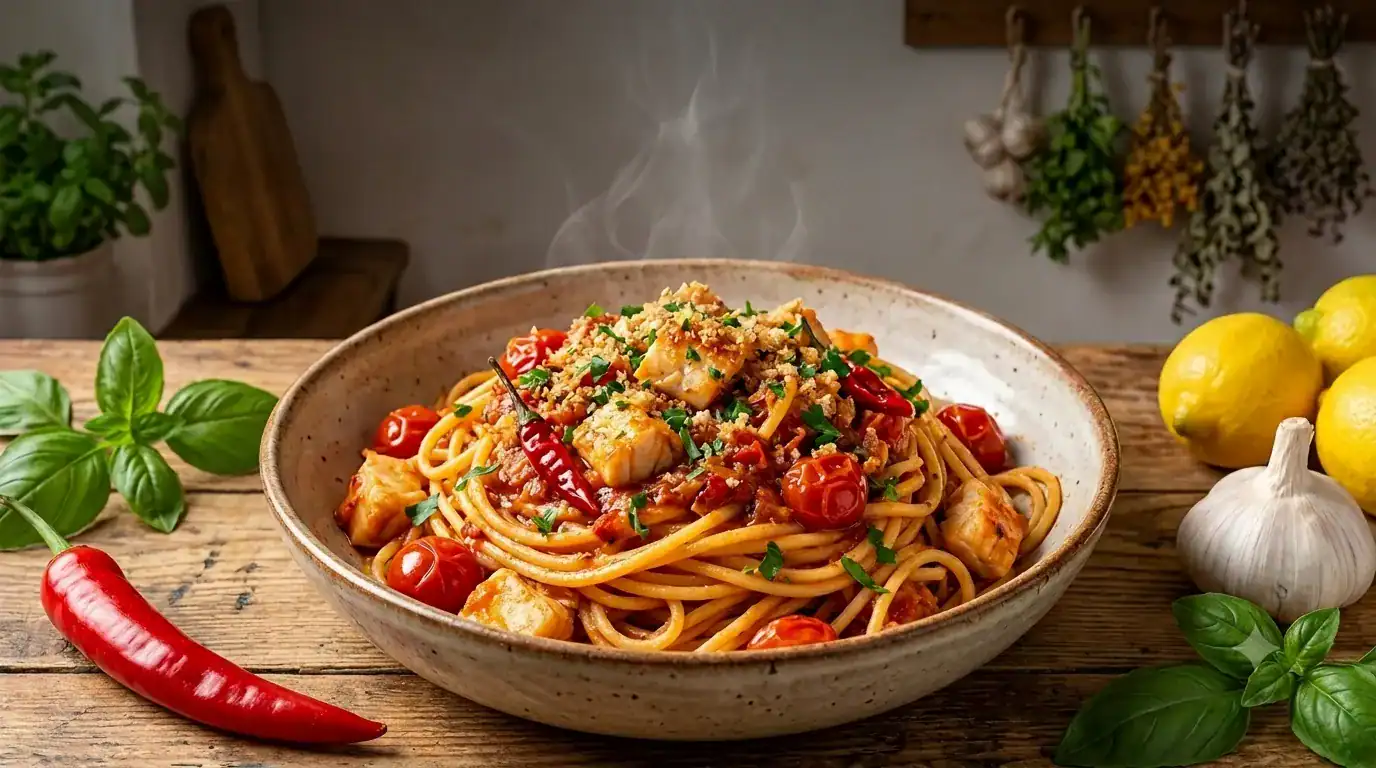
Calabrian Fish Ragu Pasta: Bold Authentic Recipe
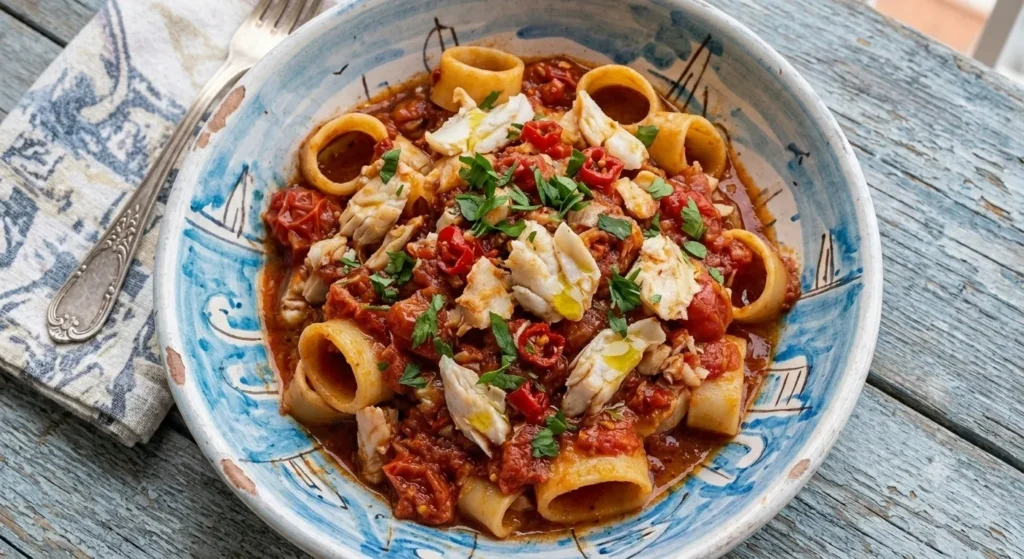
Along Calabria’s rugged coastline, where the Ionian and Tyrrhenian Seas meet the toe of Italy‘s boot, fishermen’s kitchens have long turned the day’s catch into something far richer than a simple grilled fillet. Calabrian Fish Ragu Pasta captures that same spirit: tender flakes of white fish simmered into a sauce built on sweet tomatoes, fiery Calabrian chili, and olive oil, clinging to every strand of pasta.
I grew up watching this dish come together in kitchens along the Ionian coast, where the difference between a good fish ragù and a forgettable one always came down to a handful of details: gentle heat, real Calabrian chili, and knowing exactly when to add the fish so it stays tender instead of falling apart. This guide walks through the coastal history behind the dish, the seafood science that makes it work, and every step needed to bring authentic Calabrian Fish Ragu Pasta to your own table.
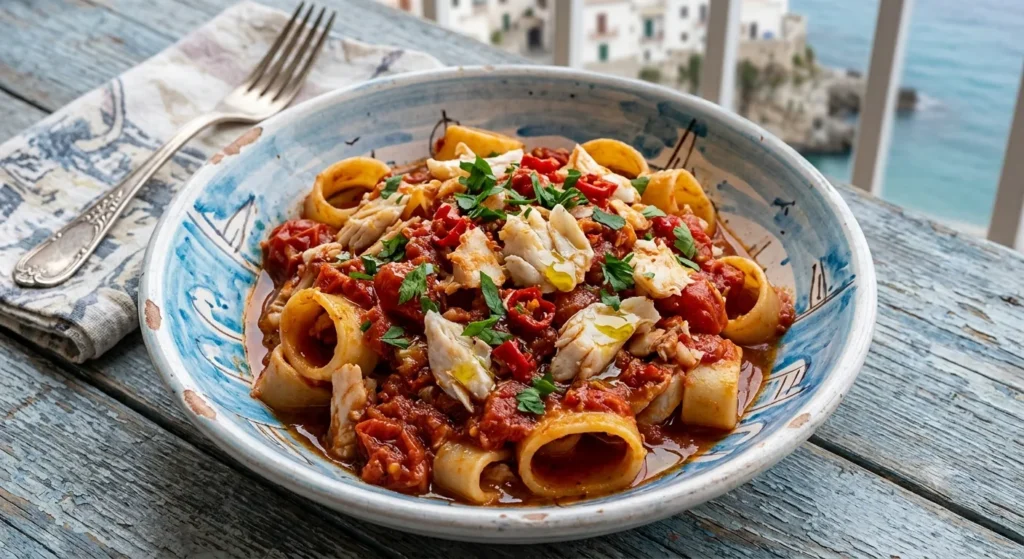
Table of Contents
What Is Calabrian Fish Ragu Pasta?
Calabrian Fish Ragu Pasta is a slow-simmered seafood sauce built around flaky white fish, sweet tomatoes, garlic, and the region’s signature chili peppers, tossed with pasta that’s sturdy enough to hold every bite of sauce. Unlike meat-based ragùs, which rely on hours of simmering to break down tough cuts, fish ragù depends on a much gentler touch, since seafood turns tough and dry if it cooks even a few minutes too long.
That distinction shapes the entire dish. Where Bolognese builds richness through long-rendered fat and slow-melting connective tissue, fish ragù builds its depth through the soffritto, tomatoes, and chili, adding the fish only at the very end so it stays tender and flaky rather than overcooked.
How It Compares to Other Italian Seafood Pastas
| Dish | Base | Cooking Style | Flavor Profile |
|---|---|---|---|
| Bolognese | Beef, veal, milk | Long, slow simmer | Rich, meaty, mellow |
| Seafood Marinara | Shellfish, tomato | Quick simmer | Bright, briny, light |
| Sicilian Fish Pasta | White fish, breadcrumbs, raisins | Moderate simmer | Sweet-savory, textured |
| Calabrian Fish Ragu | White fish, tomato, chili | Gentle simmer, fish added last | Bold, spicy, sun-warmed |
Calabrian Fish Ragu Pasta sits apart from its Sicilian cousin mainly through heat. Where Sicilian versions often lean sweet, using raisins or breadcrumbs, Calabria’s coastal cooking leans directly into its famous chili peppers, giving this ragù a spicier, more assertive character.
A Dish That Represents Coastal Mediterranean Cuisine
Fish-based pasta sauces like this one embody Calabria’s broader culinary identity, one shaped by cucina povera, or “peasant cooking,” where resourceful coastal communities built deeply flavorful dishes from the day’s catch and whatever pantry staples were on hand.
The History of Fish Ragù in Calabria
Calabria occupies the southern tip of mainland Italy, framed on one side by the Ionian Sea and on the other by the Tyrrhenian, giving its coastal communities centuries of direct access to fresh seafood. Traditional fishing has long been a way of life here, with techniques for catching and preparing fish like swordfish, anchovies, and sardines passed down through generations of families along both coastlines.
Pizzo Calabro, on the Tyrrhenian side, built its identity around tuna fishing for generations, an industry so central to the town that it shaped local food traditions well into the 20th century. Preserving the catch mattered just as much as cooking it fresh, since coastal families needed ways to make seafood last. Traditional preserved fish products, such as the chili-and-fennel seed fish spreads known regionally as rosamarina or sardella, reflect that same instinct for stretching the day’s catch across leaner times.
Cucina Povera and the Role of Fish
Calabria’s food culture is rooted in cucina povera, a peasant tradition built on transforming humble, widely available ingredients into satisfying meals. Fish, tomatoes, and chili peppers, all abundant along the coast, came together naturally in dishes like this ragù, long before restaurants ever plated a version of it.
Chef Tip Box: A Regional Dish Without a Single Fixed Recipe
Because fish ragù grew out of home kitchens rather than a single documented recipe, exact ingredients vary by household and by coast. This version reflects the broader Ionian and Tyrrhenian tradition of pairing white fish with tomato and chili, rather than claiming to replicate one specific family’s exact version.
Why This Recipe Works
The delicate texture of flaky white fish pairs beautifully with a tomato sauce that’s balanced rather than overpowering, letting the fish’s natural sweetness come through instead of getting buried under acidity. Calabrian chili peppers add real heat, but they’re balanced by good olive oil and a handful of fresh herbs, keeping the dish bold without tipping into harshness.
Because the fish goes in only at the final stage of cooking, this recipe avoids the biggest pitfall of seafood pasta: overcooked, rubbery fish that falls apart into mush rather than staying in tender, distinct flakes throughout the sauce.
A Dish Built for Sturdy Pasta
Pairing this ragù with a substantial pasta shape, rather than something delicate, ensures every bite carries a fair share of fish, tomato, and chili, rather than the sauce sliding off before it reaches your fork.
The Science Behind Perfect Fish Ragù
Fish protein is structured very differently from beef or pork. Its muscle fibers are shorter and its connective tissue is far more delicate, which is exactly why fish cooks so much faster than red meat and why overcooking it turns the texture dry and stringy almost immediately.
Because of that delicate structure, fish needs to be added at the very end of the cooking process, gently folded into a sauce that’s already fully developed rather than simmered alongside it from the start. The tomato sauce itself benefits from a slower build: cooking down crushed and cherry tomatoes together concentrates their natural sugars and balances their acidity before the fish ever enters the pot.
Kitchen Science Box: Why Olive Oil and Pasta Water Matter
Olive oil helps emulsify the tomato’s acidity with its own fat, creating a smoother, more cohesive sauce, while starchy reserved pasta water, stirred in at the very end, helps that same sauce cling to the pasta instead of pooling loosely at the bottom of the bowl.
Why Overcooking Ruins the Dish
Once fish passes its ideal doneness, its proteins tighten and squeeze out moisture, leaving behind a chalky, dry texture that no amount of sauce can disguise. Watching for opaque, just-flaking fish, rather than relying on a fixed cooking time, is the most reliable way to avoid this outcome.
Choosing the Best Fish
| Fish | Flavor | Texture | Availability | Best For |
|---|---|---|---|---|
| Cod | Mild, sweet | Flaky, tender | Widely available | Best choice for beginners |
| Haddock | Mild, slightly sweet | Flaky, delicate | Widely available | A close cod alternative |
| Sea bass | Rich, buttery | Firm, moist | Moderately available | A more indulgent option |
| Halibut | Mild, clean | Firm, meaty | Moderately available, pricier | Those who prefer firmer fish |
| Snapper | Slightly sweet | Firm, flaky | Regionally available | A flavorful, sturdy choice |
| Grouper | Mild, dense | Firm, meaty | Regionally available | Holds up well in a hearty sauce |
| Swordfish | Bold, meaty | Very firm, steak-like | Seasonally available | A traditional Calabrian favorite |
| Mixed seafood | Varied | Varied textures | Depends on availability | A more complex, layered ragù |
Cod remains the most forgiving and widely available option for beginners, since its mild flavor and flaky texture hold up well without overwhelming the sauce. Swordfish, meanwhile, carries deep traditional roots in Calabria’s coastal fishing towns and offers a firmer, meatier alternative for cooks who want a more assertive result.
Ingredients Explained
| Ingredient | Purpose |
|---|---|
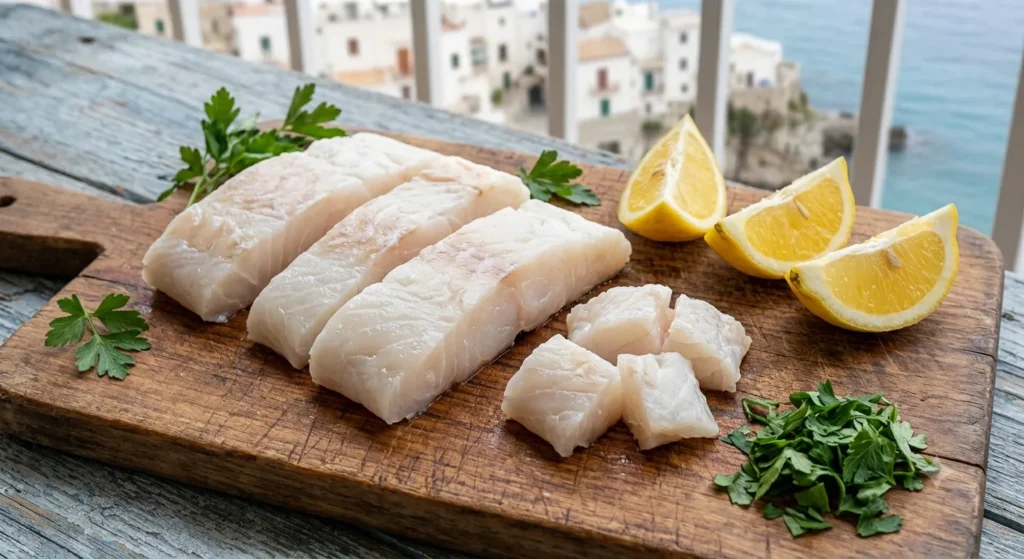
| White fish fillets | The tender centerpiece of the ragù |
| Olive oil | Base fat that carries flavor and helps emulsify the sauce |
| Garlic | Essential aromatic foundation |
| Onion | Sweetness and depth in the soffritto |
| Crushed tomatoes | Body and gentle acidity |
| Cherry tomatoes | Bursts of sweetness throughout the sauce |
| Calabrian chili peppers | Signature regional heat |
| White wine | Brightens the sauce and deglazes the pan |
| Parsley | Fresh, herbaceous finishing note |
| Basil | Aromatic sweetness that complements the tomatoes |
| Oregano | Classic Mediterranean herbal backbone |
| Lemon zest | Lifts the richness of the olive oil and fish |
| Salt | Essential seasoning throughout |
| Black pepper | Sharp, warming contrast |
| Pasta | Carries the sauce and completes the dish |
Calabrian chili peppers bring a distinctive, fruity heat that’s central to the region’s identity, and using them, whether fresh, dried, or as a paste, rather than a generic hot pepper, makes a genuine difference in capturing this dish’s authentic character.
The Secret to Authentic Calabrian Fish Ragù
Quality seafood matters more in this dish than in almost any other pasta sauce, since fish has nowhere to hide if it isn’t fresh. Beyond sourcing good fish, gentle cooking throughout the process, rather than a hard boil at any stage, keeps both the sauce and the seafood from breaking down unevenly.
Layering flavor properly, building the soffritto first, developing the tomato base second, and adding fish only at the very end, allows each element to shine without muddying the others. Finishing with a splash of reserved pasta water and a generous scattering of fresh herbs ties the whole dish together into something that tastes genuinely coastal.
Chef Tip Box: Season in Stages, Not All at Once
Season the soffritto lightly, then the tomato sauce, then taste again once the fish is folded in. Fish releases its own subtle salinity as it cooks, so seasoning everything at the very start risks an oversalted finish.
Step-by-Step Technique
Step 1: Prepare the Fish
Pat the fish fillets dry and cut them into large, even chunks. Season lightly with salt and set aside; the fish will finish cooking directly in the sauce.
Step 2: Build the Soffritto
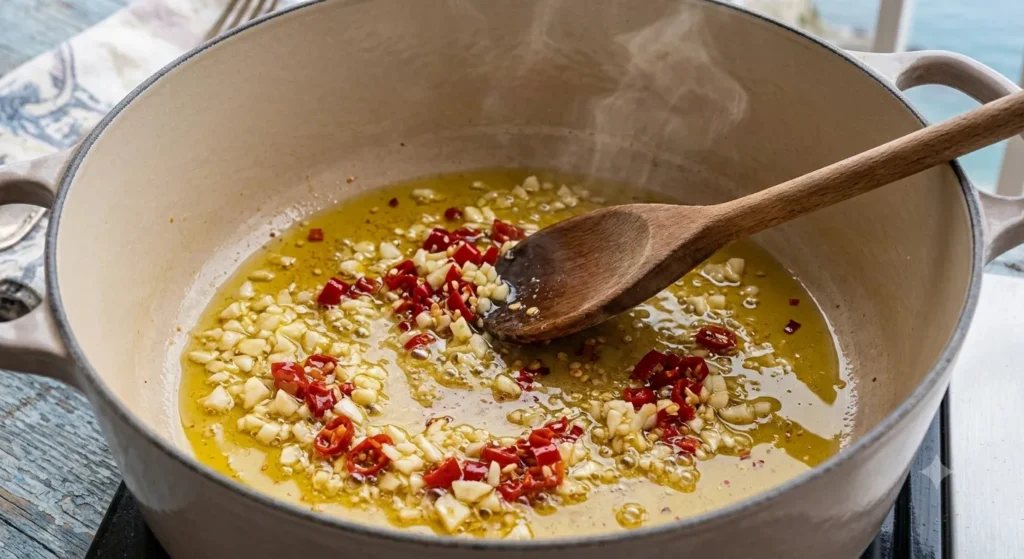
Heat olive oil in a Dutch oven over medium heat. Add diced onion and cook until softened, then stir in minced garlic and Calabrian chili for about 30 seconds, just until fragrant.
Step 3: Deglaze with Wine
Pour in the white wine and let it simmer for 2 to 3 minutes, scraping up any browned bits from the bottom of the pot, until the sharp alcohol smell fades.
Step 4: Simmer the Tomatoes
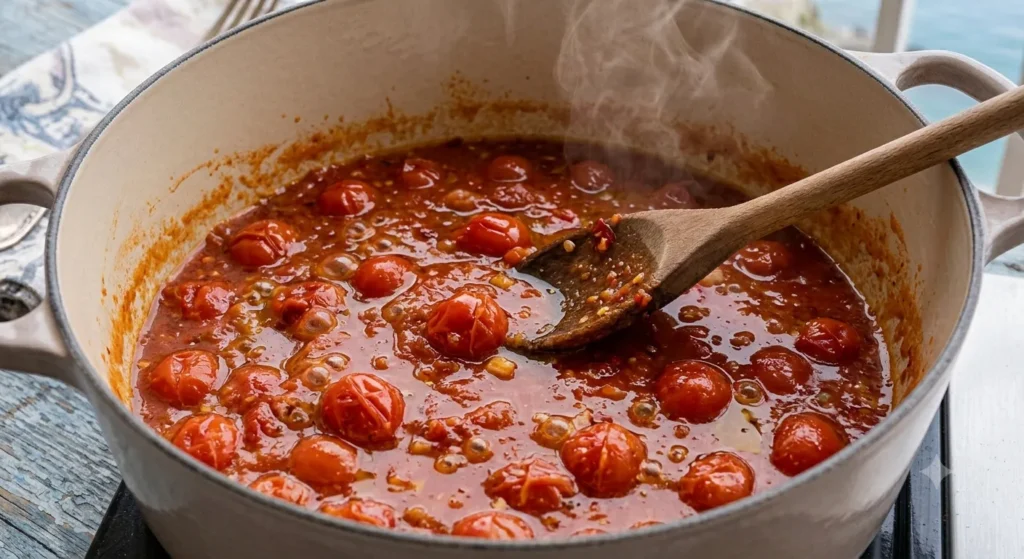
Add the crushed tomatoes and cherry tomatoes, along with oregano and a pinch of salt. Let the sauce simmer gently for 15 to 20 minutes, until it thickens slightly and the cherry tomatoes begin to break down.
Step 5: Add the Fish
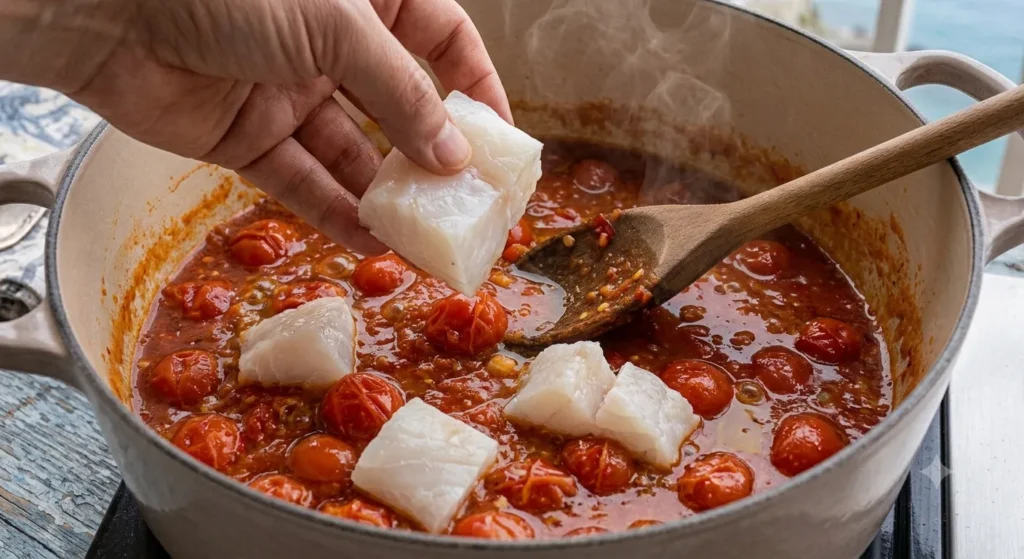
Gently fold the fish chunks into the sauce, spooning sauce over the top rather than stirring vigorously. Cover and cook for 5 to 7 minutes, just until the fish turns opaque and flakes easily.
Step 6: Cook the Pasta
While the fish finishes cooking, boil the pasta in well-salted water until just al dente. Reserve a cup of pasta water before draining.
Step 7: Combine Everything
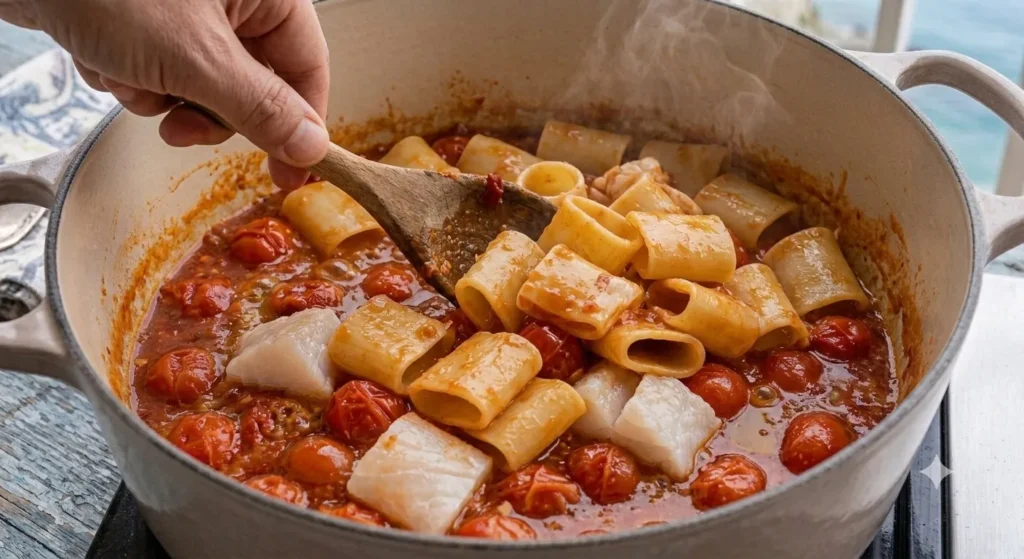
Add the drained pasta directly to the pot along with a splash of reserved pasta water, tossing gently so the fish stays intact rather than breaking apart.
Step 8: Final Finishing
Remove from heat and stir in fresh parsley, basil, and a touch of lemon zest. Drizzle with good olive oil just before serving.
Cooking Timeline
| Time | Task |
|---|---|
| 0–5 min | Prepare and season the fish |
| 5–10 min | Build the soffritto |
| 10–13 min | Deglaze with wine |
| 13–33 min | Simmer the tomato sauce |
| 33–40 min | Add and gently cook the fish |
| 30–40 min | Cook the pasta (overlapping) |
| 40–43 min | Combine and finish |
Best Pasta Shapes for Fish Ragù
| Pasta Shape | Sauce Retention | Texture | Best For |
|---|---|---|---|
| Paccheri | Excellent | Large, tube-shaped | Capturing fish chunks inside each piece |
| Calamarata | Excellent | Wide rings | Traditional pairing with seafood ragù |
| Linguine | Good | Thin, flat | A lighter, more delicate presentation |
| Spaghetti | Good | Round, classic | An approachable, familiar option |
| Mezzi Rigatoni | Very good | Ridged, medium tubes | Strong sauce grip without overwhelming bites |
| Mafaldine | Good | Ruffled ribbons | An elegant, visually striking choice |
| Tagliatelle | Moderate | Wide ribbons | Best for lighter, brothier versions |
Calamarata and paccheri are the most traditional choices for this dish, since their wide, open shapes were practically designed to cradle chunks of fish alongside the tomato sauce. Spaghetti remains a perfectly good, more familiar alternative for those without access to specialty shapes.
Equipment Needed
- Dutch oven or heavy-bottomed pot
- Large skillet, if searing fish separately
- Large pasta pot
- Colander
- Sharp chef’s knife
- Wooden spoon
- Citrus zester
Common Mistakes to Avoid
- Adding the fish too early, causing it to overcook and fall apart by the time the sauce is finished.
- Stirring too vigorously once the fish is in the pot, breaking it into mush.
- Using a fish that’s too delicate, like sole, which disintegrates quickly in a simmering sauce.
- Skipping the deglaze step, losing flavorful browned bits stuck to the pot.
- Rushing the tomato simmer, leaving the sauce thin and underdeveloped.
- Using a mild, generic hot sauce instead of real Calabrian chili, missing the dish’s signature flavor.
- Over-salting early, since fish releases its own salinity as it cooks.
- Skipping reserved pasta water, leaving the sauce unable to cling properly to the pasta.
- Using previously frozen fish without patting it dry, adding excess moisture to the sauce.
- Choosing a delicate, thin pasta shape, which can’t support hearty chunks of fish.
- Not tasting before serving, missing the chance to balance acidity, heat, and salt.
- Overcrowding the pot with too much fish at once, causing uneven cooking.
- Cooking the pasta fully before combining, leading to mushy texture once tossed in the hot sauce.
- Skipping fresh herbs at the end, losing the bright, coastal finish the dish depends on.
- Reheating leftovers over high heat, which toughens the fish considerably.
Common Mistake Box
The single most common failure in home versions of this dish is overcooked fish. Since fish continues cooking briefly even after it’s removed from direct heat, pulling it just before it looks fully done, and letting residual heat finish the job, produces the most tender result.
Pro Chef Tips
- Pat fish completely dry before seasoning to help it hold its shape in the sauce.
- Use real Calabrian chili paste or dried peppers rather than a generic hot sauce substitute.
- Build the tomato sauce fully before adding any fish.
- Cut fish into large, even chunks so pieces cook at the same rate.
- Fold the fish in gently, spooning sauce over rather than stirring hard.
- Reserve more pasta water than you think you’ll need.
- Use fresh, in-season tomatoes when available for the brightest flavor.
- Add lemon zest at the very end to preserve its fragrance.
- Choose a sturdy pasta shape that can support chunks of fish.
- Taste and adjust seasoning again after the fish goes in.
- Keep the heat gentle throughout; a hard boil breaks fish apart.
- Use good extra virgin olive oil, since its flavor carries through the whole dish.
- Let the sauce rest briefly off heat before combining with pasta.
- Add fresh basil and parsley just before serving to keep them vibrant.
- Don’t overcrowd the pot when adding fish; work in batches if needed.
- Check doneness by flaking a piece with a fork rather than timing alone.
- Use a wide, shallow pot so fish has room to cook evenly.
- Save a few whole cherry tomatoes to add near the end for texture contrast.
- Warm serving bowls slightly so the sauce doesn’t cool too quickly.
- Serve immediately, since fish ragù is best enjoyed the moment it’s finished.
Delicious Variations
Swordfish Ragù
Swap in cubed swordfish for a firmer, meatier version that leans into Calabria’s traditional swordfish fishing heritage.
Mixed Seafood Ragù
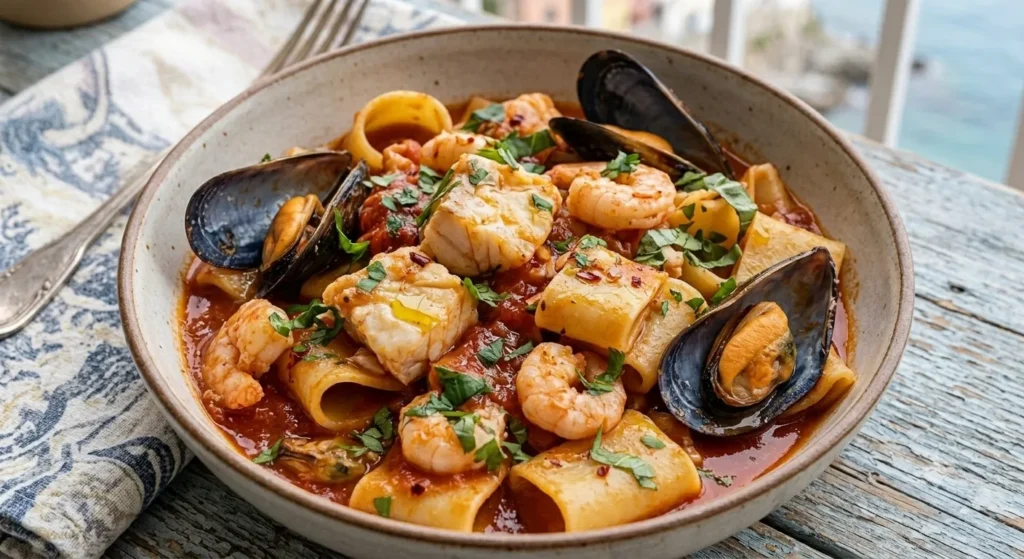
Add shrimp, mussels, or calamari alongside the white fish for a more layered, textural seafood experience.
Spicy Calabrian Version
Double the Calabrian chili for a version that leans fully into the region’s love of bold heat.
Tuna Ragù
Use fresh tuna steaks, cubed and added briefly at the end, for a heartier, richer take on the classic.
Anchovy-Enriched Ragù
Melt a few anchovy fillets into the soffritto for a deeper, umami-rich background flavor that intensifies the sauce.
White Fish Ragù Without Tomatoes
Skip the tomatoes entirely and build the sauce on white wine, garlic, and olive oil for a lighter, brothier version.
Lemon Herb Fish Ragù
Increase the lemon zest and add fresh lemon juice at the end for a brighter, more citrus-forward finish.
Gluten-Free Fish Ragù
Use a quality gluten-free pasta shape, watching the boiling time closely to avoid overcooking.
Storage & Reheating
Let leftover fish ragù cool before transferring it to an airtight container. Refrigerate for up to 2 days, since seafood doesn’t hold up as long in the fridge as meat-based sauces, and freezing is generally not recommended, as the fish’s texture suffers noticeably once thawed.
To reheat, warm the sauce very gently over low heat, stirring occasionally, and avoid microwaving on high power, which can quickly turn the fish rubbery. According to the USDA Food Safety and Inspection Service, leftover seafood dishes should be reheated to an internal temperature of 165°F to ensure food safety.
Kitchen Science Box: Why Fish Doesn’t Reheat Like Meat
Fish’s delicate protein structure means it has far less margin for error during reheating than beef or pork. Gentle, low heat gives the proteins time to warm through without seizing up and squeezing out moisture, which is what causes reheated fish to turn tough.
What to Serve with Calabrian Fish Ragu Pasta
- Warm [Internal Link: Homemade Focaccia] for scooping up extra sauce
- Crusty Italian bread alongside the meal
- A bright arugula salad to contrast the richness of the sauce
- A fennel and orange salad for a classic Southern Italian pairing
- Grilled vegetables as a simple, seasonal side
- Roasted peppers for extra Mediterranean flavor
- [Internal Link: Italian Seafood Risotto] for a heartier seafood-focused menu
- [Internal Link: Sicilian Pasta alla Norma] if you want to explore another Southern Italian classic
- [Internal Link: Garlic Bread] for a simple, crowd-pleasing side
- [Internal Link: Classic Tiramisu] to finish the meal
For wine, a crisp Vermentino or Greco di Tufo complements the dish’s brightness, while Falanghina and Pinot Grigio both offer refreshing, food-friendly alternatives. For a non-alcoholic pairing, sparkling lemon water or an Italian citrus soda both echo the dish’s bright, coastal character. Choosing seafood in line with the Monterey Bay Aquarium Seafood Watch recommendations is also worth considering when sourcing fish for this dish, since sustainable sourcing helps protect the same coastal waters this recipe celebrates.
Frequently Asked Questions
1. Can I use frozen fish for this recipe? Yes, just thaw it fully and pat it very dry before seasoning, since excess moisture can water down the sauce.
2. What’s the best fish for fish ragù? Cod is the most forgiving choice for beginners, while swordfish offers a firmer, more traditional Calabrian alternative.
3. Can I make this dish ahead of time? The tomato base can be made a day ahead, but it’s best to add the fish fresh, right before serving, for the best texture.
4. Can I freeze fish ragù? Freezing isn’t recommended, since fish’s delicate texture suffers noticeably once thawed and reheated.
5. Why is my fish falling apart? The fish was likely added too early, stirred too vigorously, or simmered for too long once added to the sauce.
6. Can I use canned tomatoes instead of fresh? Yes, quality canned crushed tomatoes work very well and are traditional in many home versions of this dish.
7. Is fish ragù spicy? It carries a moderate to bold heat from Calabrian chili peppers, though you can adjust the amount to suit your preference.
8. Which pasta is best for fish ragù? Calamarata and paccheri are the traditional choices, since their wide shapes hold chunks of fish especially well.
9. Can I use mixed seafood instead of just fish? Yes, shrimp, mussels, or calamari can be added alongside or in place of white fish for a more layered dish.
10. How long does leftover fish ragù keep? It’s best eaten within 2 days, since seafood doesn’t hold up as long in the refrigerator as meat-based sauces.
11. Can I make this dish without tomatoes? Yes, a white fish ragù built on wine, garlic, and olive oil offers a lighter, brothier alternative to the tomato version.
12. What gives this dish its distinctive heat? Calabrian chili peppers, a signature ingredient of the region, provide the dish’s characteristic fruity, bold heat.
13. Can I make this dish with tuna instead? Yes, cubed fresh tuna works well when added briefly near the end of cooking, similar to the white fish method.
14. Why does the sauce taste flat? The tomato base likely didn’t simmer long enough to concentrate its flavor, or the dish needs more salt or fresh herbs at the end.
15. Is this a Mediterranean diet-friendly dish? Yes, this recipe’s emphasis on fish, olive oil, tomatoes, and herbs aligns closely with principles promoted by the Mediterranean Diet Foundation.
Recipe Card
Calabrian Fish Ragu Pasta
Prep Time: 15 minutes Cook Time: 40 minutes Total Time: 55 minutes Servings: 4 Cuisine: Southern Italian Course: Main Course Calories (per serving, approximate): 480
Ingredients
| Ingredient | Amount |
|---|---|
| White fish fillets (such as cod) | 1.5 lbs |
| Olive oil | 3 tbsp |
| Onion, diced | 1 medium |
| Garlic, minced | 4 cloves |
| Calabrian chili peppers, chopped | 1–2 tbsp, to taste |
| Crushed tomatoes | 14 oz can |
| Cherry tomatoes, halved | 1 cup |
| Dry white wine | ½ cup |
| Fresh parsley, chopped | 3 tbsp |
| Fresh basil, torn | 2 tbsp |
| Dried oregano | 1 tsp |
| Lemon zest | 1 lemon |
| Salt and pepper | To taste |
| Pasta (calamarata or paccheri) | 12 oz |
Instructions
- Pat the fish dry, cut into large chunks, and season lightly with salt.
- Heat olive oil in a Dutch oven. Cook onion until soft, then add garlic and Calabrian chili for 30 seconds.
- Deglaze with white wine and simmer 2 to 3 minutes.
- Add crushed tomatoes, cherry tomatoes, and oregano. Simmer 15 to 20 minutes.
- Gently fold in the fish. Cover and cook 5 to 7 minutes, until opaque and flaking.
- Boil pasta until al dente. Reserve 1 cup pasta water and drain.
- Add pasta to the pot with a splash of pasta water, tossing gently.
- Remove from heat, stir in parsley, basil, and lemon zest. Drizzle with olive oil and serve.
Chef Notes
The fish should go in only once the tomato sauce is fully developed, and it should come off the heat the moment it flakes easily, since residual heat will continue cooking it slightly even after serving.
Storage Notes
Refrigerate leftovers for up to 2 days. Reheat gently over low heat; freezing is not recommended due to the fish’s delicate texture.
Nutrition Disclaimer: Nutrition values are estimates and will vary based on exact fish variety, portion size, and ingredient substitutions used.
Conclusion
Calabrian Fish Ragu Pasta brings the spirit of Italy’s rugged southern coastline straight to your table: bold chili heat, sweet tomatoes, and tender, flaky fish, all tied together with good olive oil and fresh herbs. Once you understand why the fish goes in last and how gentle heat protects its delicate texture, you’ll be able to recreate this coastal Calabrian classic with real confidence. Give this Calabrian Fish Ragu Pasta a try, and it’s easy to see why this dish has anchored fishing families’ tables for generations.