Penne all’Arrabbiata: Rome’s Bold Spicy Pasta
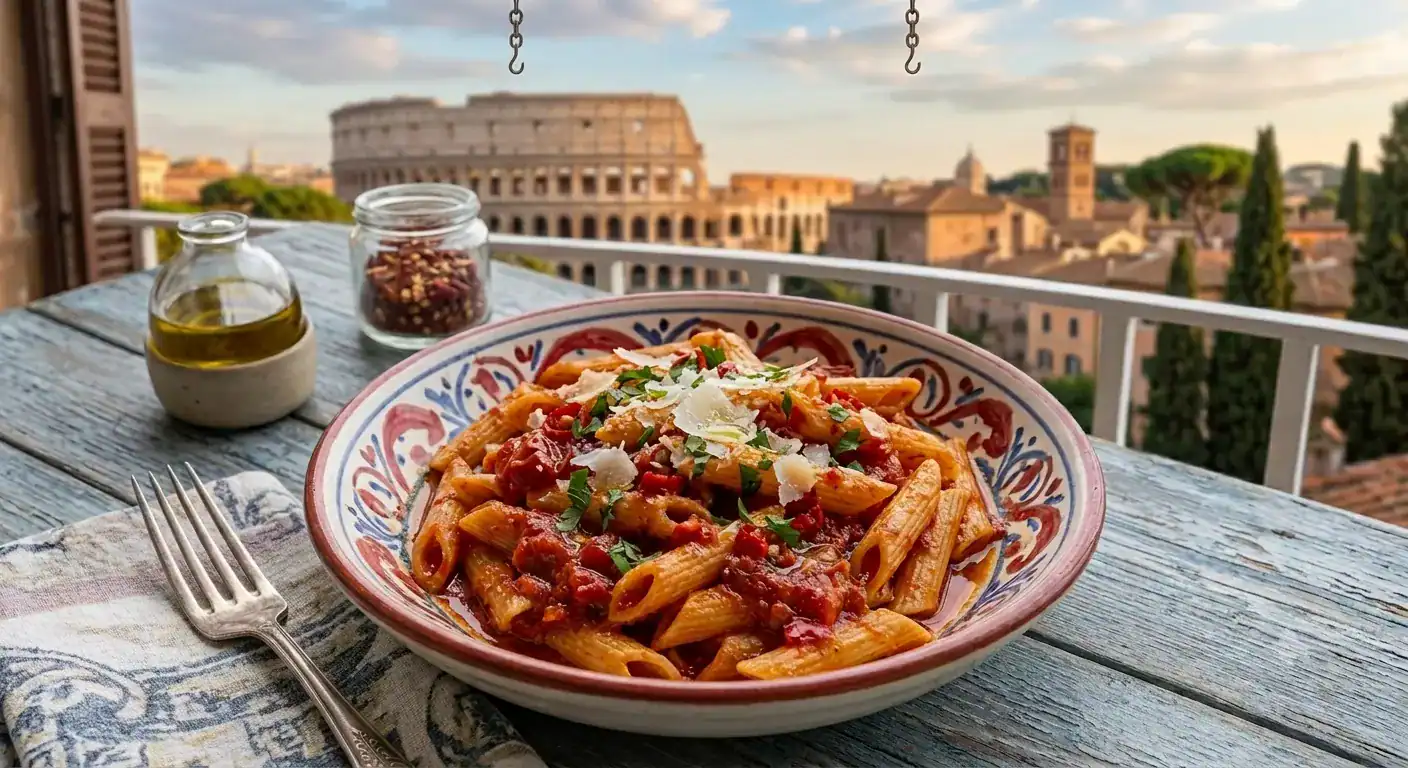
Walk into any real Roman trattoria and ask for something with a kick, and you’ll likely land on Penne all’Arrabbiata: penne rigate coated in a sauce so simple it looks almost too easy, yet so precisely balanced between sweet tomato and fiery chili that it’s earned a permanent place among Rome’s most iconic pasta dishes. This is Penne all’Arrabbiata done right, built on just a handful of ingredients and a technique that rewards patience with garlic instead of speed.
I’ve cooked this dish more times than I can count, both in busy trattoria kitchens and at home, and it never stops surprising people how much flavor comes from so few ingredients. This guide breaks down exactly what makes Penne all’Arrabbiata work, the food science behind its balanced heat, and every step needed to bring this Roman classic to your own table.
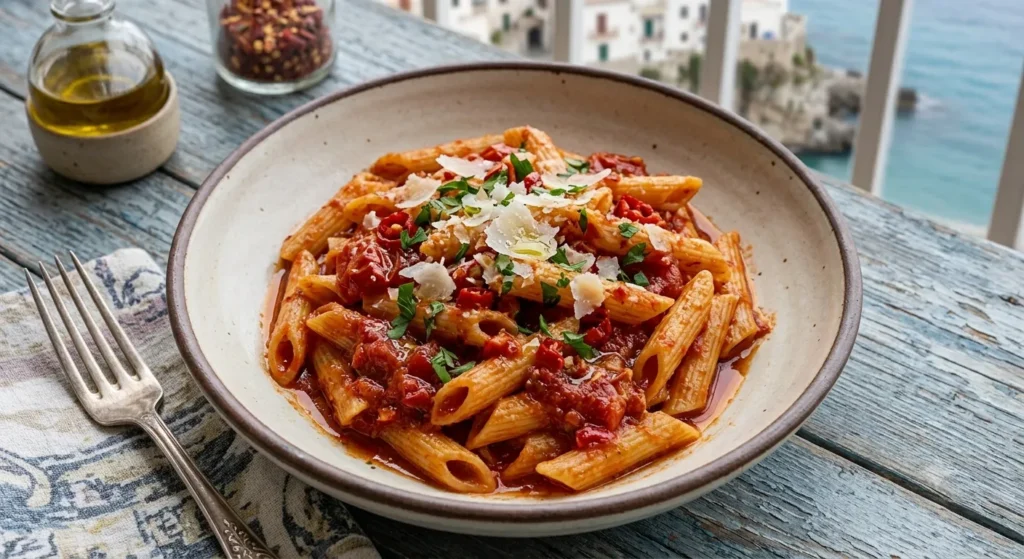
Table of Contents
What Is Penne all’Arrabbiata?
Penne all’Arrabbiata is a spicy Roman pasta built on tomatoes, garlic, olive oil, and crushed red chili, tossed with penne rigate until every ridge carries a bit of that fiery, glossy sauce. The name translates literally to “angry penne,” a nod to the sauce’s assertive heat rather than any actual temper in the kitchen.
Penne remains the traditional pasta choice here for a practical reason: its ridged surface and hollow center grip a thin, oil-based sauce far better than a smooth noodle would, ensuring the chili and tomato coat every bite instead of sliding to the bottom of the bowl.
Why It’s One of Rome’s Most Iconic Pasta Dishes
Alongside Carbonara, Cacio e Pepe, and Amatriciana, Penne all’Arrabbiata stands as one of Rome’s defining pasta dishes, distinguished from the others by its meatless, cheese-optional simplicity and its unapologetic heat.
Arrabbiata vs. Marinara, Pomodoro, and Amatriciana
| Sauce | Key Ingredients | Heat Level | Meat |
|---|---|---|---|
| Arrabbiata | Tomato, garlic, chili, olive oil | Spicy | None |
| Marinara | Tomato, garlic, herbs | Mild | None |
| Pomodoro | Tomato, basil, olive oil | Mild | None |
| Amatriciana | Tomato, guanciale, Pecorino | Mild to moderate | Guanciale |
Arrabbiata is essentially a spicier cousin of marinara and pomodoro, sharing their tomato-forward simplicity while adding real heat. Amatriciana, by contrast, builds its richness from cured pork, placing it in an entirely different category despite the shared Roman roots.
The History of Penne all’Arrabbiata
Penne all’Arrabbiata comes from Rome’s Lazio region, though its precise origin remains genuinely uncertain, as is common with many dishes born in home kitchens rather than documented restaurant menus. What’s clear is that it’s a relatively modern addition to Italian cuisine compared to older regional classics, generally believed to have taken shape sometime in the 20th century.
One of the earliest known written references appears in Ada Boni’s influential Italian cookbook, “Il Talismano della Felicità” (“The Talisman of Happiness”), which mentions a “sugo all’arrabbiata.” The dish became a fixture of Roman trattorias and taverns particularly after the Second World War, serving diners looking for something quick, inexpensive, and full of flavor.
A Staple Born from Cucina Povera
Penne all’Arrabbiata reflects Lazio’s broader cucina povera tradition, the “poor kitchen” cooking style built on humble, widely available ingredients transformed into deeply satisfying meals. Tomatoes, garlic, chili, and olive oil were staples nearly every Roman household kept on hand, which helps explain how this dish became such an enduring favorite.
From Roman Trattorias to International Menus
The dish’s simplicity, combined with its bold, recognizable heat, helped it travel well beyond Rome. It has since appeared in Italian films, including Federico Fellini’s “Roma,” a sign of just how deeply it’s woven into everyday Roman culinary identity.
Chef Tip Box: Respecting an Uncertain Origin
Because no single account definitively pins down who created Penne all’Arrabbiata or exactly when, this recipe follows the broader, well-documented Roman tradition rather than claiming a single inventor or precise founding date.
Why This Recipe Works
Balanced heat is the heart of a good Arrabbiata: enough chili to earn the “angry” name, but never so much that it overwhelms the sweetness of the tomatoes. Getting that balance right depends on infusing the garlic and chili gently in olive oil before the tomatoes ever enter the pan.
Because the dish uses so few ingredients, each one needs to pull real weight. Quality olive oil, ripe tomatoes, and fresh garlic matter more here than in a dish with a dozen components to hide behind, and the quick cooking time means there’s little room for shortcuts to go unnoticed.
Proper Pasta Emulsification
Tossing the pasta directly in the sauce, along with a splash of starchy pasta water, is what pulls everything together into a cohesive, glossy coating rather than a thin sauce sitting separately from dry noodles.
The Science Behind Perfect Arrabbiata Sauce
Garlic’s flavor compounds are fat-soluble, which is why gently warming sliced or crushed garlic in olive oil, rather than adding it directly to tomatoes, extracts so much more of its aroma into the finished sauce. Capsaicin, the compound responsible for chili heat, is also fat-soluble, so that same infused oil carries the pepper’s spice evenly throughout the dish rather than concentrating it in isolated bites.
Tomatoes bring both acidity and natural sweetness, and a short simmer helps that acidity mellow while concentrating the sweetness through gentle reduction. Cooking the pasta to a proper al dente matters just as much, since fully soft noodles can’t hold their structure once tossed with a hot, emulsified sauce.
Kitchen Science Box: Why Pasta Water Ties It Together
Reserved, starchy pasta water acts as a natural emulsifier, binding the olive oil and tomato into a cohesive sauce that clings to the ridges of the penne instead of pooling loosely at the bottom of the pan.
Why Al Dente Matters So Much Here
Because Arrabbiata’s sauce is relatively thin compared to a heavier ragù, overcooked pasta has nothing firm left to hold onto the sauce, resulting in a dish that tastes watery and underwhelming rather than vibrant and cohesive.
Choosing the Best Tomatoes
| Tomato Type | Flavor | Acidity | Sweetness | Best For |
|---|---|---|---|---|
| San Marzano | Rich, balanced | Low | High | The traditional, most authentic choice |
| Whole peeled tomatoes | Bright, clean | Moderate | Moderate | A reliable, widely available option |
| Crushed tomatoes | Concentrated | Moderate | Moderate | Convenient, quicker prep |
| Fresh Roma tomatoes | Fresh, herbaceous | Moderate | Moderate | Best when tomatoes are in season |
| Cherry tomatoes | Very sweet | Low | Very high | A brighter, slightly sweeter variation |
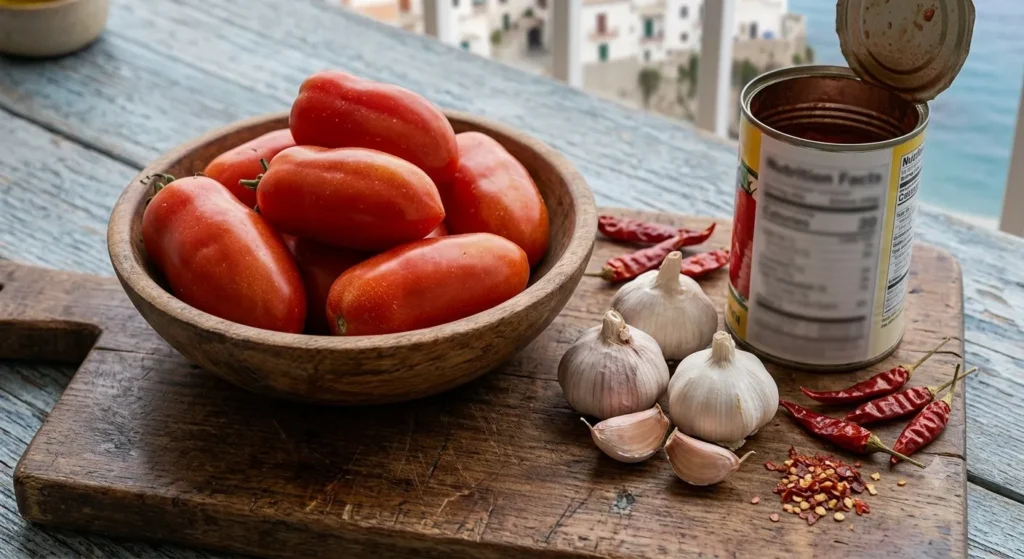
San Marzano tomatoes remain the traditional and most authentic choice, prized for their naturally low acidity and deep sweetness. For beginners, quality canned whole peeled tomatoes, crushed by hand, offer nearly the same result with far less effort than sourcing fresh San Marzanos out of season.
Ingredients Explained
| Ingredient | Purpose |
|---|---|
| Penne Rigate | The traditional pasta shape, built to grip the sauce |
| San Marzano tomatoes | Sweet, low-acid base of the sauce |
| Garlic | Essential aromatic foundation |
| Extra virgin olive oil | Carries flavor and helps emulsify the sauce |
| Crushed red pepper flakes | The dish’s signature heat |
| Fresh parsley | Bright, herbaceous finishing note |
| Pecorino Romano | Salty, sharp finish, traditional in Roman cooking |
| Salt | Essential seasoning throughout |
| Black pepper | Adds a secondary layer of warmth |
Optional additions like fresh basil, Calabrian chili, or Parmigiano Reggiano can personalize the dish, though the traditional version keeps things deliberately minimal, letting each core ingredient shine on its own.
The Secret to Authentic Penne all’Arrabbiata
Using quality olive oil isn’t optional here; with so few ingredients, a bland or low-quality oil flattens the entire dish. Gently infusing garlic over low heat, watching closely so it never browns past a pale gold, protects the sauce from the bitterness that burnt garlic inevitably brings.
Controlling spice level comes down to how long the chili flakes bloom in the oil and how many you use, so tasting as you go matters more than following a fixed measurement. Saving pasta water and tossing the pasta directly in the sauce, rather than plating pasta and spooning sauce over the top, is what separates a trattoria-quality dish from an average one.
Chef Tip Box: Never Let the Garlic Burn
If garlic turns brown or dark, it turns bitter almost instantly, and there’s no way to fix a burnt batch. Starting with cold or barely warm oil and raising the heat gradually gives you far more control than starting hot.
Step-by-Step Instructions
Step 1: Prepare the Ingredients
Thinly slice or crush the garlic, and measure out the crushed red pepper flakes. If using whole peeled tomatoes, crush them by hand or with a fork before they go into the pan.
Step 2: Infuse the Garlic
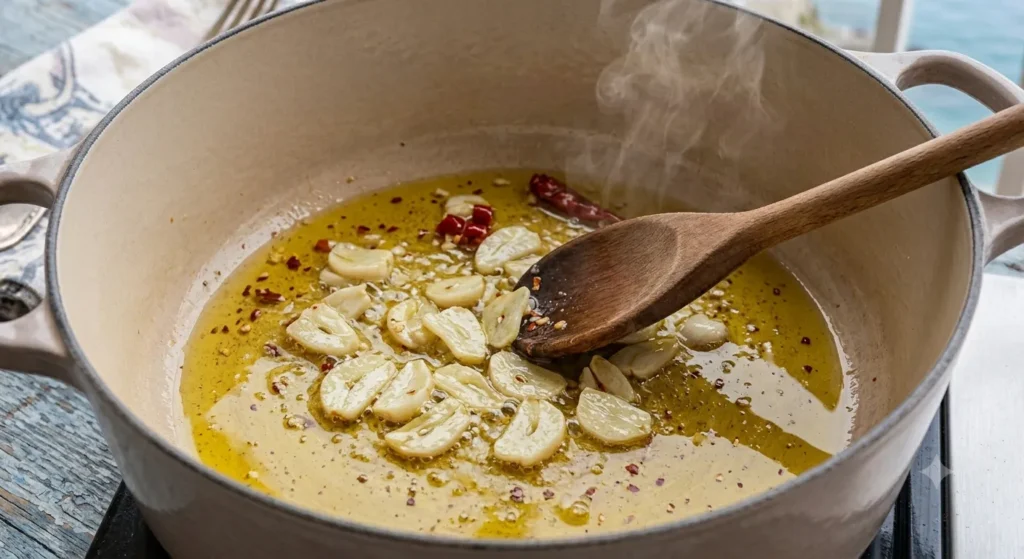
Warm olive oil in a large skillet over low to medium-low heat. Add the sliced garlic and cook gently, swirling occasionally, until it turns pale gold and fragrant, about 2 to 3 minutes.
Step 3: Bloom the Chili Flakes
Add the crushed red pepper flakes to the infused oil and let them bloom for about 30 seconds, just until fragrant, taking care not to let them scorch.
Step 4: Simmer the Tomatoes
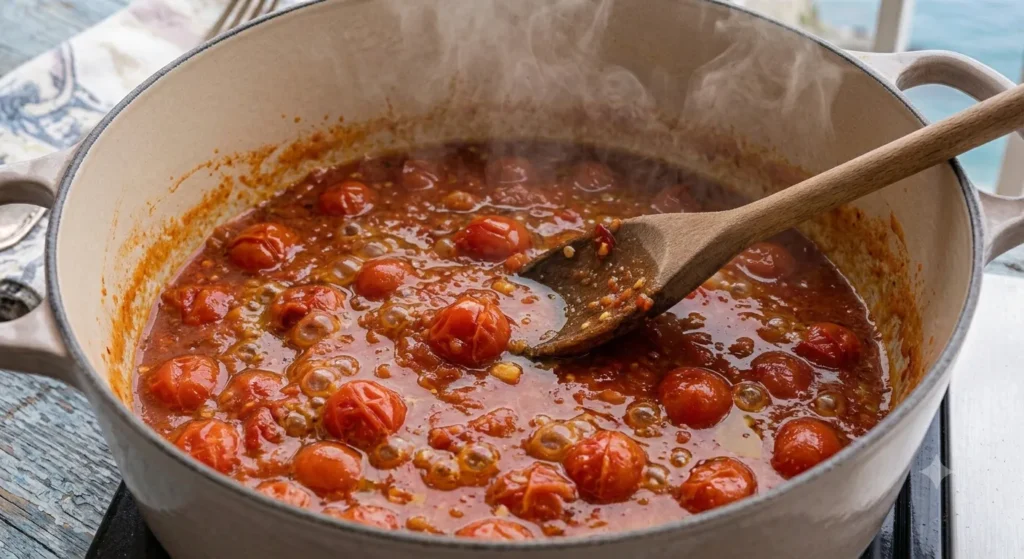
Add the crushed San Marzano tomatoes and a pinch of salt, then let the sauce simmer gently for 12 to 15 minutes, until it thickens slightly and the raw tomato edge mellows.
Step 5: Cook the Pasta
While the sauce simmers, cook the penne in well-salted boiling water until just al dente. Reserve about a cup of pasta water before draining.
Step 6: Emulsify the Sauce
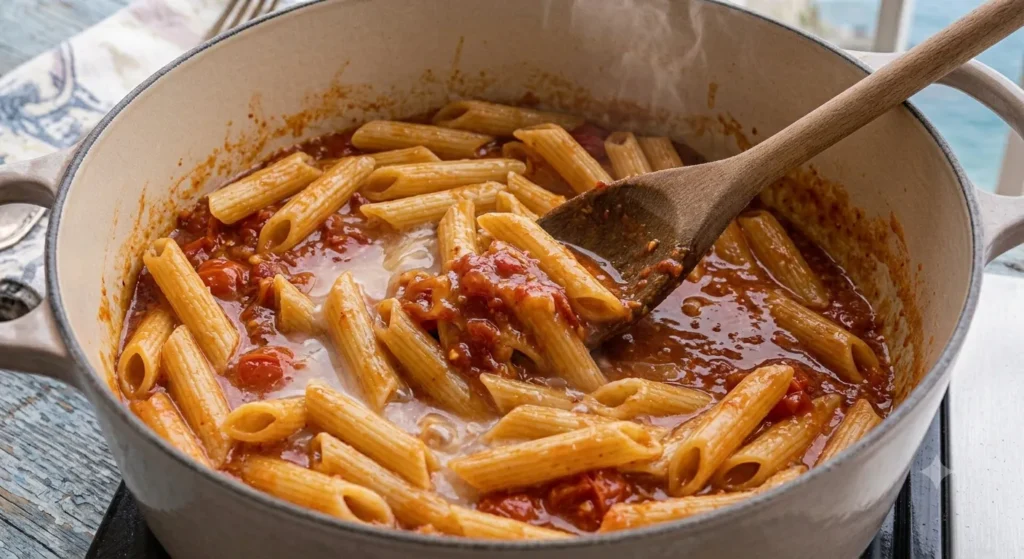
Add the drained pasta directly to the skillet along with a splash of reserved pasta water, tossing continuously over medium heat until the sauce turns glossy and clings to every piece.
Step 7: Final Tossing
Taste and adjust salt, chili, and pepper as needed. If using cheese, fold in a portion of grated Pecorino Romano off the heat for extra richness.
Step 8: Garnish and Serve
Finish with a scattering of fresh parsley and, if desired, an extra drizzle of good olive oil, then serve immediately while the sauce is still glossy.
Cooking Timeline
| Time | Task |
|---|---|
| 0–3 min | Prepare garlic and tomatoes |
| 3–6 min | Infuse the garlic |
| 6–7 min | Bloom the chili flakes |
| 7–22 min | Simmer the tomato sauce |
| 12–22 min | Cook the pasta (overlapping) |
| 22–25 min | Toss and emulsify |
| 25–26 min | Garnish and serve |
Best Pasta for Arrabbiata
| Pasta Shape | Sauce Grip | Texture | Traditional? |
|---|---|---|---|
| Penne Rigate | Excellent | Ridged, firm | Yes, the classic choice |
| Rigatoni | Very good | Larger, ridged tubes | A heartier alternative |
| Mezze Maniche | Very good | Short, ridged tubes | A common Roman substitute |
| Fusilli | Good | Springy, spiraled | A playful, sauce-catching option |
| Spaghetti | Moderate | Round, smooth | A simpler, widely available choice |
| Bucatini | Moderate | Hollow, thick strands | A distinctive, chewier alternative |
Penne Rigate remains the traditional choice specifically because its ridges and hollow center were practically designed to trap a thin, oil-based sauce like this one. Mezze Maniche, a short, ridged tube pasta common in Roman kitchens, makes an excellent, equally traditional substitute if penne isn’t on hand.
Equipment Needed
- Large pasta pot
- Large skillet
- Colander
- Sharp chef’s knife
- Wooden spoon
- Cheese grater
- Measuring spoons
Common Mistakes to Avoid
- Burning the garlic, which turns the entire sauce bitter beyond saving.
- Adding chili flakes too early over high heat, causing them to scorch.
- Rushing the tomato simmer, leaving the sauce thin and raw-tasting.
- Skipping reserved pasta water, preventing the sauce from clinging properly to the pasta.
- Overcooking the pasta, resulting in mushy penne that can’t hold the sauce’s structure.
- Using low-quality olive oil, flattening the dish’s overall flavor.
- Adding too much chili at once, overwhelming the tomato’s natural sweetness.
- Under-seasoning the sauce, since pasta absorbs a good deal of salt once combined.
- Choosing a smooth, non-ridged pasta shape, which fails to grip a thin sauce.
- Not tasting before serving, missing the chance to balance heat, acidity, and salt.
- Plating pasta and spooning sauce over the top, instead of tossing them together directly.
- Using canned tomatoes without crushing them properly, leaving large, uneven chunks.
- Adding cheese while the pan is still very hot, causing it to clump instead of melt smoothly.
- Overcrowding the skillet, preventing even tossing and emulsification.
- Serving the dish cold or lukewarm, losing the glossy texture that fresh tossing creates.
Common Mistake Box
The single most common failure is burnt garlic. Since it happens quickly and can’t be reversed, keeping the heat low and watching closely during the infusion step is the most important habit to build for this dish.
Pro Chef Tips
- Slice garlic thinly and evenly so it cooks at a consistent rate.
- Start with cold olive oil and raise the heat gradually to control garlic infusion.
- Toast chili flakes only briefly; a few seconds too long turns them acrid.
- Use San Marzano tomatoes when possible for the most authentic sweetness.
- Crush canned tomatoes by hand for better texture control than pre-crushed varieties.
- Season the sauce in stages, tasting as it simmers.
- Cook pasta a minute under package instructions, since it finishes in the sauce.
- Reserve more pasta water than you think you’ll need.
- Toss pasta and sauce together over active heat for proper emulsification.
- Use a wide skillet rather than a narrow pot for easier tossing.
- Add cheese off the heat if using it, to prevent clumping.
- Garnish with fresh parsley right before serving to keep it vibrant.
- Adjust chili flakes gradually, tasting between additions.
- Serve immediately; this dish loses its glossy texture as it cools.
- Use freshly grated Pecorino Romano rather than pre-grated for smoother melting.
- Keep extra chili flakes on the table for guests who want more heat.
- Warm your serving bowls slightly so the sauce doesn’t cool too quickly.
- Don’t walk away during the garlic infusion step; it changes quickly.
- Use a wooden spoon rather than metal to avoid scratching the pan’s coating.
- Double the sauce and refrigerate extra for a faster meal later in the week.
Delicious Variations
Calabrian Arrabbiata
Swap crushed red pepper flakes for Calabrian chili paste for a fruitier, more complex heat.
Seafood Arrabbiata
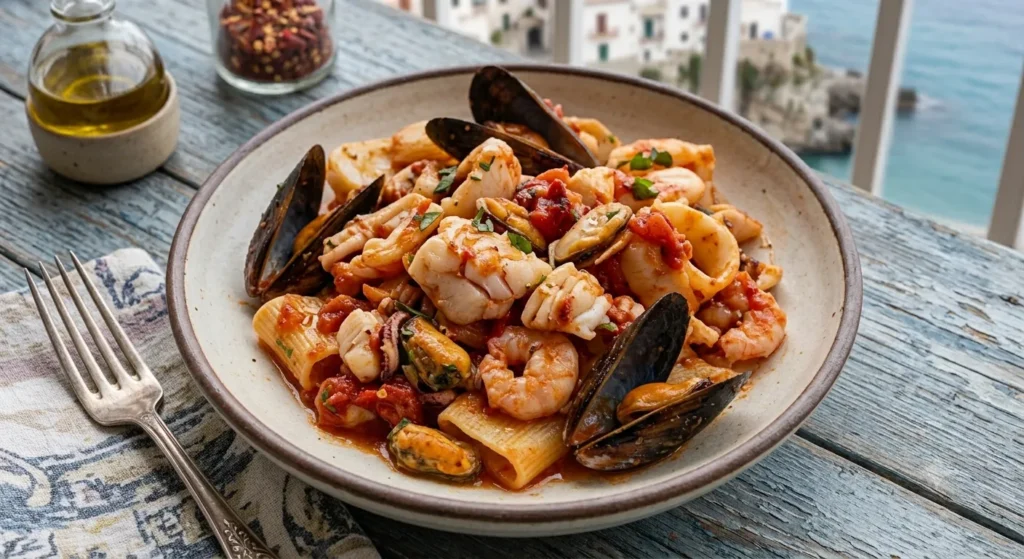
Fold in sautéed clams or mussels toward the end of cooking for a briny, Mediterranean twist.
Shrimp Arrabbiata
Sauté shrimp separately until just pink, then fold them into the finished sauce for a lighter, protein-rich version.
Chicken Arrabbiata
Add sliced, seared chicken breast to the sauce just before tossing in the pasta for a heartier main course.
Burrata Arrabbiata
Top each bowl with a torn piece of fresh burrata just before serving, letting its creamy center melt into the spicy sauce.
Vegan Arrabbiata
Skip the Pecorino Romano entirely; the traditional base recipe is naturally vegan without any adjustments needed.
Gluten-Free Arrabbiata
Use a quality gluten-free penne, watching the boiling time closely since these can soften faster than traditional wheat pasta.
Roasted Vegetable Arrabbiata
Fold in roasted zucchini, eggplant, or bell peppers for a heartier, vegetable-forward version of the classic.
Storage & Reheating
Let leftover Arrabbiata cool before transferring it to an airtight container. Refrigerate for up to 4 days, or freeze the sauce alone, separate from cooked pasta, for up to 3 months for the best texture once reheated.
To reheat, warm the sauce gently over low heat, adding a splash of water or olive oil to loosen it, then toss with freshly cooked pasta if possible for the best texture. Following USDA Food Safety and Inspection Service guidance, leftovers should be reheated to an internal temperature of 165°F to ensure food safety.
Kitchen Science Box: Why Sauce Consistency Changes Overnight
As the sauce sits, its oil and tomato components can separate slightly. A brief reheat over low heat, stirred continuously, brings the emulsion back together far more effectively than a quick blast in the microwave.
What to Serve with Penne all’Arrabbiata
- Warm [Internal Link: Homemade Garlic Bread] for soaking up extra sauce
- Fresh [Internal Link: Homemade Focaccia] as a heartier bread option
- A crisp [Internal Link: Caesar Salad] to balance the dish’s heat
- An Italian chopped salad for a tangy, textured contrast
- Fresh burrata served simply with olive oil and salt
- [Internal Link: Bruschetta] as a bright, simple starter
- Roasted broccolini for a light, seasonal vegetable side
For wine, a Chianti Classico or Montepulciano d’Abruzzo both stand up well to the dish’s heat, while Nero d’Avola offers a fruitier, softer alternative. For a non-alcoholic pairing, sparkling lemon water or an Italian blood orange soda both echo the dish’s bright, tomato-forward character.
Frequently Asked Questions
1. Why is it called Arrabbiata? “Arrabbiata” means “angry” in Italian, referring to the sauce’s assertive chili heat rather than anything related to cooking temperament.
2. How spicy should Arrabbiata be? Traditional versions carry a noticeable, moderate heat, though the amount of chili flakes can be adjusted up or down to personal taste.
3. Can I use fresh tomatoes instead of canned? Yes, ripe Roma or San Marzano tomatoes work well in season, though they’ll need to be peeled and cooked down slightly longer than canned varieties.
4. Can I freeze Arrabbiata sauce? Yes, freeze the sauce separately from cooked pasta for up to 3 months for the best texture when reheated.
5. What’s the best pasta shape for this dish? Penne Rigate is the traditional choice, since its ridges grip the thin, oil-based sauce especially well.
6. Is Penne all’Arrabbiata vegetarian? Yes, the traditional recipe contains no meat, and it’s vegetarian as long as Pecorino Romano, made with animal rennet in some cases, isn’t a concern.
7. Can I make Penne all’Arrabbiata vegan? Yes, simply omit the Pecorino Romano; the base sauce is naturally vegan without any further adjustments.
8. Why is my sauce watery? The tomatoes likely didn’t simmer long enough to reduce, or too much pasta water was added at the end without enough active tossing to emulsify it.
9. Can I use Parmesan instead of Pecorino Romano? Yes, though Pecorino Romano’s sharper, saltier flavor is more traditional and complements the chili heat particularly well.
10. Can I make this dish ahead of time? The sauce can be made a day or two ahead and reheated gently, though pasta is best cooked and tossed fresh for the ideal texture.
11. How long does leftover Arrabbiata keep in the fridge? It keeps well for up to 4 days when stored in an airtight container in the refrigerator.
12. Can I make Arrabbiata less spicy? Yes, simply reduce the amount of crushed red pepper flakes, or remove the seeds from fresh chilies if using them.
13. What’s the difference between Arrabbiata and Amatriciana? Amatriciana includes cured guanciale and Pecorino Romano as core ingredients, while Arrabbiata is a simpler, meatless, chili-forward tomato sauce.
14. Can I double this recipe? Yes, though you’ll want a wide enough skillet to toss the pasta evenly once combined with the sauce.
15. What cheese pairs best with this dish? Freshly grated Parmigiano Reggiano PDO makes a fine substitute for Pecorino Romano if you prefer a milder, nuttier finish.
Recipe Card
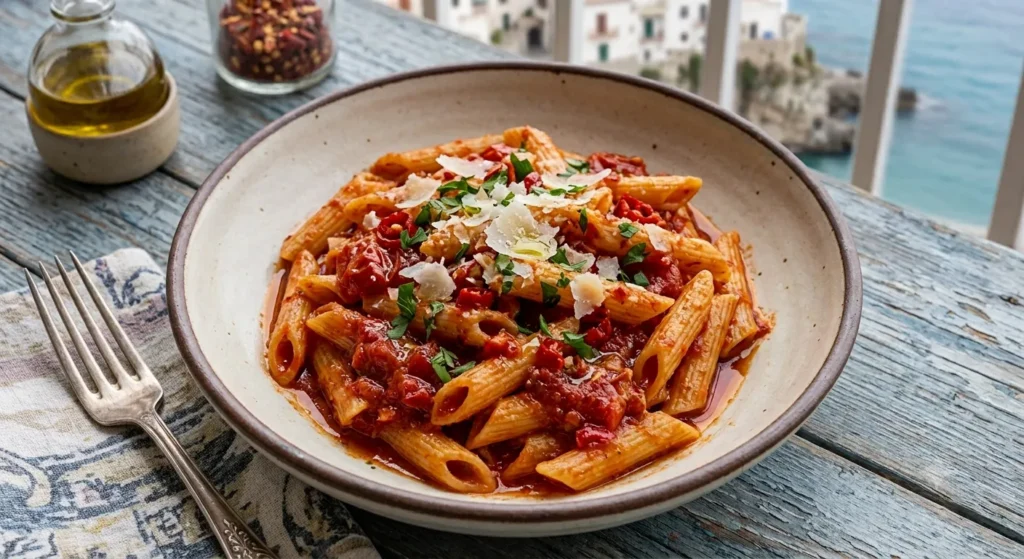
Penne all’Arrabbiata
Prep Time: 10 minutes Cook Time: 25 minutes Total Time: 35 minutes Servings: 4 Cuisine: Roman, Italian Course: Main Course Calories (per serving, approximate): 420
Ingredients
| Ingredient | Amount |
|---|---|
| Penne Rigate | 12 oz |
| San Marzano tomatoes, crushed | 28 oz can |
| Garlic, thinly sliced | 4 cloves |
| Extra virgin olive oil | ¼ cup |
| Crushed red pepper flakes | 1–2 tsp, to taste |
| Fresh parsley, chopped | 3 tbsp |
| Pecorino Romano, grated | ⅓ cup, optional |
| Salt | To taste |
| Black pepper | To taste |
Instructions
- Slice the garlic and crush the tomatoes by hand if using whole peeled tomatoes.
- Warm olive oil in a large skillet over low heat. Add garlic and cook gently until pale gold, 2 to 3 minutes.
- Add crushed red pepper flakes and bloom for about 30 seconds.
- Stir in the tomatoes and a pinch of salt. Simmer gently for 12 to 15 minutes.
- Boil the penne until just al dente. Reserve 1 cup pasta water and drain.
- Add pasta to the skillet with a splash of pasta water. Toss continuously over medium heat until glossy.
- Taste and adjust seasoning. Stir in Pecorino Romano off the heat, if using.
- Garnish with parsley and serve immediately.
Chef Notes
The garlic infusion step is the one place this recipe can go wrong quickly; keep the heat low and stay close to the pan until the garlic turns pale gold, not brown.
Storage Notes
Refrigerate leftover sauce for up to 4 days, or freeze for up to 3 months, separate from cooked pasta for the best texture.
Nutrition Disclaimer: Nutrition values are estimates and will vary based on exact brands, portion sizes, and ingredient substitutions used.
Conclusion
Penne all’Arrabbiata proves that a handful of humble ingredients, handled with real care, can produce a dish bold enough to define an entire city’s culinary identity. Once you understand why the garlic infusion matters, how to balance heat against sweetness, and why tossing the pasta directly in the sauce makes all the difference, you’ll be able to recreate this Roman classic with genuine confidence. Give this Penne all’Arrabbiata a try, and it’s easy to see why it’s earned its place among Rome’s most beloved pastas.