
Authentic Thai Grilled Chicken (Gai Yang): The Smoky, Garlic-Coriander Classic That Defines Thai Street Food
Thai Chicken, known throughout Thailand as Gai Yang, is one of the most recognizable dishes to come out of Thai street food culture. Deeply marinated in garlic, coriander root, lemongrass, and fish sauce, then grilled slowly over charcoal until the skin turns dark and blistered, Gai Yang delivers a combination of smoky char, savory depth, and bright herbal aroma that’s hard to match with any quick weeknight chicken recipe.
What makes real Thai Chicken (Gai Yang) different from ordinary grilled chicken isn’t the grill itself. It’s the marinade, built from pounded aromatics rather than bottled sauces, and the patience of low, steady heat that renders the skin crisp without burning the herbs underneath. Get those two things right, and you have a dish that tastes like it came from a roadside grill stand in Thailand rather than a backyard cookout.
This guide walks through the full picture: where Gai Yang comes from, why each ingredient in the marinade earns its place, the food science behind why marinating and grilling work the way they do, and the exact technique for getting deeply flavored meat with genuinely crispy skin. You’ll also get the classic Nam Jim Jaew dipping sauce that no plate of Gai Yang should be served without, along with common mistakes, professional tips, and variations to make it your own.
Table of Contents
- What Is Thai Chicken (Gai Yang)?
- The History of Gai Yang
- Why Gai Yang Is So Delicious
- The Science Behind the Marinade
- Choosing the Best Chicken
- Ingredients Explained
- Step-by-Step Technique
- Why Coriander Root Is Essential
- The Perfect Thai Dipping Sauce
- Equipment Needed
- Common Mistakes
- Pro Chef Tips
- Variations
- Storage & Reheating
- What to Serve with Gai Yang
- Frequently Asked Questions
- Recipe Card
- Conclusion
What Is Thai Chicken (Gai Yang)?
Gai Yang translates simply as “grilled chicken,” but the name undersells how specific and technique-driven the dish actually is. Real Thai Chicken (Gai Yang) starts with a wet marinade paste pounded from garlic, coriander root, white peppercorns, and often lemongrass, then combined with fish sauce, a little sugar or palm sugar, and sometimes soy sauce or oyster sauce. The chicken sits in this marinade for hours, often overnight, before it goes onto a charcoal grill.
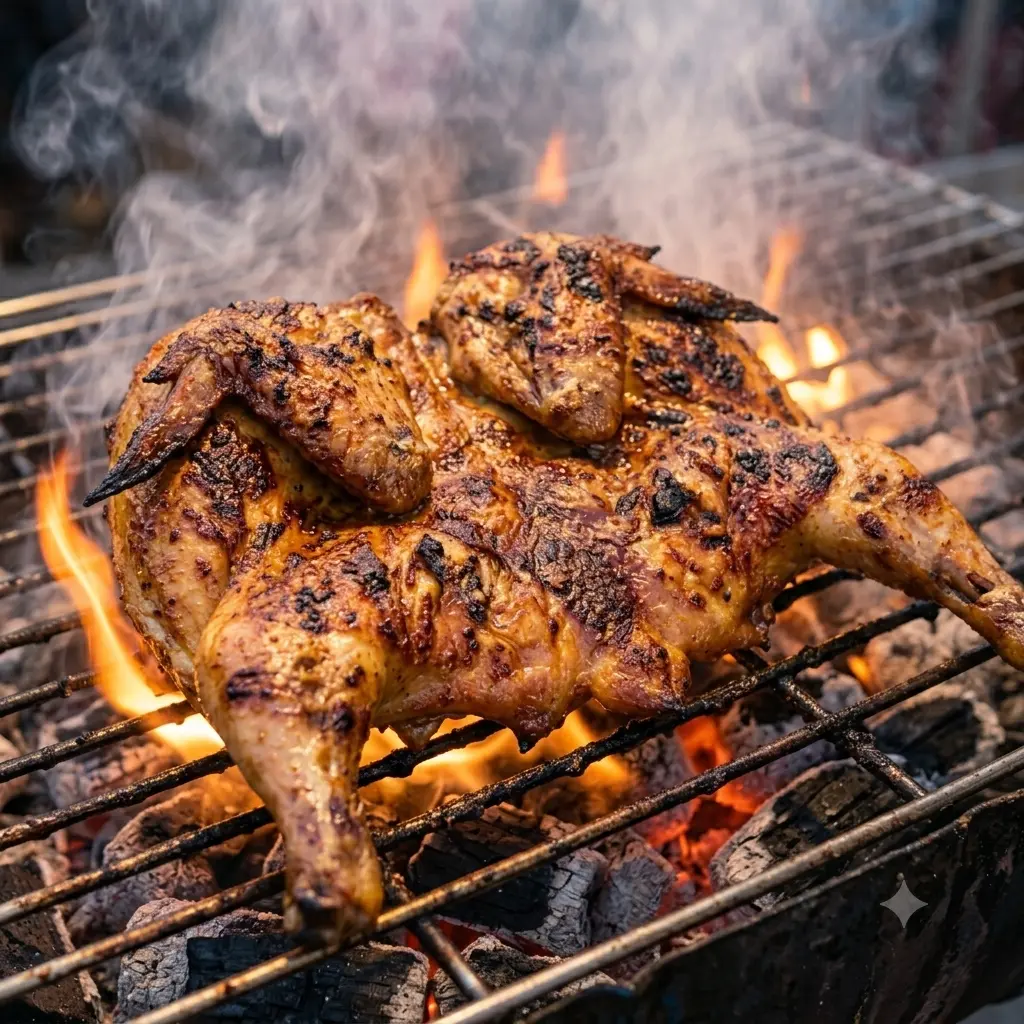
It’s one of the most beloved dishes in Thai street food because it hits so many cravings at once: smoky char from the grill, a salty-sweet glaze on the skin, and juicy meat underneath that’s been seasoned all the way through rather than just on the surface. Street vendors typically grill the chicken flattened or split open so it lies flat over the coals, cooking evenly and picking up smoke on both sides.
Traditional preparation almost always uses bone-in chicken, either a whole bird spatchcocked (butterflied flat) or bone-in pieces like thighs and drumsticks, since bones and skin help the meat stay moist through a longer, slower grilling process. Regional variations exist across Thailand, with some versions leaning more herbal and peppery, others adding coconut milk for richness, and some incorporating turmeric for a golden color and earthy note.
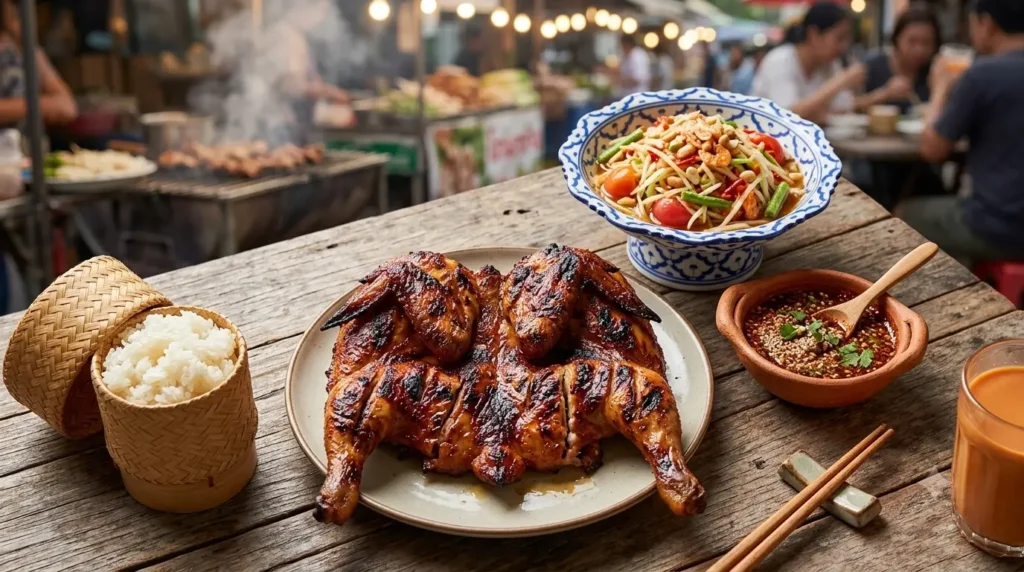
Gai Yang is almost never served alone. It’s traditionally paired with sticky rice, which is perfect for tearing off small pieces and dipping into the sauce, and with Som Tam, a spicy green papaya salad that brings acidity and heat to balance the richness of the grilled meat. A small bowl of Nam Jim Jaew, a tangy, spicy dipping sauce, usually sits right alongside.
The History of Gai Yang
Gai Yang is widely associated with Isan, the northeastern region of Thailand that shares a long border and deep cultural ties with Laos. Isan cuisine tends to favor bold, funky, and herbal flavors, built around fish sauce, fresh herbs, and grilling or fermenting rather than the richer, coconut-heavy dishes more common in central Thailand.
Because of this shared border and history, Lao cuisine has had a clear influence on Isan cooking, and many dishes associated with Gai Yang, including Som Tam and sticky rice, appear in both Lao and Isan food traditions with only small variations between them. Grilling meat over open charcoal has long been a practical cooking method in the region, well suited to open-air markets and street stalls where quick, smoky cooking draws customers by smell alone.
As Isan workers moved to Bangkok and other Thai cities over the decades in search of work, they brought their regional dishes with them, and Gai Yang spread well beyond its northeastern roots to become a staple at food stalls across the country. From there, Thai restaurants and street food vendors abroad introduced the dish to international audiences, and today Gai Yang is recognized as one of Thailand’s signature grilled dishes, served everywhere from plastic-stool street stalls to upscale Thai restaurants overseas.
Why Gai Yang Is So Delicious
Great Gai Yang works because of a specific combination of ingredients and cooking method, and each element plays its own role.
- Garlic: Provides a pungent, savory backbone that mellows and sweetens as it grills.
- Coriander roots: Add an earthy, slightly citrusy depth that fresh leaves alone can’t replicate.
- Lemongrass: Brings a bright, citrus-like aroma that cuts through the richness of the marinade.
- Fish sauce: Delivers concentrated saltiness and umami that soy sauce alone can’t match.
- Palm sugar: Balances the salt and helps the skin caramelize into a deep mahogany color.
- White pepper: Adds a warm, subtle heat that’s more floral than black pepper.
- Charcoal smoke: Infuses the meat with a smoky aroma that’s part of the dish’s identity.
- Crispy skin: Formed by slow rendering over indirect heat, giving texture contrast to the tender meat.
- Juicy meat: A result of bone-in cuts and a marinade that seasons deep into the muscle, not just the surface.
The Science Behind the Marinade
Salt and fish sauce as tenderizers. Fish sauce is high in salt, and salt works its way into muscle fibers over time, loosening the protein structure so the meat holds onto more moisture during cooking. This is the same principle behind brining, just delivered with added umami flavor.
Sugar and caramelization. Palm sugar or regular sugar in the marinade doesn’t just add sweetness. On the grill, sugars caramelize and brown, contributing to the dark, slightly sticky glaze that makes grilled Gai Yang skin so appealing.
Acid balance. While the marinade itself isn’t heavily acidic, lime is typically added at serving time, and the tang from the dipping sauce balances the richness of the fat rendered from the skin. This contrast, savory-sweet meat against a sour, spicy sauce, is central to why the dish feels balanced rather than heavy.
Aromatic oils. Garlic, coriander root, and lemongrass all contain aromatic oils that are more effectively released when pounded rather than simply chopped. Pounding breaks down the plant cell walls, releasing those oils directly into the marinade so they coat the meat more thoroughly.
Why overnight marinating matters. Because the marinade needs time to penetrate past the surface of the meat, especially with bone-in cuts, marinating for several hours or overnight allows the salt, sugar, and aromatics to reach deeper into the muscle rather than sitting only on the outer layer.
How grilling creates the Maillard reaction. As the marinated chicken hits the hot grill grates, the sugars and proteins on the surface undergo the Maillard reaction, the same browning reaction responsible for a seared steak’s crust. This is what produces the deep color and complex, slightly charred flavor associated with authentic Gai Yang.
Choosing the Best Chicken
| Cut | Flavor | Juiciness | Cooking Time | Best For |
|---|---|---|---|---|
| Whole Chicken | Full, well-rounded | Very juicy if spatchcocked | Longest, 45–60 minutes | Serving a crowd, traditional presentation |
| Spatchcock Chicken | Full flavor, even char | Juicy, cooks evenly | 40–50 minutes | Most authentic street-food result |
| Bone-in Thighs | Rich, savory | Very juicy and forgiving | 25–30 minutes | Best choice for beginners |
| Drumsticks | Rich, slightly milder | Juicy, hard to overcook | 25–30 minutes | Family-friendly, easy handling |
| Boneless Thighs | Milder | Juicy but less traditional texture | 12–15 minutes | Fastest weeknight option |
A whole spatchcocked chicken is the closest to what you’ll find at a traditional Thai street stall, since flattening the bird lets it lie evenly over the coals and gives you both light and dark meat with crispy skin throughout. For most home cooks, though, bone-in thighs are the easiest entry point into making authentic Gai Yang, since the extra fat and bone make them very forgiving on the grill and hard to dry out, even for someone grilling this style of chicken for the first time.
Ingredients Explained
- Chicken: Bone-in, skin-on cuts hold marinade and moisture best; traditional preparation favors whole or spatchcocked birds.
- Fish sauce: The primary source of salt and umami; there’s no real substitute for its distinct funky depth.
- Oyster sauce: Optional in some regional recipes; adds a touch of extra richness and a glossy finish.
- Palm sugar: Provides a deeper, more caramel-like sweetness than white sugar, and helps the skin brown attractively.
- Garlic: The aromatic foundation of the marinade; freshly pounded garlic releases more flavor than pre-minced jarred garlic.
- Coriander roots or stems: A traditional Thai ingredient that adds earthy depth; stems are a reasonable substitute if roots aren’t available.
- Lemongrass: Adds bright, citrus-forward aroma; only the tender inner core near the base is used, finely minced or pounded.
- White pepper: Traditional in Thai marinades for its floral heat, distinct from the sharper bite of black pepper.
- Turmeric (optional): Used in some regional versions for color and a subtle earthy note.
- Soy sauce: Sometimes added alongside fish sauce for extra depth and a touch more saltiness.
- Lime: Squeezed over the finished chicken or used in the dipping sauce for brightness.
- Coconut milk (regional variation): Used in some versions of the marinade for a richer, milder flavor profile.

Step-by-Step Technique
Cooking Timeline Overview
| Step | Approximate Time |
|---|---|
| Preparing the chicken | 10 minutes |
| Making the marinade paste | 10 minutes |
| Marinating | 4 hours minimum, overnight ideal |
| Preparing the grill | 15–20 minutes |
| Grilling | 35–50 minutes, depending on cut |
| Resting | 5–10 minutes |
1. Preparing the chicken. If using a whole bird, spatchcock it by cutting out the backbone and pressing it flat. For bone-in pieces, pat the chicken dry and make a few shallow slashes in the thickest parts of the meat to help the marinade penetrate.
2. Making the marinade paste. Pound garlic, coriander root, white peppercorns, and lemongrass together in a mortar and pestle until it forms a rough, fragrant paste. Stir in fish sauce, sugar, and any optional soy sauce or oyster sauce.
3. Marinating. Rub the paste all over the chicken, working it under the skin where possible for deeper flavor. Cover and refrigerate for at least four hours, though overnight produces noticeably more flavorful results.
4. Preparing the grill. Set up a two-zone charcoal fire, with hot coals banked to one side and a cooler zone on the other. This gives you both direct heat for searing and indirect heat for slow, even cooking.
5. Two-zone grilling. Start the chicken skin-side down over the hotter zone just long enough to mark and begin crisping the skin, then move it to the cooler zone to finish cooking slowly, flipping occasionally so it cooks evenly without burning.
6. Basting. Baste the chicken periodically with any remaining marinade or a little extra fish sauce and sugar mixture to build a deeper, glossier crust as it grills.
7. Resting. Once the chicken reaches a safe internal temperature, let it rest for five to ten minutes before cutting, so the juices redistribute through the meat.
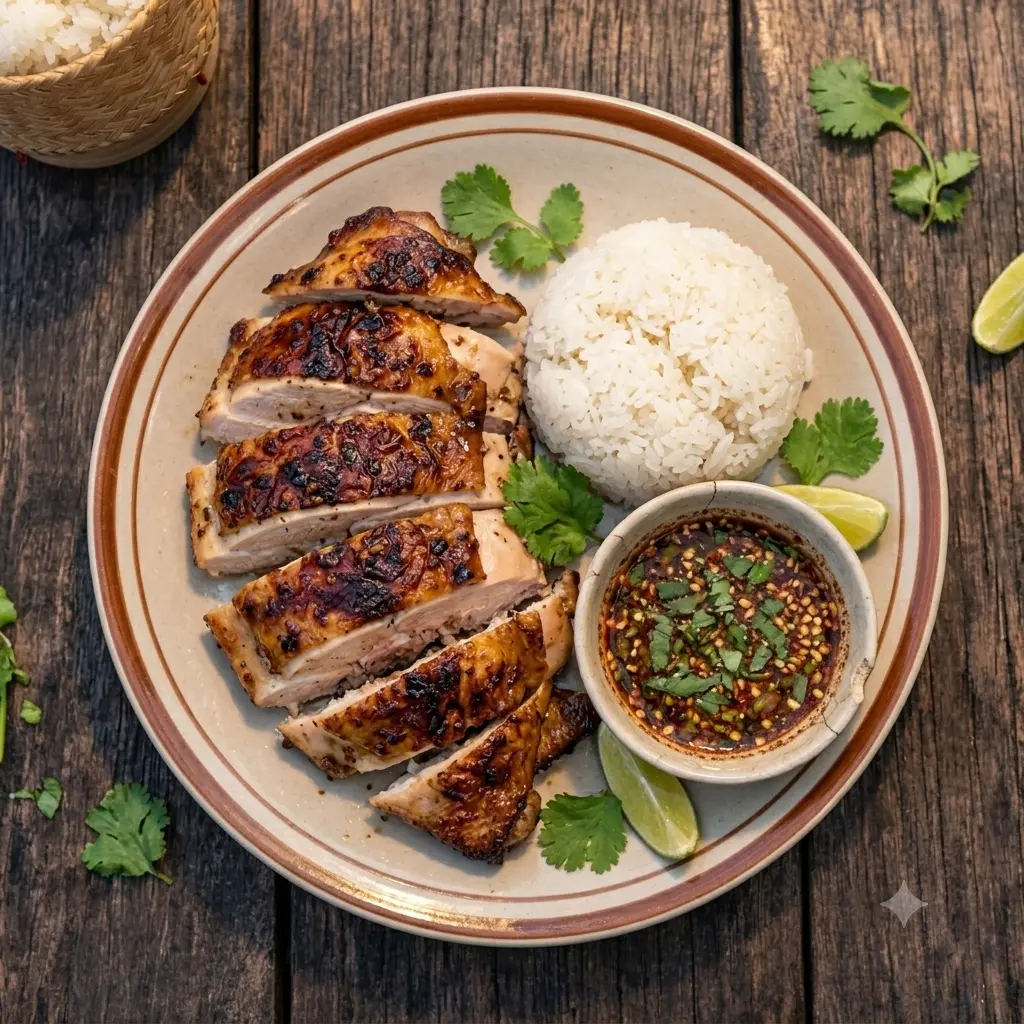
8. Serving. Cut the chicken into pieces and serve hot alongside sticky rice and Nam Jim Jaew.
Visual cues to watch for: the skin should turn a deep golden-brown to mahogany color with slightly blistered, charred edges; juices should run clear when the thickest part is pierced; the meat near the bone should no longer look pink.
Why Coriander Root Is Essential
Coriander root carries a more concentrated, earthy flavor than the leaves most home cooks are used to using as garnish. In Thai cooking, the root is considered essential to many marinades and curry pastes because it delivers a deeper, slightly musky aromatic quality that leaves alone don’t provide.
Traditionally, cooks would use the whole coriander plant, root included, rather than letting it go to waste, and this practice carried directly into dishes like Gai Yang, where the root is pounded into the marinade paste alongside garlic and pepper.
If coriander root isn’t available, the closest substitution is the lower stems of a cilantro bunch, finely chopped, since they carry more of that concentrated flavor than the leaves. It won’t be identical, but it gets much closer than leaves alone.
The Perfect Thai Dipping Sauce
No plate of Gai Yang is complete without Nam Jim Jaew, a tangy, spicy, slightly sweet dipping sauce that’s traditionally served alongside grilled meats throughout Isan and northern Thailand.
Ingredients:
- Fish sauce
- Lime juice
- Roasted rice powder (khao khua)
- Dried chili flakes
- Palm sugar or brown sugar
- Chopped shallot
- Chopped cilantro and green onion
Flavor profile: Nam Jim Jaew is sour, salty, sweet, and spicy all at once, with a nutty, slightly smoky undertone from the toasted rice powder, which also gives the sauce a bit of texture.
How to make it: Whisk together fish sauce, lime juice, and sugar until the sugar dissolves, then stir in chili flakes, roasted rice powder, shallot, and herbs. Taste and adjust the balance of sour, salty, and sweet before serving.
How to adjust heat: Reduce the chili flakes for a milder sauce, or add fresh sliced Thai chilies for extra heat if you want it spicier than the standard version.

Equipment Needed
- Charcoal grill: The traditional and most authentic way to cook Gai Yang, providing genuine smoky flavor.
- Gas grill: A convenient substitute; set up two-zone heat by leaving one burner off.
- Cast iron grill pan: Useful for smaller batches or when an outdoor grill isn’t available.
- Mortar and pestle: Essential for properly breaking down garlic, coriander root, and lemongrass into a fragrant paste.
- Chef’s knife: For spatchcocking the chicken and prepping aromatics.
- Instant-read thermometer: Ensures the chicken reaches a safe internal temperature without overcooking.
Common Mistakes
- Skipping the marinating time. Produces bland, surface-level flavor. Fix: marinate for at least four hours, ideally overnight.
- Using only cilantro leaves instead of root or stems. Loses the earthy depth central to the dish. Fix: use coriander root or the lower stems.
- Chopping aromatics instead of pounding them. Releases less flavor into the marinade. Fix: use a mortar and pestle for a proper paste.
- Grilling over one high heat zone only. Burns the skin before the inside cooks through. Fix: set up a two-zone fire with direct and indirect heat.
- Flipping the chicken too often. Prevents a proper crust from forming. Fix: let each side sear undisturbed before flipping.
- Using boneless, skinless chicken for an “authentic” result. Loses the textural contrast that defines the dish. Fix: use bone-in, skin-on cuts when possible.
- Not patting the chicken dry before marinating. Excess surface moisture dilutes the marinade’s contact with the meat. Fix: pat dry before applying the paste.
- Over-marinating with too much acid. Can make the texture mushy over time. Fix: keep lime for serving rather than adding excessive acid to the marinade itself.
- Cooking straight from the refrigerator. Leads to uneven cooking, with the outside charring before the inside catches up. Fix: let the chicken sit at room temperature for about 20–30 minutes before grilling.
- Ignoring internal temperature. Guessing doneness by color alone risks undercooked or overcooked meat. Fix: use an instant-read thermometer and cook to a safe temperature.
- Basting with raw marinade at the very end. Raises food safety concerns since the marinade touched raw chicken. Fix: reserve a separate portion of marinade before it touches raw meat, or boil the used marinade before basting.
- Skipping the resting period. Juices run out immediately when cut, drying out the meat. Fix: rest for five to ten minutes before slicing.
- Making the dipping sauce too far in advance. The roasted rice powder can lose its texture if it sits too long. Fix: make Nam Jim Jaew shortly before serving.
- Using too much sugar in the marinade. Can cause excessive burning before the chicken cooks through. Fix: balance sugar carefully and rely on lower, indirect heat for the bulk of cooking.
- Not adjusting cooking time for cut size. Bone-in thighs, drumsticks, and a whole spatchcocked bird all need different amounts of time. Fix: check temperature by cut rather than following one universal timer.

Pro Chef Tips
- Always pound the marinade paste by hand rather than using a food processor for a more textured, aromatic result.
- Marinate overnight whenever your schedule allows for the deepest flavor.
- Work some of the marinade paste directly under the skin, not just on top of it.
- Pat the chicken dry again briefly before it hits the grill to help the skin crisp.
- Set up a proper two-zone fire rather than cooking everything over direct flame.
- Start skin-side down over the hot zone just long enough to mark it, then move to indirect heat.
- Resist the urge to flip constantly; let each side develop color before turning.
- Keep a spray bottle of water nearby to control flare-ups from dripping fat.
- Baste with a reserved, unused portion of marinade, never the one that touched raw chicken.
- Use a whole spatchcocked bird if you want the most traditional street-stall presentation.
- Choose bone-in thighs if this is your first time making the dish, since they’re the most forgiving cut.
- Toast your own rice powder for Nam Jim Jaew rather than buying a pre-made version, for fresher flavor.
- Keep white pepper on hand specifically, since it has a different aromatic quality than black pepper.
- Use fresh lemongrass rather than dried for a brighter, more fragrant marinade.
- Check for doneness with a thermometer inserted into the thickest part near the bone.
- Let the chicken rest under loose foil, not tightly wrapped, to avoid steaming the crispy skin.
- Serve with sticky rice on the side rather than regular rice for a more traditional pairing.
- Adjust the sweetness of the marinade slightly if your fish sauce brand is especially salty.
- Keep extra dipping sauce on the table, since Gai Yang is often eaten with generous amounts of it.
- If grilling indoors on a grill pan, crack a window or turn on ventilation, since the smoke point is high and there will be some smoke.
Variations
- Isan-style Gai Yang: Leans heavily on garlic, coriander root, and white pepper, with a more peppery, savory profile and less sweetness.
- Bangkok-style Gai Yang: Often slightly sweeter and milder, sometimes with a touch of turmeric for color.
- Lemongrass Gai Yang: Increases the lemongrass ratio in the marinade for a brighter, more citrus-forward flavor.
- Coconut Milk Gai Yang: Adds coconut milk to the marinade for a richer, creamier finish with a milder edge.
- Spicy Gai Yang: Incorporates fresh or dried chilies directly into the marinade for built-in heat.
- Oven-roasted version: Roasts the marinated chicken at high heat, finishing under the broiler briefly to mimic charring when a grill isn’t available.
- Air Fryer version: Cooks smaller, bone-in pieces at high heat for a quicker, smoke-free approximation of the dish.
Storage & Reheating
Refrigeration: Store cooked Gai Yang in an airtight container in the refrigerator for up to four days.
Freezing: Cooked chicken can be frozen for up to three months; marinated raw chicken can also be frozen before cooking for up to two months.
Best reheating methods: Reheat in an oven or air fryer at a moderate temperature to help restore some crispness to the skin, rather than microwaving, which tends to leave the skin soft and steamy.
Food safety: Always cook chicken to a safe internal temperature, cool leftovers within two hours of cooking, and reheat thoroughly before eating. Never reuse marinade that touched raw chicken as a finishing sauce without boiling it first.
What to Serve with Gai Yang
- Sticky rice: The traditional starch pairing, ideal for scooping up sauce and juices.
- Som Tam (green papaya salad): A spicy, tangy salad that balances the richness of the grilled chicken.
- Larb: A minced meat salad with herbs and lime that complements the smoky flavor of Gai Yang.
- Grilled vegetables: A simple, smoky side that echoes the char of the chicken itself.
- Thai cucumber salad: A cool, refreshing contrast to the richness of the grilled skin.
- Nam Jim Jaew: The essential dipping sauce, always served alongside.
- Thai iced tea: A sweet, creamy drink that balances the spice and salt of the meal.
- Beer pairings: A crisp, light lager helps cut through the richness of the grilled skin.
- Wine pairings: An off-dry white wine, such as Riesling, pairs well with the sweet-salty-spicy flavor profile.

Frequently Asked Questions
1. What does Gai Yang mean? Gai Yang translates to “grilled chicken” in Thai, referring specifically to the marinated, charcoal-grilled style associated with Isan and Thai street food.
2. Can I use boneless chicken for Gai Yang? Yes, though bone-in, skin-on cuts are more traditional and tend to stay juicier through the longer grilling process.
3. Can I bake Gai Yang instead of grilling it? Yes. Roast it in a hot oven and finish under the broiler briefly to develop some char, though you’ll lose some of the authentic smoky flavor that charcoal provides.
4. Can I marinate the chicken overnight? Yes, and overnight marinating is actually recommended for the deepest, most authentic flavor.
5. Can I use cilantro stems instead of coriander root? Yes. The lower stems of a cilantro bunch are the closest substitute if coriander root isn’t available at your grocery store.
6. How do I keep the chicken juicy on the grill? Use bone-in cuts, cook over indirect heat for most of the process, avoid overcooking past a safe internal temperature, and let the meat rest before cutting.
7. Can I freeze marinated chicken before grilling? Yes. Marinated raw chicken freezes well for up to two months; thaw it fully in the refrigerator before grilling.
8. How spicy is Gai Yang? The chicken itself is usually mild to moderately seasoned, with most of the heat coming from the Nam Jim Jaew dipping sauce, which can be adjusted to taste.
9. What’s the difference between Gai Yang and Gai Tod? Gai Yang is marinated and grilled, while Gai Tod refers to Thai fried chicken, which uses a different cooking method and typically a different flavor profile.
10. Can I make Gai Yang without a charcoal grill? Yes, using a gas grill, grill pan, oven, or air fryer, though charcoal provides the most authentic smoky flavor.
11. What can I use instead of palm sugar? Brown sugar is the closest substitute, since it shares a similar deep, slightly molasses-like sweetness.
12. Why is my Gai Yang marinade not flavorful enough? This is often due to insufficient marinating time or chopping the aromatics instead of pounding them into a proper paste. Both steps affect how deeply the flavor penetrates the meat.
13. Is Gai Yang the same throughout Thailand? No. While the core technique is similar, regional variations exist, with Isan-style versions typically more peppery and herbal, and Bangkok-style versions often slightly sweeter.
14. Do I need a mortar and pestle to make the marinade? It’s strongly recommended for the best texture and aroma, though a small food processor can work in a pinch if you don’t have one.
15. Is Gai Yang healthy? It can be a relatively lean, high-protein dish, especially when trimmed of excess fat, though calorie and fat content will vary depending on the cut of chicken used and how much skin is eaten.
Recipe Card
Authentic Thai Chicken (Gai Yang)
| Detail | Info |
|---|---|
| Prep Time | 20 minutes |
| Marinating Time | 4 hours minimum, overnight ideal |
| Cook Time | 40 minutes |
| Total Time | About 5 hours with marinating |
| Servings | 4 |
| Cuisine | Thai |
| Course | Main Dish |
| Calories (estimated) | Approximately 380 per serving |
Ingredients
For the chicken:
- 4 bone-in, skin-on chicken thighs or drumsticks (or 1 whole spatchcocked chicken)
For the marinade:
- 6 cloves garlic
- 3 coriander roots (or lower cilantro stems), chopped
- 1 teaspoon whole white peppercorns
- 1 stalk lemongrass, tender inner core only, minced
- 3 tablespoons fish sauce
- 1 tablespoon palm sugar (or brown sugar)
- 1 tablespoon oyster sauce (optional)
- 1 teaspoon soy sauce
For Nam Jim Jaew dipping sauce:
- 3 tablespoons fish sauce
- 3 tablespoons lime juice
- 1 tablespoon roasted rice powder
- 1 teaspoon dried chili flakes
- 1 tablespoon palm sugar
- 1 tablespoon minced shallot
- 1 tablespoon chopped cilantro and green onion
Instructions
- Pound garlic, coriander root, white peppercorns, and lemongrass into a rough paste using a mortar and pestle.
- Stir in fish sauce, palm sugar, oyster sauce, and soy sauce to form the marinade.
- Rub the marinade over the chicken, working some under the skin. Cover and refrigerate for at least 4 hours, ideally overnight.
- Set up a charcoal grill with a two-zone fire, hot coals on one side and a cooler area on the other.
- Place chicken skin-side down over the hot zone for a few minutes to mark and begin crisping the skin.
- Move chicken to the cooler zone and continue grilling, flipping occasionally, until it reaches a safe internal temperature.
- Baste occasionally with reserved marinade that has not touched raw chicken.
- Rest the chicken for 5–10 minutes before cutting.
- Meanwhile, whisk together all Nam Jim Jaew ingredients in a small bowl.
- Serve the chicken hot with sticky rice and Nam Jim Jaew on the side.
Chef Notes: For the most traditional flavor, use fresh coriander root rather than a substitute, and don’t rush the marinating time.
Storage Notes: Refrigerate cooked chicken for up to 4 days or freeze for up to 3 months.
Nutrition Disclaimer: Nutrition values are estimates and can vary based on specific ingredients, cuts, and brands used.

Conclusion
Authentic Thai Chicken (Gai Yang) rewards patience more than any single trick or shortcut. A properly pounded marinade, enough time for that marinade to work its way into the meat, and a slow, two-zone approach to the grill are what separate real Gai Yang from ordinary grilled chicken with a few Asian-inspired seasonings sprinkled on top. Once you understand why coriander root, fish sauce, and charcoal smoke each play their part, you can adjust the recipe to your own taste while keeping it recognizably authentic.
The next time you’re planning a backyard grill session, give this method a try, marinate the night before if you can, and serve it the traditional way, with sticky rice, a sharp green papaya salad, and a bowl of Nam Jim Jaew close at hand. It’s a dish that rewards a little planning with a lot of flavor, and one worth returning to well beyond a single cookout.