Moroccan Pastilla: 8 Secrets to a Crisp
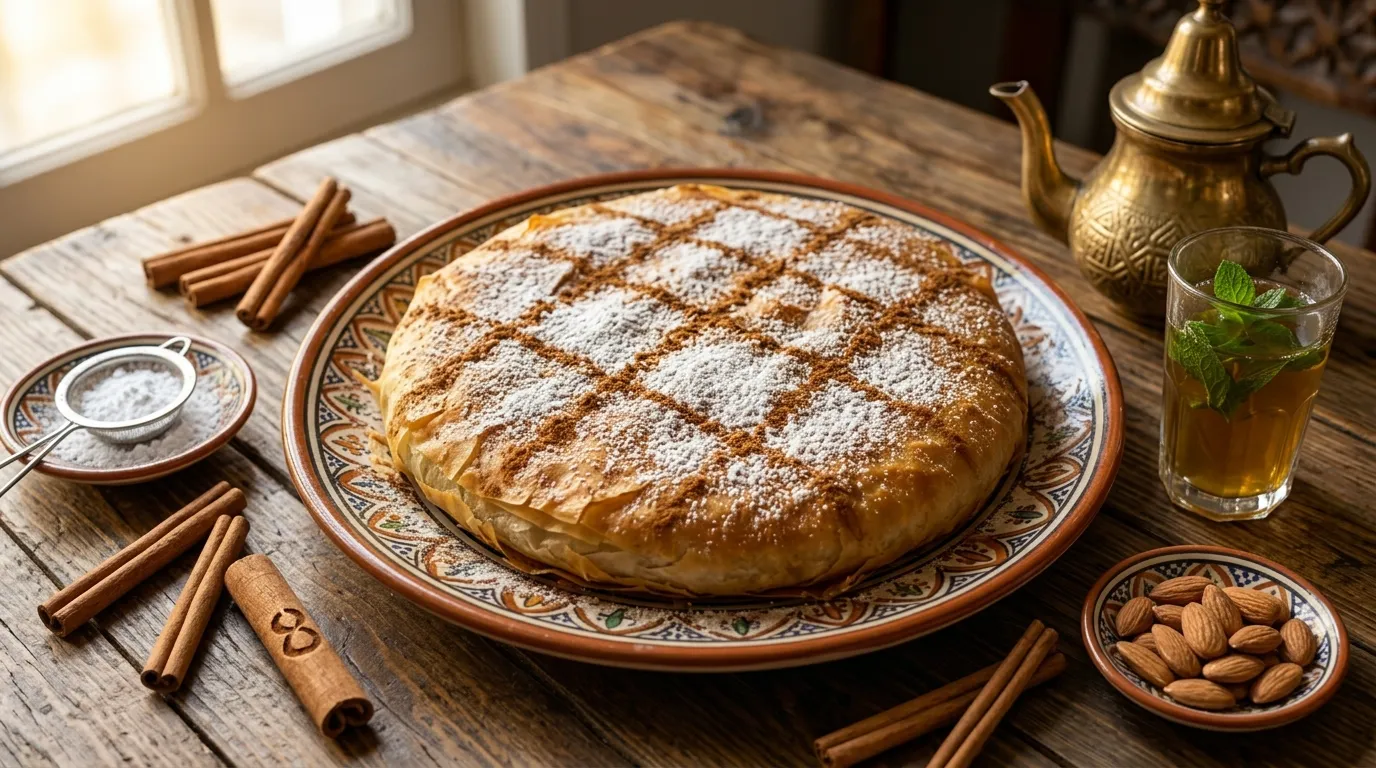
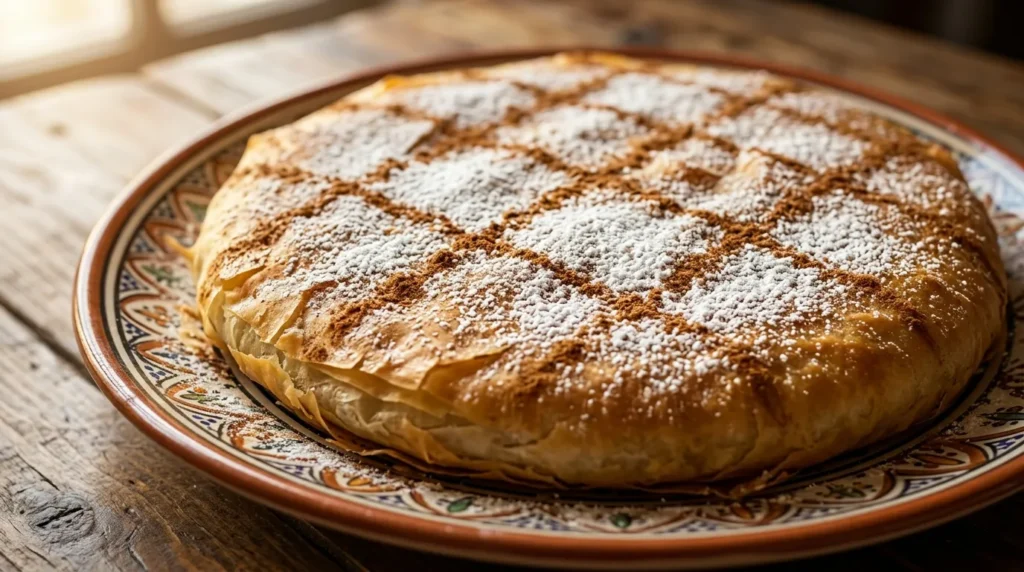
The first bite of Moroccan Pastilla tells you almost nothing about the second. You break through a crackling, golden crust dusted with powdered sugar and cinnamon, and underneath sits savory, spiced chicken and a soft, custardy layer of egg — with a scatter of toasted almonds threading sweetness through the whole thing. That contrast is the entire point of this dish, and it’s why Moroccan Pastilla has held a place at Moroccan celebration tables for generations.
This guide walks you through a traditional Moroccan chicken pastilla recipe built for a US kitchen — including an honest look at working with phyllo dough instead of hand-stretched warqa, the technique that keeps the filling from turning soggy, and the sequence that gets you a pie that holds together when you slice it.
Table of Contents
What Is Moroccan Pastilla?
Moroccan Pastilla — also transliterated as Bastilla, Bastela, or B’stilla, depending on how the Arabic بسطيلة is rendered into English — is a savory-sweet meat pie built from thin, layered pastry. The name itself is widely traced to the Spanish word pastilla, meaning “small pastry,” which points to the dish’s cross-Mediterranean roots.
A traditional Moroccan Pastilla is not simply “a Moroccan pie” in the generic sense. It’s a specific, technique-heavy preparation: a savory filling of spiced, shredded meat and a distinct egg layer sit beneath a crisp top of buttered pastry, and the whole thing is finished with powdered sugar and cinnamon rather than an egg wash or herb garnish. That sweet top is what separates it from most other North African and Middle Eastern savory pastries, and it’s worth understanding on its own terms rather than filing it next to a samosa or a pot pie.
Today, chicken is the most common filling for home cooks, though the dish is historically associated with squab (young pigeon), and seafood versions exist as well — more on those in the variations section below.
The History and Moroccan Tradition Behind Pastilla
Pastilla’s origin is genuinely debated among food historians, so it’s worth being straightforward about what’s known versus what’s folklore.
Pastilla is widely associated with Andalusian culinary traditions — the cooking of Muslim-ruled medieval Spain — and many culinary historians connect its layered pastry technique and sweet-savory profile to recipes recorded in 13th-century Andalusian cookbooks. Under this account, the dish traveled south to Morocco with Andalusian influence over the centuries that followed. Other historians propose a different, more specific route: that the dish and its name (of possible Turkish origin) arrived in northern Morocco through Ottoman Algeria, carried by Algerian migrants who settled in Tétouan after the French invasion of Algiers in 1830, spreading from there to the rest of the country. Both accounts agree the dish has deep roots in the layered pastry-making traditions of the wider Mediterranean and North African world; where exactly it first came together is not settled history.
What’s clearer is Pastilla’s place in Moroccan life today. It’s a dish reserved for celebration rather than an everyday weeknight meal — served at weddings, religious holidays, and family gatherings, where its complexity and the effort behind it are part of the point. The elaborate, labor-intensive layering, historically done with hand-stretched warqa pastry, made it a dish associated with skilled cooks and special occasions rather than routine cooking. Pastilla is historically documented in Morocco and has more recently spread to Algeria and Tunisia, and further afield to France, Israel, and North America through Moroccan emigrant communities.
Why Pastilla Has That Famous Sweet-Savory Contrast
The sweet-savory pairing in Pastilla isn’t a modern twist — it’s structural to the dish. The savory layers (spiced chicken, a soft egg mixture) sit directly beneath a top crust dusted with powdered sugar and ground cinnamon, so every bite carries both registers at once.
This works because none of the individual components are actually very sweet on their own. The chicken filling is savory and warmly spiced with ginger, cinnamon, and saffron or turmeric. The almond layer is only lightly sugared and stays textured rather than syrupy. It’s the powdered sugar and cinnamon dusted on top, combined with a bite that includes filling and pastry together, that creates the contrast — not any single overly sweet component. Understanding this helps you avoid the most common mistake home cooks make: oversweetening the filling itself, which throws off the balance the dish is built around.
The Three Layers of a Traditional Chicken Pastilla
A well-made Pastilla is really three distinct preparations, layered and baked together.
The Chicken Filling
The chicken is gently simmered with onion, fresh herbs, and Moroccan spices — typically ginger, cinnamon, saffron or turmeric, and black pepper — in a small amount of liquid until tender enough to shred by hand. Bone-in chicken thighs or a whole cut-up chicken produce a more flavorful cooking liquid than boneless breast alone, since the bones and skin render gelatin and fat into the braise as it simmers. Once the chicken is cooked, it’s removed, shredded, and set aside while the cooking liquid continues to reduce.
Egg Mixture
This is the layer that trips up the most home cooks. The reduced onion-and-spice cooking liquid is brought back to a simmer, and beaten eggs are stirred in slowly, off direct high heat, until they form soft, glossy curds — similar to the technique for a very soft scramble, stopped well before the eggs fully set. The goal is a moist, savory layer that binds the filling together, not dry scrambled egg. Pulling the pan off the heat a little earlier than feels natural, and letting residual heat finish the curds, is the key technique here.
The Sweet Almond Filling
Whole almonds are toasted until fragrant, then chopped or coarsely ground — not pulverized into paste — and mixed with a modest amount of sugar and cinnamon. Some traditional versions add a small amount of orange blossom water for aromatic lift. The almond layer is meant to add texture and scent, not turn the pie into a dessert; if it starts to taste like marzipan, it’s been ground too fine or sweetened too heavily.
Warqa vs. Phyllo: What Should You Use?
Traditional Moroccan Pastilla is made with warqa, a hand-stretched dough similar in concept to phyllo but made and handled quite differently — it’s stretched by hand on a hot surface into large, thin, slightly elastic sheets, a skill that takes real practice to master.
For a US home kitchen, phyllo dough is the honest, practical substitute, and it’s what this recipe uses. It’s important to say plainly: phyllo and warqa are not identical. Warqa has more elasticity and a slightly different texture once baked; phyllo is more delicate and drier, which means it needs a bit more care to avoid tearing and drying out.
A few things make phyllo work well here:
- Keep unused sheets covered with a lightly damp kitchen towel while you work — phyllo dries out and becomes brittle within minutes of exposure to air.
- Butter every single layer. This isn’t optional for flavor alone — it’s what holds the thin sheets together and gives you the shattering, crisp texture Pastilla is known for.
- Use 6–8 sheets for the base layer of a standard pastilla, overlapping them so there are no gaps, and a similar number layered on top.
- Work quickly but don’t rush the buttering — a dry-edged, torn sheet is far more likely if you skip butter to save time.
- Patch small tears with a scrap of buttered phyllo rather than starting over; once baked, minor patches are invisible.
Ingredients You’ll Need
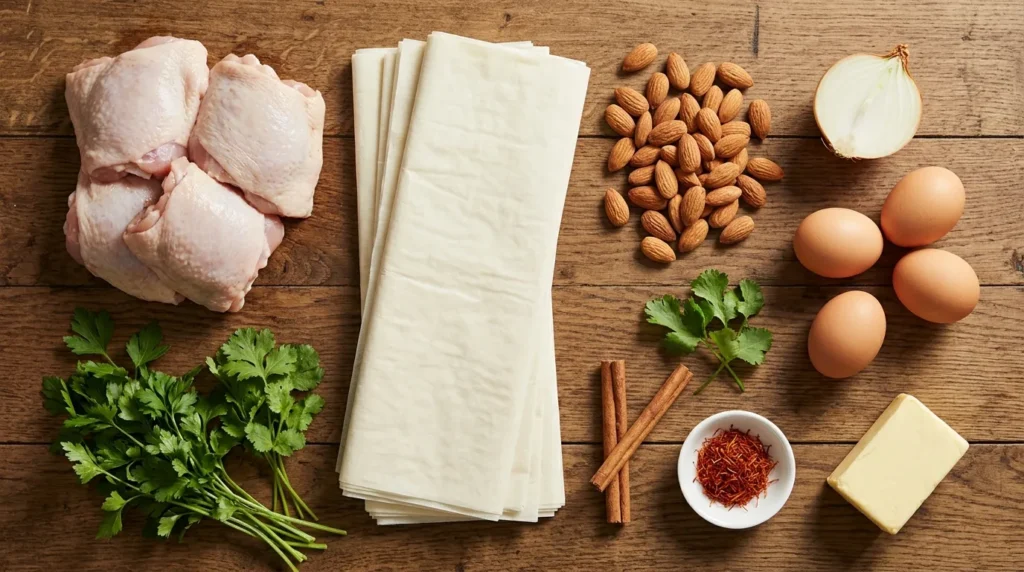
For the chicken filling:
- 3 lbs bone-in, skin-on chicken thighs (or a cut-up whole chicken)
- 1 large onion, grated or very finely chopped
- 3 tbsp unsalted butter
- 1 tsp ground ginger
- 1 tsp ground cinnamon
- ½ tsp ground turmeric (or a small pinch of saffron threads, steeped in 2 tbsp warm water)
- ½ tsp black pepper
- 1 tsp salt
- 1 cup water or low-sodium chicken stock
- ¼ cup chopped fresh parsley
- ¼ cup chopped fresh cilantro
For the egg layer:
- 4 large eggs, lightly beaten
- Reduced cooking liquid from the chicken (above)
For the almond layer:
- 1½ cups whole blanched almonds, toasted
- ¼ cup granulated sugar
- 1 tsp ground cinnamon
- 1 tsp orange blossom water (optional, traditional)
For assembly:
- 12–16 sheets phyllo dough, thawed
- ½ cup unsalted butter, melted (for brushing)
- ¼ cup powdered sugar, for decoration
- 1 tsp ground cinnamon, for decoration
Buying notes: bone-in chicken thighs are widely available and give the best flavor for the effort involved. Look for phyllo in the frozen section of most US grocery stores; thaw it in the refrigerator overnight rather than at room temperature, which helps prevent sheets from sticking together. Saffron and orange blossom water can typically be found at Middle Eastern or Moroccan grocers, larger international supermarkets, or online specialty retailers — turmeric is a reasonable, widely available substitute for saffron’s color if you can’t find it locally.
How to Make Moroccan Pastilla
1. Cook the Chicken
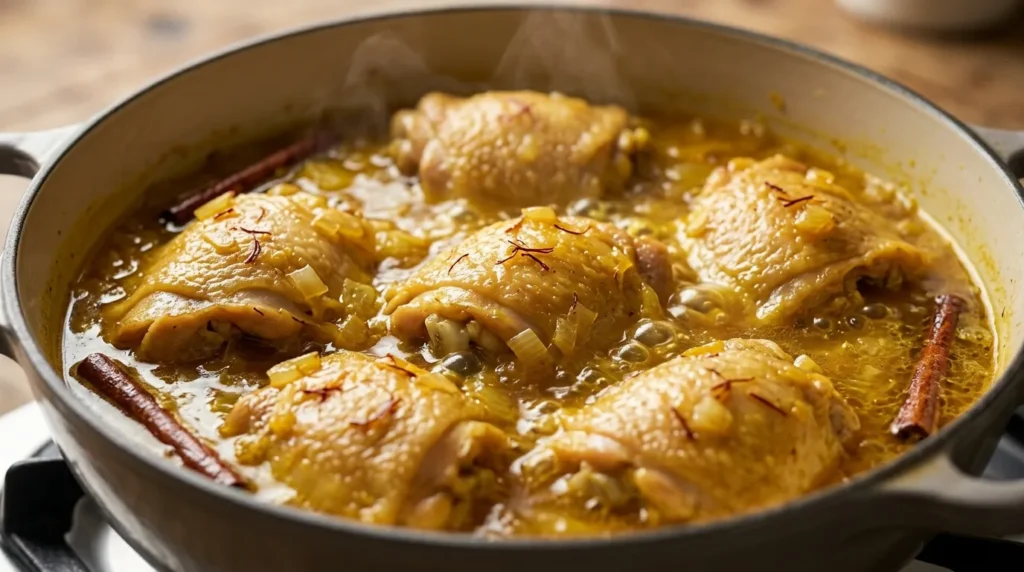
In a wide, heavy pot, melt the butter over medium heat and add the onion, ginger, cinnamon, turmeric (or saffron water), salt, and pepper. Cook gently for 5 minutes until the onion softens and the spices become fragrant. Add the chicken and water or stock, cover, and simmer gently for 35–40 minutes, until the chicken is fully cooked and tender enough to shred with a fork.
2. Prepare the Chicken Filling
Remove the chicken from the pot and let it cool slightly, then shred it into bite-sized pieces, discarding skin and bones. Stir the fresh parsley and cilantro into the shredded chicken and set it aside. Keep the cooking liquid in the pot — you’ll use it for the egg layer.
3. Make the Egg Mixture
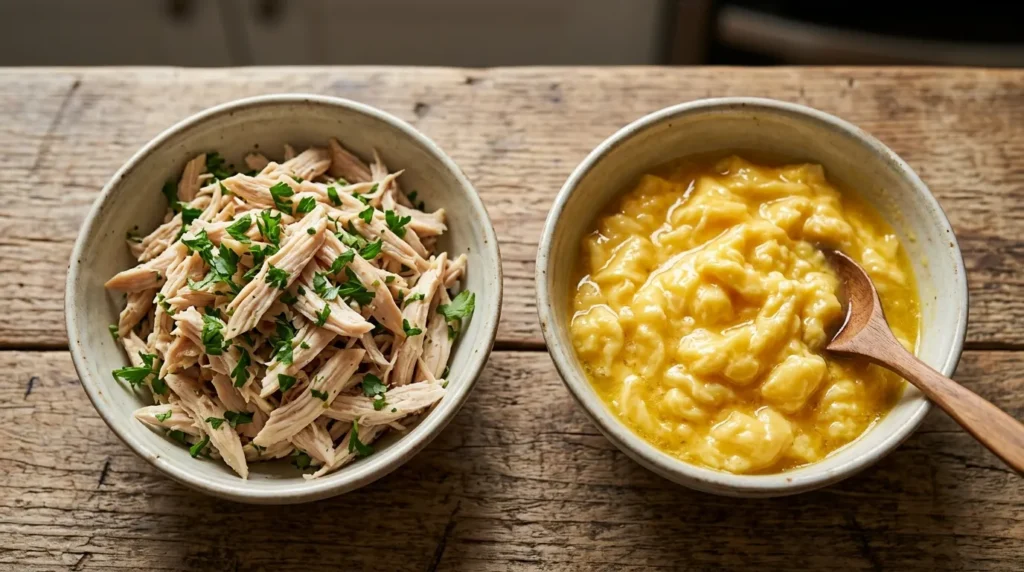
Bring the reserved cooking liquid to a simmer and let it reduce until only about ½ cup remains and it looks glossy and concentrated, not watery. Lower the heat, pour in the beaten eggs, and stir gently and continuously until soft curds form — moist, not dry. Pull the pan off the heat while the eggs still look slightly underdone; they’ll continue to set from residual heat. Let this mixture cool before assembly.
4. Prepare the Almond Filling
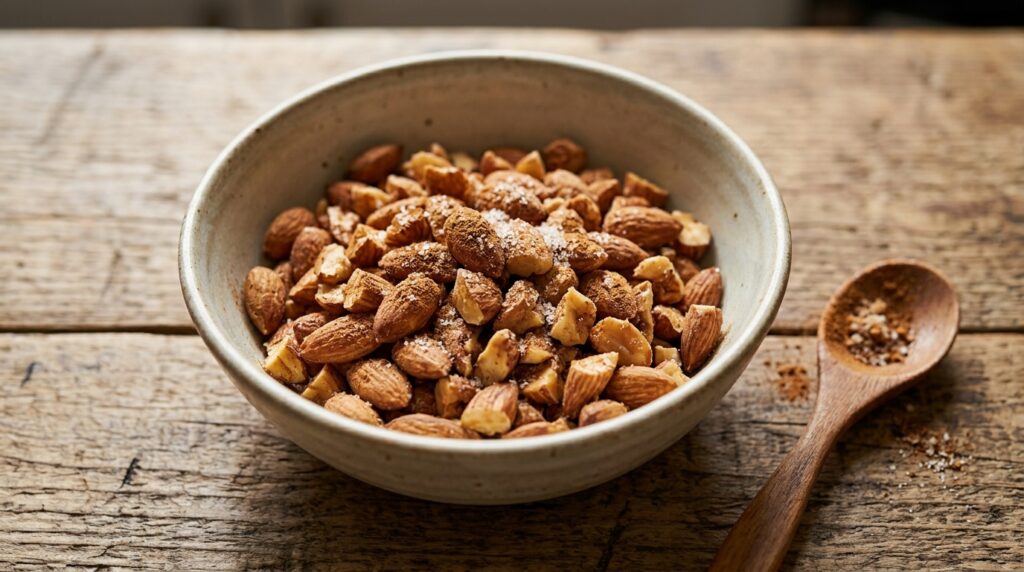
Toast the almonds in a dry skillet over medium heat, stirring often, until golden and fragrant, about 5–7 minutes. Cool completely, then pulse in a food processor or chop by hand until coarsely ground — you want texture, not paste. Stir in the sugar, cinnamon, and orange blossom water if using.
5. Prepare the Phyllo
Lay out your work surface, unroll the phyllo, and immediately cover the stack with a lightly damp towel, uncovering only the sheet you’re currently working with.
6. Assemble the Pastilla
Brush a round baking dish or pie pan generously with melted butter. Layer 6–8 sheets of phyllo in the dish, brushing each with butter and overlapping them so the edges drape over the sides with no gaps. Spread the shredded chicken filling evenly across the base, followed by the egg mixture, then the almond filling. Fold the overhanging phyllo edges up and over the filling toward the center. Layer 4–6 more buttered phyllo sheets on top, tucking the edges under to seal the pie, and brush the entire top generously with butter.
7. Bake Until Golden and Crisp
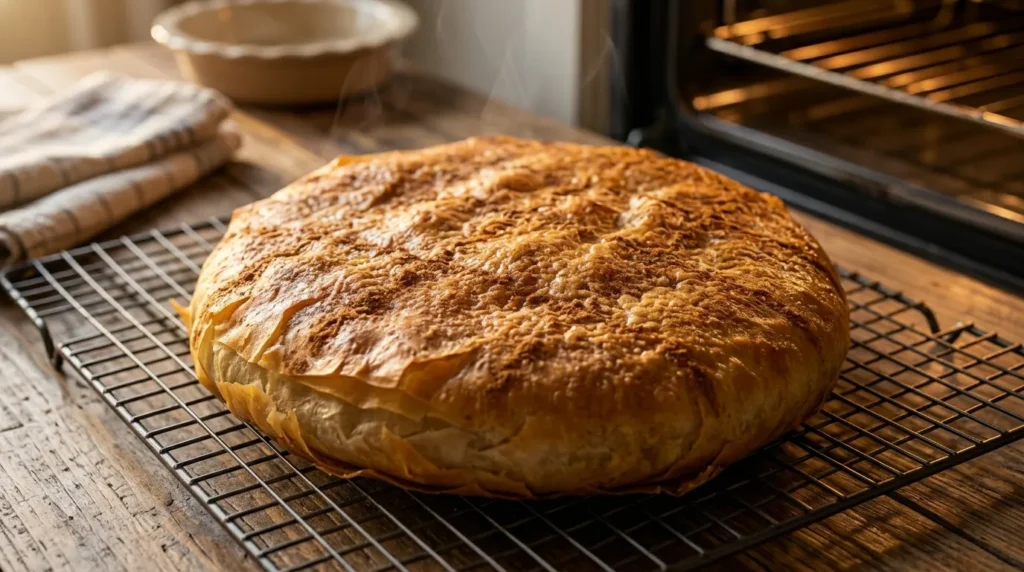
Bake at 375°F for 30–35 minutes, until deeply golden brown and audibly crisp when tapped. If the top browns too quickly before the center is heated through, tent it loosely with foil for the remaining bake time.
8. Decorate and Serve
Let the Pastilla rest for 10 minutes before dusting generously with powdered sugar. Use a stencil (strips of paper laid in a crosshatch pattern work well) to add cinnamon in a decorative lattice over the sugar, then remove the stencil. Slice into wedges and serve warm.
Chef’s Tips for Perfect Pastilla
- Grate the onion instead of dicing it — it breaks down faster and disappears into the sauce, which is exactly what you want for the egg layer.
- Don’t skip the resting step after baking; slicing into a piping-hot Pastilla lets steam escape and softens the crust.
- Toast your almonds even if they’re pre-toasted from the store — a fresh toast wakes up the oil and deepens the flavor.
- Keep phyllo covered at every stage, including the moment right before you slide it into the dish.
- If your kitchen is warm, work with the butter slightly cooled so it doesn’t pool and make the phyllo soggy before baking.
- Taste the chicken filling before assembly — this is your last chance to adjust salt and spice.
- Use a light hand with sugar in the almond layer; the powdered sugar topping does most of the sweetening work.
- A pie dish with a slight rim helps contain butter runoff during baking.
- If assembling ahead, refrigerate the unbaked Pastilla covered and bring it close to room temperature before baking for even cooking.
- Use a sharp serrated knife to slice, which cuts cleanly through crisp pastry without crushing it.
- Reduce the cooking liquid more than feels necessary — a watery reduction is the single most common cause of a soggy interior.
- Serve the same day you bake for the crispest texture; Pastilla is best enjoyed fresh.
Common Mistakes and How to Fix Them
Soggy Pastilla: Usually caused by underreduced cooking liquid or fillings that weren’t cooled before assembly. Reduce the liquid until glossy and concentrated, and let all fillings cool to room temperature first.
Torn phyllo: Comes from dry sheets or working too fast. Keep sheets covered until the moment you use them, and patch tears with a buttered scrap rather than discarding the sheet.
Dry pastry: Usually means not enough butter between layers. Every single sheet needs its own coat, not just every second or third one.
Watery filling: The chicken cooking liquid wasn’t reduced enough before adding the eggs. Simmer it down until it visibly thickens and coats a spoon.
Scrambled egg texture: The eggs were cooked too long or over heat that was too high. Pull the pan off the heat while the curds still look slightly loose.
Bland chicken: Often from underseasoning the poaching liquid rather than the meat itself. Season the cooking liquid generously — the chicken absorbs flavor as it simmers.
Burned almonds: Toasting over heat that’s too high or without stirring. Use medium heat and stir constantly; almonds go from golden to burnt quickly.
Pastilla falling apart when sliced: Not enough phyllo layers, or edges that weren’t properly sealed. Use the full sheet count and fold and tuck edges firmly before baking.
Filling leaking during baking: The phyllo wasn’t sealed tightly enough around the edges, or the filling was too wet. Make sure edges overlap generously and fillings are well-reduced.
Uneven browning: Butter wasn’t applied evenly, or oven hot spots are to blame. Brush butter in a consistent, even layer and rotate the pan halfway through baking.
Too-sweet Pastilla: Sugar was added to the chicken or egg layers instead of reserved for the almond layer and topping. Keep sweetness concentrated in the almond mixture and the final dusting.
Pastry not crisp: Often from underbaking or too low an oven temperature. Bake at a properly hot temperature (375°F) until the top is deeply golden, not just lightly colored.
How to Store and Reheat Pastilla
Refrigerate leftover Pastilla in an airtight container for up to 3–4 days. Cold perishable food should be kept at 40°F or below in your refrigerator, and leftovers should go into the fridge within two hours of cooking to limit bacterial growth.
To reheat, use an oven or toaster oven rather than a microwave — a 325°F oven for about 15 minutes recrisps the pastry, while a microwave will leave it soft and slightly soggy. Reheat until the food reaches an internal temperature of 165°F, checked with a food thermometer, before serving.
Can You Freeze Moroccan Pastilla?
Yes, and Pastilla actually freezes well at two different stages.
Freezing assembled, unbaked Pastilla: Assemble the pie completely, wrap it tightly, and freeze for up to 2 months. Bake directly from frozen, adding roughly 15–20 extra minutes to the bake time, tenting with foil if the top browns before the center is heated through.
Freezing baked Pastilla: Cool completely, wrap tightly, and freeze for up to 2 months. Thaw overnight in the refrigerator, then reheat in a 325°F oven until warmed through and crisp again, about 15–20 minutes.
Freezing unbaked generally produces the crispest final texture, since the pastry only goes through one bake cycle.
What to Serve With Pastilla
- Moroccan mint tea — the traditional accompaniment; its bright, sweetened mint flavor cuts through the richness of the pastry without competing with it.
- A simple Moroccan salad — a light, lemony chopped salad offers acidity that balances the dish’s sweetness and richness.
- Citrus-forward salads — orange and radish, or a simple citrus vinaigrette over greens, echoes the aromatic quality of the filling.
- Simple seasonal vegetables — lightly cooked, unseasoned or minimally seasoned vegetables give the palate a break between bites of pastry.
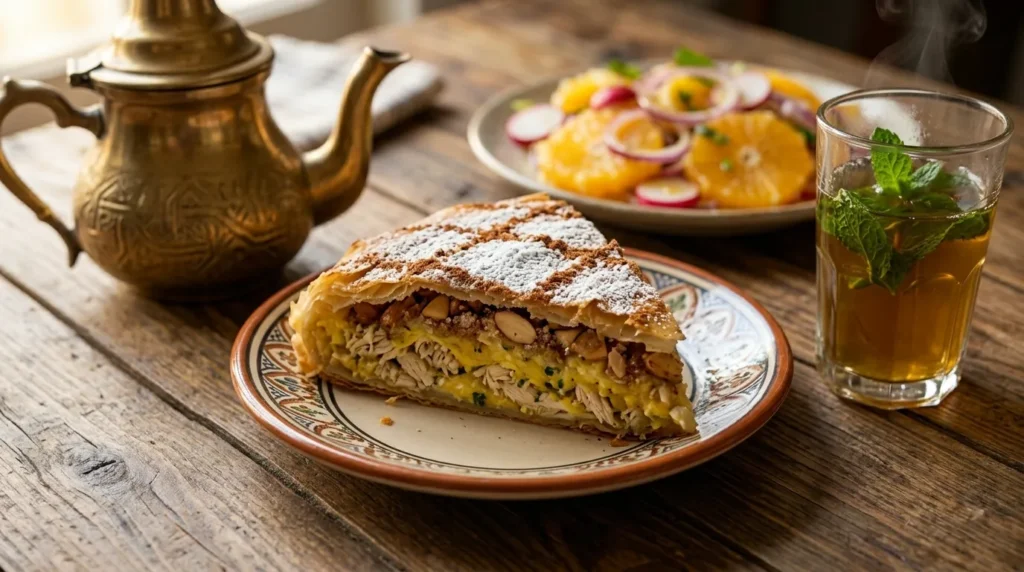
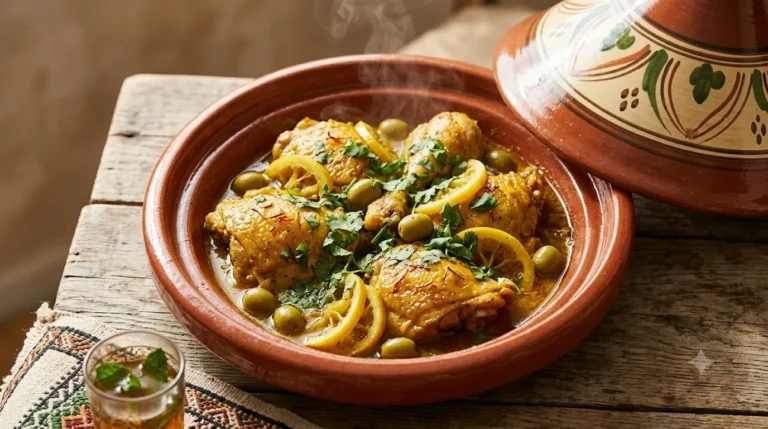
Avoid heavy, rich sides — Pastilla is already a complete, layered dish, and anything competing for richness will overwhelm rather than complement it. If you’re building out a full Moroccan spread, Fox Energie’s Chicken Tagine and Moroccan Couscous are both well suited to appear alongside Pastilla on a celebration table, though typically not all three in the same course.
Moroccan Pastilla Variations
- Chicken Pastilla (this recipe) — the most common home-cook version today, prized for being more accessible than squab.
- Traditional Pigeon (Squab) Pastilla — the dish’s older, more traditional filling, still served in some Moroccan households and restaurants for special occasions.
- Seafood Pastilla — typically made with fish and other seafood along with vermicelli, and unlike poultry Pastilla, it is not sweet — it’s savory and spicy, and it’s finished with shredded cheese and lemon rather than powdered sugar and cinnamon. This is a genuinely different dish, not an interchangeable variation on the sweet version.
- Vegetarian Pastilla — a modern adaptation using vegetables and sometimes seafood substitutes for home cooks avoiding meat, built on the same layering principle.
These are distinct dishes with their own logic, not simple substitutions within a single recipe — approach each on its own terms rather than swapping fillings 1:1 into this recipe.
Frequently Asked Questions
What is Moroccan Pastilla? Moroccan Pastilla is a savory-sweet meat pie made of thin, buttered pastry layered with spiced meat, a soft egg mixture, and toasted almonds, finished with powdered sugar and cinnamon.
Is Pastilla the same as Bastilla? Yes. Pastilla, Bastilla, Bastela, and B’stilla are all English transliterations of the same Arabic word, بسطيلة, and refer to the same dish.
What is Moroccan Pastilla made of? Traditional chicken Pastilla is made with shredded spiced chicken, a soft egg layer, toasted almonds with sugar and cinnamon, and thin pastry (warqa or phyllo), finished with powdered sugar and cinnamon.
Is traditional Pastilla sweet or savory? Both — that contrast is central to the dish. The filling is savory and spiced, while the top is finished with a sweet dusting of powdered sugar and cinnamon.
What type of pastry is used for Pastilla? Traditionally, warqa, a hand-stretched Moroccan dough. In US kitchens, phyllo dough is the standard practical substitute.
Can I use phyllo instead of warqa? Yes, and most home cooks outside Morocco do. Phyllo isn’t identical to warqa in texture, but with careful buttering between every layer, it produces a genuinely crisp, delicious result.
Can I make Pastilla with chicken breast? You can, but bone-in thighs or a whole cut-up chicken produce a more flavorful cooking liquid, which directly affects the egg layer’s flavor.
Can I make Pastilla ahead of time? Yes. You can assemble it a day ahead and refrigerate it unbaked, or freeze it assembled for up to 2 months and bake from frozen.
Can Moroccan Pastilla be frozen? Yes, both before and after baking. Freezing it unbaked generally produces the crispest final texture.
How do you keep Pastilla crispy? Butter every single layer of phyllo, reduce your fillings until they’re no longer watery, and reheat leftovers in an oven rather than a microwave.
Why is my Pastilla soggy? The most common causes are underreduced cooking liquid, fillings that weren’t cooled before assembly, or not enough butter between phyllo layers.
What do you serve with Pastilla? Moroccan mint tea, a light citrus or lemony salad, and simple seasonal vegetables are traditional, lower-richness accompaniments.
Is Pastilla traditionally eaten during celebrations? Yes. It’s associated with weddings, religious holidays, and family gatherings rather than everyday cooking, largely due to the skill and time its traditional preparation requires.
Can Pastilla be made with seafood? Yes, but seafood Pastilla is a distinctly different, savory (not sweet) dish, typically made with fish and vermicelli and finished with cheese and lemon rather than sugar and cinnamon.
Can I make a vegetarian Pastilla? Yes, modern vegetarian adaptations exist using vegetables in place of meat, built on the same layered pastry technique.
Final Thoughts
Moroccan Pastilla rewards the same thing osso buco or a good bolognese does: patience with the parts that actually matter. Reduce the filling until it’s no longer watery, butter every sheet of phyllo, and let the eggs stay soft rather than fully set, and the rest of the dish comes together the way it’s meant to. It’s a genuine project, best saved for a day when you have a few hours and people worth cooking for — which, historically, is exactly what it was built for. Explore more of Fox Energie’s Morocco recipe collection for other celebration-worthy dishes, including Moroccan Lamb Meatballs.
4. RECIPE CARD
Traditional Moroccan Chicken Pastilla
A savory-sweet Moroccan celebration pie: spiced shredded chicken, a soft egg layer, and toasted almonds wrapped in crisp, buttered phyllo, finished with powdered sugar and cinnamon.
| Detail | Info |
|---|---|
| Prep Time | 45 minutes |
| Cook Time | 1 hour (chicken + baking) |
| Total Time | 1 hour 45 minutes |
| Yield | 6–8 servings |
| Category | Main Course / Savory Pie |
| Cuisine | Moroccan |
| Method | Braised filling, layered and baked |
Ingredients
Chicken filling: 3 lbs bone-in, skin-on chicken thighs · 1 large onion, grated · 3 tbsp unsalted butter · 1 tsp ground ginger · 1 tsp ground cinnamon · ½ tsp ground turmeric (or a pinch of saffron steeped in 2 tbsp warm water) · ½ tsp black pepper · 1 tsp salt · 1 cup water or low-sodium chicken stock · ¼ cup chopped parsley · ¼ cup chopped cilantro
Egg layer: 4 large eggs, beaten · reduced chicken cooking liquid
Almond layer: 1½ cups whole blanched almonds, toasted · ¼ cup granulated sugar · 1 tsp ground cinnamon · 1 tsp orange blossom water (optional)
Assembly: 12–16 sheets phyllo dough, thawed · ½ cup unsalted butter, melted · ¼ cup powdered sugar (decoration) · 1 tsp ground cinnamon (decoration)
Instructions
- Simmer chicken with onion, spices, and liquid until tender, 35–40 minutes.
- Shred chicken; stir in parsley and cilantro.
- Reduce cooking liquid until concentrated; stir in beaten eggs off high heat until softly curdled.
- Toast and coarsely chop almonds; mix with sugar, cinnamon, and orange blossom water.
- Layer 6–8 buttered phyllo sheets in a pie dish.
- Add chicken, then egg mixture, then almond mixture.
- Fold overhanging phyllo over filling; top with 4–6 more buttered sheets, sealing edges.
- Brush top generously with butter.
- Bake at 375°F for 30–35 minutes until deeply golden.
- Rest 10 minutes; dust with powdered sugar and cinnamon; slice and serve warm.
Notes: Reduce the filling until it’s no longer watery — this is the single biggest factor in a crisp final pie. Keep phyllo covered while you work to prevent tearing.
Storage: Refrigerate up to 3–4 days in an airtight container; reheat in a 325°F oven, not a microwave, to restore crispness.
Freezing: Freezes well assembled-but-unbaked (bake from frozen, add 15–20 minutes) or fully baked (thaw overnight, then reheat) for up to 2 months.
Nutrition (estimated, per serving, based on 8 servings): Calories ~480 | Protein 28g | Fat 26g | Carbohydrates 32g | Sodium 420mg (Estimated from the ingredients and yield above; not laboratory-verified.)