Sausage Ragu with Pappardelle Pasta: the best Italian Recipe
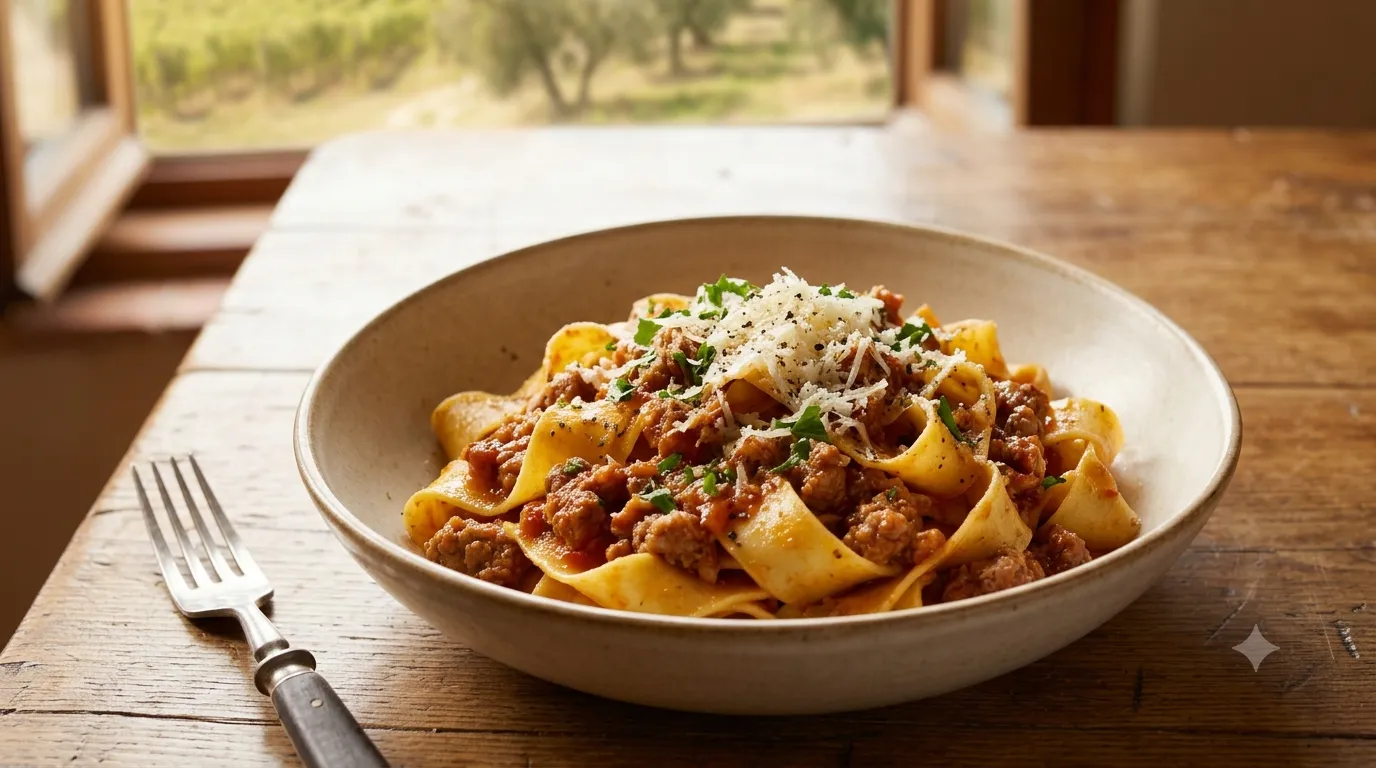
There’s a particular kind of quiet that falls over a Tuscan kitchen while a pot of ragù simmers for hours, filling the house with the smell of browned pork, garlic, and rosemary. Sausage Ragu with Pappardelle Pasta captures that same feeling at home: rich Italian sausage broken down slowly into a deeply savory sauce, clinging to wide ribbons of pappardelle that were practically built to carry it.
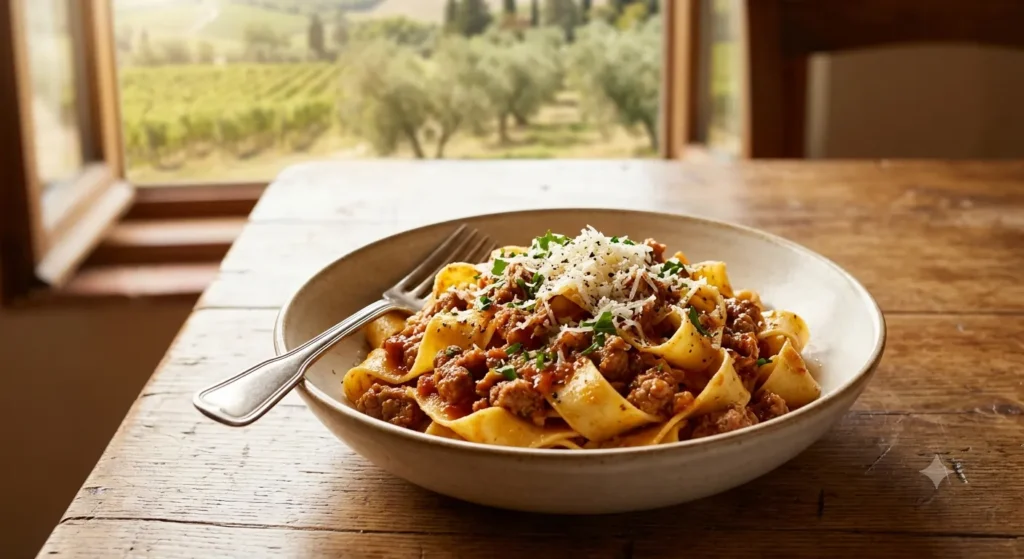
Table of Contents
I’ve spent years cooking traditional Italian sauces the slow way, and this dish rewards exactly that kind of patience. It isn’t difficult, but it depends on technique: proper browning, a real deglaze, and a long, gentle simmer that turns simple ingredients into something layered and satisfying. This guide walks through the history, the food science, and every step needed to bring authentic Sausage Ragu with Pappardelle Pasta to your own table.
Table of Contents
- What Is Sausage Ragu with Pappardelle?
- The History of Ragù
- Why This Recipe Works
- The Science Behind a Perfect Ragù
- Choosing the Best Sausage
- Ingredients Explained
- The Secret to Authentic Sausage Ragù
- Step-by-Step Instructions
- Equipment Needed
- Common Mistakes to Avoid
- Pro Chef Tips
- Delicious Variations
- Storage & Reheating
- What to Serve with Sausage Ragù
- Frequently Asked Questions
- Recipe Card
- Conclusion
What Is Sausage Ragu with Pappardelle?
Ragù, at its core, is a slow-simmered Italian meat sauce, built on a soffritto of onion, carrot, and celery, deepened with wine, and finished with tomato. Sausage Ragu takes that foundation and builds it around Italian sausage instead of ground beef or veal, giving the sauce a rounder, more herbaceous character thanks to the fennel and spices already seasoned into the meat.
Pappardelle, with its wide, flat ribbons, is the ideal partner for a sauce this substantial. Thin pasta shapes slip past a chunky ragù, but pappardelle’s width and slightly rough surface let it catch and hold every bit of sauce and meat in each bite.
Ragù Versus Bolognese
Bolognese is technically one specific regional style of ragù, tied closely to Bologna and built on finely minced meat simmered with milk and a small amount of tomato. Ragù, as a broader category, covers many regional versions across Italy, including rustic, coarser styles like this sausage version, which lean more heavily on tomato and are often paired with wider, heartier pasta shapes.
A Staple of Central Italy
Dishes built on slow-simmered meat sauces over wide pasta ribbons are especially common in central Italy, where wild boar, pork, and sausage-based ragùs have long been paired with pappardelle as a natural, traditional match.
The History of Ragù
The word ragù traces back to the French “ragoût,” a term for meat and vegetables cooked slowly over low heat, which entered Italian kitchens through aristocratic and papal courts between the 14th and 18th centuries. One of the earliest written references to a ragù-style dish appears in Vincenzo Corrado’s 1773 cookbook, though the ingredients at that point were far less standardized than they are today.
Tomatoes only entered Italian cooking widely during the 16th century and weren’t commonly used in ragù until later, so early versions relied on broth, wine, and vegetables rather than the tomato-forward sauces recognized today. As the dish spread through Italy’s regions, distinct local traditions took shape, each shaped by available meat, local herbs, and the pasta typically eaten nearby.
Tuscan Traditions
Tuscany’s rustic ragù traditions lean toward game and pork rather than the finely minced beef associated with Bologna. Wild boar ragù, paired with pappardelle, remains one of the region’s most recognized dishes, and that same pairing of wide pasta ribbons with a rich, coarse meat sauce carries directly over into sausage-based versions like this one.
Chef Tip Box: Respecting Regional Identity
Because ragù varies so widely by region, there’s no single “official” sausage ragù recipe. This version draws on the broader Tuscan tradition of pairing hearty, coarsely textured pork sauces with pappardelle, rather than claiming to replicate any single family’s exact recipe.
Why This Recipe Works
Slow cooking is what separates a good ragù from a great one. Given enough time, the sausage’s fat renders fully into the sauce, the vegetables melt down into the background, and the tomato loses its raw edge, leaving behind a sauce that tastes far more complex than its ingredient list suggests.
Wide pappardelle ribbons then do their job, catching that rich sauce in every fold. A finish of freshly grated Parmesan ties the acidity of the tomato and the richness of the pork together into one balanced, cohesive dish.
Built for a Slow Weekend, Not a Rushed Weeknight
This is a dish that rewards a lazy Sunday afternoon rather than a 20-minute dinner rush, and it freezes beautifully, which makes the long simmer time an investment rather than an inconvenience.
The Science Behind a Perfect Ragù
Browning the sausage properly triggers the Maillard reaction, the same chemical process responsible for a seared steak’s crust, and it’s what gives the finished sauce its deep, savory backbone instead of a flat, boiled taste. Rushing this step is one of the most common reasons a homemade ragù falls short of a restaurant version.
As the sausage browns, its fat renders into the pan and carries flavor through the entire sauce as the vegetables cook in it. A long simmer then reduces the tomato, concentrating its flavor while any connective tissue in the pork slowly breaks down into gelatin, which is what gives a well-made ragù its characteristic body and slight silkiness.
Kitchen Science Box: Why the Sauce Feels Silky
Reserved pasta water, stirred in at the end, isn’t optional here. Its starch helps emulsify the rendered fat and tomato into a cohesive sauce that clings to the pappardelle instead of separating into an oily layer on top.
Resting Before Serving
Letting the finished ragù rest off heat for a few minutes allows the sauce to thicken slightly and the flavors to settle, which noticeably improves how it coats the pasta once combined.
Choosing the Best Sausage
| Sausage Type | Flavor | Fat Content | Best For |
|---|---|---|---|
| Italian sweet sausage | Mild, herbaceous | Moderate | Classic, balanced ragù |
| Italian hot sausage | Spicy, bold | Moderate | Those who want built-in heat |
| Fennel sausage | Anise-forward | Moderate | Traditional Tuscan-style flavor |
| Plain pork sausage | Simple, savory | Higher | A milder, adaptable base |
| Mixed pork and beef sausage | Heartier, deeper | Moderate-high | A richer, more robust sauce |
Sweet Italian sausage with a good amount of fennel is the most traditional and forgiving choice, since its built-in seasoning does much of the flavor work for you. Beginners generally get the most consistent results starting there before experimenting with hot or mixed varieties.
Ingredients Explained
| Ingredient | Purpose |
|---|---|
| Italian sausage | The rich, savory backbone of the ragù |
| Onion | Sweetness and aromatic depth |
| Carrot | Subtle sweetness that balances acidity |
| Celery | Earthy, herbal base note |
| Garlic | Pungent, essential aromatic |
| Tomato paste | Concentrated flavor, deepened by browning |
| Crushed tomatoes | Body and gentle acidity |
| Dry white wine | Deglazes the pan and adds brightness |
| Olive oil | Base fat for building flavor |
| Rosemary | Piney, Tuscan-style herbal note |
| Thyme | Subtle, earthy complexity |
| Bay leaf | Background depth during simmering |
| Parmesan | Salty finish that ties the sauce together |
| Pappardelle | Wide ribbons built to hold the sauce |
| Salt | Essential seasoning throughout |
| Pepper | Sharp, warming contrast |
The onion, carrot, and celery combination, known as soffritto, forms the aromatic foundation of nearly every Italian ragù, and cooking it slowly until soft and sweet, rather than rushing it, has a real impact on the final depth of the sauce.
The Secret to Authentic Sausage Ragù
Restaurant-quality ragù comes down to a handful of specific techniques rather than any single secret ingredient. Proper browning, done in batches so the sausage sears instead of steams, builds the flavor foundation that nothing added later can fully replace.
Deglazing with wine right after browning lifts every flavorful browned bit stuck to the pot, while layering the tomato paste, crushed tomatoes, and herbs in stages, rather than all at once, lets each element cook properly instead of turning into one flat, muddled flavor. Finishing with reserved pasta water and freshly grated Parmesan is what pulls the whole sauce together into something glossy and cohesive.
Chef Tip Box: Don’t Rush the Simmer
A true ragù needs at least an hour of gentle simmering, and closer to two if time allows. Shortening this step is the single biggest reason homemade versions taste thinner and less developed than the ones found in a good Italian kitchen.
Step-by-Step Instructions
Step 1: Prepare the Vegetables
Finely dice the onion, carrot, and celery into a uniform soffritto. Mince the garlic separately, since it cooks much faster and shouldn’t go in with the rest.
Step 2: Brown the Sausage
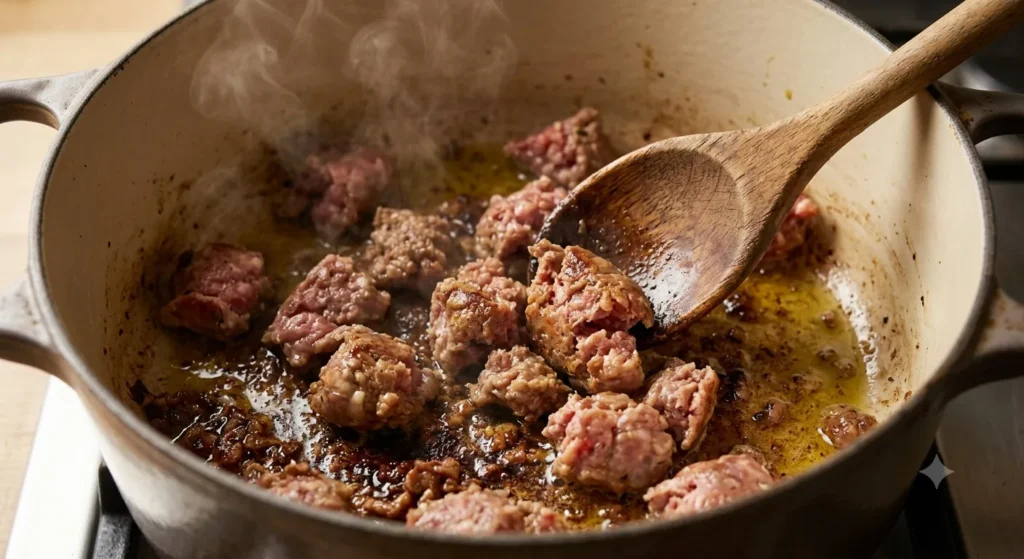
Remove the sausage from its casings and brown it in a Dutch oven over medium-high heat, breaking it into coarse pieces, until deeply browned on most sides, about 7 to 9 minutes.
Step 3: Cook the Soffritto
Remove the sausage and set it aside. Add the diced onion, carrot, and celery to the same pot and cook until softened and lightly golden, about 6 to 8 minutes, then stir in the garlic for 30 seconds.
Step 4: Deglaze with Wine
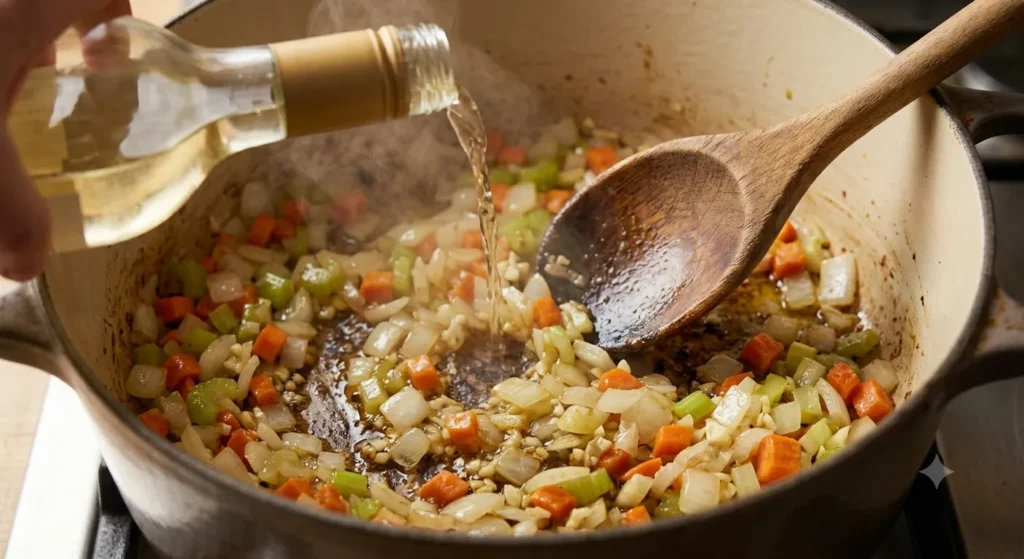
Pour in the dry white wine, scraping up the browned bits from the bottom of the pot, and let it simmer for 2 to 3 minutes until the sharp alcohol smell fades.
Step 5: Build the Sauce
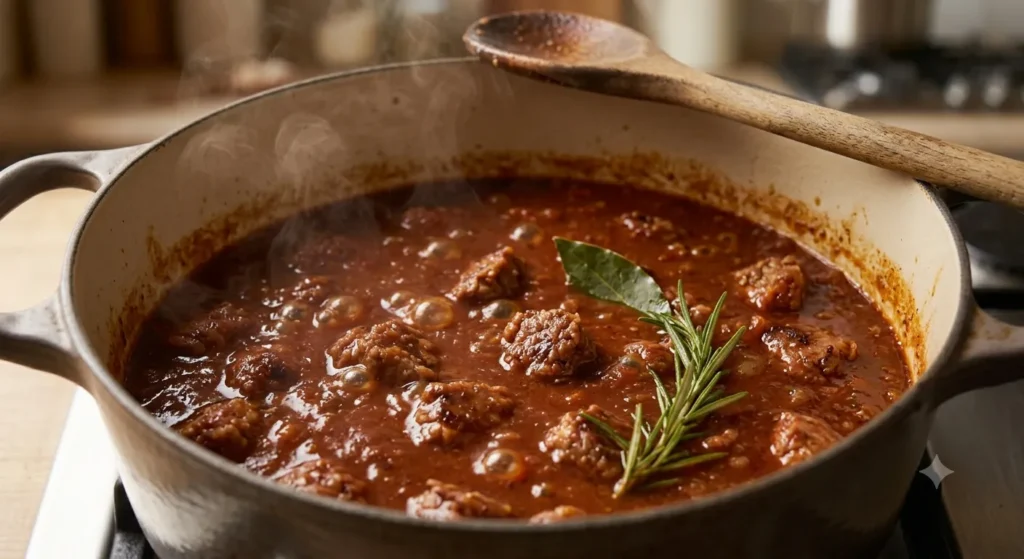
Stir in the tomato paste and cook for 1 to 2 minutes, then add the crushed tomatoes, browned sausage, rosemary, thyme, and bay leaf. Bring to a gentle simmer.
Step 6: Simmer Low and Slow
Reduce the heat to low, cover partially, and let the ragù simmer for at least 1 to 1.5 hours, stirring occasionally, until the sauce has thickened and deepened in color.
Step 7: Cook the Pappardelle
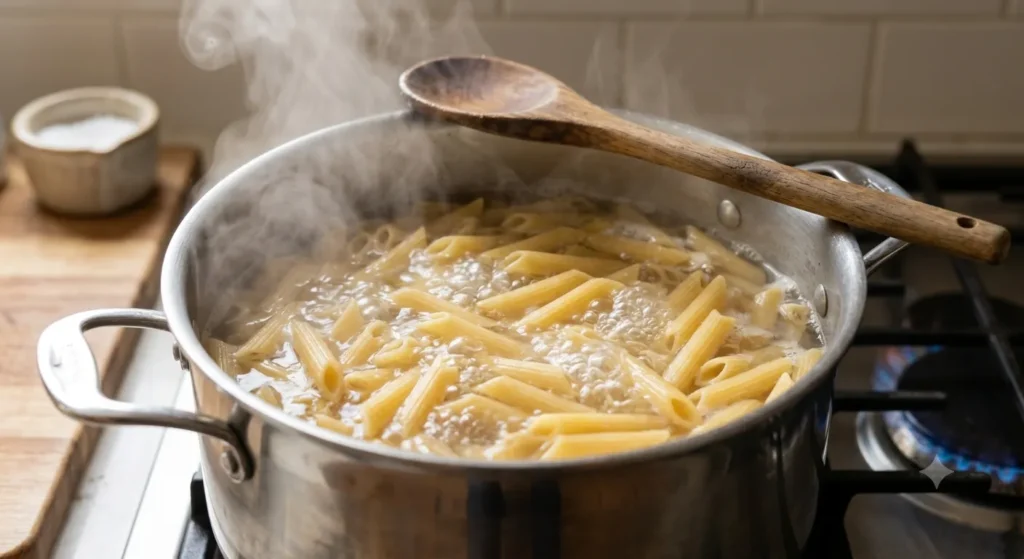
While the ragù finishes simmering, cook the pappardelle in well-salted boiling water until just al dente. Reserve a cup of pasta water before draining.
Step 8: Combine and Finish
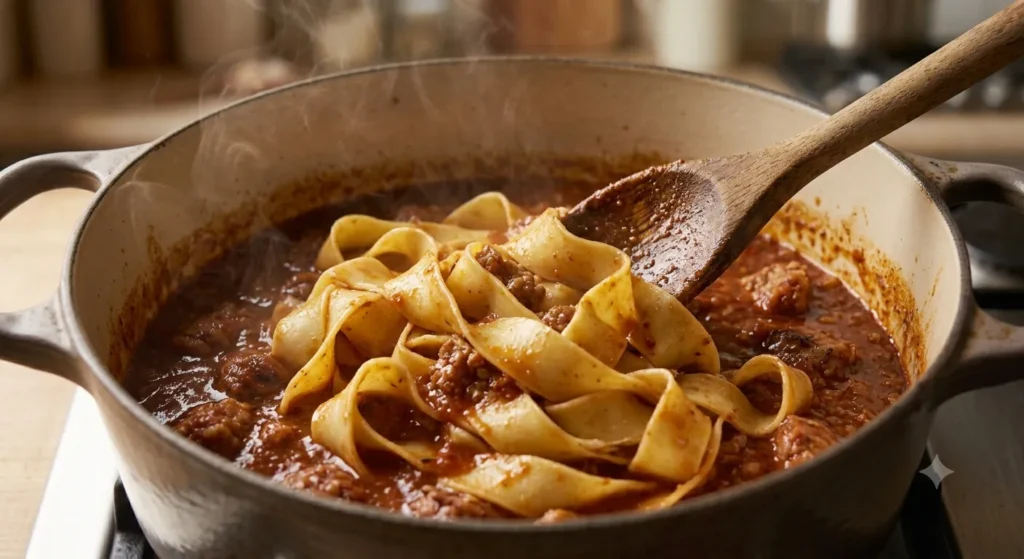
Toss the drained pappardelle directly into the ragù along with a splash of reserved pasta water, coating every ribbon. Remove from heat and stir in freshly grated Parmesan before serving.
Cooking Timeline
| Time | Task |
|---|---|
| 0–10 min | Prep vegetables and sausage |
| 10–19 min | Brown the sausage |
| 19–27 min | Cook the soffritto |
| 27–30 min | Deglaze with wine |
| 30–90 min | Simmer the ragù |
| 80–90 min | Cook the pappardelle |
| 90–95 min | Combine and finish |
Equipment Needed
- Dutch oven or heavy-bottomed pot
- Large skillet, if browning in batches
- Large pasta pot
- Colander
- Sharp chef’s knife
- Wooden spoon
- Cheese grater or microplane
Common Mistakes to Avoid
- Rushing the browning step, which leaves the sausage pale and the sauce underdeveloped.
- Overcrowding the pot while browning, causing the sausage to steam instead of sear.
- Skipping the deglaze, losing the flavorful browned bits stuck to the pot.
- Cutting the simmer time short, resulting in a thin, underdeveloped sauce.
- Chopping the soffritto unevenly, leading to inconsistent texture and cooking.
- Adding garlic too early, letting it burn and turn bitter before the sauce even starts.
- Using a low-quality or oversalted sausage, throwing off the sauce’s overall seasoning.
- Skipping reserved pasta water, leaving the sauce unable to properly cling to the pasta.
- Overcooking the pappardelle, resulting in a mushy final texture.
- Adding Parmesan over high heat, causing it to clump instead of melt smoothly.
- Using pre-shredded cheese, which resists melting as smoothly as freshly grated.
- Under-seasoning the sauce, since pasta absorbs a good deal of salt once combined.
- Not skimming excess fat, leaving the finished sauce greasy rather than silky.
- Stirring too infrequently during the simmer, risking scorching on the bottom of the pot.
- Serving immediately without resting, missing the chance for the sauce to thicken slightly.
Common Mistake Box
The most common shortfall in a homemade ragù is impatience with the simmer. Even an extra 30 minutes of low, gentle cooking can be the difference between a thin sauce and one that tastes like it’s been on the stove all day.
Pro Chef Tips
- Brown the sausage in batches if your pot is crowded, so it sears properly.
- Dice the soffritto vegetables uniformly for even cooking.
- Use a dry white wine you’d actually drink; poor wine makes a poor sauce.
- Let the tomato paste cook briefly before adding liquid to deepen its flavor.
- Skim excess fat off the top of the sauce partway through simmering.
- Keep the simmer gentle, not a rolling boil, to avoid breaking the sauce.
- Stir occasionally to prevent sticking, especially as the sauce thickens.
- Reserve more pasta water than you think you’ll need.
- Grate Parmesan fresh rather than using pre-shredded bags.
- Add herbs like rosemary early so their flavor has time to infuse fully.
- Remove the bay leaf before serving; it’s meant to flavor, not to eat.
- Taste and adjust salt again after stirring in the Parmesan.
- Let the ragù rest for a few minutes off heat before combining with pasta.
- Cook the pappardelle slightly under al dente, since it finishes in the sauce.
- Toss the pasta directly in the pot rather than in a separate bowl.
- Double the batch and freeze half; ragù freezes exceptionally well.
- Use fresh pappardelle if available for the most authentic texture.
- Warm serving bowls slightly so the sauce doesn’t cool too fast.
- Finish each bowl with a drizzle of good olive oil for extra shine.
- Let leftovers rest overnight; the flavor often deepens by the next day.
Delicious Variations
Spicy Sausage Ragù
Use hot Italian sausage, or add red pepper flakes with the garlic, for a version with real background heat.
Mushroom Sausage Ragù
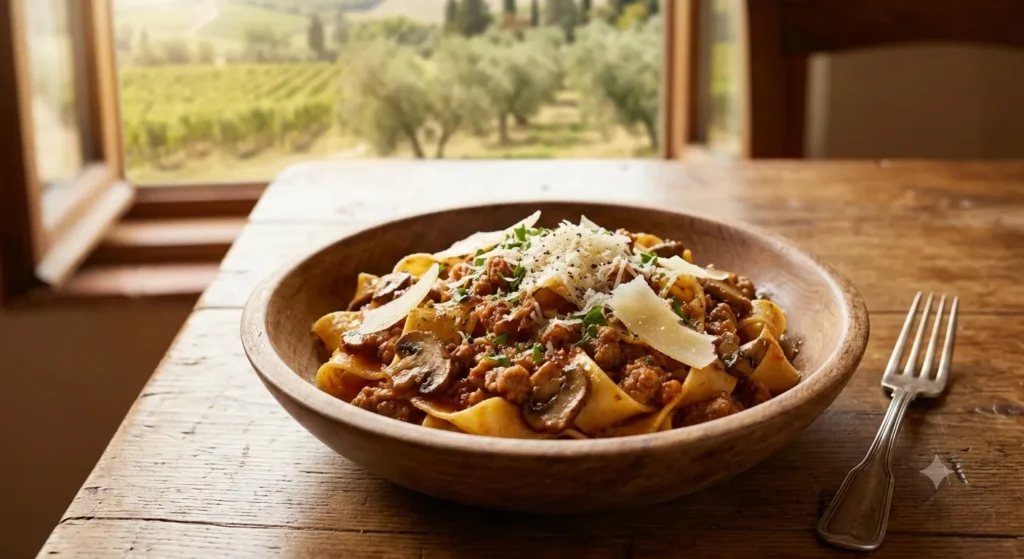
Sauté sliced cremini or porcini mushrooms with the soffritto for an earthy, umami-rich addition to the sauce.
Beef and Sausage Ragù
Brown a portion of ground beef alongside the sausage for a heartier, more traditional ragù texture.
Creamy Ragù
Stir in a splash of heavy cream at the very end for a richer, silkier finish reminiscent of a Bolognese-style sauce.
Red Wine Ragù
Swap the white wine for a dry red, such as Chianti, for a deeper, more robust flavor profile.
Slow Cooker Version
Brown the sausage and soffritto on the stovetop first, then transfer everything to a slow cooker on low for 6 to 8 hours for a hands-off approach.
Gluten-Free Version
Use a sturdy gluten-free pappardelle or wide fettuccine substitute, and reduce the boiling time slightly to avoid overcooking.
Fresh Homemade Pappardelle
Make pappardelle from scratch using egg-based pasta dough, rolled thin and cut into wide ribbons, for the most traditional texture and flavor.
Storage & Reheating
Let leftover ragù cool before transferring it to an airtight container. Refrigerate for up to 4 days, or freeze the sauce alone, separate from cooked pasta, for up to 3 months for the best texture when reheated.
To reheat, warm the sauce gently on the stovetop over low heat, adding a splash of water or broth to loosen it, then toss with freshly cooked pappardelle. Following USDA safe minimum cooking temperatures, leftover pork-based sauces should be reheated to an internal temperature of 165°F to ensure food safety.
Kitchen Science Box: Why Ragù Tastes Better the Next Day
As the sauce rests overnight, fat and liquid redistribute through the meat and vegetables, allowing flavors that were still separate during cooking to fully meld, which is why many cooks consider day-two ragù even better than fresh.
What to Serve with Sausage Ragù
- Warm [Internal Link: Garlic Bread] for scooping up extra sauce
- Fresh [Internal Link: Homemade Focaccia] alongside the meal
- A crisp [Internal Link: Caesar Salad] to balance the richness
- Fresh burrata served simply with olive oil and salt
- Roasted vegetables for a lighter side dish
- [Internal Link: Classic Tiramisu] to finish on a traditional note
For wine, a Chianti Classico pairs naturally with the dish’s Tuscan roots, while Montepulciano d’Abruzzo offers a fruitier, softer alternative, and Sangiovese provides the bright acidity that classic Italian ragù pairings call for.
Frequently Asked Questions
1. Can I make Sausage Ragu with Pappardelle ahead of time? Yes, the ragù actually improves after a day in the refrigerator as the flavors continue to meld together.
2. Can I freeze Sausage Ragu? Yes, freeze the sauce separately from cooked pasta for up to 3 months for the best texture when reheated.
3. Can I use another pasta besides pappardelle? Yes, tagliatelle or fettuccine work well, though their narrower width won’t hold the sauce quite as generously.
4. Why is my ragù watery? It likely didn’t simmer long enough for the tomatoes to reduce and the sauce to properly thicken.
5. Can I use fresh tomatoes instead of canned? Yes, though you’ll need to peel, seed, and cook them down longer, since canned crushed tomatoes are already concentrated.
6. What’s the best sausage for this recipe? Sweet Italian sausage with fennel is the most traditional and forgiving choice for a balanced, classic flavor.
7. Can I make Sausage Ragu spicy? Yes, use hot Italian sausage or add red pepper flakes during the soffritto stage for background heat.
8. How long should the ragù simmer? Plan for at least 1 to 1.5 hours, though up to 2 hours will develop even deeper flavor.
9. Can I make this in a slow cooker? Yes, brown the sausage and vegetables first, then transfer to a slow cooker on low for 6 to 8 hours.
10. Is Sausage Ragu the same as Bolognese? No, Bolognese is one specific regional style built on finely minced meat and milk, while ragù is a broader category with many regional variations.
11. Can I make this dish gluten-free? Yes, substitute a quality gluten-free pappardelle and reduce the pasta’s boiling time slightly.
12. What cheese works best in this recipe? Freshly grated Parmigiano Reggiano PDO melts smoothly and offers the deepest, most authentic flavor.
13. Why does my sauce taste flat? The sausage likely wasn’t browned deeply enough, or the sauce didn’t simmer long enough to develop flavor.
14. Can I double this recipe? Yes, though you’ll need a very large pot, and the simmer time may need to increase slightly.
15. How long does leftover ragù keep in the fridge? It keeps well for up to 4 days when stored in an airtight container in the refrigerator.
Recipe Card
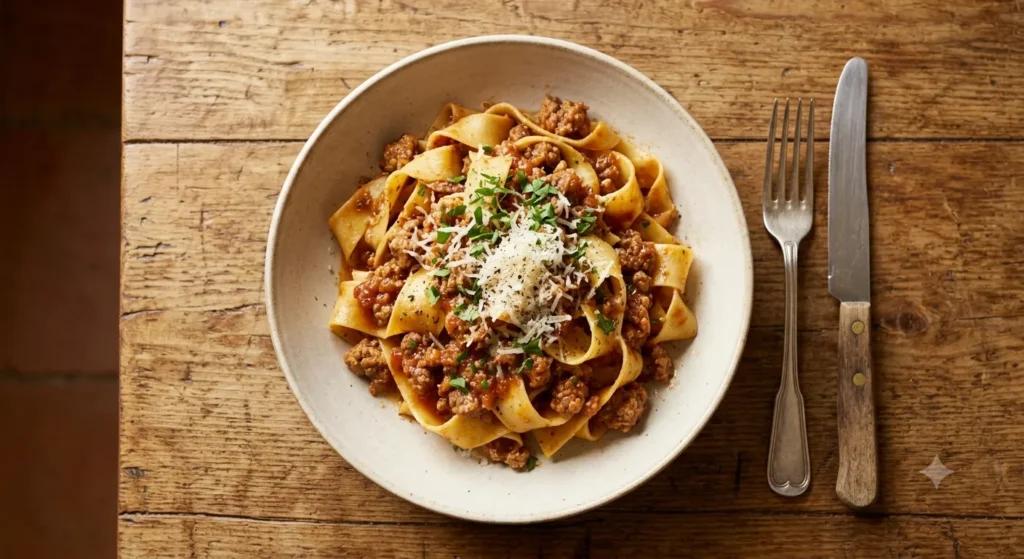
Sausage Ragu with Pappardelle Pasta
Prep Time: 20 minutes Cook Time: 1 hour 40 minutes Total Time: 2 hours Servings: 6 Cuisine: Italian Course: Main Course Calories (per serving, approximate): 590
Ingredients
| Ingredient | Amount |
|---|---|
| Italian sausage, casings removed | 1.5 lbs |
| Onion, finely diced | 1 medium |
| Carrot, finely diced | 1 medium |
| Celery, finely diced | 2 stalks |
| Garlic, minced | 4 cloves |
| Tomato paste | 2 tbsp |
| Crushed tomatoes | 28 oz can |
| Dry white wine | ½ cup |
| Olive oil | 2 tbsp |
| Fresh rosemary, chopped | 1 tbsp |
| Fresh thyme, chopped | 1 tsp |
| Bay leaf | 1 |
| Parmesan, grated | ½ cup, plus more for serving |
| Pappardelle | 1 lb |
| Salt and pepper | To taste |
Instructions
- Dice the onion, carrot, and celery into a fine soffritto. Mince the garlic separately.
- Brown the sausage in a Dutch oven over medium-high heat, breaking it into coarse pieces. Remove and set aside.
- Cook the soffritto in the same pot until softened, then add garlic for 30 seconds.
- Deglaze with white wine, scraping the bottom, and simmer 2 to 3 minutes.
- Stir in tomato paste, then add crushed tomatoes, browned sausage, rosemary, thyme, and bay leaf.
- Simmer on low, partially covered, for 1 to 1.5 hours, stirring occasionally.
- Cook pappardelle until al dente. Reserve 1 cup pasta water and drain.
- Toss pasta into the ragù with a splash of pasta water. Remove from heat, stir in Parmesan, and serve.
Chef Notes
For the deepest flavor, don’t rush the browning or the simmering stages; both are where the real character of this ragù develops.
Storage Notes
Refrigerate leftover sauce for up to 4 days or freeze for up to 3 months, separate from cooked pasta for the best texture.
Nutrition Disclaimer: Nutrition values are estimates and will vary based on exact sausage brand, portion size, and ingredient substitutions used.
Conclusion
Sausage Ragu with Pappardelle Pasta is the kind of dish that rewards a little patience with a lot of flavor. The slow simmer, the properly browned sausage, and those wide, sauce-catching ribbons of pappardelle come together into something that tastes far more complex than the ingredient list suggests. Once you’ve made this ragù the traditional, unhurried way, it’s easy to see why versions of it have anchored Italian kitchens for generations, and why it deserves a regular place at your own table.