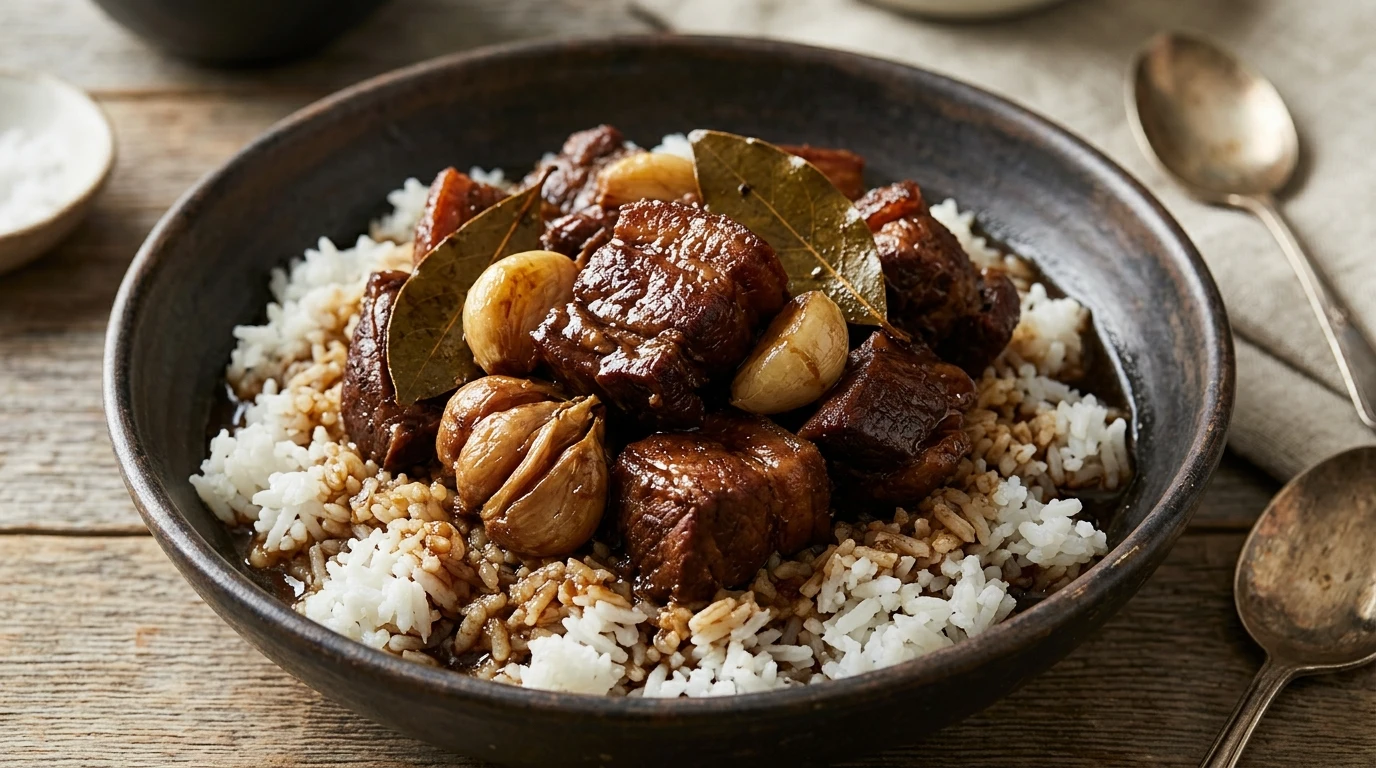
Filipino Pork Adobo Recipe: Classic Tangy & Garlicky
If you ask ten Filipino households how they make Filipino Pork Adobo, you will get ten different answers, and every single one of them will insist theirs is correct. That argument is part of the dish. Pork simmered in vinegar, soy sauce, garlic, and black peppercorns is not just a weeknight dinner in the Philippines. It is a small, edible proof that a country can agree on almost nothing about a recipe and still call it a shared identity.
This guide walks through what Filipino Pork Adobo actually is, where it came from, the food science that makes it work, and the exact technique I use to get pork that falls apart under a fork and a sauce dark and glossy enough to make rice disappear fast. You will also find ingredient breakdowns, a full vinegar comparison, fifteen common mistakes, twenty chef tips, regional variations, storage advice, and a complete recipe card at the end.
Table of Contents
Table of Contents
- What Is Filipino Pork Adobo?
- The History of Adobo
- Why Pork Adobo Is So Special
- The Science Behind Great Adobo
- Choosing the Best Pork
- Ingredients Explained
- Vinegar Guide
- Step-by-Step Technique
- Equipment Needed
- Common Mistakes
- Pro Chef Tips
- Regional Variations
- Storage & Reheating
- What to Serve with Filipino Pork Adobo
- Frequently Asked Questions
- Recipe Card
- Conclusion
What Is Filipino Pork Adobo?
Filipino Pork Adobo is pork braised in vinegar, soy sauce, garlic, bay leaves, and whole black peppercorns until the meat is tender and the liquid reduces into a thick, savory sauce. That is the short version. The long version is that “adobo” describes a cooking method, not a single fixed recipe, which is why the dish looks different in almost every region and every home.
The word itself comes from the Spanish “adobar,” meaning to marinate or season. Spanish colonizers arriving in the Philippines in the sixteenth century found local cooks already preserving meat in vinegar and salt, a method suited to a hot, humid climate with no refrigeration. They gave the technique a Spanish name. They did not invent it.
Pork Adobo is frequently called the national dish of the Philippines, though there is no official decree that says so. It earns the title by habit. It shows up at birthday parties, in packed lunches, on airline menus for Filipino expatriates, and in nearly every Filipino restaurant outside the country. Ask a Filipino abroad what they miss most about home cooking, and Adobong Baboy comes up more often than anything else.
Every family has its own version because adobo was never written down as a single formula. It traveled through households by memory and taste, adjusted for whatever vinegar was on hand, whatever the budget allowed, and whatever the matriarch of that particular kitchen preferred. Some versions are salty and sharp. Some are sweeter, with a spoon of sugar or a splash of banana ketchup. Some skip the soy sauce entirely. All of them are still adobo.
The History of Adobo
Long before Spanish ships reached the archipelago, Filipinos were already cooking meat and fish in vinegar and salt. Vinegar in the Philippines was cheap, plentiful, and locally made from coconut sap, cane sugar, or nipa palm. In a tropical climate without refrigeration, an acidic marinade bought a household extra days before meat spoiled. This was survival cooking first and flavor cooking second.
When Spanish colonial rule began in 1565, chroniclers documented the method and attached the word “adobo,” borrowed from their own marinated dishes back home. The name stuck, even though the technique predated their arrival by generations. This is a detail worth sitting with: adobo is often described as a product of Spanish influence, but the Spanish mainly supplied the label. The cooking itself is Filipino, built around local vinegar and local instincts about preservation.
As the practice spread across more than seven thousand islands, regional ingredients shaped regional adobo. Coastal Visayan communities lean on coconut vinegar and sometimes coconut milk. Bicol adds chili for heat, consistent with the region’s fondness for spicy food. Northern Luzon versions run drier and saltier, closer to the preservation style the dish started as. None of these are wrong. They are proof that adobo adapted to whatever grew, fermented, or was affordable nearby.
By the twentieth century, adobo had moved from home kitchens into Filipino restaurants around the world, carried by waves of migration to the United States, the Middle East, and beyond. It became shorthand for Filipino cooking itself, the dish most likely to appear on a “Filipino food 101” list. That reputation is earned. Few dishes explain a country’s history, geography, and resourcefulness in a single pot the way Pork Adobo does.
Why Pork Adobo Is So Special
Great Filipino Pork Adobo balances three things at once: salt from soy sauce, acidity from vinegar, and savory depth from browned pork and garlic. None of these should dominate. When it works, you get a sauce that hits sour first, settles into salty, and finishes with a garlicky, peppery warmth that lingers.
Garlic is not a background note here. Traditional adobo uses far more garlic than most non-Filipino cooks expect, often a full head or more for a modest batch of pork. Smashed and cooked slowly in the fat rendered from the pork, it turns sweet and mellow, losing the sharp bite of raw garlic while still perfuming every bite.
Whole black peppercorns matter more than ground pepper. Left whole, they release their oils slowly during the simmer instead of turning bitter or muddying the sauce with grit. Biting into one occasionally is part of the experience, a small burst of heat that ground pepper cannot replicate.
The pork itself should be fatty enough to survive a long braise without drying out. Well-marbled cuts render fat into the sauce, adding richness and a silky mouthfeel that lean cuts cannot match. This is not a dish for pork tenderloin.
Perhaps the most talked-about trait of adobo is that it tastes better the next day. This is not folklore. The flavors genuinely deepen and mellow overnight, and the section below explains exactly why.
The Science Behind Great Adobo
Adobo works because of a few overlapping food science principles, and understanding them will make you a better cook of this dish than any exact measurement ever could.
Vinegar and meat tenderness. Vinegar’s acetic acid breaks down some of the connective tissue and muscle proteins in pork, loosening the structure so the meat is easier to chew. This is mild compared to the effect of long, slow heat, but it starts working from the moment the pork touches the marinade, which is why marinating time matters even before the pot goes on the stove.
Why soy sauce seasons deeply. Soy sauce carries glutamates, the compounds responsible for umami, along with salt that penetrates the meat over time through osmosis. Salt does not just sit on the surface. Given enough time in a braise, it moves into the muscle fibers, seasoning the pork from the inside rather than just coating the outside.
Collagen and the braise. Pork cuts with more connective tissue, like shoulder or belly, contain collagen that converts into gelatin when cooked low and slow in liquid, roughly between 160°F and 200°F for an extended period. That gelatin is what gives braised pork its silky, almost sticky texture and what thickens the sauce naturally without any flour or cornstarch.
Reduction concentrates flavor. As the sauce simmers uncovered near the end of cooking, water evaporates and the remaining liquid holds a higher concentration of soy sauce, vinegar, garlic, and rendered pork fat. This is the step that turns a thin, sour liquid into the thick, clingy sauce adobo is known for.
Why it tastes better the next day. Overnight in the refrigerator, the fat solidifies and re-melts into the sauce upon reheating, redistributing flavor more evenly. Just as important, the vinegar’s sharp acidity mellows over time as it continues to interact with the other compounds in the sauce, and the salt finishes its slow migration into the meat. The dish is not “aging” in a dramatic sense. It is simply finishing a process that a single evening of cooking does not have time to complete.
Why you should not stir vinegar in right away. Adding vinegar and letting it sit undisturbed for a few minutes before stirring allows the acid to cook off some of its raw, sharp edge through direct heat contact, rather than being immediately diluted and dispersed throughout the pot. Stir too soon and the whole dish can taste sharper and less rounded.
Choosing the Best Pork
| Cut | Fat Content | Texture After Braising | Cooking Time | Best For |
|---|---|---|---|---|
| Pork Shoulder (Kasim) | Moderate-high | Tender, holds shape | 60-75 minutes | Best all-around choice |
| Pork Belly (Liempo) | High | Very rich, soft | 45-60 minutes | Richer, fattier adobo |
| Pork Butt (Pigue) | Moderate | Tender, slightly firmer | 60-75 minutes | Good substitute for shoulder |
| Pork Loin | Low | Can dry out, less tender | 30-40 minutes | Not recommended |
| Pork Ribs | Moderate-high | Tender, falls off bone | 60-90 minutes | Great for a heartier version |
Pork shoulder is the cut I reach for most often. It has enough fat and connective tissue to stay moist through a long simmer, and it holds its shape in the pot instead of shredding into strings. Pork belly makes a richer, almost decadent adobo, good for special occasions but heavy for a regular weeknight meal. Pork butt works nearly as well as shoulder and is often labeled interchangeably at the grocery store, so do not worry too much about telling them apart.
Pork loin is the one cut I would steer beginners away from. It is lean, which means it has very little fat to render and very little collagen to convert into gelatin, so it tends to turn dry and stringy under the same long cooking time that makes shoulder tender. If loin is all you have, cut the braising time down significantly and watch it closely.
Pork ribs make an excellent, slightly more indulgent adobo, especially good served over rice where the sauce can pool between the bones. For beginners cooking their first batch, pork shoulder is the safest, most forgiving choice.
Ingredients Explained
| Ingredient | Role in the Dish |
|---|---|
| Pork (shoulder or belly) | The main protein; fat and collagen build texture and richness |
| Soy sauce | Salt, color, and umami depth |
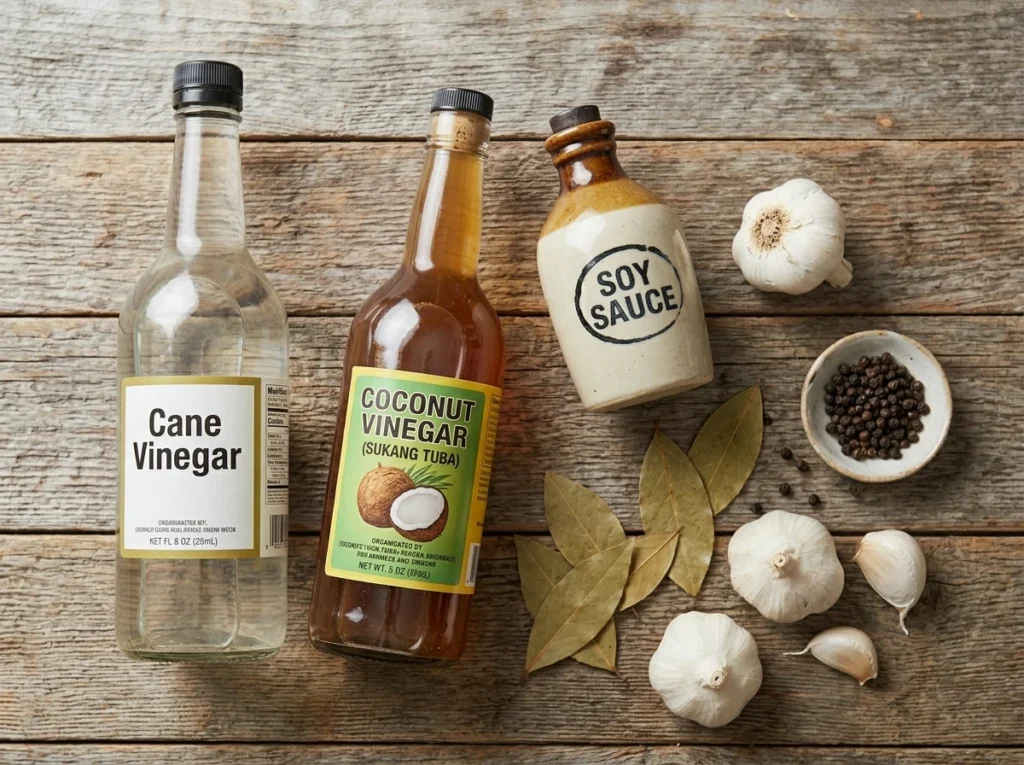
| Cane vinegar | Primary acidity and the dish’s signature tang |
| Garlic | Aromatic backbone; sweetens as it cooks |
| Whole black peppercorns | Slow-releasing heat and aroma |
| Bay leaves | Herbal, slightly floral background note |
| Brown sugar (optional) | Rounds out sharpness, adds subtle caramel note |
| Water or chicken stock | Adjusts braising liquid volume and richness |
| Onions | Adds sweetness and body to the sauce base |
| Chili peppers (optional) | Heat, common in Bicol-style versions |
| Boiled eggs (optional) | Soak up sauce, add protein and visual appeal |
Every one of these ingredients earns its place. Soy sauce is doing more than salting the dish. It is also responsible for the dark color adobo is known for and a good portion of its savoriness. Cane vinegar provides the sourness that defines the dish, and swapping it changes the entire character of the sauce, which is why the next section covers vinegar in detail.
Garlic should be smashed, not minced, for traditional adobo. Smashed cloves release their flavor slowly and can be fished out or eaten whole, soft and sweet after simmering. Bay leaves are subtle. Their job is a quiet herbal undertone, not a dominant flavor, so one or two per pot is plenty.
Sugar is optional and regional. Some households never touch it. Others add a spoonful to balance a particularly sharp vinegar. Neither approach is more authentic than the other; it depends on which vinegar you are using and your own palate.
Vinegar Guide
| Vinegar Type | Acidity | Flavor Profile | Best Use |
|---|---|---|---|
| Cane Vinegar | Moderate (4-5%) | Mellow, slightly sweet, traditional | The standard choice for most adobo |
| Coconut Vinegar (Sukang Tuba) | Moderate (4-5%) | Tangy, slightly funky, tropical | Visayan-style adobo, adobo sa gata |
| White Vinegar | High (5-7%) | Sharp, neutral, no sweetness | Acceptable substitute, use slightly less |
| Apple Cider Vinegar | Moderate (5%) | Fruity, mild sweetness | Good substitute, adds different aroma |
| Rice Vinegar | Low (4%) | Very mild, slightly sweet | Too weak alone; can blend with white vinegar |
Cane vinegar is the traditional backbone of Filipino Pork Adobo, and if you can find a bottle at an Asian grocery store, it is worth seeking out. It has a rounder, gentler sourness than plain white vinegar, without tasting sweet the way apple cider vinegar does.
Coconut vinegar brings a slightly funky, tropical note that pairs beautifully with coconut milk in adobo sa gata. It is sharper and a touch more assertive than cane vinegar, so start with a little less than the recipe calls for and adjust to taste.
White vinegar is a reasonable substitute when nothing else is available, but its acidity runs higher and its flavor is more one-dimensional. Reduce the amount slightly, by about one tablespoon per cup called for, and consider a small pinch of sugar to soften the edge.
Apple cider vinegar is my go-to backup when I cannot get to a Filipino grocery store. It has enough fruitiness to mimic some of what cane vinegar offers, though the flavor is not identical. Rice vinegar on its own is too mild to give adobo its characteristic punch, but blended half and half with white vinegar it can work in a pinch.
Step-by-Step Technique
1. Marinate the pork (30 minutes to overnight)
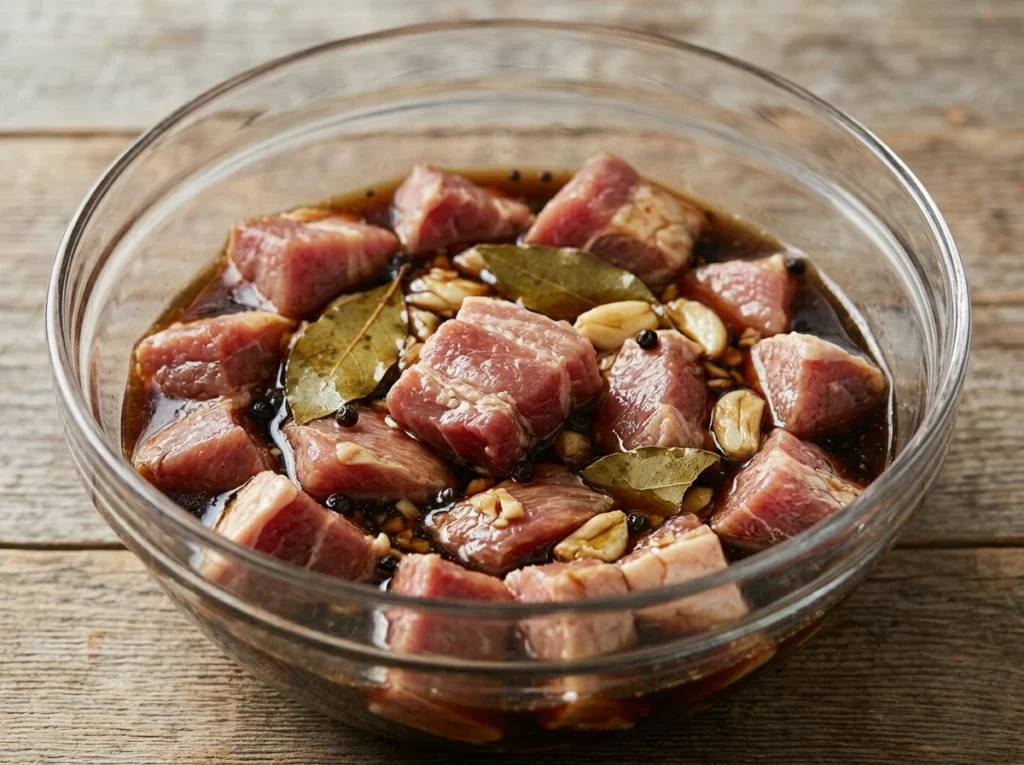
Combine pork with soy sauce, half the garlic, and half the peppercorns in a bowl. Thirty minutes is enough for a weeknight version. If you have the time, a few hours or overnight in the refrigerator lets the salt and acid work further into the meat. Do not add the vinegar yet.
2. Brown the pork (8-10 minutes)
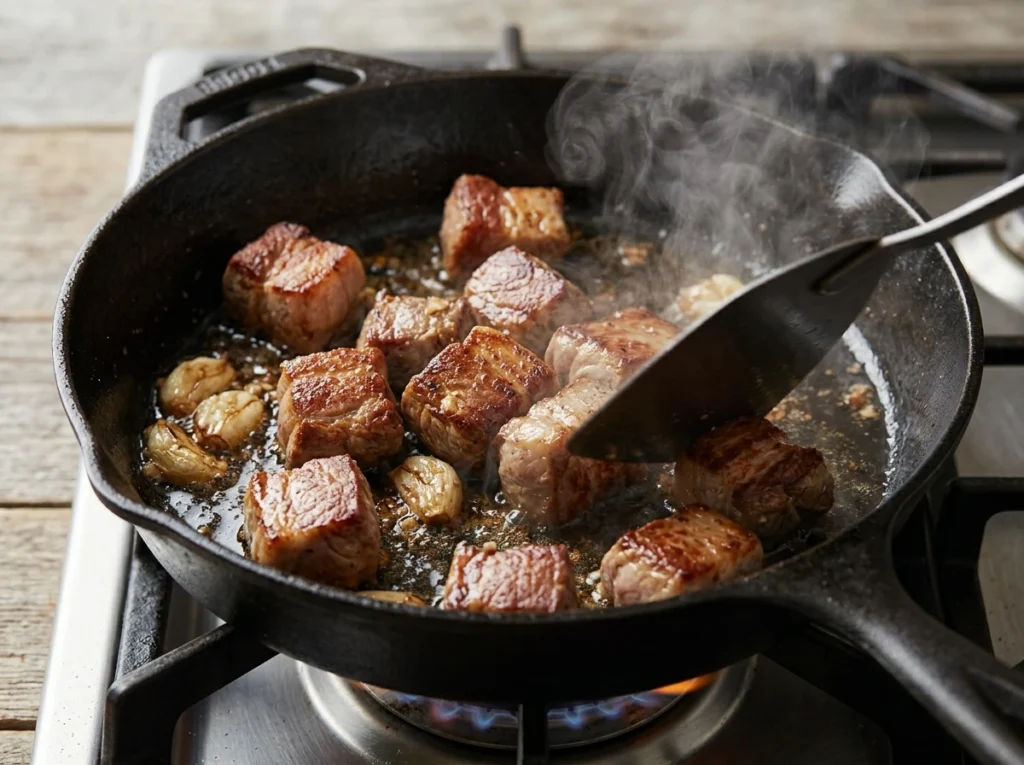
Remove the pork from the marinade, reserving the liquid, and pat it dry. Sear in a hot Dutch oven or heavy skillet until deeply browned on at least two sides. This is not optional. Browning builds a layer of flavor through the Maillard reaction that a simple boil never develops. Listen for a steady sizzle; if the pan goes quiet, it has cooled down and you are steaming instead of searing.
3. Add aromatics (2-3 minutes)
Lower the heat slightly and add the remaining garlic, along with sliced onion if using. Cook just until the garlic turns golden and fragrant, not brown, which turns it bitter.
4. Add the reserved marinade, vinegar, bay leaves, and remaining peppercorns
Pour in the marinade first, then add the vinegar on top without stirring immediately. Let it sit for 2-3 minutes over heat before stirring the pot. Add bay leaves and any remaining peppercorns now.
5. Simmer (45-75 minutes, depending on cut)
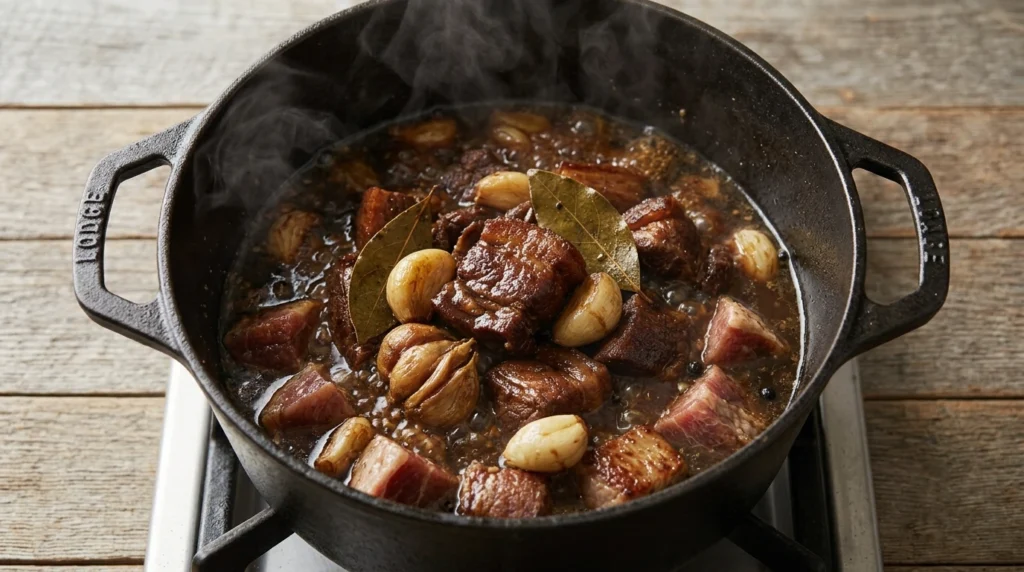
Bring to a gentle simmer, then reduce heat to low and cover partially. Small, lazy bubbles are what you want, not a rolling boil, which will toughen the pork before the collagen has time to break down. Check at the 45-minute mark for shoulder or belly; the pork is ready when a fork slides in with almost no resistance.
6. Reduce the sauce (10-15 minutes)
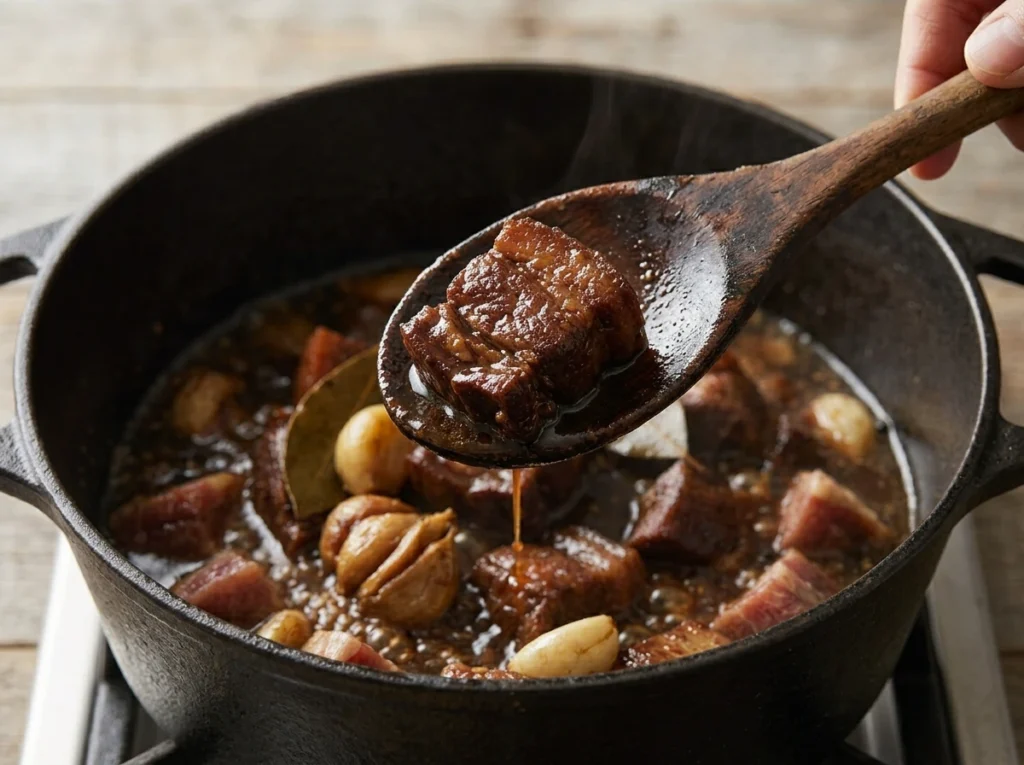
Remove the lid entirely and raise the heat slightly to let the sauce reduce until it coats the back of a spoon. This is where the dish goes from soup-like to properly adobo.
7. Balance the flavors
Taste. If it is too sharp, a small pinch of sugar softens it. If it is flat, a splash more soy sauce or a few extra cracked peppercorns will fix it. Adjust in small increments; adobo sauce concentrates quickly once it starts reducing.
8. Serve
Serve hot over steamed rice, spooning extra sauce generously over the top. Adobo is a sauce-forward dish, so do not be shy with it.
Equipment Needed
- Dutch oven or heavy-bottomed pot: Even heat distribution prevents scorching during the long simmer.
- Heavy skillet: An alternative for browning if you plan to transfer to a slow cooker afterward.
- Wooden spoon: Will not scratch your pot and does not react with the acidic sauce.
- Chef’s knife: For trimming pork and slicing onions cleanly.
- Measuring cups and spoons: Precision matters more here than in most Filipino dishes, since the soy sauce to vinegar ratio determines the entire balance of the final dish.
Common Mistakes
1. Boiling instead of simmering. A hard boil toughens pork before the collagen has time to soften. Keep the heat low and the bubbles gentle.
2. Skipping the browning step. Boiled, unbrowned pork tastes flat compared to pork that has developed a seared crust first. Take the extra ten minutes.
3. Adding vinegar too early, then stirring right away. This mutes the vinegar’s ability to mellow through direct heat exposure. Let it sit before stirring.
4. Using too little garlic. Adobo is not the dish to be conservative with garlic. A full head for a pound and a half of pork is normal, not excessive.
5. Using pre-ground black pepper instead of whole peppercorns. Ground pepper turns bitter over a long simmer and lacks the slow-release aromatic quality of whole peppercorns.
6. Choosing a lean cut like pork loin. Lean pork dries out during a long braise. Stick to shoulder, belly, or butt.
7. Over-reducing the sauce until it turns into a paste. The sauce should coat a spoon, not turn sticky and jam-like. Pull it off the heat a few minutes earlier than you think.
8. Under-reducing and serving a thin, watery sauce. The opposite problem is just as common. Give the uncovered simmer enough time at the end.
9. Not tasting and adjusting before serving. Every batch of pork and every bottle of vinegar varies slightly. Taste before you plate.
10. Using the wrong vinegar without adjusting the quantity. White vinegar is more acidic than cane vinegar; a straight one-to-one swap can make the dish too sour.
11. Adding sugar out of habit rather than to correct a specific imbalance. Sugar should fix sharpness, not become a default ingredient in every batch.
12. Overcrowding the pan while browning. Too much pork at once steams instead of sears. Brown in batches if needed.
13. Refrigerating the pot with the lid sealed tight while still steaming hot. This traps condensation and can dilute the sauce. Let it cool briefly first.
14. Reheating on high heat, which can make the sauce separate or the pork rubbery. Reheat gently over low to medium heat instead.
15. Throwing out the bay leaves and peppercorns visible in the pot before serving. They are meant to be picked around or left in for flavor, not a sign that something went wrong.
Pro Chef Tips
- Use a full head of garlic, smashed rather than minced, for a pound and a half of pork.
- Marinate overnight when your schedule allows it; the difference in seasoning depth is noticeable.
- Reserve the marinade rather than discarding it after removing the pork.
- Sear pork in batches so each piece makes direct contact with the hot pan.
- Let vinegar sit undisturbed for a few minutes after adding before stirring the pot.
- Keep the simmer at a gentle bubble, never a hard boil.
- Taste the sauce at three points: after simmering, after reducing, and just before serving.
- Add a splash of chicken stock instead of water for a richer base if you like.
- Try adobong puti (no soy sauce) if you want to taste the vinegar and garlic more directly.
- Fish out bay leaves before storing leftovers, since they can turn slightly bitter after extended soaking.
- Use a splash of banana ketchup for a milder, sweeter regional variation.
- Fry the boiled eggs briefly before adding them for a firmer texture that holds up in the sauce.
- Rest the finished dish for ten minutes off heat before serving; the sauce continues to settle.
- Double the recipe. Adobo freezes and reheats better than almost any other Filipino dish.
- Skim excess fat off the top only if you prefer a leaner sauce; otherwise, that fat carries flavor.
- Use bone-in pork when possible; bones add extra body to the braising liquid.
- If your sauce tastes flat, a few extra cracked peppercorns often fixes it faster than more salt.
- Cook the onions until translucent, not caramelized, so they melt into the sauce rather than standing out.
- Keep a small jar of your preferred vinegar-to-soy ratio written down once you land on your favorite; adobo rewards consistency once you find your version.
- Serve leftovers the next day whenever possible. The improvement is real, and it is worth planning for it.
Regional Variations
Adobong Puti (White Adobo) Skips soy sauce entirely, relying on vinegar, garlic, salt, and pepper for a paler, sharper-tasting sauce. Common in older, more traditional households and closer to what pre-colonial adobo likely tasted like.
Adobo sa Gata (Adobo in Coconut Milk) Popular in the Bicol region and parts of the Visayas, this version adds coconut milk near the end of cooking, producing a creamier, richer sauce with a subtle sweetness.
Spicy Adobo Bicolano and Visayan cooks often add sliced chili peppers, sometimes siling labuyo, during the simmer for a version with real heat alongside the tang.
Chicken and Pork Adobo A common household version that combines both proteins in one pot, since chicken cooks faster than pork and picks up the same sauce beautifully. Add chicken pieces partway through the pork’s cooking time so both finish tender at the same moment.
Dry Adobo (Adobong Tuyo) Cooked until almost all the liquid reduces away, leaving pork coated in a thick, sticky glaze rather than sitting in a pool of sauce. Popular for packed lunches since it travels well without spilling.
Adobo with Potatoes Potato chunks added partway through the simmer soak up the sauce and add heartiness, stretching the dish further for a larger family.
Storage & Reheating
Filipino Pork Adobo keeps well in the refrigerator for four to five days in an airtight container. Let it cool to room temperature for no more than an hour before sealing and refrigerating, to avoid trapping excessive condensation inside the container.
For longer storage, adobo freezes exceptionally well for up to three months. Freeze in a flat, sealed container or freezer bag so it thaws evenly and quickly. Thaw overnight in the refrigerator rather than at room temperature.
As covered in the food science section above, adobo genuinely improves after a night in the refrigerator, as the fat redistributes and the vinegar mellows. This is one of the few dishes where “planned leftovers” is a legitimate cooking strategy rather than an afterthought.
Reheat gently on the stovetop over low to medium heat, stirring occasionally, until warmed through. A microwave works in a pinch but can make the pork slightly rubbery if overdone; use short intervals and stir between them. Add a small splash of water or stock if the sauce has thickened too much in storage.
As with any braised pork dish, make sure leftovers are reheated to an internal temperature of 165°F before eating, and do not leave cooked adobo at room temperature for more than two hours.
What to Serve with Filipino Pork Adobo
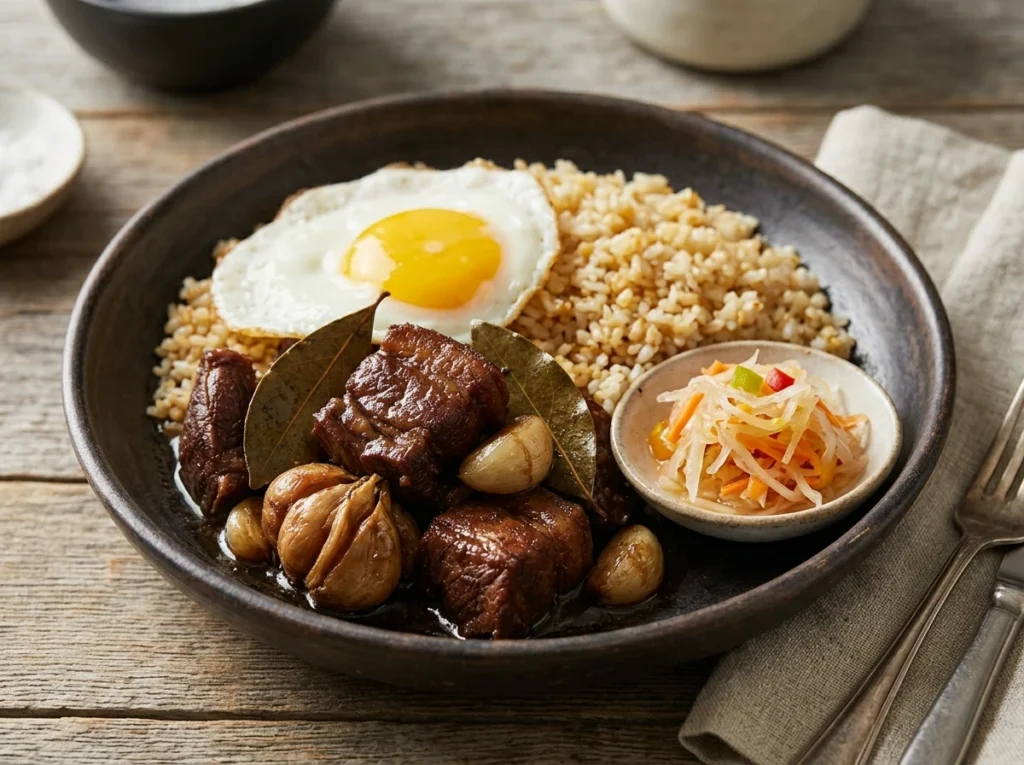
Steamed jasmine rice is the standard, non-negotiable pairing. The sauce is built to be spooned over rice, and a plain, fluffy base lets the pork adobo flavor lead.
Garlic fried rice, or sinangag, made from day-old rice fried with extra garlic, turns adobo into a full Filipino breakfast plate when paired with a fried egg.
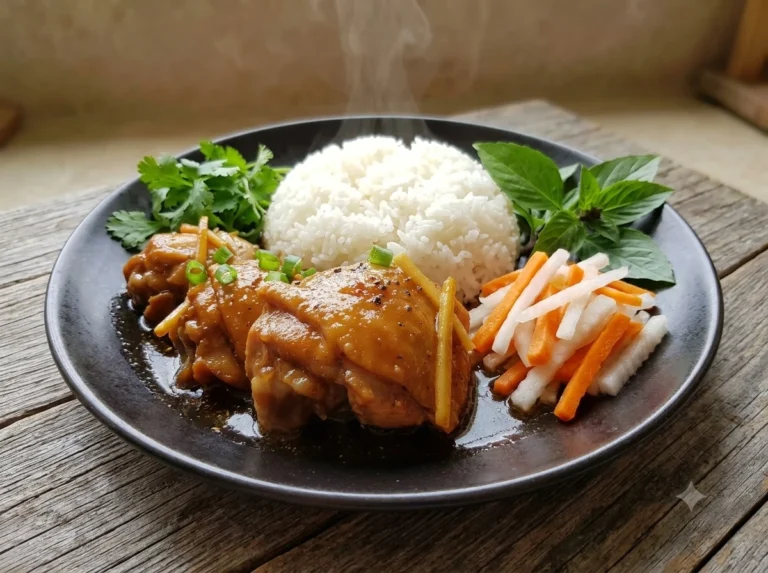
Pickled papaya, known as atchara, cuts through the richness of the sauce with its sweet-sour crunch, and is one of the most common adobo side dishes in the Philippines.
Stir-fried vegetables, particularly something simple like sautéed string beans or bok choy, round out the plate with freshness.
A fried egg with a runny yolk on top of adobo and rice, sometimes called adobo with sunny-side-up egg, is a beloved everyday combination.
Green mango salad adds sharp acidity and crunch, echoing the vinegar in the dish itself while providing textural contrast.
For drinks, iced tea is the everyday choice in most Filipino homes. A light lager pairs well with the richness of the pork fat. Sparkling water with a squeeze of calamansi mirrors the citrus-vinegar profile of the dish. A dry Riesling, with its acidity and slight sweetness, is a surprisingly good match for the sauce’s tang.
Frequently Asked Questions
Can I use chicken instead of pork? Yes. Chicken Adobo is just as traditional as Pork Adobo, and many households make Chicken and Pork Adobo together in one pot. Chicken cooks faster, so add it later than the pork if combining both.
Can I use apple cider vinegar instead of cane vinegar? Yes, apple cider vinegar works as a substitute. It has a fruitier profile than cane vinegar, so the final flavor will be slightly different, but the dish will still taste like adobo.
Can I freeze Pork Adobo? Yes, it freezes well for up to three months in a sealed, freezer-safe container. Thaw it in the refrigerator overnight before reheating.
Why is my adobo too sour? This usually happens when a higher-acidity vinegar, like white vinegar, is used in the same quantity as cane vinegar. Reduce the vinegar slightly next time, or balance an overly sour batch with a small pinch of sugar and a longer simmer to cook off some sharpness.
Can I make Filipino Pork Adobo spicy? Yes. Add sliced chili peppers such as siling labuyo during the simmer, following the Bicolano tradition of spicy adobo.
Can I use pork loin? You can, but it is not recommended. Pork loin is lean and can dry out during a long braise. Reduce the cooking time significantly if using loin, and watch it closely.
Why does adobo taste better the next day? Overnight refrigeration allows the fat to redistribute, the salt to finish penetrating the meat, and the vinegar’s sharp acidity to mellow, resulting in a more balanced, rounded flavor the second day.
Can I make Pork Adobo in a slow cooker? Yes. Brown the pork first on the stovetop for best flavor, then transfer everything to a slow cooker and cook on low for six to seven hours, or high for three to four hours. Reduce the sauce on the stovetop afterward if it is too thin.
What is the difference between Adobong Puti and regular Pork Adobo? Adobong Puti skips soy sauce entirely, relying only on vinegar, garlic, salt, and pepper, resulting in a paler, sharper-tasting version closer to the dish’s earliest form.
Do I need to marinate the pork before cooking? Marinating is not strictly required, but even thirty minutes improves seasoning depth. Overnight marinating gives the best results if your schedule allows it.
Can I use coconut milk in regular Pork Adobo? Adding coconut milk turns the dish into adobo sa gata, a distinct regional variation. It is not required for standard Pork Adobo but is a popular twist worth trying.
Why should I not stir the pot right after adding vinegar? Letting vinegar sit undisturbed over heat for a few minutes allows some of its sharpness to cook off through direct contact with the heat, rather than being immediately diluted throughout the sauce.
Can I double the recipe? Yes. Adobo scales well, though you may need to brown the pork in more batches to avoid overcrowding the pan, and the simmer time may run slightly longer for a larger volume of liquid.
What if I do not have whole peppercorns? Ground black pepper can be used in a pinch, added slightly later in the cooking process to avoid bitterness, though the flavor will be less aromatic than with whole peppercorns.
Is Pork Adobo gluten-free? Traditional soy sauce contains wheat, so standard Pork Adobo is not gluten-free. Substitute a certified gluten-free tamari or coconut aminos in equal measure to make it gluten-free.
Recipe Card
Classic Filipino Pork Adobo
| Detail | Info |
|---|---|
| Prep Time | 15 minutes (plus optional marinating time) |
| Cook Time | 75 minutes |
| Total Time | 90 minutes |
| Servings | 6 |
| Cuisine | Filipino |
| Course | Main Dish |
| Calories (estimated) | 420 per serving |
Ingredients
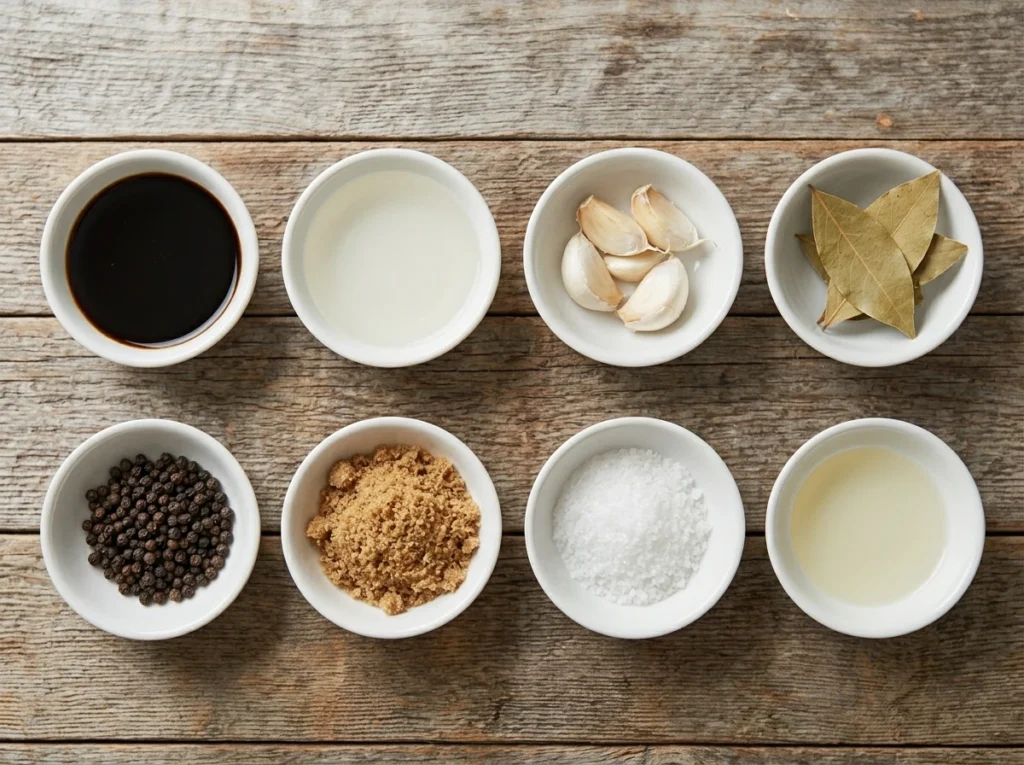
- 2 lbs pork shoulder, cut into 2-inch cubes
- 1/2 cup soy sauce
- 1/3 cup cane vinegar
- 1 whole head garlic, smashed and peeled
- 1 tablespoon whole black peppercorns
- 3 bay leaves
- 1 small onion, sliced
- 1 tablespoon brown sugar (optional)
- 1 cup water or chicken stock
- 2 tablespoons cooking oil
- 2 hard-boiled eggs (optional)
Instructions
- Combine pork with soy sauce, half the garlic, and half the peppercorns in a bowl. Marinate for at least 30 minutes, up to overnight in the refrigerator.
- Remove pork from marinade, reserving the liquid. Pat pork dry.
- Heat oil in a Dutch oven over medium-high heat. Brown pork in batches, about 3-4 minutes per side, until deeply seared. Set aside.
- Lower heat to medium. Add remaining garlic and sliced onion. Cook until golden and fragrant, about 2 minutes.
- Return pork to the pot. Add reserved marinade, water or stock, bay leaves, and remaining peppercorns.
- Pour vinegar over the top. Let sit undisturbed for 2-3 minutes, then stir gently.
- Bring to a simmer, reduce heat to low, and cover partially. Cook for 45-60 minutes, until pork is fork-tender.
- Remove lid, raise heat slightly, and simmer uncovered for 10-15 minutes to reduce and thicken the sauce.
- Taste and adjust with sugar, extra soy sauce, or pepper as needed.
- Add boiled eggs, if using, during the last 5 minutes to warm through.
- Serve hot over steamed rice.
Chef Notes Pork shoulder or belly gives the most reliable results. Adjust vinegar quantity by one tablespoon less if substituting white vinegar for cane vinegar.
Storage Notes Refrigerate in an airtight container for up to 5 days, or freeze for up to 3 months. Reheat gently over low to medium heat.
Nutrition Disclaimer Calorie and nutrition estimates are approximate and will vary based on specific ingredients, cut of pork, and portion size used.
Conclusion
Filipino Pork Adobo rewards patience more than precision. The exact ratio of soy sauce to vinegar will shift slightly depending on the brand in your pantry, the cut of pork on your cutting board, and, honestly, your own mood that day. What stays constant is the method: brown the meat, build the garlic and aromatics, let the vinegar do its quiet work undisturbed, and give the sauce time to reduce into something worth spooning over rice twice.
If you take one thing from this guide, let it be this: cook a bigger batch than you think you need. Filipino Pork Adobo was built to be eaten again the next day, when the sauce has settled and the pork has soaked up everything the pot had to offer. Make it once this week, and you will understand why an entire country built a piece of its identity around a dish this simple.