Vodka Pasta: The Best Creamy Penne alla Vodka Recipe
There’s a reason Vodka Pasta shows up on nearly every Italian-American restaurant menu and why home cooks keep searching for the recipe that finally gets it right. This dish delivers a sauce that’s silkier than marinara, lighter than Alfredo, and somehow more than the sum of its parts: tomato, cream, garlic, and a splash of vodka, simmered together until it turns into something genuinely restaurant-quality.
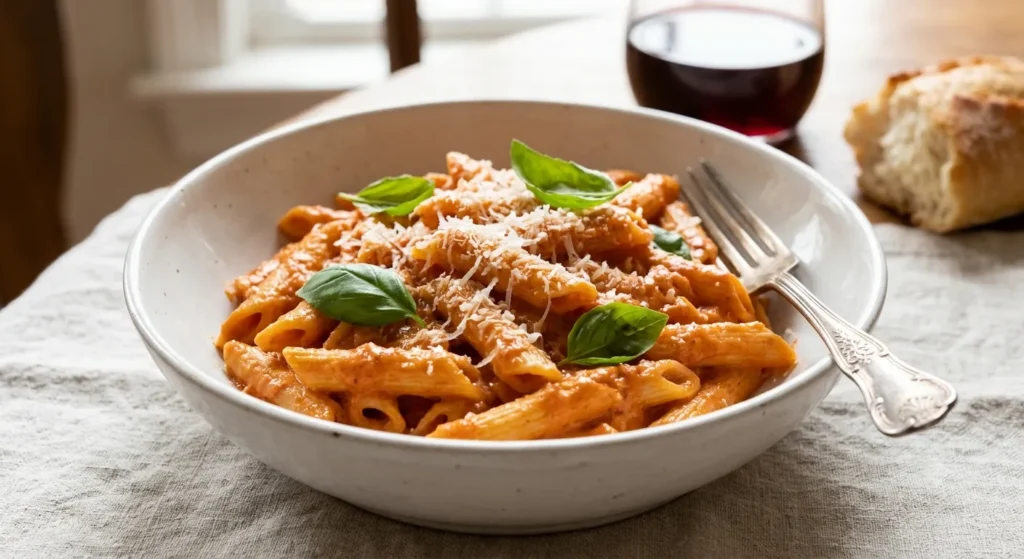
Table of Contents
I’ve spent years cooking Italian and Italian-American classics, and Vodka Pasta remains one of the most requested dishes I make, because it looks impressive but comes together with pantry staples and about 30 minutes of real effort. This guide breaks down exactly why vodka belongs in the sauce, the food science behind that famous silky texture, and every step you need to make Vodka Pasta taste like it came from a real Italian kitchen.
What Is Vodka Pasta?
Vodka Pasta, most often served as Penne alla Vodka, is pasta tossed in a rosy, creamy tomato sauce built on tomato paste, cream, garlic, and a splash of vodka that helps bind everything together. The result sits somewhere between a marinara and an Alfredo: tangy and tomato-forward, yet rich and velvety at the same time.
Vodka does more than add novelty to the name. It dissolves flavor compounds in tomatoes that neither water nor oil can fully release on their own, which is part of why this sauce tastes deeper than a standard tomato cream sauce.
How It Compares to Other Classic Sauces
| Sauce | Base | Texture | Flavor Profile |
|---|---|---|---|
| Marinara | Tomato, garlic, olive oil | Light, slightly chunky | Bright, acidic, herbaceous |
| Alfredo | Butter, cream, Parmesan | Very rich, thick | Buttery, cheesy, mild |
| Tomato Cream Sauce | Tomato, cream | Medium-rich | Balanced tang and richness |
| Vodka Pasta | Tomato, cream, vodka | Silky, emulsified | Tangy, rich, subtly deepened |
Vodka Pasta earns its place between marinara and Alfredo because it keeps the acidity of a tomato sauce while gaining the richness of cream, with the vodka acting as the bridge that pulls the two together into one smooth sauce instead of separate layers.
The History of Vodka Pasta
The exact origin of Vodka Pasta is genuinely disputed, and no single account has been confirmed as definitive. One of the earliest written references appears in Italian actor Ugo Tognazzi’s 1974 cookbook, which included a spicy pasta recipe made with a splash of chili-infused vodka. Several Italian sources also point to restaurants in Bologna and Rome experimenting with vodka in tomato sauce during the 1970s.
In New York, two competing stories are commonly cited. Chef Luigi Franzese of Orsini’s restaurant is said to have improvised the dish in the 1970s while using vodka to thin a tomato and cream sauce. A separate account credits James Doty, a Columbia University graduate student, with popularizing the dish in the 1980s. Food historians generally agree the dish gained real momentum in Italian-American restaurants during that decade, even if its true birthplace remains unsettled.
An Italian-American Icon
Whatever its true origin, Vodka Pasta became far more popular in the United States than in Italy, where it’s rarely seen on menus today. That popularity has only grown since, with the dish experiencing a strong resurgence on American restaurant menus and social media in recent years.
Why Vodka Pasta Is So Popular
Part of the appeal comes down to texture. The cream softens the tomato’s sharp edge, while the vodka helps the sauce cling to every piece of pasta instead of pooling at the bottom of the bowl. That balance of acidity and richness makes it feel indulgent without being heavy.
It also happens to be genuinely easy to make well. Unlike some sauces that demand hours of simmering, Vodka Pasta comes together in under 40 minutes using ingredients most home cooks already keep on hand, which makes it a realistic choice for a busy weeknight or a date-night dinner at home.
Family-Friendly, Restaurant-Quality
Because the sauce is creamy rather than sharply acidic, it tends to appeal to kids and picky eaters just as much as it does to adults looking for a restaurant-style meal without leaving the house.
The Science Behind Vodka Sauce
Vodka’s role in this sauce is rooted in real chemistry. Tomatoes contain flavor compounds that are soluble in alcohol but not in water or fat alone, so a splash of vodka helps release aromas and flavors that would otherwise stay locked inside the tomato paste.
As the sauce simmers, most of the alcohol evaporates, leaving behind the flavor compounds it helped unlock rather than the vodka’s own taste. Meanwhile, the fat in the cream and the acid in the tomatoes need help combining smoothly, and alcohol acts as an emulsifier that keeps the sauce from separating into a greasy layer and a watery one.
Kitchen Science Box: Why the Sauce Turns Silky
Reserved pasta water plays a supporting role here, too. Its starch content helps the sauce grip the pasta rather than sliding off, while a bit of Parmesan stirred in off the heat adds proteins that further thicken and stabilize the emulsion.
Building the Flavor Base
Cooking tomato paste directly in fat before adding liquid triggers a form of caramelization that deepens its flavor considerably, turning a sharp, one-note paste into something closer to roasted tomato.
Choosing the Best Pasta
| Pasta Shape | Sauce Retention | Texture | Best For |
|---|---|---|---|
| Penne Rigate | Excellent | Firm, ridged | The traditional, classic choice |
| Rigatoni | Excellent | Hearty, tube-shaped | Heartier bite, great sauce grip |
| Fusilli | Very good | Springy, spiraled | Fun texture, holds sauce in curls |
| Shells | Very good | Soft, cup-shaped | Captures sauce inside each piece |
| Farfalle | Good | Delicate, bow-shaped | Lighter presentation |
Penne Rigate remains the traditional and most reliable choice, since its ridges grip the sauce far better than smooth pasta shapes do. For beginners, penne is also the most forgiving to cook, since its shape makes it easy to judge doneness by taste and bite.
Ingredients Explained
| Ingredient | Purpose |
|---|---|
| Penne | The traditional pasta shape for this dish |
| Olive oil | Builds the base fat for cooking aromatics |
| Butter | Adds richness and helps finish the sauce |
| Shallot | Milder, sweeter than onion, blends smoothly |
| Garlic | Essential aromatic backbone |
| Tomato paste | Concentrated tomato flavor, deepened by cooking |
| Crushed tomatoes | Body and acidity for the sauce |
| Vodka | Unlocks flavor compounds and helps emulsify |
| Heavy cream | Creates the signature silky richness |
| Parmesan | Adds salty depth and helps thicken the sauce |
| Basil | Bright, fragrant finishing note |
| Salt | Essential seasoning throughout |
| Black pepper | Warm, sharp contrast to the cream |
| Red pepper flakes | Optional gentle heat |
Using a good-quality vodka isn’t about extravagance; a mid-shelf plain vodka works perfectly well, since its main job is chemical, not flavor-forward, and flavored vodkas can throw off the balance of the sauce.
The Secret to Restaurant-Style Vodka Pasta
Restaurant kitchens rely on a few specific techniques that home cooks often skip. Caramelizing the tomato paste in butter and oil before adding any liquid is the first, since raw tomato paste tastes flat and slightly metallic by comparison.
Deglazing with vodka right after that caramelization step lifts every browned bit from the pan and lets the alcohol do its emulsifying work early, rather than being added as an afterthought. Finishing the sauce off the heat with a knob of butter and a handful of Parmesan, added gradually while stirring, is what gives the glossy, cohesive texture found in the best versions of this dish.
Chef Tip Box: Pasta Water Is Not Optional
Reserve at least a cup of starchy pasta water before draining. Restaurants rely on it constantly to loosen sauce and help it bond to the pasta, and skipping this step is one of the fastest ways to end up with a sauce that looks broken or separated.
Step-by-Step Instructions
Step 1: Cook the Pasta
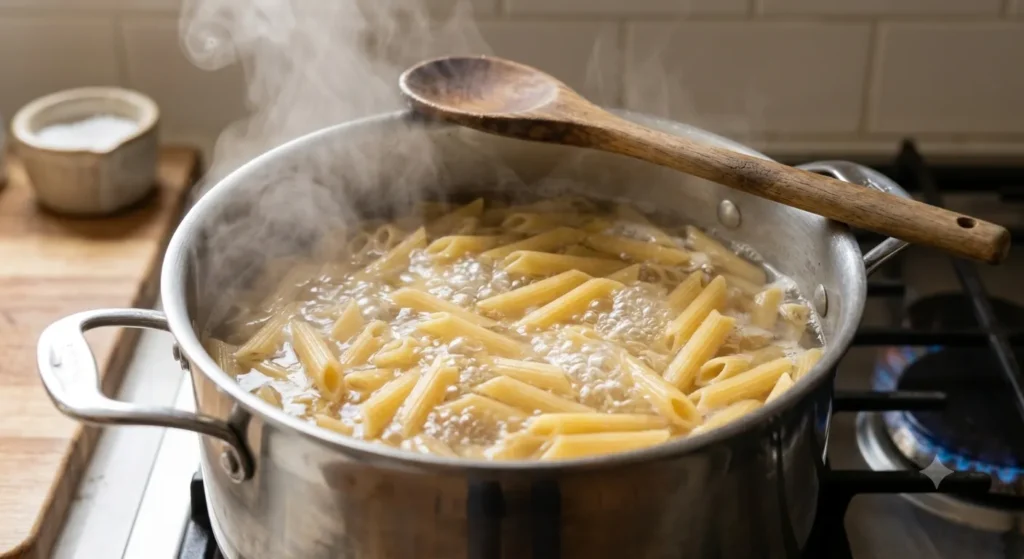
Bring a large pot of well-salted water to a boil and cook the penne until just shy of al dente, since it will finish cooking briefly in the sauce. Reserve at least a cup of pasta water before draining.
Step 2: Build the Aromatics
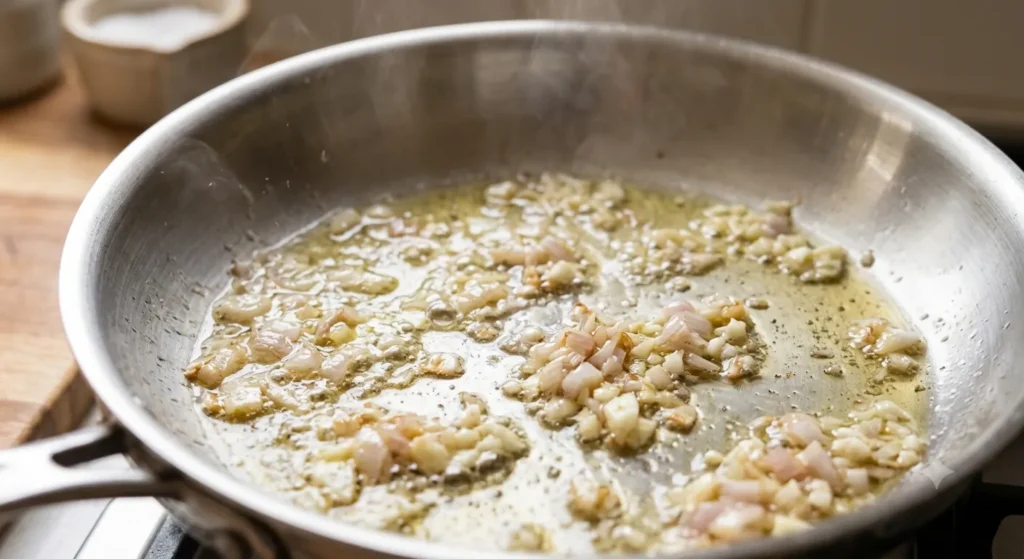
In a large skillet, heat olive oil and butter over medium heat. Add minced shallot and cook until soft, then stir in garlic for about 30 seconds, just until fragrant.
Step 3: Caramelize the Tomato Paste
Add tomato paste directly to the skillet and cook, stirring constantly, for 2 to 3 minutes until it darkens slightly and smells deeply savory rather than sharp.
Step 4: Deglaze with Vodka
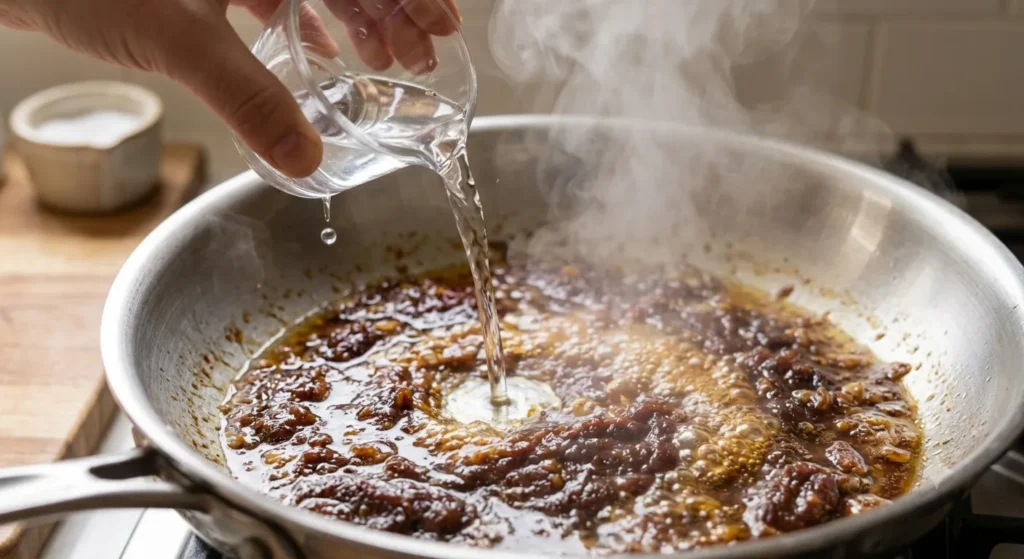
Pour in the vodka and let it simmer for 2 to 3 minutes, scraping up any browned bits from the bottom of the pan, until most of the alcohol smell has cooked off.
Step 5: Add Tomatoes and Simmer
Stir in the crushed tomatoes, season with salt and pepper, and let the sauce simmer gently for 10 minutes so the flavors concentrate and meld.
Step 6: Stir in the Cream
Lower the heat and stir in the heavy cream, letting the sauce turn a soft rosy color as it comes together into one smooth mixture.
🖼️ [IMAGE 5 — ADDING CREAM]
vodka-pasta-cream-sauce.webp· ALT: “Adding cream to Vodka Pasta sauce” Heavy cream being poured into a simmering tomato sauce, swirling to create a marbled rosy color just before full incorporation.
Step 7: Combine and Finish
Add the drained pasta directly to the skillet along with a splash of reserved pasta water, tossing to coat. Remove from heat and stir in Parmesan and a final knob of butter until the sauce turns glossy.
Step 8: Garnish and Serve
Finish with torn fresh basil, a crack of black pepper, and extra Parmesan before serving immediately while the sauce is still silky.
Cooking Timeline
| Time | Task |
|---|---|
| 0–10 min | Boil pasta |
| 0–3 min | Sauté shallot and garlic |
| 3–6 min | Caramelize tomato paste |
| 6–9 min | Deglaze with vodka |
| 9–19 min | Simmer with crushed tomatoes |
| 19–22 min | Stir in cream |
| 22–25 min | Combine pasta, finish with butter and Parmesan |
Equipment Needed
- Large skillet, wide enough to toss pasta
- Large pasta pot
- Colander
- Sharp chef’s knife
- Wooden spoon
- Microplane, for grating Parmesan
- Measuring cups
Common Mistakes to Avoid
- Skipping the tomato paste caramelization step, which leaves the sauce tasting flat and slightly raw.
- Adding vodka off the heat, which prevents the alcohol from cooking off properly.
- Using flavored vodka, which can throw off the sauce’s balance.
- Boiling the cream directly, which risks curdling instead of smooth emulsification.
- Adding cold cream straight from the fridge, which shocks the sauce and can cause separation.
- Overcooking the pasta before adding it to the sauce, resulting in mushy texture.
- Skipping reserved pasta water, leaving the sauce too thick and unable to cling properly.
- Adding Parmesan while the sauce is at a hard boil, causing it to clump instead of melt smoothly.
- Using pre-shredded cheese, which contains anti-caking agents that resist smooth melting.
- Under-seasoning the sauce, since pasta absorbs salt as it’s tossed in.
- Rushing the simmer time, which doesn’t allow the tomatoes to fully concentrate in flavor.
- Using too little vodka, which limits its emulsifying and flavor-releasing effect.
- Using too much vodka, which can leave a harsh, boozy edge if it doesn’t fully cook off.
- Not tasting before serving, missing the chance to adjust salt or acidity.
- Letting the dish sit too long before serving, since the sauce thickens and loses its silky texture as it cools.
Common Mistake Box
The single most common issue home cooks run into is a broken, greasy-looking sauce. Almost every time, it traces back to adding cream too quickly over high heat instead of lowering the temperature first.
Pro Chef Tips
- Use plain, mid-shelf vodka rather than a flavored or premium bottle.
- Let the tomato paste darken slightly before adding any liquid.
- Keep the heat at medium, not high, once cream enters the pan.
- Grate Parmesan fresh rather than using pre-shredded bags.
- Reserve more pasta water than you think you’ll need.
- Add cheese gradually, stirring constantly, rather than dumping it in at once.
- Finish the sauce off direct heat to avoid overcooking the dairy.
- Toss pasta directly in the skillet rather than mixing in a separate bowl.
- Taste and adjust salt after adding Parmesan, since cheese adds its own sodium.
- Use a wide skillet so the pasta and sauce can toss together evenly.
- Let the vodka simmer a full two minutes before adding tomatoes.
- Add red pepper flakes early so the heat mellows into the sauce.
- Use San Marzano-style crushed tomatoes for a smoother, less acidic base.
- Don’t skip the shallot; its sweetness balances the tomato’s acidity.
- Keep a spare splash of cream on hand in case the sauce needs loosening.
- Warm serving bowls slightly so the sauce doesn’t cool too quickly.
- Let leftover sauce cool before refrigerating to avoid condensation and wateriness.
- Add a small pat of butter at the very end for extra shine.
- Use a splash of pasta water even if the sauce looks done; it improves cling.
- Serve immediately, since Vodka Pasta is best enjoyed the moment it’s finished.
Delicious Variations
Spicy Vodka Pasta
Double the red pepper flakes and add a diced fresh chili with the garlic for real heat throughout the sauce.
Chicken Vodka Pasta
Add seared, sliced chicken breast or thigh just before tossing the pasta in, for a heartier, protein-rich version.
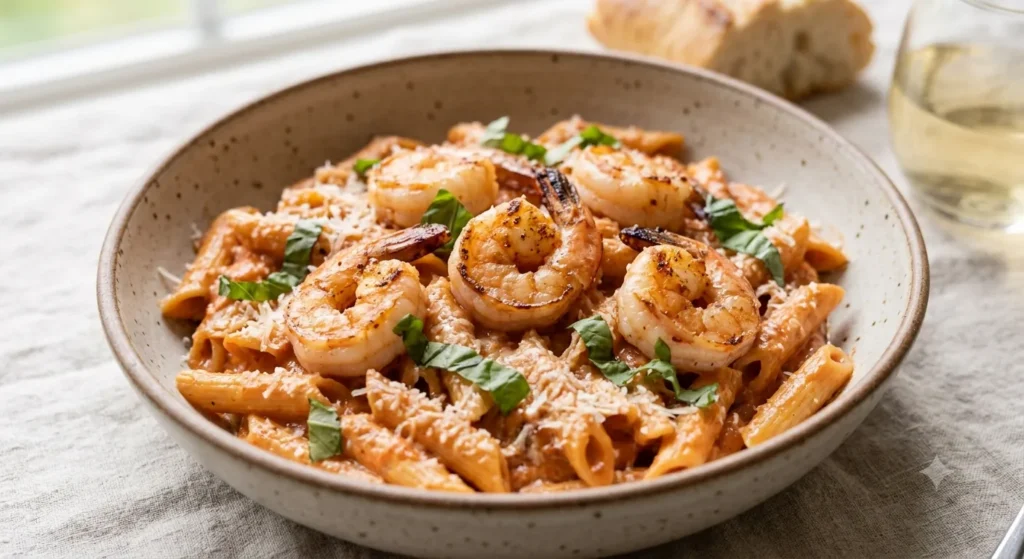
Shrimp Vodka Pasta
Sauté shrimp separately until just pink, then fold them in at the very end so they don’t overcook in the simmering sauce.
Mushroom Vodka Pasta
Sauté sliced cremini mushrooms with the shallots for an earthy, umami-rich version of the classic sauce.
Sausage Vodka Pasta
Brown crumbled Italian sausage before adding the tomato paste for a heartier, spiced take on the dish.
Burrata Vodka Pasta
Top each bowl with a torn piece of fresh burrata just before serving, letting its creamy center melt into the hot pasta.
Gluten-Free Vodka Pasta
Swap in a quality gluten-free penne, and reduce cooking time slightly, since these noodles can turn soft faster than traditional wheat pasta.
Vegetarian Vodka Pasta
Skip any meat additions and lean into extra mushrooms, roasted red peppers, or spinach folded in at the end.
Storage & Reheating
Let leftover Vodka Pasta cool before transferring it to an airtight container. Refrigerate for up to 4 days; freezing is possible but the cream sauce may separate slightly upon thawing, so stovetop reheating with a splash of cream or milk works best to bring it back together.
To reheat, warm gently over low heat on the stovetop, stirring frequently and adding a splash of cream or reserved pasta water to loosen the sauce. Avoid high heat, which can cause the dairy to break. Following <a href=”https://www.fsis.usda.gov/food-safety/safe-food-handling-and-preparation/food-safety-basics/safe-temperature-chart”>USDA safe minimum cooking temperatures</a>, leftovers containing dairy and any added meat should be reheated to 165°F to ensure food safety.
Kitchen Science Box: Why Cream Sauces Separate When Frozen
Freezing causes the water and fat in cream to separate at the molecular level. When thawed, that separation shows up as a grainy or broken texture, which gentle, low reheating with added liquid can usually smooth back out.
What to Serve with Vodka Pasta
- Warm [Internal Link: Homemade Garlic Bread] for soaking up extra sauce
- A crisp [Internal Link: Caesar Salad] to balance the richness
- Fresh burrata alongside for extra creaminess
- Roasted broccolini for a simple, bright vegetable side
- [Internal Link: Focaccia Bread] as a heartier bread option
- A classic Caprese salad for a bright, acidic contrast
- [Internal Link: Tiramisu] to finish the meal on a classic Italian note
For wine, a crisp Pinot Grigio or Sauvignon Blanc complements the creaminess without competing, while a lighter Chianti pairs well if you want something with more red-wine structure.
Frequently Asked Questions
1. Why does Vodka Pasta use vodka? Vodka helps release flavor compounds in the tomatoes that aren’t soluble in water or fat alone, and it helps emulsify the tomato and cream into one smooth sauce.
2. Does the alcohol cook off completely? Most of it evaporates during simmering, though a very small trace amount can remain, similar to other dishes cooked with wine or spirits.
3. Can kids eat Vodka Pasta? Since the majority of the alcohol cooks off during simmering, many families do serve it to children, though individual comfort levels vary and it’s a personal choice.
4. Can I skip the vodka entirely? Yes, though the sauce will lose some of its signature depth and silky emulsification; a splash of white wine or extra pasta water can partially substitute.
5. What’s the best vodka substitute? Dry white wine is the closest substitute, since it offers similar acidity and alcohol content to help the sauce come together.
6. Can I freeze Vodka Pasta? Yes, though the cream sauce may separate slightly on thawing; reheating gently with added cream usually restores the texture.
7. Why is my sauce grainy? Grainy sauce is typically caused by adding cold cream or cheese over high heat, which causes the proteins to seize instead of melting smoothly.
8. Why is my sauce too thick? The sauce likely needs more reserved pasta water stirred in to loosen it back to a silky consistency.
9. What pasta shape works best? Penne Rigate is the traditional choice, since its ridges grip the sauce especially well.
10. Can I make Vodka Pasta ahead of time? The sauce can be made a day ahead and reheated gently, though pasta is best cooked and combined fresh for the best texture.
11. Is Vodka Pasta spicy? As written, it’s mild, though red pepper flakes are traditionally included for a gentle background heat that can be increased to taste.
12. What cheese works best in Vodka Pasta? Freshly grated Parmigiano Reggiano PDO melts more smoothly and offers deeper flavor than pre-shredded alternatives.
13. Can I make this dish vegetarian? Yes, the base recipe is naturally vegetarian as long as no meat variation is added.
14. How long does Vodka Pasta keep in the fridge? It keeps well for up to 4 days when stored in an airtight container in the refrigerator.
15. Why is Vodka Pasta more popular in America than Italy? The dish gained its strongest following in Italian-American restaurants during the 1980s and has remained far more common on U.S. menus than in Italy ever since.
Recipe Card
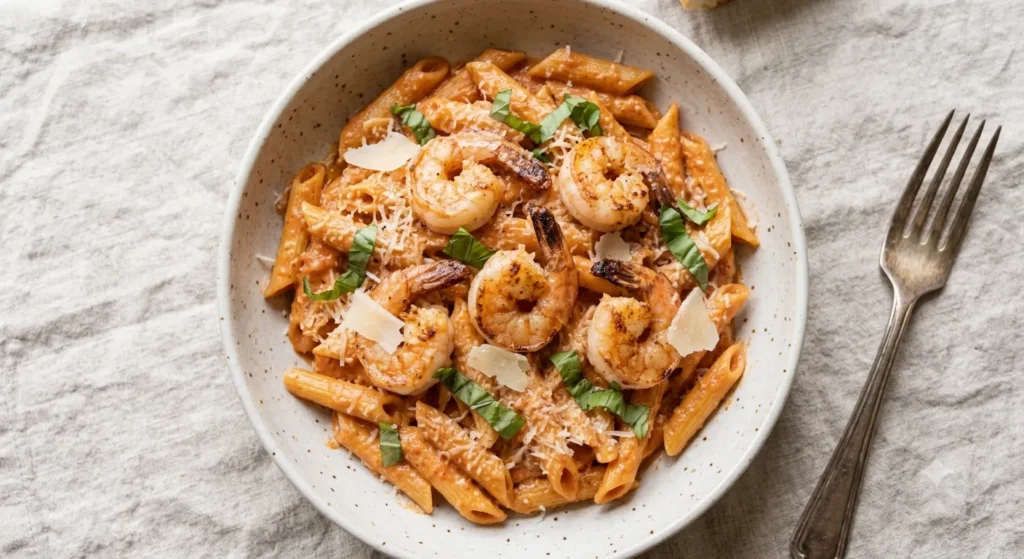
Vodka Pasta
Prep Time: 10 minutes Cook Time: 25 minutes Total Time: 35 minutes Servings: 4 Cuisine: Italian-American Course: Main Course Calories (per serving, approximate): 610
Ingredients
| Ingredient | Amount |
|---|---|
| Penne | 12 oz |
| Olive oil | 2 tbsp |
| Butter, divided | 3 tbsp |
| Shallot, minced | 1 medium |
| Garlic, minced | 4 cloves |
| Tomato paste | 3 tbsp |
| Crushed tomatoes | 14 oz can |
| Vodka | ⅓ cup |
| Heavy cream | ¾ cup |
| Parmesan, grated | ½ cup |
| Fresh basil, torn | For garnish |
| Salt and pepper | To taste |
| Red pepper flakes | ¼ tsp, optional |
Instructions
- Boil the penne in salted water until just shy of al dente. Reserve 1 cup pasta water and drain.
- Heat olive oil and 1 tablespoon butter in a large skillet. Cook shallot until soft, then add garlic for 30 seconds.
- Stir in tomato paste and cook 2 to 3 minutes until darkened.
- Add vodka and simmer 2 to 3 minutes, scraping the pan.
- Stir in crushed tomatoes, salt, and pepper. Simmer 10 minutes.
- Lower heat and stir in heavy cream until smooth.
- Add pasta and a splash of reserved pasta water, tossing to coat. Remove from heat.
- Stir in Parmesan and remaining butter until glossy. Garnish with basil and serve.
Chef Notes
For the silkiest texture, keep the heat moderate once cream and cheese enter the pan, and always finish with a splash of starchy pasta water rather than skipping it.
Storage Notes
Refrigerate leftovers for up to 4 days. Reheat gently over low heat with a splash of cream or pasta water to restore the sauce’s texture.
Nutrition Disclaimer: Nutrition values are estimates and will vary based on exact brands, portion sizes, and ingredient substitutions used.
Conclusion
Vodka Pasta earns its popularity honestly: it’s silky, tangy, rich, and forgiving enough for a weeknight while still feeling special enough for date night. Once you understand why the vodka matters and how to build the sauce in the right order, from caramelized tomato paste to a careful cream emulsion, you’ll be able to recreate that restaurant-quality bowl in your own kitchen every time. Give this Vodka Pasta recipe a try, and it’s likely to become one of the most requested dishes at your table.